
Daily Research-to-Prototype Industrial Design Sketchbook
Load-Bearing Thin Multilayer Thermal Deck
In aging wooden houses and temporary dwellings, winter's chill and summer's heat creep quietly through floors and walls. At just 16 mm thick, this thermal deck firmly bears the weight of furniture and footsteps while blocking heat transfer through hundreds of stacked ultra-thin insulating membranes. Requiring no construction—simply laid directly over existing floors—it restores a gentle margin of thermal calm beneath daily life.
01 / RESEARCH SEED
Foundational Research
Pressure-Resistant Thermal Insulation via Multilayered Ultra-Thin Film
ScienceDaily Engineering · 2026-11-16
The secret to building Moon bases may be hiding in emergency blankets
Thin resin films, such as those used in emergency aluminized blankets, excel at reflecting heat, yet lose their insulating properties the moment external pressure forces the layers into direct contact, allowing heat to conduct readily. This research achieved a structure in which hundreds of these same ultra-thin resin films are precisely stacked so that thermal insulation remains intact even under heavy compressive loads. Originally developed for lunar base habitats exposed to extreme temperature swings, this technology combines thinness, strength, and high thermal resistance—offering a new foundation for heat shielding in architectural floors and walls subject to constant pressure and weight, without relying on bulky insulation.
02 / SOCIAL CONTEXT
Thermal Harshness Rising from Underfoot
Amid intensifying heatwaves and cold snaps, poorly insulated older wooden rentals, aging homes, and post-disaster temporary housing allow chill and heat to seep through floors and window edges even when climate control is running, taking a steady toll on residents' health. Particularly in homes where elderly residents live, temperature differences between rooms place significant strain on the body. Yet major renovations—tearing up floors to install thick insulation—are often unfeasible due to cost or lease restrictions, while laying down conventional thick foam mats obstructs doors and collapses under the weight of desk and bed legs, diminishing their insulating effect. What is needed is a thin, durable means of insulation that works reliably over existing floors without disrupting the life already unfolding upon them.
Can we create a quiet architectural element that cuts off floor heat transfer while supporting the weight of people and furniture, without requiring construction?
03 / PROTOTYPE
A Sixteen-Millimeter Insulating Layer That Bears Weight
This is a loose-lay thermal insulation panel designed as a 450 mm square module, 16 mm thick. Its 12 mm internal core seals a pressure-resistant multilayered film as a microscopic airtight barrier, sandwiched between a rigid top plate of mineral-fiber-reinforced recycled cellulose and an elastic rubber base with anti-slip properties. The surface has a matte, pale taupe finish that suppresses glare, completely concealing any metallic sheen reminiscent of emergency blankets. Stepped interlocking edges (shiplap joints) along all four sides press together seamlessly without tools, and placing chairs or beds on top will not crush the internal insulating core. Thin enough not to impede the opening and closing of doors, it softens winter's chill in living rooms and hallways, and can be lifted panel by panel to carry into a new home when moving or vacating temporary housing.
- Material
- High-pressure molded recycled cellulose board with mineral fibers (top surface), hundreds-layer stacked reflective resin film (internal core), recycled elastomer anti-slip sheet (base), airtight resin sealing frame
- System
- Multilayered film thermal core maintaining insulation under compressive load; shiplap interlocking edge structure with integrated elastic gasket
- Dimensions
- W 450 mm × D 450 mm × H 16 mm (approx. 2.3 kg per panel)
- Behavior
- Power-free and wholly passive. Connects simply by laying on the floor and pressing adjacent edges together, blocking conductive and radiant heat transfer while supporting foot traffic and furniture loads.
- Field
- Living rooms and hallways of aging wooden houses and rental apartments; temporary housing in extreme cold or heat regions; wooden floors beside windows and beneath bedding
04 / INDUSTRIAL SKETCHES
Five Perspectives on Form & Mechanism
CLICK ANY PLATE TO ENLARGE
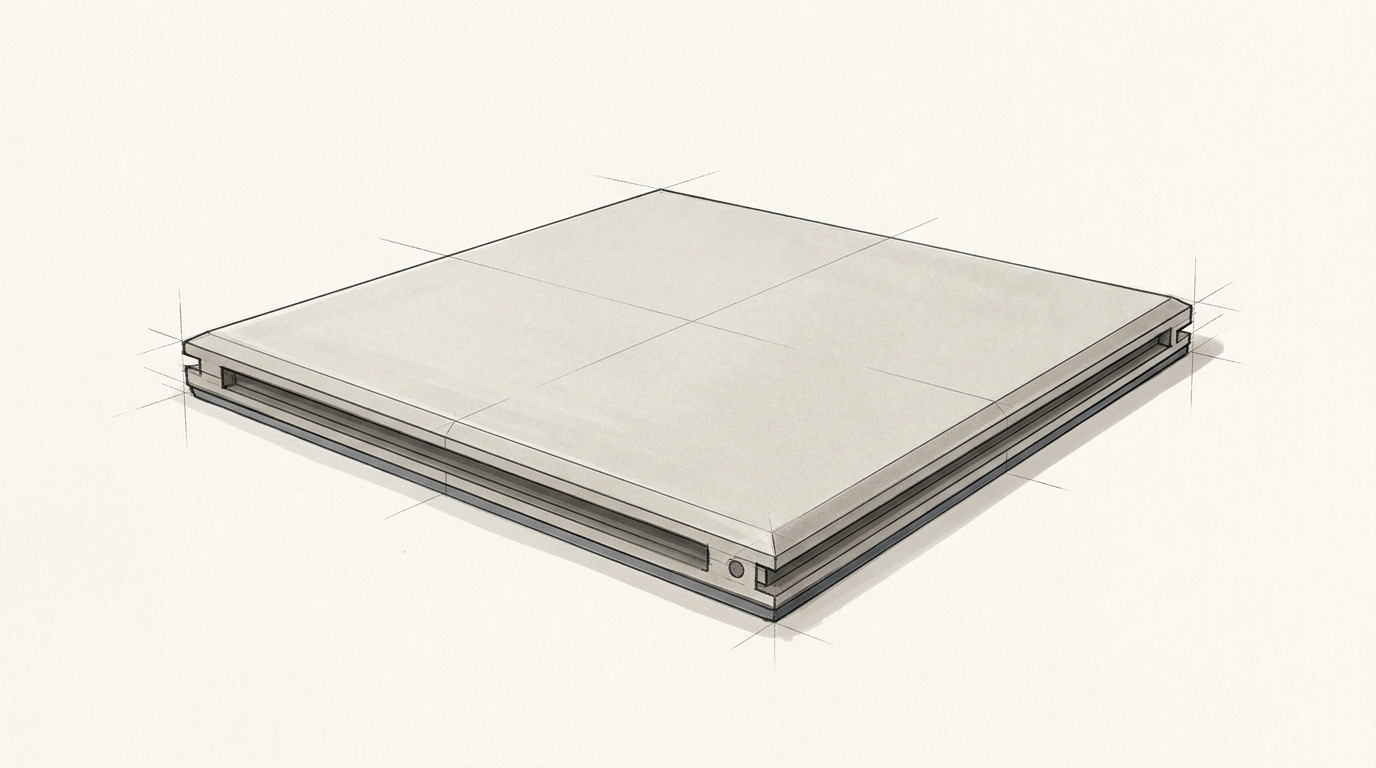
16 mm Square Module
An overall view of a single panel, combining crisp 450 mm square proportions with a slim 16 mm profile. Its pale taupe top plate features finely chamfered edges for a gentle feel underfoot when walking barefoot. The dark charcoal perimeter frame incorporates stepped interlocking edges that align adjacent panels with precision—possessing both a self-contained presence as a single unit and a quiet, continuous order across an entire floor.
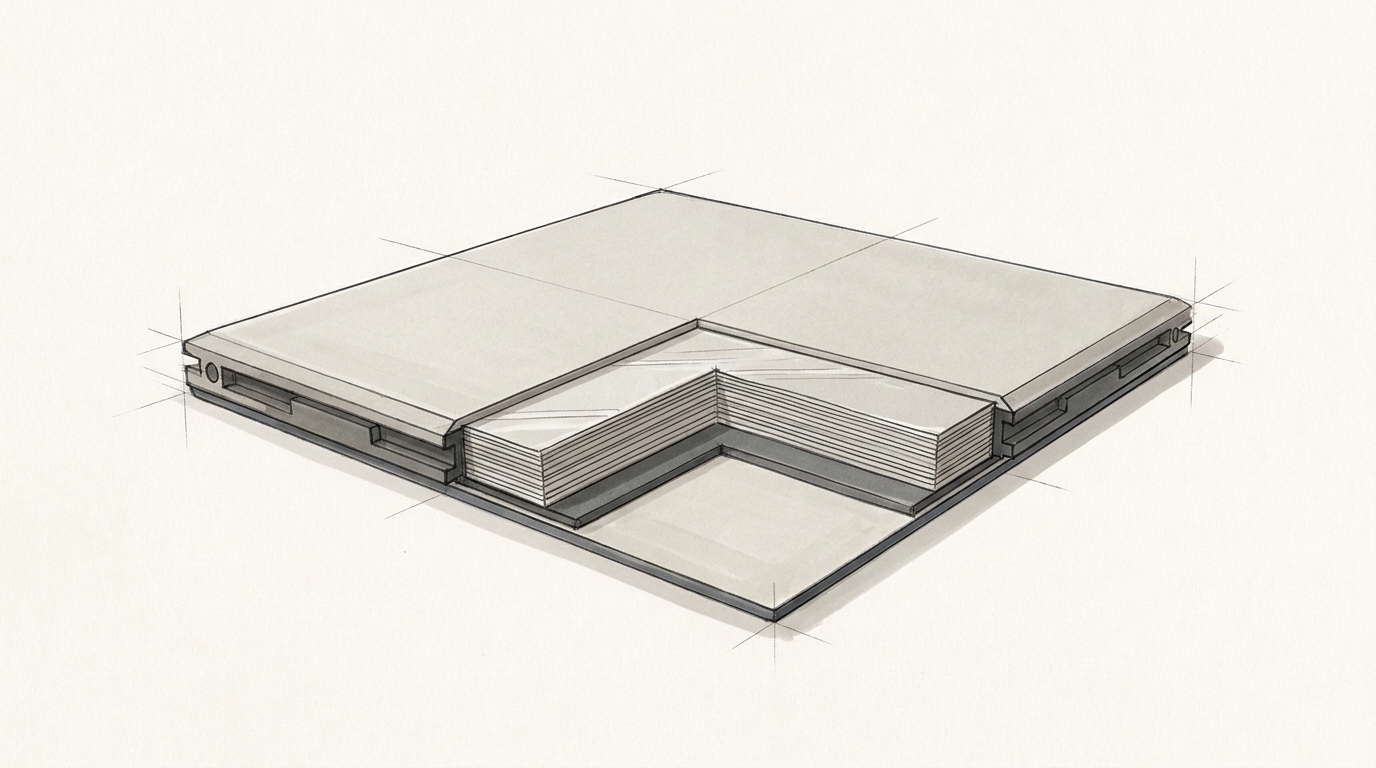
Hundreds-Layer Load-Bearing Thermal Core
A cutaway corner reveals the three-layer internal construction. Beneath the rigid top plate that distributes loads evenly across its plane lies a 12 mm pressure-resistant thermal core composed of hundreds of stacked ultra-thin reflective resin films. Sealed airtight along its perimeter by a resin frame, the layered structure resists crushing under footsteps or heavy furniture, continuously blocking both conductive and radiant heat.
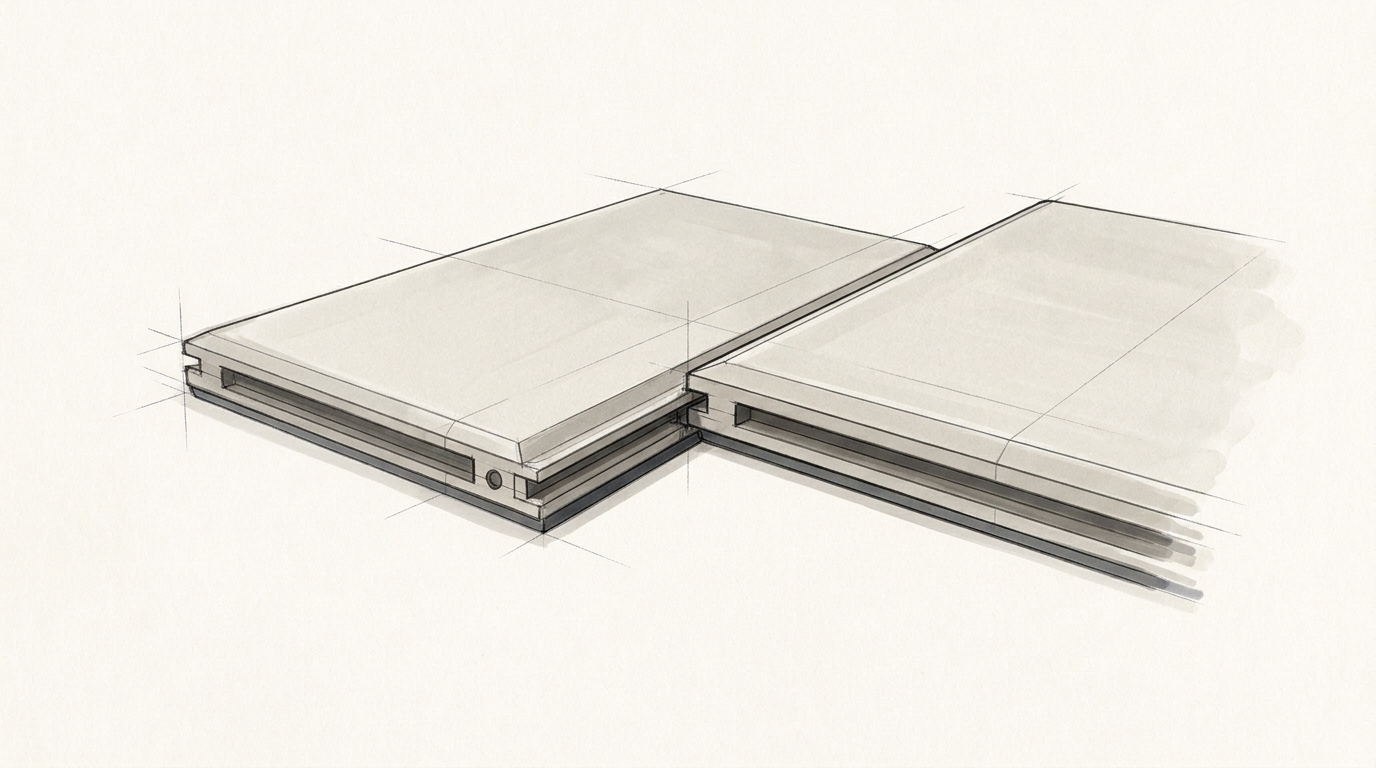
Barefoot-Friendly Surface and Shiplap Seam
A close-up of the interlocking seam between two panels and the surface texture. The top plate is high-pressure molded from a blend of mineral fibers and recycled cellulose, finished with a fine, fabric-like micro-texture that feels warm rather than stark against bare feet in winter. Elastic gaskets embedded in the stepped edges draw neighboring panels into tight contact, preventing cold drafts from rising through the joints while keeping the seam lines clean and composed.
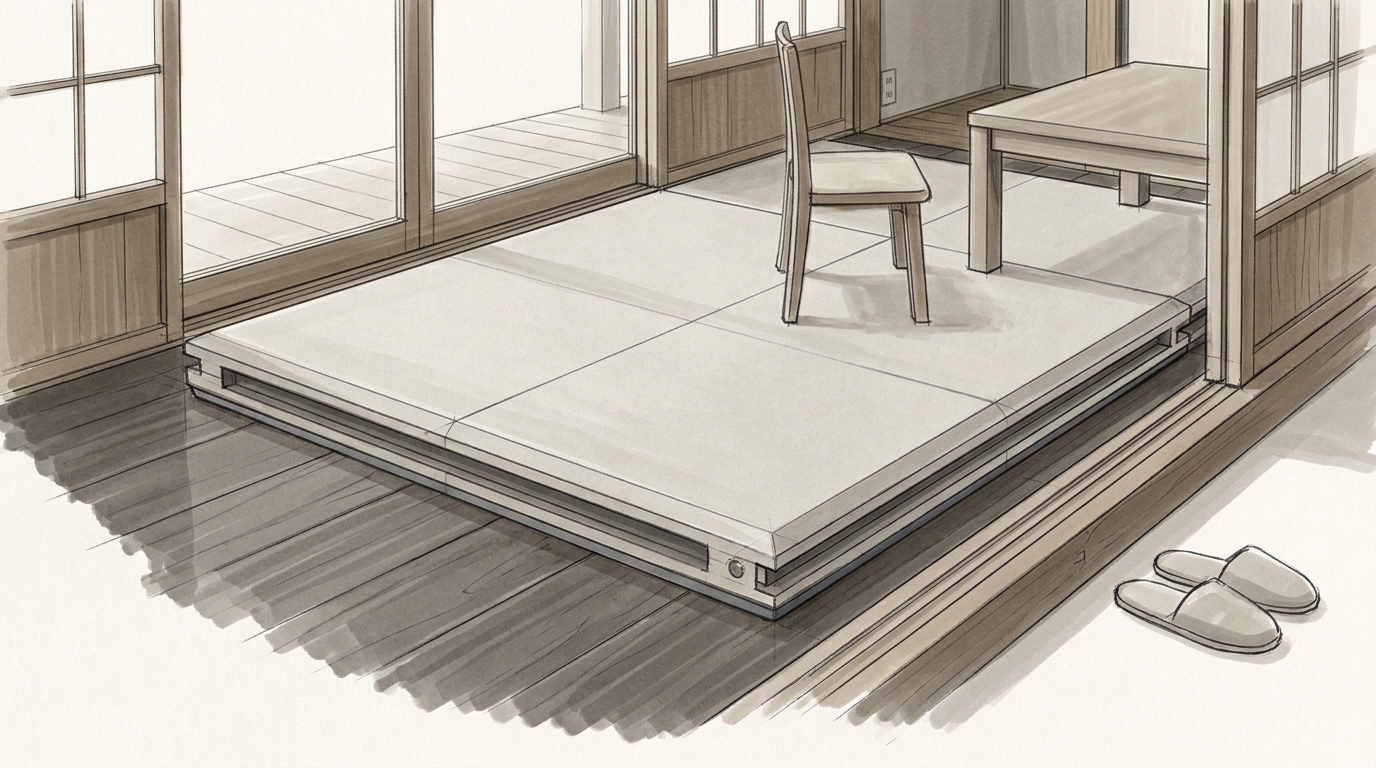
Winter Living Room Resting on Existing Floors
Panels laid quietly from the window toward the interior of a living room in an aging wooden house. Sitting low atop the existing floorboards, they do not obstruct sliding glass windows or interior doors, while readily supporting heavy desks and chairs. They can also be laid selectively along draft-prone window edges or under seating areas, gently stabilizing indoor warmth without disturbing the character of an older home.
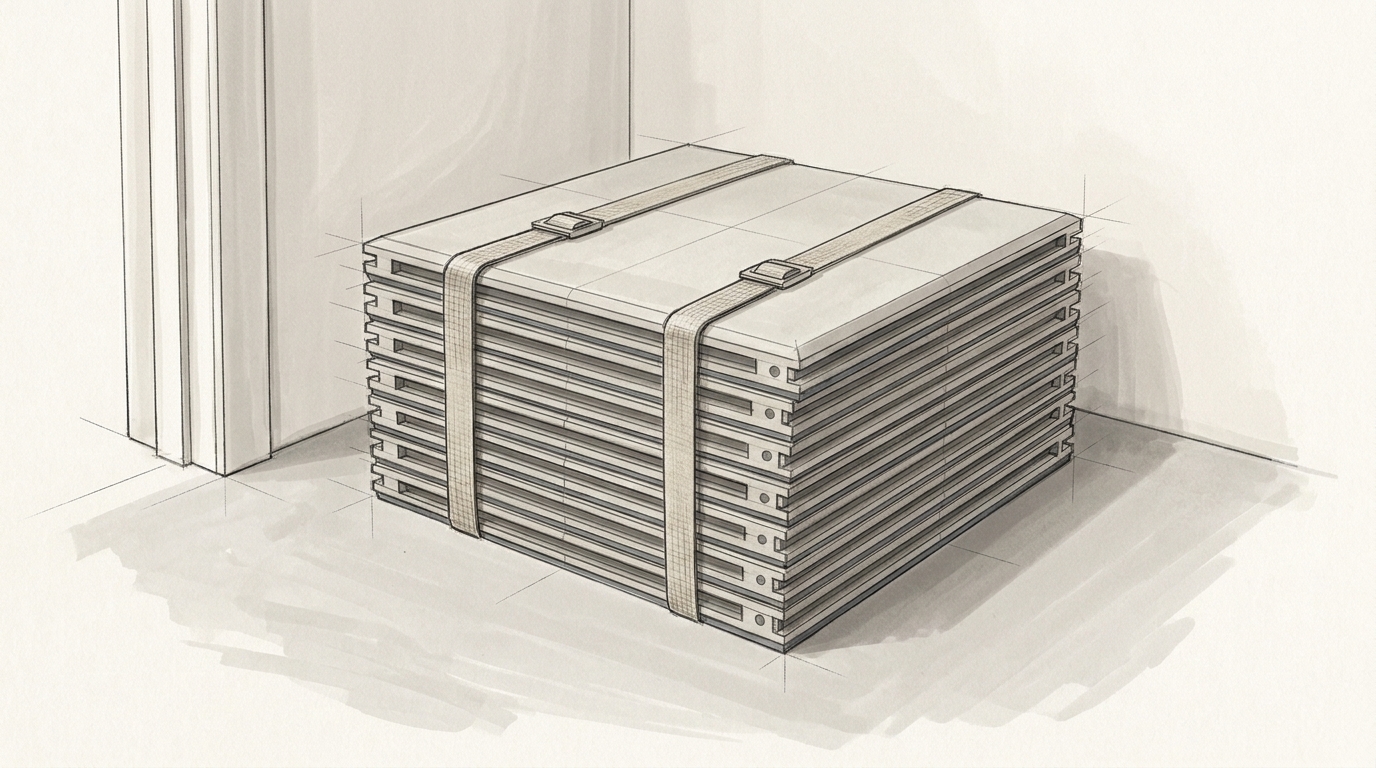
Modular Units for Transport and Maintenance
Stacked for off-season storage or relocation when moving out of temporary housing. Weighing roughly 2.3 kg per panel—light enough to handle with one hand—a stack of eight bound with a dedicated fabric strap measures only about 13 cm thick. Designed as independent modules so a single worn panel can be replaced individually, the system can be carried onward from home to home without being discarded.
ARCHIVE · 6 SPECIMENS
Latest & Past Specimens
 LATEST
Waterway-Side Catalytic Nitrogen Vessel
Agriculture, Waterways & Ecosystems
VIEWING
Load-Bearing Thin Multilayer Thermal Deck
Architecture, Living Environment & Climate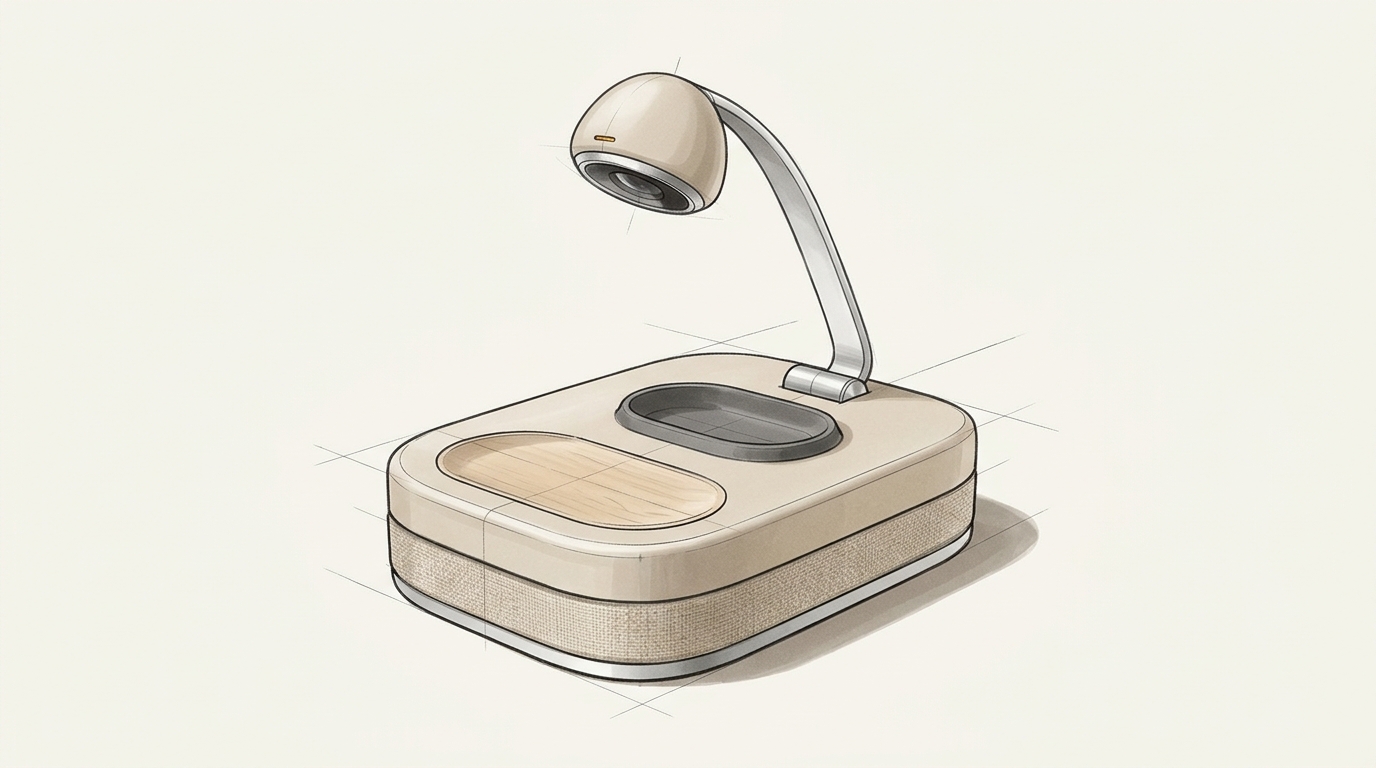
A Voice Learning Instrument Watching Over the Hands
Children's AI Education & Spoken Dialogue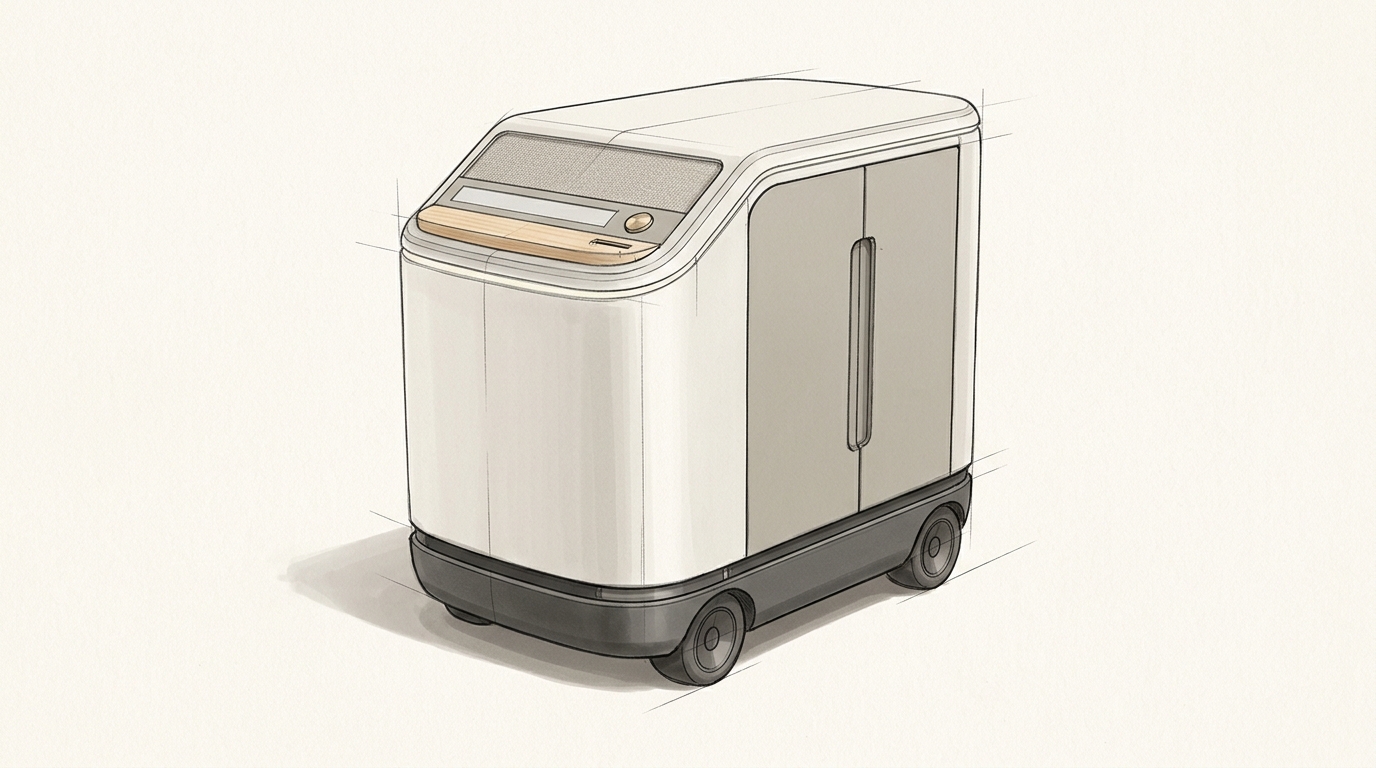
Doorstep Voice Patrol Kiosk
Community Living & Elder Care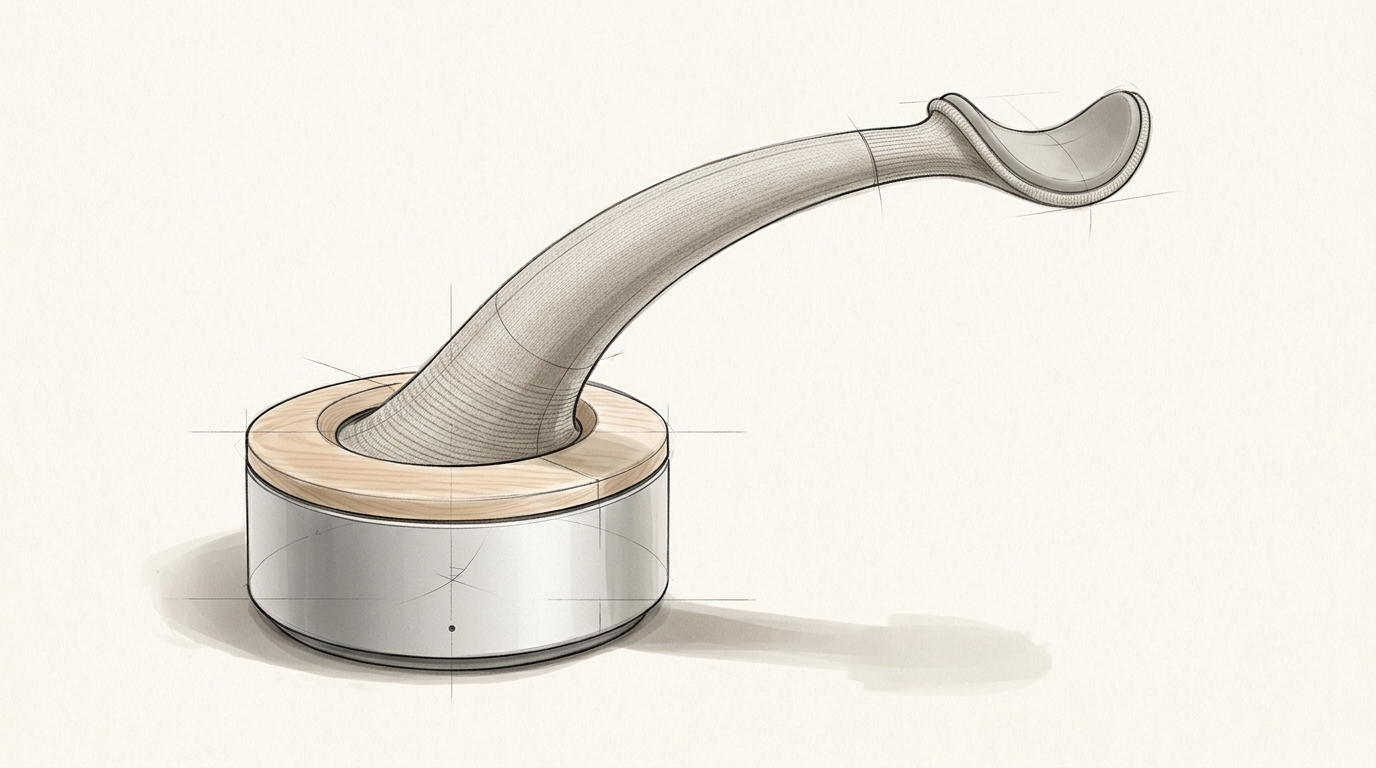
A Soft Supporting Arm That Blends into Bedding
Body, Healthcare & Welfare
Unpowered Mountain-Fold Flood Sill Driven by Water Pressure
Disaster Prevention, Hydraulics & Evacuation Tools
Quiet tools where research meets everyday behavior.
An autonomous daily industrial design sketchbook.