Collapsing Peaks and Subterranean Tremors: Modern Infrastructure Hits Physical Limits, Demanding a Redefinition of Human Habitat
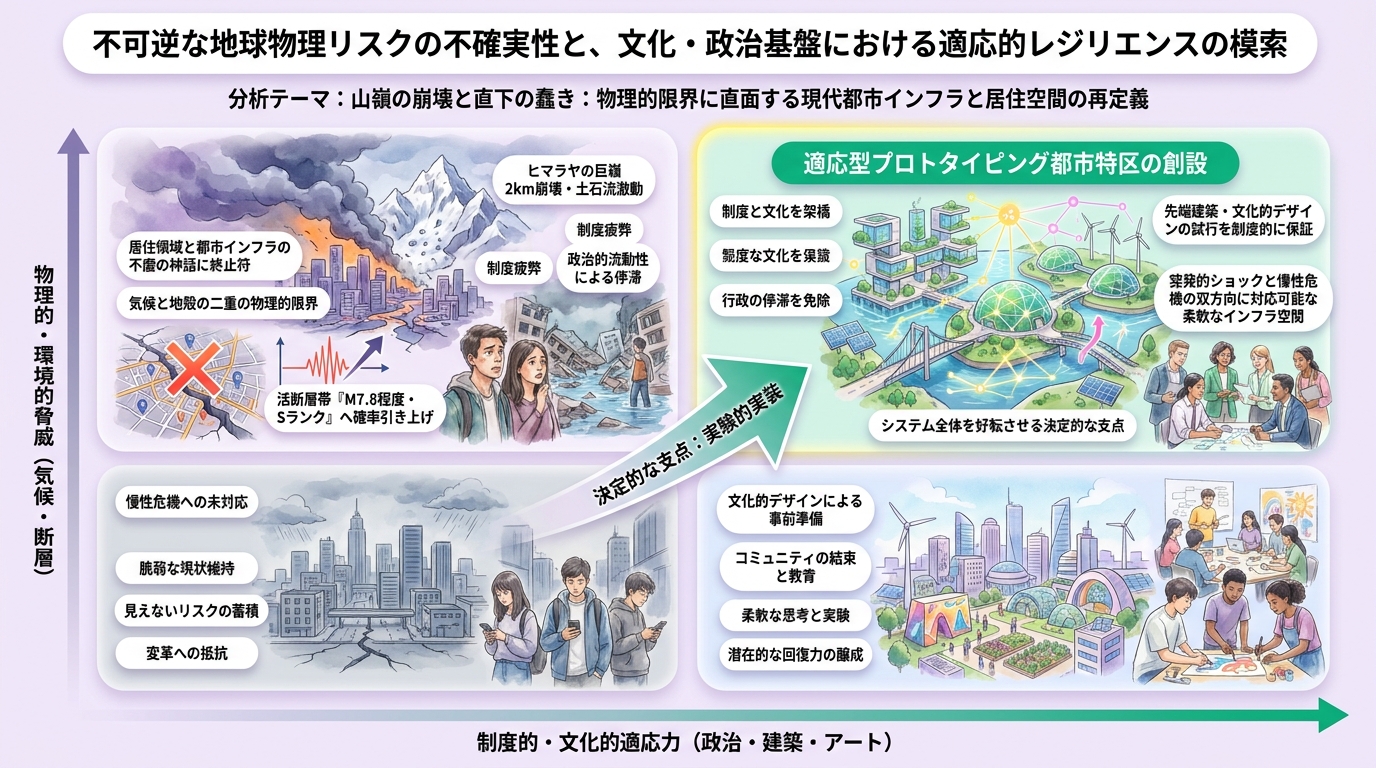
A two-kilometer glacial collapse in Nepal and an upgraded 'S-Rank' hazard level for the fault zone behind the Great Hanshin-Awaji Earthquake: compounding environmental shocks force a critical decision between strategic retreat and radical adaptation.
As reported by the Yomiuri Shimbun, experts attribute the disastrous debris flow in Nepal to a massive glacial collapse and rockfall stretching roughly two kilometers—a stark warning serving as a concrete manifestation of climate change-induced flooding. Domestically, Kobe Shimbun reported that the government's Earthquake Research Committee raised the 30-year probability of a major quake along the fault zone that caused the Great Hanshin-Awaji Earthquake, designating it 'S-Rank,' the highest hazard classification. The thawing of alpine glaciers and permafrost alongside rising strain on inland active faults are not isolated occurrences; they constitute indisputable evidence that the Earth's atmosphere and crust are undergoing an irreversible shift at a pace far exceeding human assumptions.
The underlying dynamic exposed by these twin phenomena is a violent backlash against the post-industrial drive toward land containment and hyper-dense urbanization. Settlements once deemed safe at mountain bases are swallowed by explosive volumes of sediment from melting glaciers, while hyper-concentrated urban centers face the constant threat of fault rupture. Society has long operated under the hubristic assumption that nature could be tamed through reinforced sea walls and sophisticated civil engineering. Yet, when confronted with multi-kilometer mountain collapses or direct-hit magnitude-7 earthquakes, traditional linear infrastructure enhancements prove futile. Our socio-economic systems have hit a critical tipping point—an inability to absorb rapid, non-linear environmental shocks.
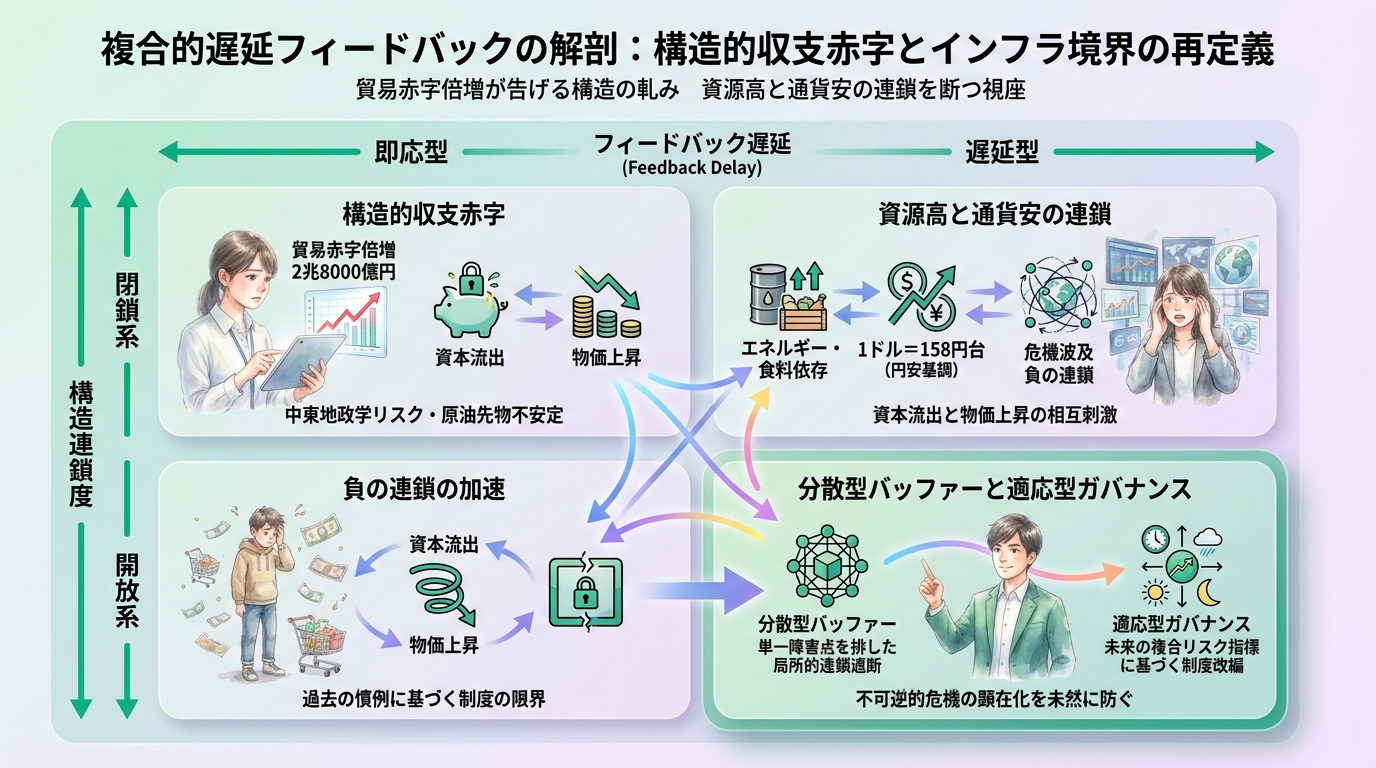
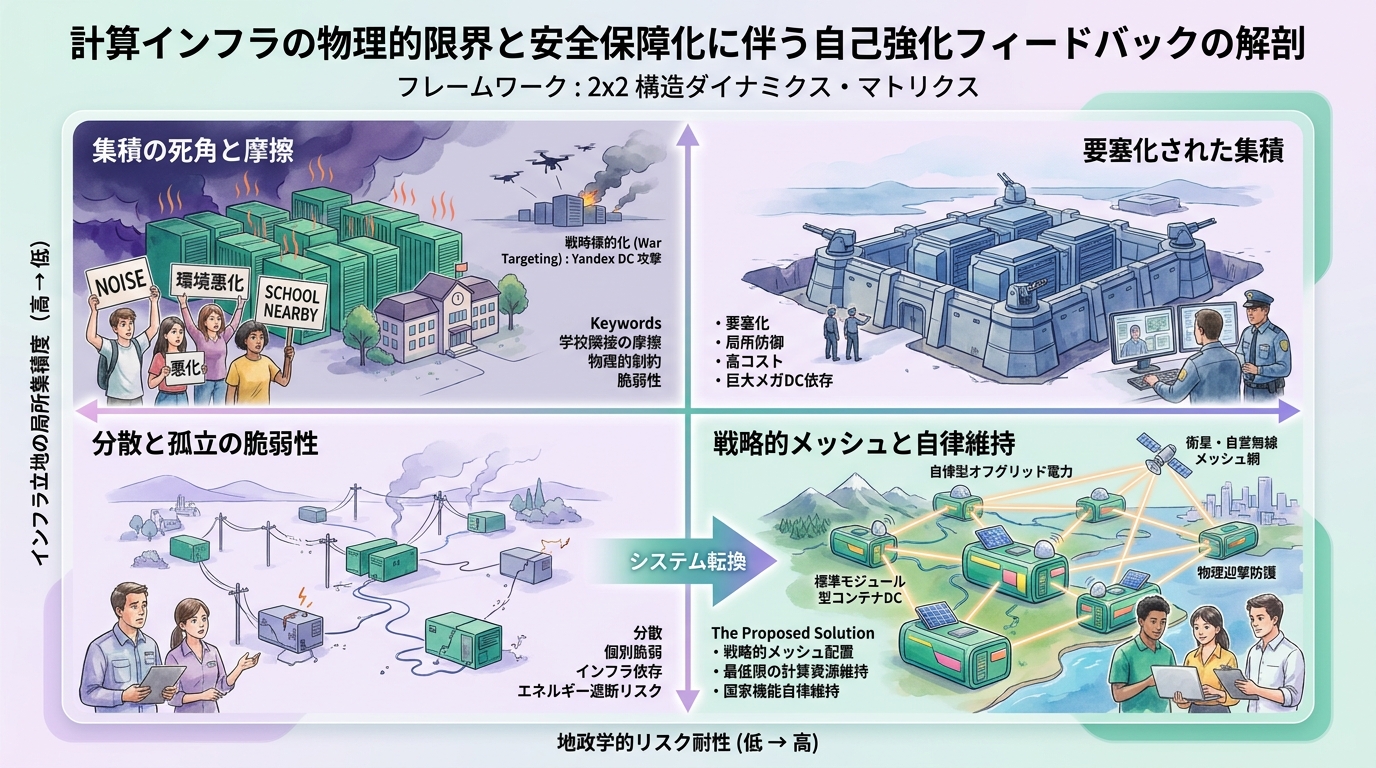
This structural vulnerability demands a foundational paradigm shift across industrial frameworks, real estate markets, and urban planning. Amid global financial tensions—with the Nikkei hovering in the 38,000-yen range and USD/JPY trading near 154—markets are challenged to adopt a new calculus: how fully can systemic disaster risk be priced in? Capital deployment will likely accelerate away from simple structural fortification toward cutting-edge satellite monitoring, AI-driven predictive modeling for tectonic and climatic anomalies, and self-contained decentralized infrastructure. We have entered an era where corporate business continuity planning (BCP) and real estate valuations will depend not merely on hardening existing structures, but on 'strategic retreat' from high-hazard zones and 'decentralized spatial design' in safer regions.
What we confront is not merely a cycle of transient disasters and subsequent rebuilding. The degradation of high-altitude ecosystems and subterranean tectonic shifts pose a fundamental question: where and how should humanity reside on this planet? We must abandon the philosophy of 'restoration'—of simply rebuilding what was broken—and pivot toward flexible 'adaptation' and the preservation of spatial buffers. Relocating residential zones away from catastrophic hazard areas, constructing green infrastructure that leverages natural dampening capacities, and transitioning toward decentralized societal systems powered by human wisdom and technology are paramount. As mountain peaks collapse and the earth beneath us shifts, redrawing our master plan upon a new urban philosophy is the sole path forward.