The Blind Spots of Concentrated Computing Infrastructure: School-Adjacent Friction and Wartime Targeting Expose Flaws in Site Selection Policy
Bloated Power Consumption and Lagging Physical Protection: A Crossroads in Urban Planning to Control Unchecked Facility Expansion
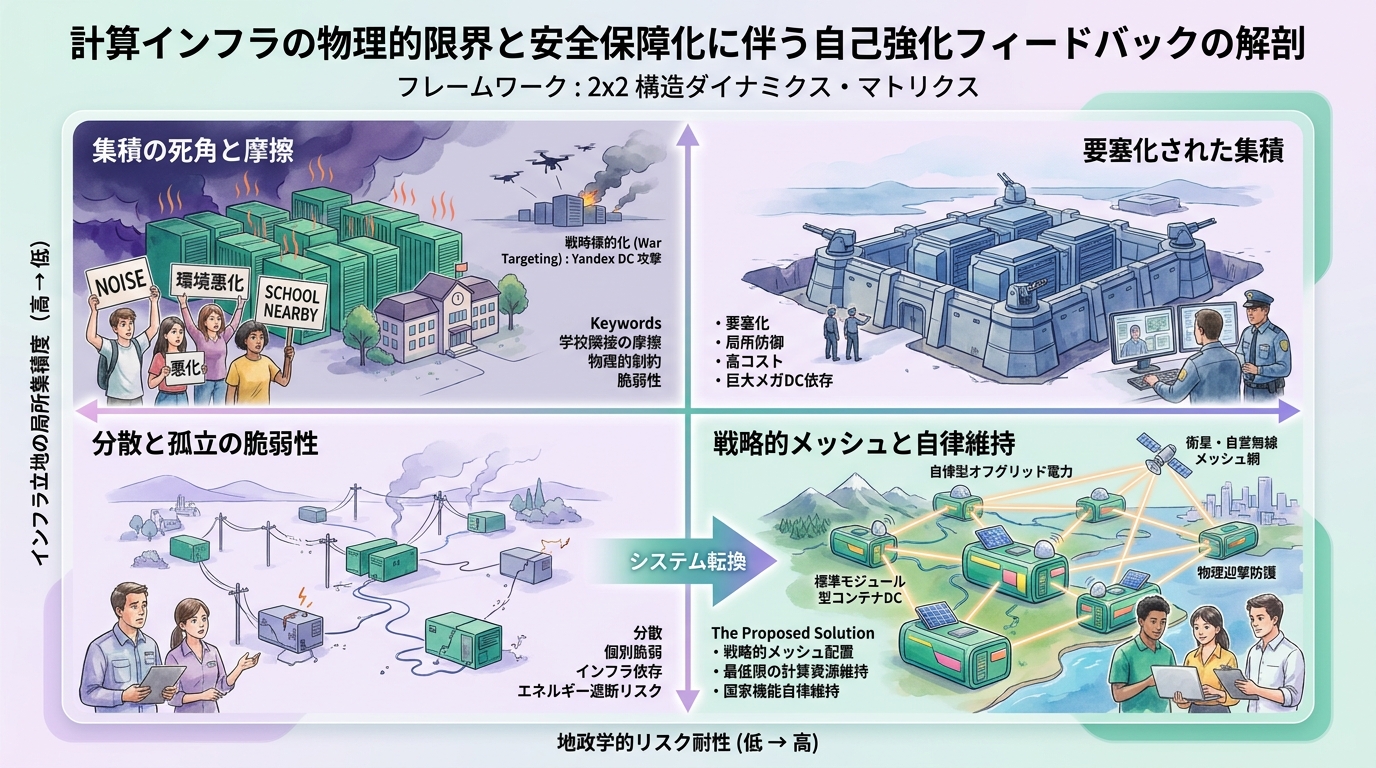
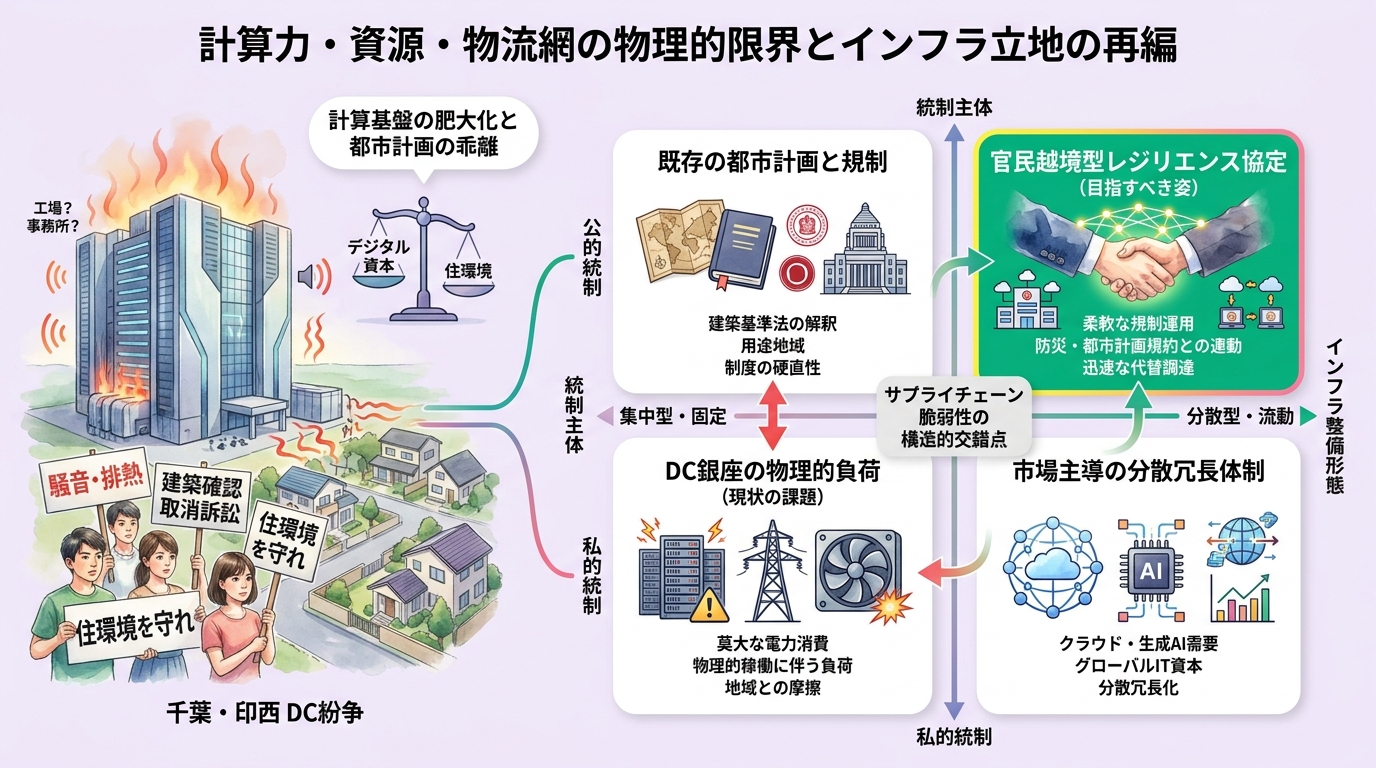
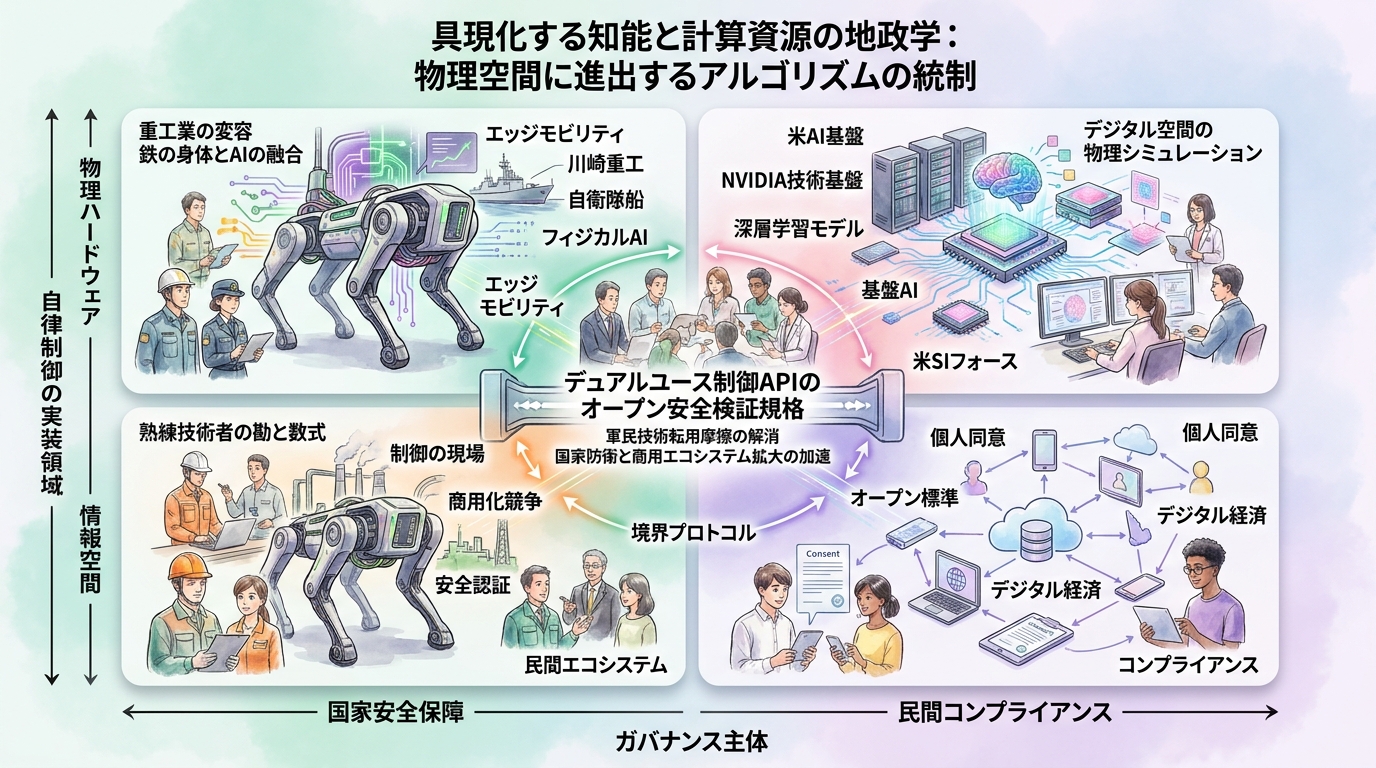
Massive facilities supporting the digital space are generating fierce friction with concrete residential spheres. In a domestic municipality, a plan to construct a large-scale data center right next to a school triggered parents and local residents to demand a review of the project, citing low-frequency noise from cooling outdoor units, exhaust heat, and visual oppression of the landscape. Meanwhile, in wartime Eastern Europe, bases belonging to Russian search and cloud giant Yandex were hit by precision long-range drone strikes, causing three facilities to burn and suffer damage within four days. The information network—ostensibly dispersed as virtual cloud services—proved to be a vulnerable target dependent on specific concrete facilities and power transmission infrastructure, demonstrated in the harsh reality of physical destruction.
These two phenomena are not isolated, accidental occurrences, but rather manifestations of structural causal relationships. Accommodating the ballooning size of AI models, operators rush to make concentrated investments in specific regions where high-capacity extra-high-voltage transmission lines are easily accessible and communication latency to urban areas is minimized. As investment concentrates, land acquisition overheats, uncontrollably encroaching into educational districts and densely populated residential areas where industrial facilities were traditionally shunned. Furthermore, the more concentration progresses, the higher the strategic importance of these facility groups as national communication and economic nubs becomes, elevating their value as targets in conflicts and terrorism. Because regulatory frameworks, regional agreements, and protection standards lag behind the velocity of development, risks accumulate before erupting all at once.
The effective intervention point to prevent system breakdown—namely, policy reform—lies not merely in individual factory construction permit criteria, but in the rigorous redesign of regional power distribution and zoning classifications. Current urban planning and building standards were designed for conventional logistics warehouses and factories, failing to keep pace with the characteristics of computing hubs that constantly consume tens of thousands of kilowatts of power and release immense heat. Rather than leaving site-attraction competition up to individual municipalities, mandating national-level location zoning that considers surplus capacity in the backbone grid, regional living environments, and wartime decentralization is indispensable. A shift is required from localized optimal deployment that overly prioritizes low communication latency to a decentralized deployment emphasizing nationwide redundancy.
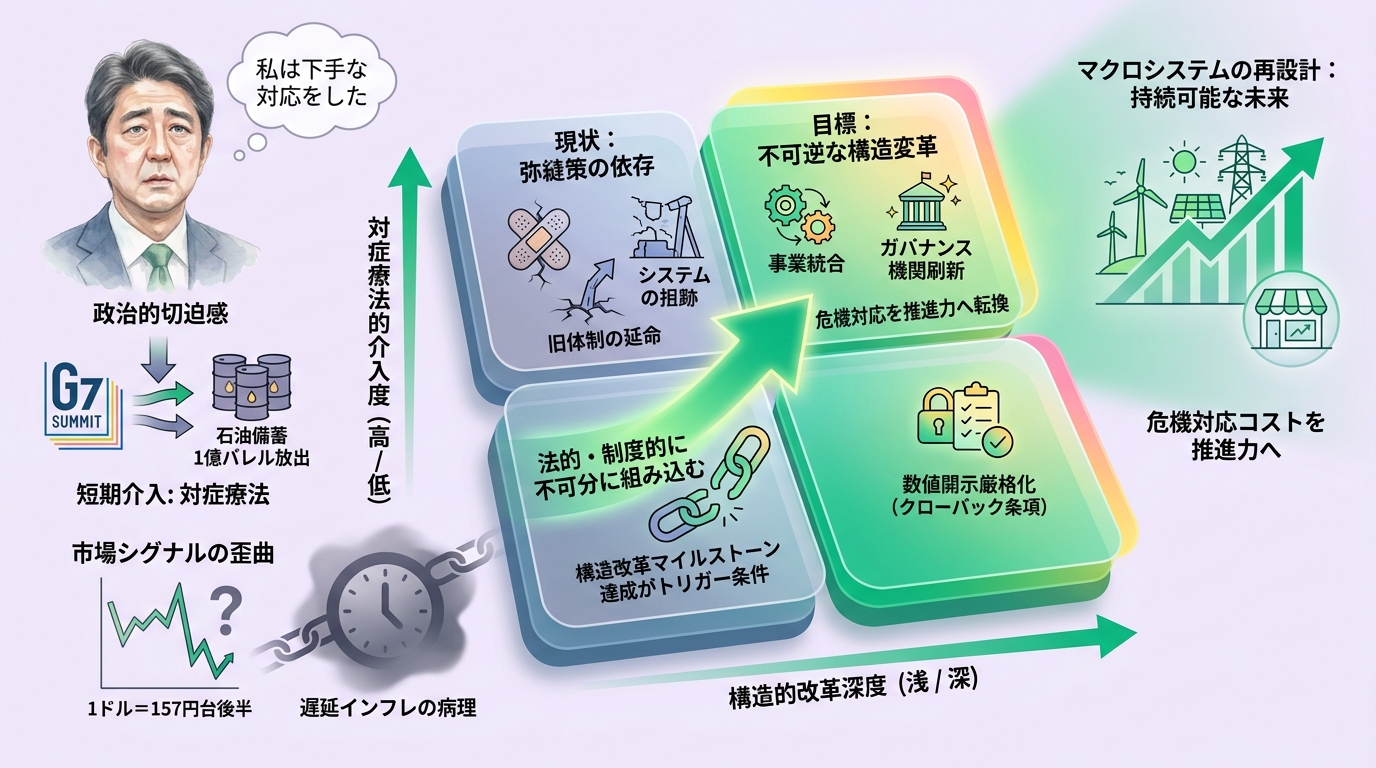
Agglomeration strategies that pursue efficiency alone breed community division in peacetime and trigger systemic risks such as the simultaneous loss of critical infrastructure in wartime. In Japan, where the foreign exchange market sees the yen trading in the upper 158 per dollar range and upward pressure on imported energy prices persists, deciding where and how to allocate limited electric power resources constitutes a matter of national strategy. The voices of residents safeguarding the tranquility of their schools and the reality of server rooms billowing black smoke in distant locales accuse the digital society of resting upon a fragile physical foundation. The fortification of infrastructure depends not merely on the expansion of invisible networks, but on maintaining harmony between earth-rooted facilities and human society.