Doubled Trade Deficit Signals Structural Strain: Perspectives on Breaking the Chain of High Resource Prices and Currency Depreciation
First-Half Deficit Expands to ¥2.8 Trillion; Urgent Need to Overcome Palliatives and Restructure Industrial Foundations
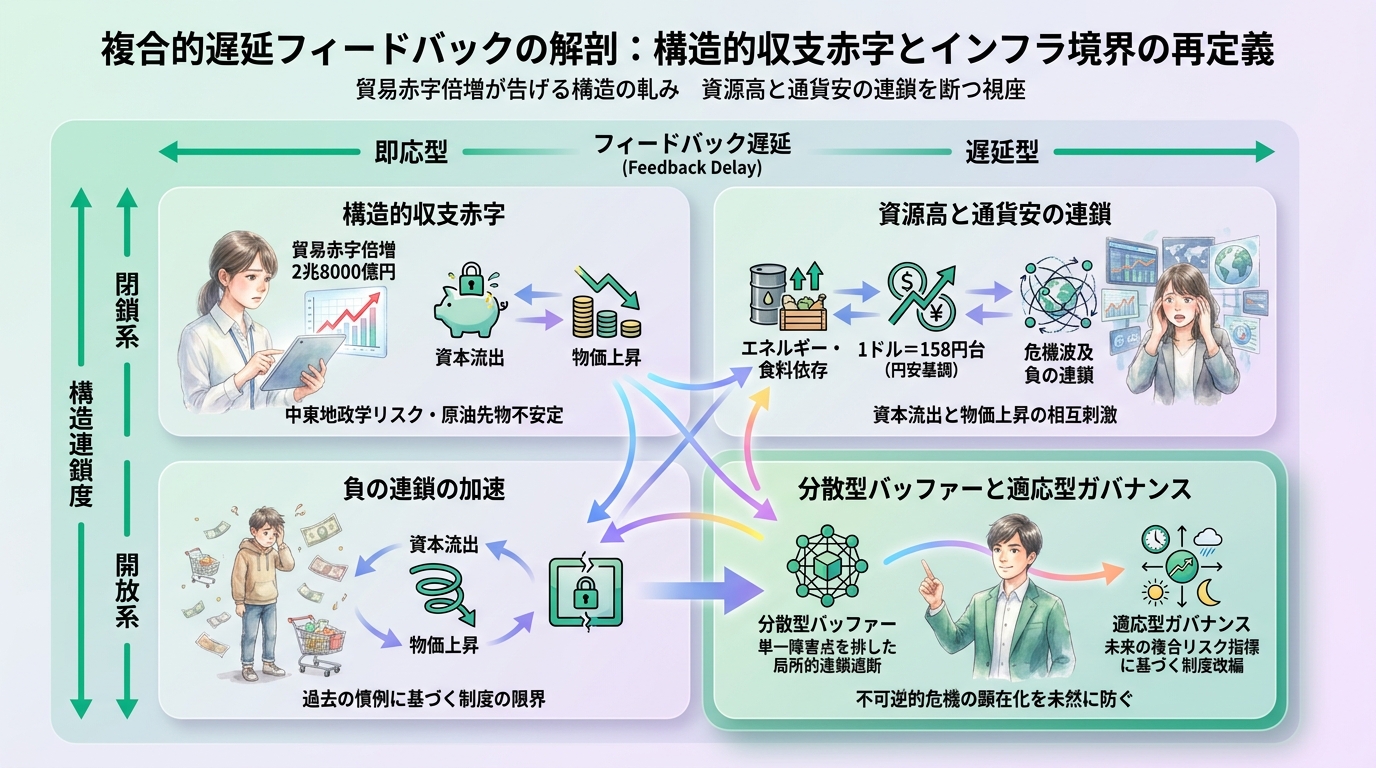
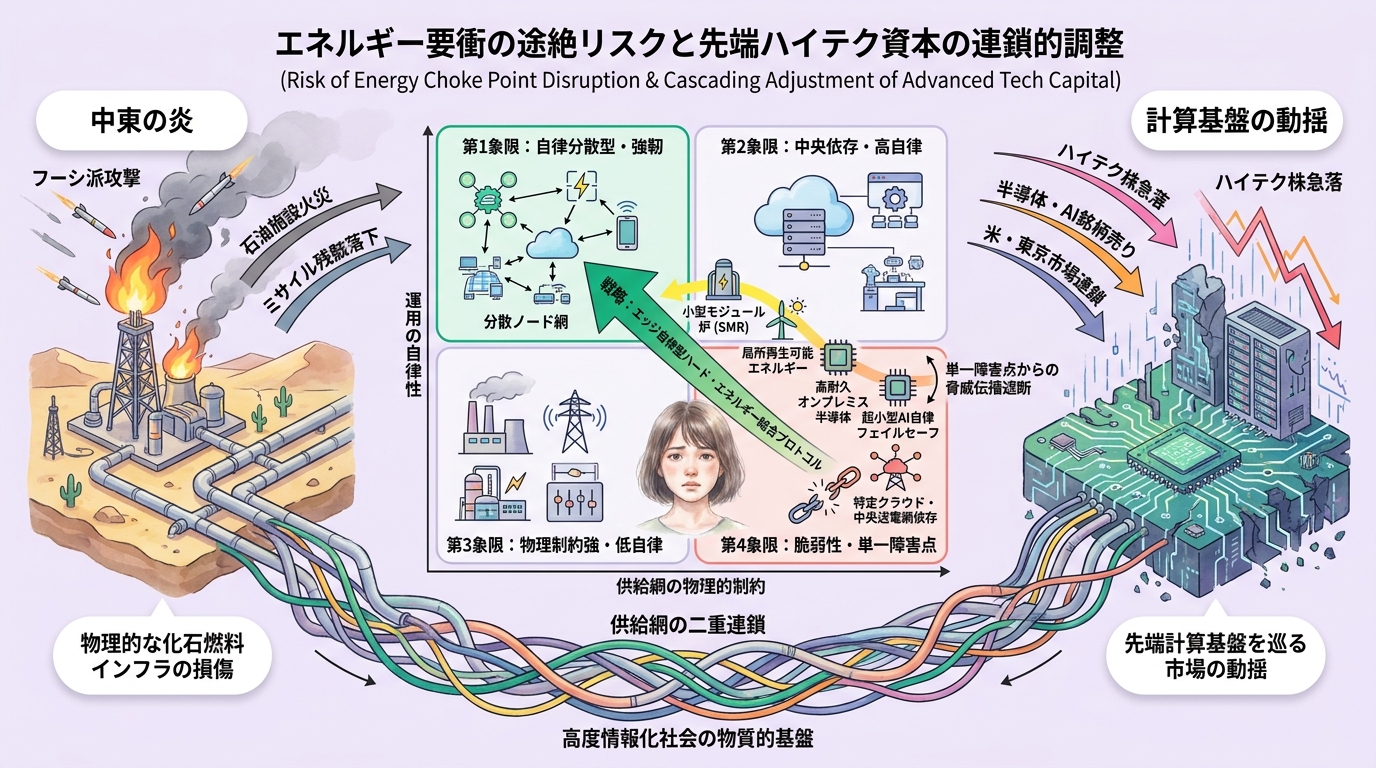
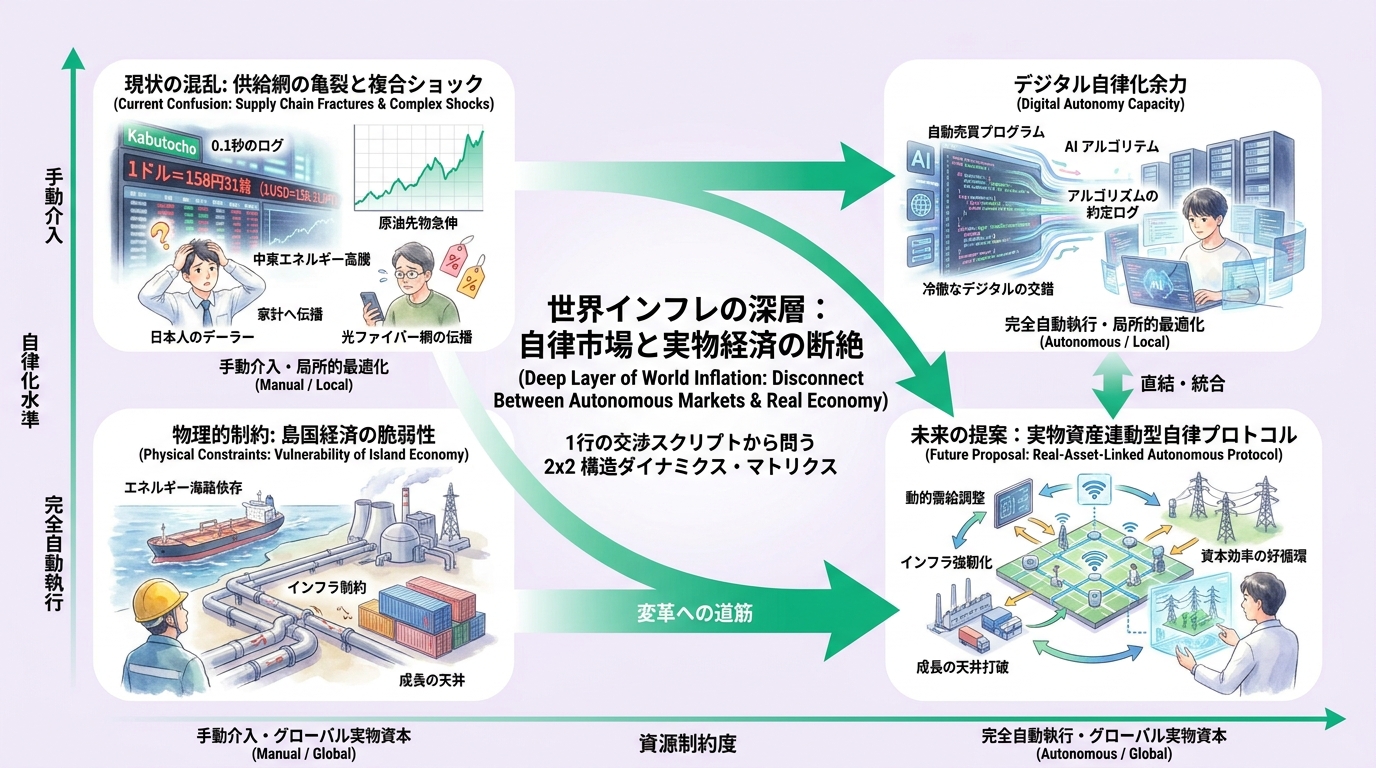
The customs-cleared figures eloquently speak to the structural vulnerabilities inherent in the domestic economy. The primary drivers behind the rapid expansion of the first-half deficit lie in the persistence of high resource prices amid international tensions and the surge in import values driven by the weak yen. Following commercial vessel attacks in the Red Sea and mounting geopolitical friction in the Middle East, international crude oil futures have swung wildly after hitting high marks, leaving the outlook for supply chains shrouded in uncertainty. While procurement costs for crude oil, natural gas, and other resources remain high in dollar terms, payment amounts in yen swell further due to currency depreciation. With the growth of export volumes remaining limited, the unilateral upward pressure on import values signals a fundamental decline in foreign currency-earning capacity.
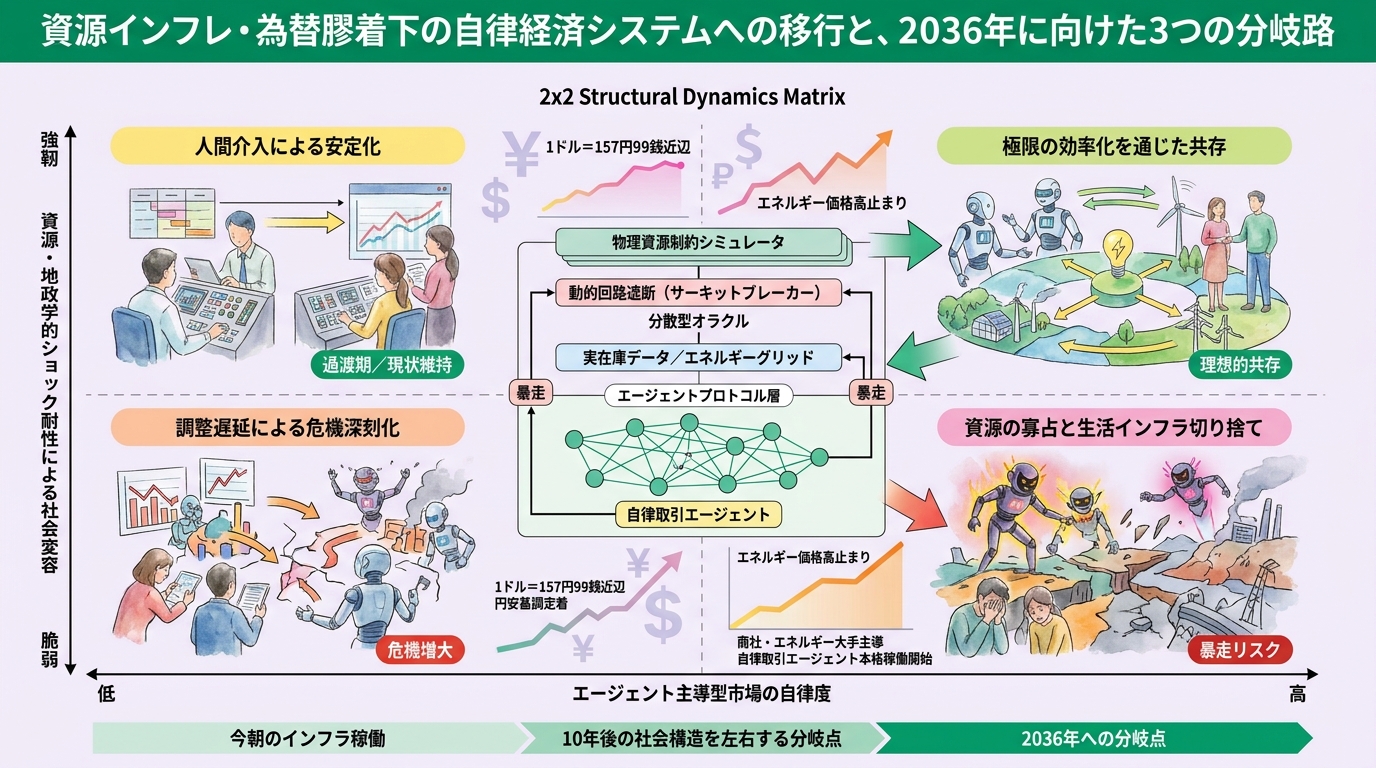
Operating beneath the surface is a self-reinforcing feedback loop: currency depreciation invites deficits, which in turn invite further depreciation. Ordinarily, currency depreciation should act as a self-correcting valve, encouraging export volume growth and autonomously improving the trade balance. However, as manufacturing production bases have relocated overseas, export volumes from the domestic market fail to increase easily even when the currency weakens. Meanwhile, imports of energy and raw materials essential to daily life and industry cannot experience sharp demand drops regardless of price increases. This asymmetrical structure institutionalizes real-demand yen-selling pressure tied to settlement needs, steadily eroding the purchasing power of households and corporations as a delayed-action driver of domestic inflation.
The leverage point to halt this chain reaction does not lie in superficial palliatives such as foreign exchange market intervention or temporary fiscal subsidies for energy prices. The fundamental solution is deeply intertwined with the structural transformation of the added value generated by domestic industries and the structural reduction of energy consumption. It is imperative to concentrate investment in industrial sectors capable of securing pricing power overseas regardless of exchange rate levels—such as high-functional materials, next-generation communications, and advanced semiconductor manufacturing equipment. Simultaneously, lowering the economy's fundamental dependence on fossil fuels through the accelerated deployment of renewable energy and the reinforcement of transmission grids constitutes a fundamental remedy to compress absolute external payment obligations and enhance overall economic resilience against foreign exchange volatility.
The continued deployment of subsidies aimed solely at alleviating near-term burdens carries the side effect of distorting price signals and delaying medium-to-long-term adaptations such as decarbonization and industrial restructuring. Pouring public funds endlessly into localized pain relief risks eroding market confidence through expanding fiscal expenditures, potentially triggering further declines in currency value. What is required now is not a patchwork of individual policies, but a direct confrontation with the structural warnings signaled by the trade deficit. Unless an optimal macro-design is forged—one that enhances domestic energy self-sufficiency and concentrates capital on high-value-added export industries—Japan cannot escape a vulnerability that trembles with every external shock.