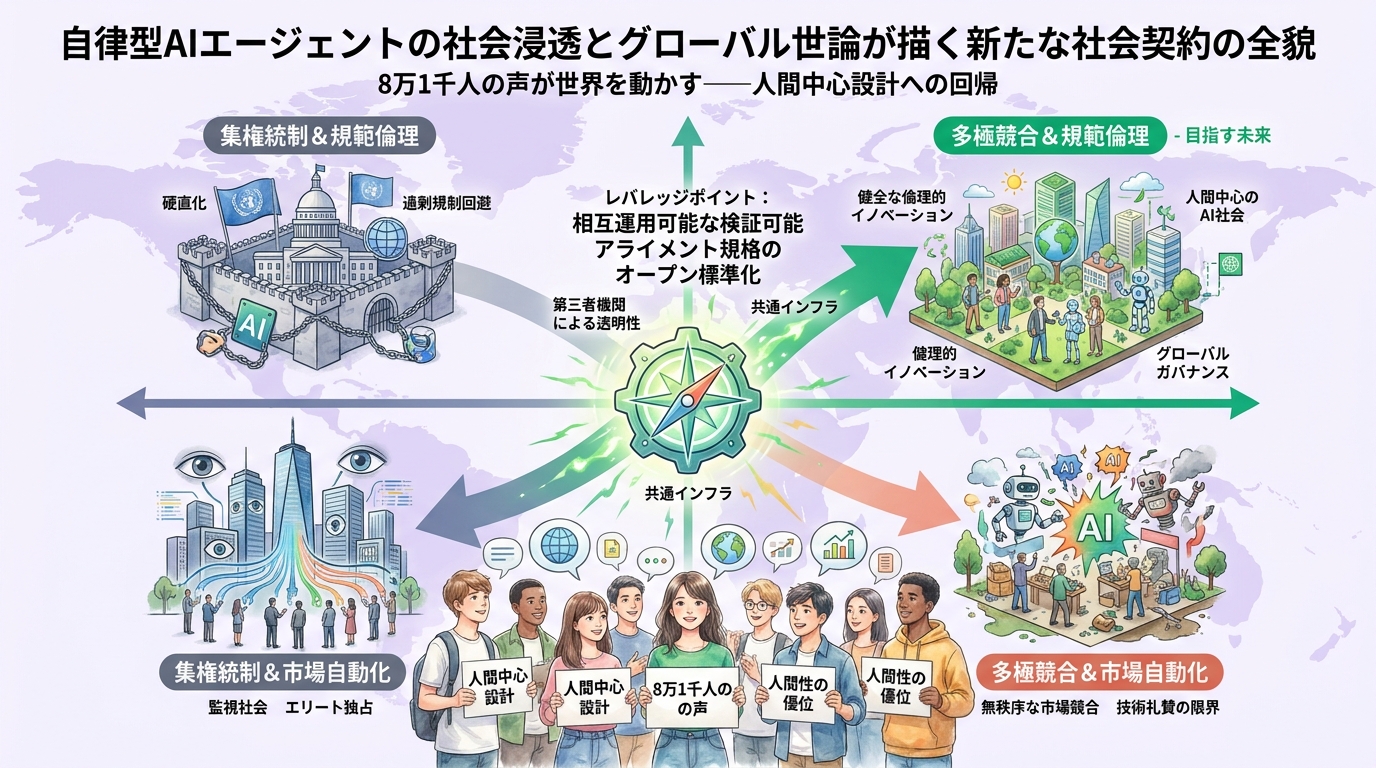
81,000 Voices Reshape the Future: Global Citizen Consultation on Human-Centric AI Asserts the 'Primacy of Humanity'
From Tech-Driven Acceleration to Human-Centric Governance: Nearly 80% of Citizens Demand Transparency and Retained Decision-Making Power
The data in the study is striking. Of the 81,000 participants, a decisive 78 percent asserted that ultimate responsibility and choice in AI-driven decision-making processes must always remain in human hands. Furthermore, 68 percent called for legally binding algorithmic transparency and accountability, voicing deep-seated skepticism toward full automation in high-stakes domains directly impacting life and livelihood, such as healthcare, justice, and employment. While it has long been assumed that the pace of technological progress outpaces public understanding, the survey demonstrates that citizens—while recognizing the benefits of AI—maintain a deeply rational and critical perspective on its uncontrolled risks. As Big Tech accelerates its development race, civil society is coalescing around a powerful consensus: humanity must retain command of the decision-making helm.
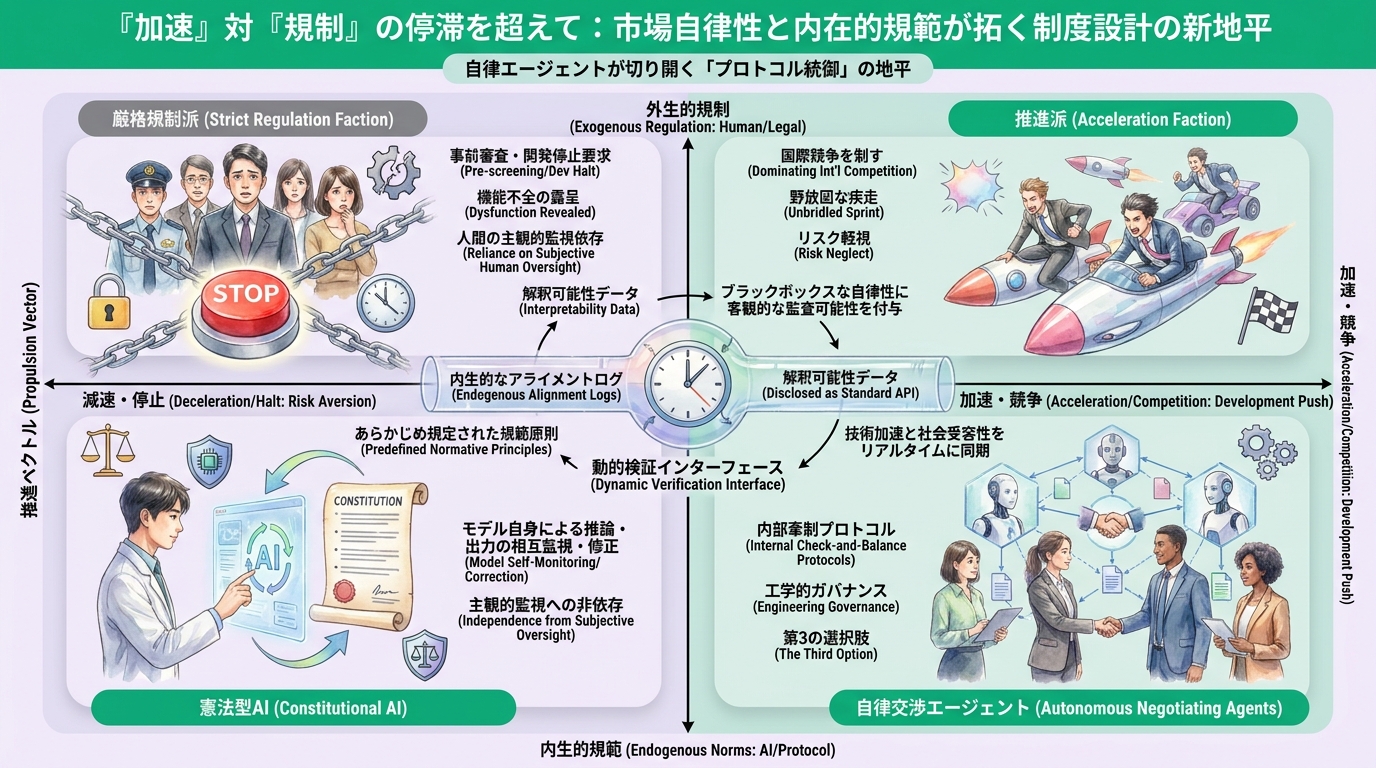
This trend signifies far more than a call for tighter regulation. It signals an epochal shift away from the relentless pursuit of maximum efficiency championed by Silicon Valley’s techno-determinism and market fundamentalism. AI development has long been dominated by scaling laws—a frantic race to expand parameter counts and compute power. Yet the collective wisdom of these 81,000 participants poses a teleological challenge not to technological capability, but to purpose: to what end do we deploy these tools? The paradigm that technology must augment human cognition and creativity rather than replace human beings is transforming AI ethics from a compliance checklist into the cornerstone of a new social contract.
This seismic shift is exerting irreversible ripple effects across industry, business, and the creative sector. Enterprise evaluation metrics for AI adoption are transitioning from crude efficiency indicators like productivity gains and cost cuts to human-centric benchmarks, including user autonomy, robust privacy safeguards, and diversity guarantees. In education, institutions are looking beyond automated learning tools to build conversational platforms that cultivate critical thinking. In creative industries, emphasis is shifting toward workflows where generative AI serves as an instrument while humans preserve the soul and ultimate spiritual value of the work. The era of accepting AI as a black box is over; we have entered an age where transparent interface design for human-AI co-creation defines corporate competitiveness.
The fundamental challenge before us lies in bridging the divide between the exponential velocity of algorithms and the deliberate, measured pace of democratic consensus-building. What these 81,000 citizens have provided is a beacon of hope for technological direction—and a decisive rejection of innovation that leaves humanity behind. Moving forward, establishing international regulatory frameworks must go hand in hand with deploying adaptable, human-centric designs tailored to local community contexts. As humanity commands this formidable intelligence, can we forge a future without surrendering our dignity and sovereignty? The resolve to embed the immutable principle that humans must always hold the reins of technology into every societal system is being put to the ultimate test.