The US-Japan Chasm Over BOJ Independence and the Fiscal Calculus of a '3% Long-Term Interest Rate'
A Future US Treasury Secretary's Query Exposes Nagatacho's Addiction to Low Rates and Its Dismissal of Ballooning Debt Servicing
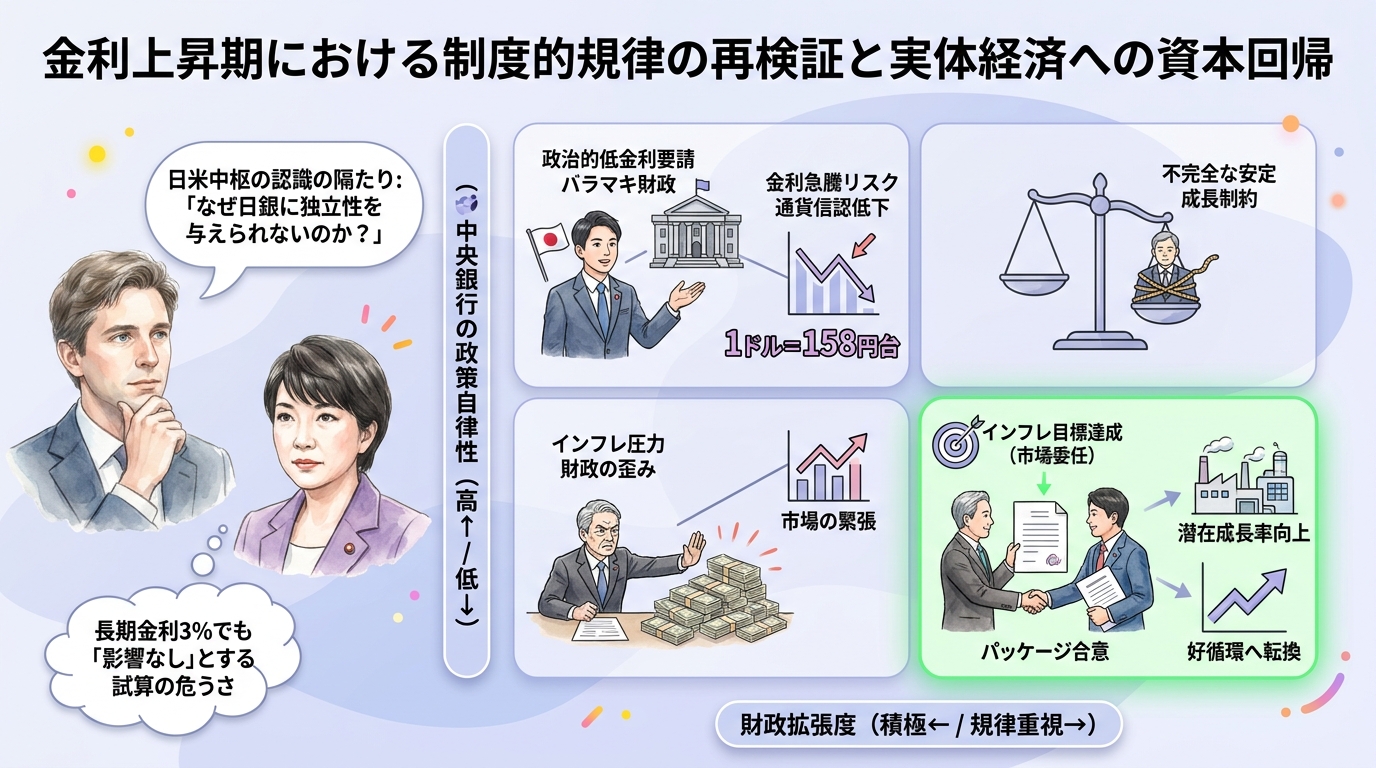
Details of the US-Japan meeting reported by the Yomiuri Shimbun coldly expose the divergent assumptions held by policy authorities. While Takaichi's camp conveyed caution toward hasty BOJ rate hikes out of consideration for the economy, Bessent countered with questions grounded in the principle of central bank independence. Echoing this friction, Reuters reports that within core administration circles, the view is gaining traction that "even if long-term yields spike to around 3%, Takaichi's aggressive fiscal management will not collapse, sustained by tax revenue growth and the multiplier effects of growth investments." The logic assumes that if the nominal growth rate exceeds interest rates, the rapid surge in debt-servicing costs can be offset. Yet this has sparked open dissent within the ruling party, with critics dismissing it as a "dangerous piece of optimism that effectively hollows out fiscal consolidation targets," severely shaking the boundary between monetary policy and fiscal discipline.
At the root of this lies Japan's structural vulnerability: a government debt balance exceeding 1,000 trillion yen, where minor fluctuations in interest rates directly pressure the national budget. In the US, even when the Federal Reserve pushed policy rates above 5% to curb inflation, political interference with the institutional taboo of central bank independence was avoided. In Japan, however, years of unorthodox monetary easing have institutionalized a dependence on a "debt-monetization environment" that minimizes the cost of servicing government debt. Despite projections that every 1-percent rise in interest rates will trigger trillions of yen in increased national debt expenses with a slight lag, the sub-surface currency of the "3% tolerance theory" reveals a fiscal mindset aiming to compress the real value of debt via inflation while keeping real interest rates negative.
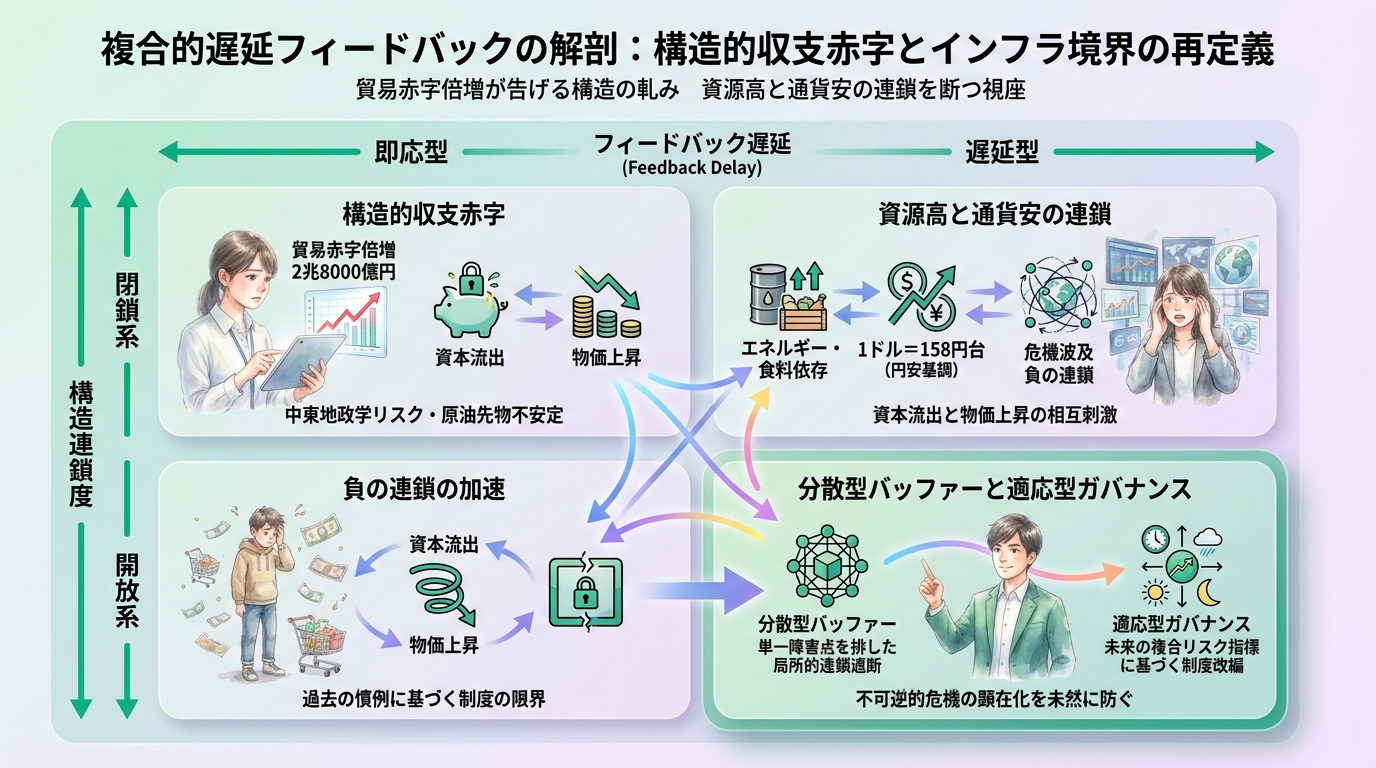
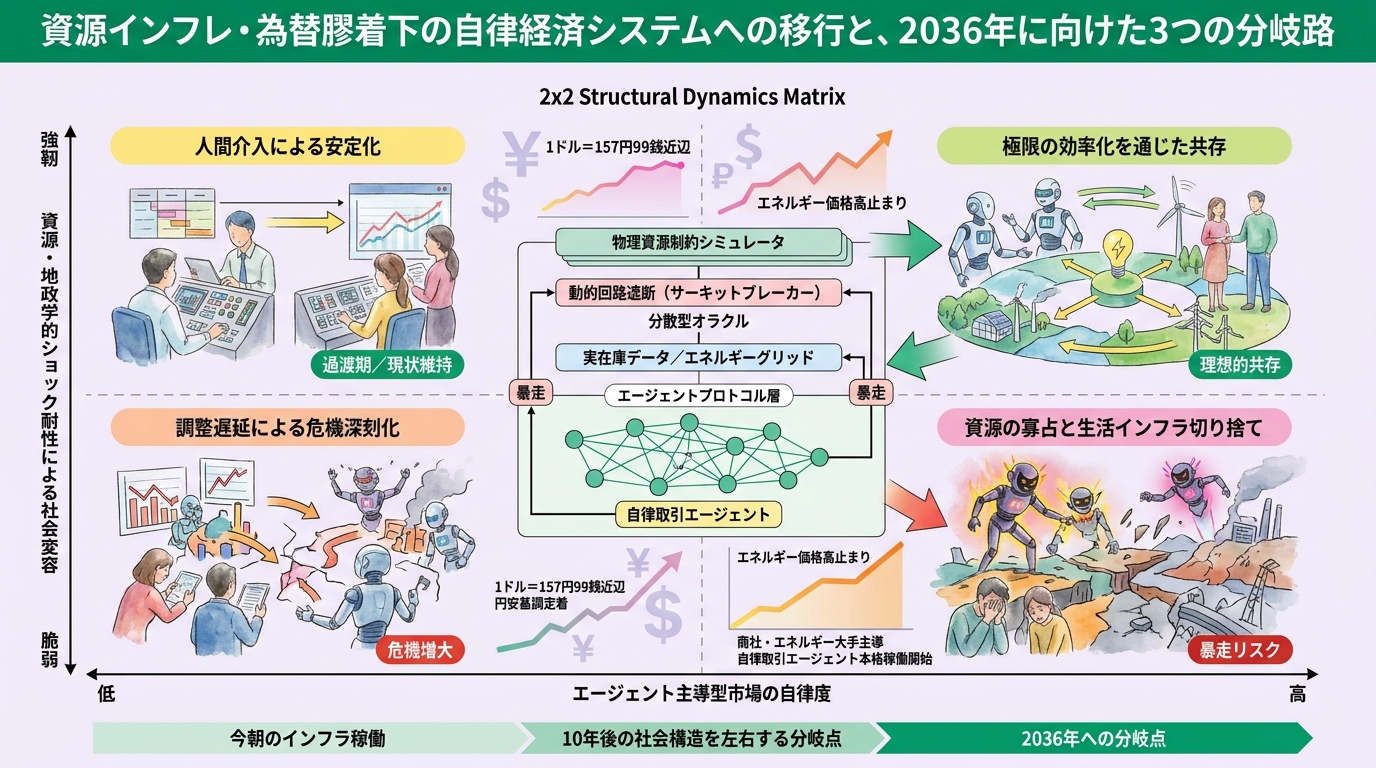
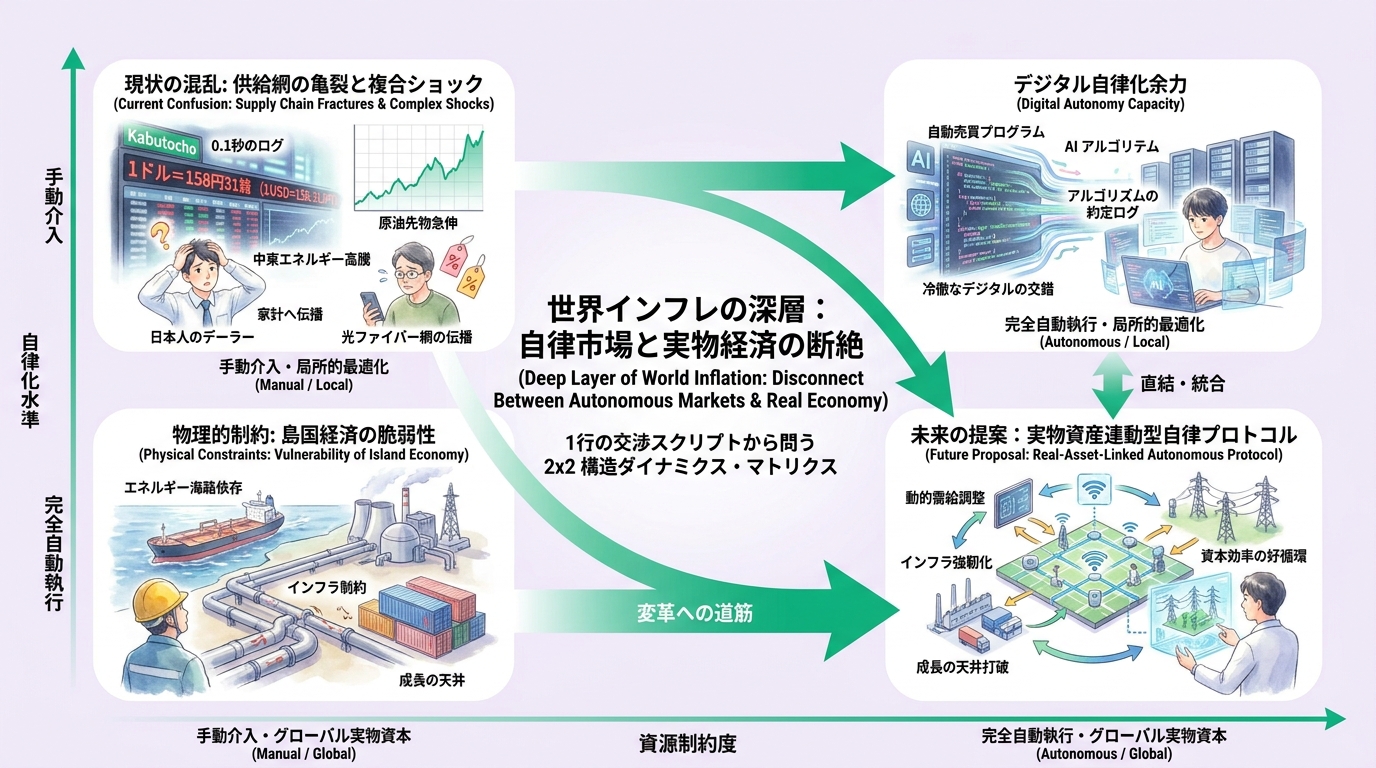
This friction between political intentions and market realities is already directly spilling over into the real-economy supply chains and corporate finances. As the Nikkei Average trades nervously in the 6,4000 range and a weak-yen trend around 158.68 per dollar entrenches itself, the simultaneous rise in interest rates and prices presents a dual squeeze on cash flow for small and medium-sized manufacturers and domestic service providers struggling under soaring imported raw material costs. While it is becoming harder to keep low-margin operations afloat under a legacy zero-interest assumption, mega-banks and other major financial institutions are benefiting from wider interest margins—even as they face new pressures to compress assets due to massive unrealized losses on government bond holdings. In corporate capital expenditure planning, stricter capital allocation anticipating rising borrowing costs is accelerating rapidly.
At stake is the quality of governance: whether politics can genuinely guarantee central bank independence as the institution normalizes interest rate functions through market dialogue. Foreign investors are observing the presence or absence of political interference in the BOJ and the credibility of the Japanese government bond market with extreme vigilance. If politicians tie the hands of monetary policy for short-term economic stimulus and retreat into convenient fiscal projections, it risks reigniting selling pressure on the yen and triggering an uncontrolled spike in long-term yields. Now that interest rates are recovering their function as the economy's thermometer, what the Japanese economy needs is not groundless tolerance for higher rates, but a cold realism that returns to rigorous institutional design and drastic productivity enhancements capable of enduring the pain of expanding debt.