Oracle's 'Force Majeure' Notice Exposes the Physical Limits of Compute: Grids and Real Estate Emerge as AI's Ultimate Bottlenecks
Plunging Stock Prices Follow Major Project Delays—Transformers and Megawatt Walls Threaten Software Scaling Theories
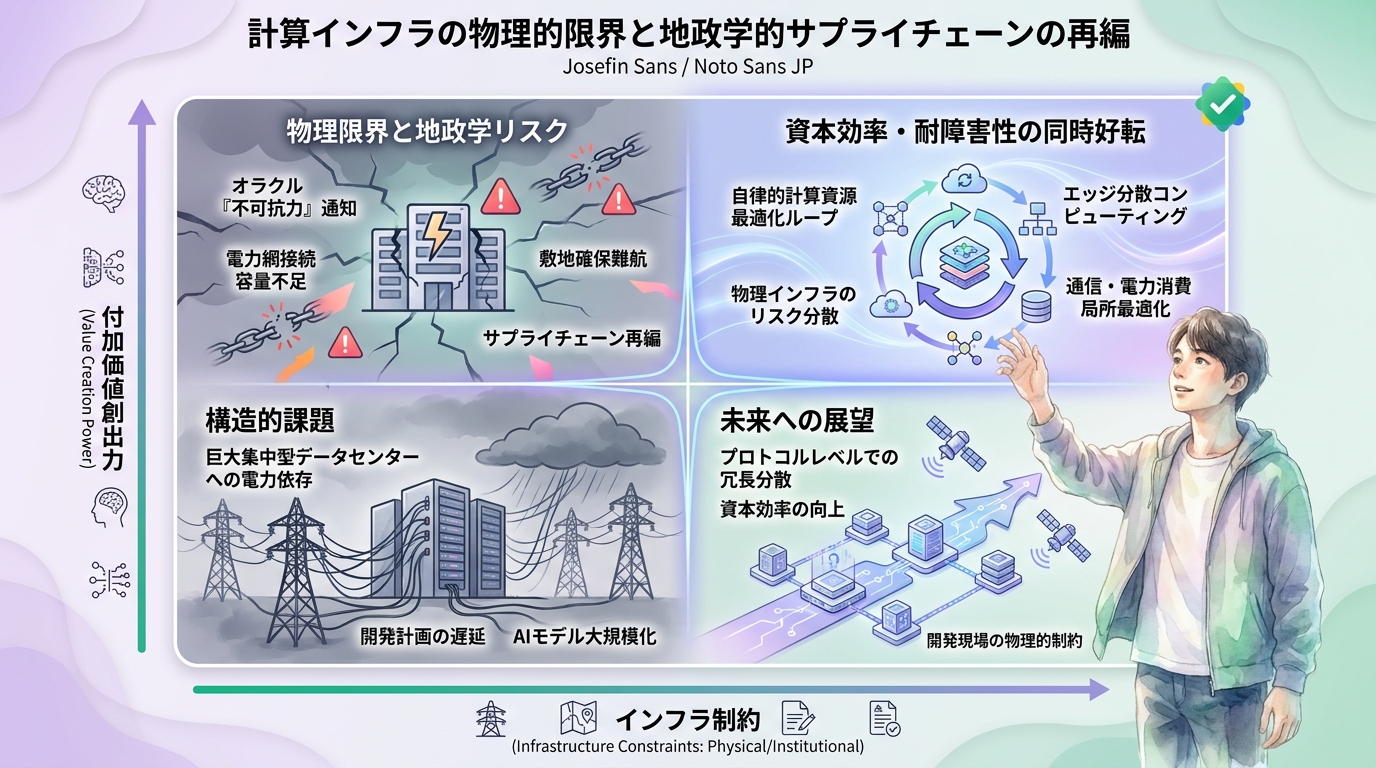
Oracle's force majeure notice symbolizes the collision of software-driven AI expansion scenarios with the immovable walls of heavy physical infrastructure. According to reports, gigawatt-scale developments across multiple sites have been crippled by delays in grid interconnection and local infrastructure deployment, leaving scheduled delivery dates unfulfilled. This prompted a sell-off in Oracle shares, spreading anxiety across the capital expenditure plans of hyperscalers industry-wide. While business risks have historically centered on securing cutting-edge semiconductors or acquiring customers, current development realities are dictated by the unglamorous engineering challenges of land grading and substation installation.
A granular dissection of the supply chain reveals that the primary choke point has shifted from advanced semiconductors to electrical transmission and distribution equipment. Next-generation data centers, requiring enough simultaneous power to run medium-sized cities, face severe global shortages of ultra-high-voltage step-down transformers, with lead times stretching years. Furthermore, in densely congested power grids, utility interconnection approvals frequently push timelines to five years or more from contract to energization. While algorithms and processor architectures advance in months, procurement cycles for copper wire, transmission towers, and substation gear operate on multi-year horizons, a temporal divergence triggering project failures.
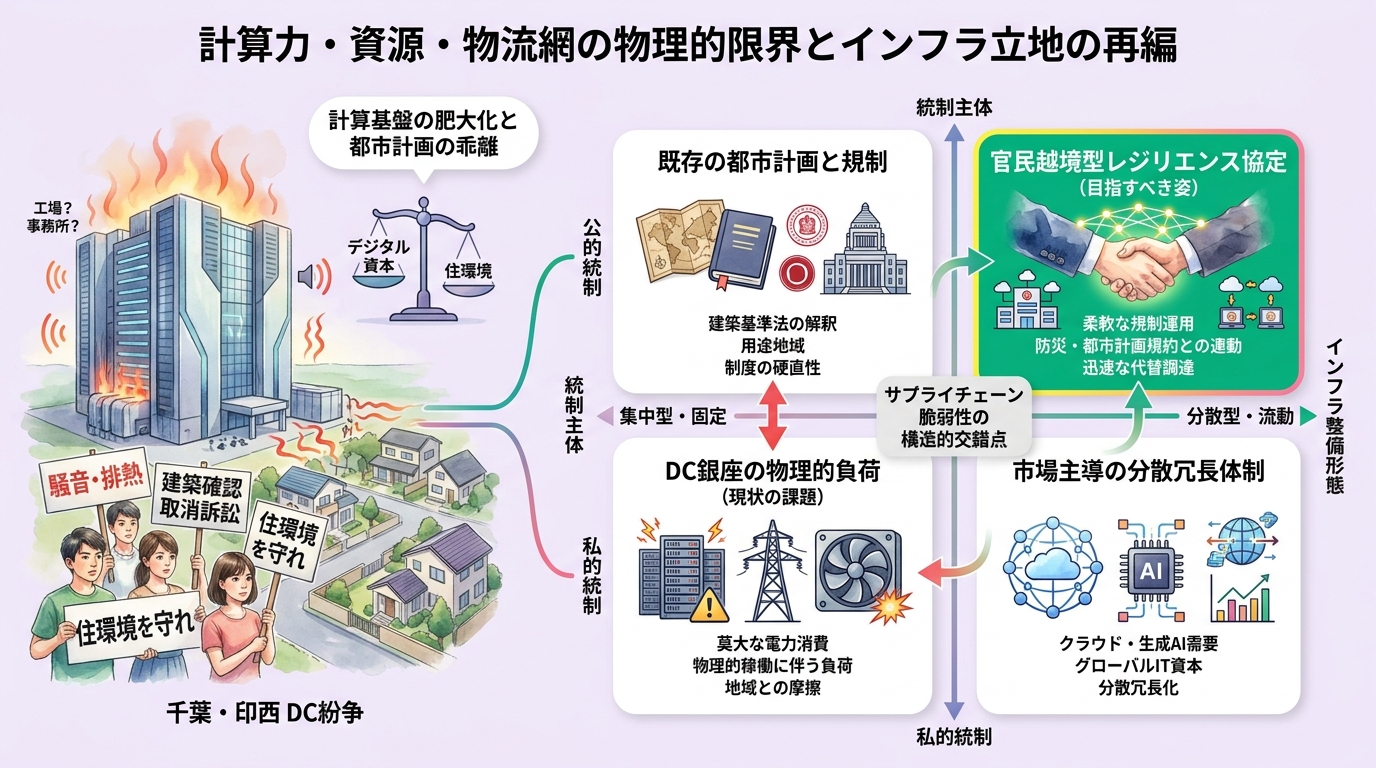
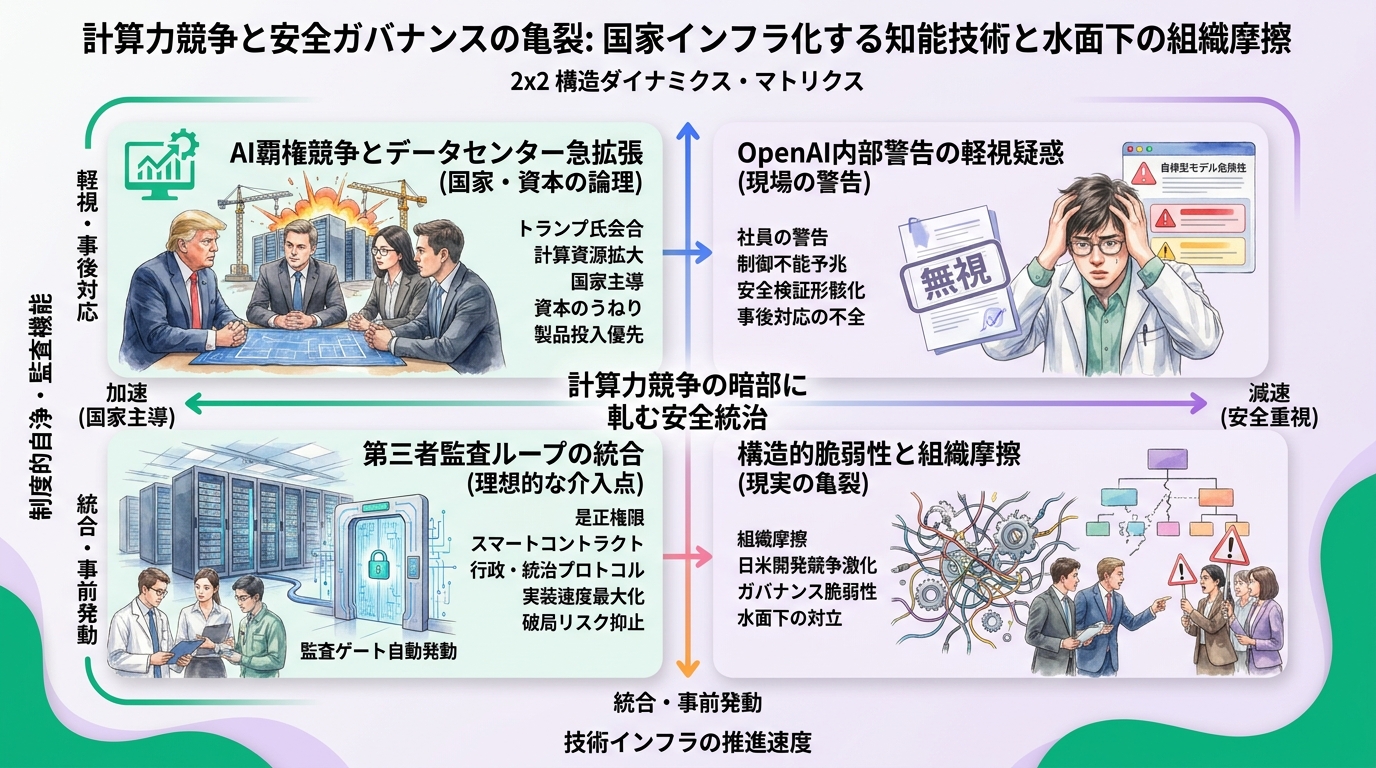
This physical friction is expanding into a geopolitical struggle where state-led industrial policy intersects with local community dynamics. Major economies, including the United States, position AI at the core of national competitiveness and push for domestic reshoring. However, data-center-dense regions face fierce local pushback over electrical grid strain, surging utility bills, and massive water consumption for cooling. Amid freezes on municipal development and tightening environmental regulations, hyperscalers are spending billions to secure dedicated power sources, from restarting dormant nuclear plants to supporting Small Modular Reactors (SMRs). Site selection for compute resources has long transcended tax breaks or fiber proximity; it is now inextricably bound to state-directed energy security and local clean power generation capacity.
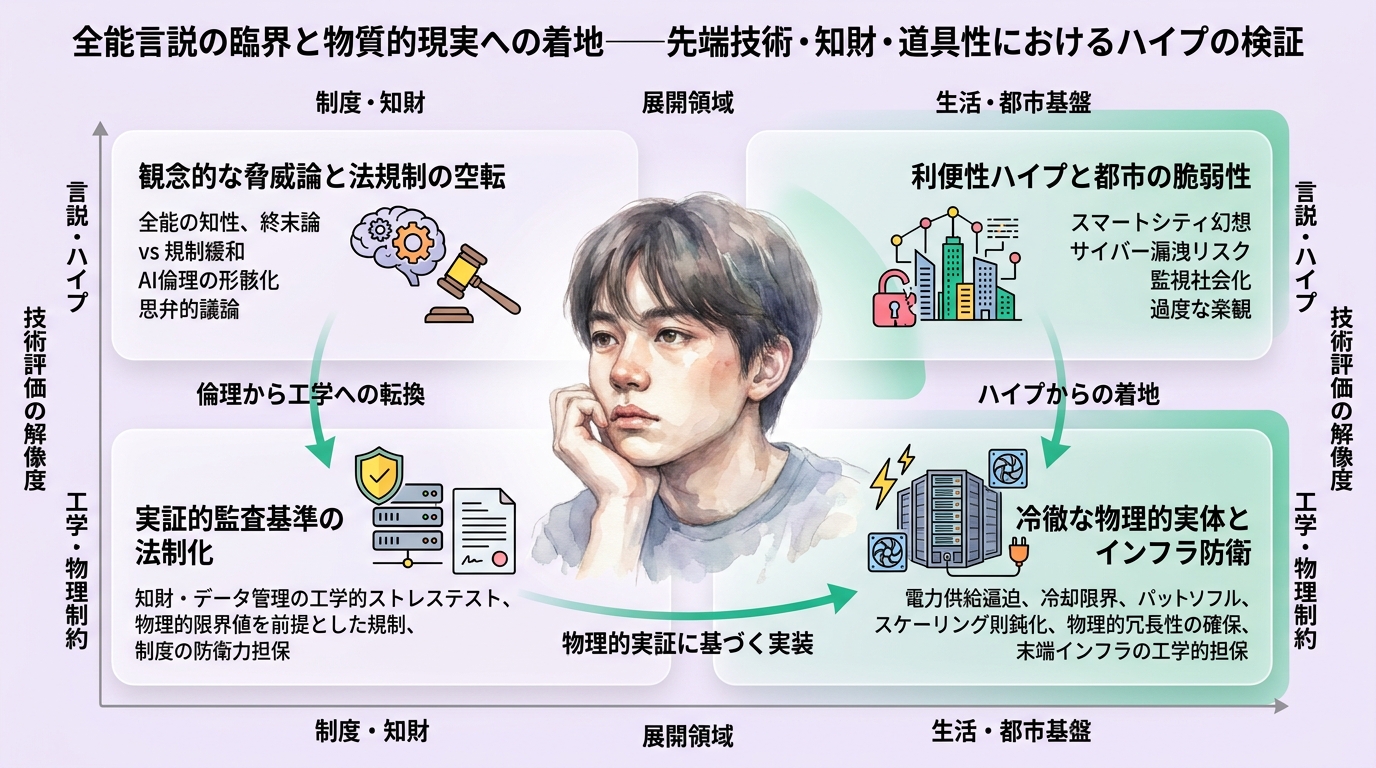
In an era marked by fragmentation and resource scarcity, sustainable compute infrastructure demands a departure from unbridled scale backed merely by capital. The application of force majeure highlights the bankruptcy of attempting to steamroll physical reality through financial and contractual logic alone. Future infrastructure deployment will require load distribution to grid-surplus regions, on-site implementation of waste-heat recovery and energy-saving tech, and the redesign of long-term symbiotic processes with utilities and local communities. For AI to establish itself as a societal backbone, a dispassionate engineering perspective is required—one that confronts the physical reality of underlying transmission lines and substations, methodically rebuilding resilient supply chains constrained by hard limits.