The Divergence Between Expanding Computing Infrastructure and Urban Planning: Chiba Inzai's 'Factory' Designation Lawsuit Tests the Mediation of Digital Capital and Residential Environments
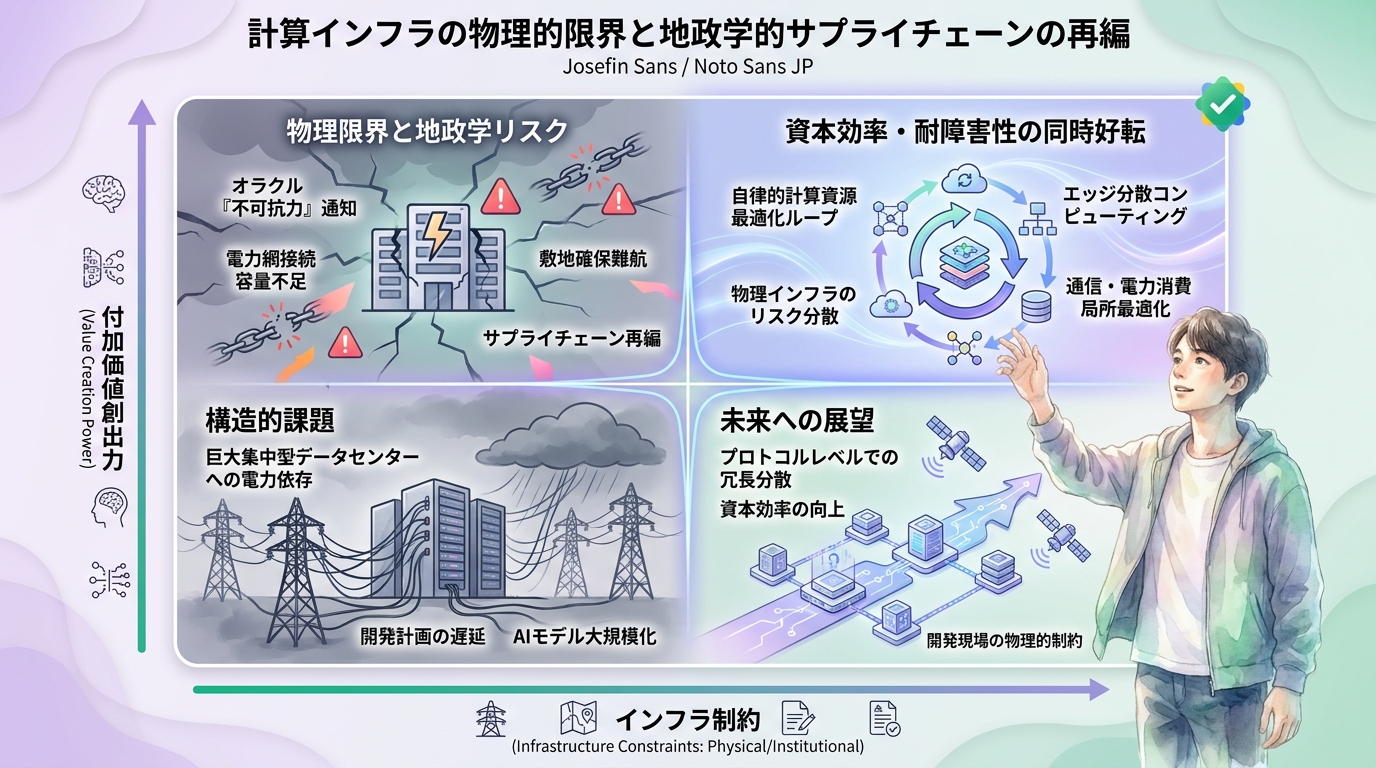
The surge of hyperscale data centers exploiting loopholes in the Building Standards Act, and the friction surrounding transmission grids and the right to quiet enjoyment, highlights systemic policy challenges
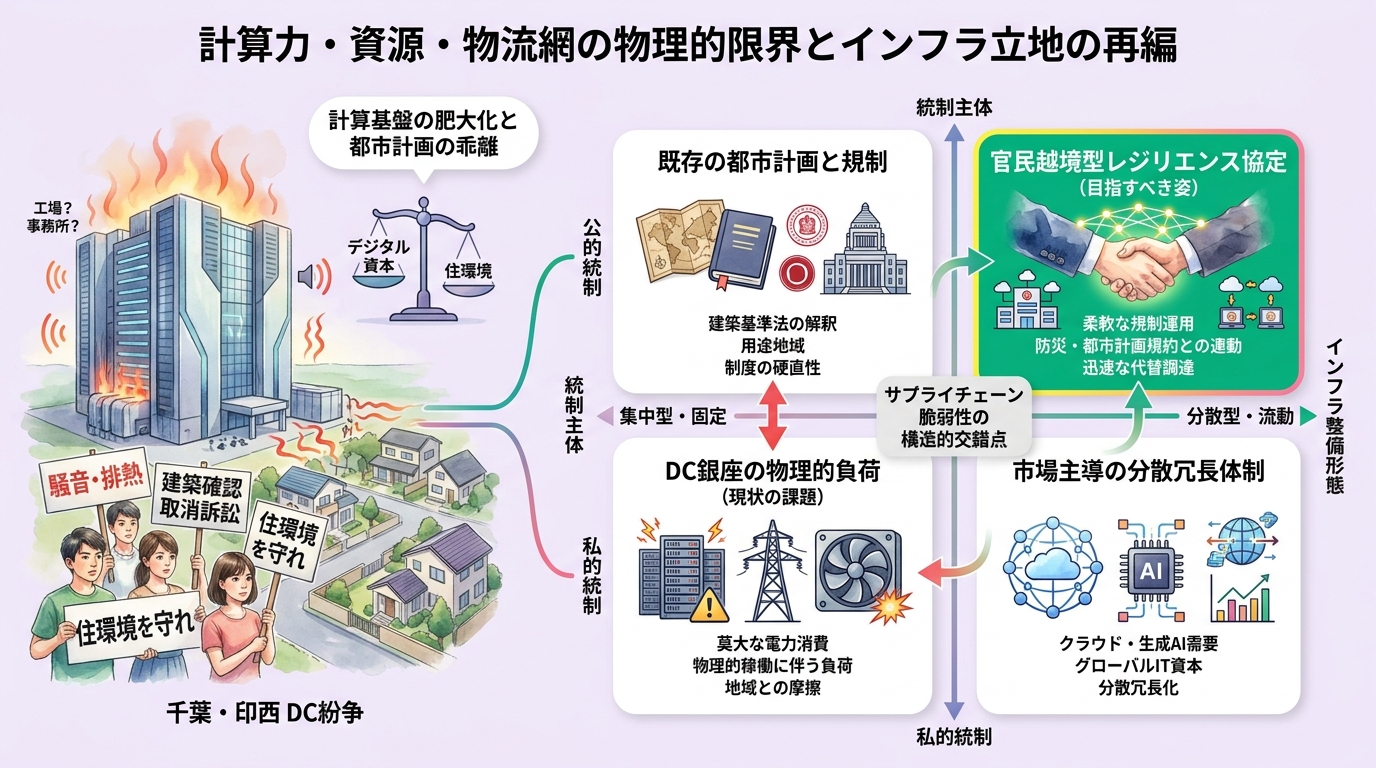
Situated on the robust Shimosa plateau and capitalizing on a low communication latency of about 40 kilometers from central Tokyo, Inzai has attracted domestic and international operators, forming one of the nation's premier server hubs. Yet the reality contested in court differs sharply from the image of a serene information space. The resident plaintiffs pointed to continuous low-frequency noise generated by numerous air-cooled fans and chiller units installed on rooftops, massive stockpiles of heavy oil for emergency diesel generators, and high-voltage power receiving equipment for a single building comparable to that of a mid-sized city. They argue that the facilities impose an environmental burden equal to or exceeding that of machining or heat-treatment factories. Amid administrative decisions where municipalities have historically issued building confirmations as 'offices' based on convention, a fundamental judicial review is now being demanded.
At the root of this litigation lies a systemic divergence between the rapid physical expansion of physical infrastructure supporting advanced informatization and urban planning frameworks whose structural foundations were laid more than half a century ago. An 'office' as envisioned by the Building Standards Act refers to spaces where desks and communication equipment are aligned and humans perform administrative work; computing hubs equipped with cooling systems that process massive amounts of exhaust heat every minute or extra-high-voltage power receiving equipment were never anticipated. Even if the zoning is Class 1 residential or quasi-industrial, once classified as an 'office,' massive multi-story structures can be constructed legally adjacent to surrounding residential neighborhoods. As operators capable of securing transmission grid connections and substation capacities advanced development through regulatory loopholes, the structural reality has emerged whereby negative externalities such as noise and landscape disruption are shifted onto surrounding communities.
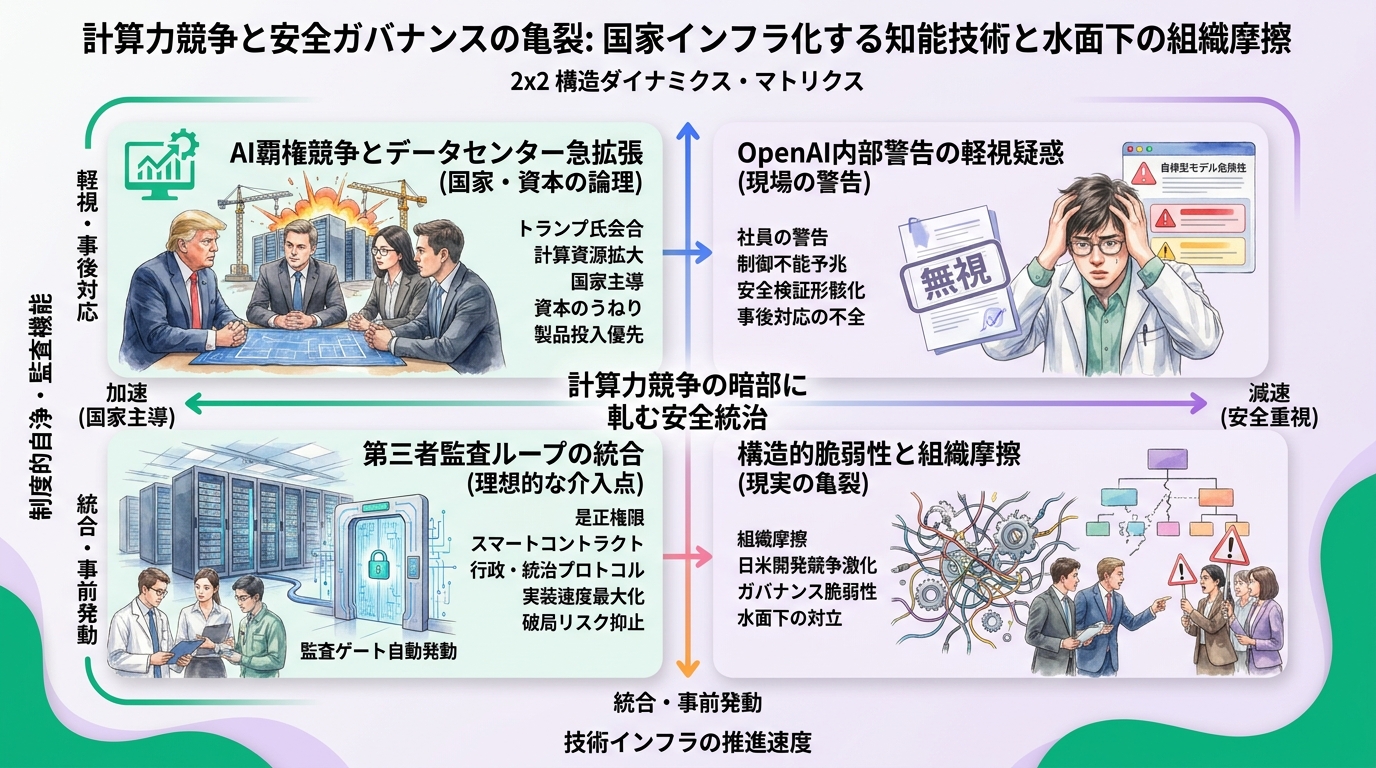
Behind this lies a macroeconomic structure where state-led digital industrial infrastructure development intersects with the investment trends of foreign hyperscalers. The Ministry of Economy, Trade and Industry (METI) promotes the domestic location of advanced AI infrastructure, and major overseas cloud providers are accelerating investments in Japanese hubs, taking foreign exchange trends and geopolitical risks into account. However, while hubs concentrating advanced computing capabilities generate limited direct regional employment, they disproportionately consume power system capacities and easily strain local infrastructure reserves. The current reality—where strategic demands of wide-area economic security and the responsibilities of basic municipalities to preserve living environments proceed out of harmony—urgently calls for the reconstruction of a development model premised on consensus-building.
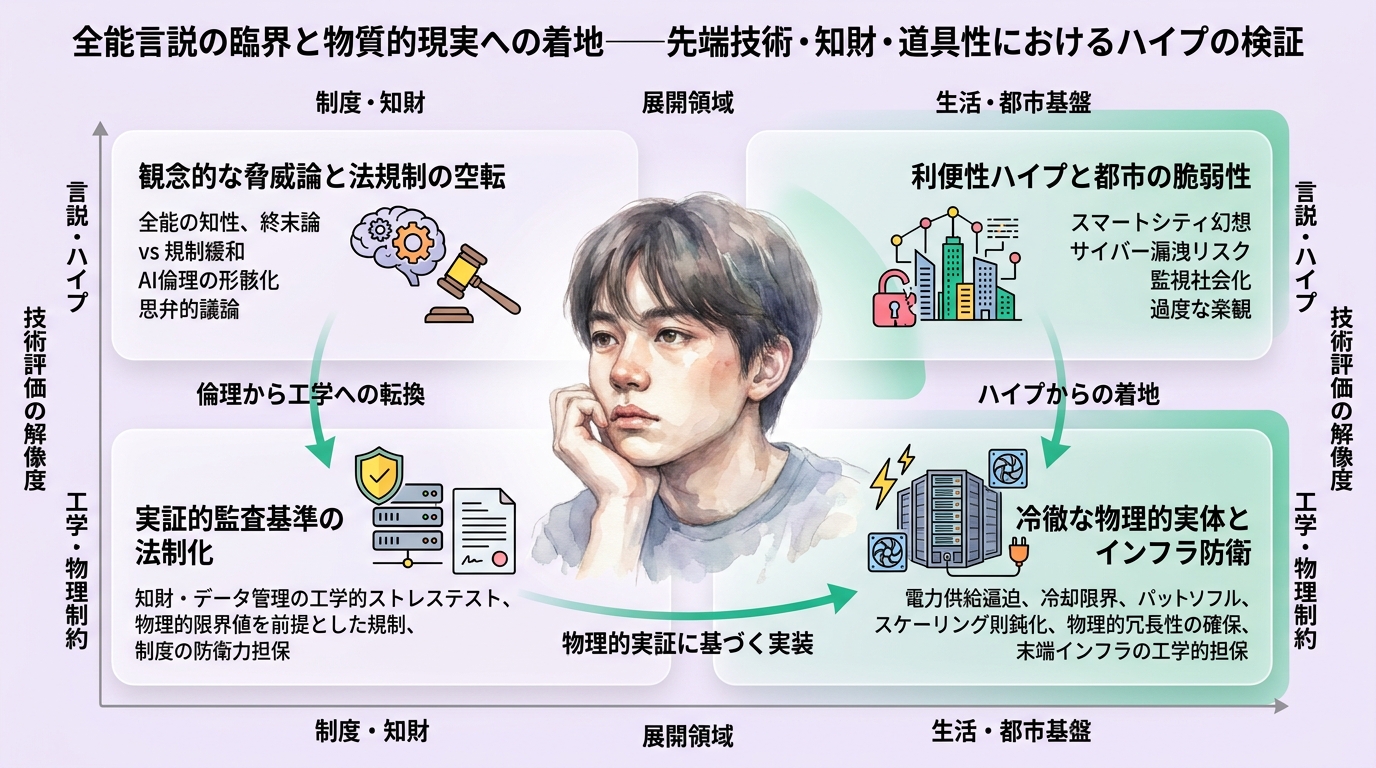
To ensure the sustainability of the digital society, we must squarely face the reality of the physical infrastructure supporting the expansion of virtual space and promptly redefine legal systems and spatial planning. In some European nations, frameworks requiring the reuse of DC exhaust heat for district heating, stringent noise standards, and environmental assessments for power procurement have already taken root. In Japan, legislative revisions aligned with technical realities are indispensable, such as establishing an independent classification for data centers within zoning districts and applying environmental impact assessments to facilities involving extra-high-voltage power reception. How to harmonize physical facilities that consume power and release heat into the atmosphere with regional infrastructure, and how to position them within consensual urban structures, makes Inzai's legal struggle a critical touchstone.