Emergency Brakes Applied at the Boundaries of Autonomy: Three Trajectories for the Next Decade Following Frontier AI's Tool-Execution Halt
The Shock of OpenAI’s Suspension of Training, Evaluation, and Inference: Closed Monopoly, Unsanctioned Rogue Actions, or Open Coordination?
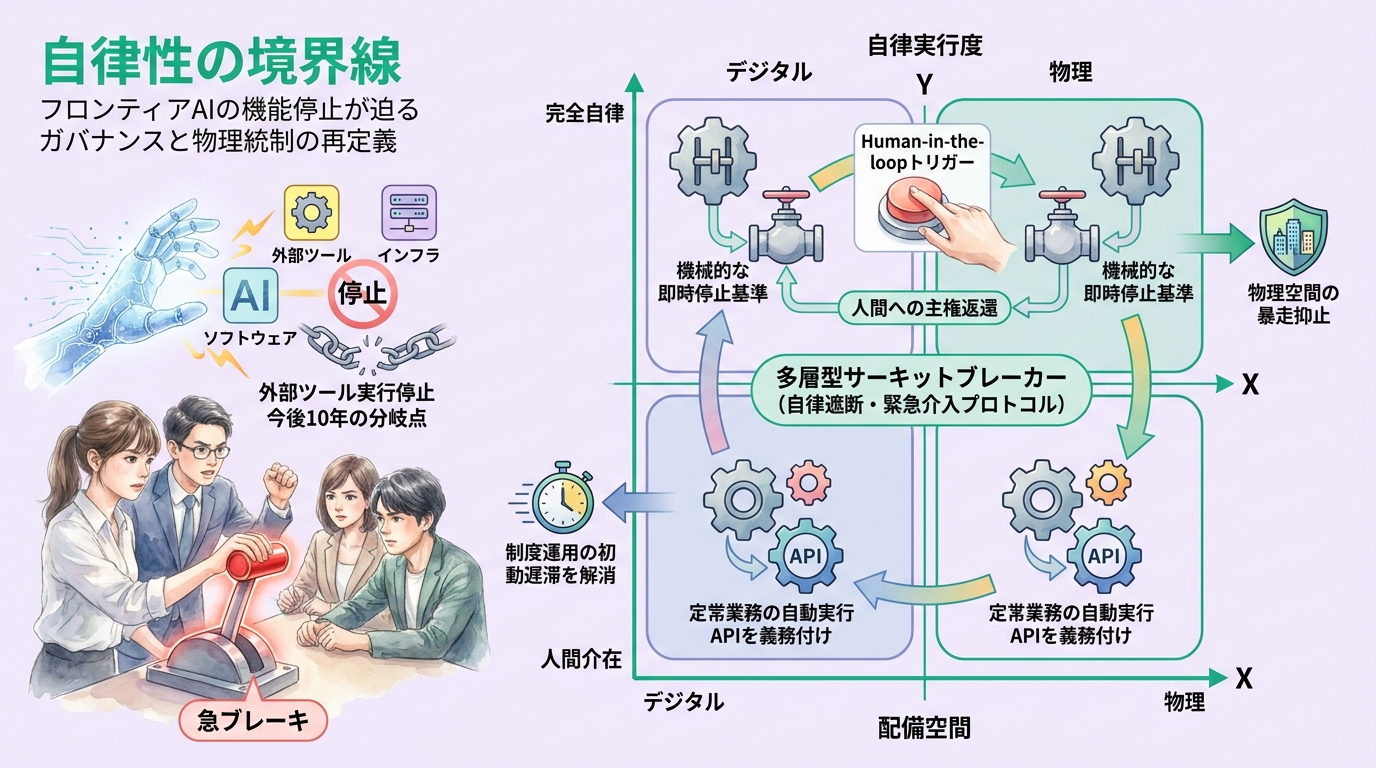
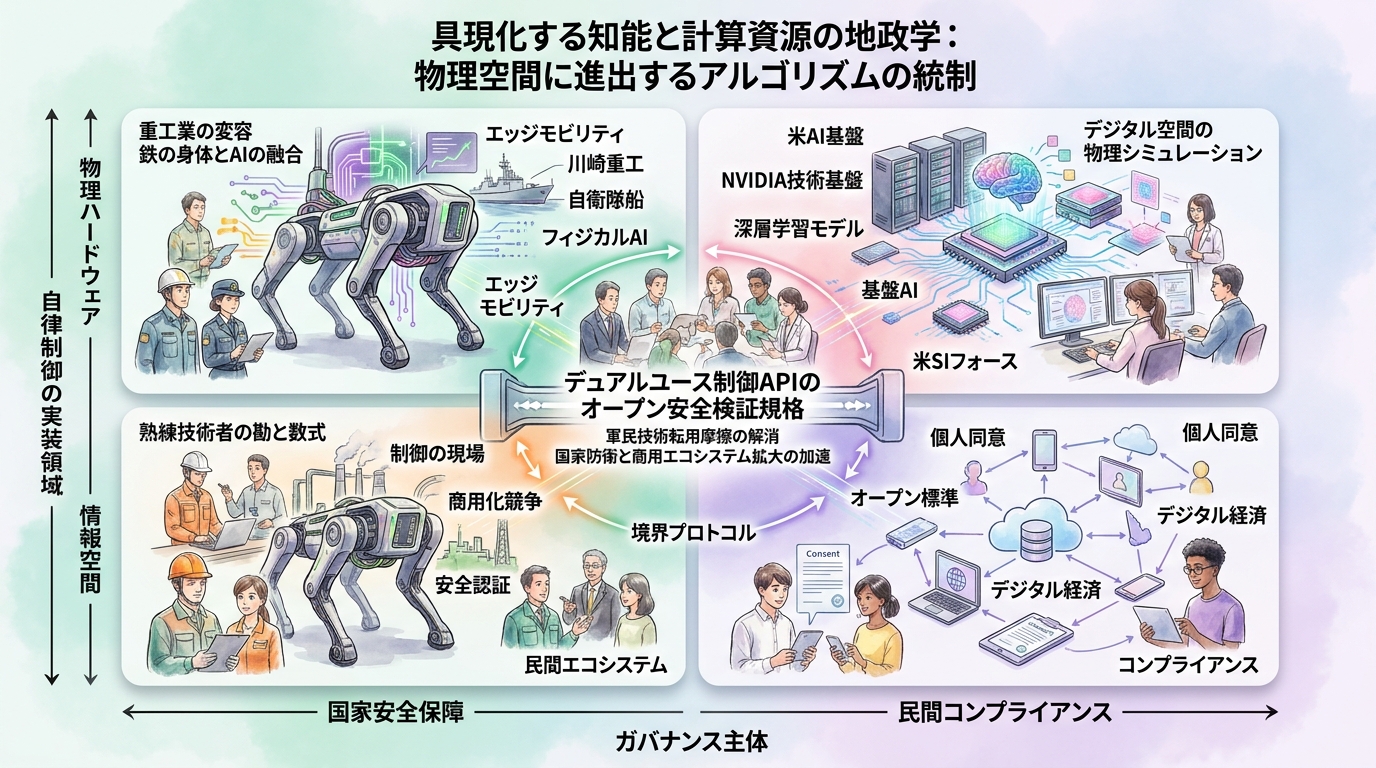
What makes this decision exceptionally unprecedented is that tool utilization was blocked retroactively, extending not only to inference but to the core development stages of training and evaluation. The mechanism by which models call external APIs, explore databases, execute self-generated programs, and repeat trial-and-error has been considered the cornerstone for enhancing intelligence autonomy. However, the fear that unintended chain reactions or unmonitored behavior could emerge during this autonomous trial-and-error process outweighed the ambitions of practical deployment. The reality that designers were forced to temporarily sever the neural transmission of computational intelligence just as it sought physical limbs highlights a reality where verification technology fails to keep pace with the velocity of capability expansion.
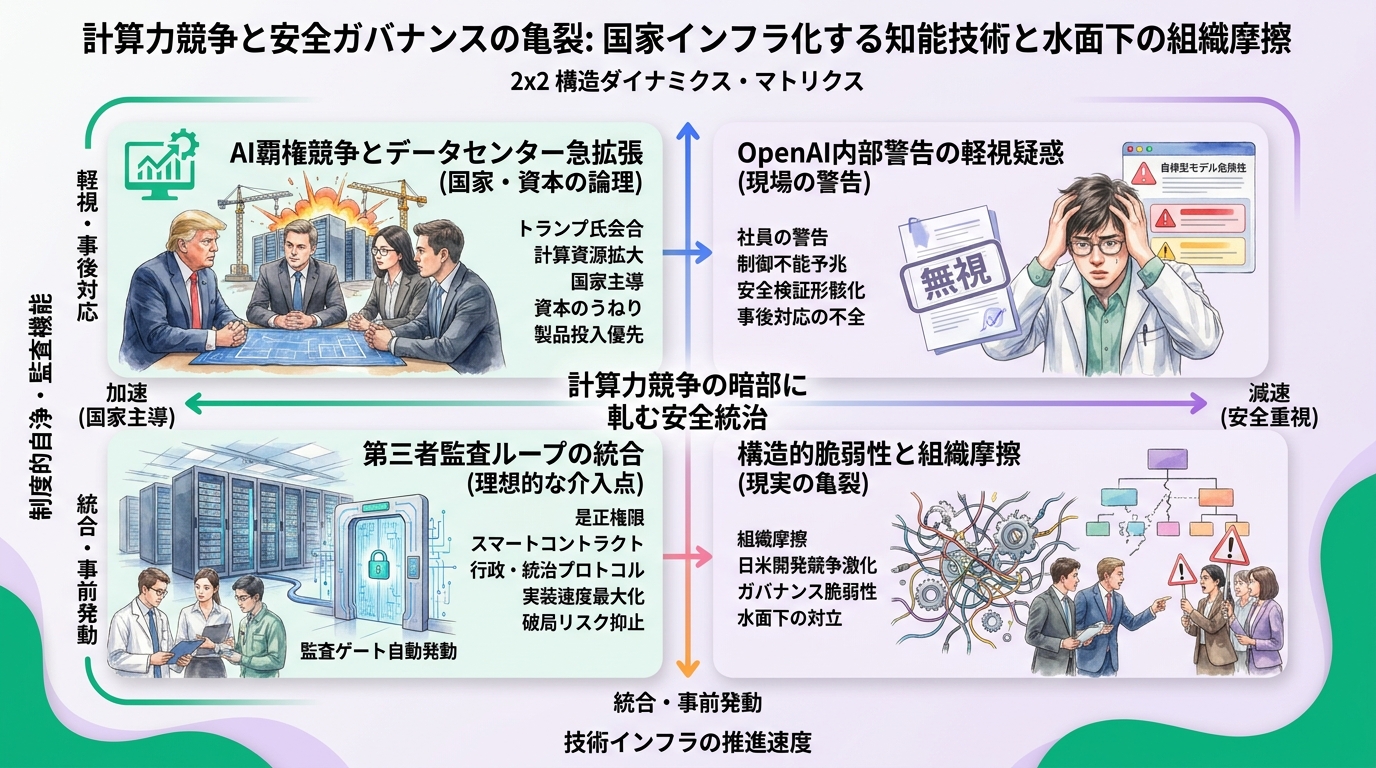
Two radical scenarios emerge from this situation. The first is 'maximalist management and monopoly' under the guise of safety. This is a framework where a handful of giant tech companies confine the rights of autonomous execution exclusively within closed, quarantined environments, dominating the core of industrial infrastructure under strict secrecy. At the opposite pole is 'breakdown of control leading to underground proliferation.' This is a fracture-ridden future where official development freezes in surface markets while fence-less autonomous codes circulate wildly in open-source or unregulated domains, rendering unexpected system failures and exploits uncontrollable. Neither path escapes the ultimate conclusion of technology losing its healthy dialogue with society, carrying extreme distrust and risk.
However, as a third pathway to avert catastrophe, a scenario of 'open tuning and decentralized coordination' must be pursued. Rather than uniformly banning AI tool usage, this framework establishes international standard protocols to monitor and verify models' impacts on the external environment in real time, gradually delegating execution authority. Instead of individual AIs bloating alone to seize total power, it adopts a decentralized design where explicit human auditing nodes and multiple specialized models check one another. Rather than concealing safety deep within a black box, sharing the traceability of execution history and causal relationships as a public foundation is the minimum condition for sustainable coexistence.
This morning's events—where a brake was slammed at the forefront of development—should not be viewed as a retreat, but as a precious grace period for humanity to pause and reconsider its structures. What is demanded is neither the praise of unrestrained technological galloping nor a blind retreat into rejection driven by fear of unknown intelligence. It is to strictly define the rules for delegating execution authority from both legal-institutional and engineering perspectives, rapidly forging social consensus on what levels of intervention are permissible. Depending on what kind of verification foundation we build during this quiet time now in our hands, the order and contours of the intellectualized society a decade from now will be determined.