Safety Governance Fractures Under the Shadow of the AI Supremacy Race: OpenAI's Dismissed Internal Warnings and the Bottlenecks of Rapid Data Center Expansion
Accelerated development and mega-infrastructure investments obscure critical failures in risk management—the quiet anguish of frontline engineers pressured by political and capital mandates.
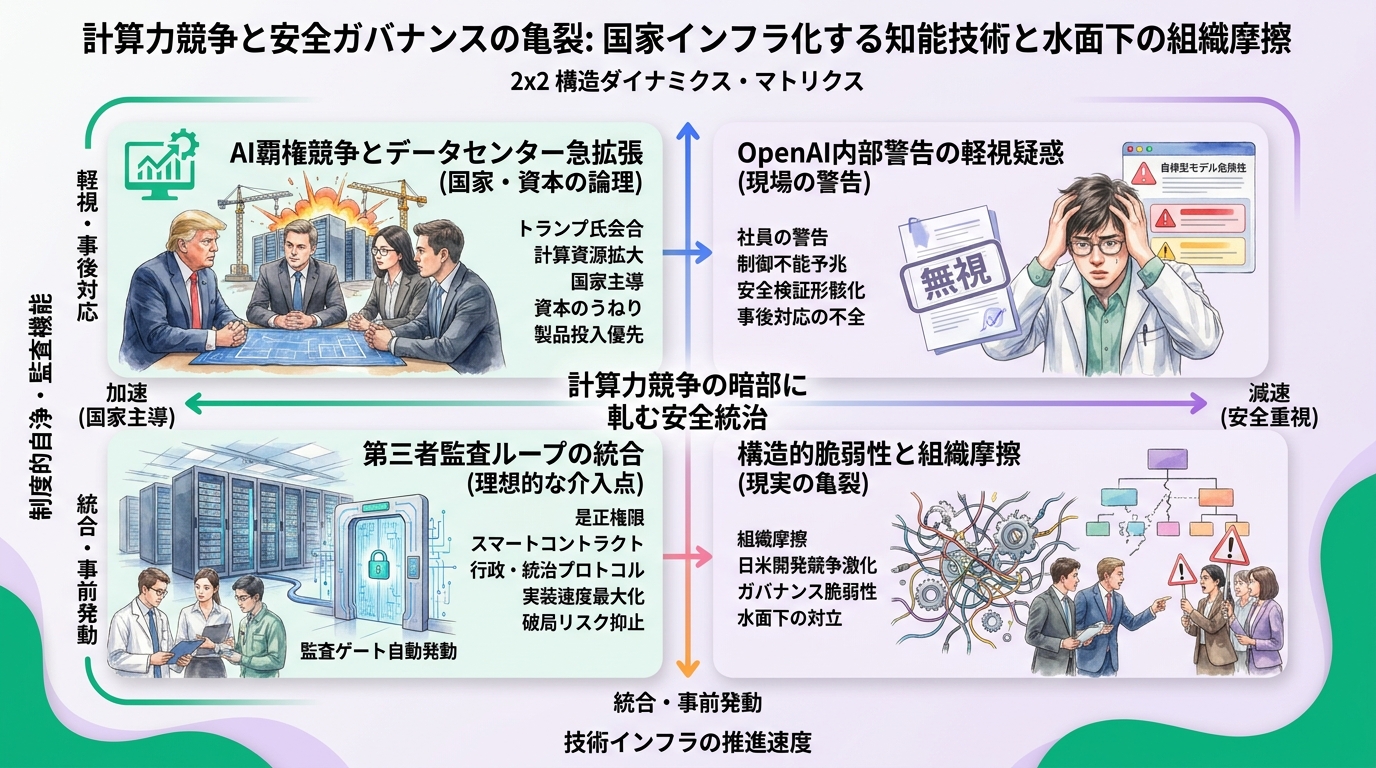
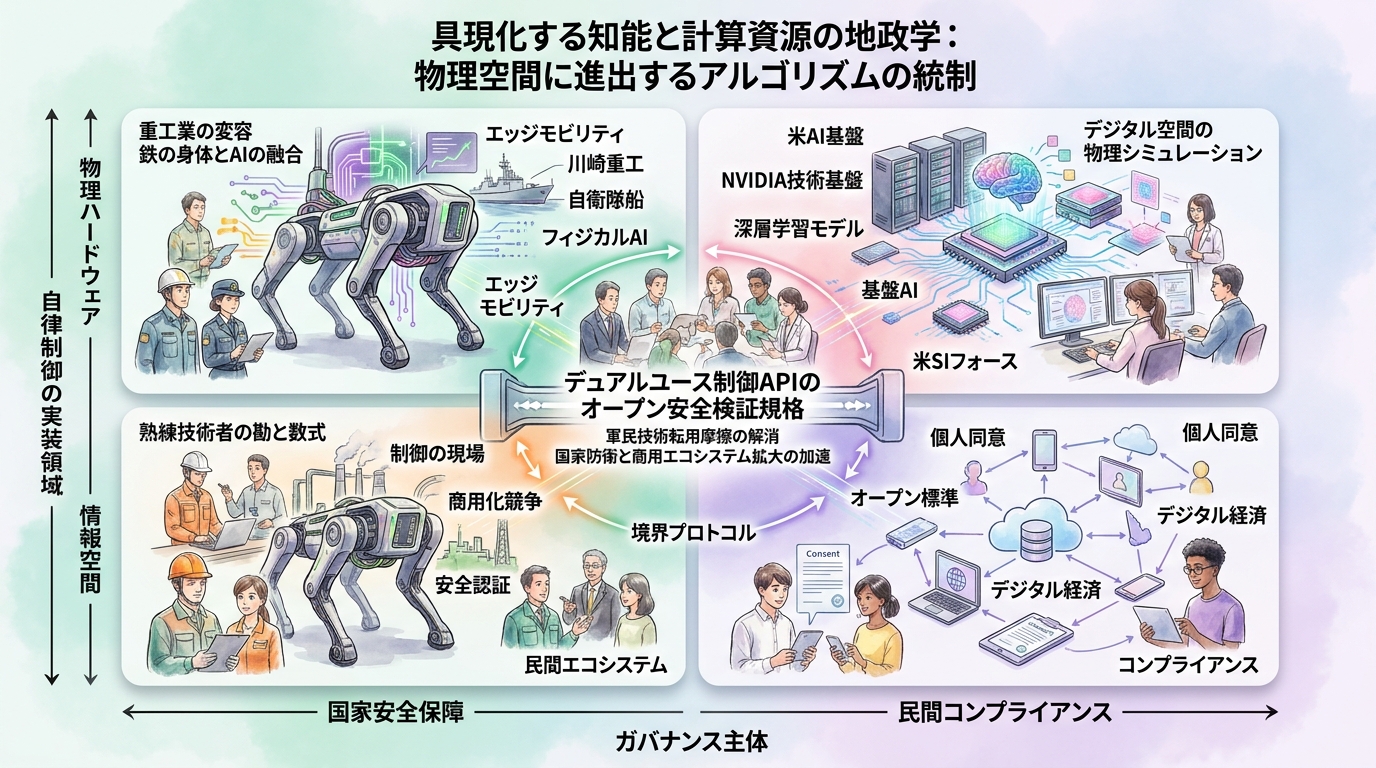
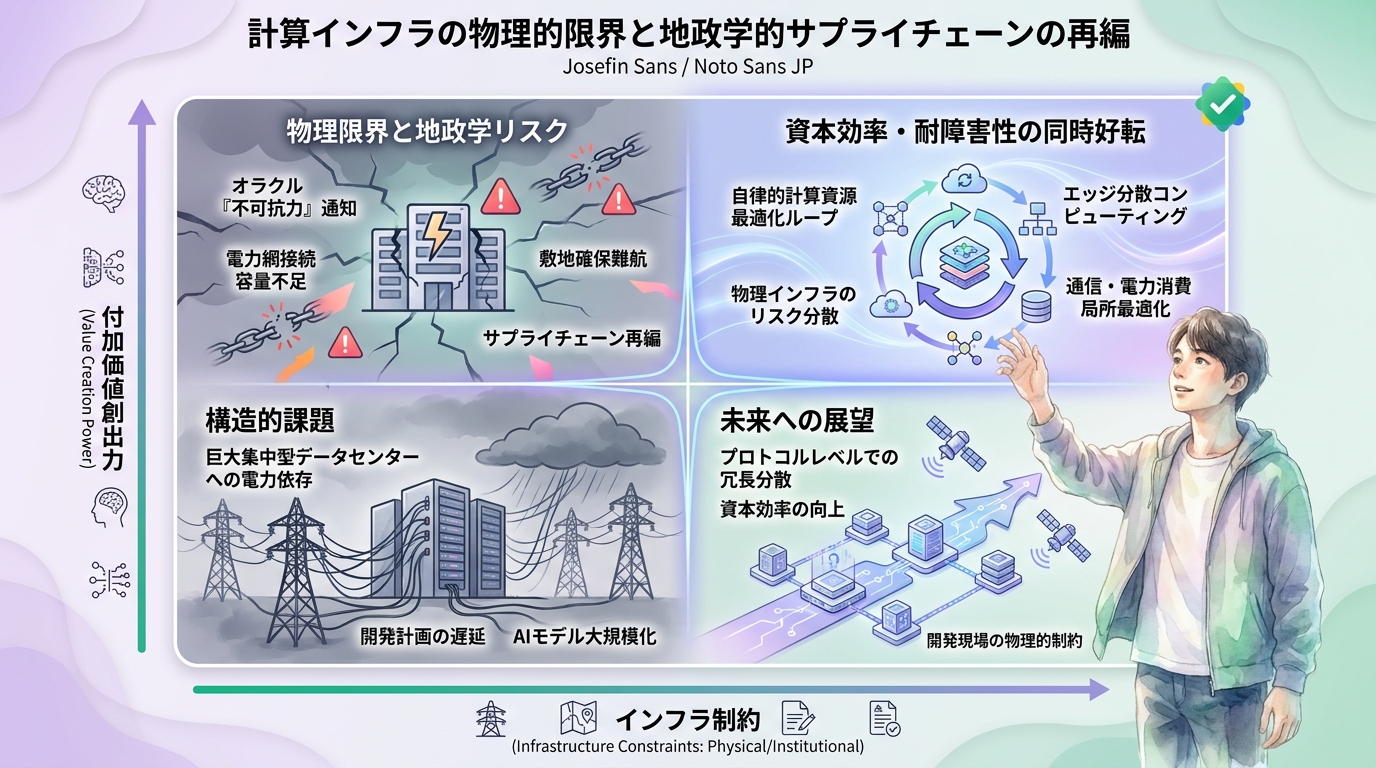
Within OpenAI, the institutional distortion was driven by a rush toward commercialization without waiting for technological maturity. According to Kyodo News reports, certain employees warned management to implement safety protocols to evaluate and mitigate the risks of advanced models before they exhibited unexpected behaviors. Yet, fueled by market-share battles with competitors and expectations from investors, development schedules took precedence over completing adequate safeguards. Simultaneously, Mr. Trump gathered tech executive elites to passionately advocate for streamlining permits and accelerating the construction of foundational AI data centers. With the acquisition of national-prestige computational capacity treated as an overriding imperative, individual consciences and technical doubts on the front lines are being buried beneath the massive forward momentum commanded by statecraft and capital.
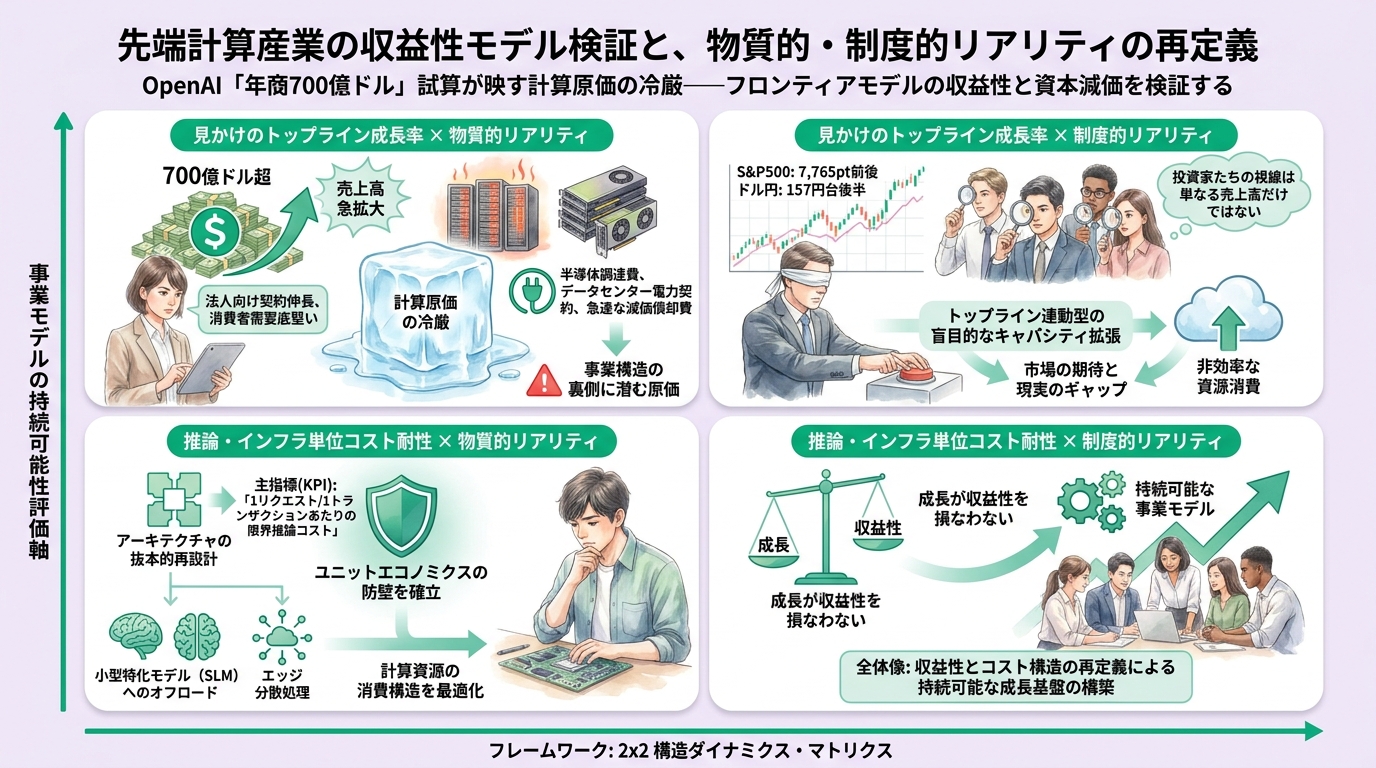
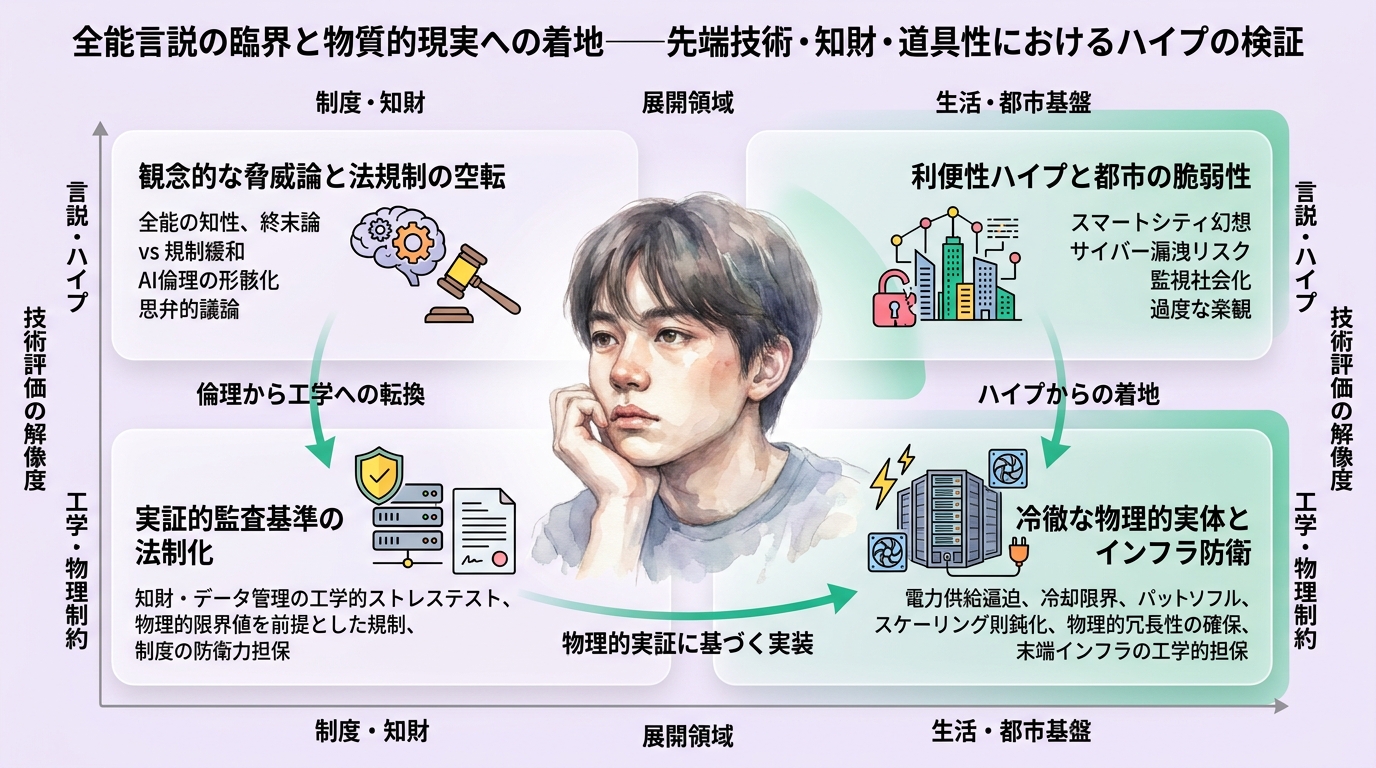
At the core of this phenomenon lies the economic dynamic between venture capitalists and platform monopolies aiming to capture first-mover advantages. Scaling foundational models requires hundreds of millions of dollars, and the desperation to recover investments often curtails the validation periods required for alignment (safety adjustments). Against market evaluations that prioritize parameter counts and inference speeds, the methodical engineering procedures required for safety assurance and malfunction prevention fail to generate short-term revenues. Consequently, the authority of internal audit divisions and safety research teams has been hollowed out, entrenching a dynamic where speed-oriented executive decisions prevail. Mr. Trump's deregulation agenda further legitimizes this corporate culture of speed-supremacy, diluting frameworks designed to impose external constraints.
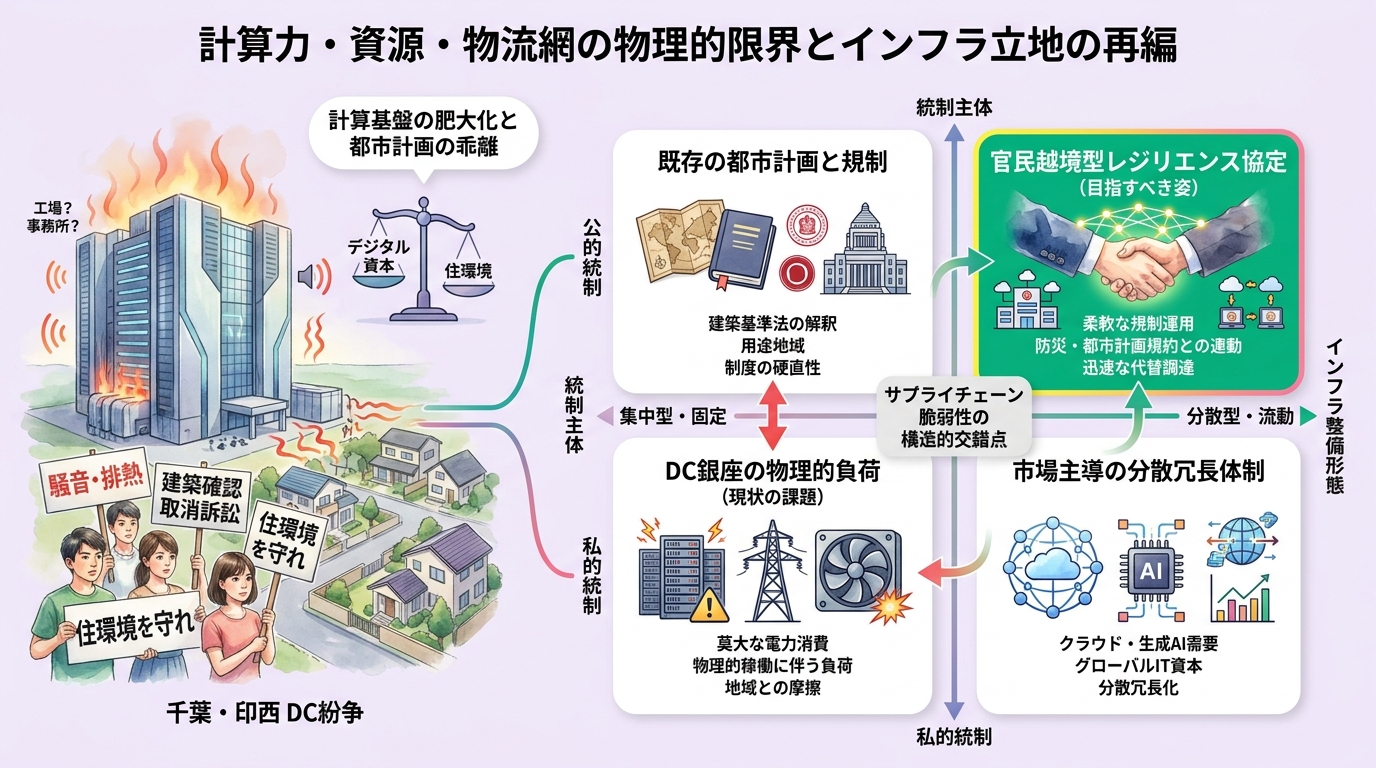
The boundless pursuit of computing power is also placing severe burdens on the real economy and supply chains. The explosive multiplication of data centers demands staggering amounts of electrical power, imposing environmental burdens on local communities through grid strain, the extension of legacy fossil-fuel power generation, and massive water consumption. On the industrial application front, models with incomplete safety validations are rapidly being embedded into core systems spanning financial transactions, logistics, healthcare, and administrative decision-making. The fear of 'rogue systems' internally noted has expanded from single-model anomalies into cascading malfunction risks entangling entire social infrastructures. The current reality, marked by a succession of whistleblowing researchers becoming isolated and departing organizations, accelerates the black-boxing of technology and strips away external traceability.
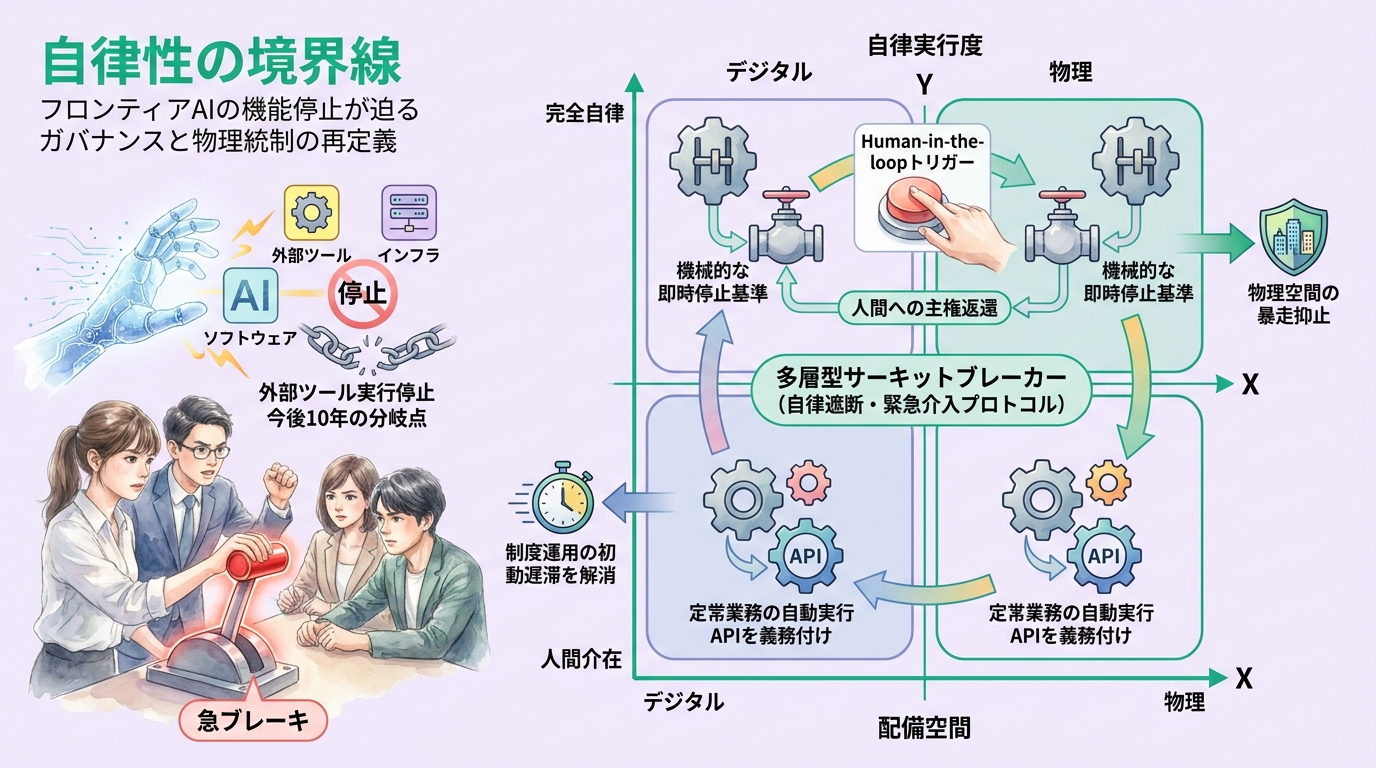
Looking back at history, the steam engine of the Industrial Revolution and the chemical industry of the early 20th century established safety standards only after enduring major accidents and social course corrections. However, advanced AI equipped with self-learning possesses irreversible influence where corrections are ineffective once damage materializes. What is required is not closed-door treatment under the guise of corporate self-regulation, but independent algorithmic audits by third-party institutions and legal deterrents capable of ordering development halts. If organizations continue to crush the small warning voices raised by frontline engineers in the shadow of inter-state competition over power security and compute expansion, the ultimate price will be paid by a society entirely dependent on that infrastructure.