Reclaiming the Silence of the Alleyways: Shinjuku Ward's Sweeping Crackdown on Short-Term Rentals Sends Shockwaves Through the City
Existing Facilities Not Spared in Ban Across Residential and School Districts, Forcing a Rethink on the Boundary Between Tourist Capital and the Right to Dwell
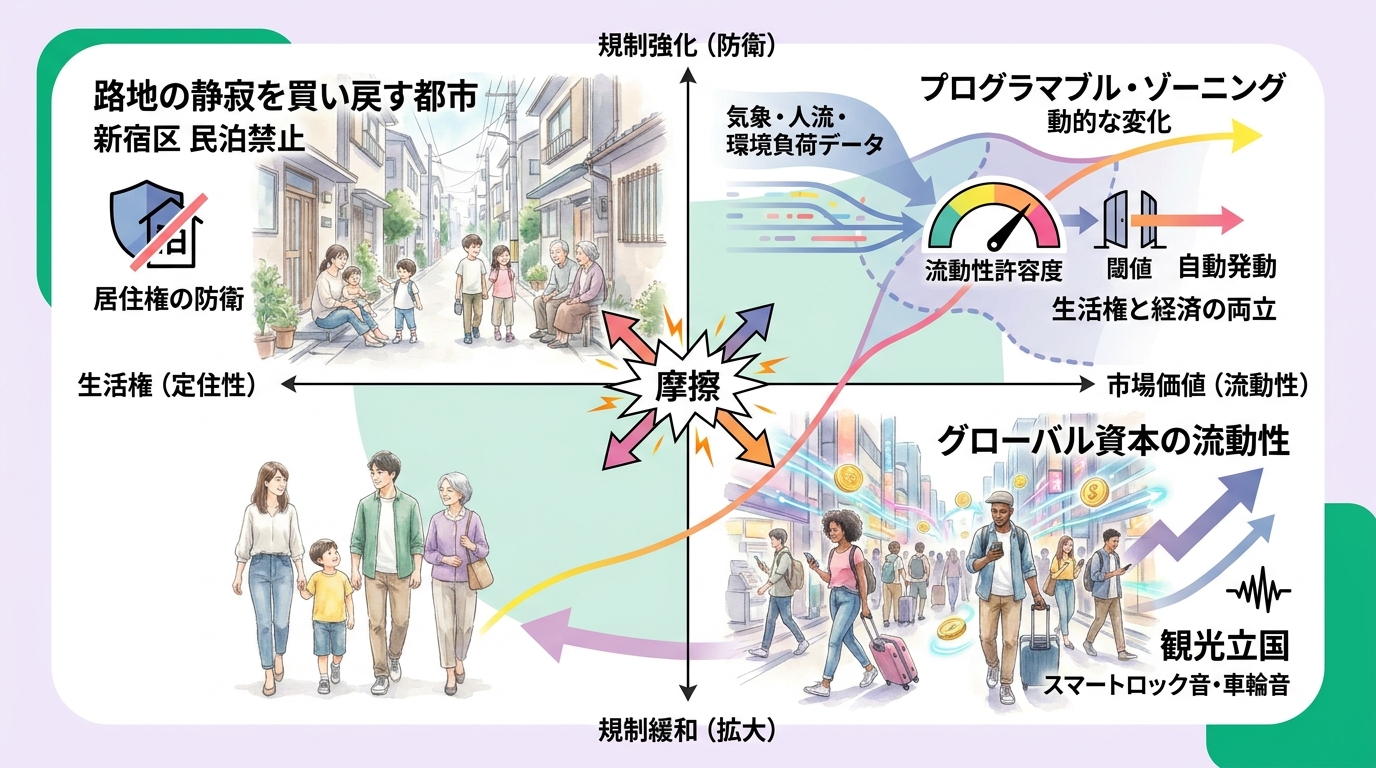
Just a few minutes by subway from Shinjuku Station, in a corner of a residential neighborhood woven with narrow slopes, a dry electronic chime rings out at the entrance of an aging apartment building. Travelers holding smartphones up to unlock smart locks and dragging heavy suitcases late at night have become an everyday sight. Wooden and multi-family homes where local elderly residents and single workers once paid monthly rent have morphed unawares into accommodation facilities registered on online platforms. Friction such as late-night street conversations and unsegregated trash disposal has extended far beyond individual matters of etiquette, gradually wearing down the peaceful sense of security held by those who live there. Shinjuku Ward's ban on operations around schools and residential zones is an inevitable reaction born from the breaking point of these alleyway realities.
Behind this localized friction lies the cross-border logic of massive capital. As a historical yen-depreciation trend settles in with the dollar trading around the 155-yen mark, Tokyo's lodging rates still appear economical to inbound foreign tourists. Combined with the technology of online intermediary platforms, housing stock that should rightfully be supplied to the long-term rental market has been instantly converted into short-term, high-yield revenue assets. For landlords and real estate investors, renting to travelers by the day offers a far greater economic incentive than leasing to conventional tenants on a monthly basis. As a result, the more convenient a residential area is, the more effectively rooms meant for actual living are stripped away, quietly exerting upward pressure on overall rent market rates.
The dynamic where urban living spaces are exposed to the pressures of over-tourism and municipalities shift toward forceful intervention is a common challenge already faced by major global cities. Prompted by a housing crisis, Barcelona has set a policy to entirely phase out short-term rental registrations within the city by 2028, while New York City has effectively squeezed out intermediary platforms by imposing strict residency requirements. Amsterdam and Florence have likewise restricted new accommodations in their historic centers. The phenomenon where local residents are priced out of central areas, overshadowed by the economic benefits of consumption stimulation and foreign currency earnings brought by the tourism industry, has surfaced as a global urban problem. Shinjuku Ward's tightened regulations eloquently speak to the reality that in Japan, too, the correction of over-tourism and the preservation of residents' living environments have entered an irreconcilably tense relationship.
What is noteworthy about these new regulations is that, while incorporating a transitional grace period, they do not exempt existing operating facilities, wielding strong enforcement power that pushes them toward closure and exit. While pushback from the business community—which prioritizes property rights and freedom of enterprise—is anticipated, the municipality has made a heavy pivot toward restoring order as a 'town for living.' In Shinjuku's residential neighborhoods as night falls, what remains after the blue lights of the smart locks go dark? Stepping back from the macroeconomic frenzy competing merely over numerical targets for tourism and consumption expansion, and pulling the city's reins back to a scale where the breathing of those conducting daily life can be heard. The single, thin, and rigorous boundary drawn by Shinjuku Ward casts a fundamental question to each of us: Where does the sovereignty of urban space truly reside?