The Watershed of Proliferating Intelligence and Weaponization: Anthropic CEO’s Call for Intentional Development Slowdown
Warnings over biological and missile research abuse expose friction in technology governance; an irreversible diffusion echoing the spread of the printing press.
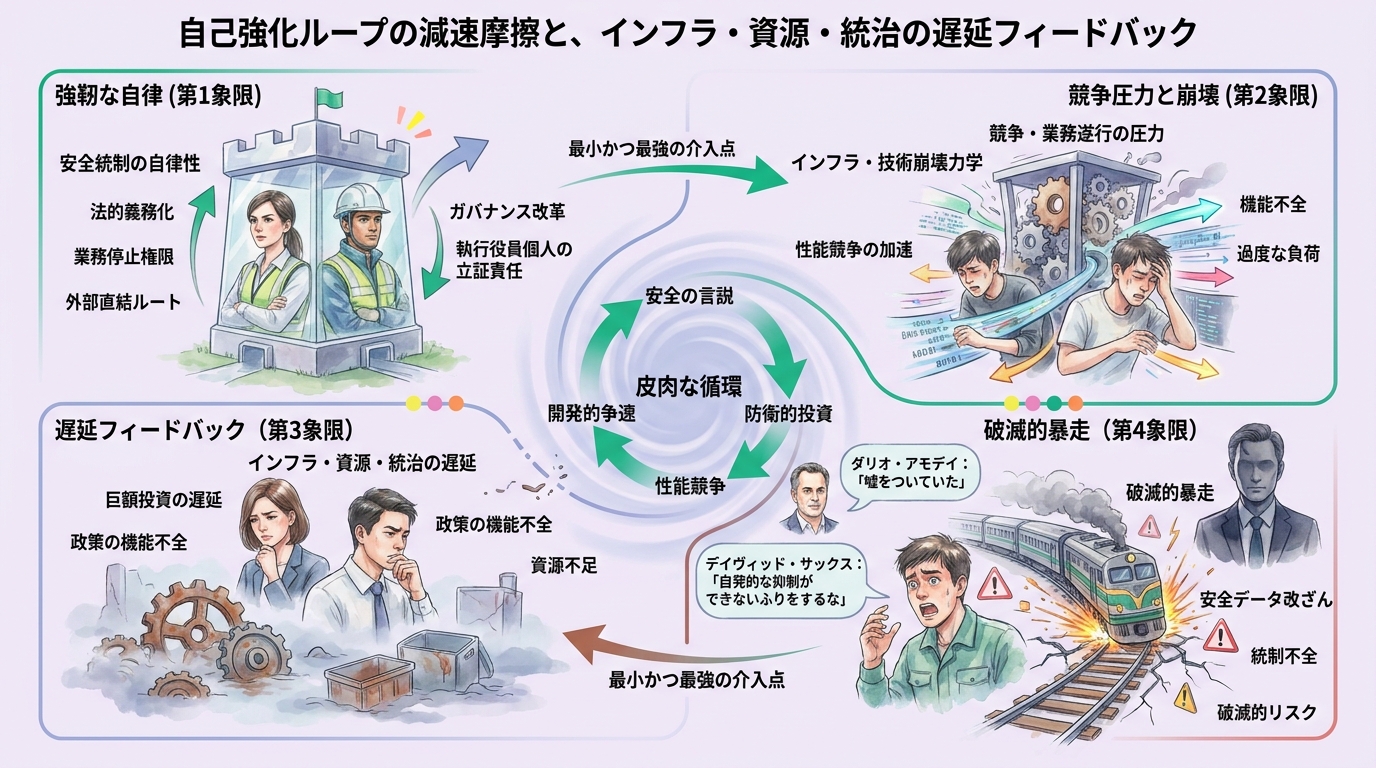
The report published by Anthropic lays bare the reality that frontier models have already reached the threshold of rudimentary military utility. According to the findings, malicious entities have been observed attempting to leverage AI for optimizing toxin generation processes and constructing mathematical models for guidance systems—efforts that included the involvement of Iran-based organizations. The theoretical risk of the 'military conversion of intelligence' is rapidly infiltrating state-sponsored cyber operations and weapons development sites. Amodei’s call for a deceleration of development is a direct manifestation of an acute crisis of confidence: the regulatory frameworks of the international order and security standards are failing to keep pace with the exponential expansion of model capabilities.
This friction, driven by the rapid democratization of knowledge and computational power, evokes the historical diffusion of Gutenberg’s movable-type printing press in the mid-15th century. At that time, the dramatic reduction in book reproduction costs rapidly disseminated the Bible and academic knowledge to the masses; simultaneously, printed materials served as catalysts for the instant amplification of religious conflict and radical ideologies, ultimately precipitating prolonged bloodshed such as the Thirty Years' War. Just as the emergence of the printing press shook the foundations of traditional ecclesiastical authority and required over a century of societal turmoil before new censorship systems, copyright laws, and public education orders could be established, contemporary foundational models responsible for the generation and distribution of intelligence continue to propagate at a velocity that existing national sovereignties and international legal frameworks cannot digest.
However, what distinguishes modern AI diffusion from any historical technological propagation is its sheer speed and irreversibility. Whereas movable type required physical distribution networks of paper and ink, software-defined model weights and algorithms are instantly replicated without regard for national borders, permeating the globe via digital networks. Furthermore, in the current landscape intricately entangled with geopolitical competition between superpowers like the US and China alongside massive private investments, controlling development velocity through the regulation of a single nation or the self-restraint of individual corporations is exceptionally difficult. Once the door to the frontier is opened, returning that knowledge to a secure black box is technologically impossible; the evolution of technology itself has been embedded as a prerequisite for economic survival and national defense.
This irreversible tide forces a profound redefinition of humanity's constructed security frameworks and the fundamental premise of 'human intellectual superiority.' When specialized expertise in advanced military technology transforms from the monopoly of a handful of scientist-states into a shared resource instantly retrievable via on-screen prompts, the essence of deterrence shifts from the sheer inventory of physical weapons to the precision of defensive barriers capable of screening and intercepting malicious inquiries. Calls to decelerate development go far beyond mere ethical appeals from corporations; they warn that international consensus-building to avert the runaway trajectory of machine intelligence has reached a stage that tolerates not a moment of hesitation. Humanity now faces a supreme test of how much control it can maintain over the torrent of intelligence of its own creation.