THE SCHOOL OF KAMOS
Connecting Real-world Dev & Academic Intelligence with Intuitive Metaphors
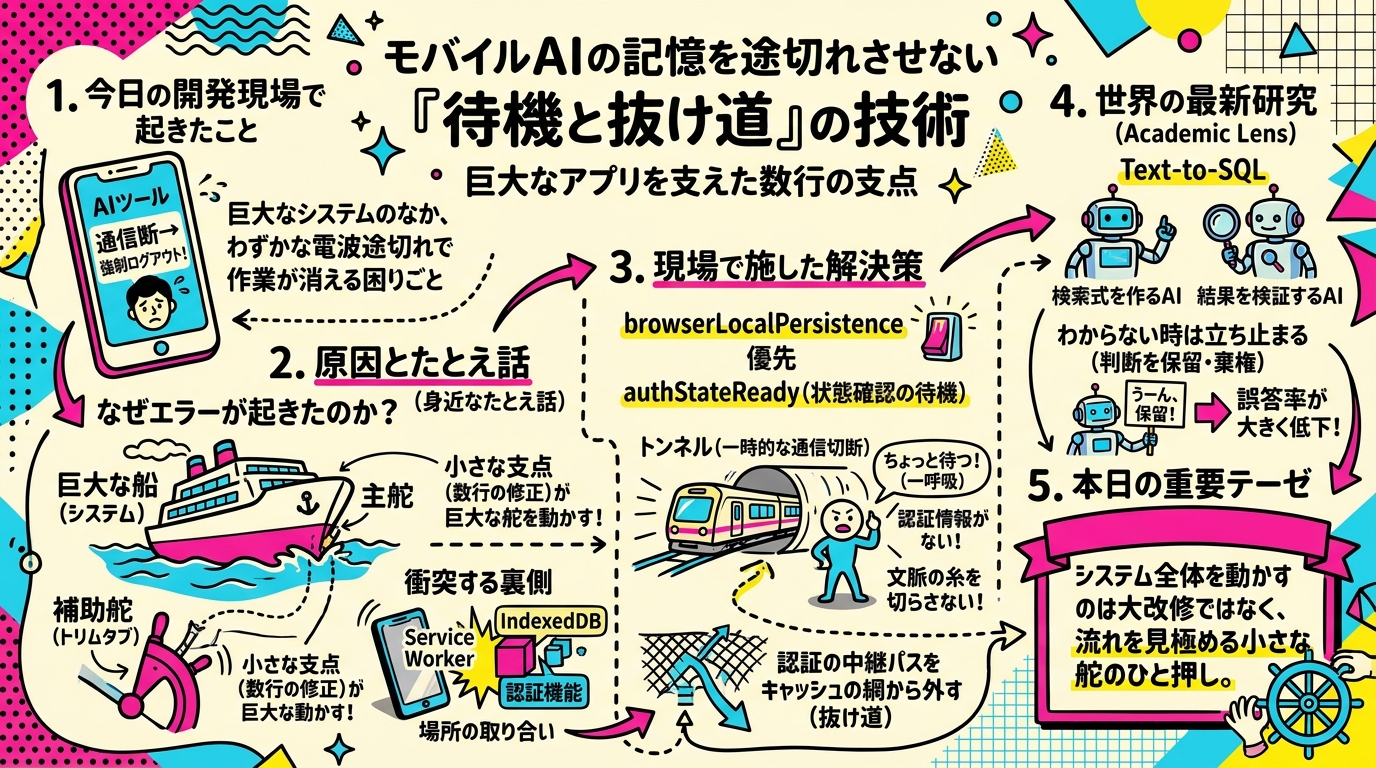
A Few Lines Supporting a Massive App: The Craft of 'Waiting and Bypasses' Keeping Mobile AI Memory Intact
How switching storage priorities and pausing for state confirmation quietly untangle complex authentication failures
On the front lines of mobile app development, users working with AI tools on smartphones faced a frustrating disruption: even a brief drop in signal would abruptly log them out and cut their work short. Within a sprawling system where authentication, caching mechanisms, and on-device storage were tightly intertwined, the key to solving it was not a massive rebuild. Instead, a tiny fulcrum—just a few lines adjusting data storage priorities and waiting briefly for state confirmation, alongside a clean network bypass—dramatically shifted the stability of the entire system.
When a massive ship changes course, trying to muscle its heavy main rudder against the ocean's resistance only pushes back against you. Instead, shipwrights attach a palm-sized 'trim tab' to the edge of the giant rudder. Tilting that tiny tab with minimal force harnesses the leverage of the water's current, smoothly turning the entire main rudder. This fix worked on the exact same principle. Behind the scenes of the app, the Service Worker rendering screens rapidly, the authentication module managing logins, and IndexedDB handling on-device storage were all running simultaneously—competing for the same turf. By simply shifting storage priority to 'browserLocalPersistence' and excluding the authentication relay path from the cache network, their collisions vanished at once.
The second fulcrum was a brief statement waiting for state confirmation called 'authStateReady'. Previously, the instant connectivity flickered and returned—such as when a train emerged from a tunnel—the system jumped to the conclusion that authentication credentials were missing and forcibly signed the user out. This carries vital implications for AI model inference and context control as well. When entrusting continuous tasks to AI, a foundation that keeps the 'thread of context'—like conversation history and login state—unbroken is indispensable. At the same time, systems must be designed not to snap to failure in moments of uncertainty, but to pause for a single breath until all facts align and proceed only on solid ground. Just a few lines of waiting logic and route organization ended up anchoring the reliability of the entire AI application.
"What moves an entire system isn't a massive overhaul, but a small nudge of the rudder that reads the current."Key Takeaway
📖 1-Minute Lexicon
A mechanism that preserves login credentials and work data locally without erasing them, even when the app closes or connectivity drops.
A background browser script acting as a quiet guide, caching network requests and enabling screen rendering while offline.
How a Tiny Fulcrum (A Few Lines of Design) Anchors Massive App Stability and AI Trustworthiness
Live Frontier Pulse: Real-World AI Trends
[AI-Driven Modernization] Introducing 'Reverse Spec Flow': Generating AI-Agent-Ready Specifications from Legacy Code
AWS has unveiled 'Reverse Spec Flow,' a method that reads existing program code and automatically reconstructs specifications formatted for AI agents to easily comprehend. It is presented as a practical approach for untangling long-running systems and smoothly advancing AI-driven modernization and refactoring.
Joint Development of Wafer Surface Height Measurement System with AI Mecatec to Support Early Defect Detection in Semiconductor Back-End Processes
Shimadzu Corporation and AI Mecatec have jointly developed a wafer surface height measurement instrument for back-end semiconductor manufacturing. Announced as an initiative to strengthen quality control and catch defective products early, the system detects microscopic surface anomalies during the final stages of production.
How Does This Connect to Global Frontier Research?
Designing systems to pause rather than jump to conclusions in uncertain moments is also drawing intense focus in leading-edge AI research. This paper examines Text-to-SQL, a technology that automatically translates everyday language into database queries. To prevent cases where a query appears to run cleanly yet returns an answer misaligned with the user's intent, the research team separated the 'AI that writes the query' from the 'AI that verifies the result.' Furthermore, using statistical criteria, they built a mechanism to 'abstain' from answering whenever the probability of error threatens to exceed an acceptable threshold—significantly cutting error rates in practice. Just as a production app waits for state confirmation before judging login status, AI earns genuine trustworthiness by knowing when to pause when it isn't sure.
In a mobile app with unstable connectivity, which technique was introduced to prevent users from being mistakenly logged out?
Past School Paper Backnumbers
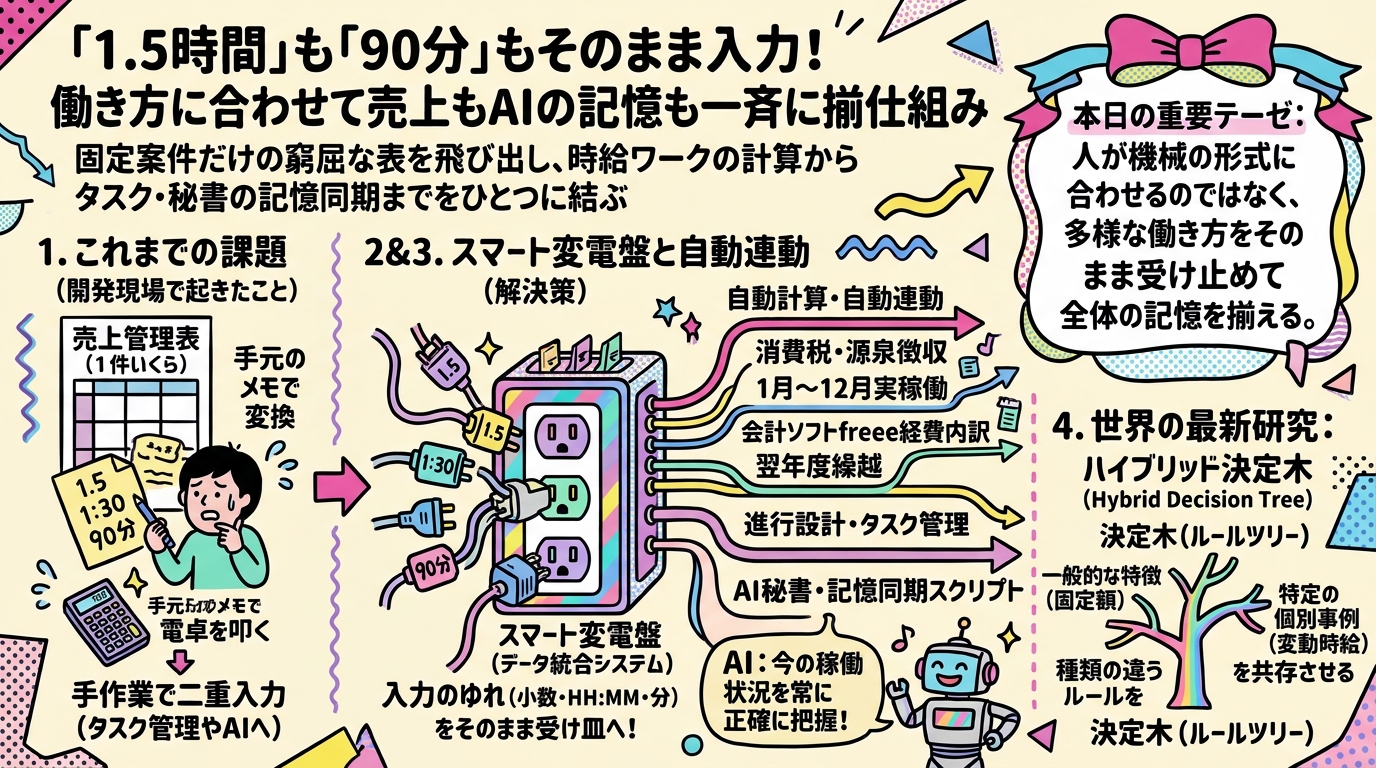
Enter "1.5 Hours" or "90 Minutes" As-Is: Unifying Revenue and AI Memory as Workstyles Evolve
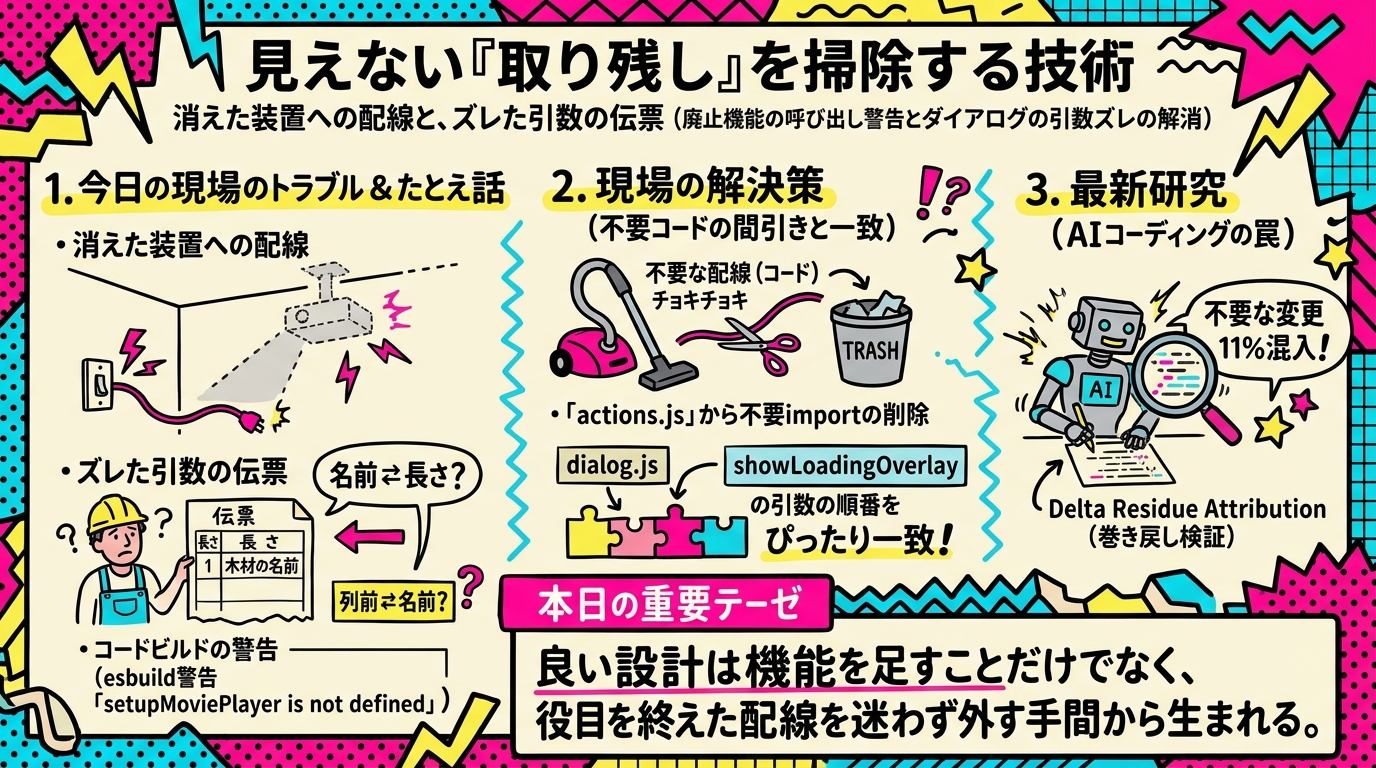
Wiring to a Vanished Device and Misaligned Argument Slips: The Craft of Clearing Invisible Leftovers
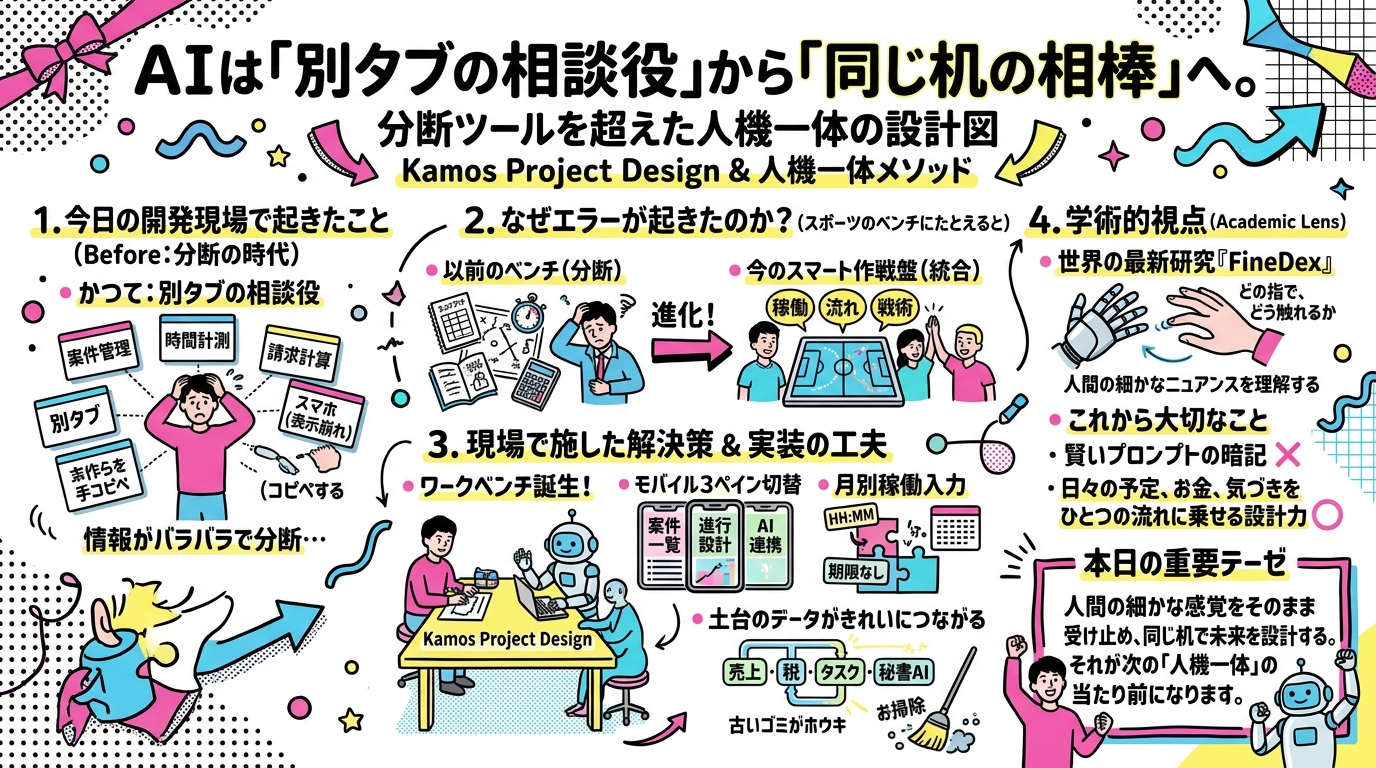
AI Evolves from a 'Consultant in Another Tab' to a 'Partner at the Same Desk': A Blueprint for Human-Machine Unity Beyond Fragmented Tools
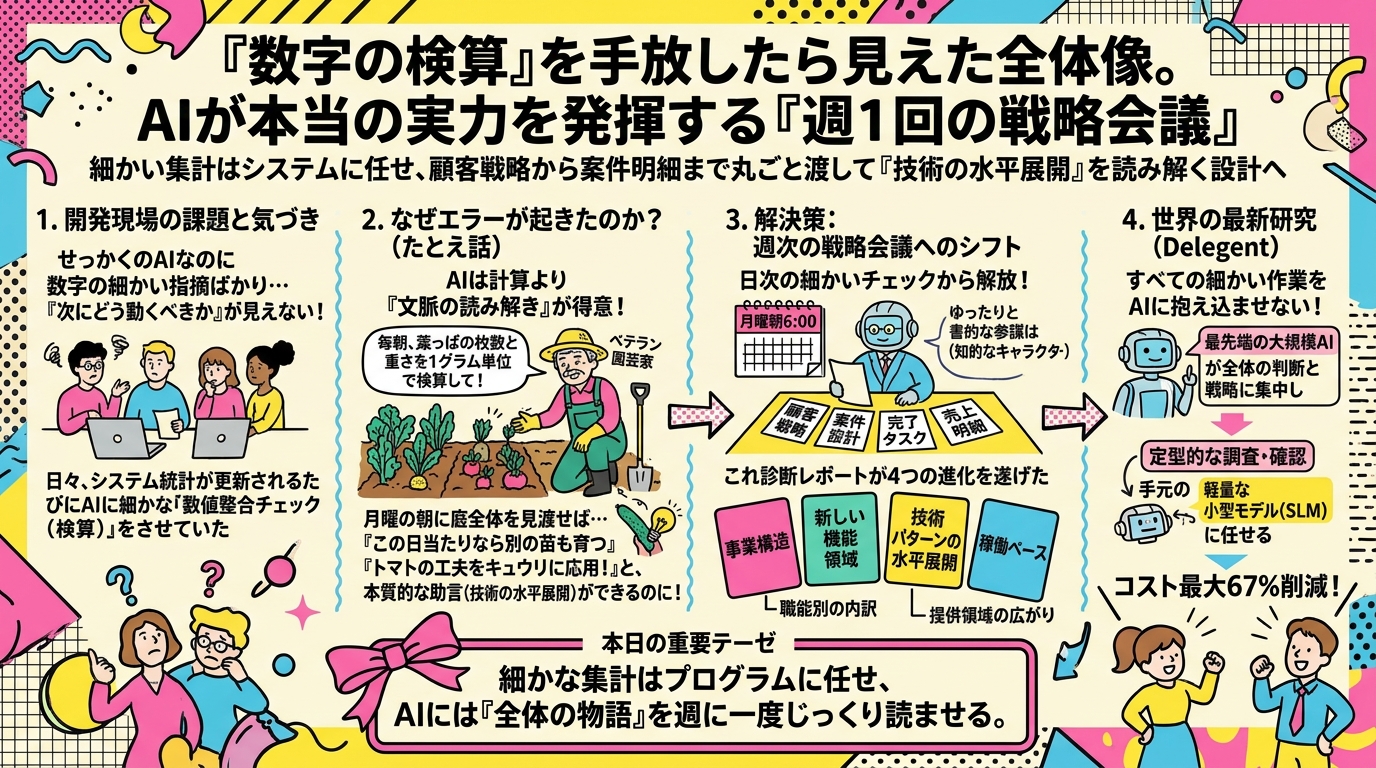
Letting Go of 'Number-Checking' to See the Big Picture: How a Weekly Strategy Sync Unleashes AI's True Potential
Current
A Few Lines Supporting a Massive App: The Craft of 'Waiting and Bypasses' Keeping Mobile AI Memory Intact
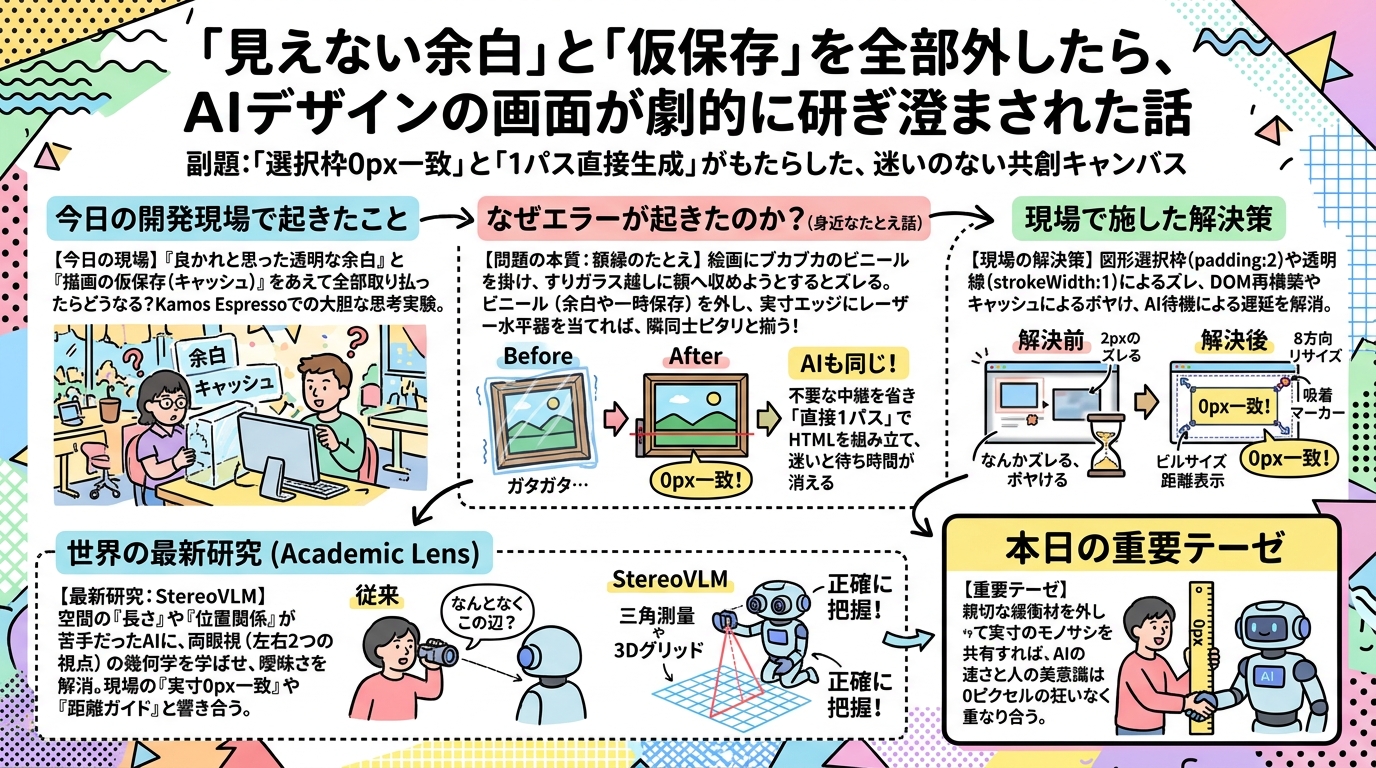
How Stripping Away Invisible Padding and Caching Dramatically Sharpened Our AI Design Canvas
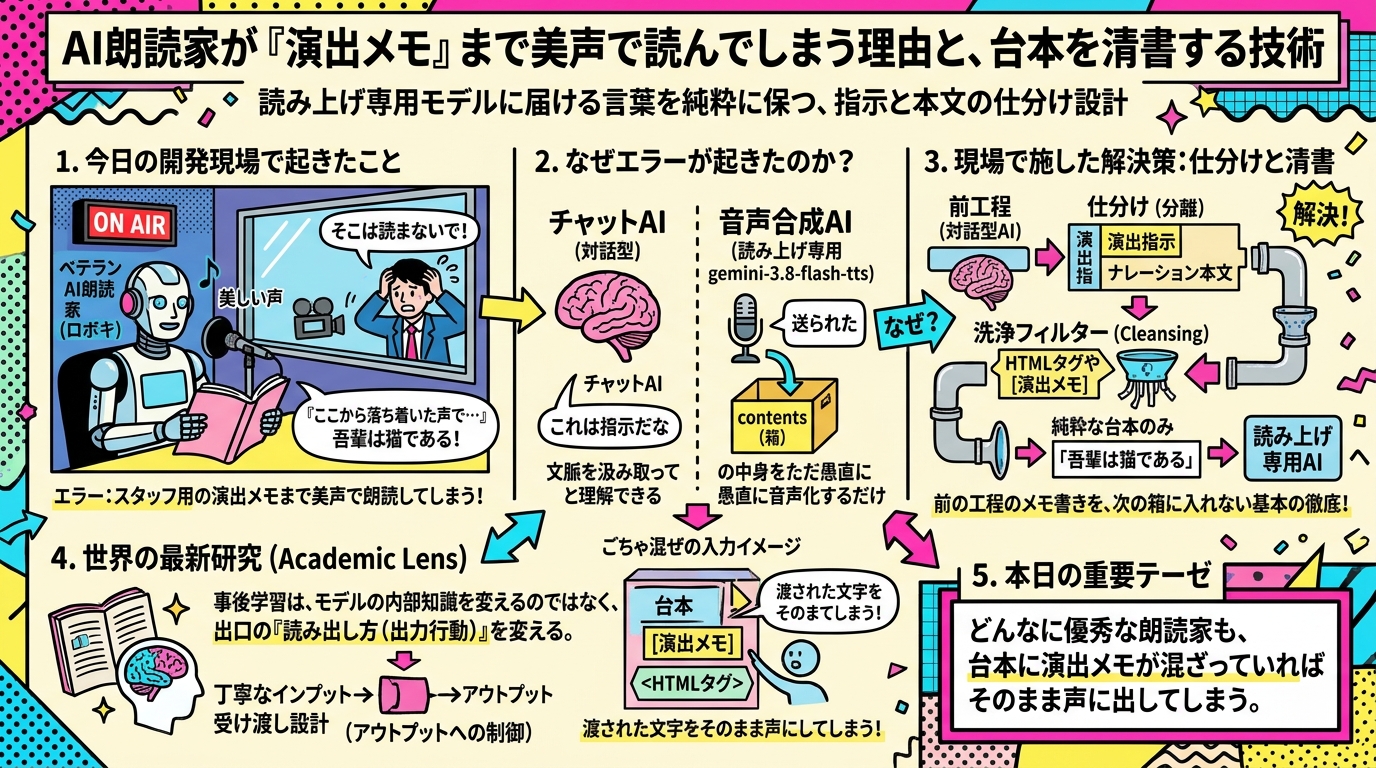
Why an AI Narrator Reads 'Stage Directions' Aloud—and the Art of Scrubbing the Script Clean
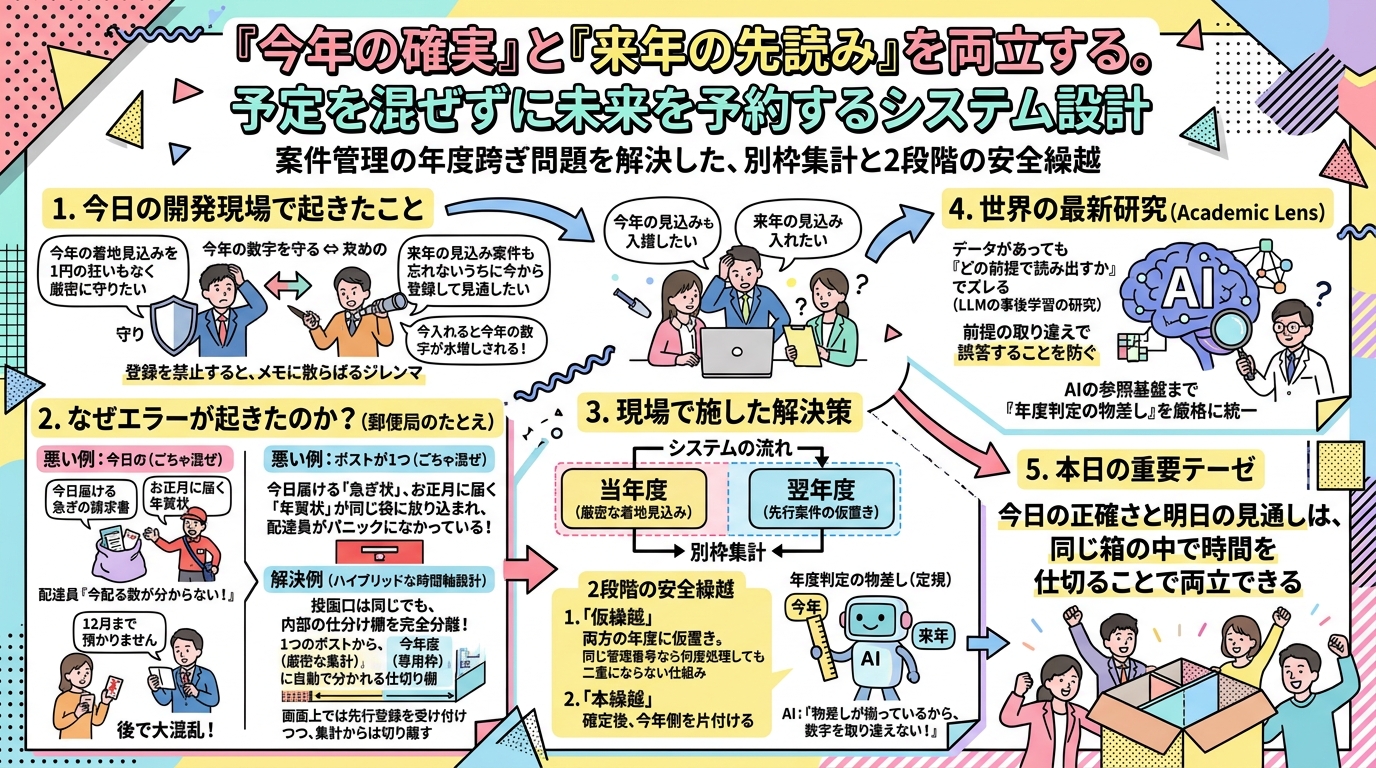
Balancing 'This Year's Certainty' with 'Next Year's Foresight': System Design That Reserves the Future Without Mixing Schedules
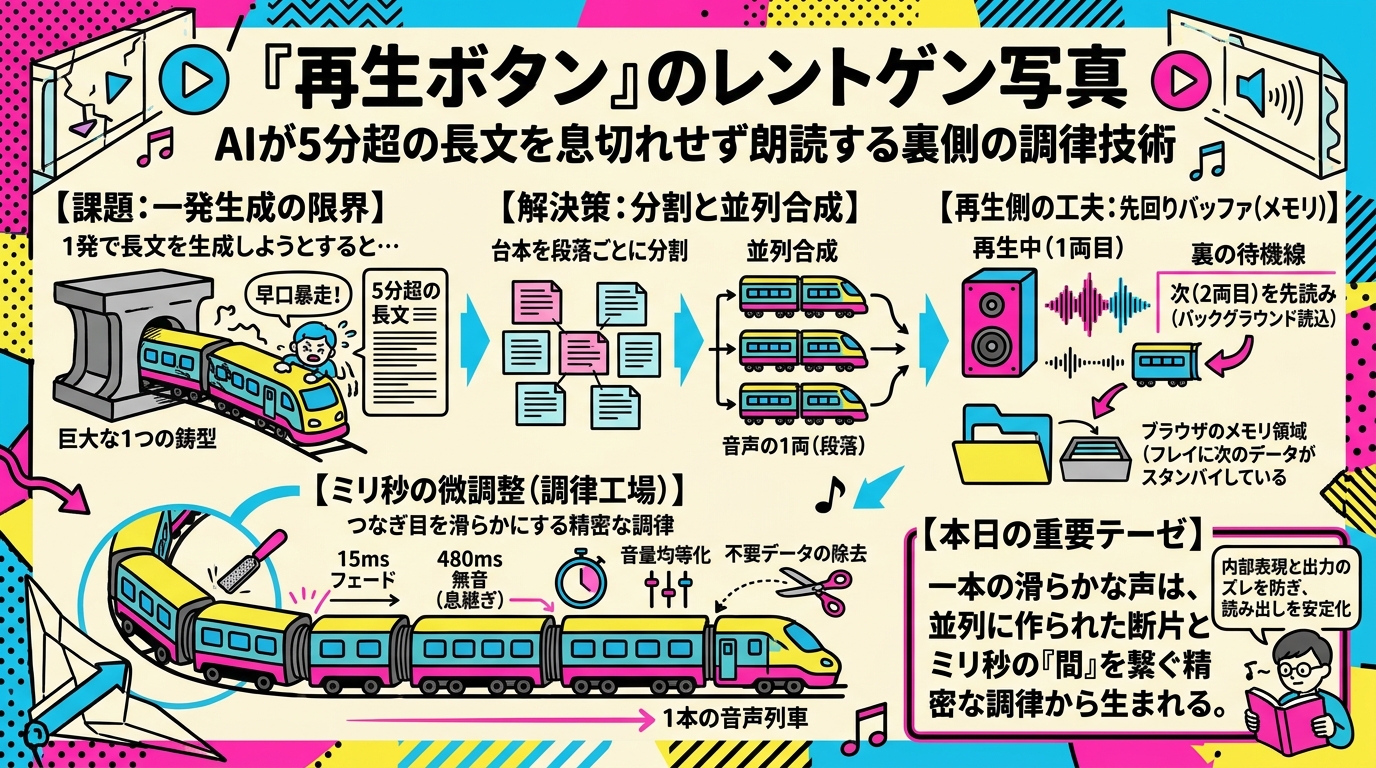
An X-Ray of the Play Button: The Precision Tuning Behind Unhurried Five-Minute AI Narration
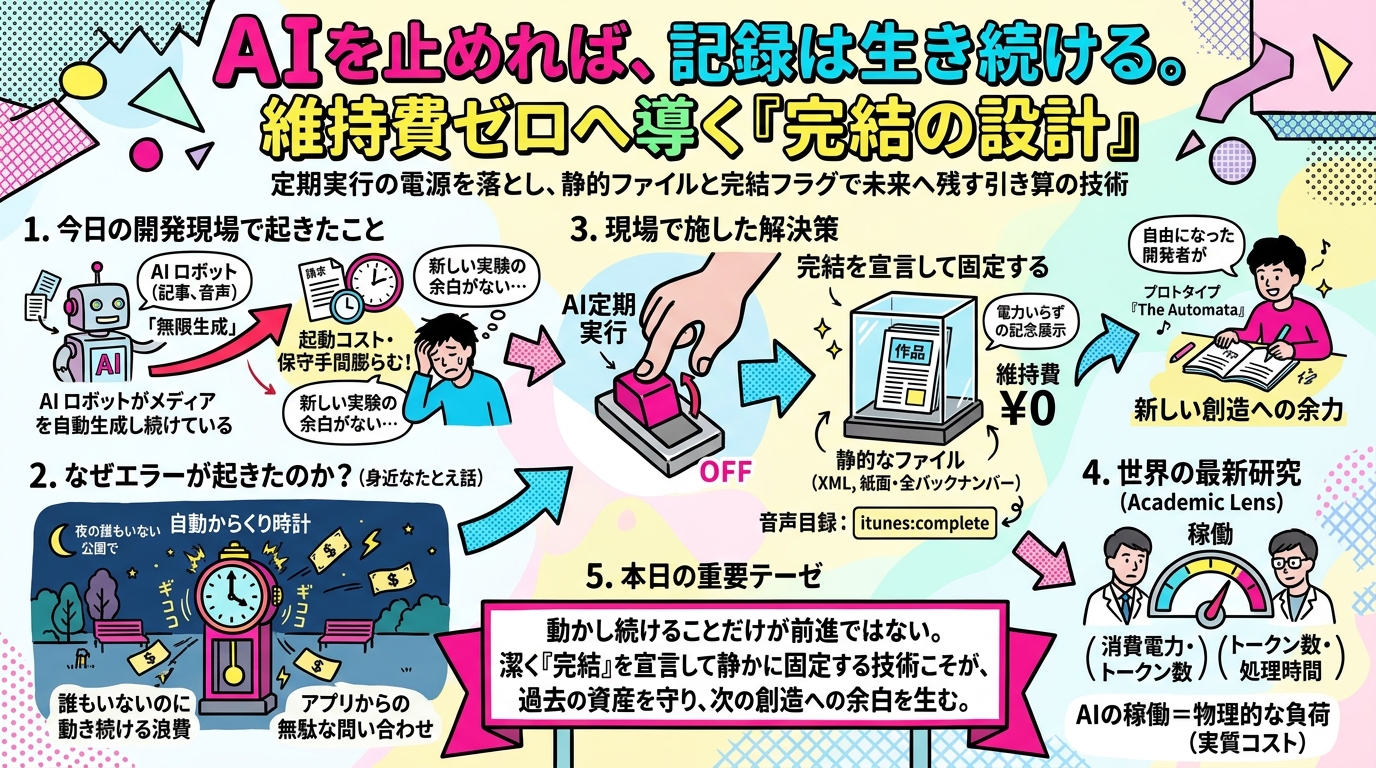
Stop the AI, and the Archive Lives On: Designing for Completion at Zero Maintenance Cost
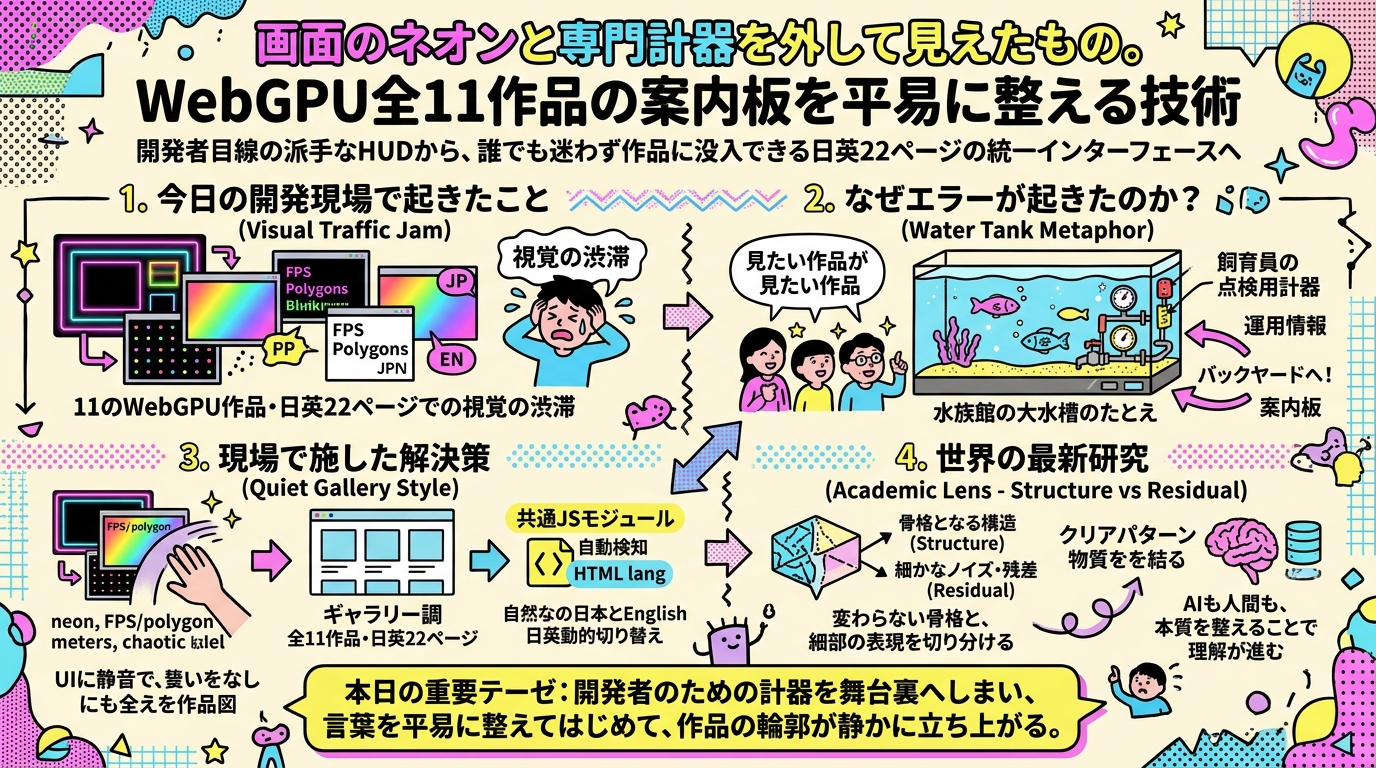
What Appeared When We Removed the Neon and Technical Gauges: Crafting Effortless Wayfinding Across 11 WebGPU Works
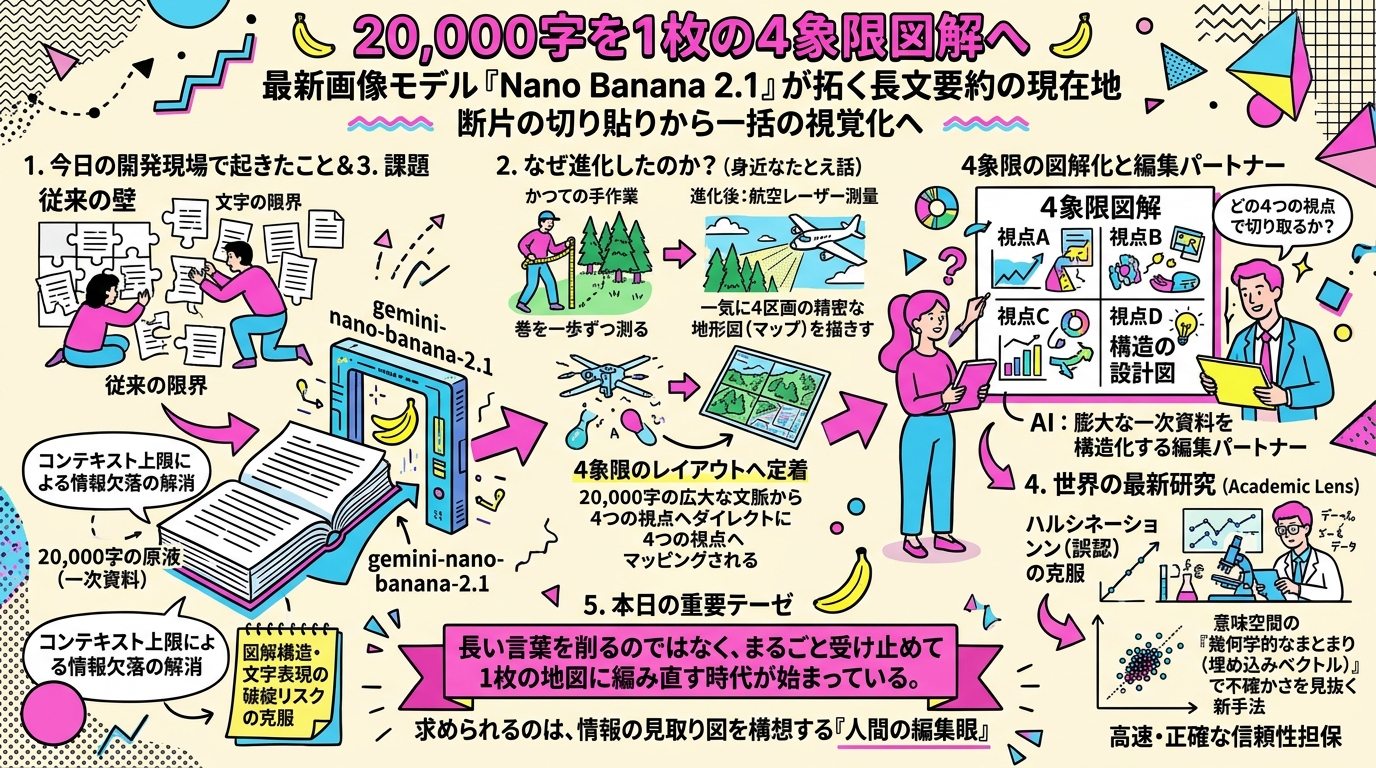
20,000 Characters Distilled into a Single Four-Quadrant Diagram: Where Long-Form Summarization Stands Today with the Latest Image Model, Nano Banana 2.1
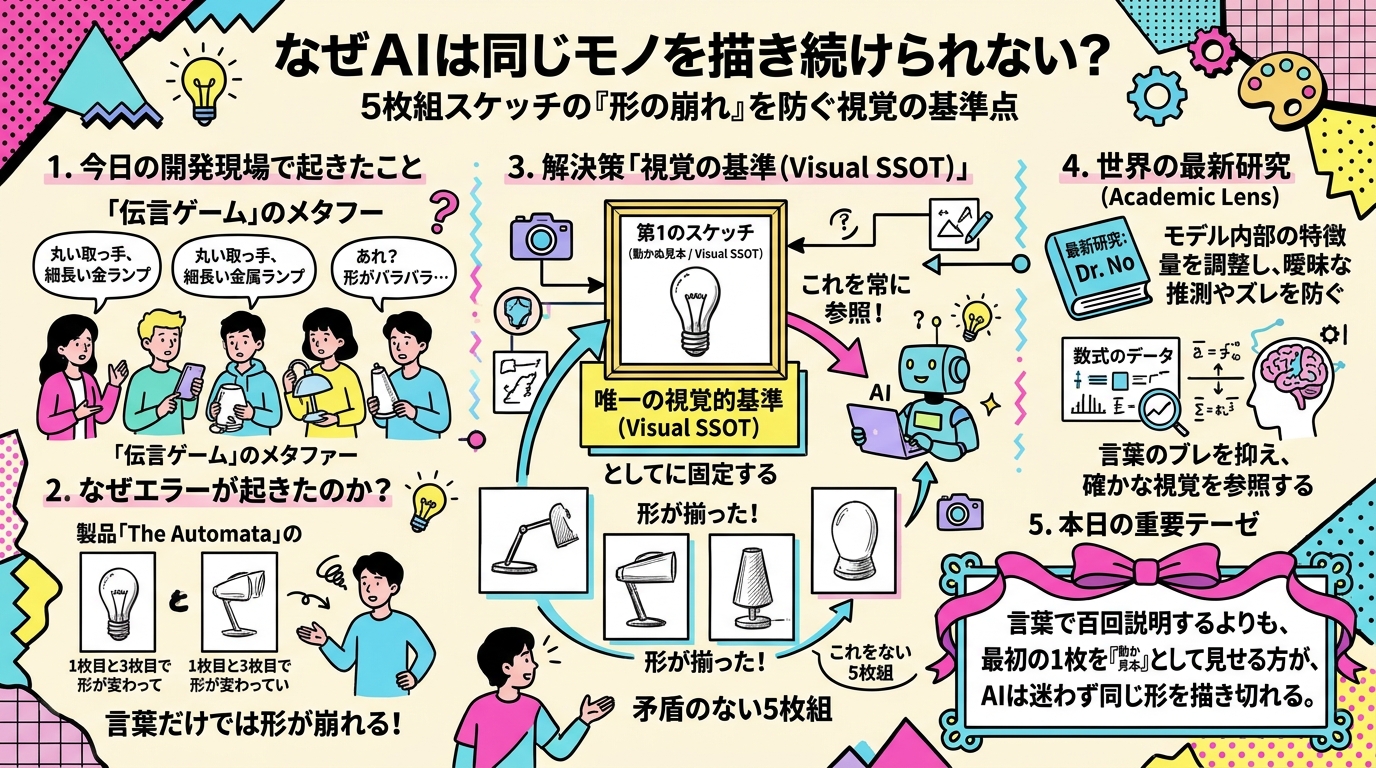
Why Can't AI Keep Drawing the Same Object? A Visual Anchor to Prevent Structural Drift in 5-Panel Sketches