THE SCHOOL OF KAMOS
Connecting Real-world Dev & Academic Intelligence with Intuitive Metaphors
Why Can't AI Keep Drawing the Same Object? A Visual Anchor to Prevent Structural Drift in 5-Panel Sketches
Behind 'The Automata,' the Autonomous Morning Prototype Publisher: An Image-Referencing Architecture That Prevents Form Collapse
'Why does an image-generation AI slightly alter the appearance of the same product or character every time I ask it to draw it from a different angle?' Our engineering team confronted this deceptively simple question head-on. While building 'The Automata'—a system that autonomously publishes industrial prototypes and five-panel sketches every morning based on cutting-edge research papers—we found that generating panels sequentially using text prompts alone caused the product's form to drift into something unrecognizable between the first and third panels.
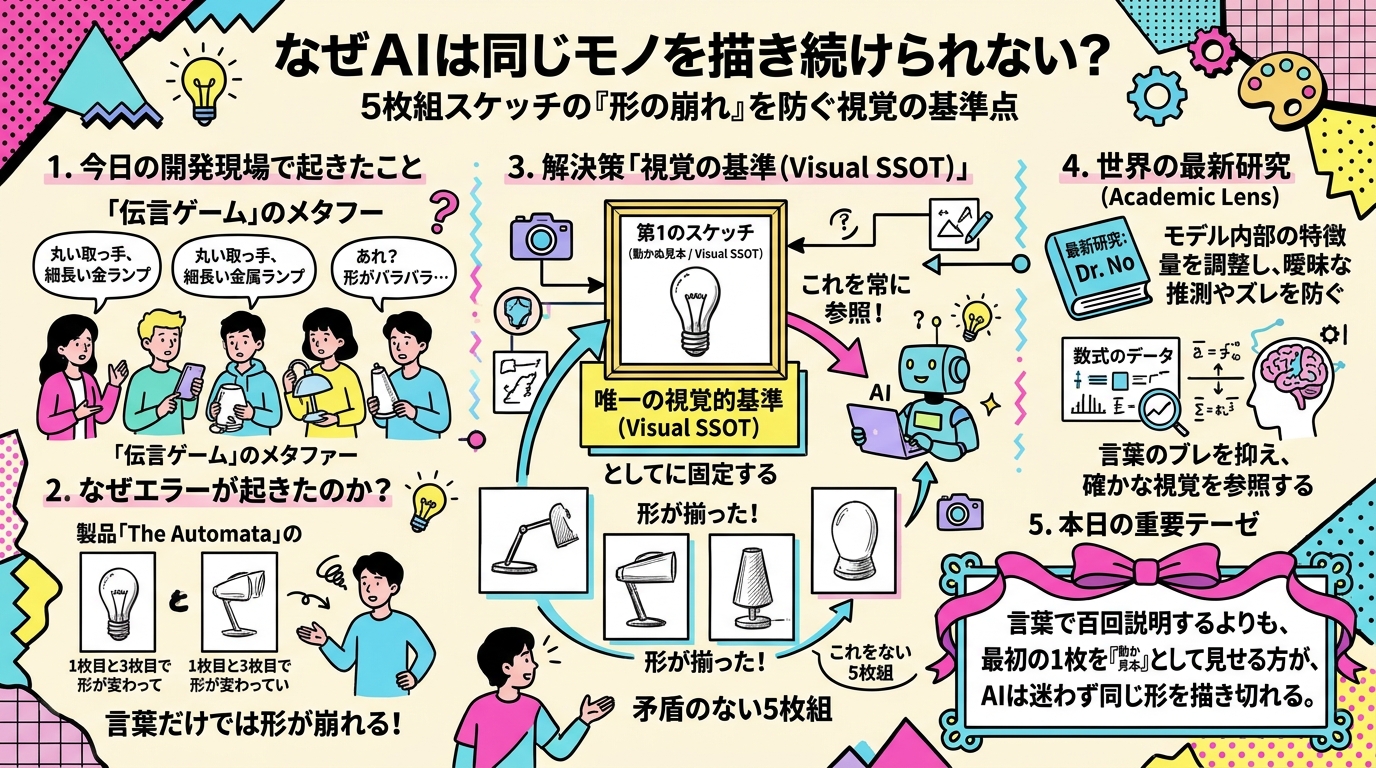
Why does AI struggle to redraw the exact shape it just generated from another angle? Think of it as a game of telephone played with words alone. Imagine five illustrators with no physical object in front of them, each given only a verbal description—'a slender metal lamp with a round handle'—and asked to draw the front, back, or side views. Because verbal descriptions leave wide room for interpretation, the size of the handle and the curvature of the edges will vary wildly from artist to artist, making the finished drawings look like entirely different products when placed side by side. AI operates in much the same way: reconstructing each image from scratch using only a 'verbal recipe,' making it exceedingly difficult to maintain visual continuity with the previous frame.
To cleanly resolve this issue, our team introduced a mechanism akin to placing an immovable model in the center of an atelier. Within our shared image-generation utility, we added a dedicated reference mode that locks the very first completed sketch as the 'Visual Single Source of Truth' (Visual SSOT), continuously referencing it while rendering the remaining four panels. Rather than handing over text instructions alone, the system places the finished first panel directly in front of the AI and asks it to 'draw the side and rear views while preserving this exact form and texture.' Combined with a safeguard to keep text labels out of the artwork, all five panels now interlock seamlessly as a single, coherent three-dimensional object.
"Rather than explaining a hundred times in words, showing the first panel as an 'immovable model' allows the AI to render the exact same form without hesitation."Key Takeaway
📖 1-Minute Lexicon
A design principle that avoids scattered reference samples by designating a single, authoritative baseline image to be referenced across every stage of production.
An AI architecture capable of reading, understanding, and generating content by combining visual inputs like photos and illustrations with written text.
Preventing AI Form Collapse with a Visual Anchor (Visual SSOT)
Live Frontier Pulse: Real-World AI Trends
RIKEN Discloses Unauthorized Access to Supercomputer Fugaku
RIKEN has revealed that its supercomputer 'Fugaku' suffered unauthorized access, underscoring the persistent cybersecurity threats targeting advanced computing resources and research infrastructure.
Nikkei Drops Below 60,000 in Afternoon Session as AI Stocks Extend Losses
In Tokyo trading, the Nikkei Stock Average fell below the 60,000 milestone in the afternoon session, led by widening losses in AI-related equities as investors increasingly scrutinize the profitability and real-world demand behind AI investments.
How Does This Connect to Global Frontier Research?
How vision-language models—which process images and text simultaneously—bind visual cues to textual instructions is a subject of intense inquiry in global research. The arXiv paper 'Dr. No' demonstrates a method for directly steering a model's internal features so that when visual information is ambiguous or a question is unanswerable, the AI refrains from forcing flawed guesses. This shares a deep foundational connection with our engineering approach: suppressing the drift caused by ambiguous verbal guesswork by anchoring generation to a reliable visual standard.
When prompting an AI to sequentially illustrate the same product from multiple angles, what is the most effective technique to prevent its shape from drifting?
Past School Paper Backnumbers
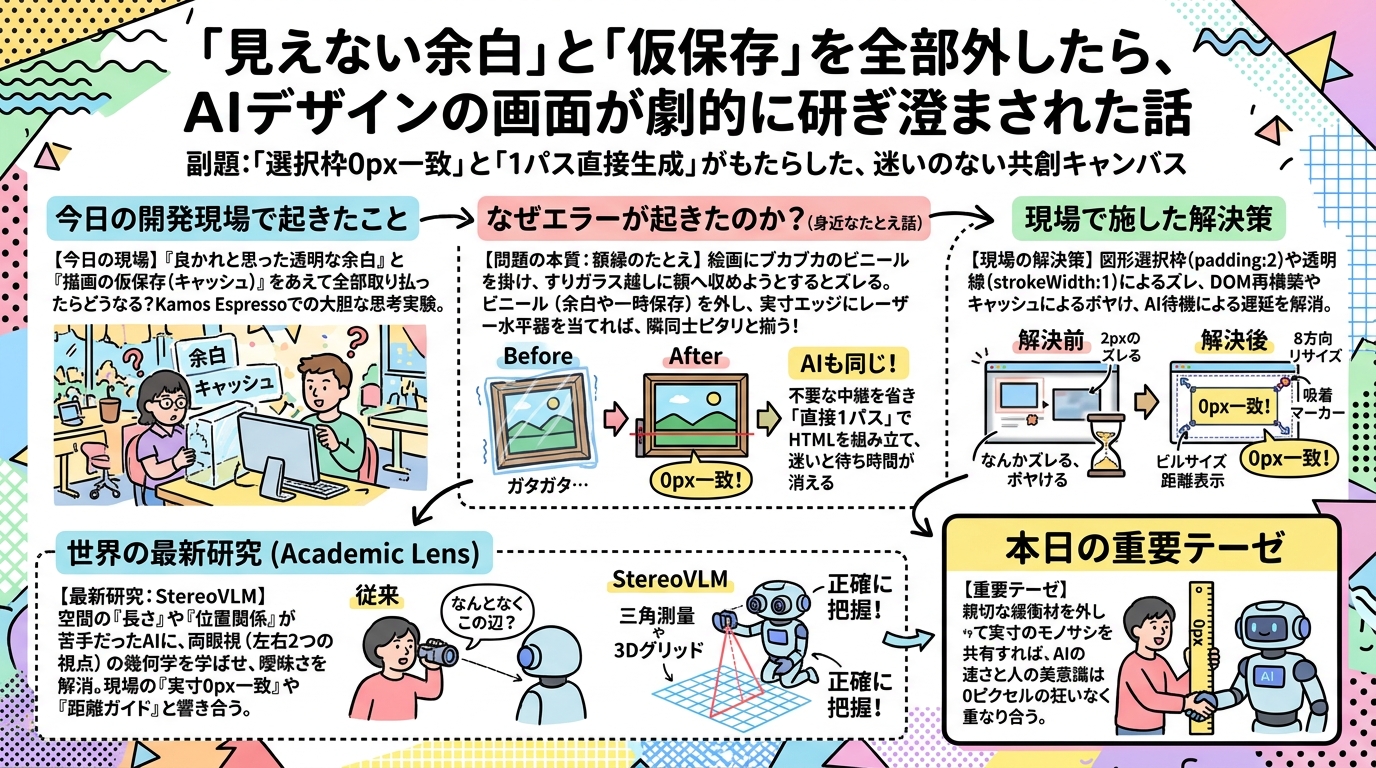
How Stripping Away Invisible Padding and Caching Dramatically Sharpened Our AI Design Canvas
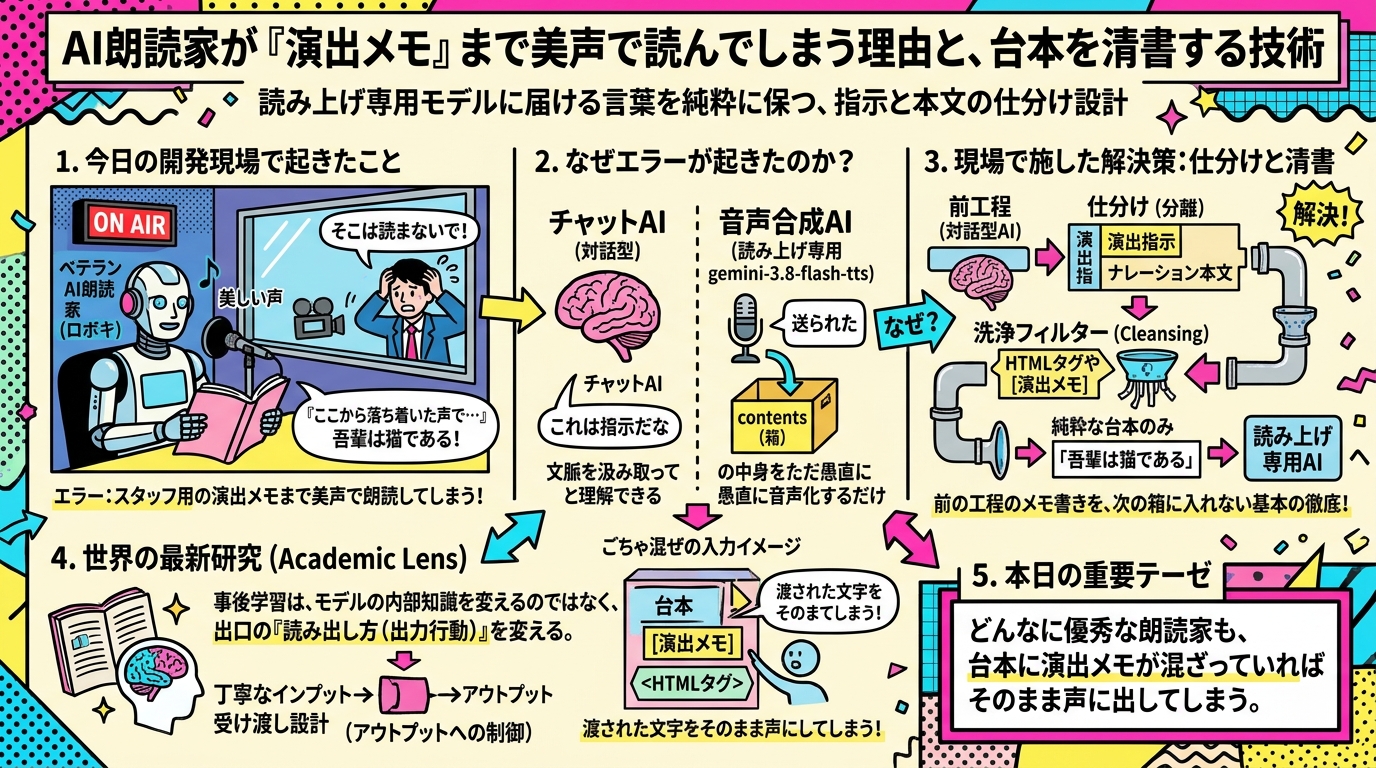
Why an AI Narrator Reads 'Stage Directions' Aloud—and the Art of Scrubbing the Script Clean
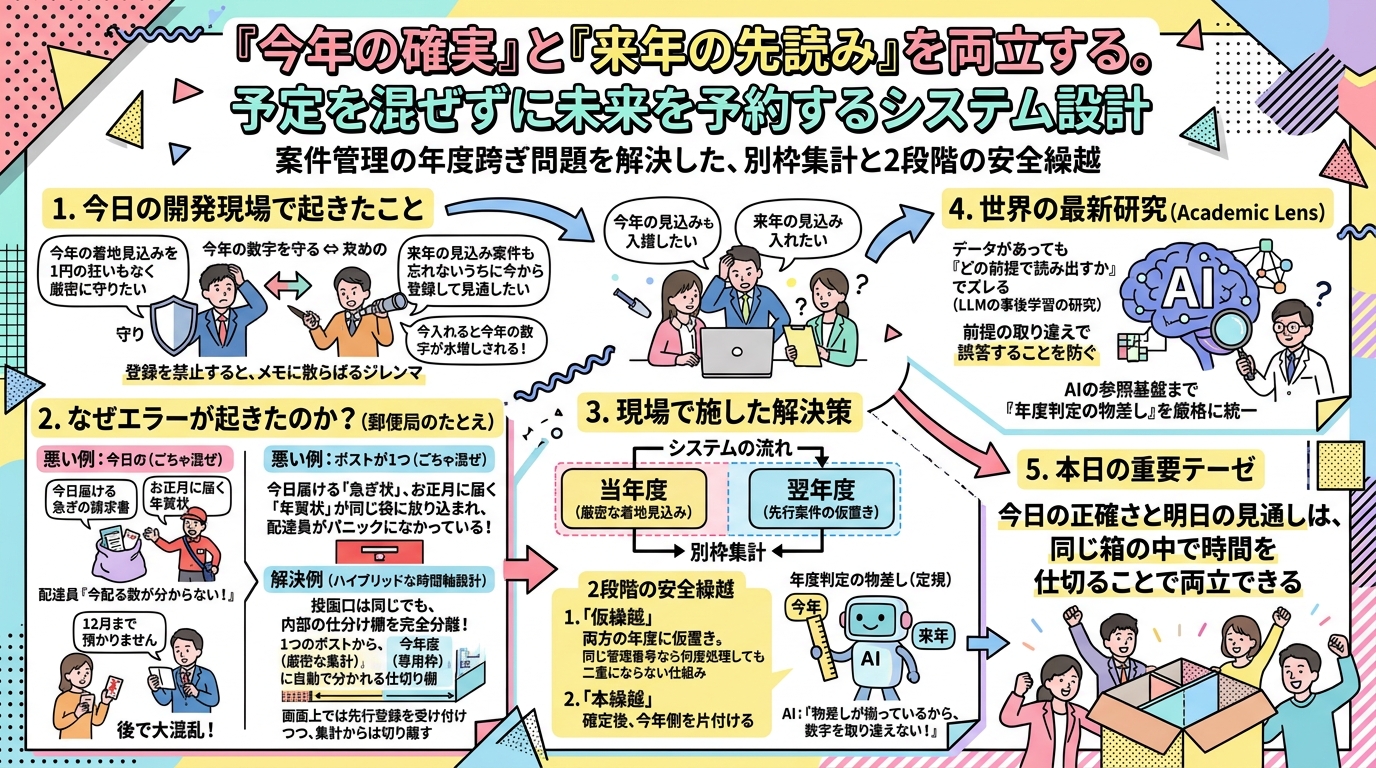
Balancing 'This Year's Certainty' with 'Next Year's Foresight': System Design That Reserves the Future Without Mixing Schedules
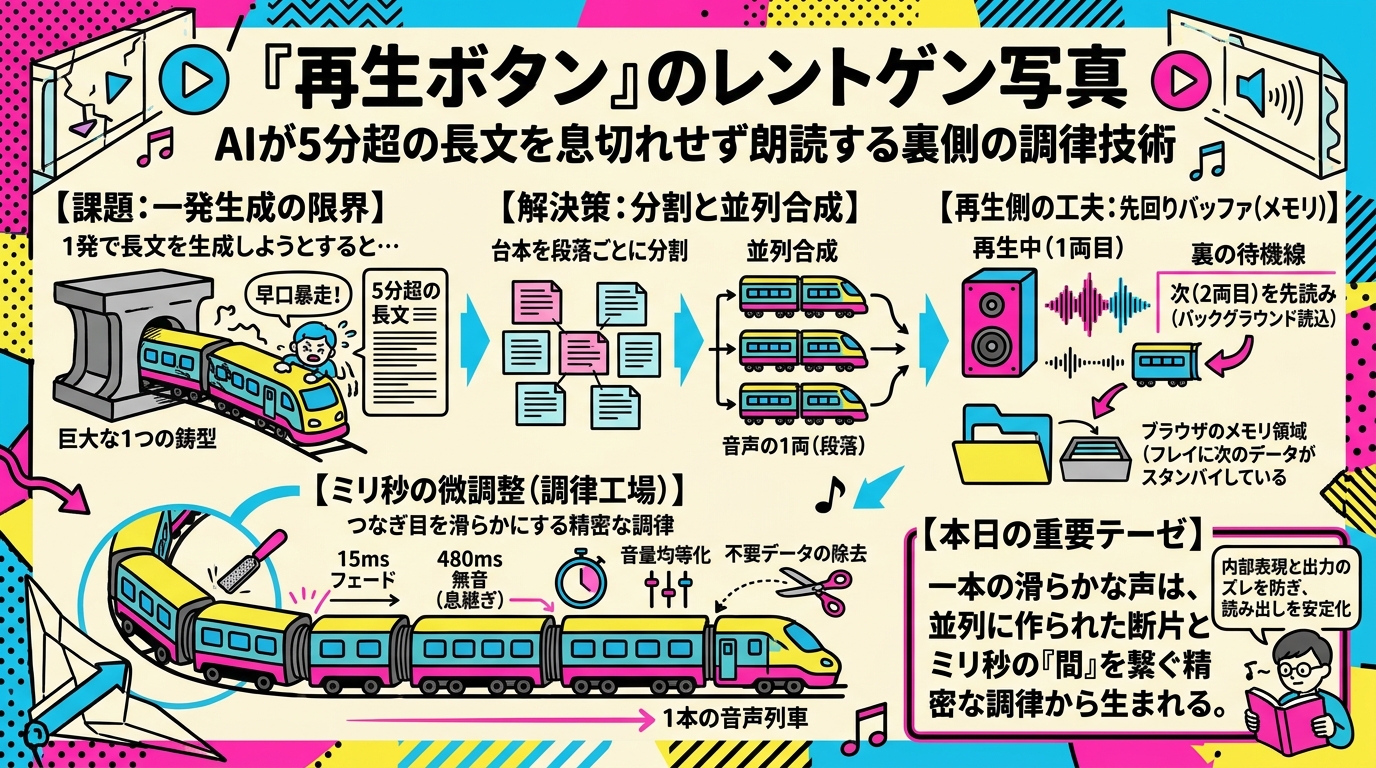
An X-Ray of the Play Button: The Precision Tuning Behind Unhurried Five-Minute AI Narration

Stop the AI, and the Archive Lives On: Designing for Completion at Zero Maintenance Cost
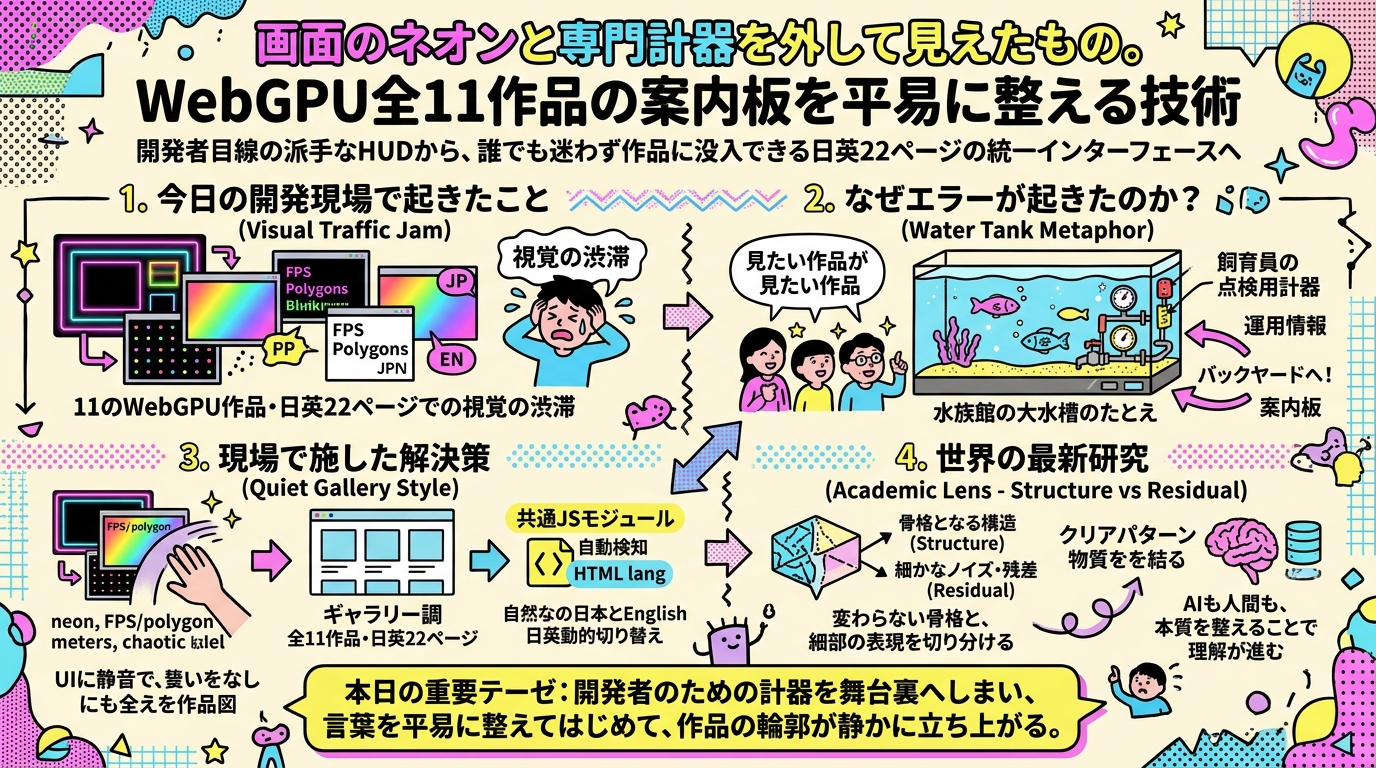
What Appeared When We Removed the Neon and Technical Gauges: Crafting Effortless Wayfinding Across 11 WebGPU Works
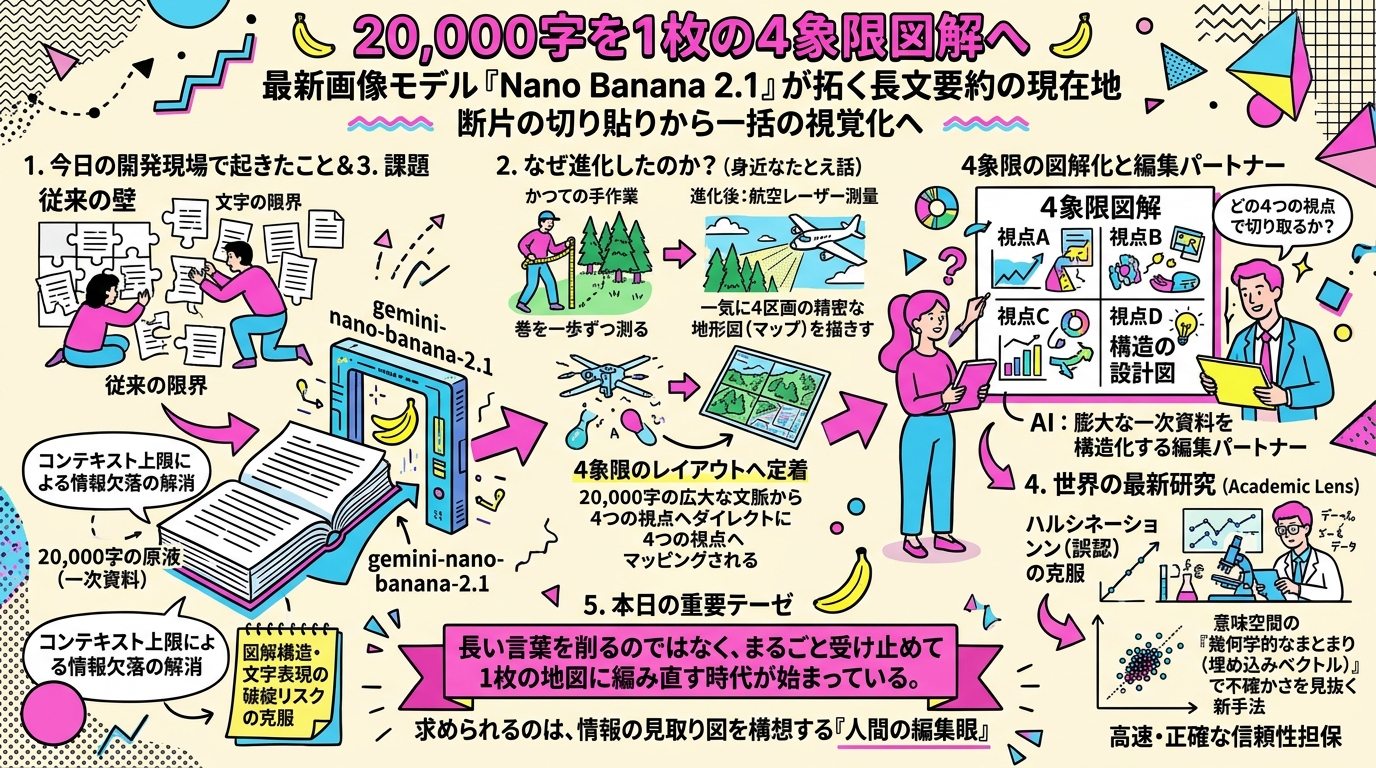
20,000 Characters Distilled into a Single Four-Quadrant Diagram: Where Long-Form Summarization Stands Today with the Latest Image Model, Nano Banana 2.1
Current
Why Can't AI Keep Drawing the Same Object? A Visual Anchor to Prevent Structural Drift in 5-Panel Sketches
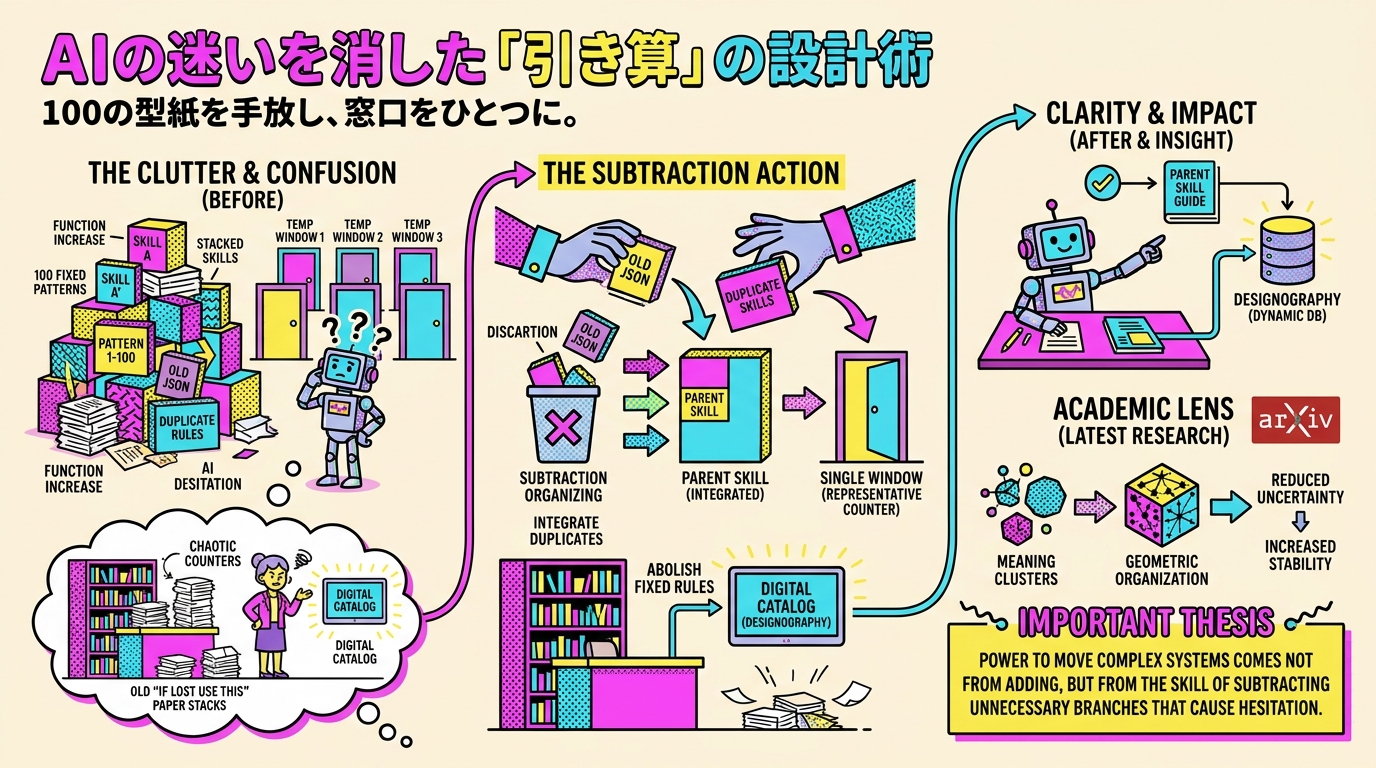
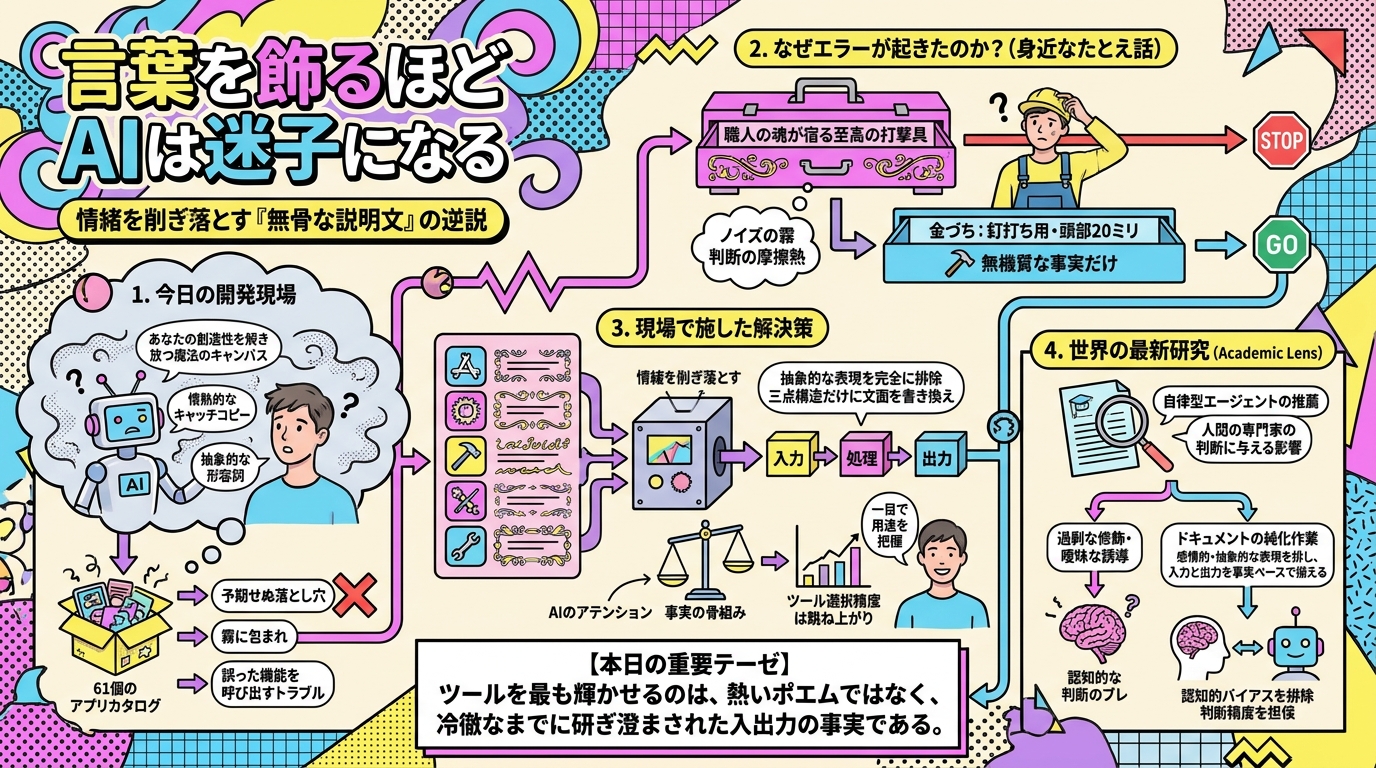
Letting Go of 100 Templates for a Single Desk: The Art of Subtractive Design That Eliminated AI Hesitation
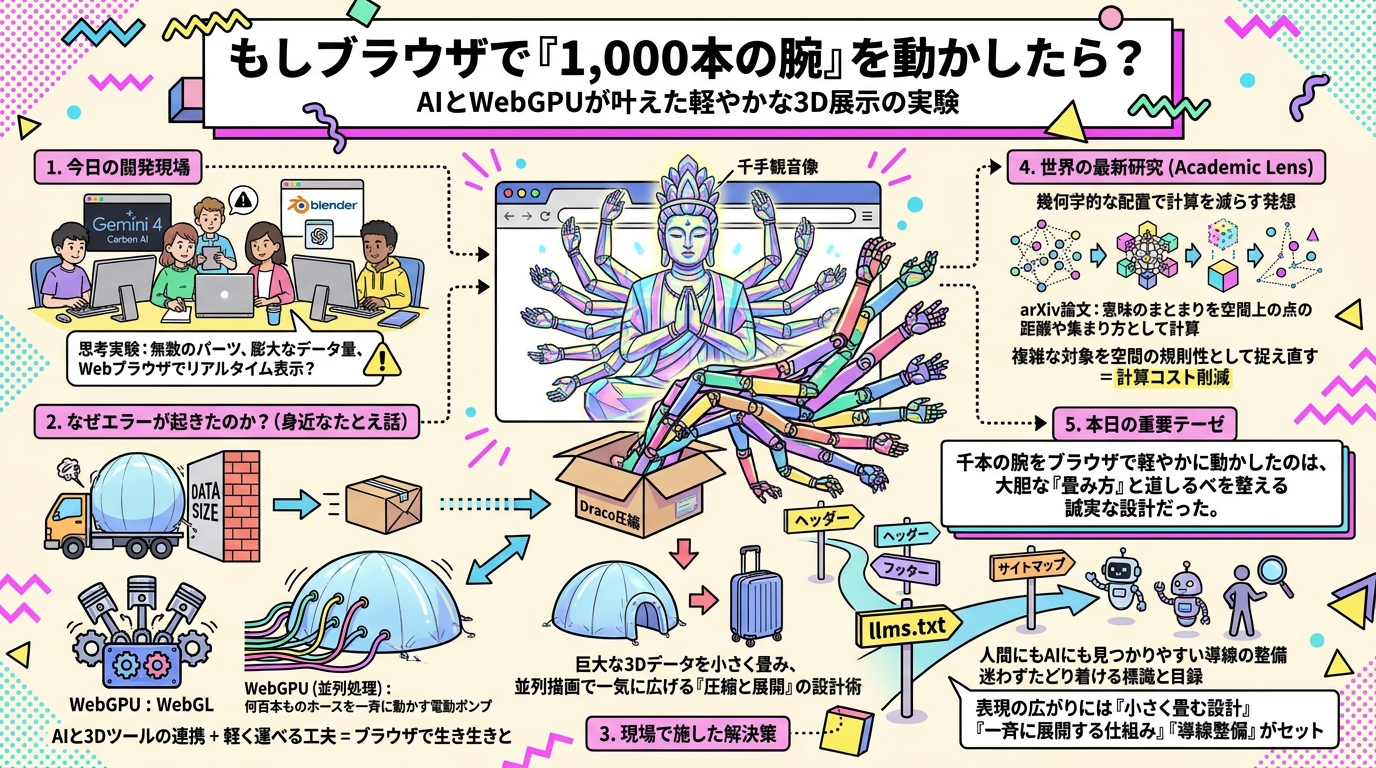
What If You Animated '1,000 Arms' in a Browser? A Lightweight 3D Exhibition Experiment Powered by AI and WebGPU
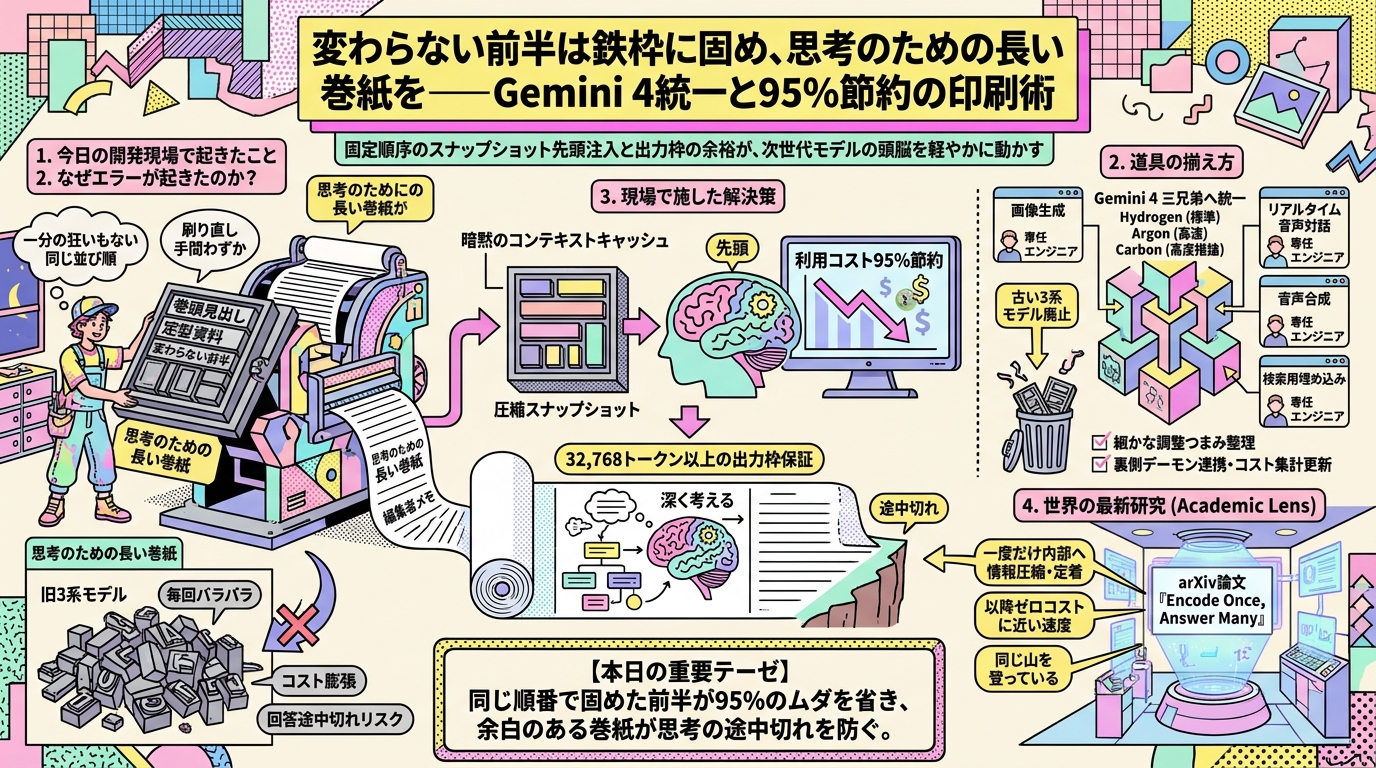
Locking the Constant Lead in Iron, Unrolling Long Scrolls for Thought — Gemini 4 Unification and the Art of 95% Printing Savings
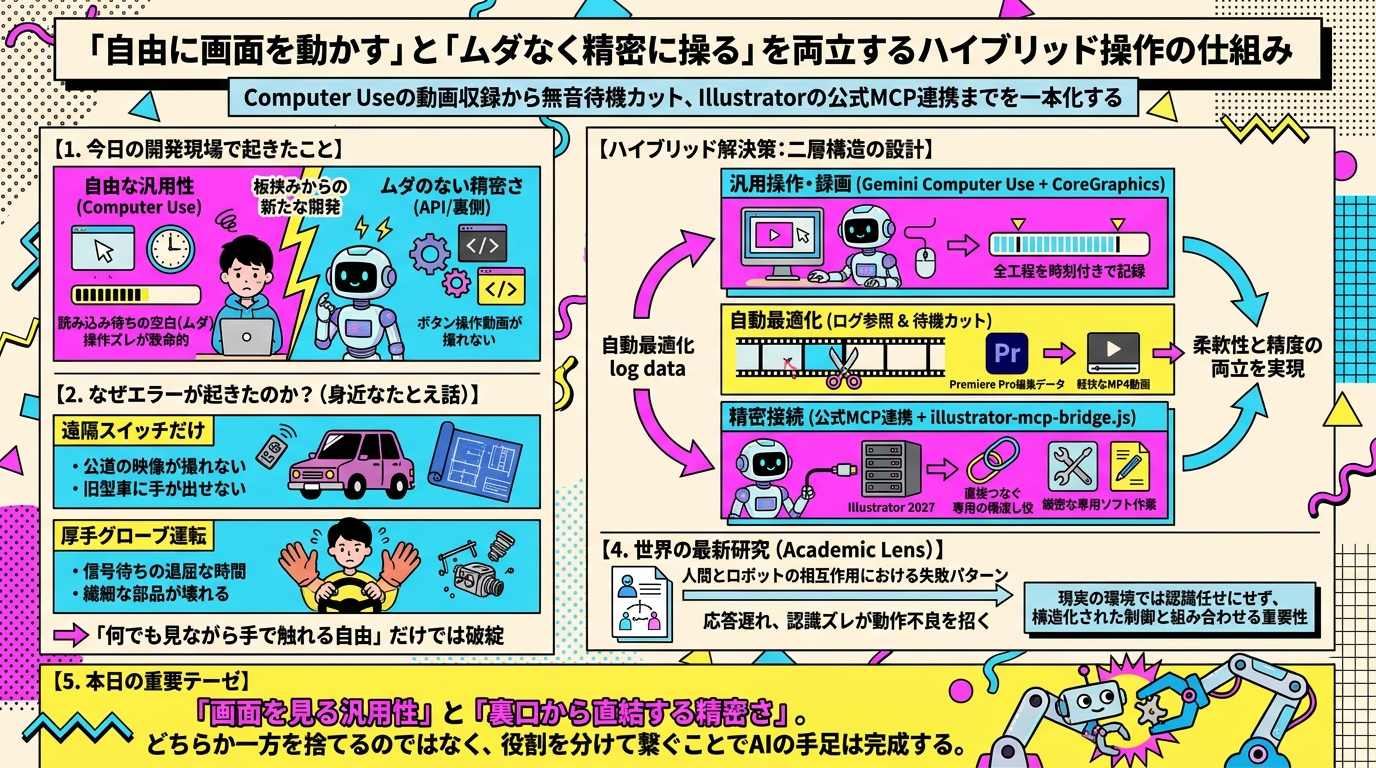
A Hybrid Control Architecture Bridging Free-Form Screen Navigation and Lean, Precision Execution
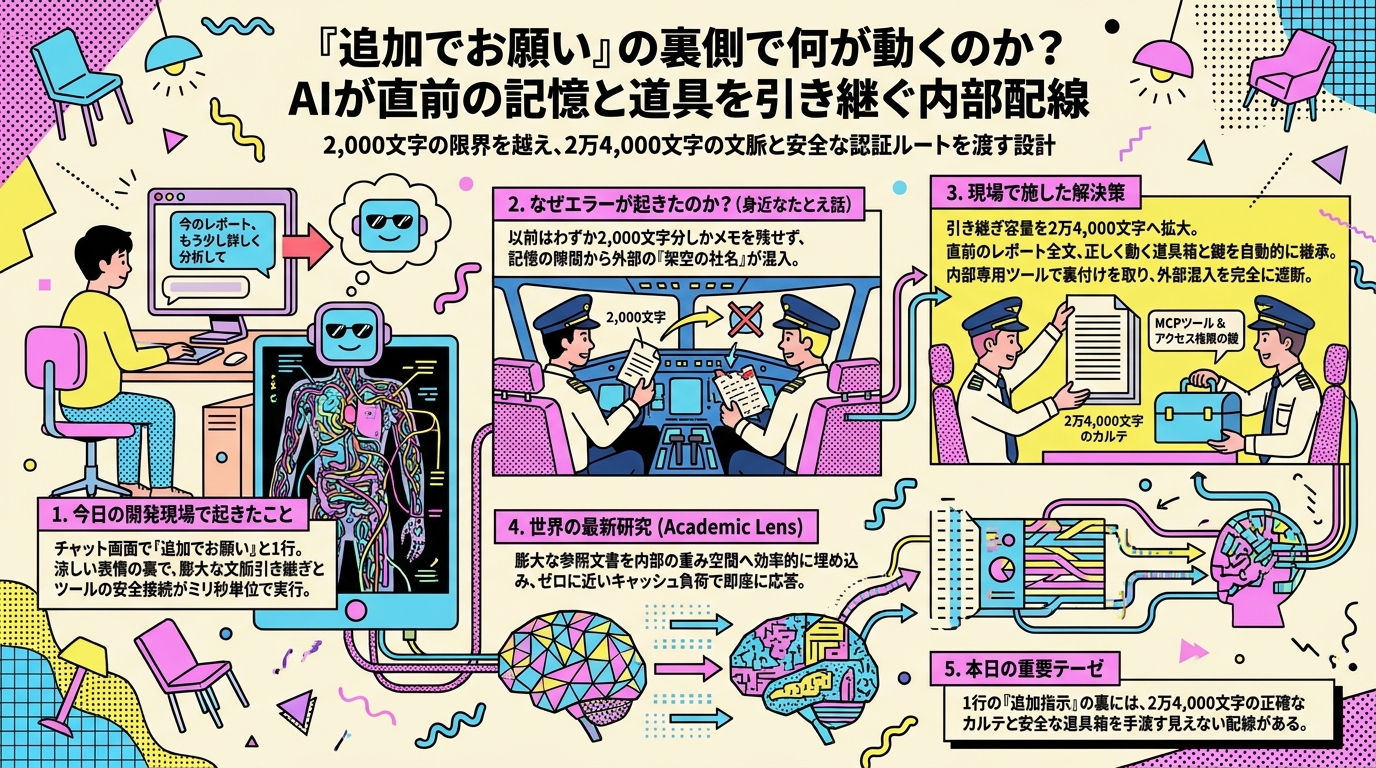
Behind "Just One More Request": The Internal Wiring That Hands Off Memory and Tools Between AIs