THE SCHOOL OF KAMOS
Connecting Real-world Dev & Academic Intelligence with Intuitive Metaphors
AI Evolves from a 'Consultant in Another Tab' to a 'Partner at the Same Desk': A Blueprint for Human-Machine Unity Beyond Fragmented Tools
What the birth of a unified workbench spanning clients, progress, hourly tracking, and AI integration reveals about the future of collaboration
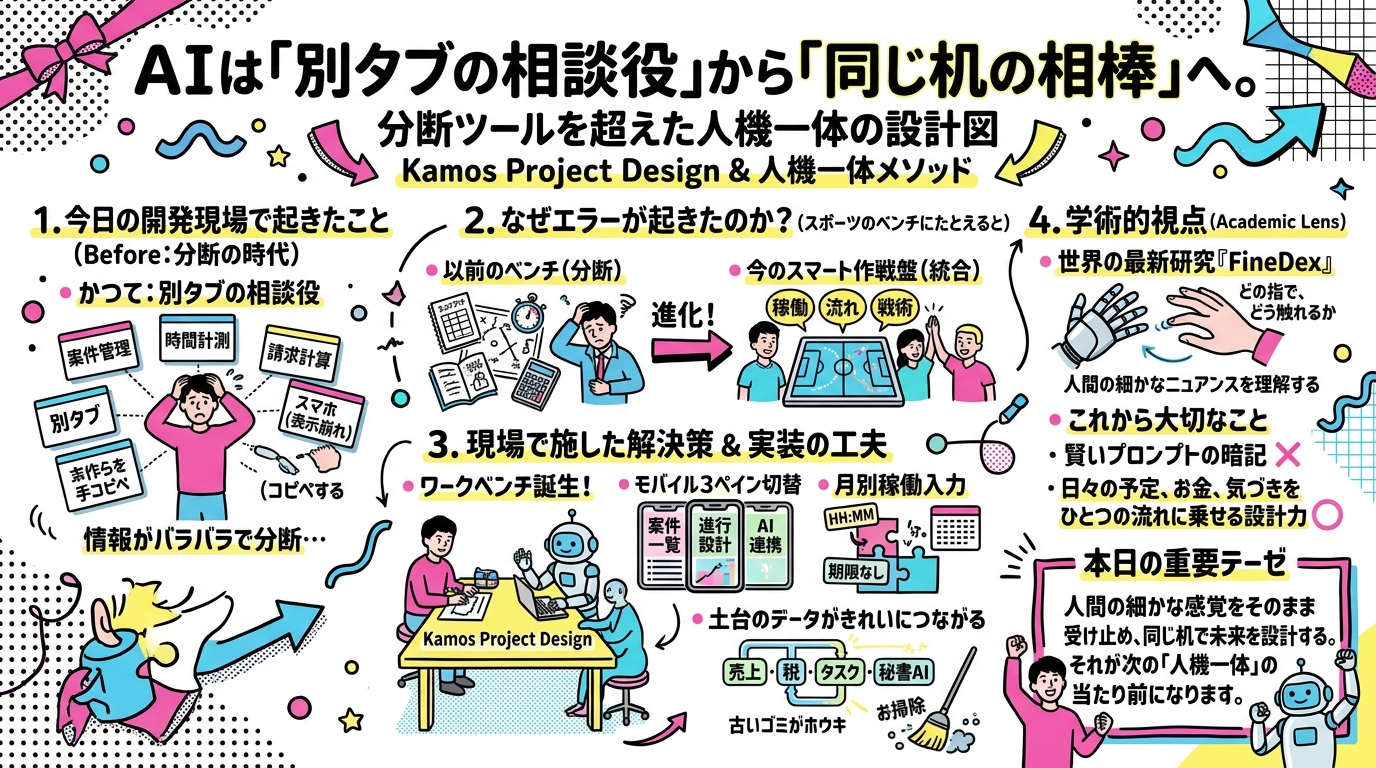
Just a year or two ago, using AI at work meant opening a separate browser tab and manually copying and pasting client notes or schedules just to ask a question. Project management, time tracking, and billing calculations were each locked away in isolated tools, and on a smartphone while out and about, complex tables would break, often forcing you to give up altogether. This week, however, a major breakthrough unfolded in the development environment. With the implementation of the new workbench 'Kamos Project Design'—which seamlessly bridges clients, project progress, tasks, and revenue—alongside the 'Human-Machine Unity' method, a foundation has been established where AI can share context in real time on the exact same desk.
What fundamentally evolved here is a mechanism that translates soft, human intuition directly into a shared language for both the system and AI, rather than forcing humans to re-enter data to suit the machine's convenience. To compare it to a sports bench: in the past, paper scorebooks, stopwatches, handwritten tactic boards, and calculators were all scattered, leaving the coach to piece the information together inside their head. Now, player performance, game flow, and tactical data synchronize instantaneously on a single smart coaching board. In this release as well, we implemented monthly work-hour inputs that move fluidly between decimals, hours-and-minutes (HH:MM), and minute conversions; a flexible calendar that accommodates 'no deadline'; and a three-pane toggle that lets you switch effortlessly between 'Project List, Progress Design, and AI Integration' even on narrow smartphone screens. The unification of tools creates a continuous flow that never interrupts human thought.
What this implementation reflects is the 'explanation-free AI collaboration' that will become second nature six months from now. Until now, the reason we had to type out long preambles to AI every time—like 'Right now, this project is in such-and-such a state...'—was simply because the AI wasn't sitting right beside our actual workspace. With this update, hourly time-tracking records automatically synchronize across the entire ecosystem, reaching revenue, tax calculations, tasks, and even the secretary's memory scripts, while obsolete loading warnings have been carefully swept away. When the underlying data is cleanly connected, AI naturally understands 'what you are spending how much time on right now' without needing special instructions. For anyone learning how to leverage AI going forward, what truly matters isn't memorizing clever prompts, but the design capability to keep daily schedules, finances, and insights flowing within a single unified stream.
"Embracing human nuance just as it is, and designing the future at the very same desk—that will become the next standard of 'Human-Machine Unity.'"Key Takeaway
📖 1-Minute Lexicon
An integrated interface that brings multiple tools—such as client information, schedules, revenue, and AI—onto a single workspace where they operate in sync.
A design philosophy in which AI and tools adapt to and collaborate with natural human intuition and rhythm, rather than forcing humans to conform to machine operations.
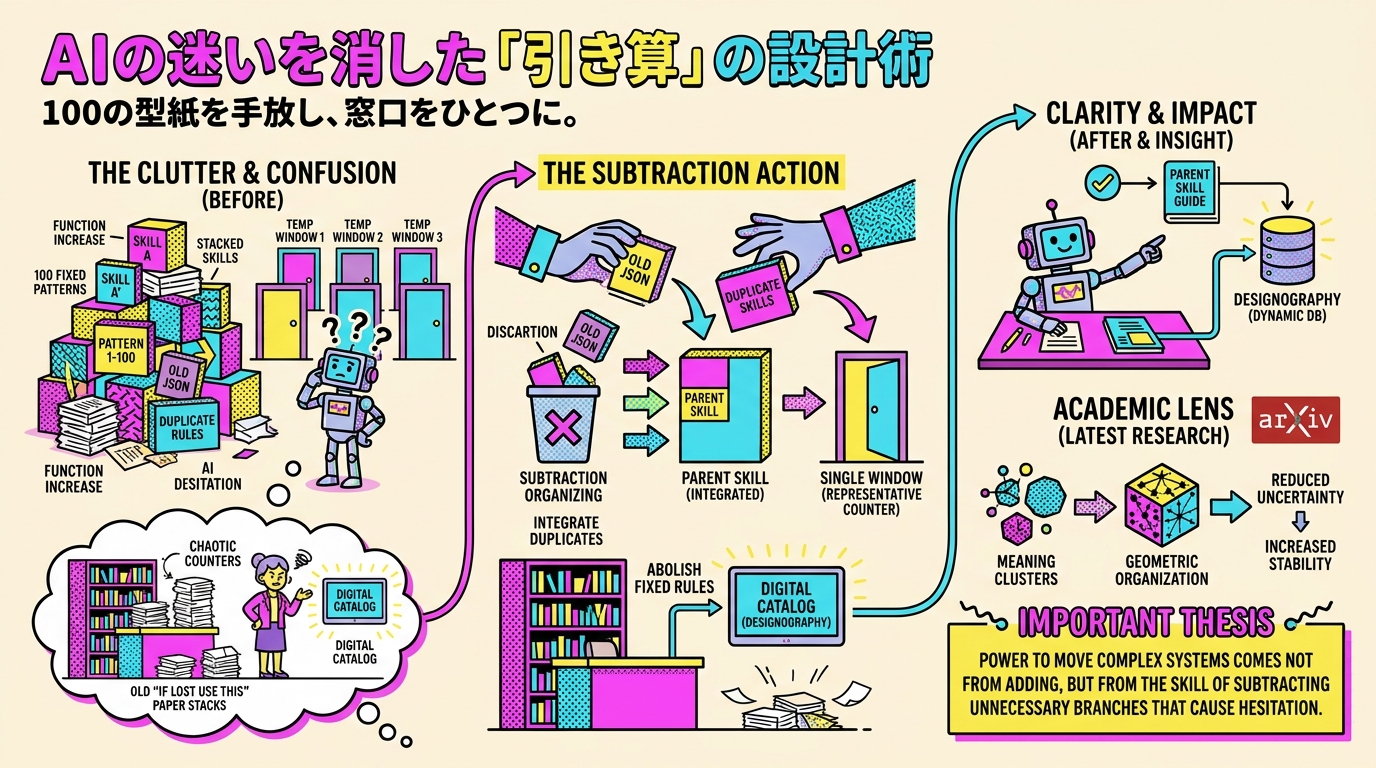
Evolution from Fragmented Tools to a Unified 'Human-Machine Unity' Workbench
Live Frontier Pulse: Real-World AI Trends
[AI-Driven Modernization] 'Reverse Spec Flow' Released to Generate AI-Agent-Ready Specifications from Existing Code
AWS has unveiled 'Reverse Spec Flow,' a development methodology that reverse-engineers specifications from existing program code into a format easily understood by AI agents. Even in environments where documentation has been lost over years of system modifications, this practical approach translates actual codebases into AI-ready blueprints to streamline modernization.
Workplace Use of Personal AI Expands to Nearly Half of Managers, Heightening Data Leak Risks
A Nikkei survey and report revealed that nearly half of managers are using personal, non-company-issued AI services for work, heightening the risk of internal data leaks. The findings highlight a structural trend: the more disconnected official business tools are from AI, the more likely employees are to take data out into personal tools in search of convenience.
How Does This Connect to Global Frontier Research?
This challenge of 'bridging fine-grained human intent directly into machine movement' resonates deeply with the frontier of robotics. In the latest study 'FineDex,' researchers overcame the wall of conventional AI control—which could previously only treat a five-fingered hand like a simple pair of scissors (a gripper)—and proposed a framework that understands human-level delicate instructions, such as 'which finger to use and how to make contact,' reproducing them on physical robots. Its hallmark lies in using ideal motions drawn by generative models as a guide, while adapting them through virtual practice into physically executable procedures. Rather than forcing humans to conform to the tool, this stance of having the system absorb delicate human nuances overlaps completely with our 'Human-Machine Unity' design in the field.
What is the greatest benefit of this new design, which allows switching between 'Project List, Progress Design, and AI Integration' even on a narrow smartphone screen and supports flexible work-hour entry in decimals or HH:MM?
Past School Paper Backnumbers
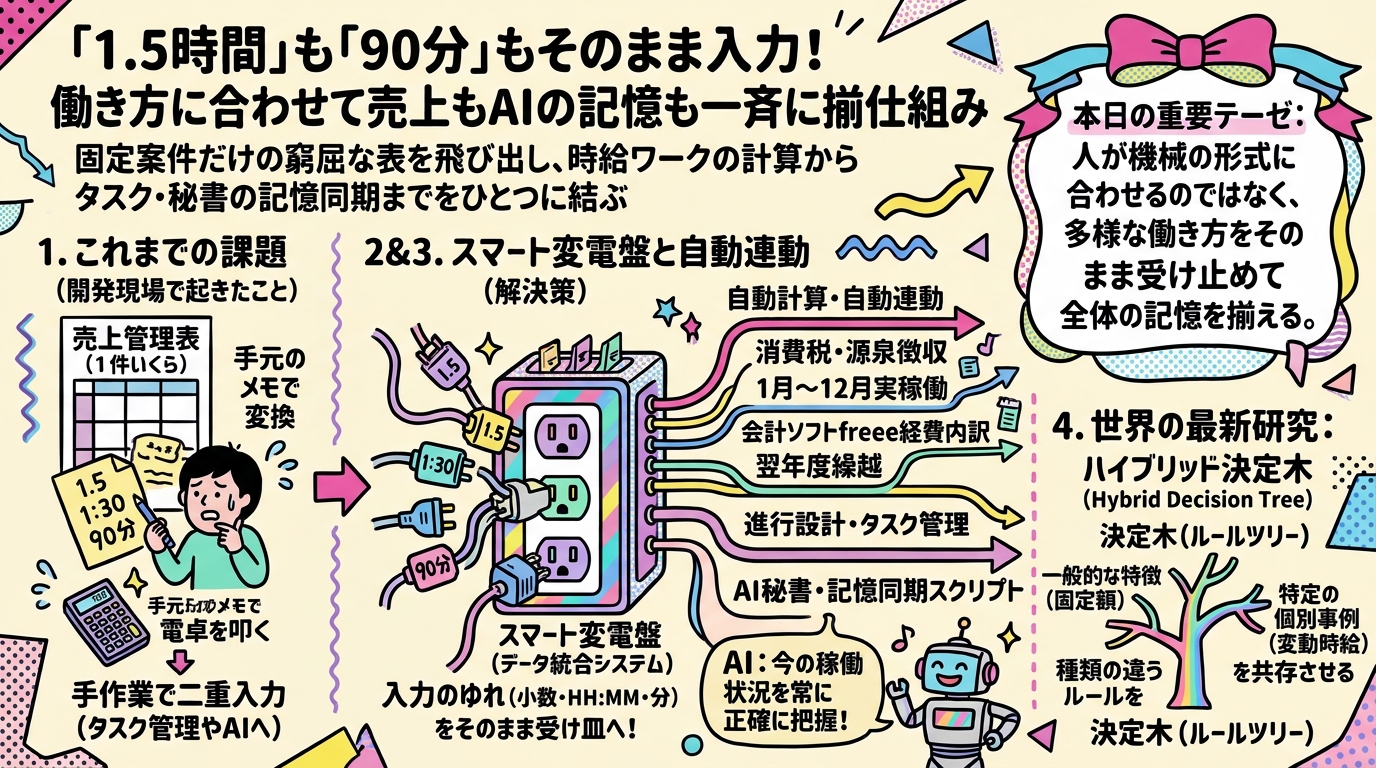
Enter "1.5 Hours" or "90 Minutes" As-Is: Unifying Revenue and AI Memory as Workstyles Evolve
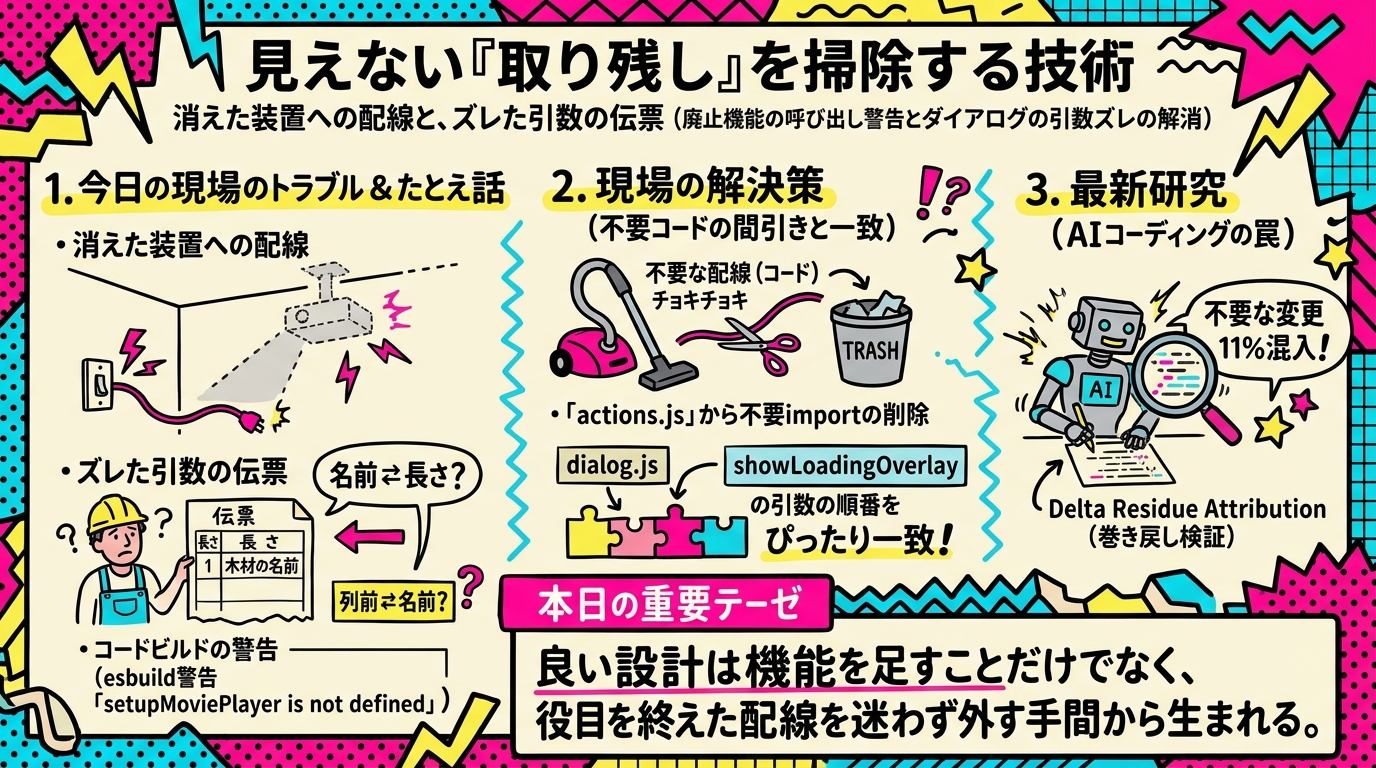
Wiring to a Vanished Device and Misaligned Argument Slips: The Craft of Clearing Invisible Leftovers
Current
AI Evolves from a 'Consultant in Another Tab' to a 'Partner at the Same Desk': A Blueprint for Human-Machine Unity Beyond Fragmented Tools
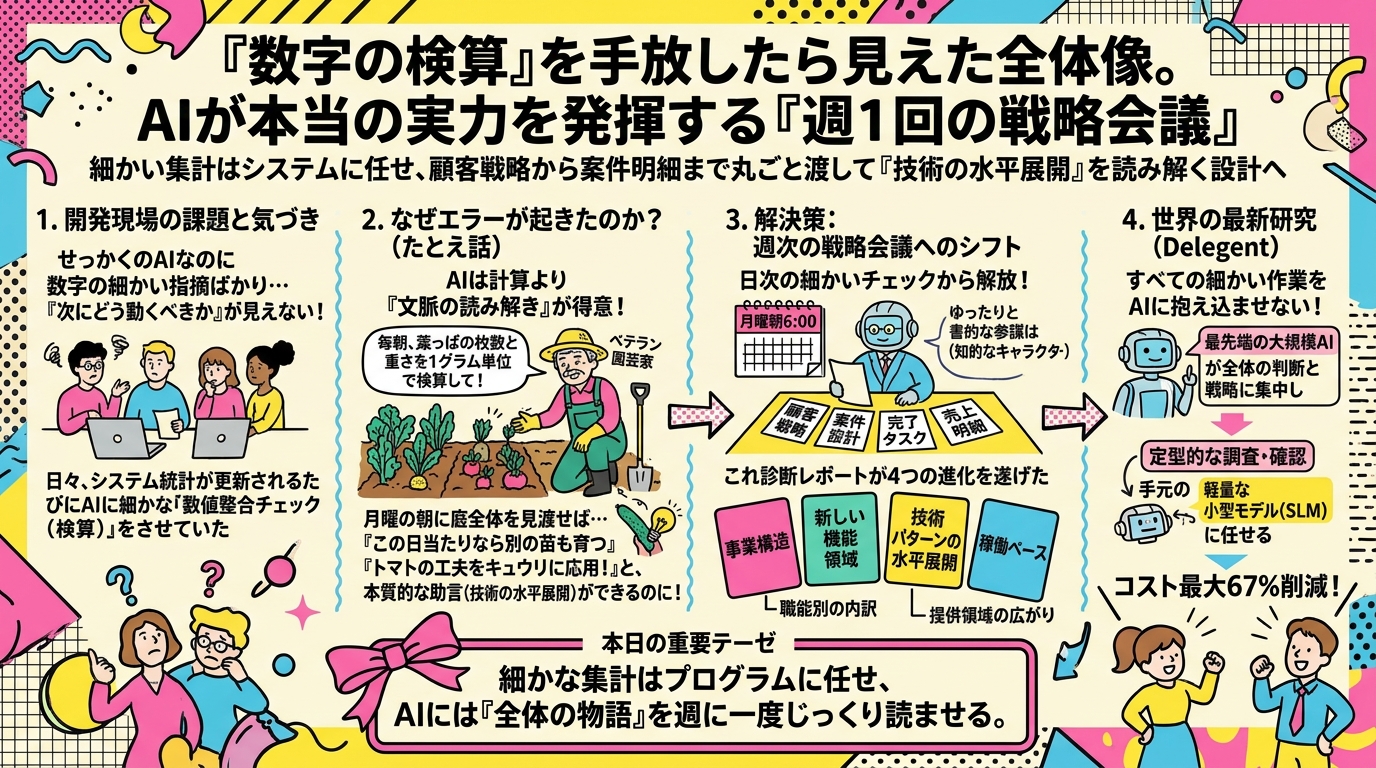
Letting Go of 'Number-Checking' to See the Big Picture: How a Weekly Strategy Sync Unleashes AI's True Potential
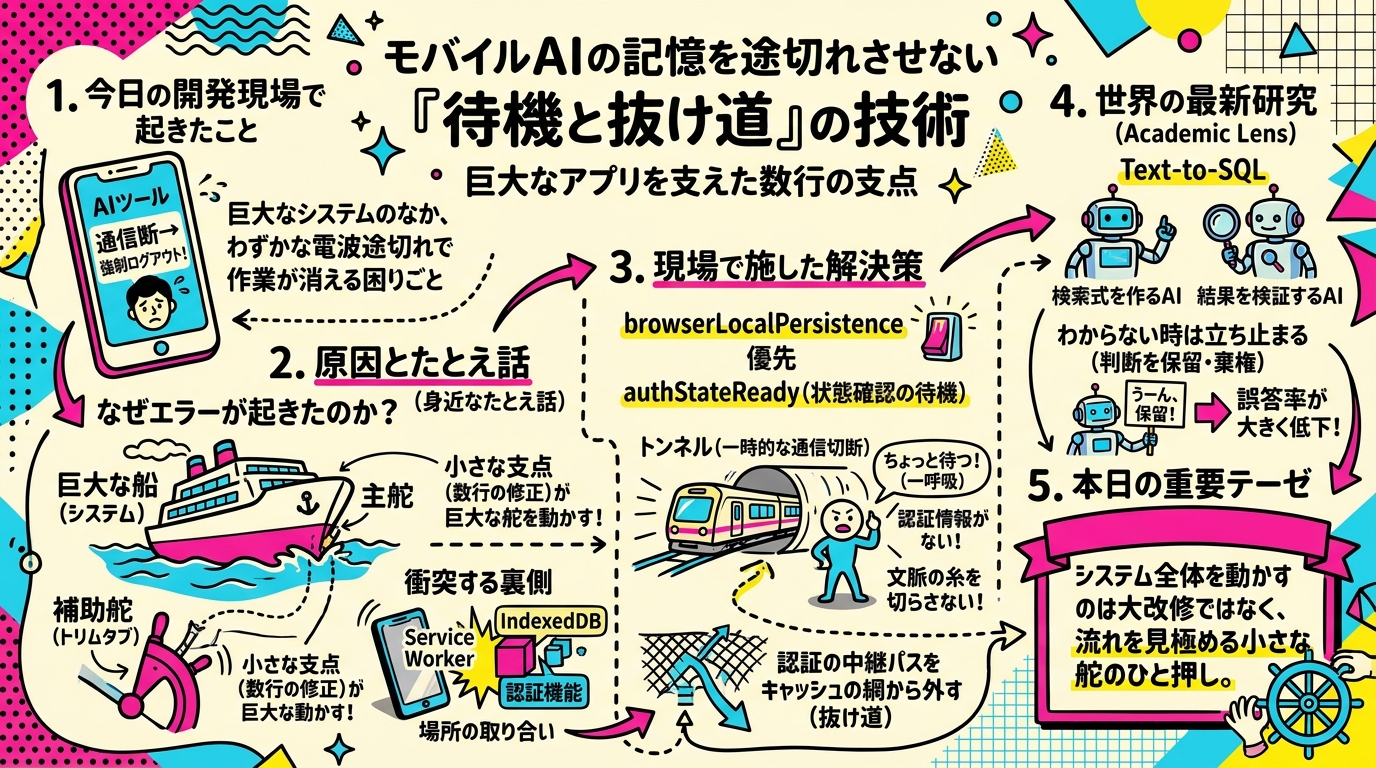
A Few Lines Supporting a Massive App: The Craft of 'Waiting and Bypasses' Keeping Mobile AI Memory Intact
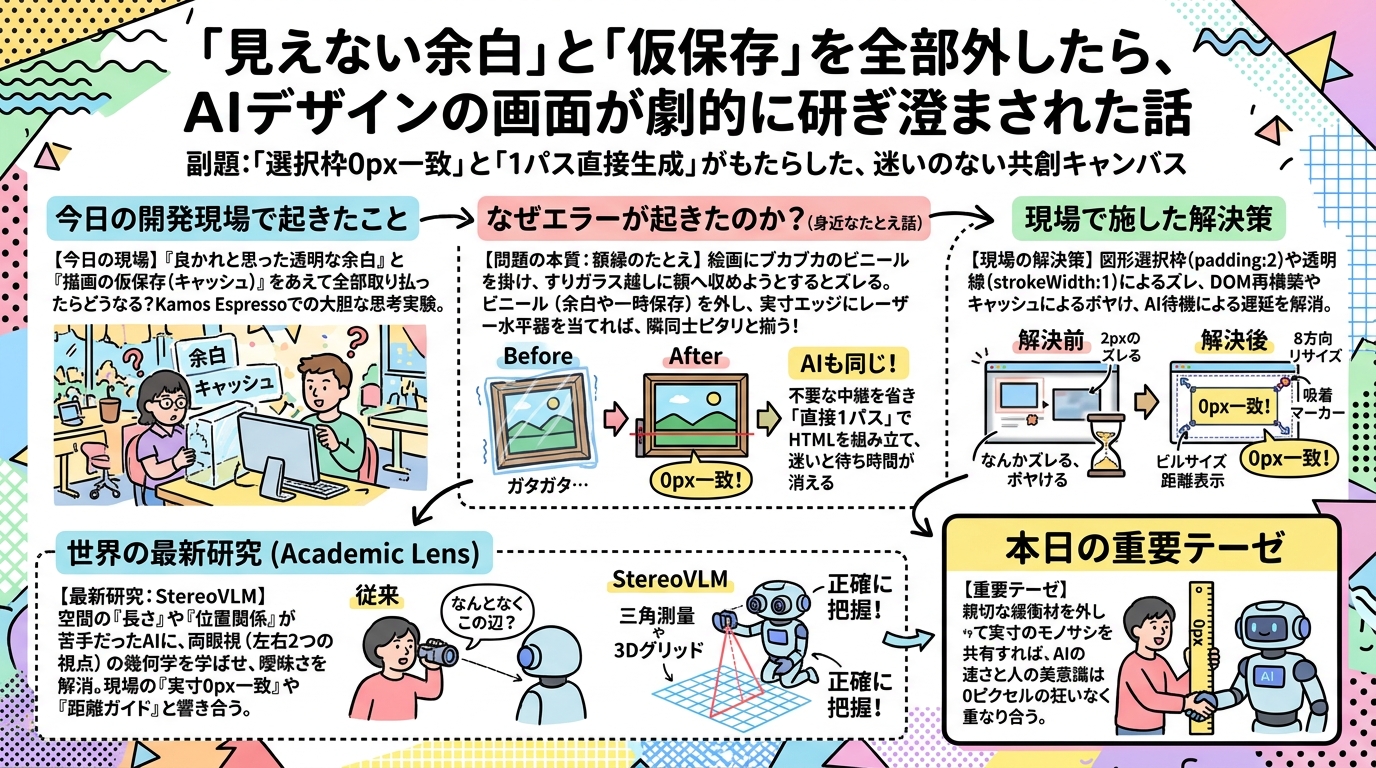
How Stripping Away Invisible Padding and Caching Dramatically Sharpened Our AI Design Canvas
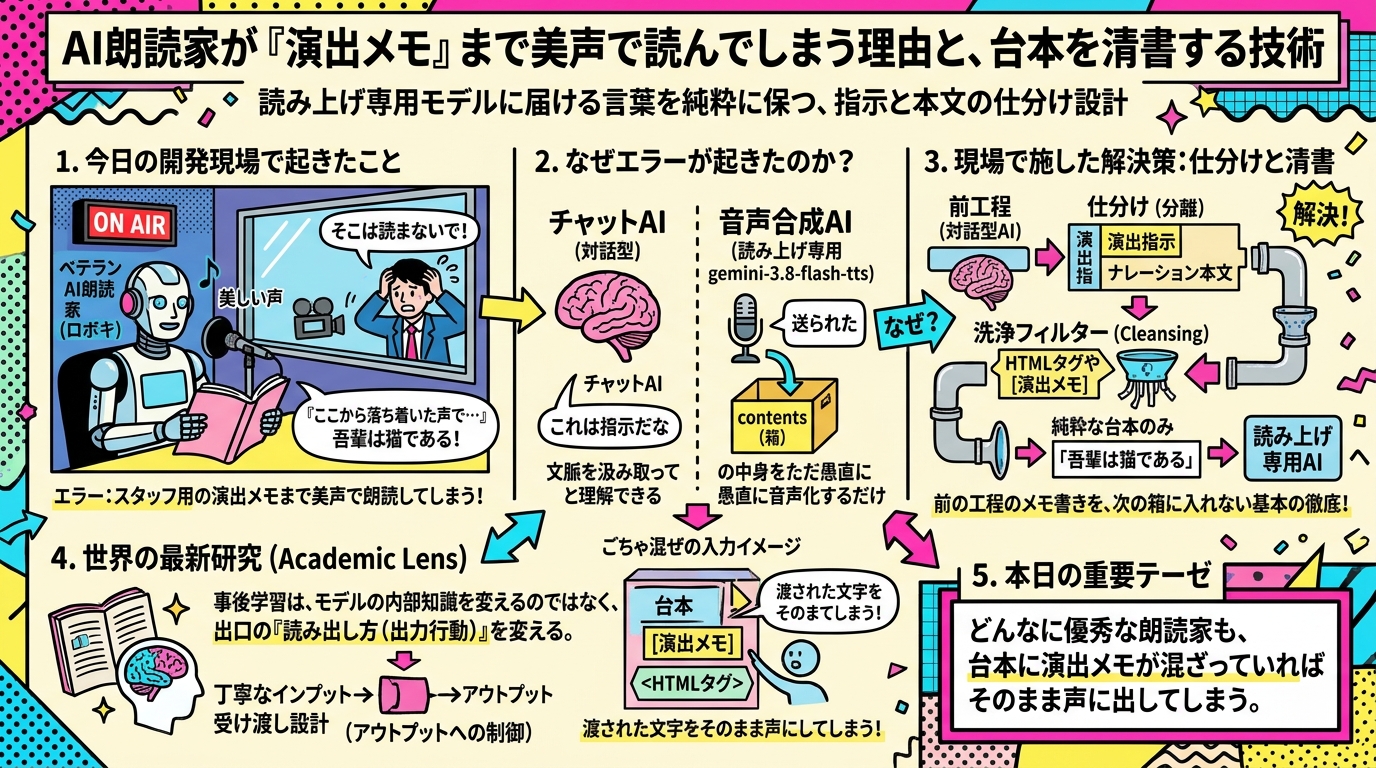
Why an AI Narrator Reads 'Stage Directions' Aloud—and the Art of Scrubbing the Script Clean
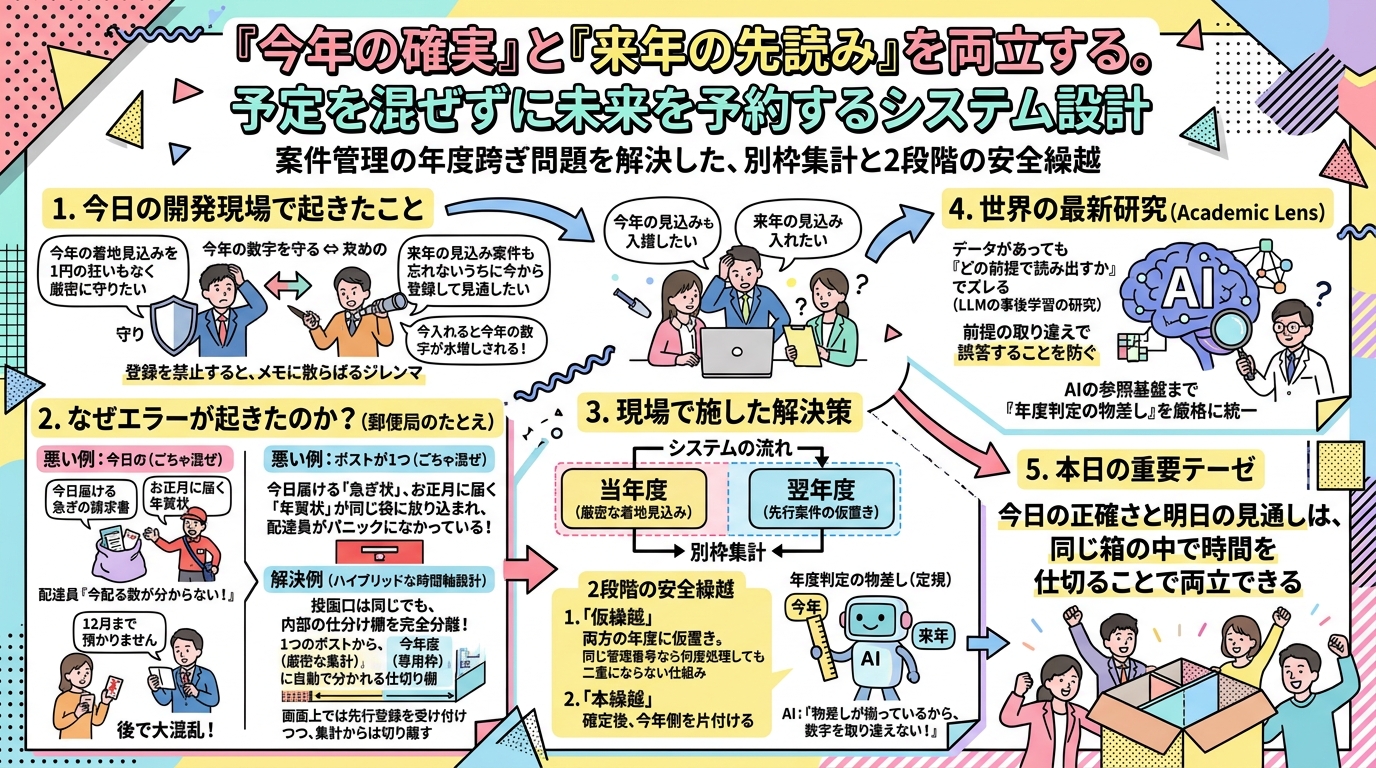
Balancing 'This Year's Certainty' with 'Next Year's Foresight': System Design That Reserves the Future Without Mixing Schedules
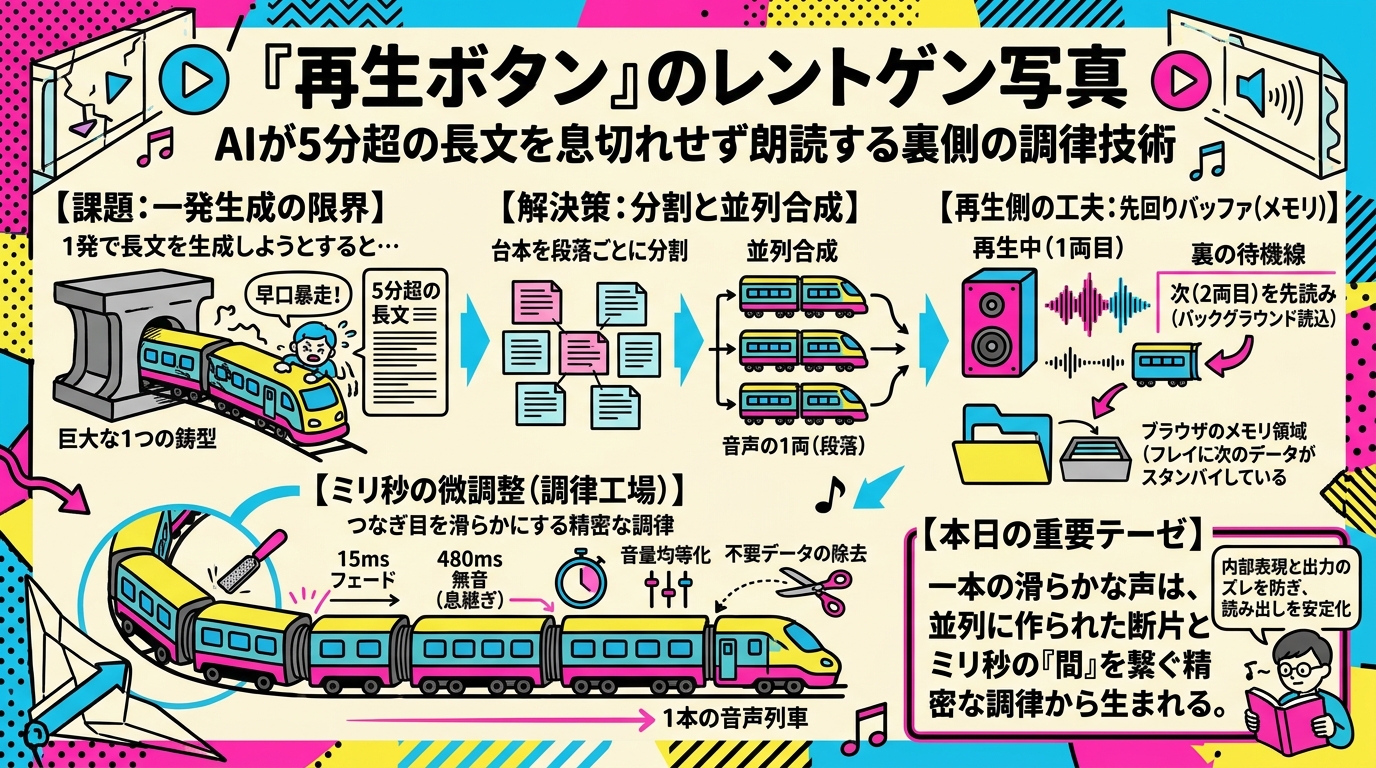
An X-Ray of the Play Button: The Precision Tuning Behind Unhurried Five-Minute AI Narration
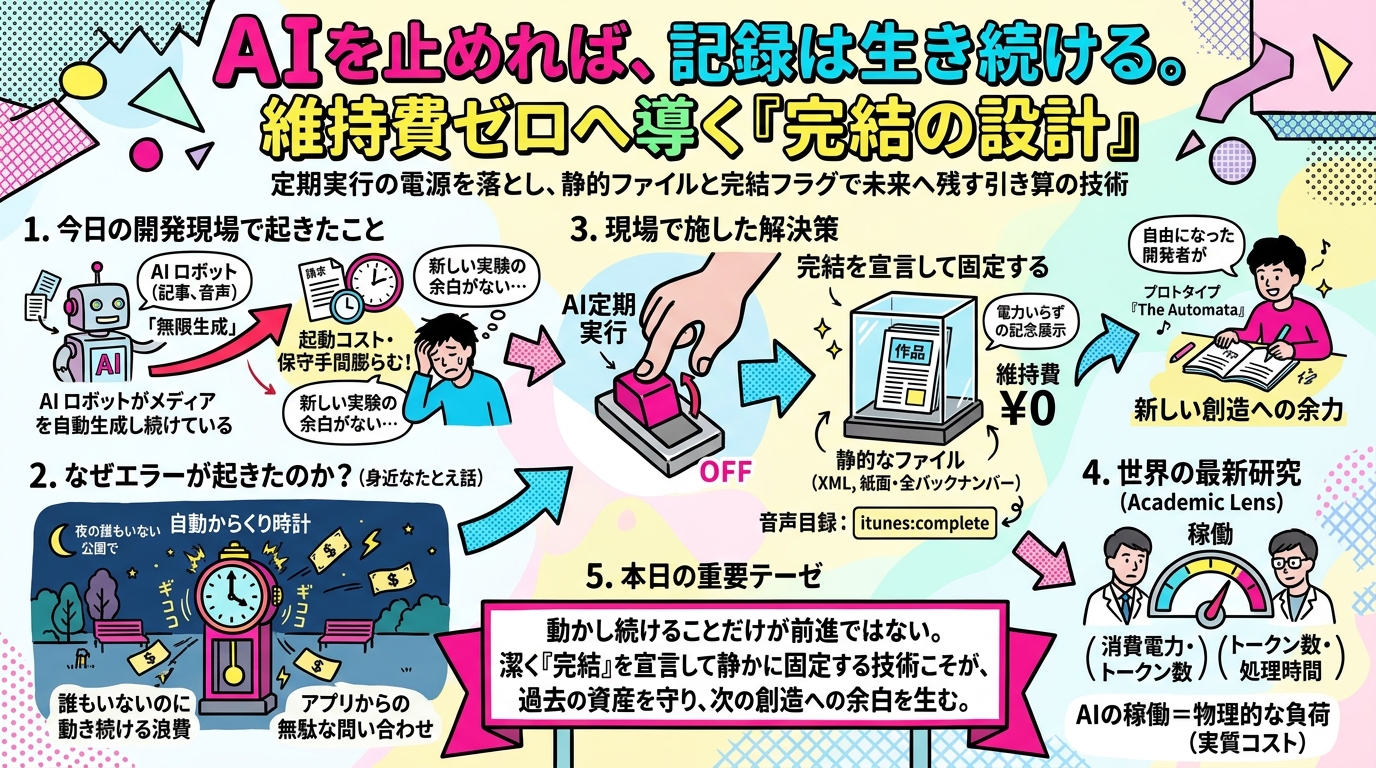
Stop the AI, and the Archive Lives On: Designing for Completion at Zero Maintenance Cost
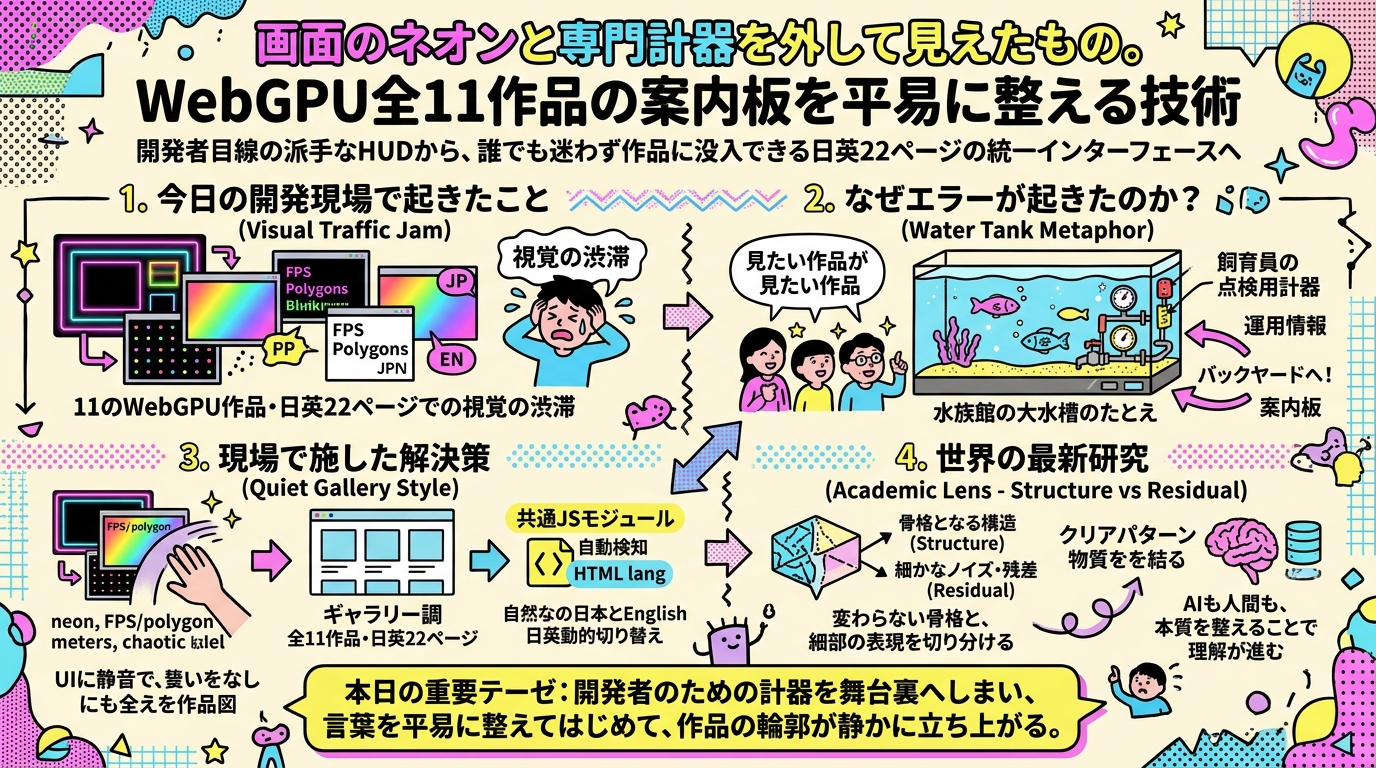
What Appeared When We Removed the Neon and Technical Gauges: Crafting Effortless Wayfinding Across 11 WebGPU Works
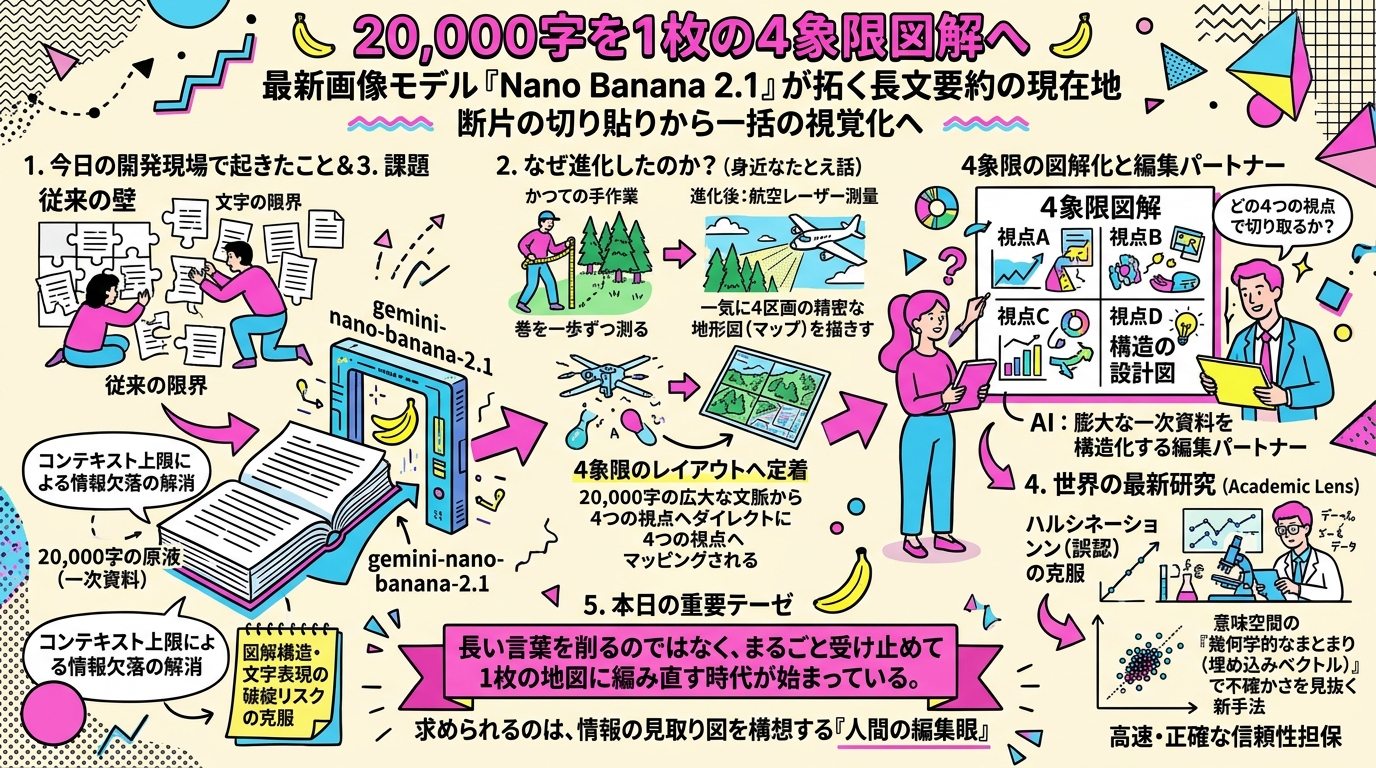
20,000 Characters Distilled into a Single Four-Quadrant Diagram: Where Long-Form Summarization Stands Today with the Latest Image Model, Nano Banana 2.1
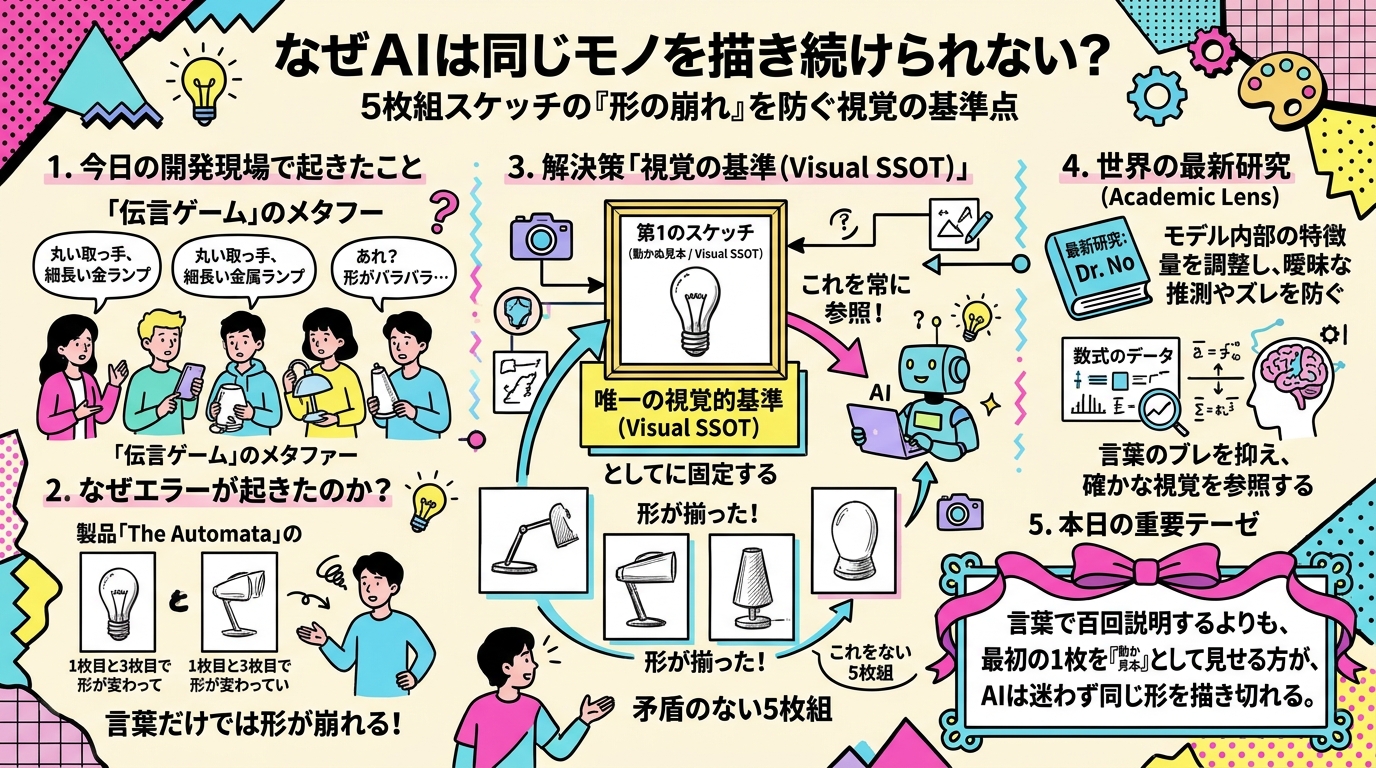
Why Can't AI Keep Drawing the Same Object? A Visual Anchor to Prevent Structural Drift in 5-Panel Sketches