THE SCHOOL OF KAMOS
Connecting Real-world Dev & Academic Intelligence with Intuitive Metaphors
Why an AI Narrator Reads 'Stage Directions' Aloud—and the Art of Scrubbing the Script Clean
Separating instructions from content to keep inputs pure for text-to-speech models
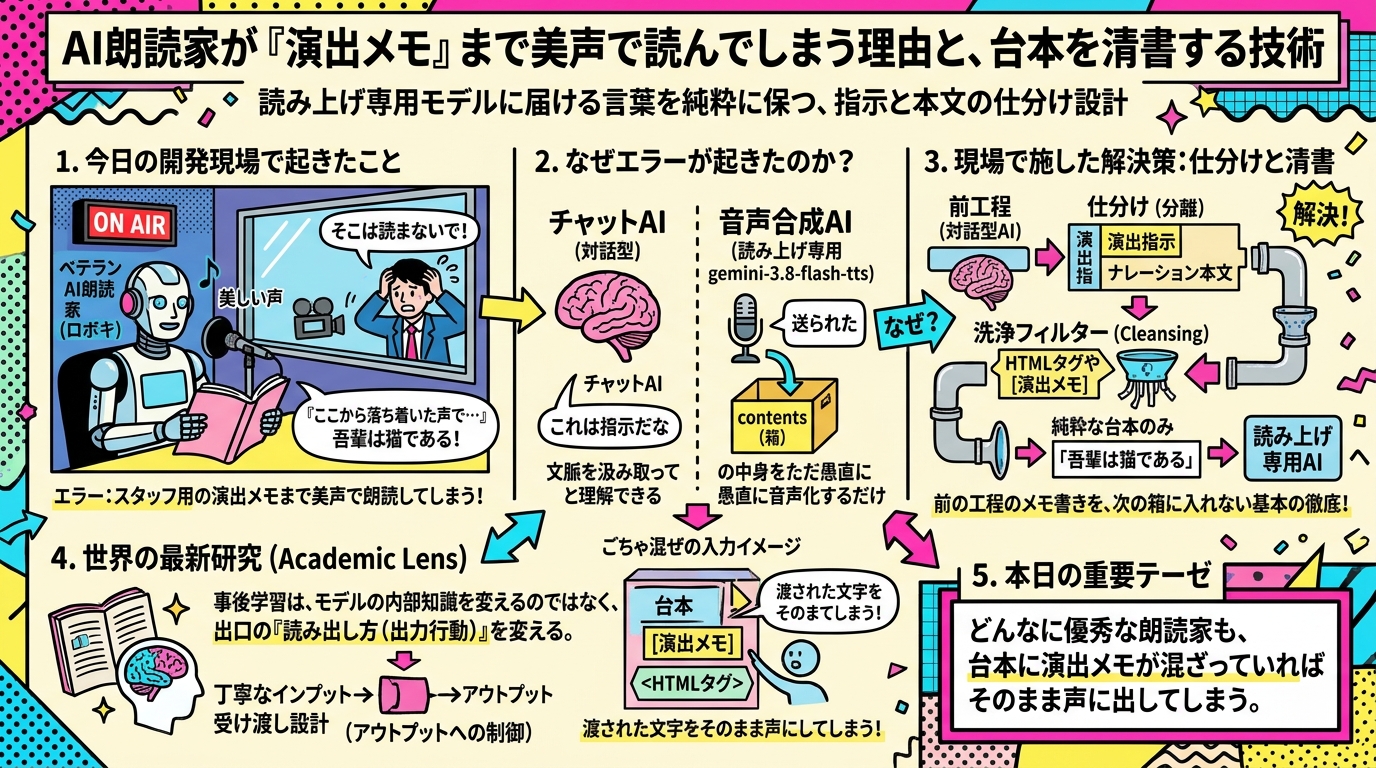
A late-night radio recording booth. The red lamp glows, and behind the glass, the director gives the cue. Standing before the microphone is a seasoned narrator, capable of delivering even the most intricate prose with effortless grace. Yet the moment recording begins, the air in the studio freezes. Right before diving into the story, the narrator begins reciting a production note scribbled in the margin—'Read from here in a calm voice, ignoring page-break symbols'—in a rich, resonant baritone. Worse still, with every turn of the page, they dutifully read that same staff memo aloud all over again.
As it turns out, this is precisely what happened to an AI generating narration for video presentations on our development floor. That overly literal narrator was gemini-3.8-flash-tts, a dedicated text-to-speech model built solely to convert text into audio. While a conversational AI used in everyday chat can infer the difference between an instruction and the body text from context, the contents field—the specialized gateway for speech synthesis—has one simple job: to voice whatever text is placed inside it verbatim. Because conversational rulebooks (the stage directions) and UI formatting HTML tags were being passed in alongside the copy, the AI diligently read the instructions aloud with every new slide.
To untangle these crossed wires, the engineering team implemented a sorting and clean-copy pass right before the script reached the narrator's hands. They cleanly decoupled the pipeline—separating the conversational AI stage that structures the narrative from the TTS stage that generates the voice—and redesigned the architecture so that zero directing prompts ever enter the latter's contents field. Furthermore, they built a sanitization filter to strip out HTML tags and stray markup beforehand, ensuring only pure narration text goes through. When AI models with different roles pass the baton, adhering to the fundamental rule of keeping one stage's scratchpad out of the next stage's inbox restored a calm, natural cadence to the video's voiceover.
"No matter how brilliant the narrator, if stage directions are mixed into the script, they will read them straight into the mic."Key Takeaway
📖 1-Minute Lexicon
A technology that converts written text into natural, human-like spoken audio.
Computer-readable markup symbols embedded behind the scenes of text to format web pages, such as making text bold or inserting line breaks.
Additional, finishing-touch training applied to an AI after it has learned from massive volumes of text, teaching it to follow human instructions faithfully.
Sanitization Engineering: Separating the AI's 'Script' from 'Stage Directions'
Live Frontier Pulse: Real-World AI Trends
Foundational Vision LLM for AI Collaboration and Orchestration
NEC has unveiled a foundational Vision LLM designed for orchestration—coordinating and governing multiple AI models and systems together. Capable of processing both visual and textual information, it is drawing attention as core infrastructure for harmonizing diverse AI capabilities to smoothly control enterprise workflows and system-wide operations.
Has AI Solved the Unsolved 'Riemann Hypothesis'? Mathematician at Anthropic Claims Potential Proof
A mathematician at US-based Anthropic has claimed that an AI may have proven the Riemann Hypothesis, a mathematical puzzle unsolved for over 160 years, according to reports from the BBC and other outlets. The claim has sparked intense interest as a milestone showing that AI with advanced reasoning is moving beyond mere assistance toward tackling uncharted theoretical proofs.
How Does This Connect to Global Frontier Research?
While our engineers prevented vocal misfires by sorting the script before delivery, how an AI reads out its own internal representations is also a major topic in recent research. This study published on arXiv investigated whether post-training alters a model's underlying internal knowledge or simply changes how it reads out that knowledge as answers. Experiments revealed that even when a model accurately captures the truth value of a statement or the identity of its author internally, its actual output can fail to utilize that signal—or even invert it—demonstrating that post-training reshapes the readout mechanism. To elicit reliable results from AI, we must account for these readout dynamics while designing meticulous system handoffs that never confuse instructions with content.
When asking a dedicated text-to-speech AI to narrate a video, how can you prevent it from reading 'instruction text' aloud alongside the actual script?
Past School Paper Backnumbers
How Stripping Away Invisible Padding and Caching Dramatically Sharpened Our AI Design Canvas
Current
Why an AI Narrator Reads 'Stage Directions' Aloud—and the Art of Scrubbing the Script Clean
Balancing 'This Year's Certainty' with 'Next Year's Foresight': System Design That Reserves the Future Without Mixing Schedules
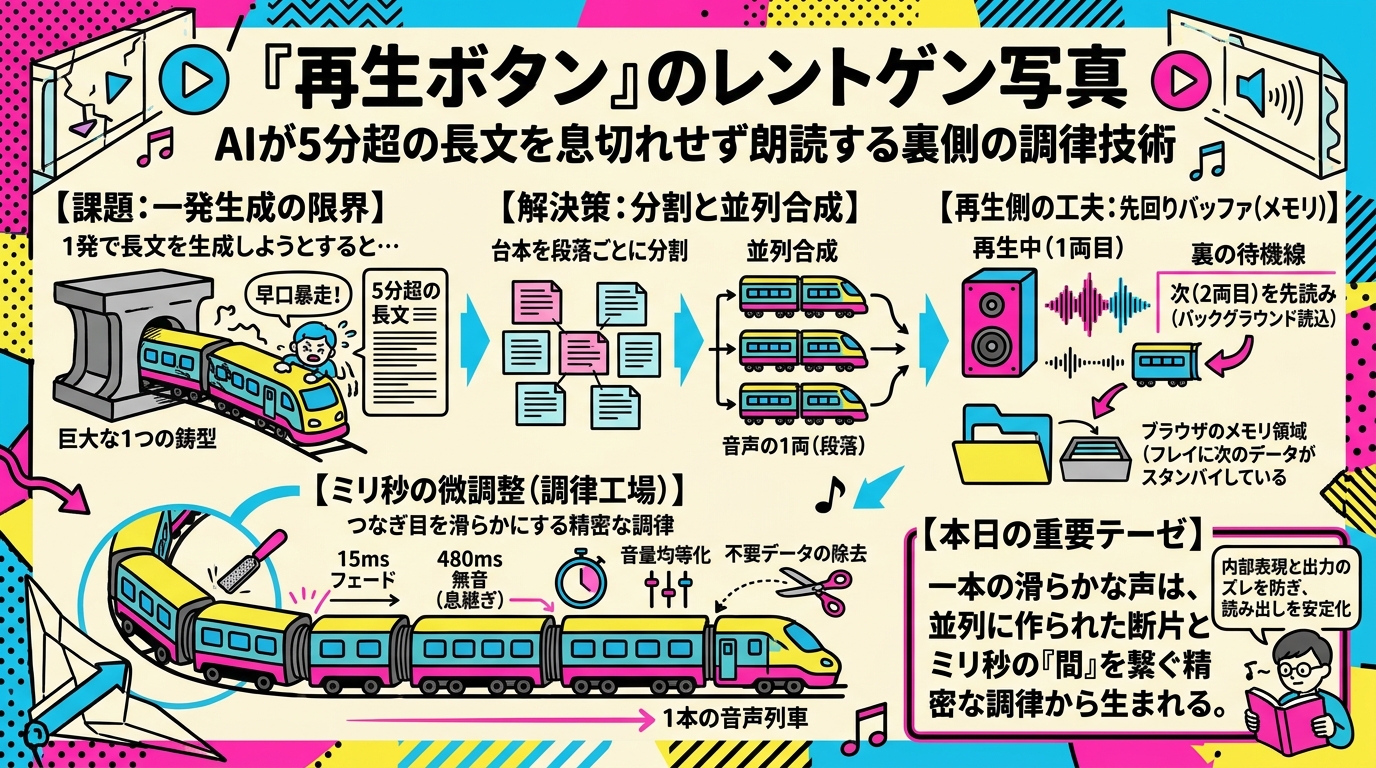
An X-Ray of the Play Button: The Precision Tuning Behind Unhurried Five-Minute AI Narration

Stop the AI, and the Archive Lives On: Designing for Completion at Zero Maintenance Cost
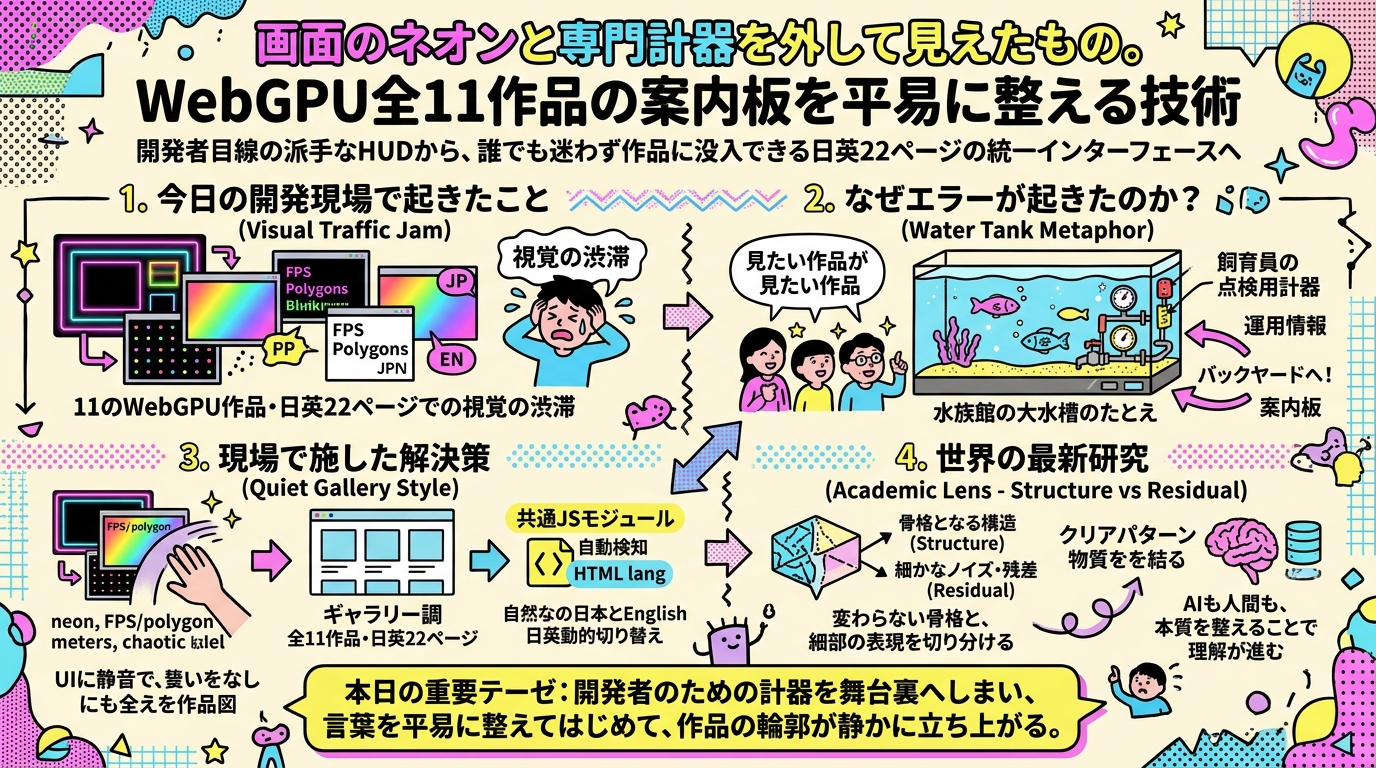
What Appeared When We Removed the Neon and Technical Gauges: Crafting Effortless Wayfinding Across 11 WebGPU Works

20,000 Characters Distilled into a Single Four-Quadrant Diagram: Where Long-Form Summarization Stands Today with the Latest Image Model, Nano Banana 2.1
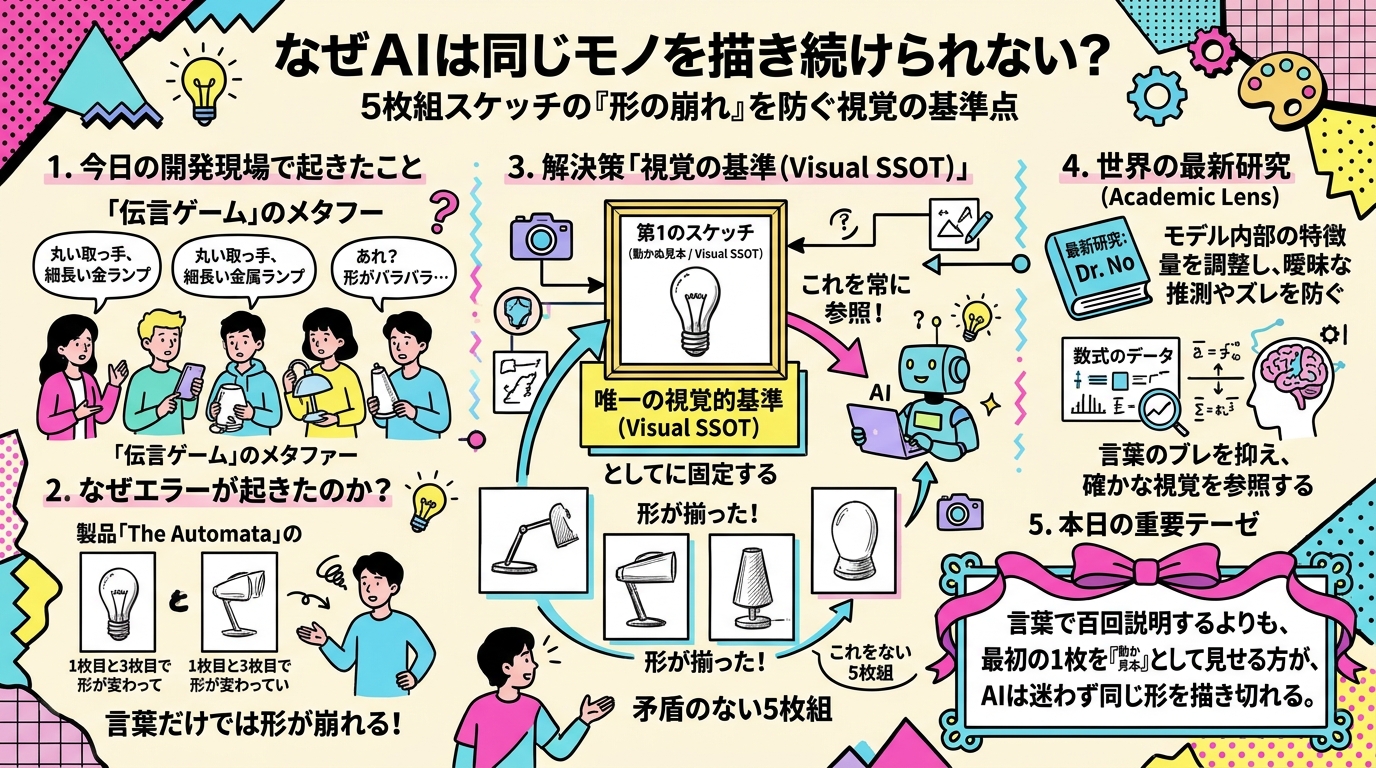
Why Can't AI Keep Drawing the Same Object? A Visual Anchor to Prevent Structural Drift in 5-Panel Sketches
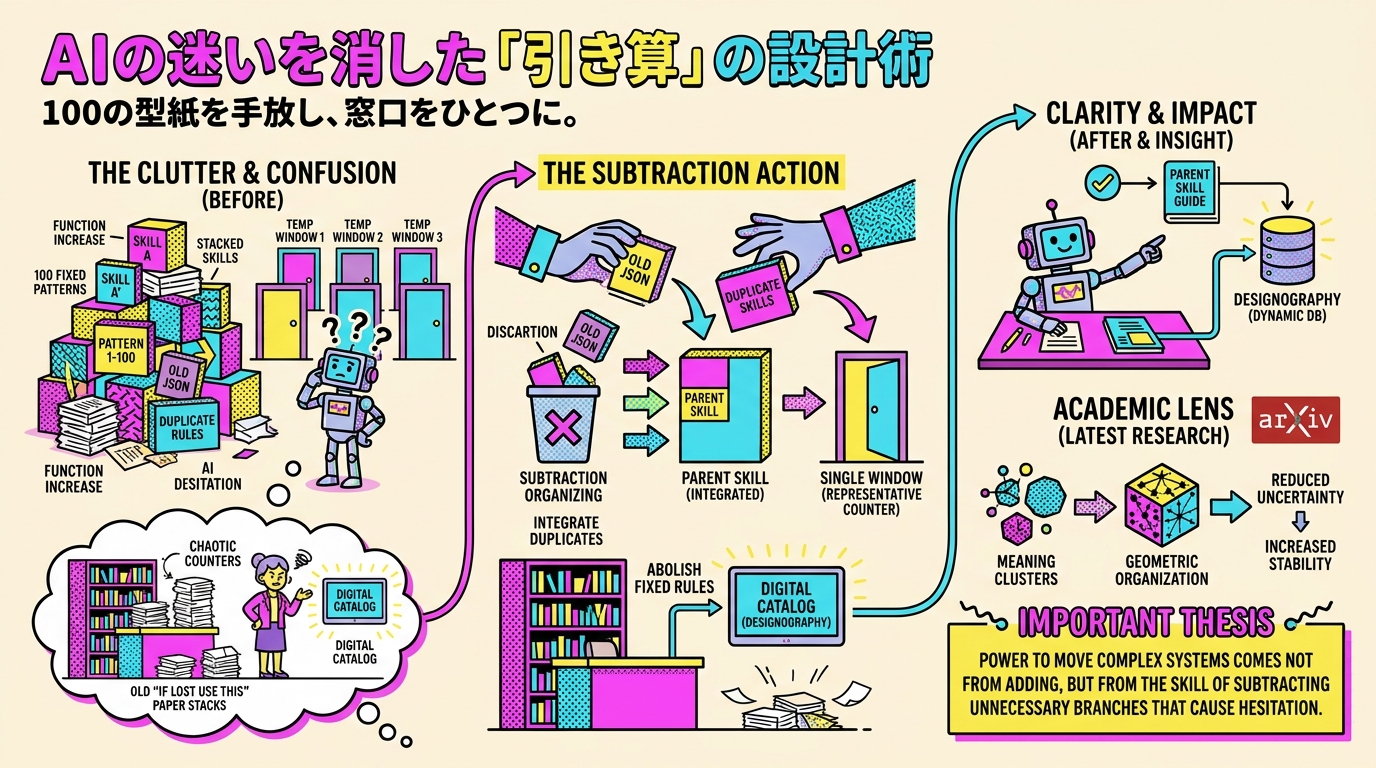
Letting Go of 100 Templates for a Single Desk: The Art of Subtractive Design That Eliminated AI Hesitation

What If You Animated '1,000 Arms' in a Browser? A Lightweight 3D Exhibition Experiment Powered by AI and WebGPU
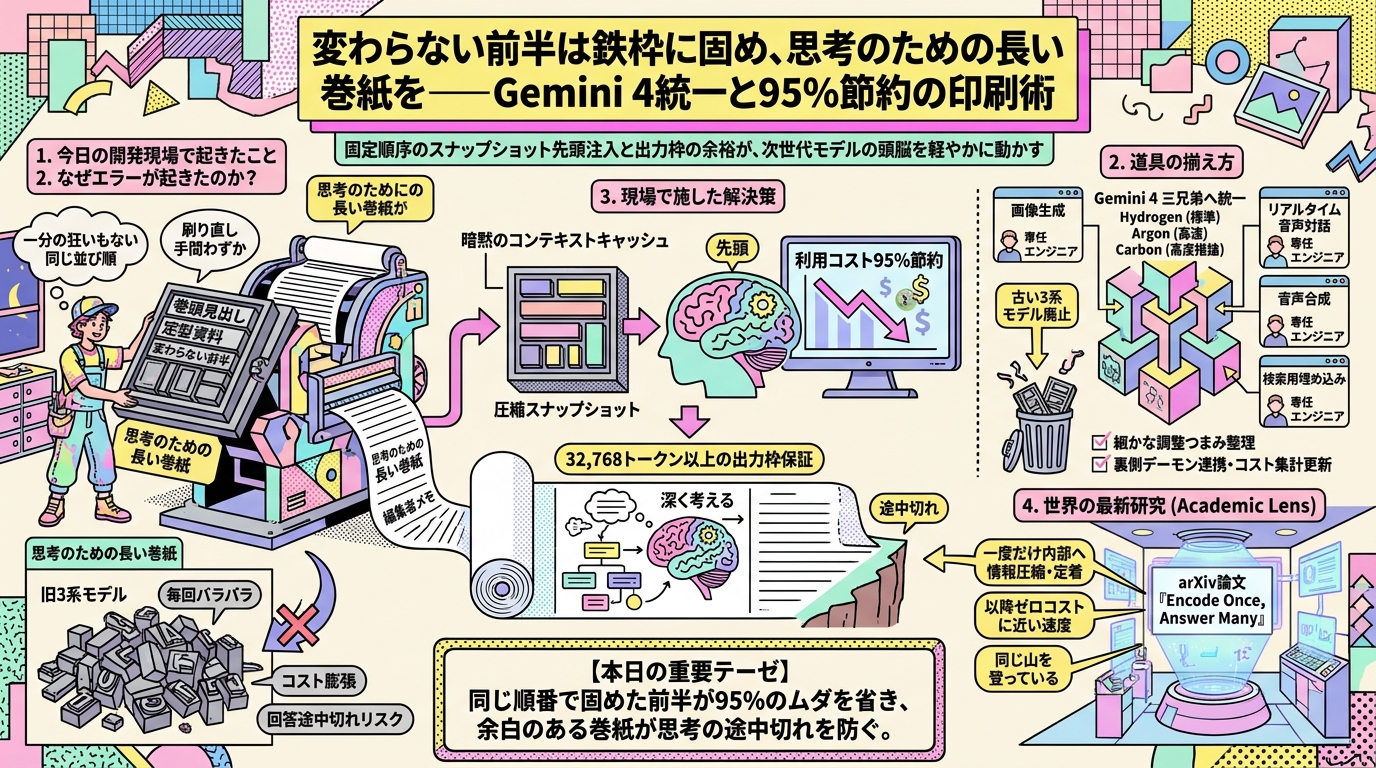
Locking the Constant Lead in Iron, Unrolling Long Scrolls for Thought — Gemini 4 Unification and the Art of 95% Printing Savings
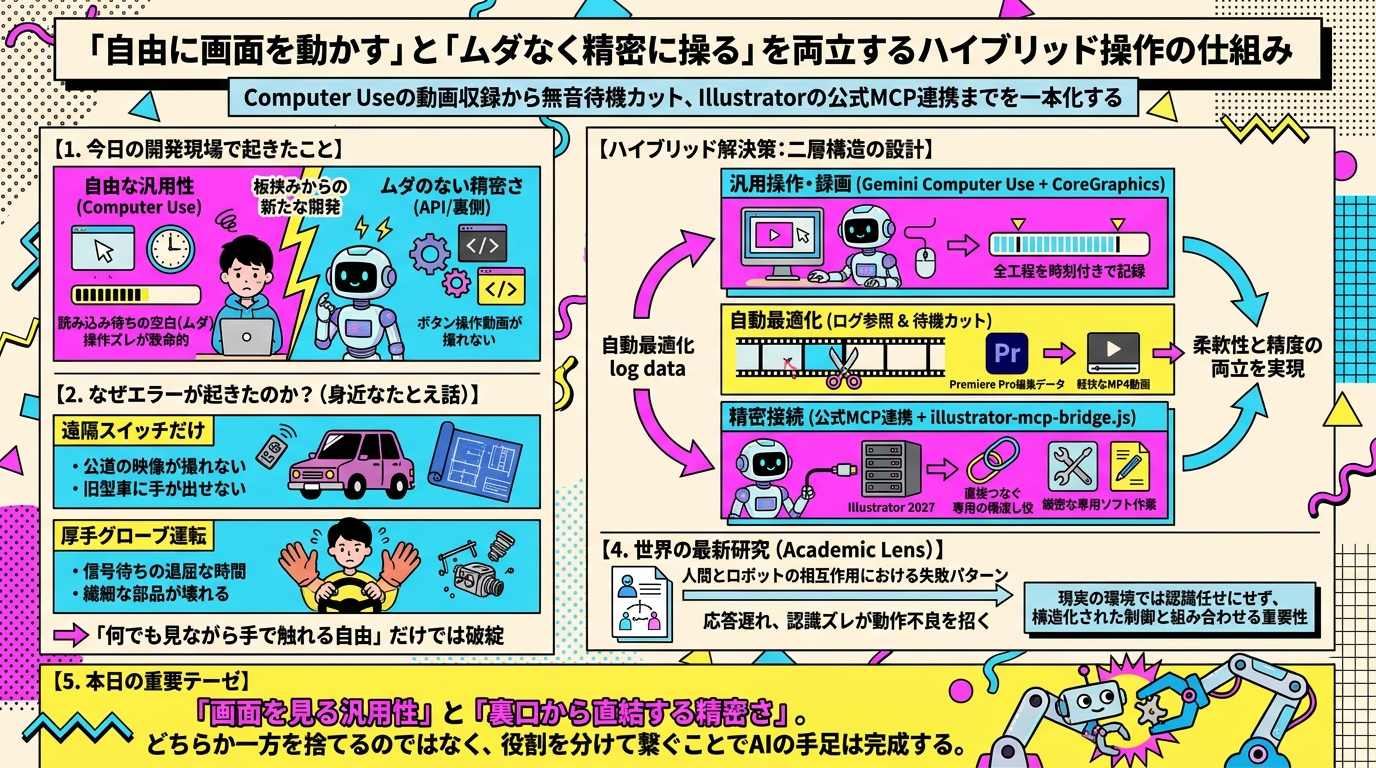
A Hybrid Control Architecture Bridging Free-Form Screen Navigation and Lean, Precision Execution
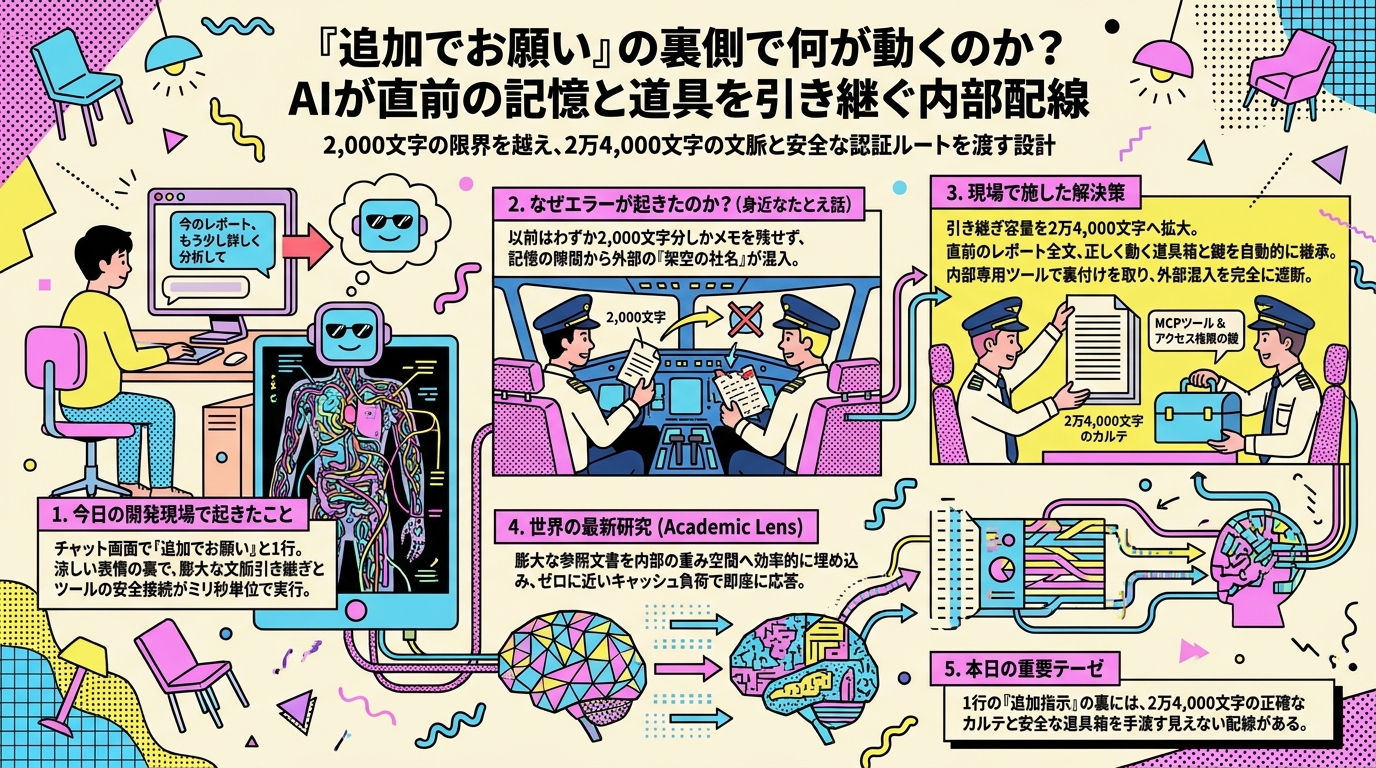
Behind "Just One More Request": The Internal Wiring That Hands Off Memory and Tools Between AIs