THE SCHOOL OF KAMOS
Connecting Real-world Dev & Academic Intelligence with Intuitive Metaphors
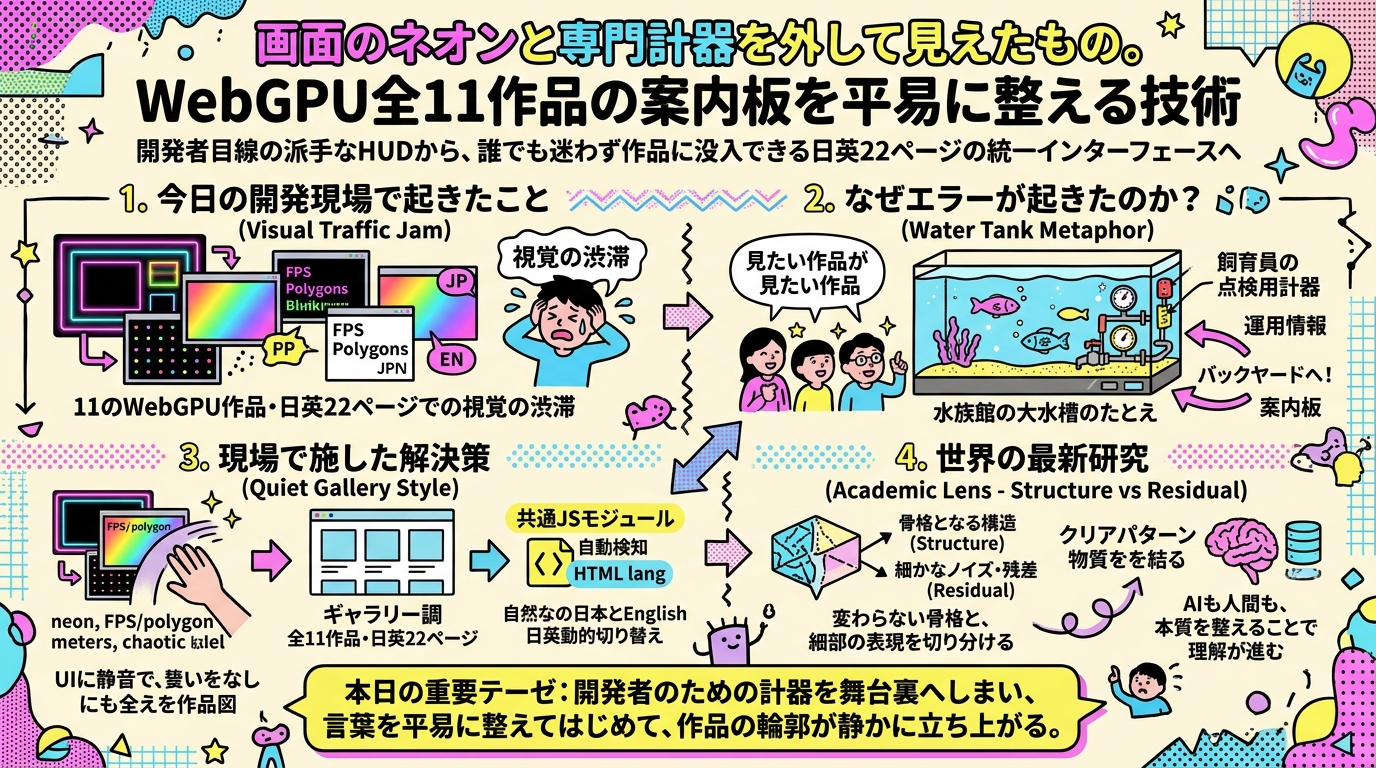
What Appeared When We Removed the Neon and Technical Gauges: Crafting Effortless Wayfinding Across 11 WebGPU Works
Transforming flashy, developer-centric HUDs into a unified 22-page bilingual interface where anyone can immerse themselves without hesitation
On a development team showcasing 11 interactive WebGPU works across 22 Japanese and English pages, an unexpected case of 'visual congestion' emerged. Neon borders, rainbow gradients, and blinking dots vied for attention around the edges of the screen, while developer metrics like FPS and polygon counts crowded the corners. Worse still, labels for camera angles, lighting, and scene names mixed technical jargon with English, and when switching between Japanese and English, the shared JS module's labels fell out of sync with the page's language setting.
Why did the very controls meant to highlight the artworks end up getting in the way? Think of an aquarium's grand tank. What visitors come to see are the fish gliding gracefully behind the glass. Now imagine if the front glass were plastered wall-to-wall with the caretakers' pipe pressure gauges, blinking warning lights, fluorescent tape, and English valve tags. Operational telemetry meant for the backstage had been mixed right onto the same pane as the visitors' viewing guide. As the 11 works were developed individually, diagnostic meters and flashy decorations remained out front, obscuring the true essence of the experience and its controls.
In response, the team overhauled the control UI across all 11 works and 22 bilingual pages in one sweep. We unified the design of glass panels, selection pills, sliders, and primary buttons into a quiet, gallery-like aesthetic—boldly stripping away neon borders, rainbow gradients, blinking dots, emojis, and FPS or polygon readouts. Labels for camera views and lighting were rewritten into plain, intuitive Japanese and natural English. Furthermore, we introduced a mechanism in which the shared JS module governing UI components automatically detects the HTML lang attribute and dynamically switches bilingual text. By keeping each work's expressive core intact while quietly refining the shared control framework, we created an environment where visitors can engage with every piece effortlessly.
"Only when we tuck the developer's gauges backstage and refine our words into plain language do the contours of the work quietly come into focus."Key Takeaway
📖 1-Minute Lexicon
On-screen overlay displays—such as control buttons and status meters—that guide users without leaving the main view.
An HTML marker that tells programs whether a web page is written in Japanese (ja) or English (en).
Built-in design assumptions that guide an AI to discover the right underlying structure without getting lost during training.
UI Purification Across All 11 WebGPU Works & Separating 'Structure from Surface'
Live Frontier Pulse: Real-World AI Trends
Expanding Access to AI for Scientists
OpenAI has announced an initiative to broaden access to AI for researchers engaged in scientific inquiry. The move is drawing attention for establishing infrastructure that supports advanced information processing and hypothesis testing on the front lines of research, accelerating and democratizing scientific discovery.
Returning Compensation to Creators When Their Articles Are Referenced by AI
The creative publishing platform note has announced a policy to return compensation to authors whenever their articles are referenced by AI. It is an effort to properly value primary sources in the AI era and foster a sustainable cycle of creation.
How Does This Connect to Global Frontier Research?
In fact, the idea of stripping away excessive ornamentation and noise from a UI to refine its essential framework resonates deeply with cutting-edge AI foundational research. A paper published on arXiv proposes a mechanism in which language models learn text by cleanly separating the overarching structural backbone (Structure) from surface-level, context-specific variations (Residual). Experiments show that combining a design that consolidates structural information at text boundaries with one that suppresses fine-grained noise improves both learning efficiency and predictive accuracy. Whether in human experience design or AI internal representations, keeping the invariant backbone distinct from surface detail is a universal principle for clarity and elegance.
In this update refining the control screens of 11 WebGPU works, what was removed or revamped so visitors could focus on the art?
Past School Paper Backnumbers
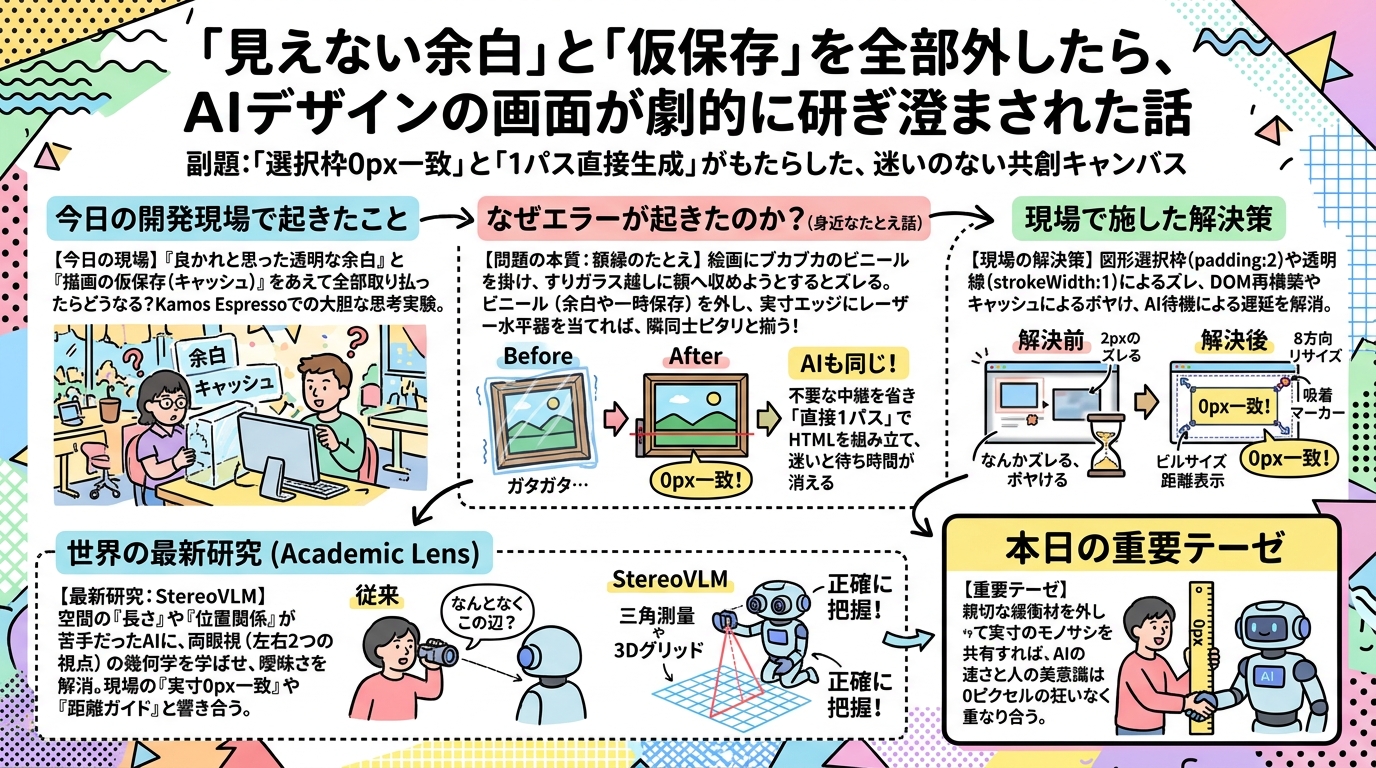
How Stripping Away Invisible Padding and Caching Dramatically Sharpened Our AI Design Canvas
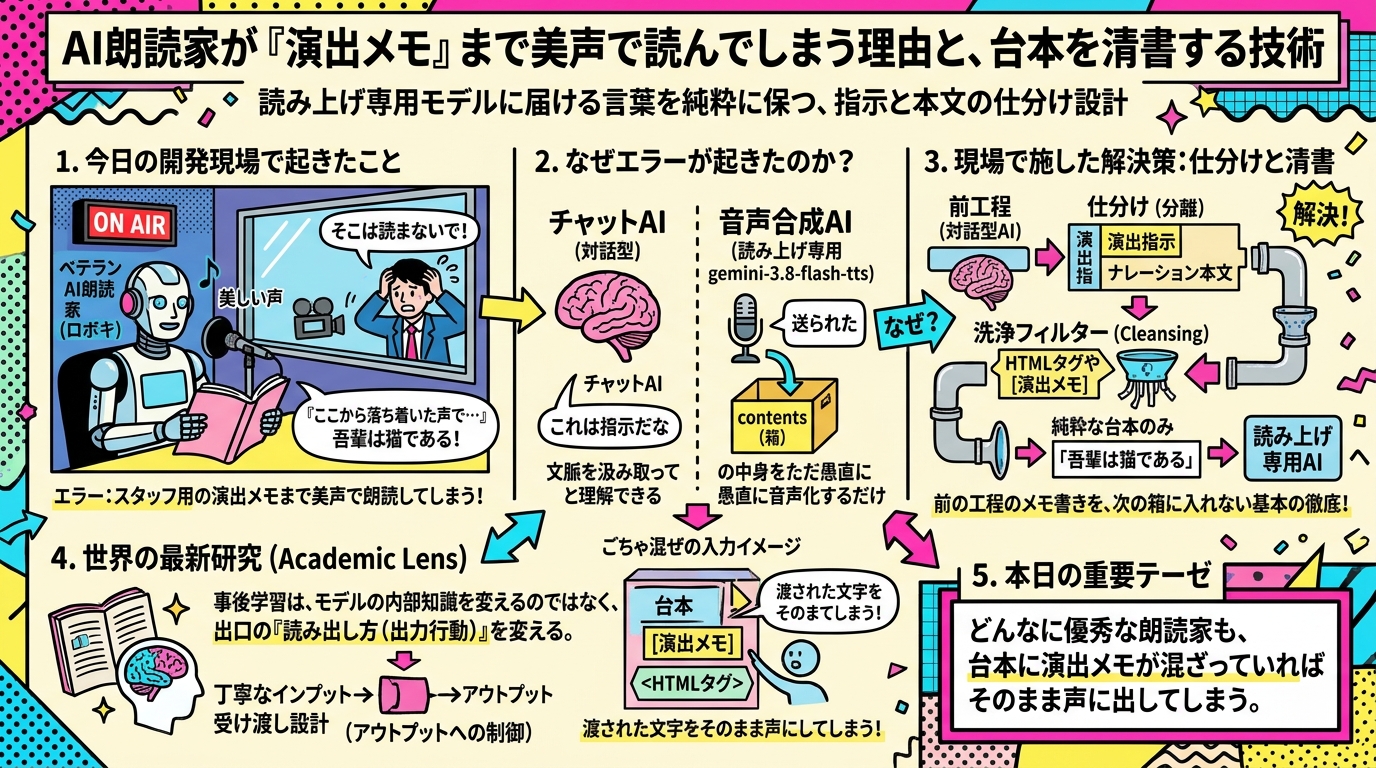
Why an AI Narrator Reads 'Stage Directions' Aloud—and the Art of Scrubbing the Script Clean
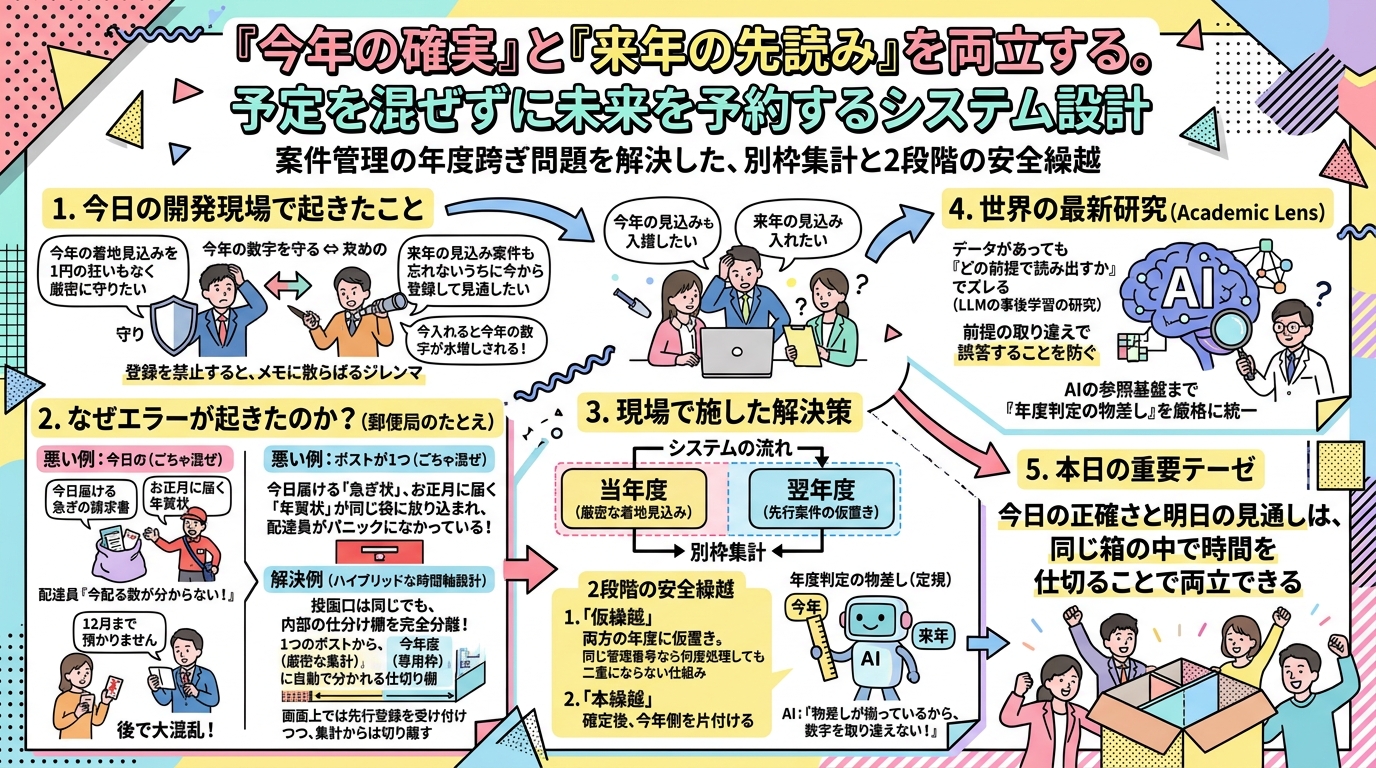
Balancing 'This Year's Certainty' with 'Next Year's Foresight': System Design That Reserves the Future Without Mixing Schedules

An X-Ray of the Play Button: The Precision Tuning Behind Unhurried Five-Minute AI Narration

Stop the AI, and the Archive Lives On: Designing for Completion at Zero Maintenance Cost
Current
What Appeared When We Removed the Neon and Technical Gauges: Crafting Effortless Wayfinding Across 11 WebGPU Works

20,000 Characters Distilled into a Single Four-Quadrant Diagram: Where Long-Form Summarization Stands Today with the Latest Image Model, Nano Banana 2.1

Why Can't AI Keep Drawing the Same Object? A Visual Anchor to Prevent Structural Drift in 5-Panel Sketches
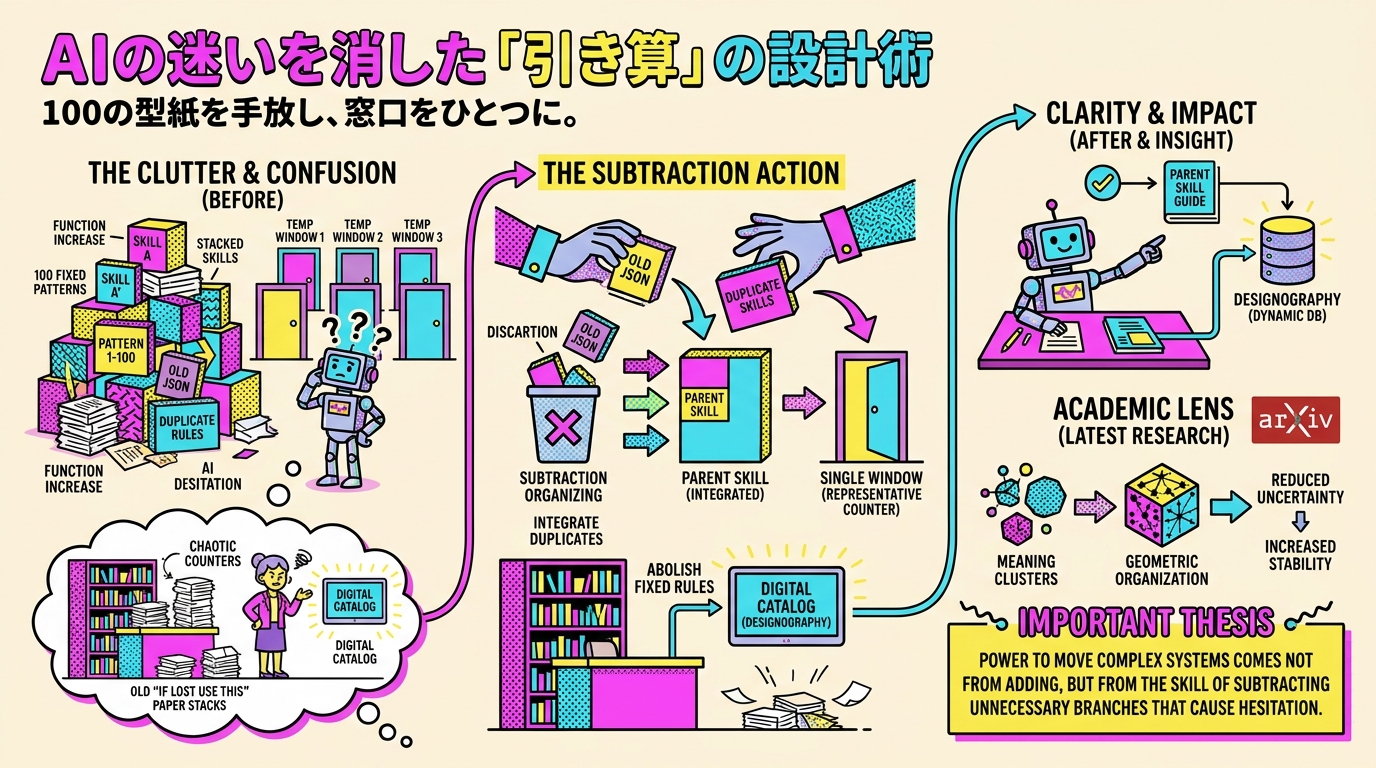
Letting Go of 100 Templates for a Single Desk: The Art of Subtractive Design That Eliminated AI Hesitation
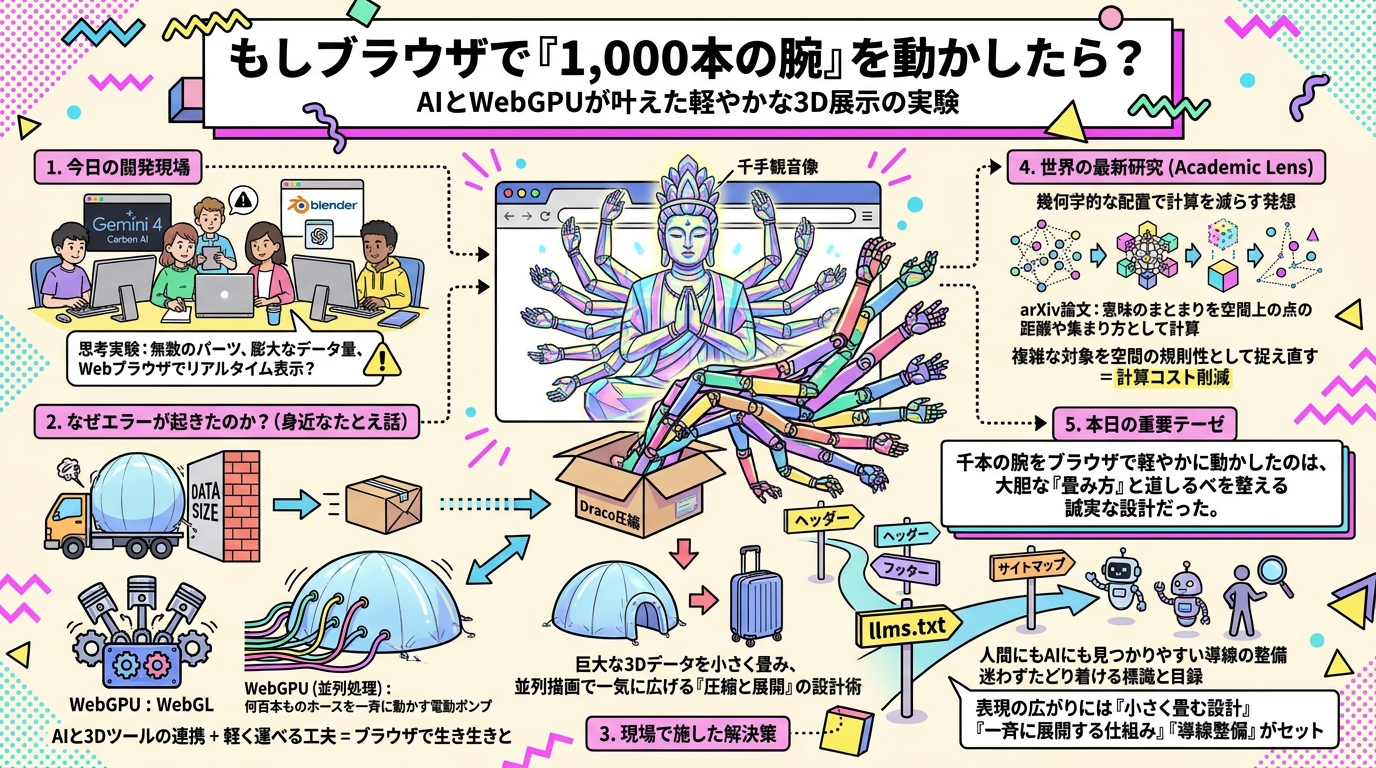
What If You Animated '1,000 Arms' in a Browser? A Lightweight 3D Exhibition Experiment Powered by AI and WebGPU
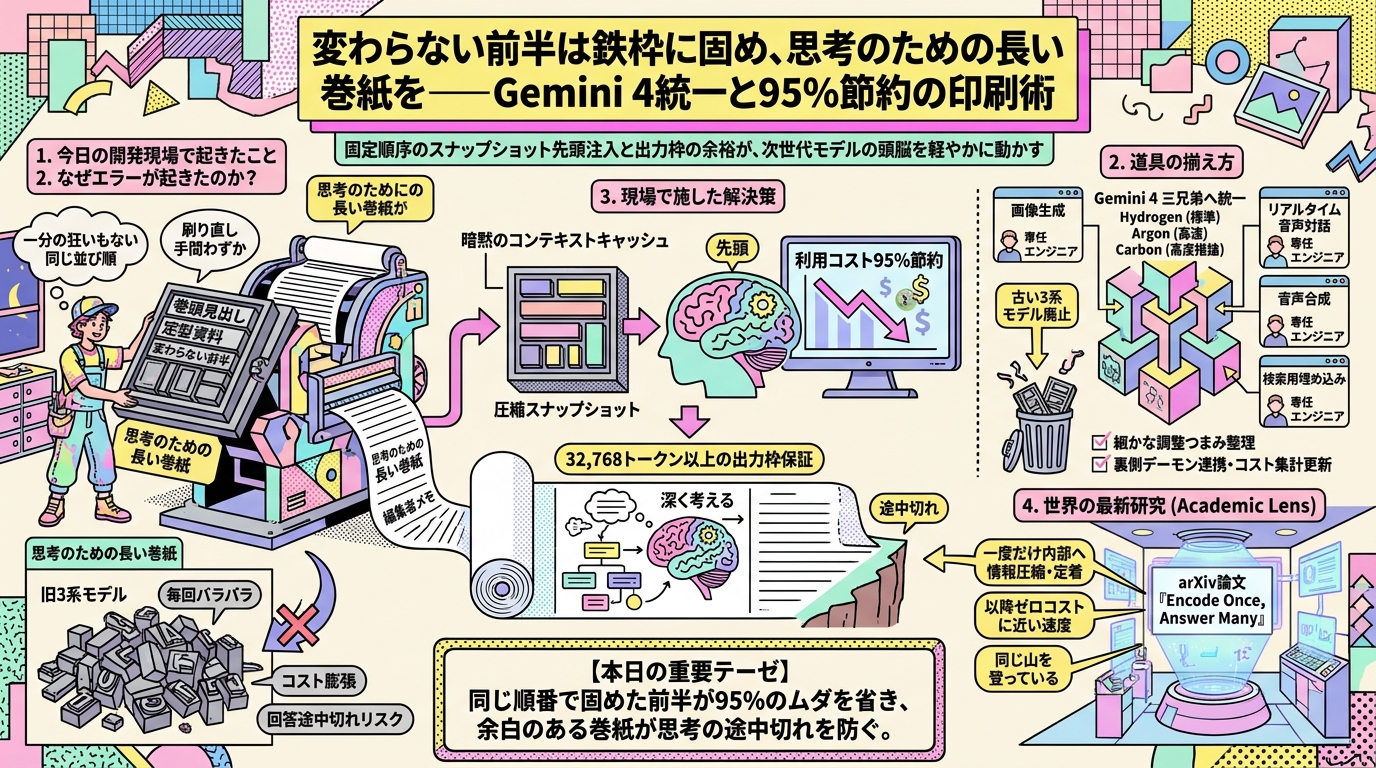
Locking the Constant Lead in Iron, Unrolling Long Scrolls for Thought — Gemini 4 Unification and the Art of 95% Printing Savings
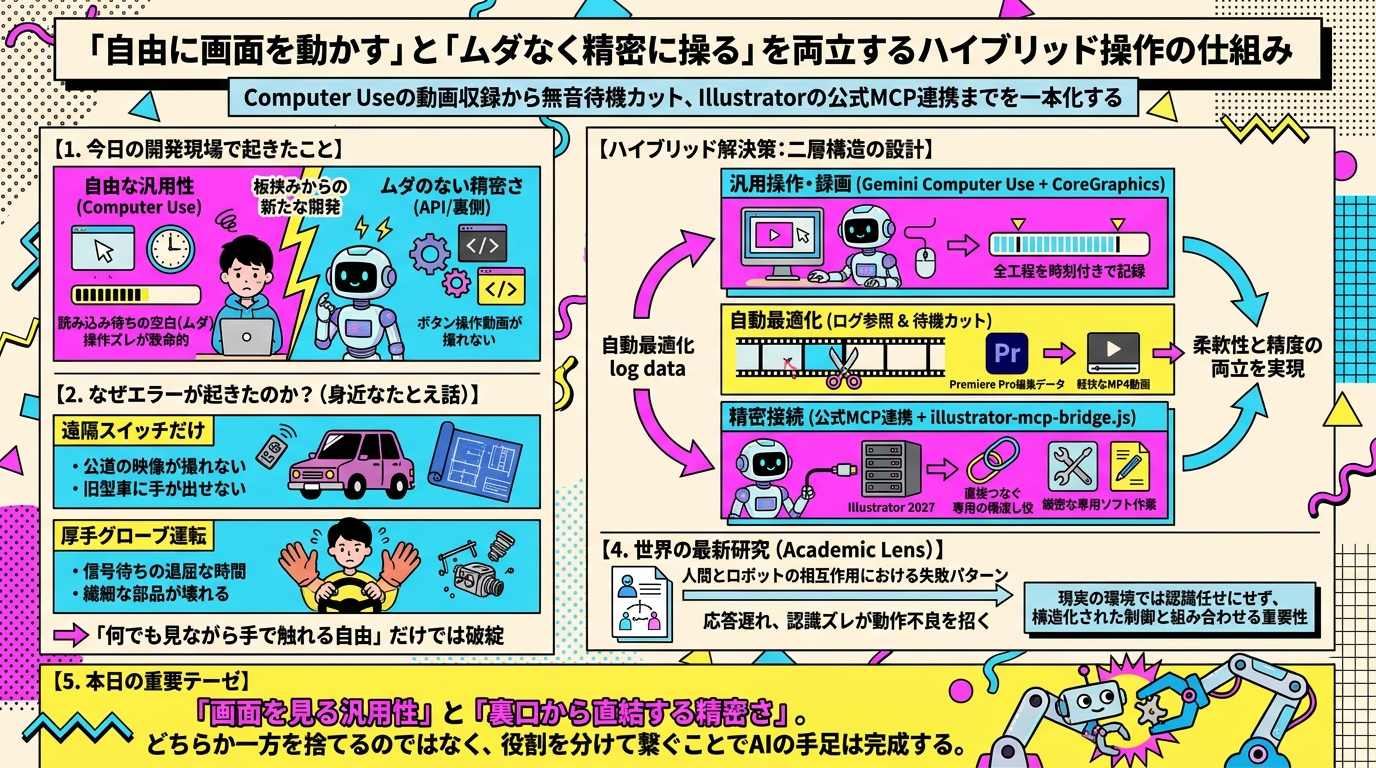
A Hybrid Control Architecture Bridging Free-Form Screen Navigation and Lean, Precision Execution
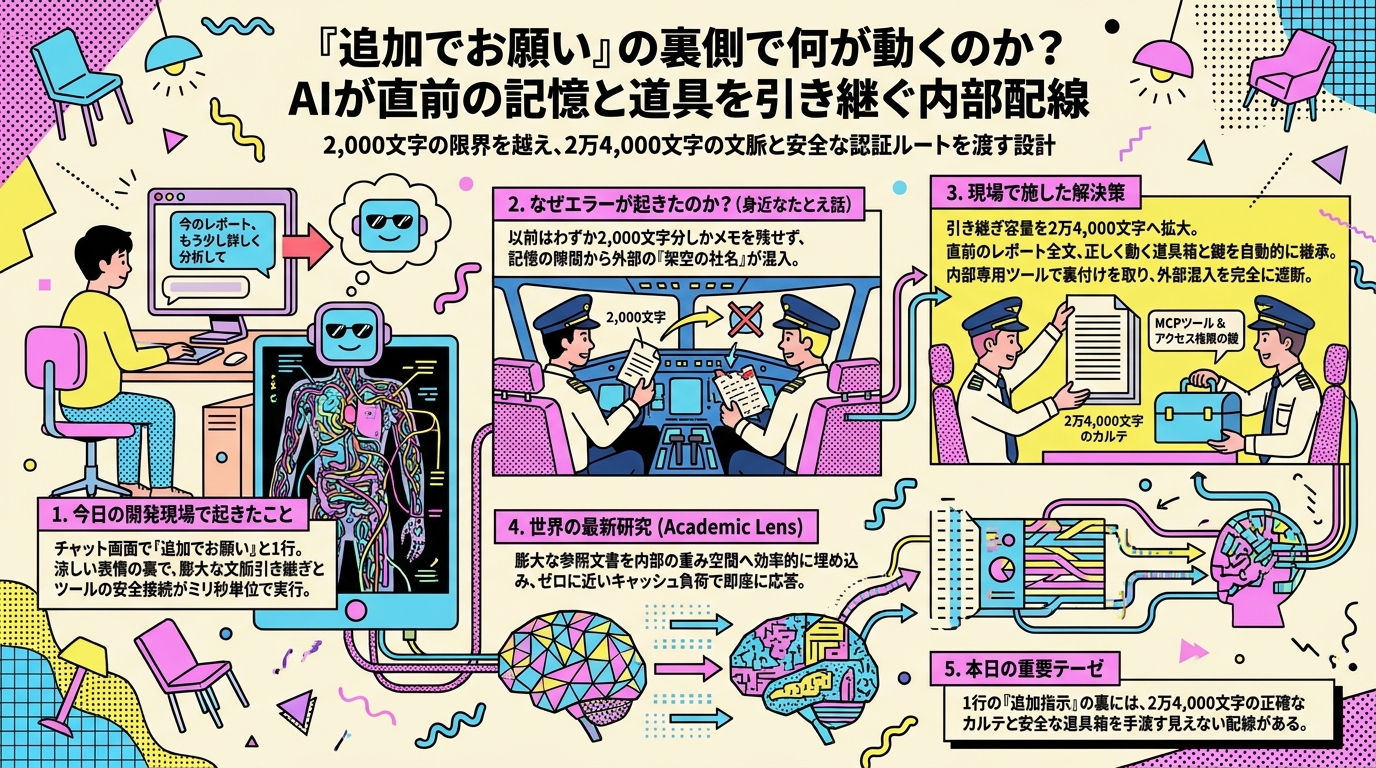
Behind "Just One More Request": The Internal Wiring That Hands Off Memory and Tools Between AIs