THE SCHOOL OF KAMOS
Connecting Real-world Dev & Academic Intelligence with Intuitive Metaphors
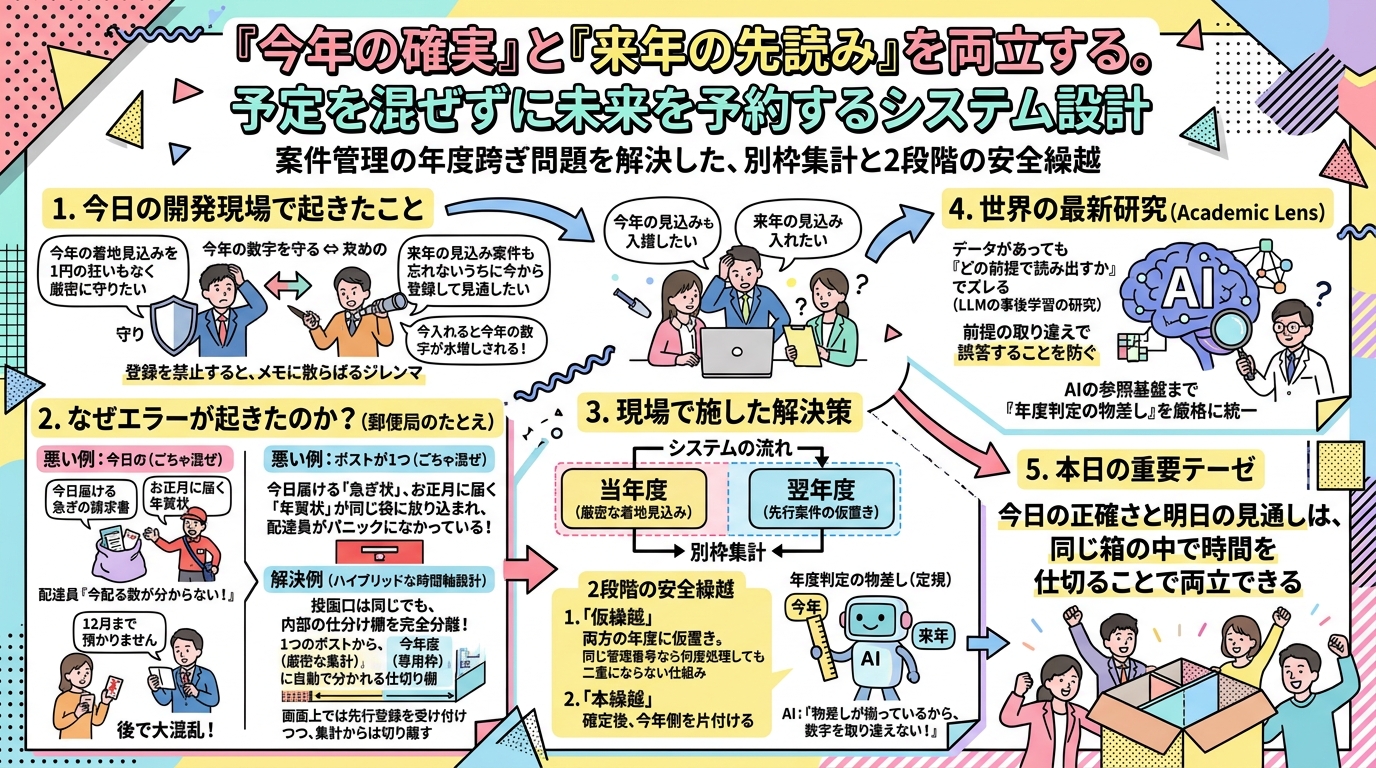
Balancing 'This Year's Certainty' with 'Next Year's Foresight': System Design That Reserves the Future Without Mixing Schedules
Solving Cross-Fiscal-Year Project Management Through Separate Aggregation and Two-Stage Safe Carryover
When planning work and finances, two entirely valid demands constantly collide on the front lines. One is the defensive stance: 'We must protect this year's landing forecast down to the exact yen.' The other is the offensive stance: 'We want to register next year's prospective projects right now so we don't forget them and can map out our pipeline.' Because the system previously looked only at the current fiscal year, entering next year's plans inflated this year's figures—yet banning early registration forced teams to scatter notes across personal memos, creating an awkward dilemma.
Trying to choose only one over the other immediately brings the system to a standstill. A post office sorting counter offers a clear analogy. Imagine if there were only a single mail slot, and you tossed invoices that need immediate delivery today into the same bag as New Year's cards meant for January 1st. Carriers would lose track of the exact number of items to deliver today, and urgent letters would get buried beneath piles of holiday cards. Conversely, if the post office shut its window and declared, 'We will not accept any New Year's cards until December,' senders would have no choice but to hoard stacks of postcards in their desk drawers—resulting in a chaotic flood of mail the instant acceptance opened. Strict present-day tallying and flexible future reservations: mix them in the same box, or lock one out, and either way the system breaks down.
What the engineering team arrived at was a hybrid timeline design: keeping the intake slot in the same place while completely separating the sorting shelves inside. Every project now carries an explicit 'year and month' label; while the UI accepts advance registrations for the next fiscal year, the backend routes them into a dedicated 'Next Year Pipeline' bucket, isolated from this year's landing forecast calculations. Furthermore, for the cross-year migration process, we built a two-stage workflow: a 'provisional carryover' that stages items in both fiscal years and safely verifies them using an ID-based mechanism that guarantees no duplicates no matter how many times it runs, followed by a 'final carryover' that cleans up the current year's side once confirmed. By aligning even the backend task management and the context data referenced by our AI under the exact same fiscal-year criteria, our AI assistant can now offer advice without ever confusing this year's numbers with next year's.
"Today's precision and tomorrow's visibility can coexist—simply by partitioning time inside the same box."Key Takeaway
📖 1-Minute Lexicon
The property whereby performing the same operation once or ten times yields the exact same single final result.
The process of additionally teaching conversational etiquette and accurate response behaviors to an AI that has already learned foundational knowledge from massive volumes of text.
Timeline Sorting & Safe Carryover: Balancing 'This Year's Precision' with 'Next Year's Foresight'
Live Frontier Pulse: Real-World AI Trends
Government to Launch Full-Scale Review of Legal Liability for AI Agents, Establishing Expert Panel
Reports indicate that the Japanese government will establish an expert panel to begin full-scale discussions on clarifying who bears legal responsibility—and how—when autonomous AI agents cause issues. As scenarios without direct human operation increase, formal rulemaking for real-world deployment is finally getting underway.
Foundational Vision LLM for AI Collaboration and Orchestration: Corporate Release
NEC announced corporate information regarding a new foundational Vision LLM tailored for 'orchestration'—coordinating multiple AI models and systems so they operate harmoniously as a whole. It is drawing attention as a foundation for holistically handling complex business workflows by integrating visual information alongside text.
How Does This Connect to Global Frontier Research?
Even when data and knowledge are stored accurately, any misalignment in 'which premise is used to read them out' will severely distort the answer. This paper investigates how post-training in large language models (LLMs) alters not the internal knowledge itself, but rather 'how the model reads out answers' and 'how it weights underlying premises.' The study revealed cases where, even when a model internally captures truth values or features accurately, slight differences in training or contextual framing can flip the readout direction when generating a response. Strictly unifying the 'fiscal-year evaluation standard' all the way down to task management and the AI reference layer in this project is a well-founded design choice—ensuring the AI doesn't produce wrong answers from misread premises despite holding the right data.
When a team wants to register next fiscal year's plans in advance without throwing off this year's sales forecast figures, how did this system solve the challenge?
Past School Paper Backnumbers
How Stripping Away Invisible Padding and Caching Dramatically Sharpened Our AI Design Canvas
Why an AI Narrator Reads 'Stage Directions' Aloud—and the Art of Scrubbing the Script Clean
Current
Balancing 'This Year's Certainty' with 'Next Year's Foresight': System Design That Reserves the Future Without Mixing Schedules
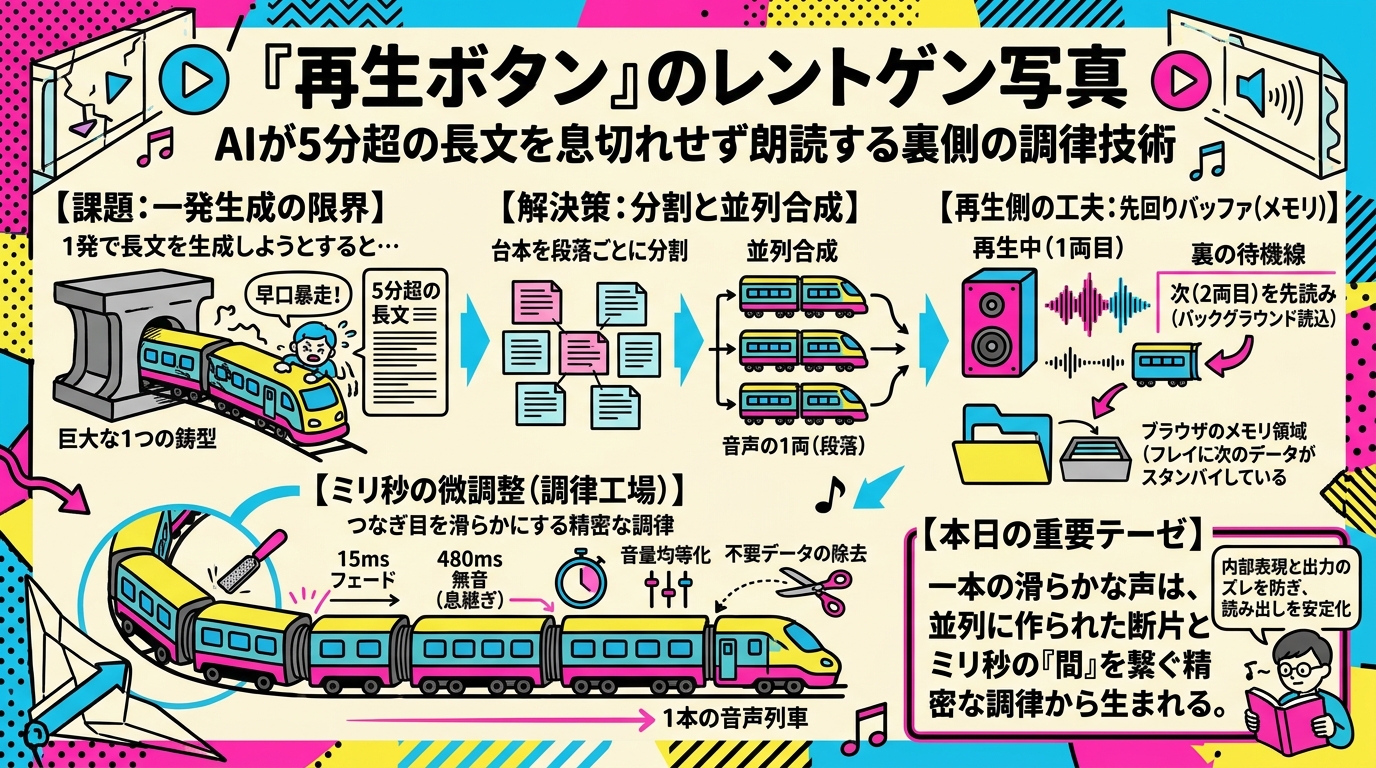
An X-Ray of the Play Button: The Precision Tuning Behind Unhurried Five-Minute AI Narration
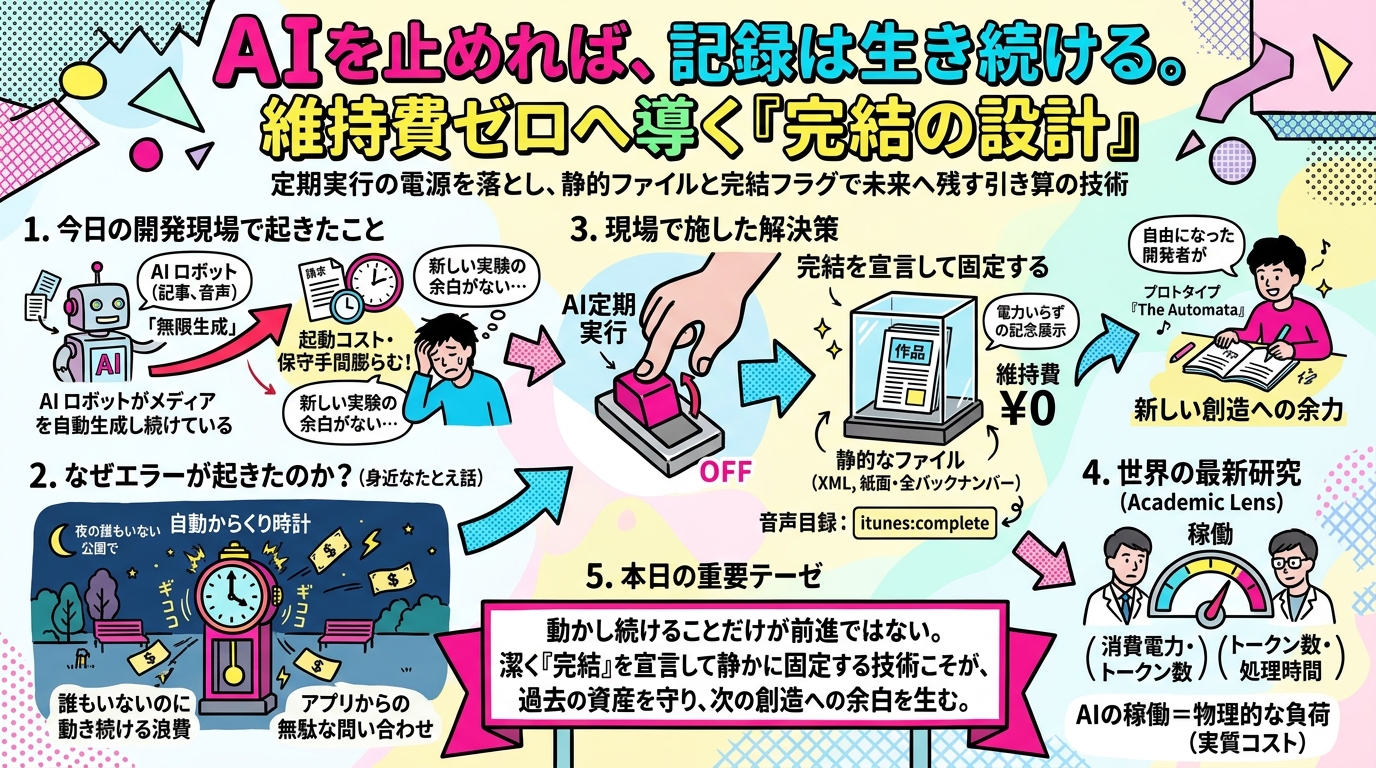
Stop the AI, and the Archive Lives On: Designing for Completion at Zero Maintenance Cost
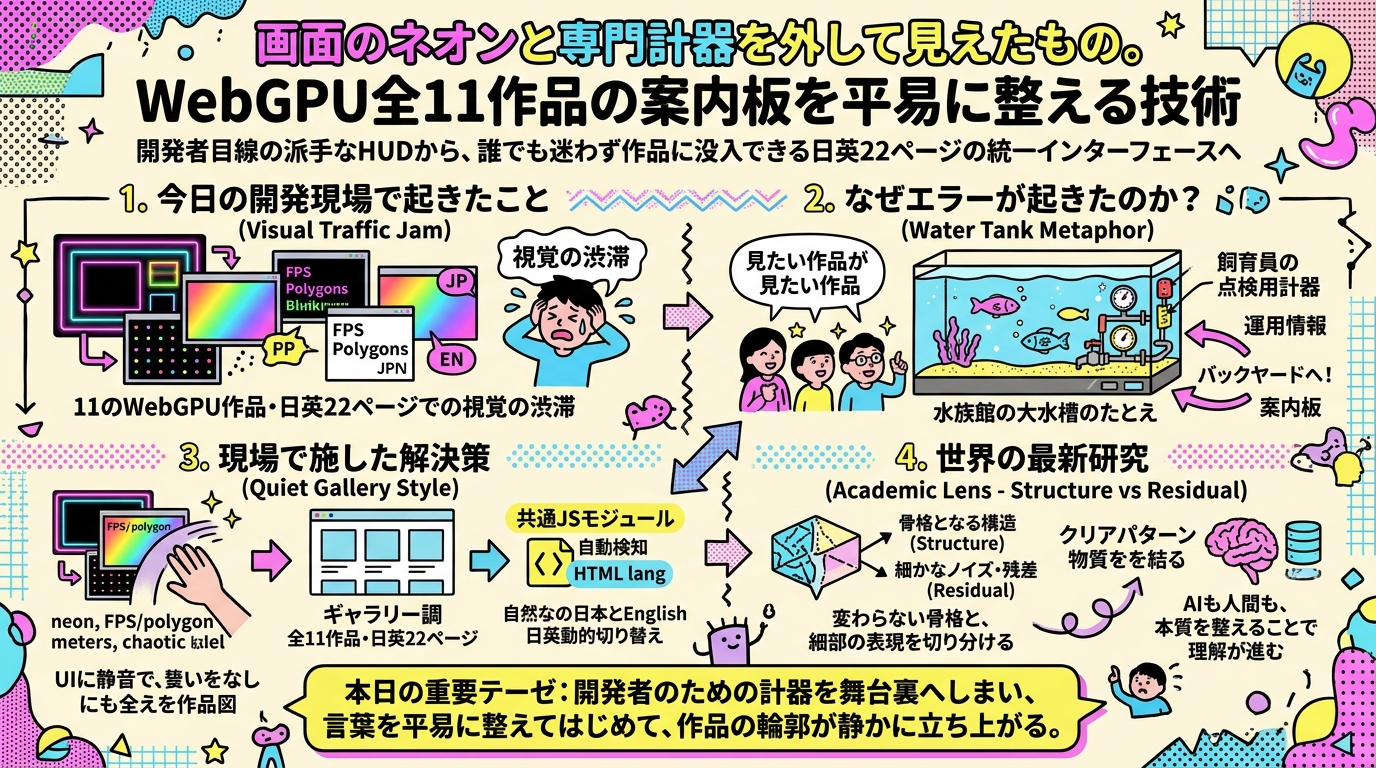
What Appeared When We Removed the Neon and Technical Gauges: Crafting Effortless Wayfinding Across 11 WebGPU Works
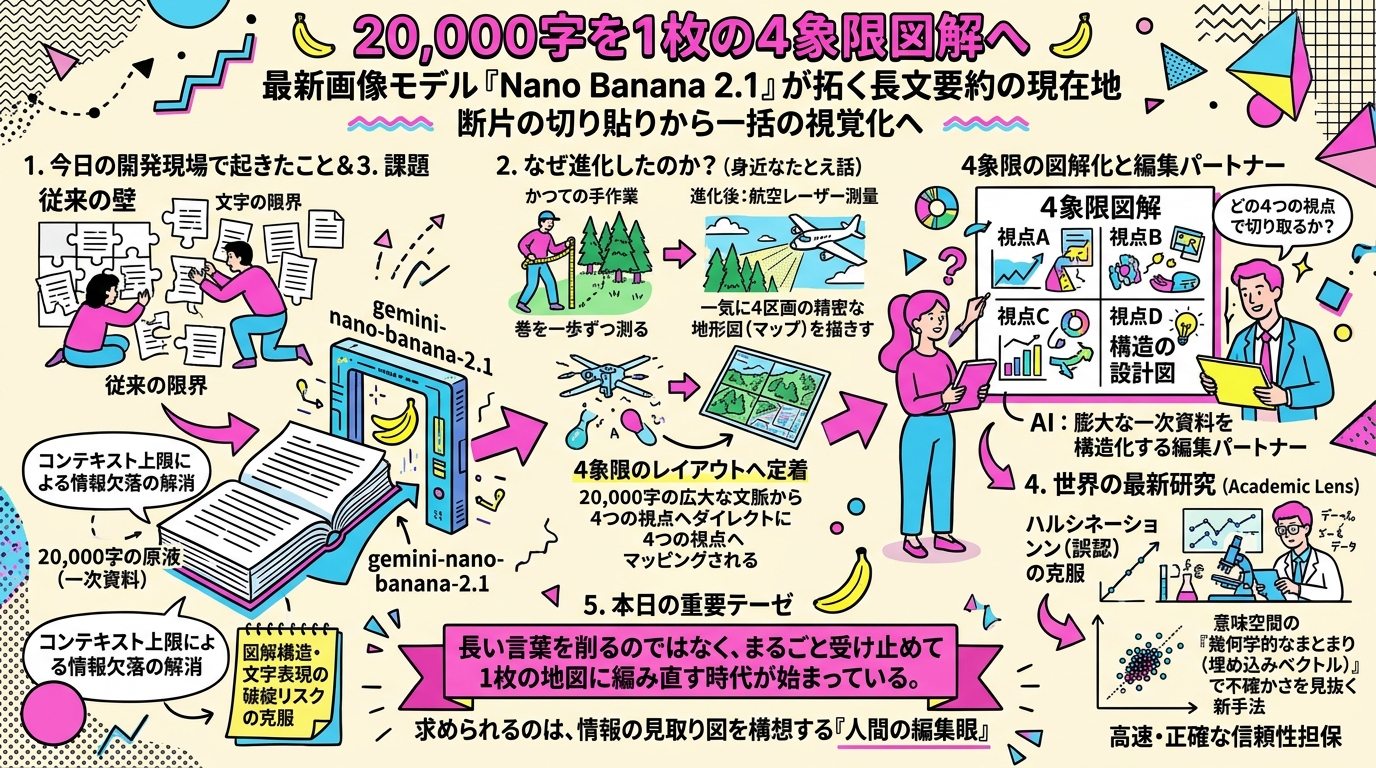
20,000 Characters Distilled into a Single Four-Quadrant Diagram: Where Long-Form Summarization Stands Today with the Latest Image Model, Nano Banana 2.1
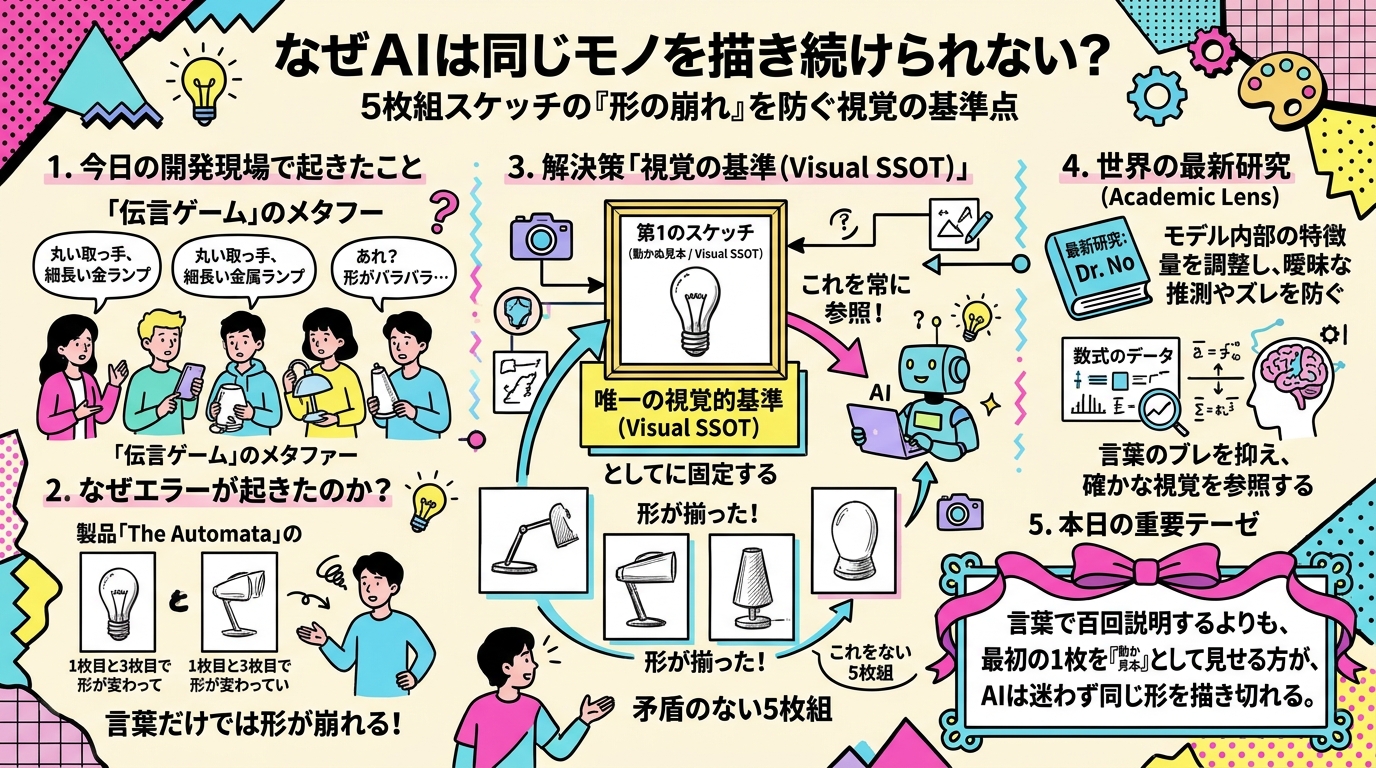
Why Can't AI Keep Drawing the Same Object? A Visual Anchor to Prevent Structural Drift in 5-Panel Sketches
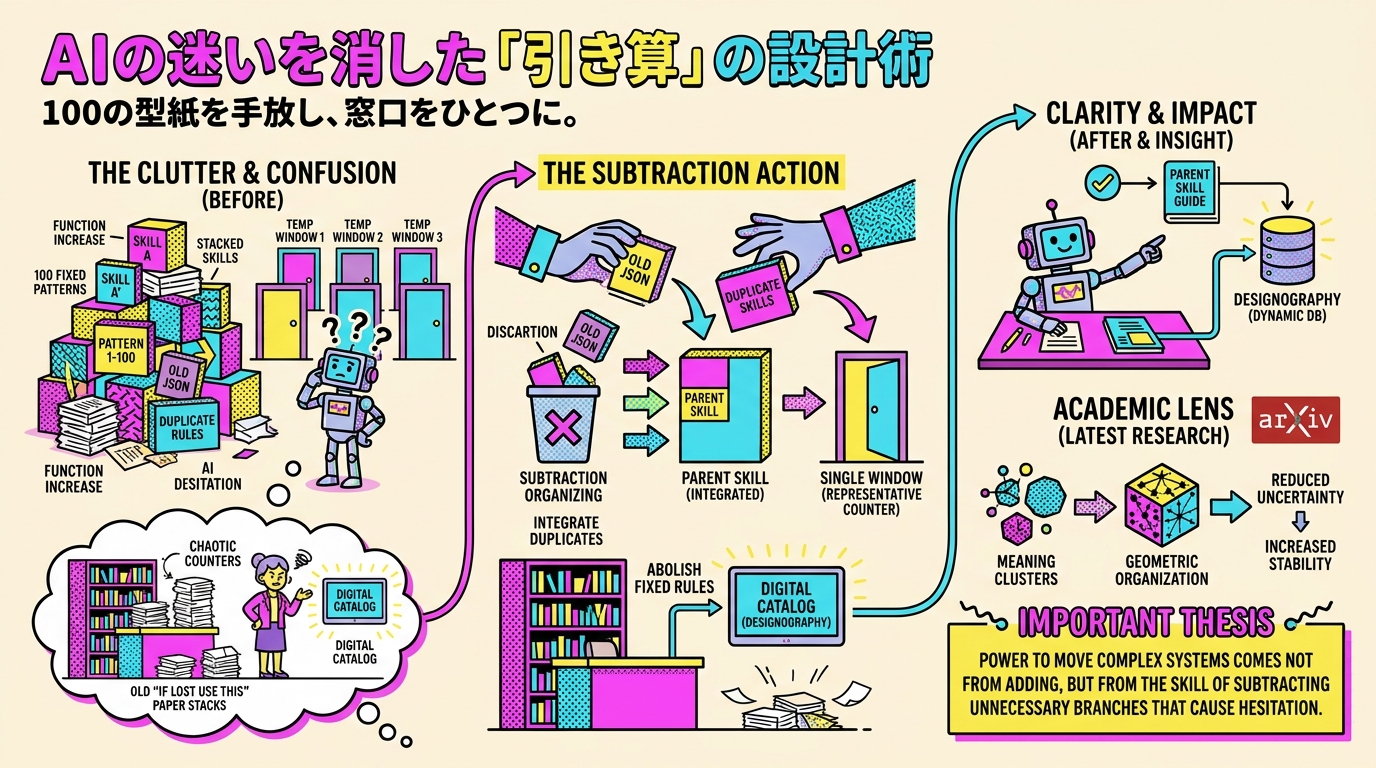
Letting Go of 100 Templates for a Single Desk: The Art of Subtractive Design That Eliminated AI Hesitation
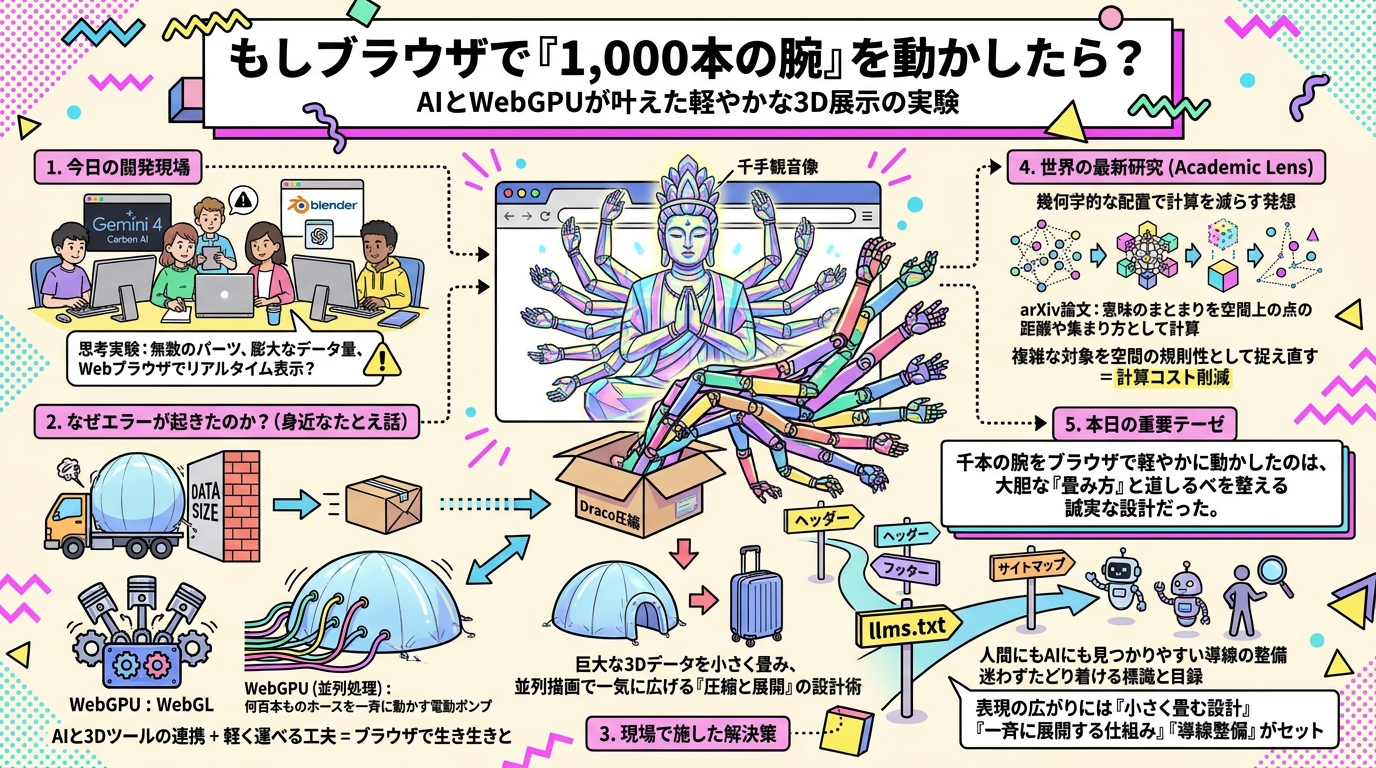
What If You Animated '1,000 Arms' in a Browser? A Lightweight 3D Exhibition Experiment Powered by AI and WebGPU
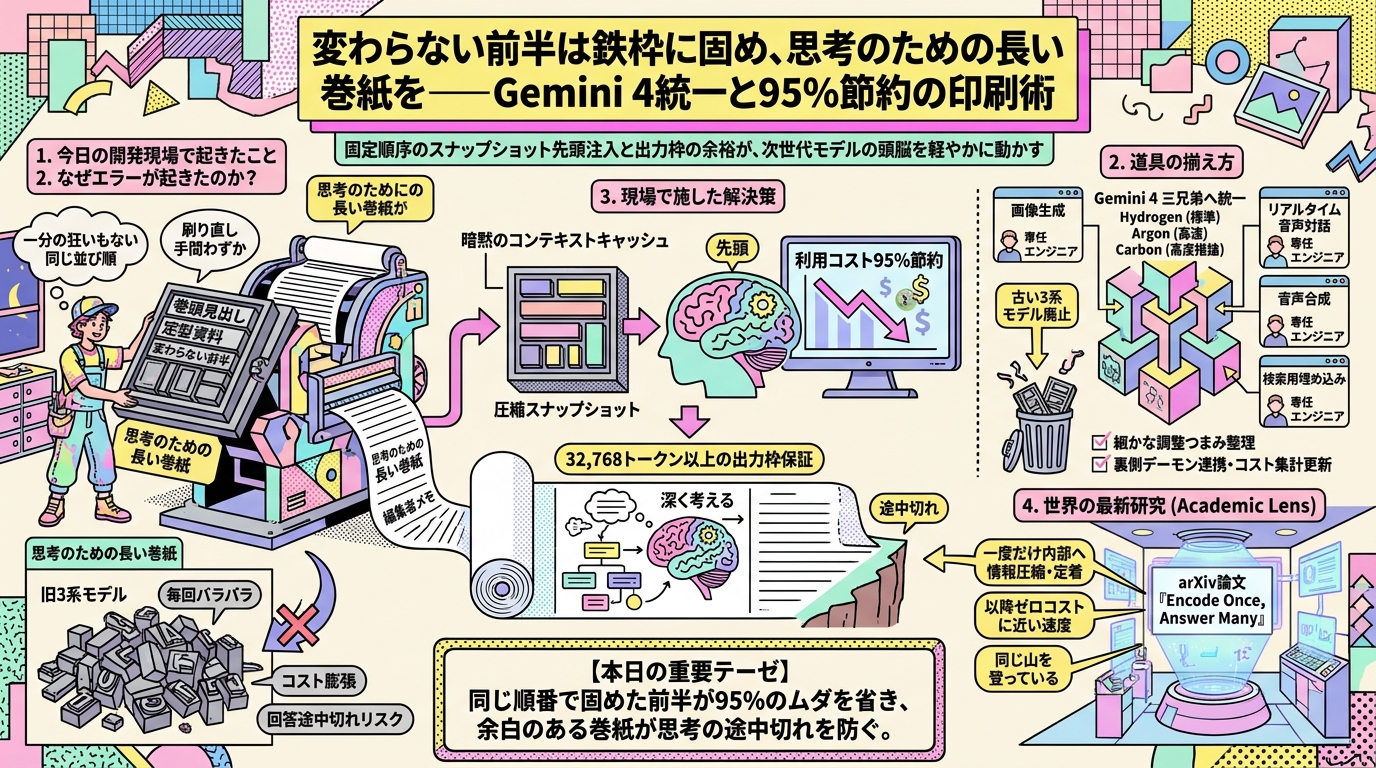
Locking the Constant Lead in Iron, Unrolling Long Scrolls for Thought — Gemini 4 Unification and the Art of 95% Printing Savings
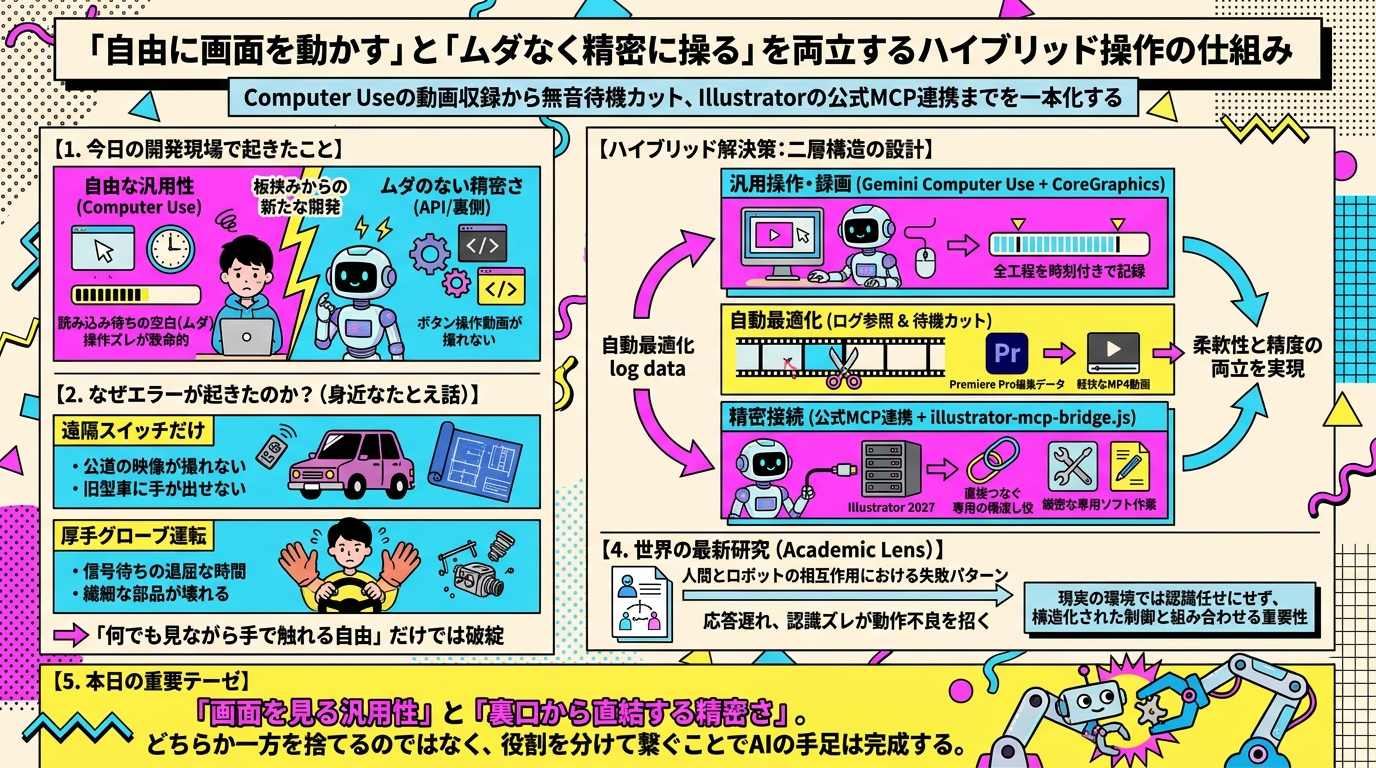
A Hybrid Control Architecture Bridging Free-Form Screen Navigation and Lean, Precision Execution
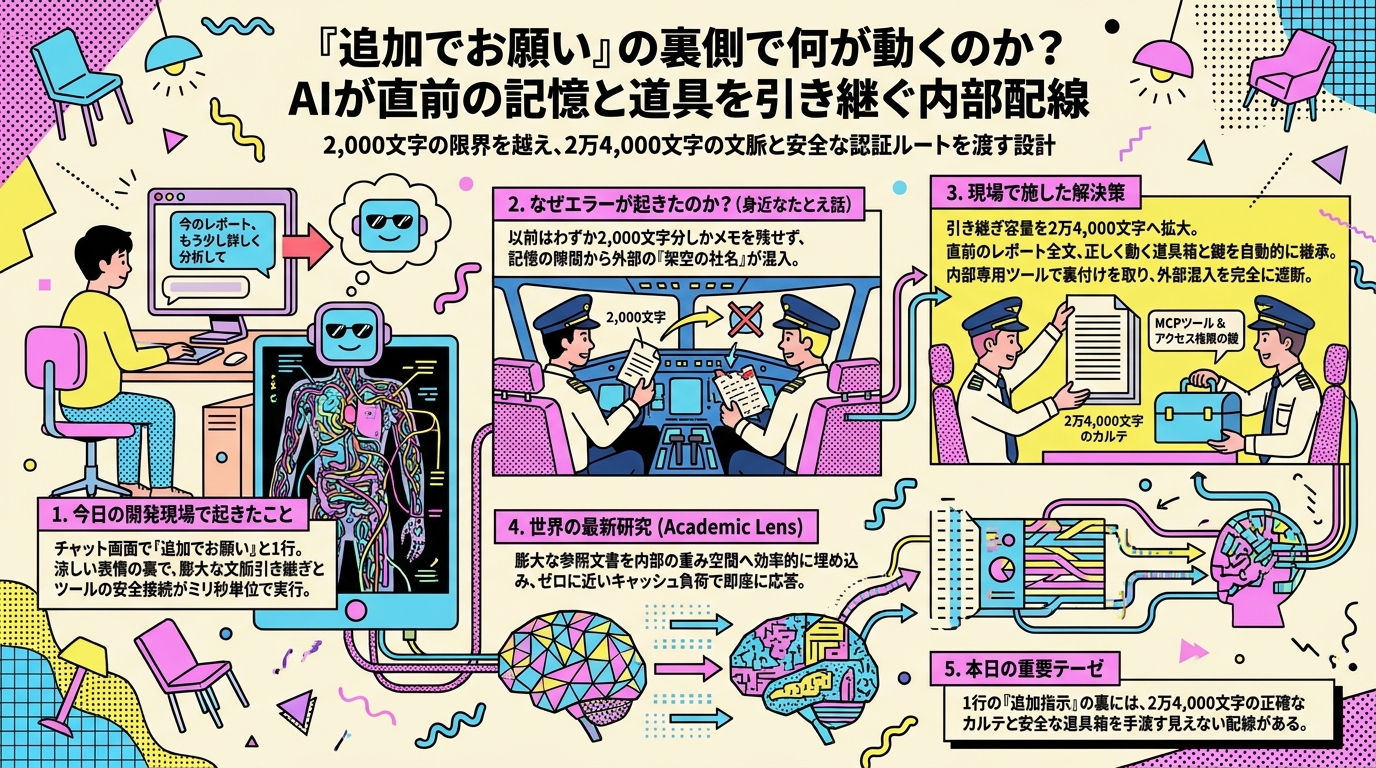
Behind "Just One More Request": The Internal Wiring That Hands Off Memory and Tools Between AIs