THE SCHOOL OF KAMOS
Connecting Real-world Dev & Academic Intelligence with Intuitive Metaphors
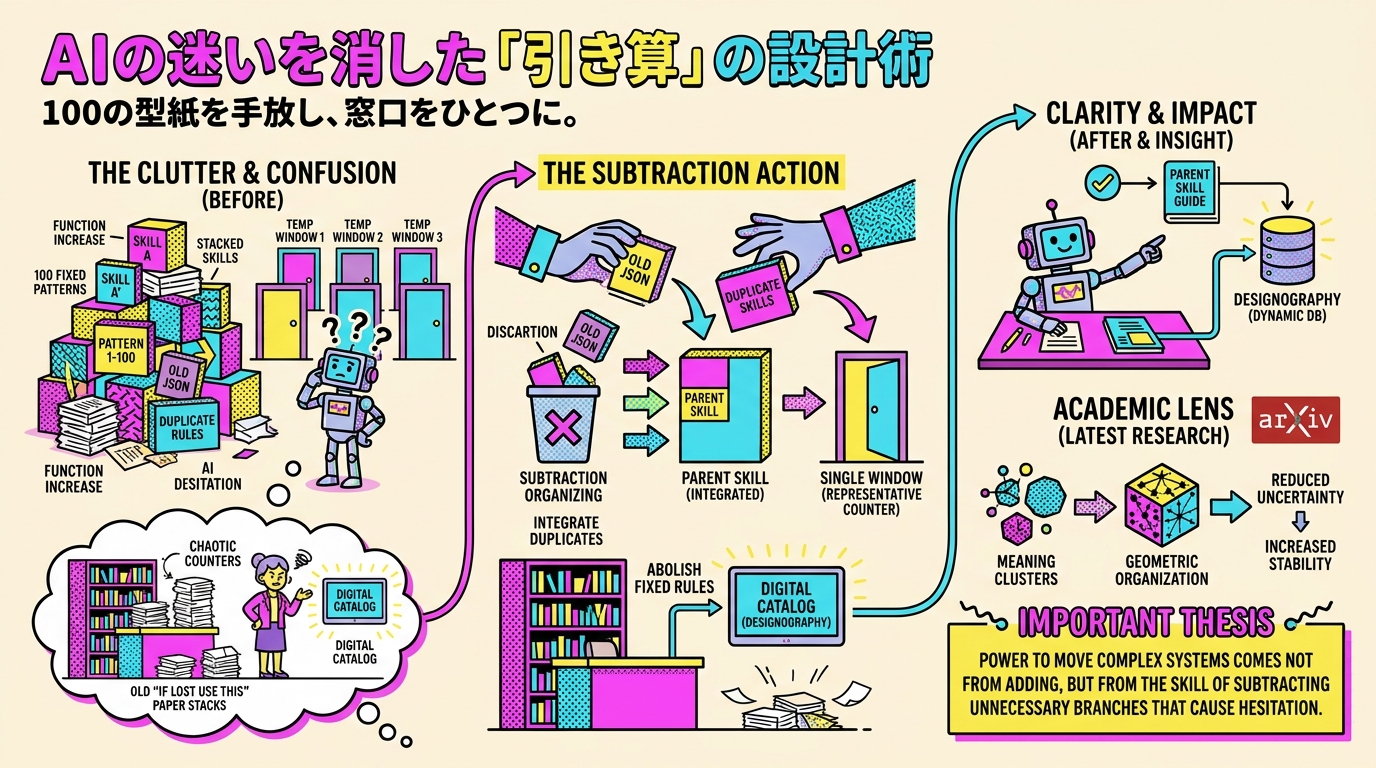
Letting Go of 100 Templates for a Single Desk: The Art of Subtractive Design That Eliminated AI Hesitation
A subtle leverage point: consolidating overlapping skills and retiring rigid rules to unlock an agent's true judgment
As features multiplied, layers of instructional 'skills' and '100 fixed design patterns' piled up in the codebase, ironically leaving the AI increasingly uncertain about which tool to reach for. Rather than forcing a fix by writing hundreds of new lines of control code, the engineering team chose subtraction: merging redundant skills into their parent skills and deleting the legacy JSON files housing those 100 fixed combos. This modest cleanup—streamlining the entry points of configuration and architecture—became the decisive fulcrum that stabilized the entire sprawling system.
Why did simply subtracting and consolidating—rather than adding—set the entire system moving with effortless grace? Imagine a grand library housing hundreds of thousands of volumes. If pop-up help desks with nearly identical names were scattered across every floor, and the counters were buried under thick stacks of outdated paper titled '100 Standard Combinations to Use When in Doubt,' even a veteran librarian would hesitate over which desk to use—and overlook the live digital catalog altogether. By consolidating those scattered booths into dedicated main desks by function, clearing away the obsolete paper stacks, and placing the digital catalog within immediate reach, a minimal adjustment—no larger than turning a small directional sign—acted as a powerful lever that harmonized navigation and circulation across the entire building.
The reason this cleanup works lies in how an AI model receives instructions and decides its next move. An AI spreads every skill description and guide it is given across its virtual workbench, comparing them side by side to assemble a plan of action. When redundant entry points like 'for illustration export' and 'for app screens' sit side by side, or when 100 rigid rules monopolize the desk, the model's attention fragments, inviting hesitation over what to choose. In this refactor, related scripts were nested cleanly under their parent skills, and the fixed-combo JSONs were retired in favor of speaking directly with Designography in Firestore. By clearing away the clutter on the workbench, the AI can now perceive only the context that matters in the moment and make sharp, accurate decisions.
"The power to orchestrate a complex system comes not from adding more features, but from the quiet craftsmanship of pruning away the dead branches that breed hesitation."Key Takeaway
📖 1-Minute Lexicon
Reorganizing and cleaning up the internal structure and redundancies of a program to make it clearer and more resilient without altering its external behavior.
The degree to which an AI hesitates over a single prompt and wavers among multiple answers carrying different meanings.
The Leverage of Skill Consolidation: Stabilizing AI Through Subtraction, Not Addition
Live Frontier Pulse: Real-World AI Trends
What Domestic LLMs Exist in Japan? A Comparison of Major Models and Enterprise Selection Guide [2026 Edition]
ExaWizards, a provider of enterprise AI adoption support, has published a guide comparing major Japanese-built large language models (LLMs) as of 2026 alongside key criteria for selecting them. The article outlines practical perspectives—spanning Japanese language fluency, security requirements, and cost—to help organizations pinpoint the model best suited to their needs.
Sakana AI Eyes Autumn 2027 IPO in What Could Be Japan's Largest Startup Listing and First for Generative AI
According to Nikkei, Tokyo-based generative AI startup Sakana AI is preparing to go public as early as autumn 2027. If realized, it would mark Japan's first IPO by a generative AI company and rank among the largest startup listings in the country.
How Does This Connect to Global Frontier Research?
Measuring and reducing the 'hesitation' (uncertainty) an AI experiences when selecting an answer or action is a central question in global academic research. A recent paper published on arXiv proposes a method that geometrically organizes the meanings of candidate outputs into spatial clusters, efficiently detecting variance in judgment and early signs of error. When semantically similar options remain scattered, an AI's confidence wavers; by thoughtfully grouping related meanings together, systems can accurately gauge uncertainty and achieve greater stability. The team's hands-on work—consolidating overlapping skills and clearing out fixed patterns—is a direct practical application of removing unnecessary dispersion from the AI's cognitive space.
When entrusting an AI agent with many tasks, why does consolidating and trimming similar tool definitions and vast sets of fixed patterns make its behavior more reliable?
Past School Paper Backnumbers
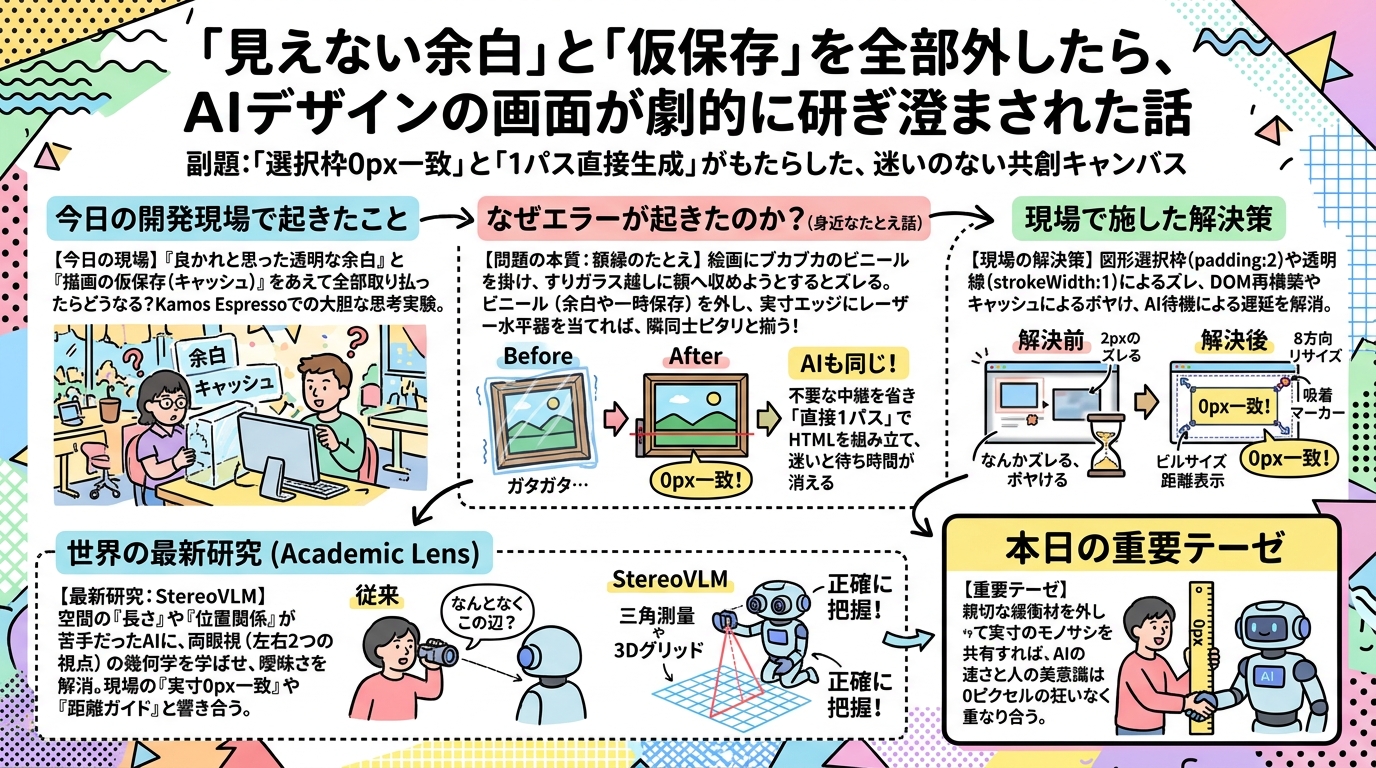
How Stripping Away Invisible Padding and Caching Dramatically Sharpened Our AI Design Canvas
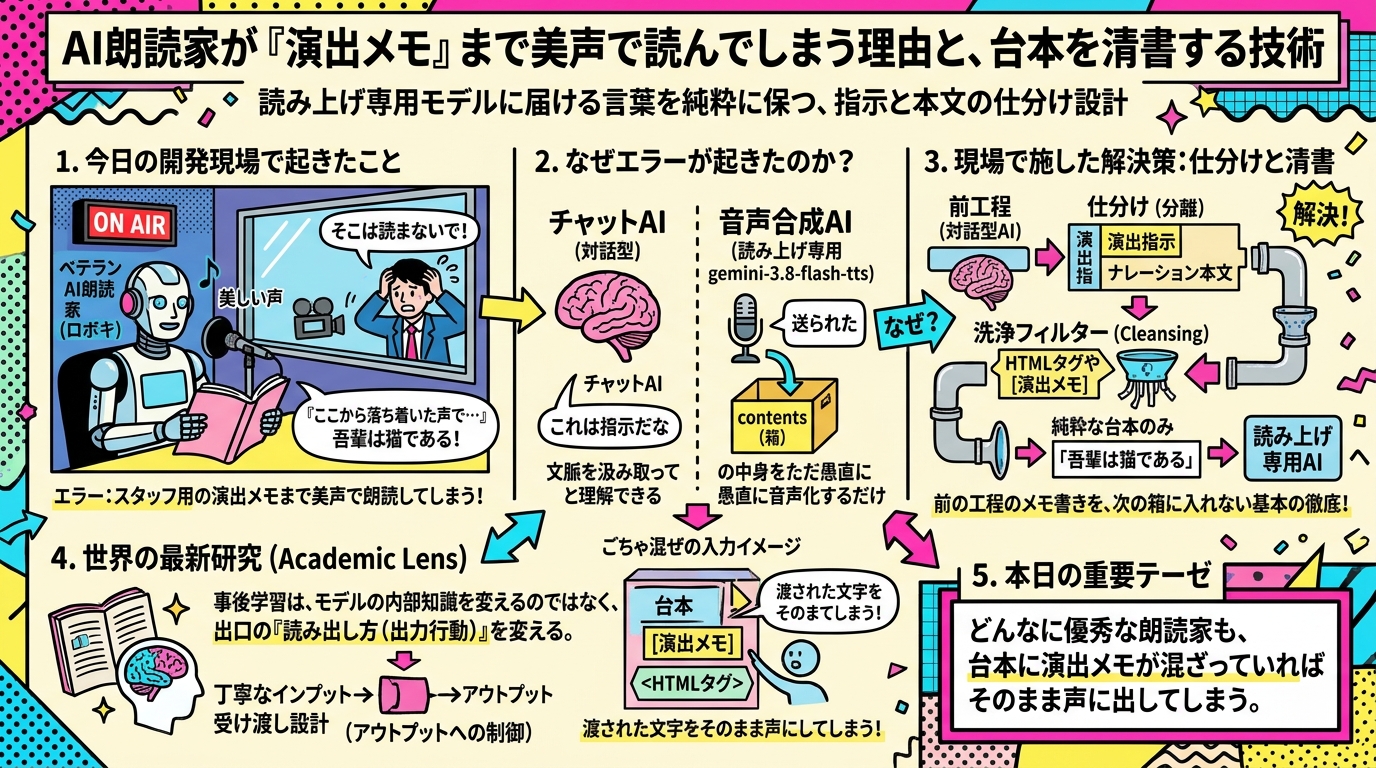
Why an AI Narrator Reads 'Stage Directions' Aloud—and the Art of Scrubbing the Script Clean
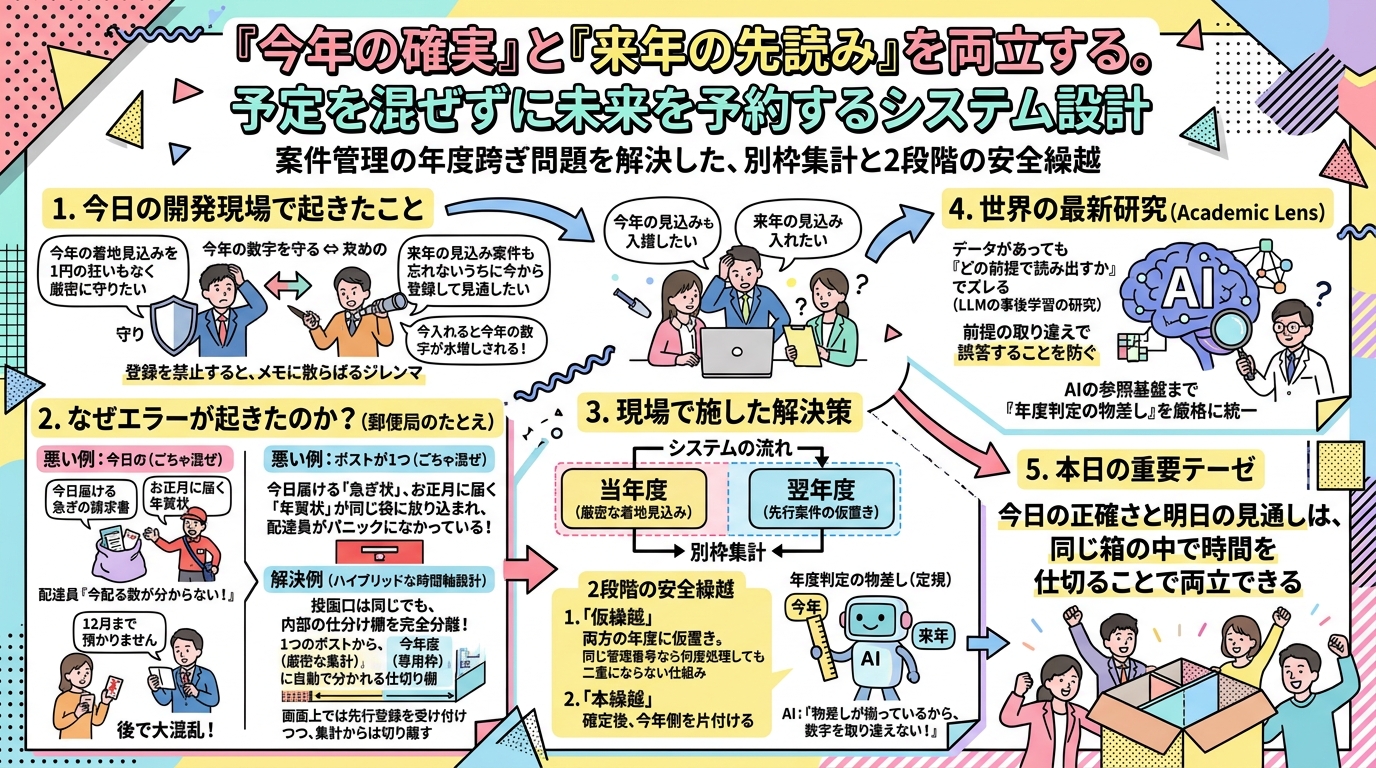
Balancing 'This Year's Certainty' with 'Next Year's Foresight': System Design That Reserves the Future Without Mixing Schedules
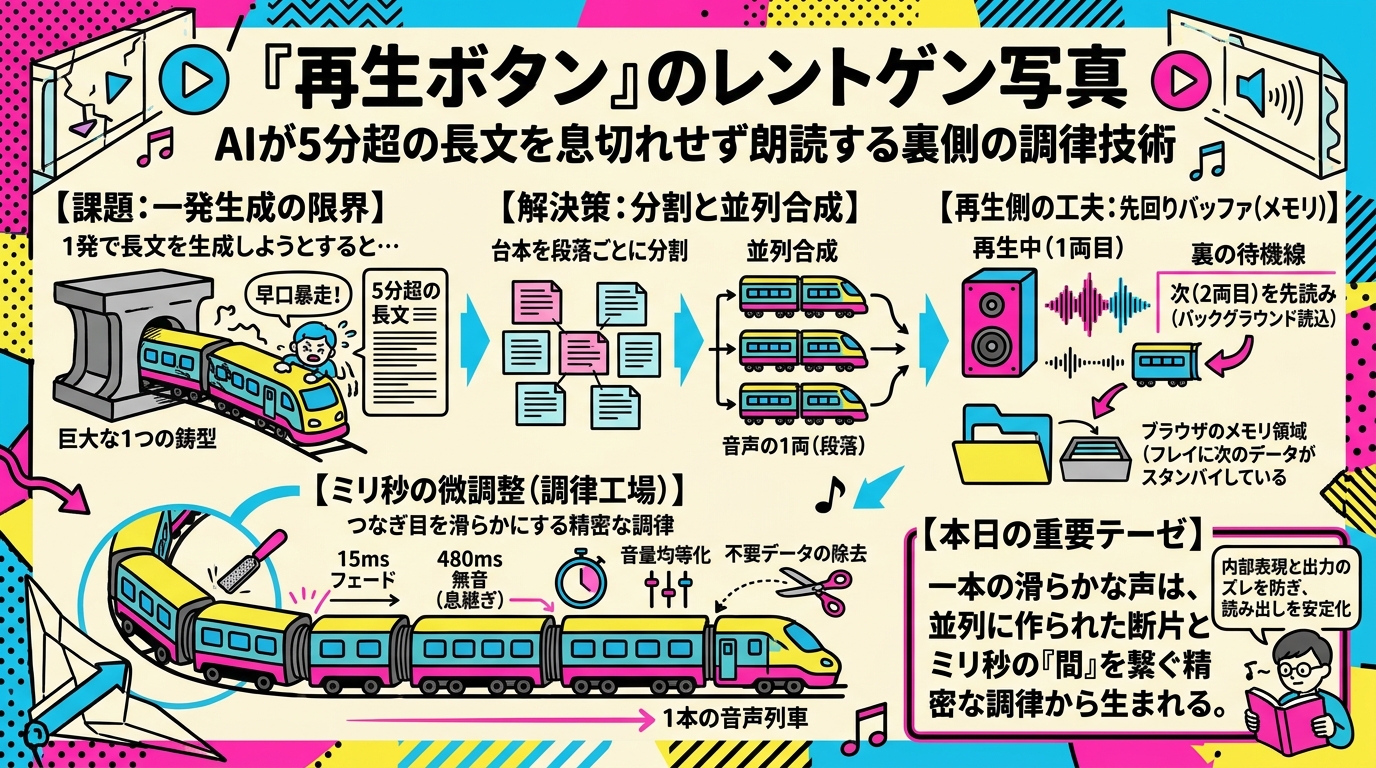
An X-Ray of the Play Button: The Precision Tuning Behind Unhurried Five-Minute AI Narration
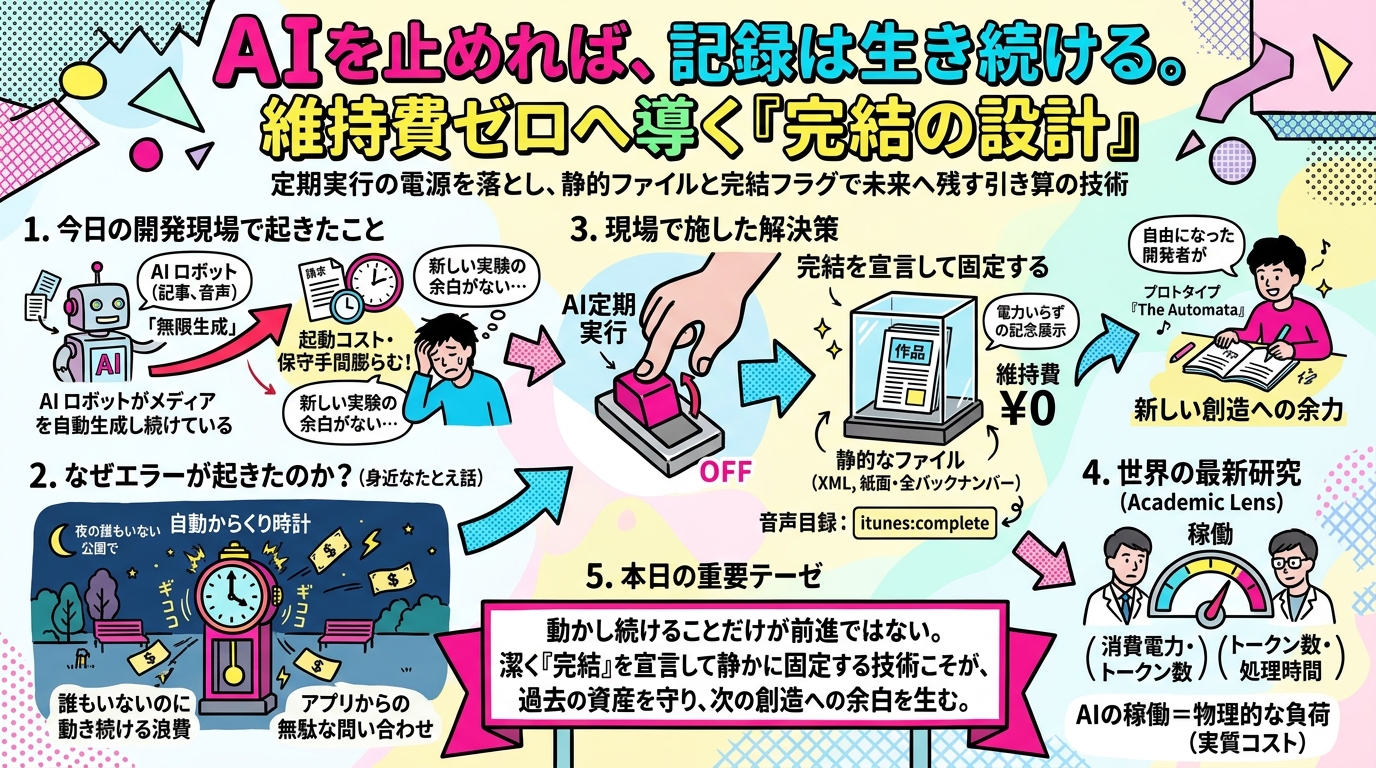
Stop the AI, and the Archive Lives On: Designing for Completion at Zero Maintenance Cost
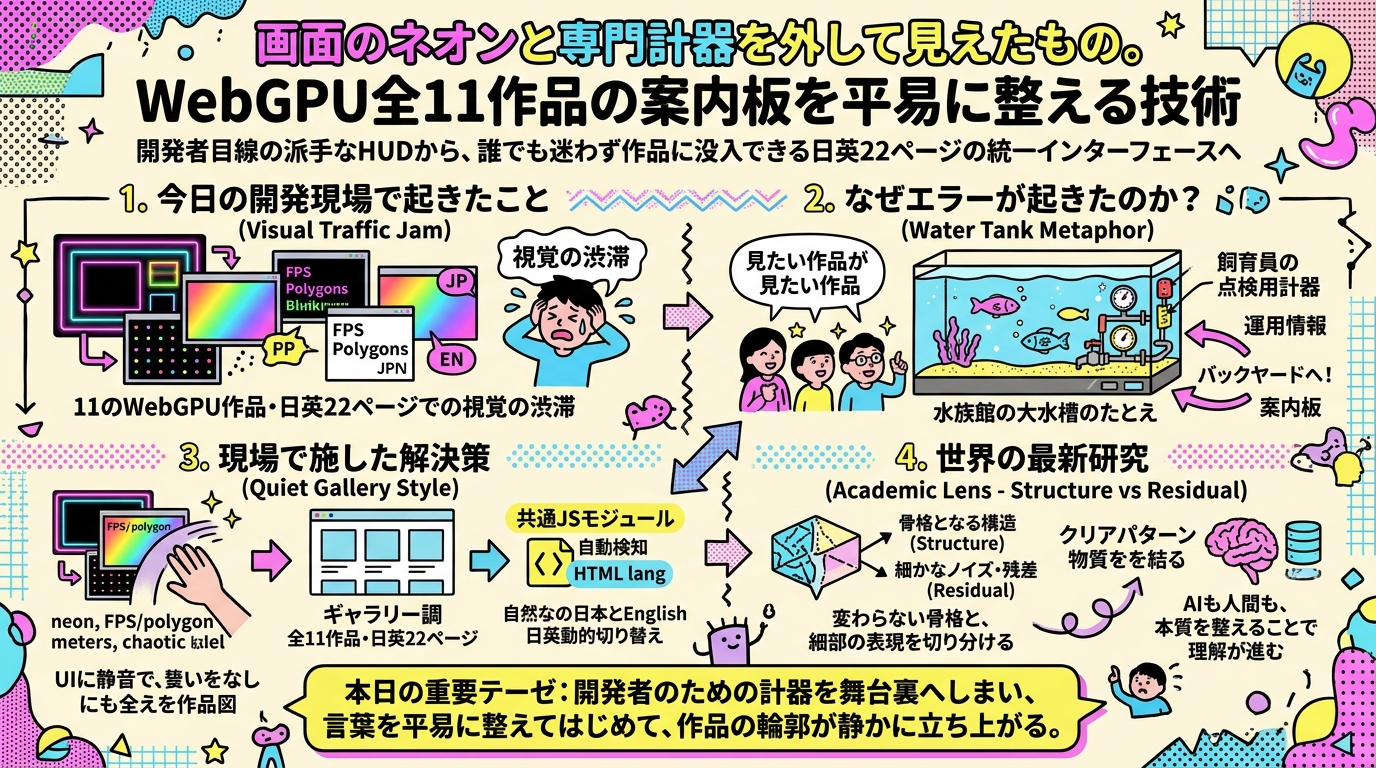
What Appeared When We Removed the Neon and Technical Gauges: Crafting Effortless Wayfinding Across 11 WebGPU Works
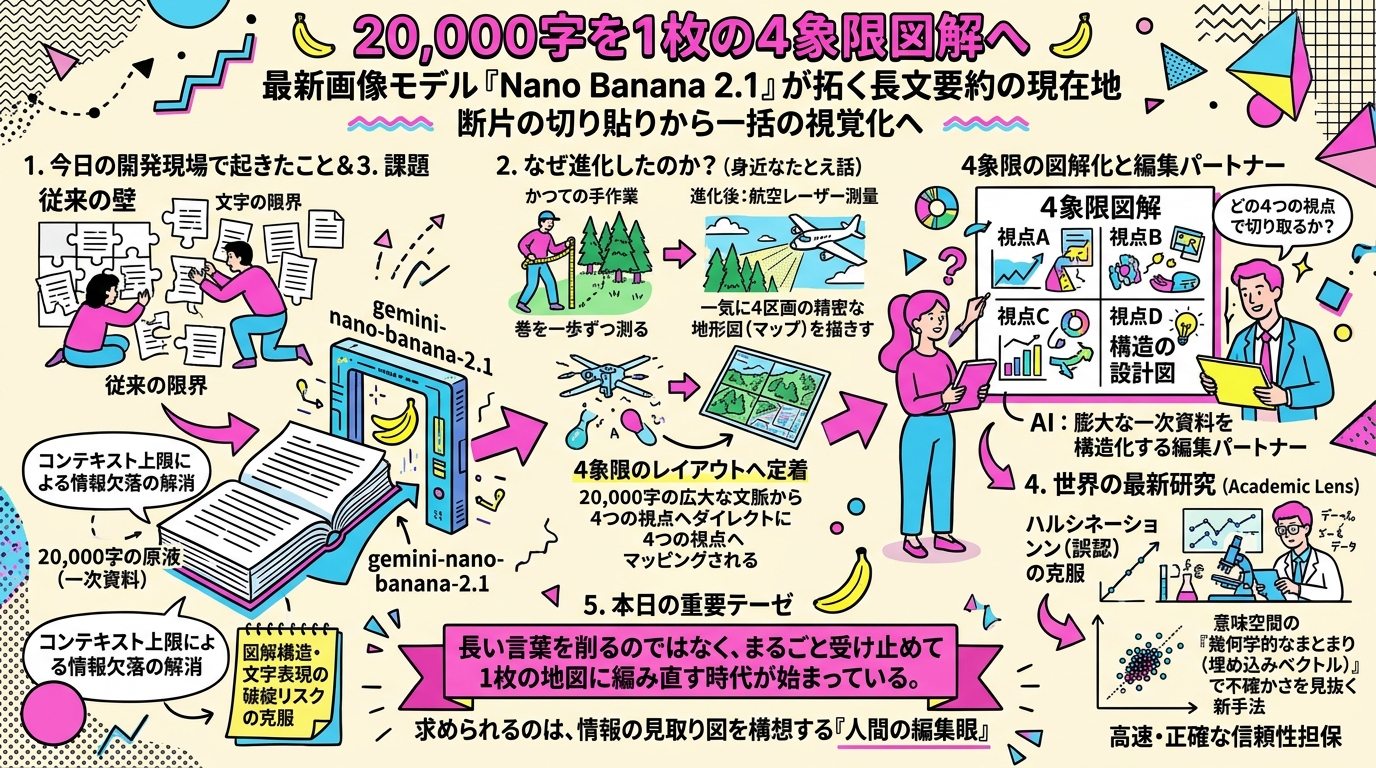
20,000 Characters Distilled into a Single Four-Quadrant Diagram: Where Long-Form Summarization Stands Today with the Latest Image Model, Nano Banana 2.1
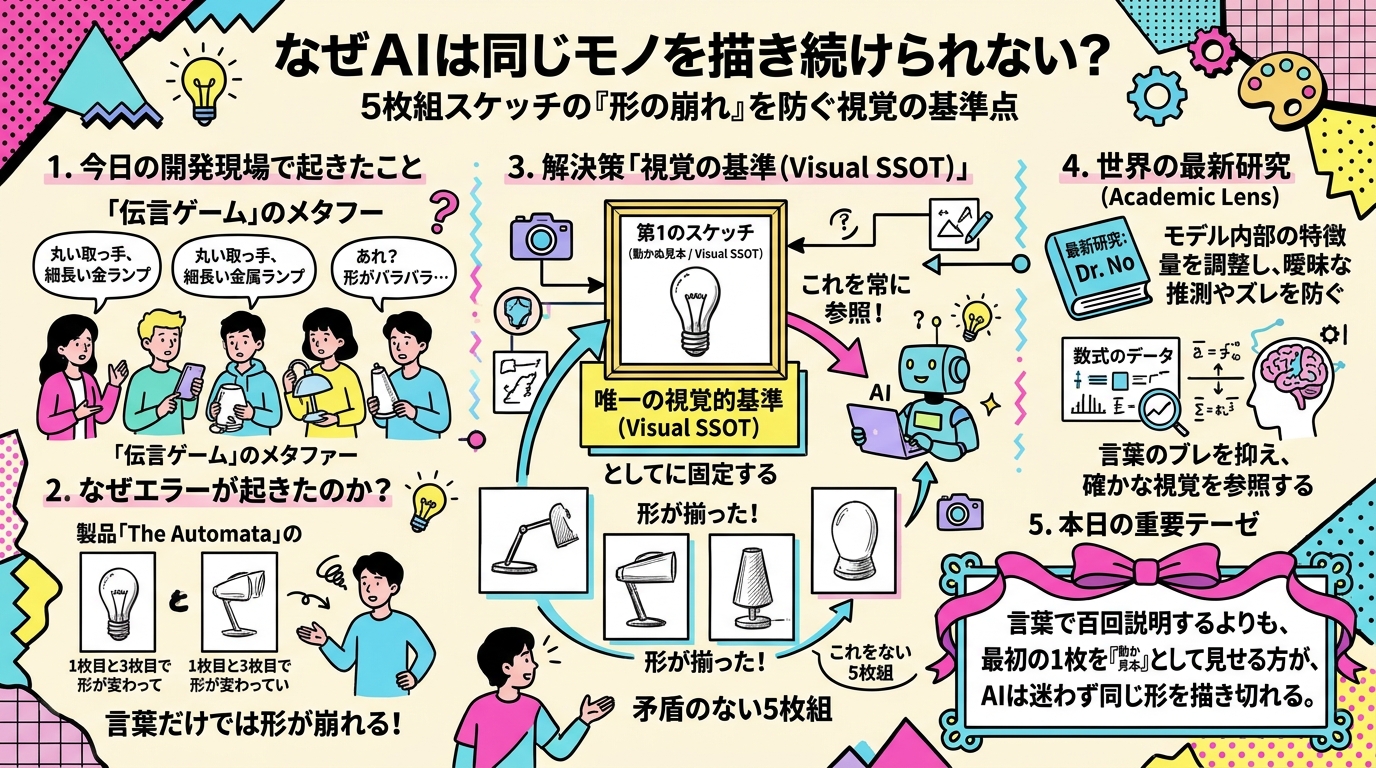
Why Can't AI Keep Drawing the Same Object? A Visual Anchor to Prevent Structural Drift in 5-Panel Sketches
Current
Letting Go of 100 Templates for a Single Desk: The Art of Subtractive Design That Eliminated AI Hesitation
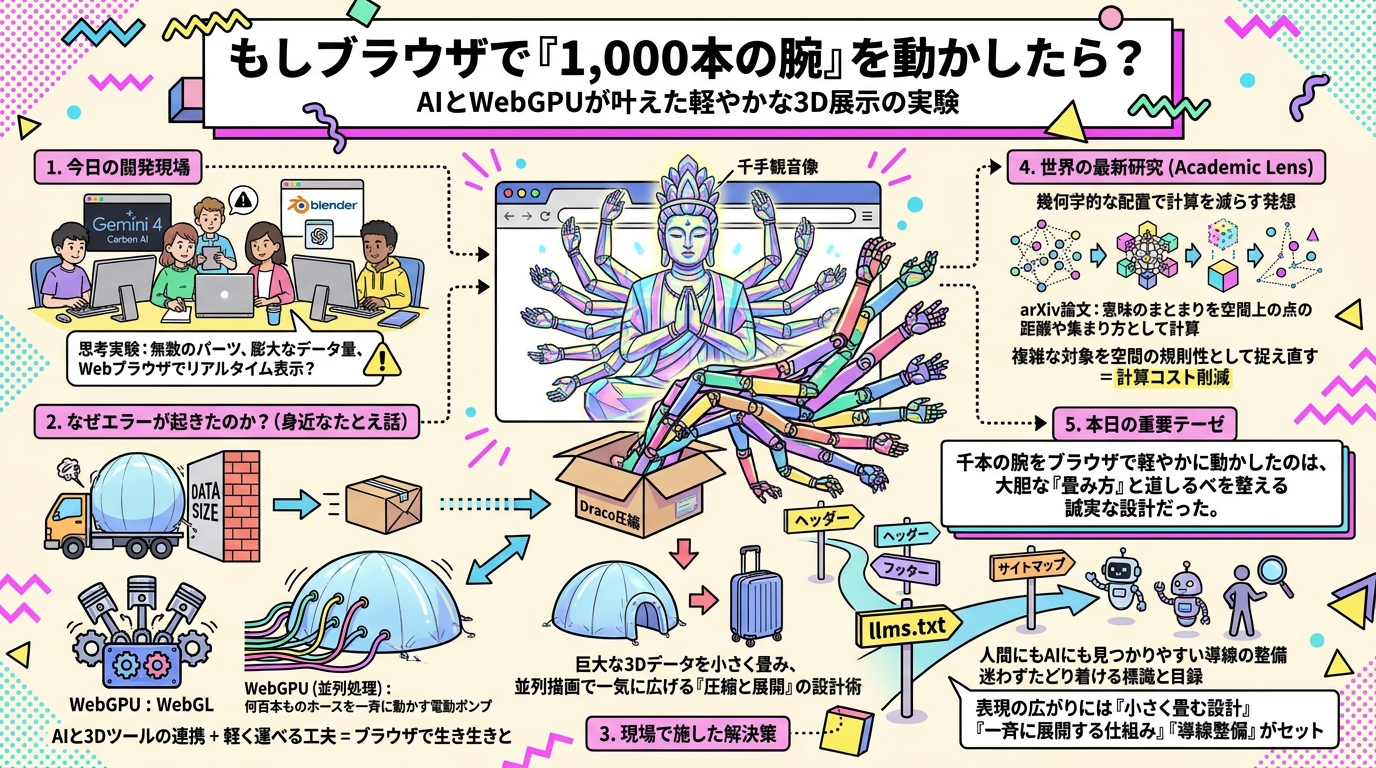
What If You Animated '1,000 Arms' in a Browser? A Lightweight 3D Exhibition Experiment Powered by AI and WebGPU
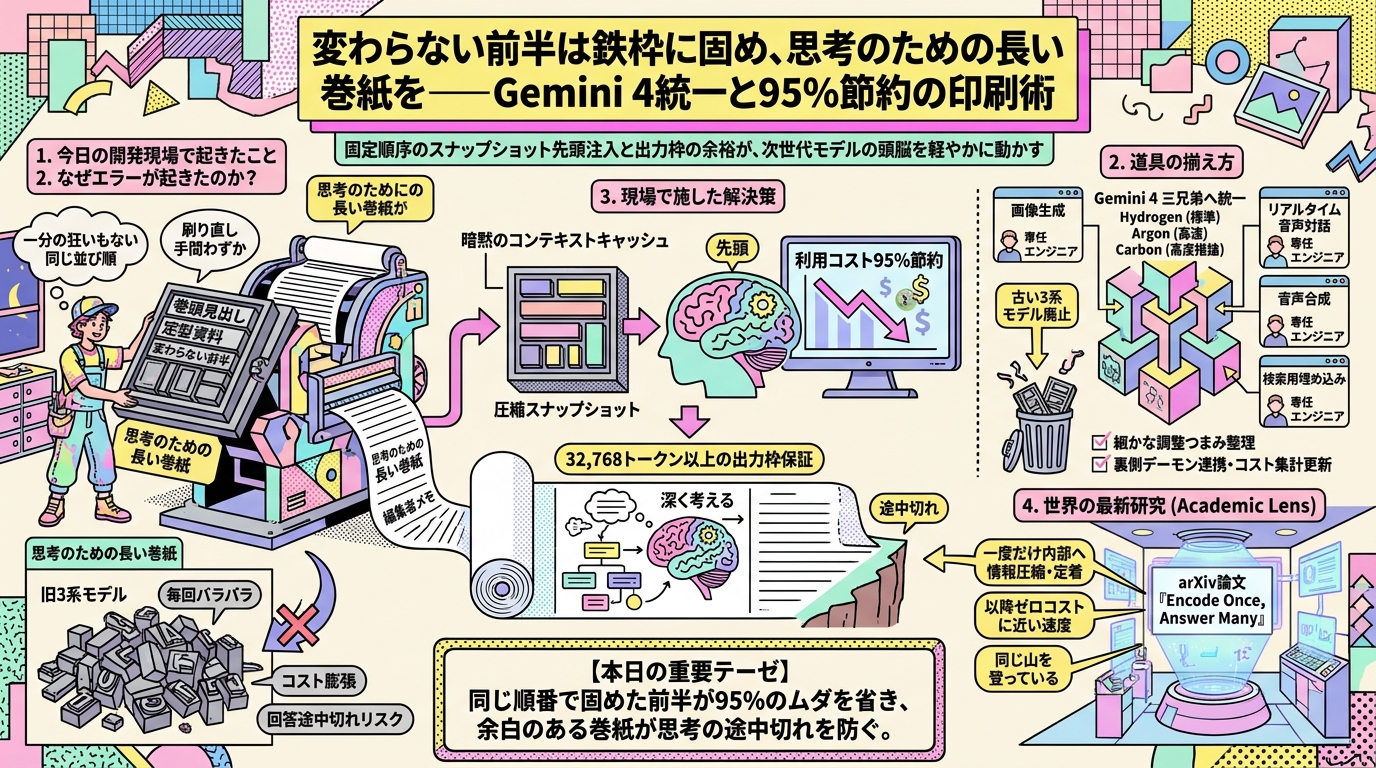
Locking the Constant Lead in Iron, Unrolling Long Scrolls for Thought — Gemini 4 Unification and the Art of 95% Printing Savings
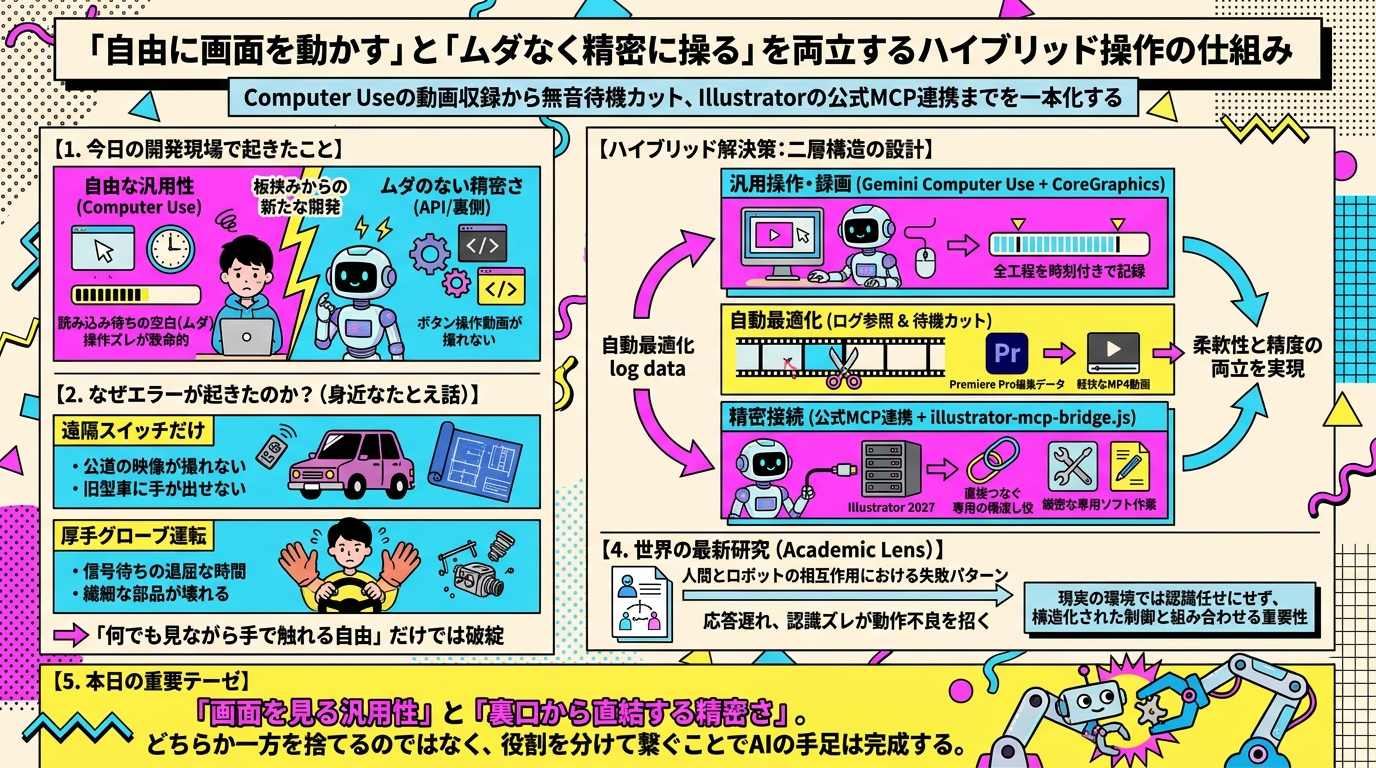
A Hybrid Control Architecture Bridging Free-Form Screen Navigation and Lean, Precision Execution
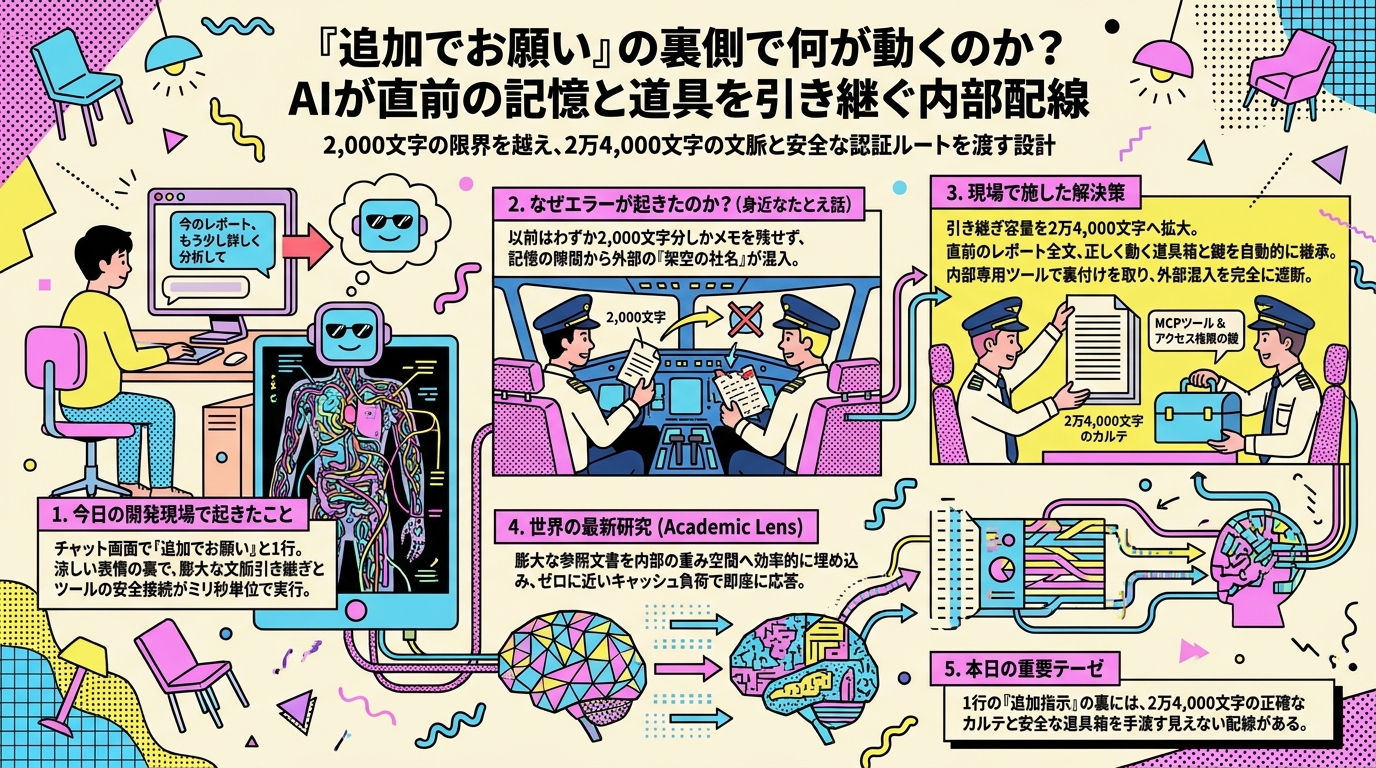
Behind "Just One More Request": The Internal Wiring That Hands Off Memory and Tools Between AIs