THE SCHOOL OF KAMOS
Connecting Real-world Dev & Academic Intelligence with Intuitive Metaphors
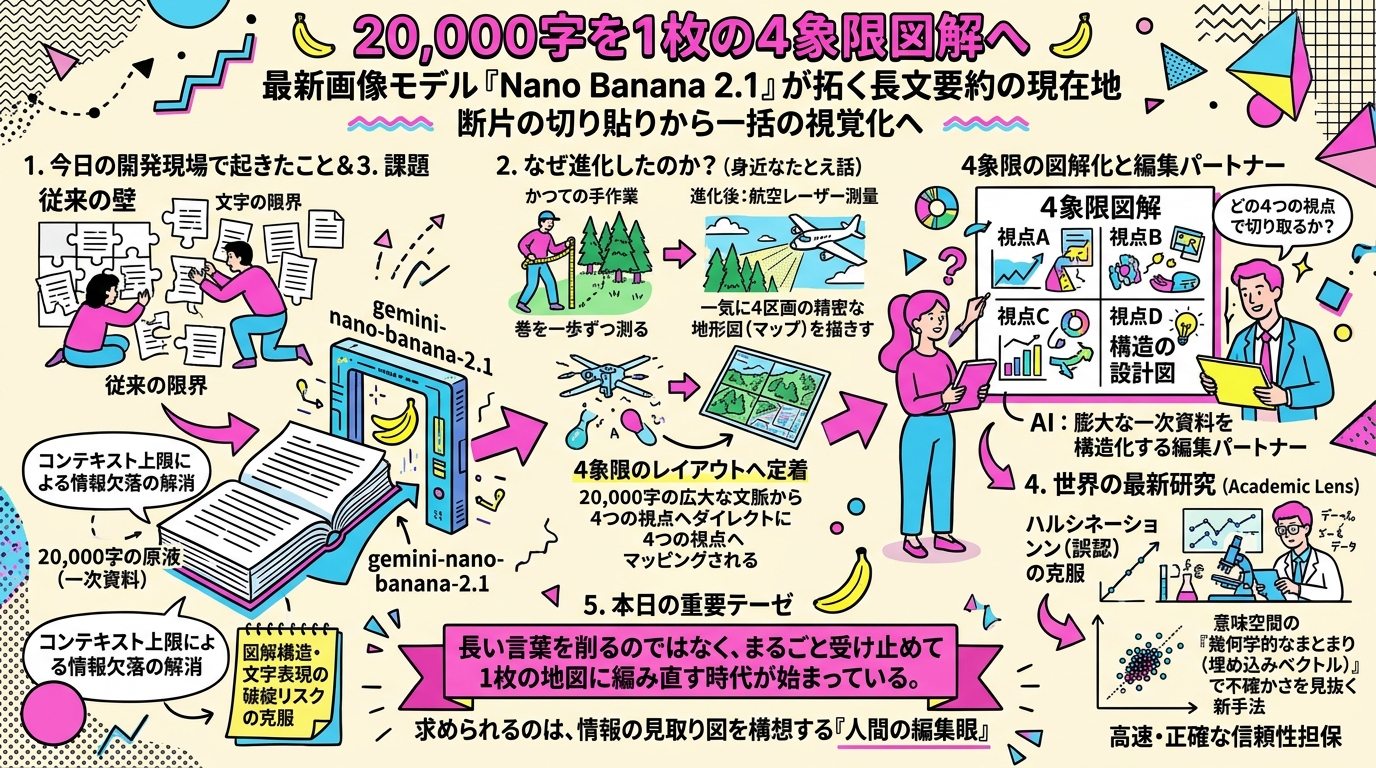
20,000 Characters Distilled into a Single Four-Quadrant Diagram: Where Long-Form Summarization Stands Today with the Latest Image Model, Nano Banana 2.1
From Piecing Together Fragments to Unified Visualization: A Generational Shift in Generative Infrastructure Across Three Media Channels
Until very recently, having AI read long articles or research reports and distill them into a single, intuitive diagram came with formidable barriers. Input character limits meant anything slightly lengthy risked losing key takeaways, and sending text to an image generator often resulted in garbled typography and broken layouts—making manual human bridging between summarization and diagramming the norm. Now, however, by simultaneously migrating the diagram generation models across three media channels—including The School of Kamos—to the latest 'gemini-nano-banana-2.1' and raising the summarization extraction limit to 20,000 characters, we have realized a pipeline capable of weaving text equivalent to several book chapters into a four-quadrant diagram in one sweep.
The essence of this evolution lies in the fact that textual comprehension capacity and visual structuring capability have grown dramatically in lockstep. To draw a parallel from the history of everyday tools, it resembles the leap from manual cartography—measuring a forest step by step with a tape measure and graph paper—to airborne LiDAR surveying, which scans the entire forest from above and renders a precision four-sector topographic map all at once. Earlier AI could only survey short fragments of a few thousand characters, struggling merely to keep individual components consistent when drawing diagrams. Now, capable of holding a vast 20,000-character context at once, the diagram-specialized Nano Banana 2.1 anchors the narrative's backbone directly into a four-quadrant layout, enabling information design that reveals the big picture of long-form text at a single glance without loss of fidelity.
What this overhaul demonstrates is that human–AI collaboration is shifting from using a tool that answers short prompts to working with an editorial partner entrusted with entire volumes of primary source material to structure. Rather than trimming long texts to appease AI constraints, a workflow is taking hold where we hand over the undiluted 20,000-character source and receive a diagram that speaks directly to human intuition. For those learning technology moving forward, what matters will not merely be having AI summarize long texts, but the ability to draft structural blueprints—deciding which four lenses best capture and convey the essence. As generational upgrades in models take over more of the heavy lifting, the human editorial eye that envisions the architecture of information will become the defining key to creativity in the next era.
"An era has begun where we no longer pare down long prose, but embrace it whole and weave it anew into a single map."Key Takeaway
📖 1-Minute Lexicon
An at-a-glance visual note that organizes complex information into four distinct sections—such as cause and effect, or past and future.
A numerical array representing the 'semantic proximity' of words or sentences, much like coordinates on a map.
An index of 'hesitation' that measures whether an AI's answers to the same question converge on a single meaning or scatter across conflicting ones.
The Evolution of 20,000-Character 'Comprehension' and 'Four-Quadrant Diagramming' with Nano Banana 2.1
Live Frontier Pulse: Real-World AI Trends
Expanding AI Access and Opportunities for Scientists
OpenAI has announced an initiative to expand access and opportunities to use advanced AI tools for researchers and scientists engaged in scientific inquiry. By assisting with the reading of vast volumes of academic literature, hypothesis testing, and experimental workflows, the effort aims to accelerate the speed and precision of scientific discovery.
Federated Learning for Privacy-Preserving Collaboration and Its Applicability to LLMs
NEC has published an overview of its 'federated learning' technology—which enables collaborative AI model training across distributed sites without ever exposing confidential data externally—and its applicability to large language models (LLMs). The commentary outlines a technical approach to integrating insights across multiple organizations to boost accuracy while safeguarding privacy and corporate secrets.
How Does This Connect to Global Frontier Research?
When summarizing a 20,000-character text and translating it into a diagram, the greatest risk to guard against is 'hallucination,' where AI misreads the context and depicts information that deviates from the facts. Rather than relying on computationally heavy conventional methods to gauge output uncertainty—such as performing pairwise logical entailment checks between sentences—this paper proposes a new approach that rapidly detects uncertainty solely through the 'geometric clustering' of embedding vectors in semantic space. When generating multiple candidate summaries from a lengthy text, measuring whether the answers converge on a single point or scatter across the semantic landscape enables fast, accurate reliability assurance—providing an essential theoretical foundation for the quality of large-scale automated summarization and diagram generation.
When having AI summarize and diagram a long text, what clue does the latest research on 'embedding-based uncertainty estimation' use to detect AI hesitation?
Past School Paper Backnumbers
How Stripping Away Invisible Padding and Caching Dramatically Sharpened Our AI Design Canvas
Why an AI Narrator Reads 'Stage Directions' Aloud—and the Art of Scrubbing the Script Clean
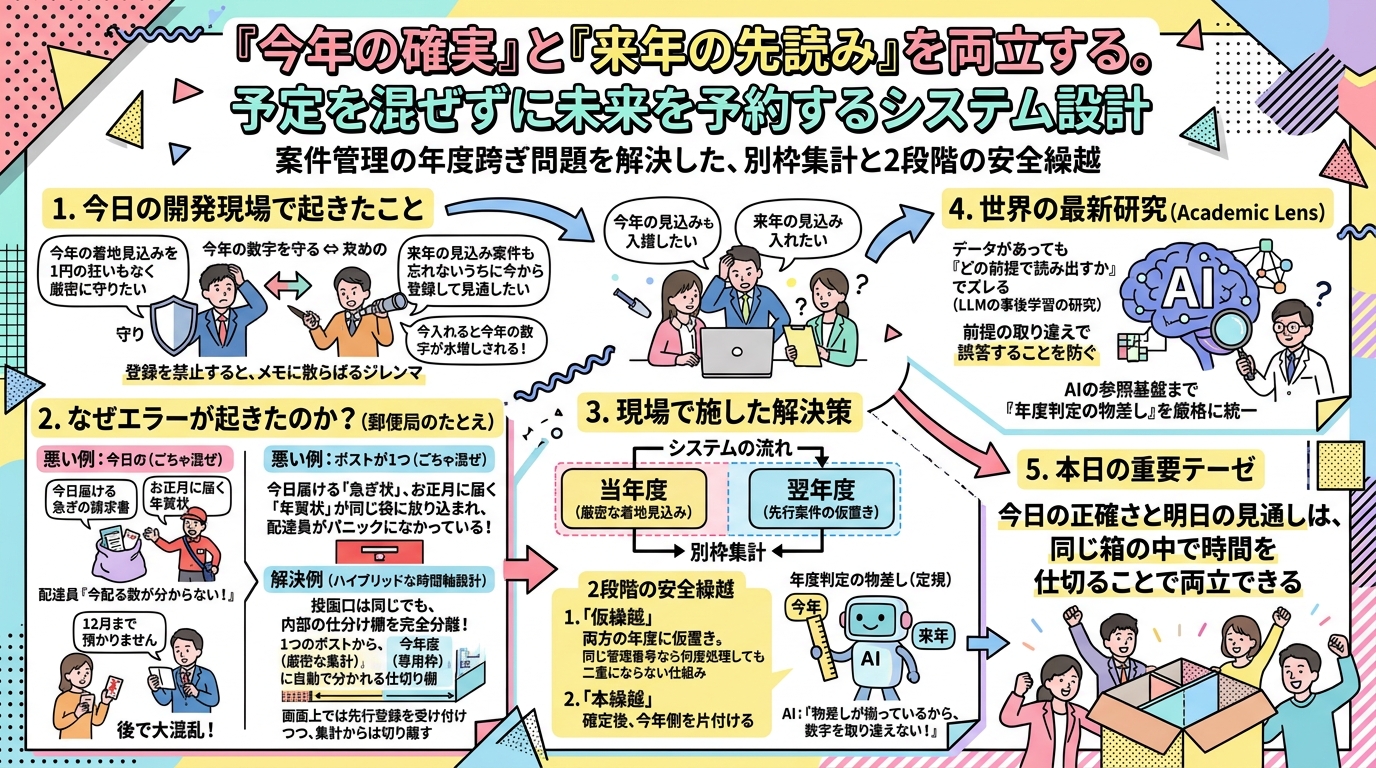
Balancing 'This Year's Certainty' with 'Next Year's Foresight': System Design That Reserves the Future Without Mixing Schedules
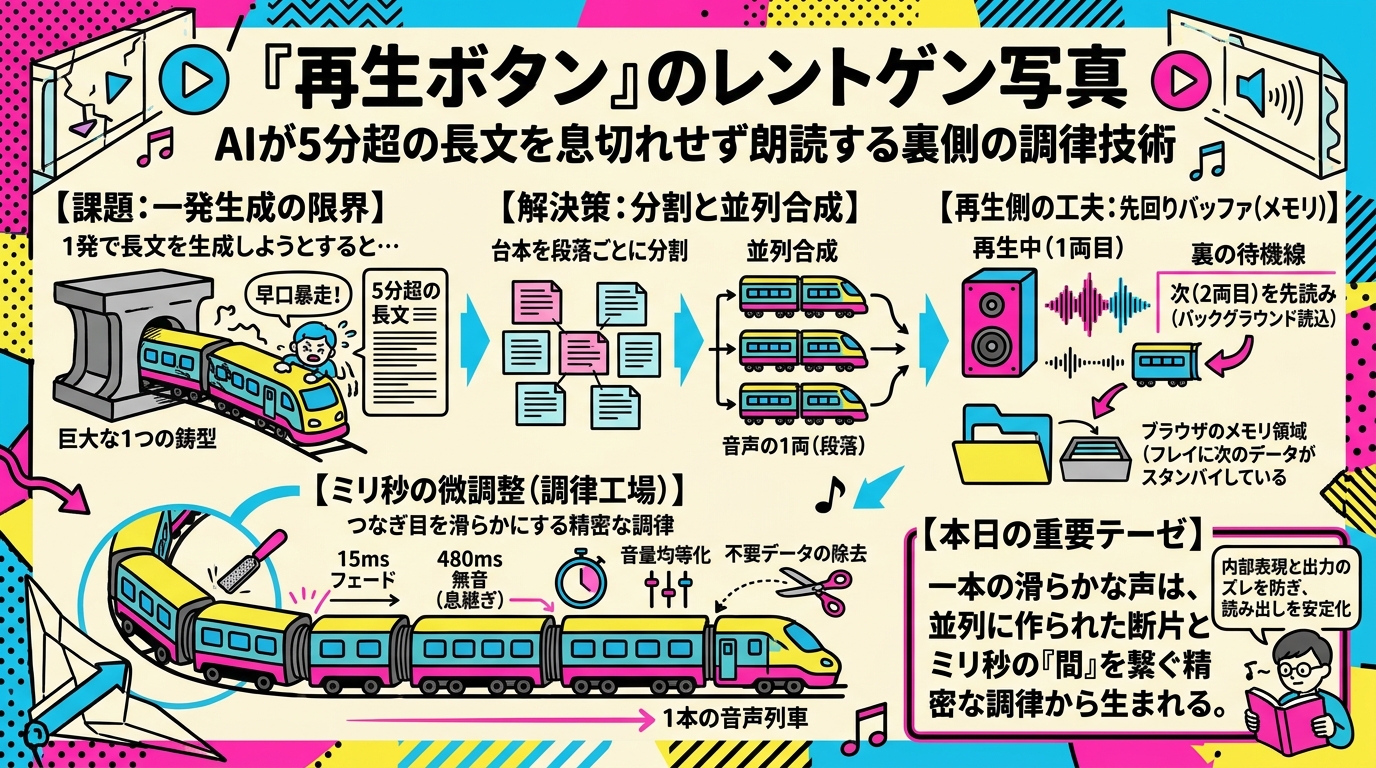
An X-Ray of the Play Button: The Precision Tuning Behind Unhurried Five-Minute AI Narration
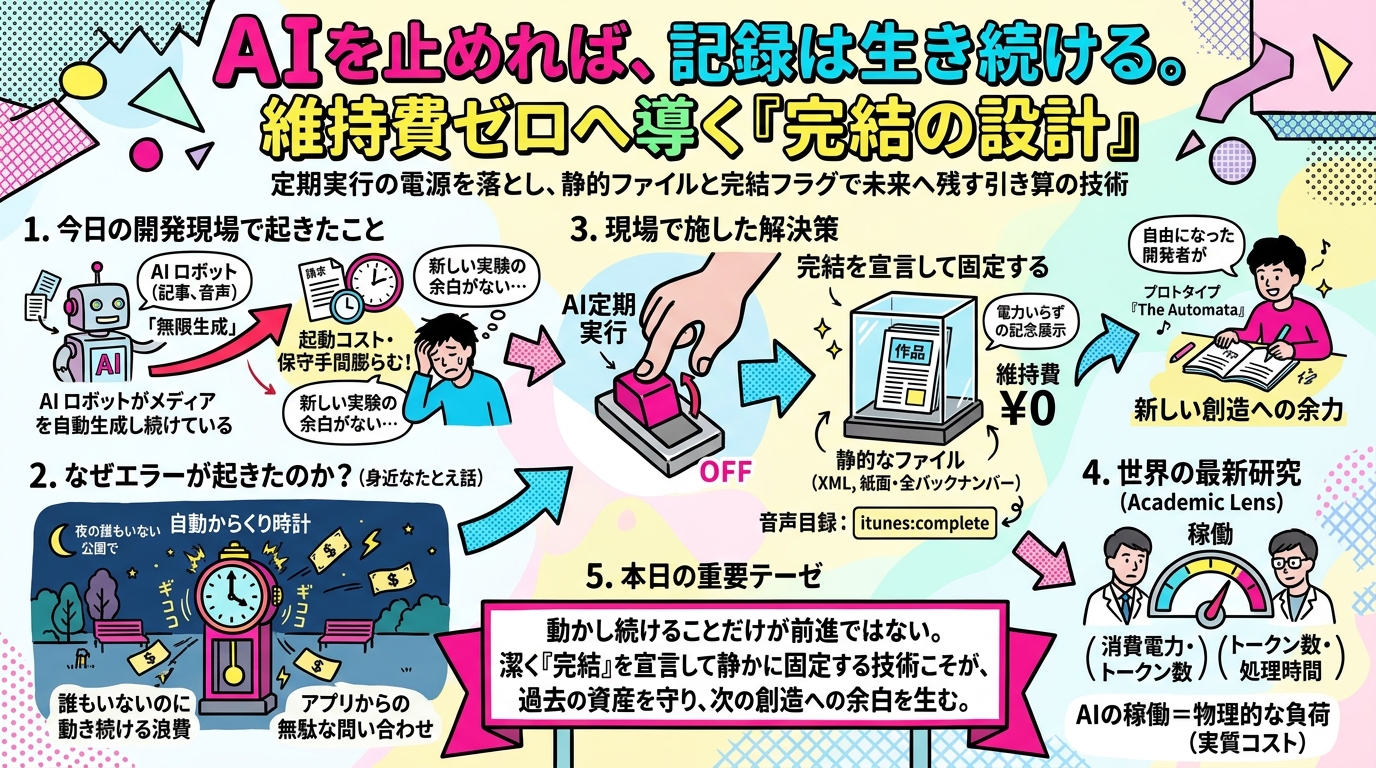
Stop the AI, and the Archive Lives On: Designing for Completion at Zero Maintenance Cost
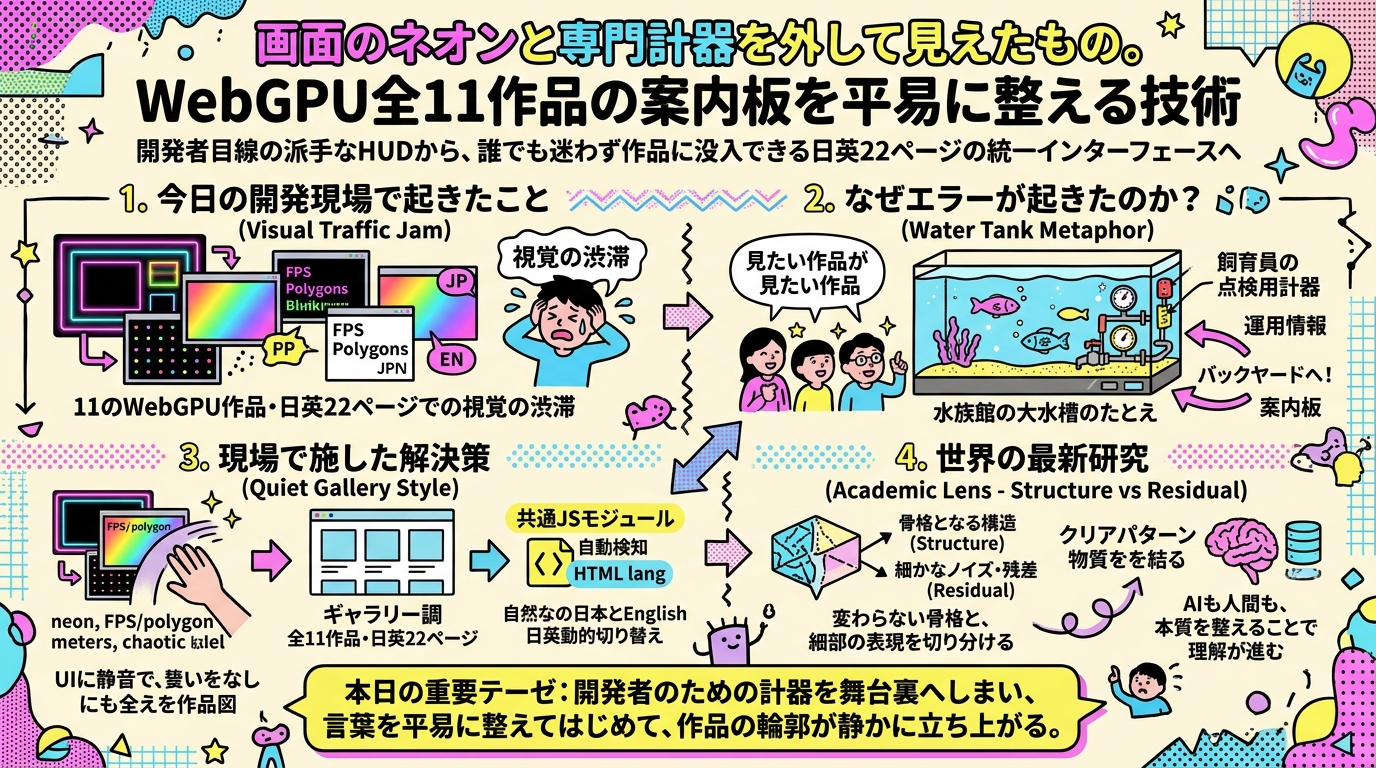
What Appeared When We Removed the Neon and Technical Gauges: Crafting Effortless Wayfinding Across 11 WebGPU Works
Current
20,000 Characters Distilled into a Single Four-Quadrant Diagram: Where Long-Form Summarization Stands Today with the Latest Image Model, Nano Banana 2.1
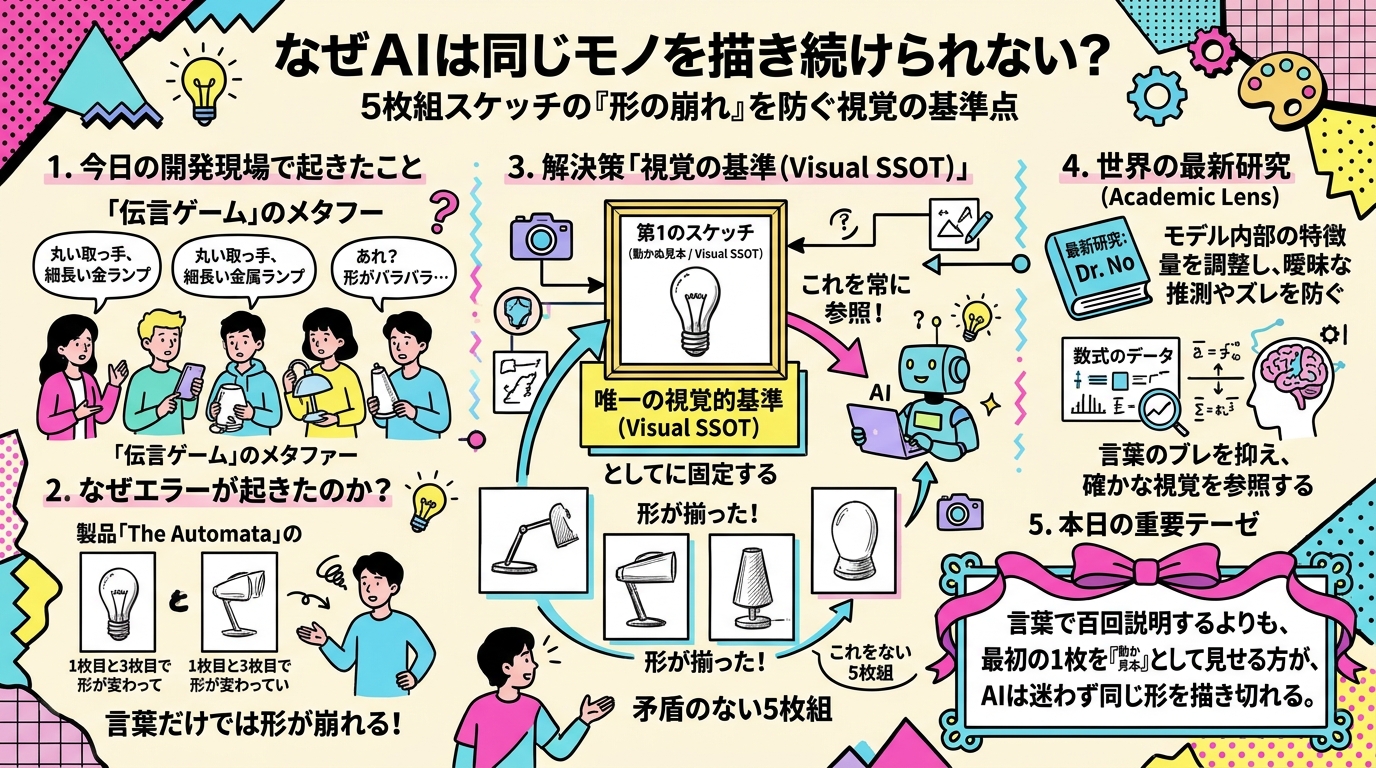
Why Can't AI Keep Drawing the Same Object? A Visual Anchor to Prevent Structural Drift in 5-Panel Sketches
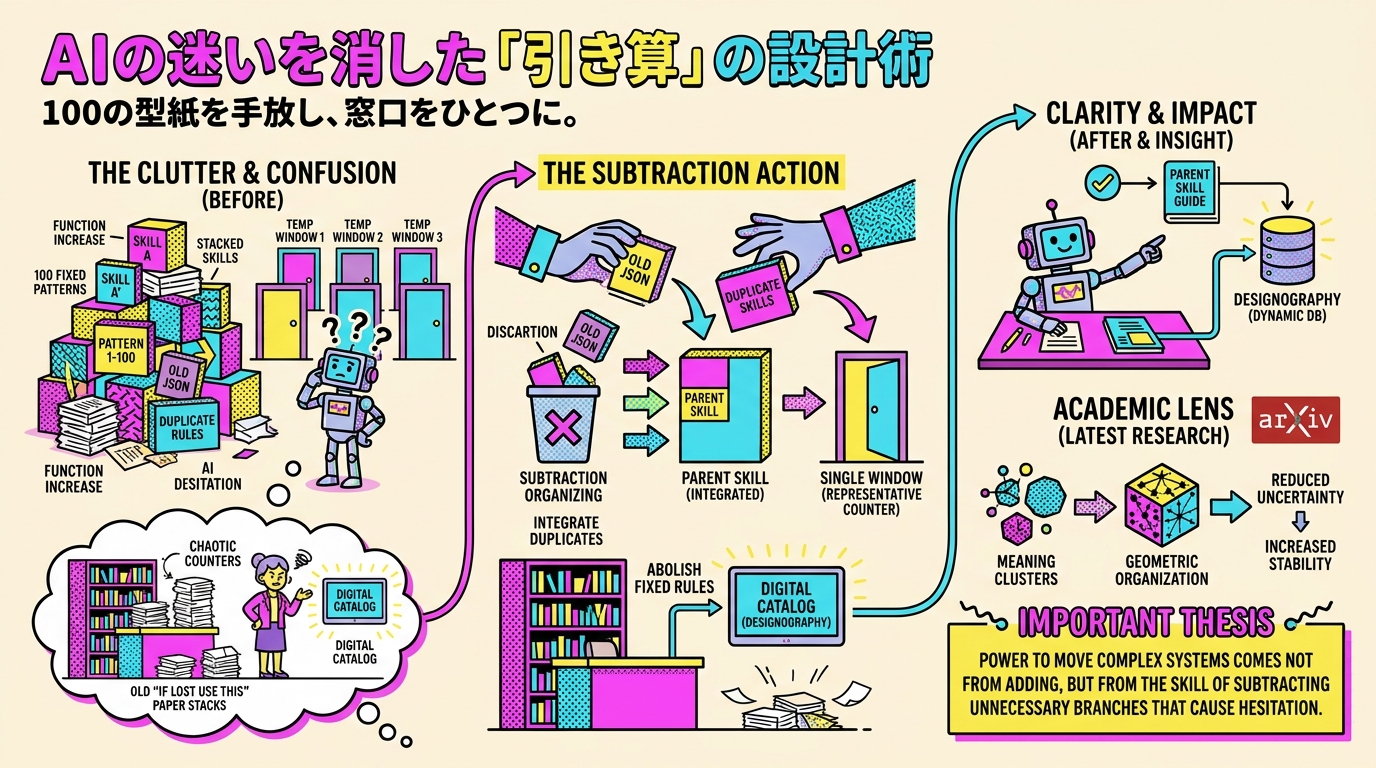
Letting Go of 100 Templates for a Single Desk: The Art of Subtractive Design That Eliminated AI Hesitation
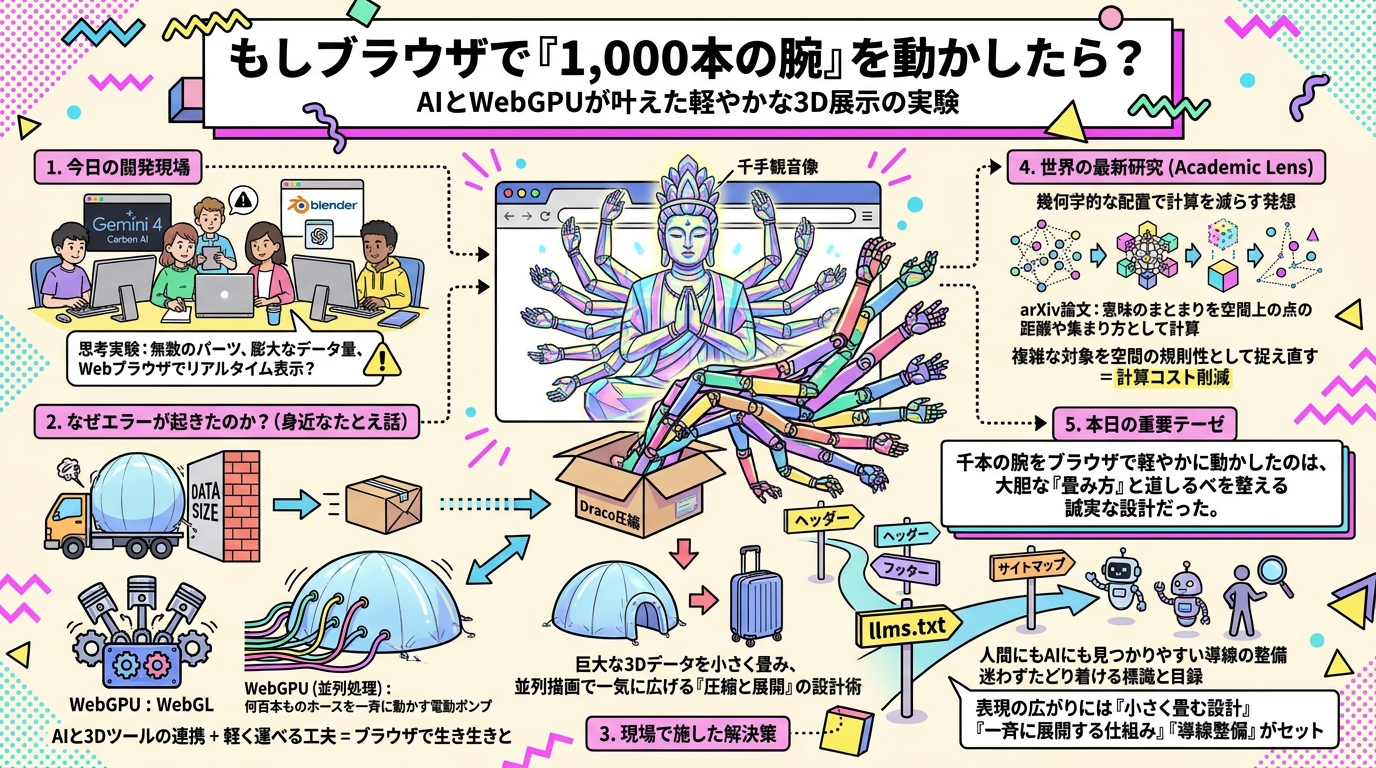
What If You Animated '1,000 Arms' in a Browser? A Lightweight 3D Exhibition Experiment Powered by AI and WebGPU
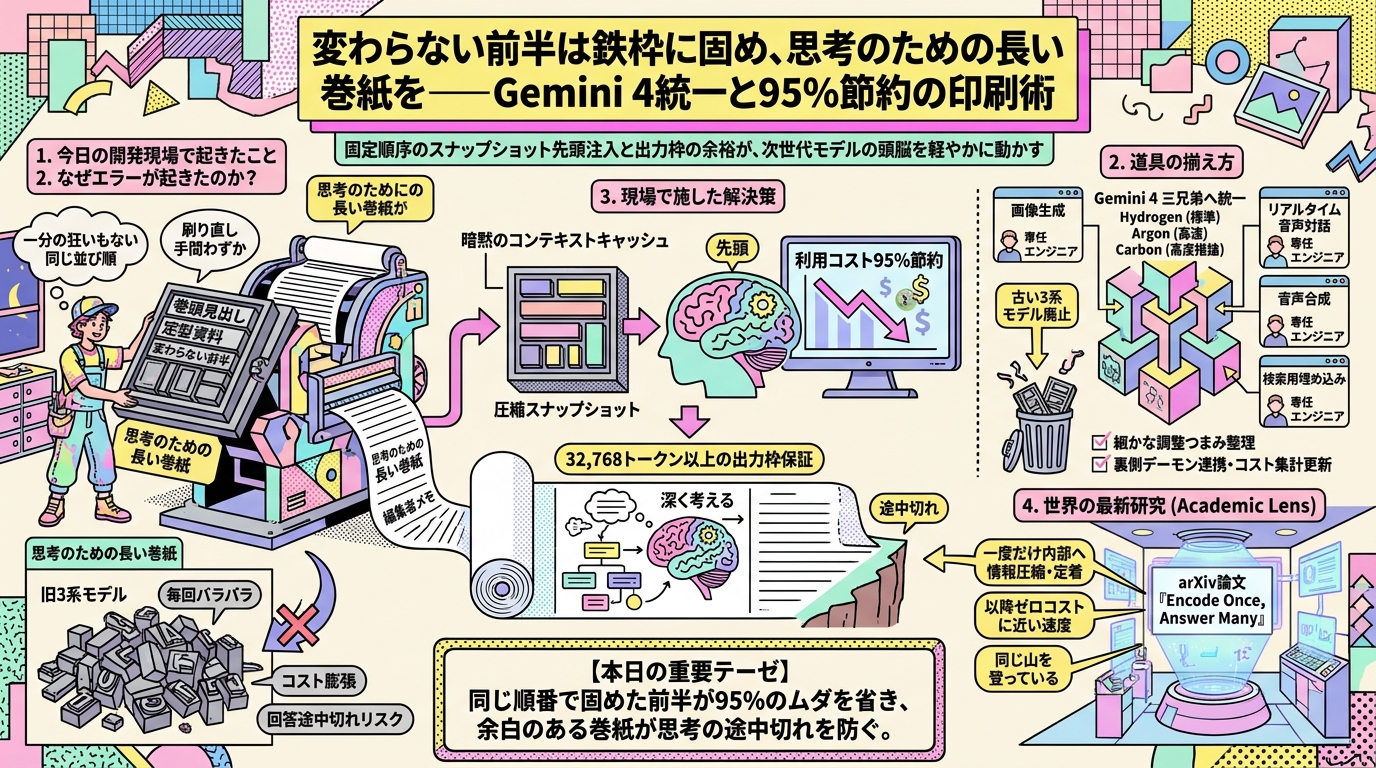
Locking the Constant Lead in Iron, Unrolling Long Scrolls for Thought — Gemini 4 Unification and the Art of 95% Printing Savings
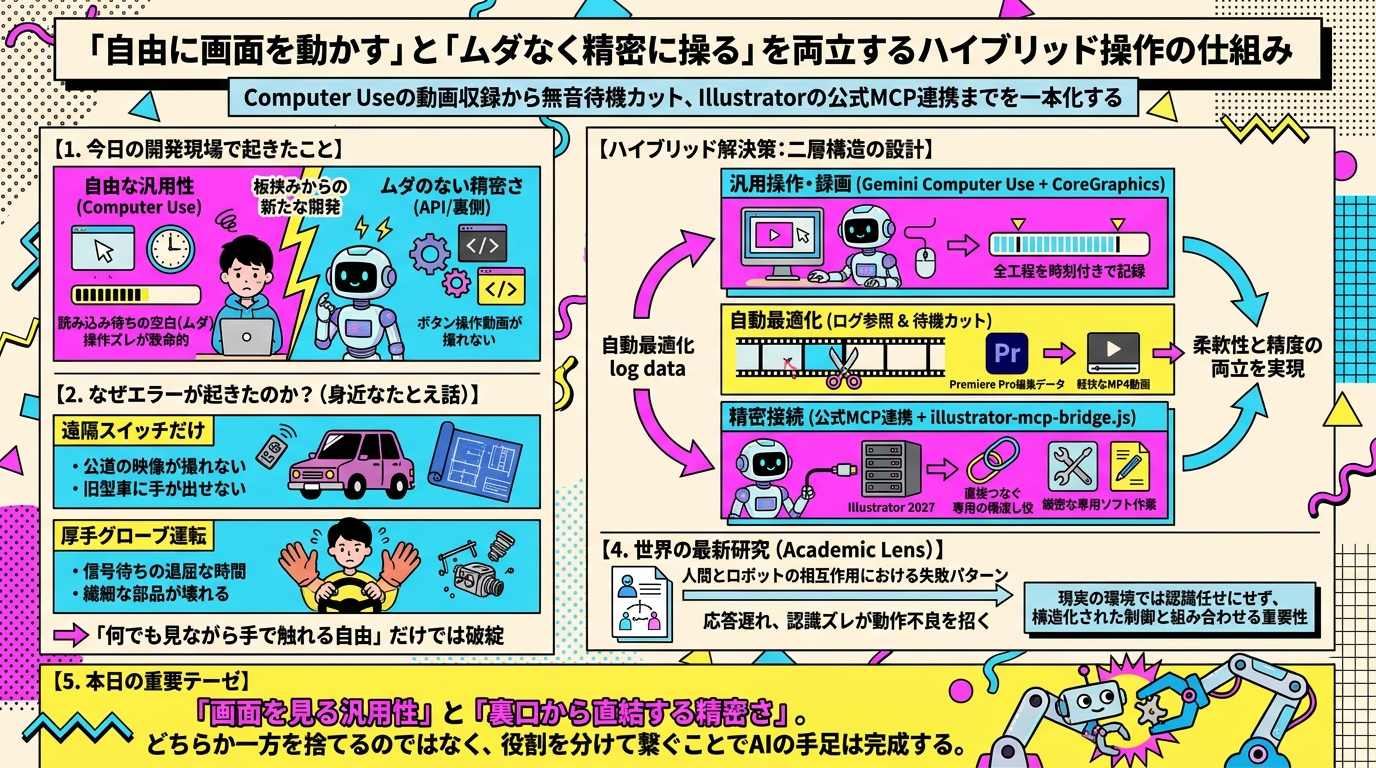
A Hybrid Control Architecture Bridging Free-Form Screen Navigation and Lean, Precision Execution
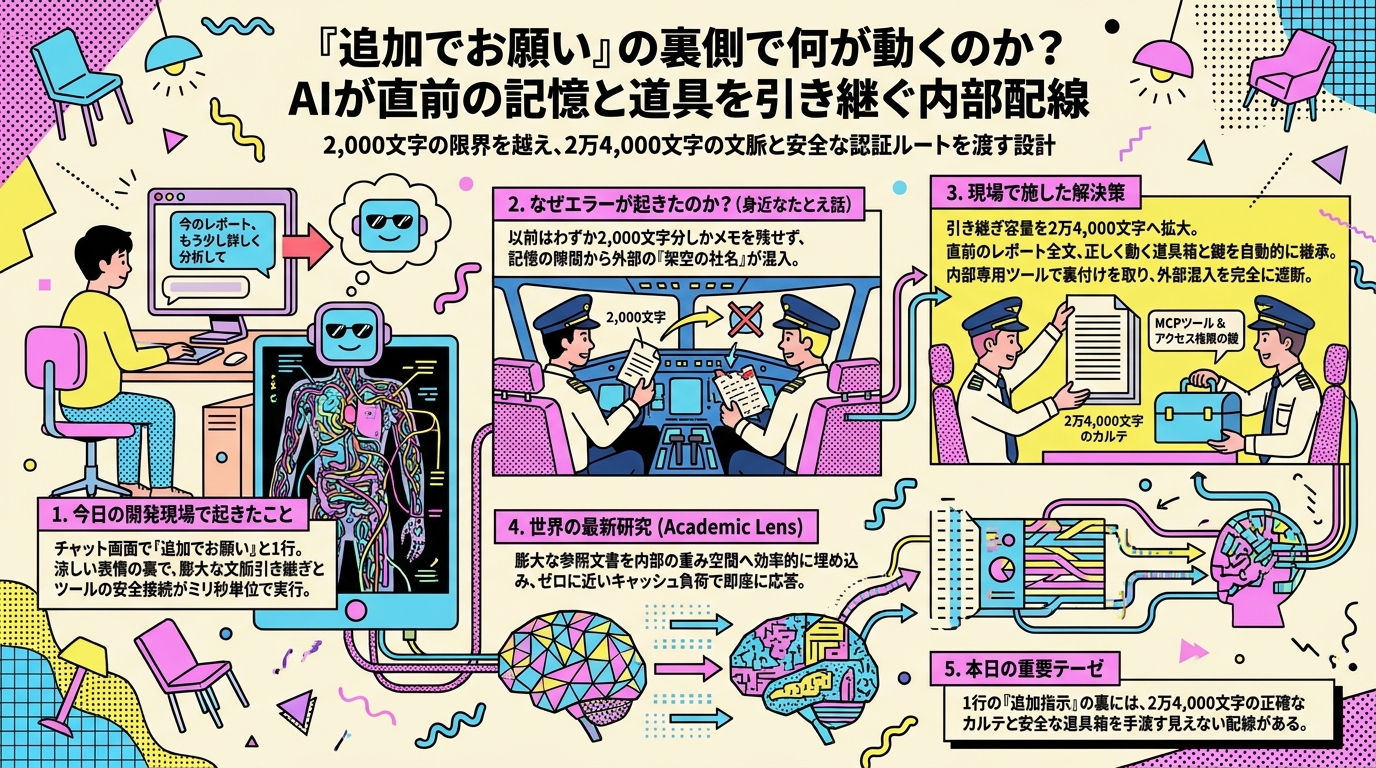
Behind "Just One More Request": The Internal Wiring That Hands Off Memory and Tools Between AIs