Saturated Optimization Prompts the 'Log-Out': Gen Z Confronts the Chasm Between Tool and Existence
Caught Between the Cult of Productivity and Risk Regulation, Youth Reclaim the Friction of Autonomous Thought
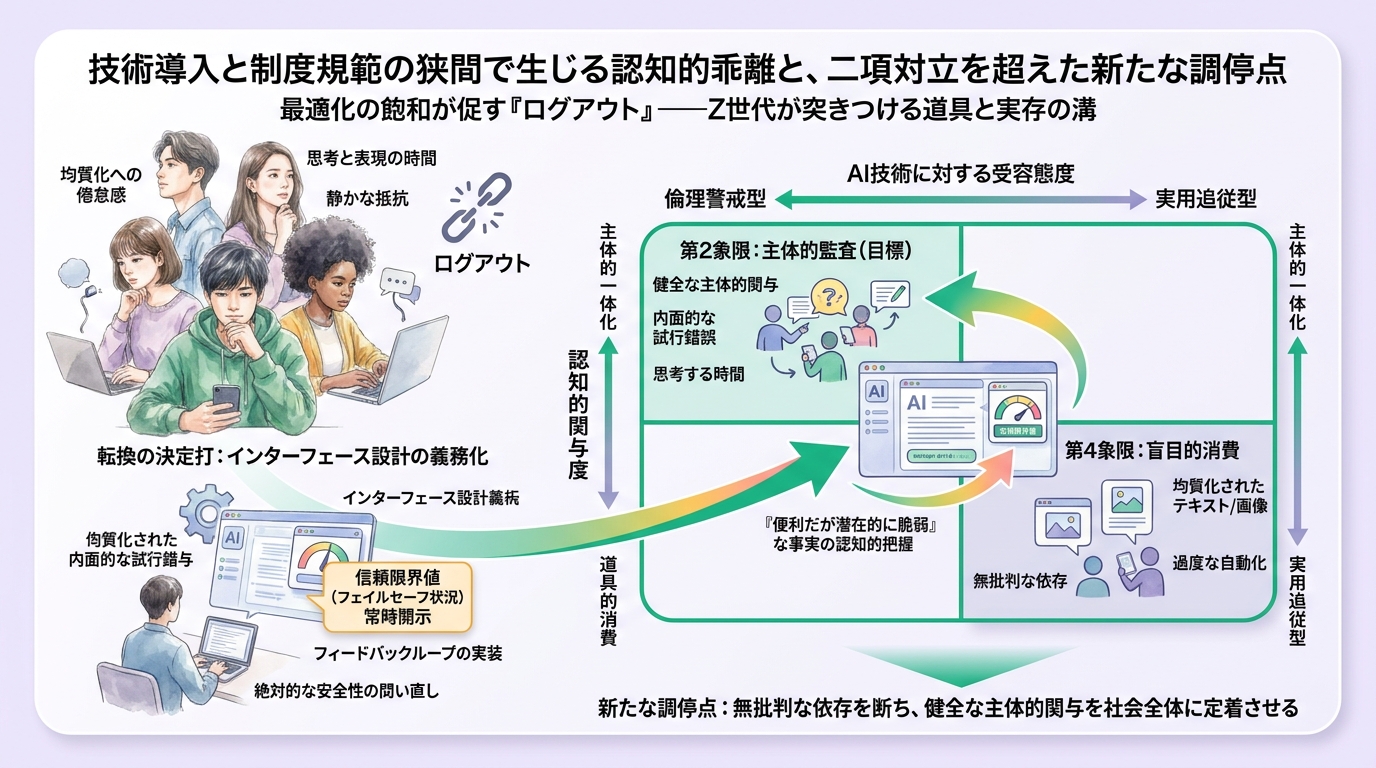
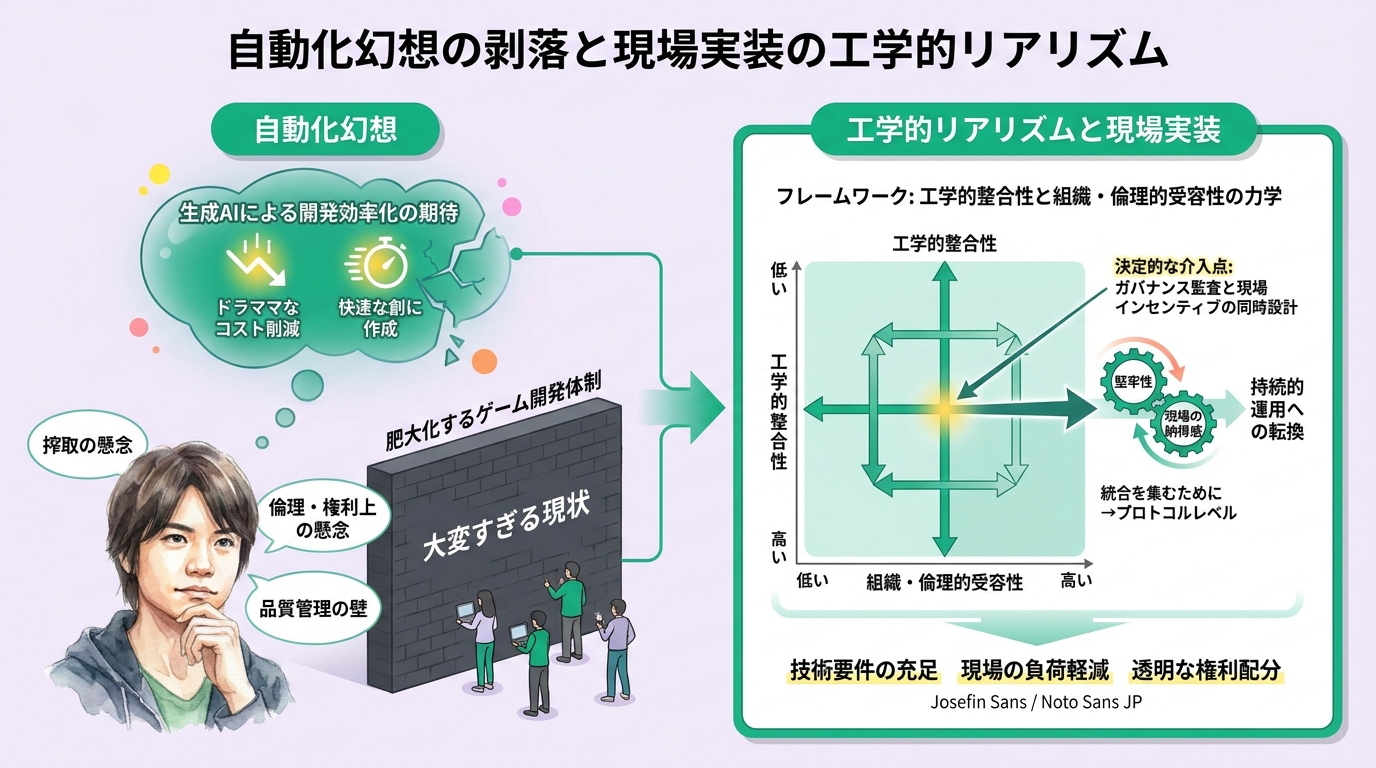
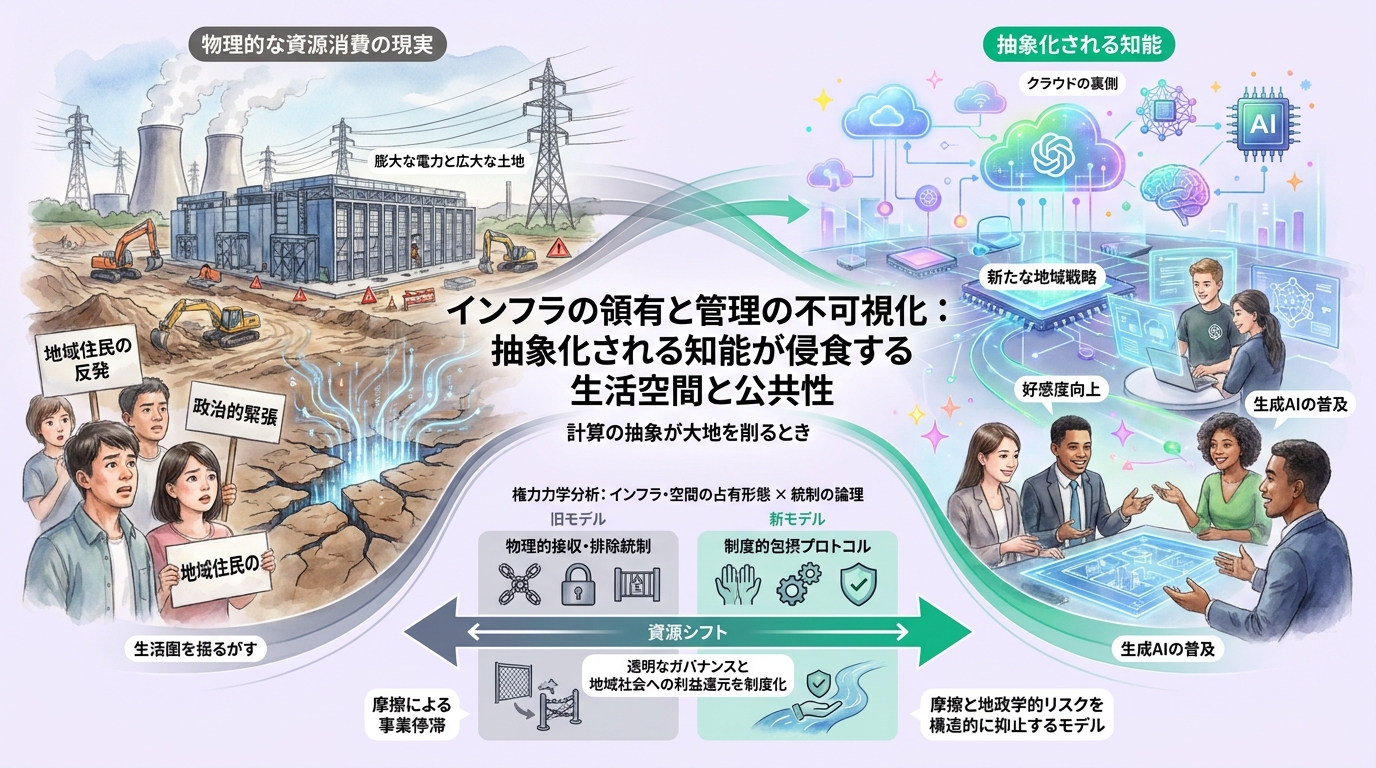
Current discourse surrounding generative AI has long been trapped in a barren binary. Proponents across industry and venture capital herald a future where all cognitive labor is automated, compression of work hours reigns supreme, and economic rationality is maximized to its theoretical limits. Conversely, skeptics in academia and the legal establishment warn of severe negative externalities—copyright infringement, the viral dissemination of disinformation, and labor obsolescence—demanding stringent usage curbs and pervasive oversight architectures. While irreconcilably divided in their appraisal of the technology, both camps share a curious consensus: they reduce AI to an extrinsic instrument of efficiency designed solely to maximize output, gauging its worth exclusively through processing bandwidth or liability vectors.
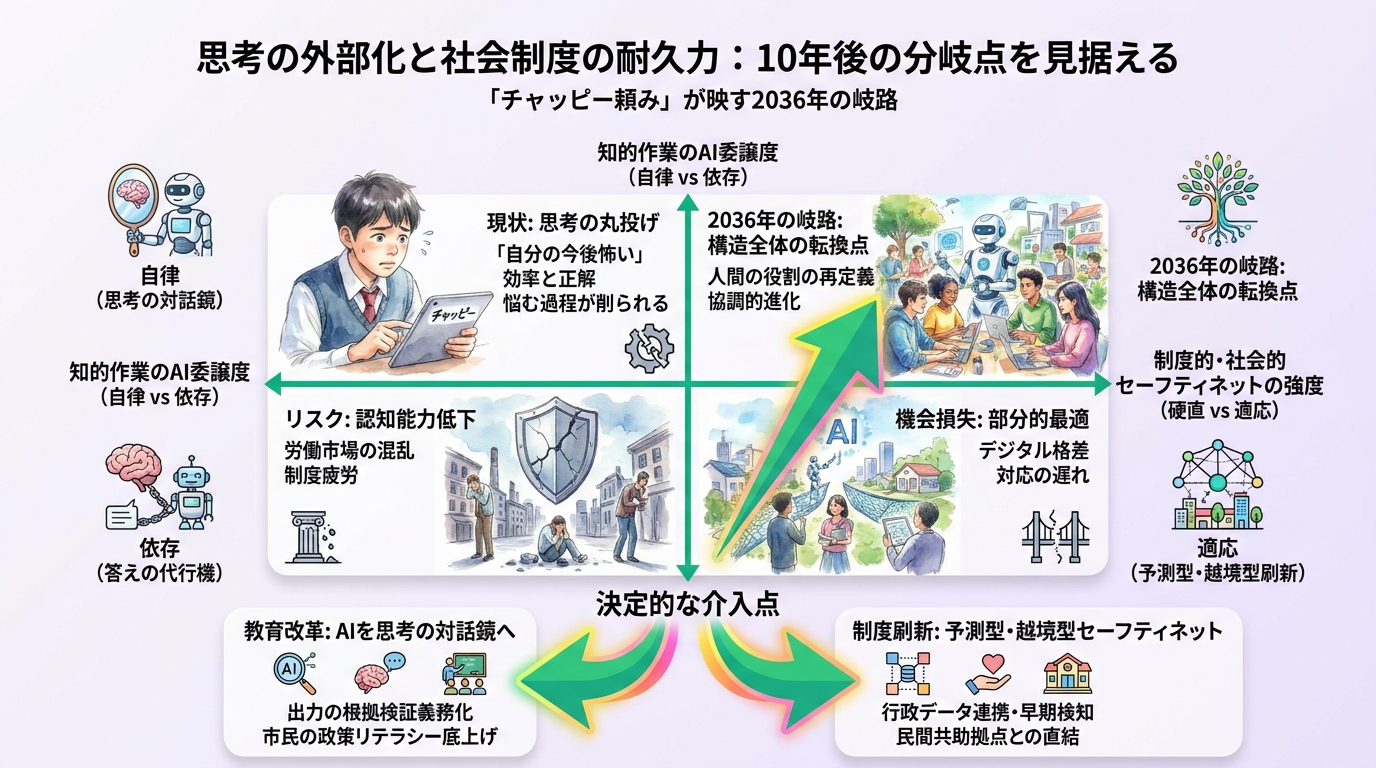
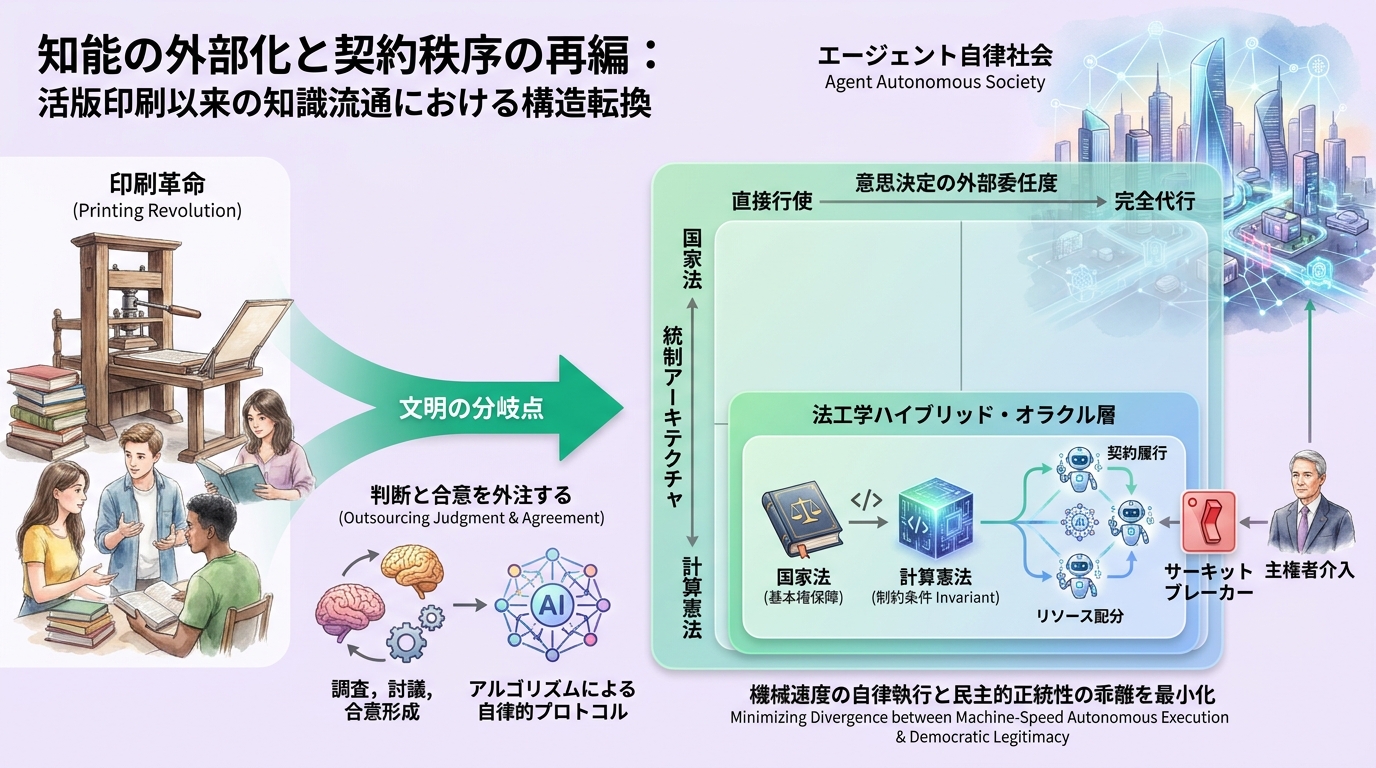
Yet this crossfire between evangelism and regulation overlooks the heart of the matter: the existential experience of the user. What American youth are confronting is the dilemma that the sheer convenience delivered by AI guts the slow, agonizing process of intellectual growth—the very friction of trial, error, and struggle. An environment that serves up impeccably polished prose in seconds dismisses the clumsy, wandering quest for one's own words as sheer inefficiency. What advocates failed to grasp is that for human beings, expression is not merely the delivery of a finished artifact, but an embodied contemplation through which the self is discovered. What regulators overlooked is that the core issue extends beyond legal infringement to the gradual erosion of spiritual and cognitive self-determination.
What the present moment demands is a departure from the simplistic binary of wholesale automation versus total prohibition, moving toward a new paradigm that reframes the distance between tools and humanity. The Gen Z retreat suggests a paradox: an interface design that irons out every trace of friction ends up paralyzing human agency. While computational and retrieval burdens should be alleviated, interfaces in core domains—such as the structuring of logic and the articulation of sentiment—must deliberately withhold instantaneous answers, prompting the user to pause and reconsider. The key to closing the rift between instrumentality and existential authenticity lies in forging a relationship where tools cease to act as autonomous proxies for the subject, functioning instead as catalysts to deepen human contemplation.
This perspective offers actionable orientation for future technological engineering and pedagogical practice. AI developers must pivot away from architectures that output turnkey artifacts from single-sentence prompts, shifting toward designs that preserve reflective space and encourage critical scrutiny by the user. Likewise, in academic institutions and enterprise settings, evaluators must move past grading final algorithmic deliverables, honoring instead the somatic and intellectual rigor of the discursive path navigated in dialogue with the machine. The deliberate choice by young people to 'close the screen' is neither retrograde escapism nor reactionary withdrawal; it is an assertive declaration of autonomy, maintaining an independent spirit against assimilation into the logic of the machine.