When the Abstraction of Calculation Chiseled the Earth
OpenAI's Community Harmony Initiatives Exclude the Invisible Appropriation of Power and Land
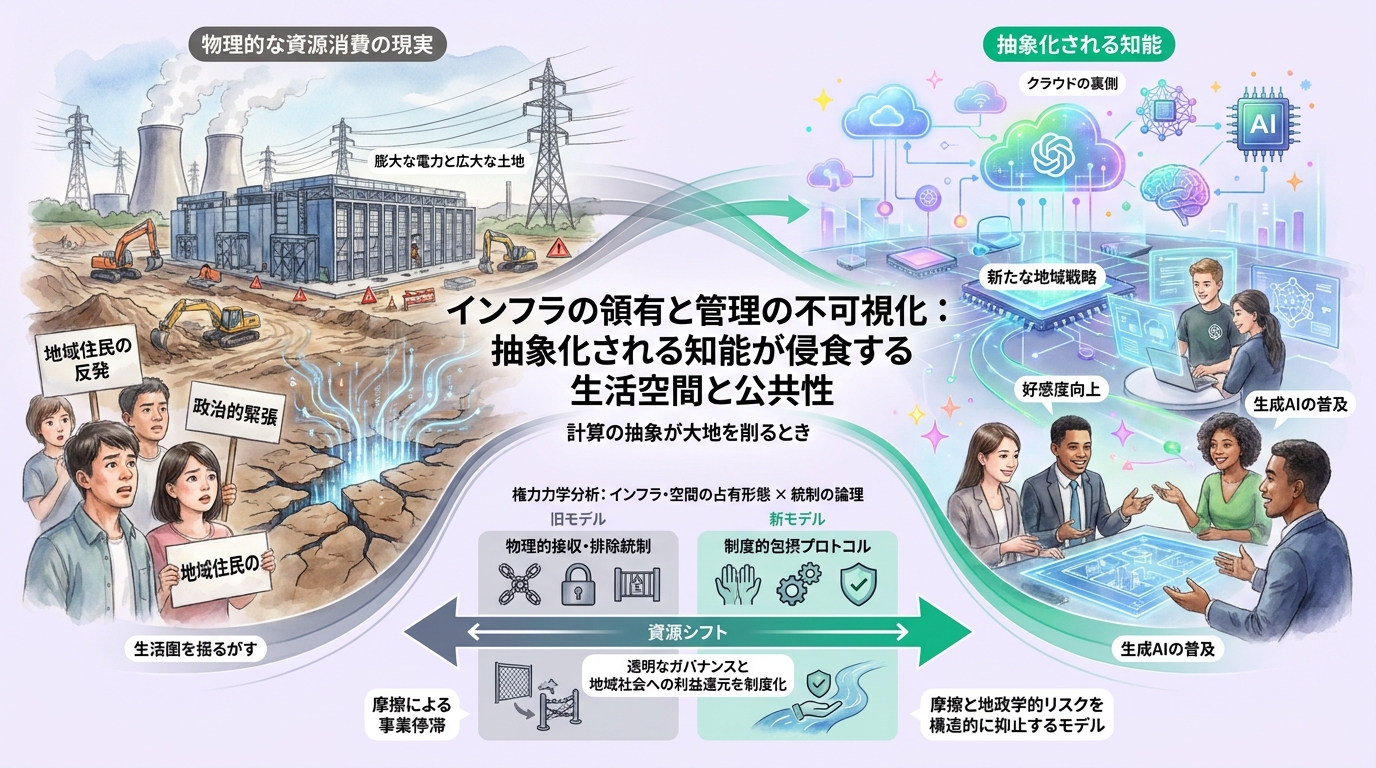
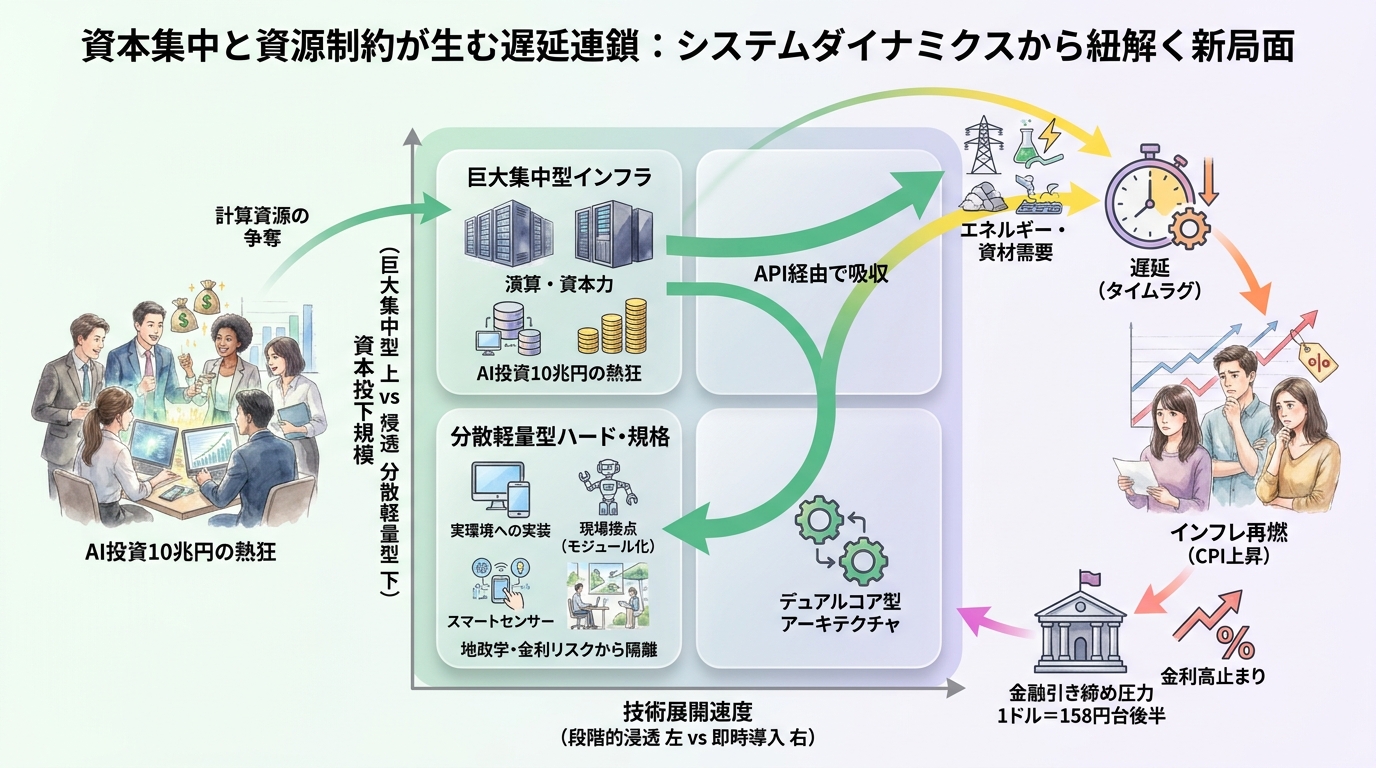
Algorithms that spin out instant answers on a screen are easily mistaken for pure intellect, devoid of mass or waste heat. Behind them, however, countless server racks continuously draw cooling water and siphon monumental electricity loads from high-voltage grids. OpenAI's pivot toward public relations campaigns emphasizing community contribution and dialogue tells a stark story: the physical burden of computational infrastructure, hitherto rendered invisible, is approaching the breaking point of local social tolerance. The windowless monoliths and substation facilities that suddenly materialize in tranquil suburbs make visible an asymmetry that forces the cost of our convenience onto others' living spaces.
It was the philosopher Martin Heidegger who identified the essence of modern technology as an attitude that views nature solely as an energy reservoir and extractable resource. What is unfolding today is precisely a process wherein this technological imperative breaches digital borders, unilaterally transforming local residents' living foundations into 'land for computation.' The rejection demonstrated by residents is not merely concern over environmental degradation or disrupted landscapes; it is a fundamental wariness of seeing their habitats consumed for the benefit of faceless, distant industries. Support packages offered under the banner of community harmony are little more than attempts to forcefully convert the bond between land and humanity into the logic of money and investment.
While we acquire instantaneous knowledge and business efficiency, we are systematically selling off resources held in common. Although attracting a data center may bring temporary municipal tax revenues, the permanent jobs created post-launch are exceedingly limited; instead, the facility permanently strains regional power capacities and precious water supplies. A structural fixation is taking root: the staggering costs of generating cutting-edge intelligence are unequally externalized not to urban users who enjoy the services, but to rural residents providing the ends of transmission lines and the physical acreage. This geographical disconnect between the fruits of convenience and environmental burdens highlights the asymmetry inherent in technological progress.
How much more of the real world's space will we surrender for invisible calculations? Is exchanging the earth, water, and regional silence beneath our feet for augmented machine intelligence truly the shape of progress we desired? OpenAI's new strategy does not raise a technical question of whether clever PR can avert conflict, but rather highlights the ethical limits of a digital society expanding without regard for physical finitude. Without abandoning our captivation by the convenience of abstraction and confronting the burdens that technology carves into the earth and grid, we cannot redraw the contours of a sustainable human society.