The U.S. Administration's Domestic Turmoil and External Pressures: A Turning Point for the 2036 Global Order
Midterm Route and Chief of Staff Departure: Three Futures Confronting Diplomatic Tilt
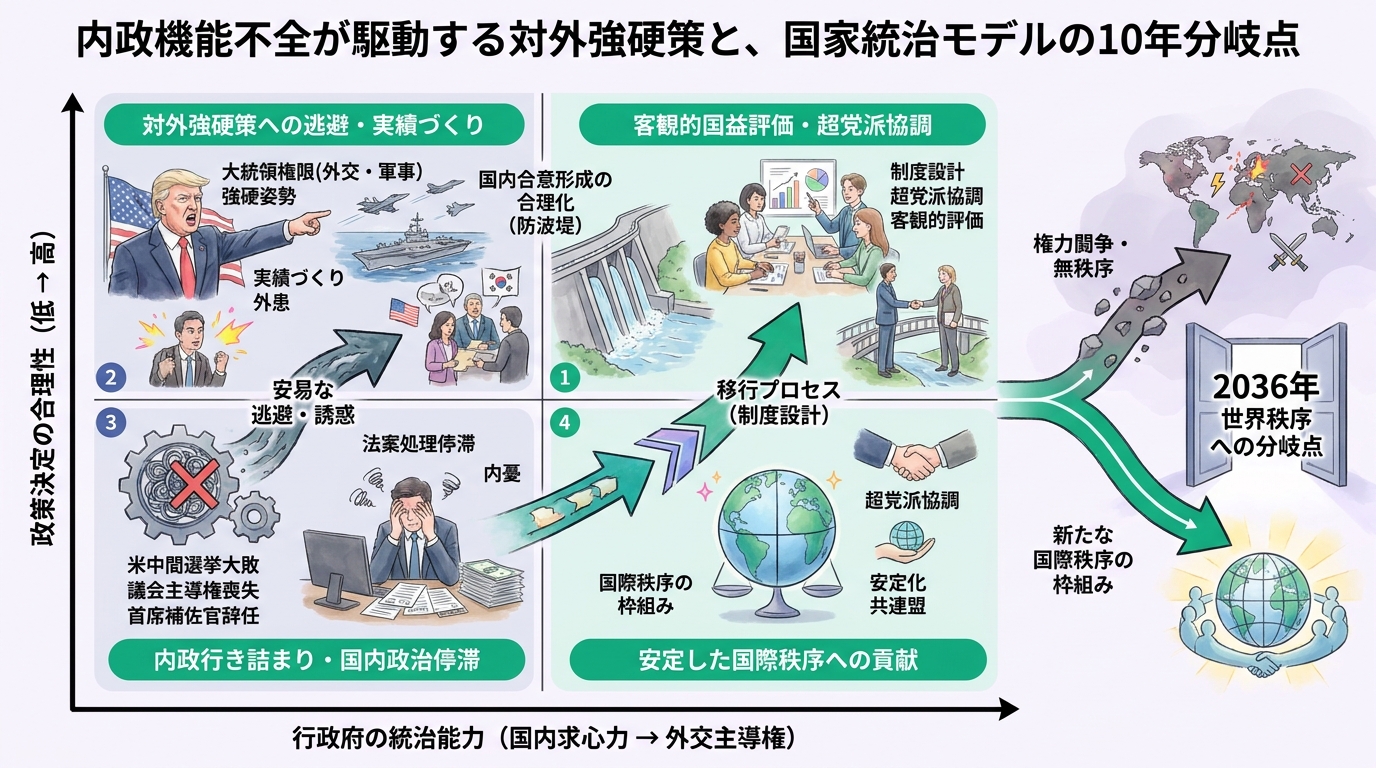
The resignation of the White House Chief of Staff illustrates the reality that an administration facing a weakened domestic foundation is gripped by a crisis of eroding centripetal force. As Akihisa Nagashima analyzed in reports by the Yomiuri Shimbun, it is a natural progression for a president lacking legislative momentum to gravitate toward military and diplomatic stages where executive privileges are abundant in search of accomplishments during his remaining term. However, deploying external pressure and security cards to deflect domestic policy paralysis risks shaking existing alliance and trade framework architectures, potentially serving as a catalyst that pushes inter-state dynamics into a tense standoff.
If this dynamic is propelled forward, the world will confront two volatile trajectories. The first is the path of "bloc formation and escalating friction," wherein advanced technologies and critical resources are ring-fenced within specific camps. The formation of exclusive economic zones leveraged by sanctions and tariffs structurally heightens the risk of accidental military clashes. The second is the path of "multipolar equilibrium," wherein nations, wary of unpredictable unilateral U.S. actions, pursue individual defense policies, with regional powers checking one another in the absence of a definitive mediator. Both trajectories harbor the danger of undermining the foundation of international cooperation as a consequence of transmuting domestic political deadlocks into foreign hardline routes.
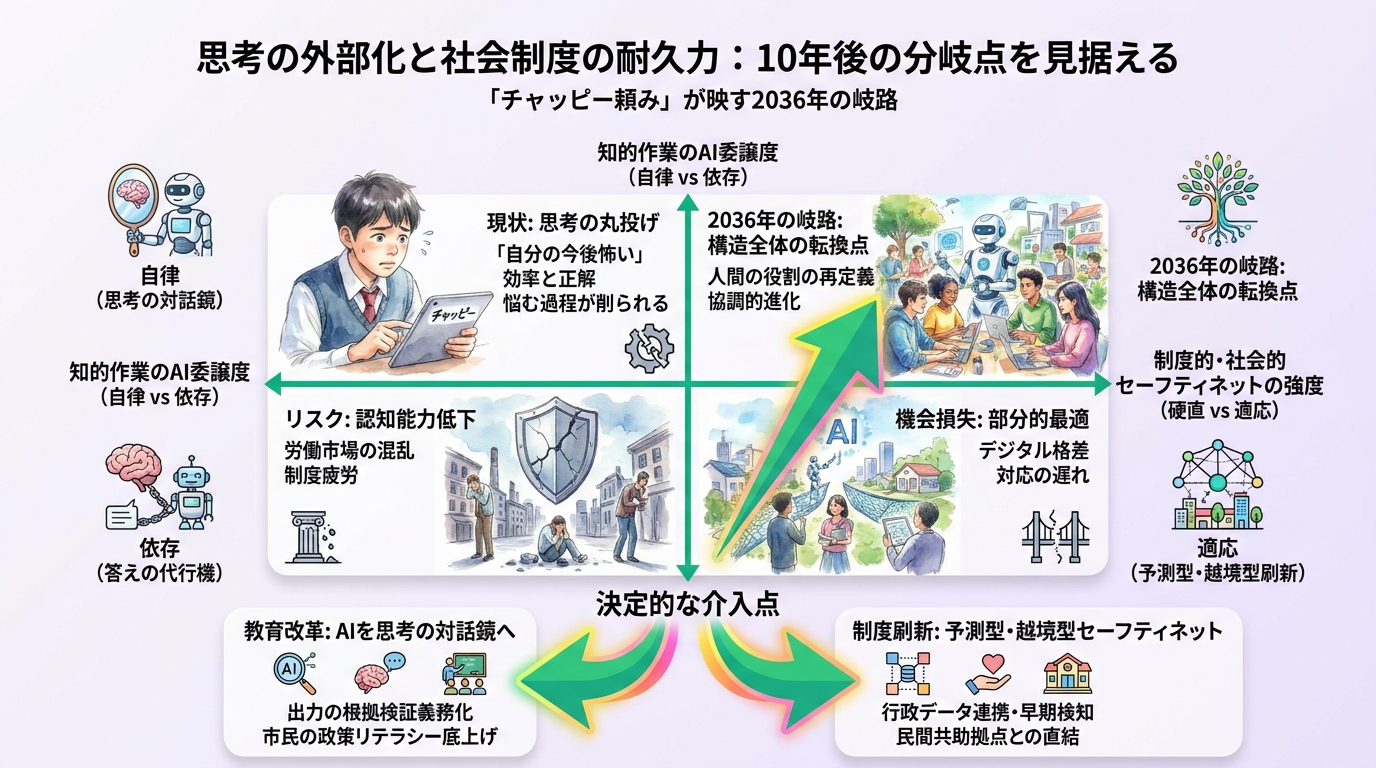
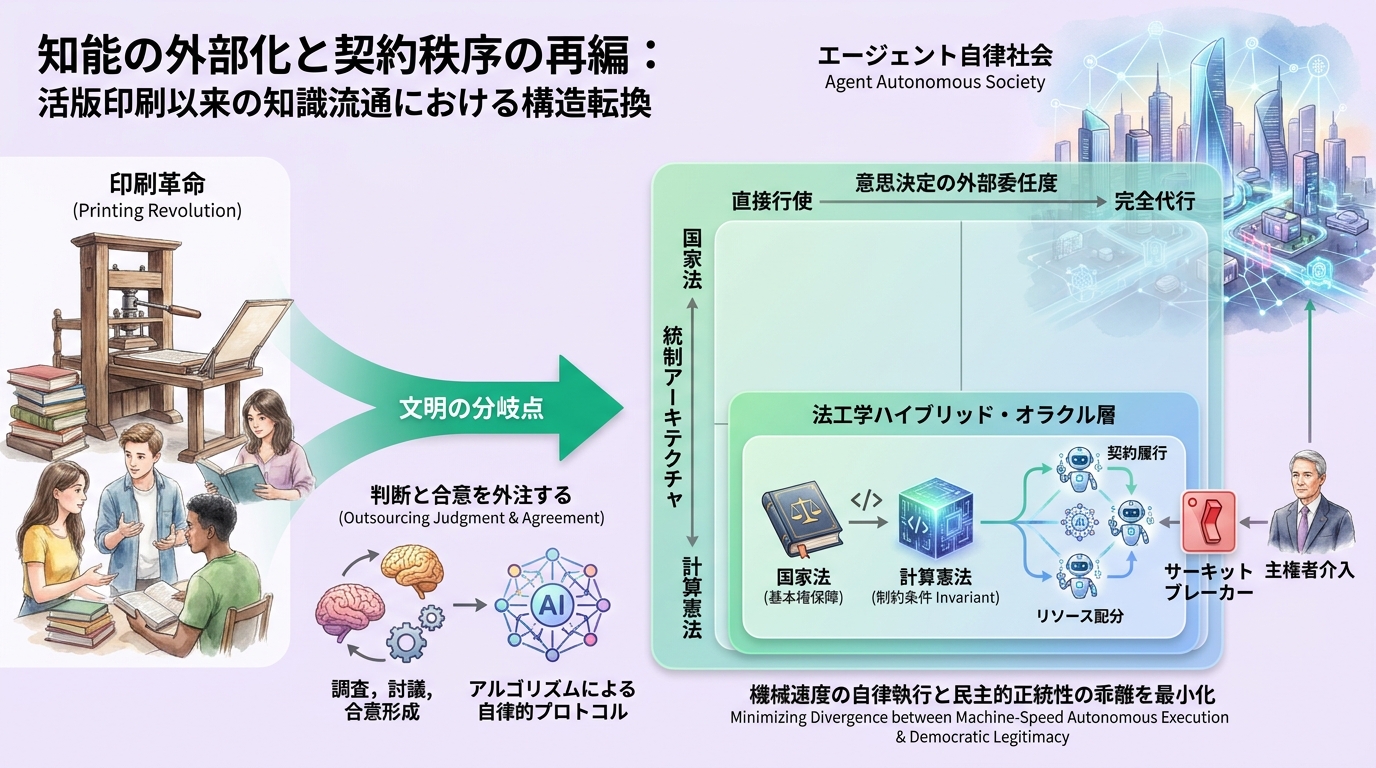
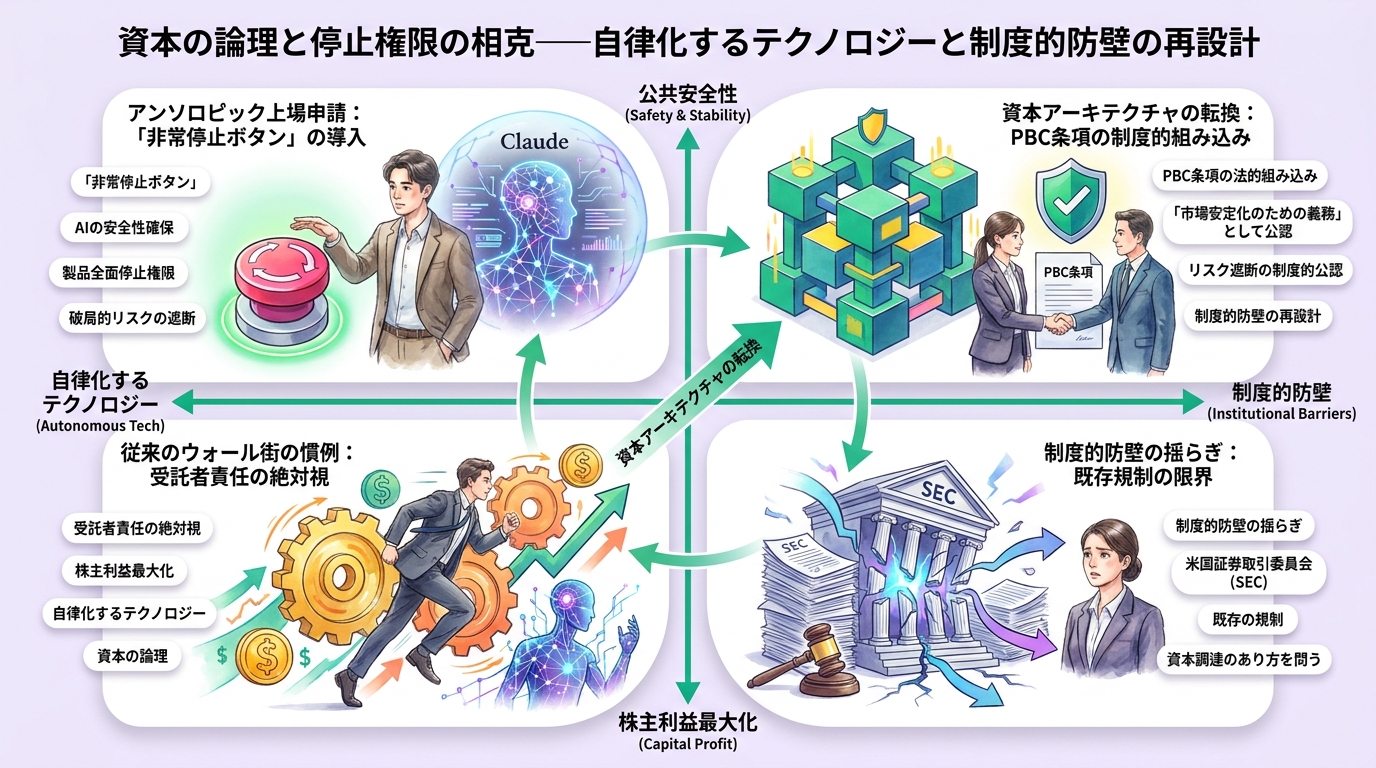
Yet, conceived as a third option to avert these catastrophic frictions, the "supranational AI coordination" scenario seeks to mitigate military and economic tensions through advanced computational foundations and data integration. This attempt delegates nuclear alert readiness, the prevention of cyberattack misidentifications, and critical mineral supply-and-demand adjustments away from emotional national sovereignty tussles and toward autonomous cross-validation systems. By jointly operating transparent mediation protocols transcending national political interests, it becomes possible to forestall catastrophes driven by impulsive leadership diplomacy and shape a stable governance foundation where humans and intelligence coexist.
As modern history demonstrates, major geopolitical turbulence is most likely to arise precisely when a superpower's leader, constrained in domestic authority, seeks external legacies. The international community, led by key allies like Japan, must not merely follow short-term U.S. hardline measures but actively construct institutional breakwaters to deter cascading frictions. Now that the presidential power structure is faltering, whether we can arrest the tide of fragmentation and bloc-building and steer toward a new equilibrium grounded in common rules will determine the contours of the 2036 international order.