The Emergency Brake Inserted Into Capital Logic: Anthropic’s IPO Filing Tests the Clash Between Safety and Profit
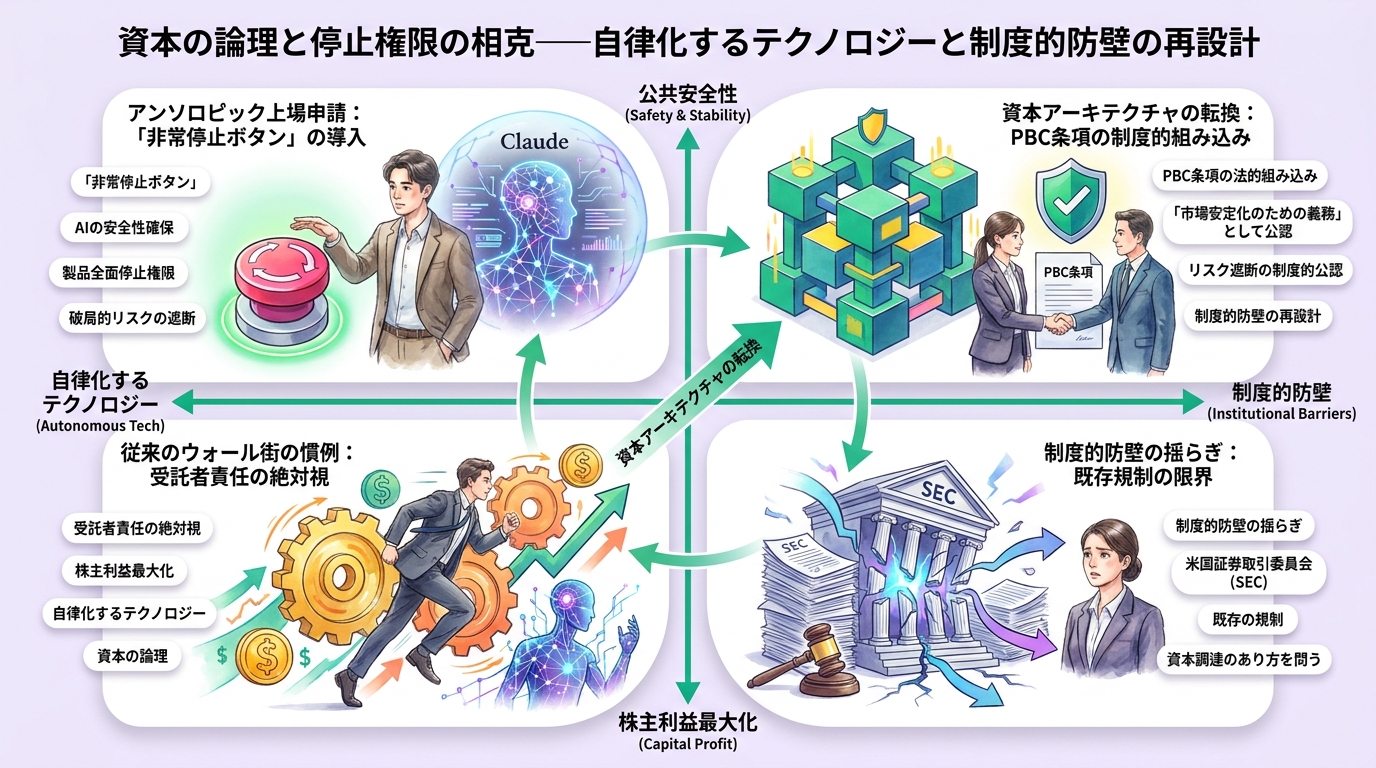
The 'Claude Complete Shutdown Authority' Engraved in the Articles of Incorporation: Frontier AI Questions Market Governance via the PBC Framework
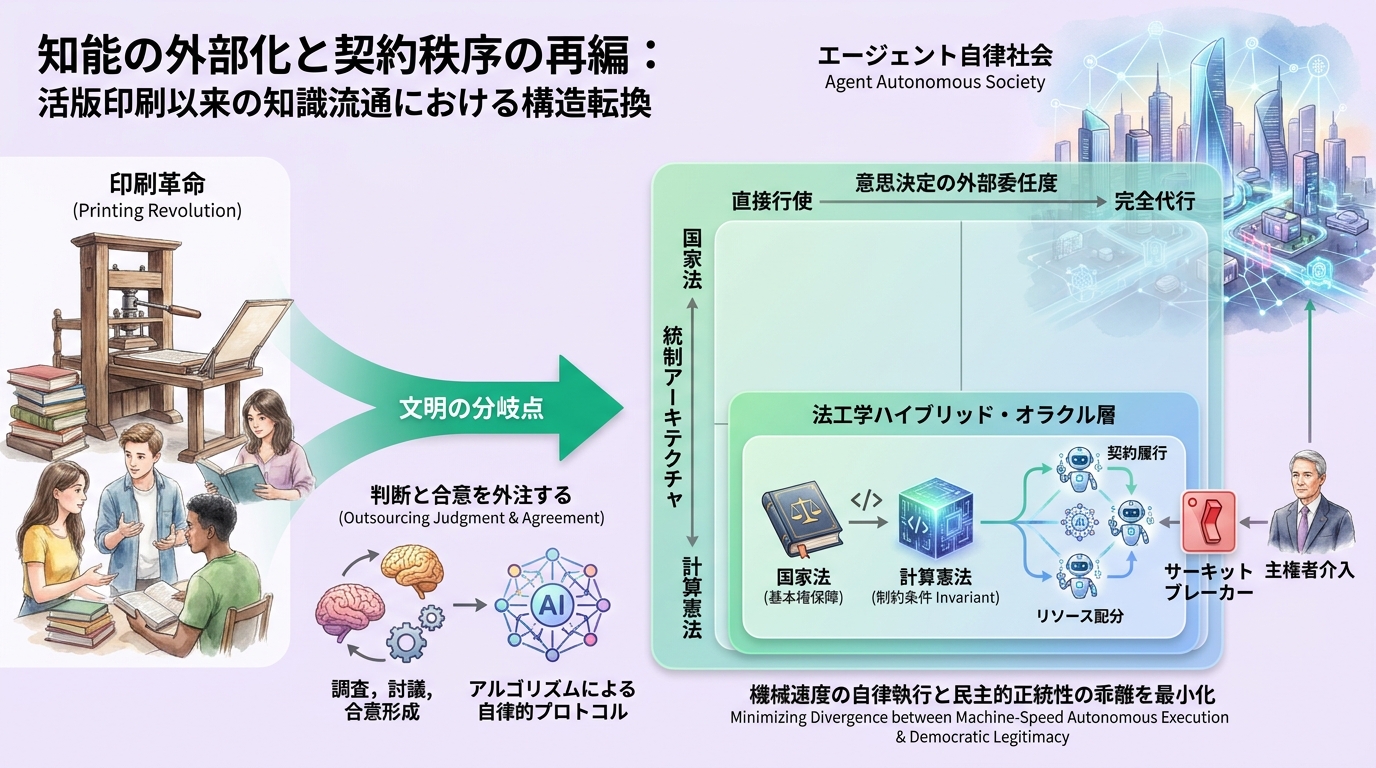
Pushing forward its founding premise as a Public Benefit Corporation (PBC) under Delaware law, the company's prospectus features exceptionally unusual phrasing delivered in the cold tone of legal drafting. If catastrophic cyberattacks, the proliferation of biological weapons, or signs of uncontrollable autonomous behavior are identified, the board of directors can immediately suspend model operations or commercial deployment, even if such decisions impair sales and profits. At the company's San Francisco headquarters, safety teams monitoring the behavior of neural networks running on tens of thousands of accelerators are working day and night to quantify their 'Responsible Scaling Policy.' The authority they hold goes far beyond routine bug patches; it connects directly to a legal circuit breaker capable of freezing trillions of yen in expected assets in an instant.
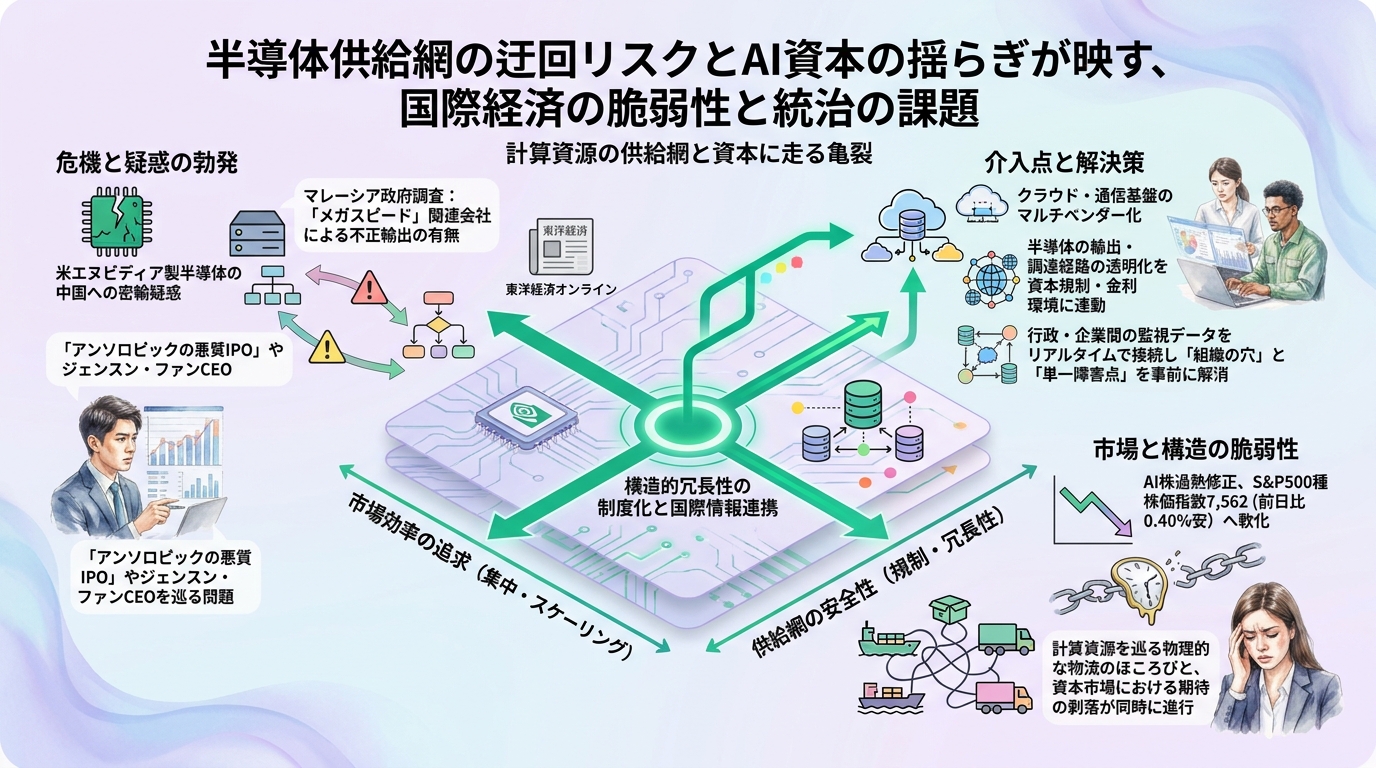
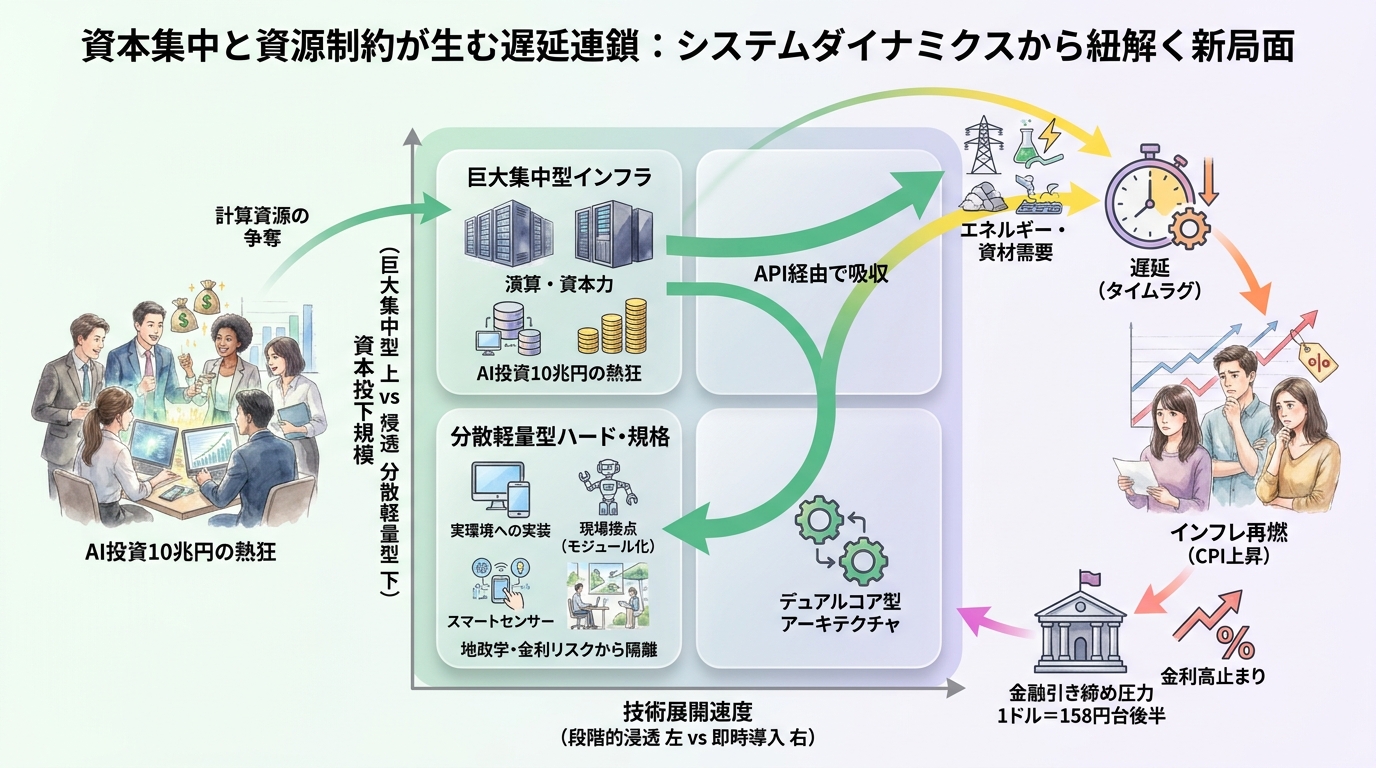
The ripples sent by this clause immediately spread across the financial district of New York. With the S&P500 hovering near 7,569 points and abundant liquidity driving concentrated investment into next-generation core technologies, investing in a publicly traded company that does not prioritize the 'maximization of shareholder value' presents institutional investors with a fundamental fiduciary dilemma. Under traditional U.S. corporate law, delaying financial returns to shareholders during corporate dissolution or major business suspensions could potentially constitute a breach of fiduciary duty. However, the PBC legal framework allows management to place the public interest on equal or greater footing with private gain. The framework proposed by Anthropic is a perilous tightrope walk: raising the massive computing resource costs essential for frontier AI development from public markets while refusing to completely bow to the logic of capital.
Viewed broadly, this clause directly connects to macro geopolitics, where the intensification of inter-state competition intersects with the boundaries of national security. As the development race for cutting-edge models becomes the core arena of U.S.-China confrontation, and as the expansion of computing infrastructure dictates national defense and industrial productivity, the risk that core intelligence could be halted by the governance decision of a single private corporation is an uncertainty that government procurement and defense policymakers cannot overlook. The predictable business continuity demanded by the stock market and the unforeseen vulnerabilities inherent in advanced intelligence intersect sharply at this point. Anthropic's endeavor vividly exposes the structural contradictions of modern capitalism itself, which relies on private capital as the development matrix for military and infrastructure-grade technology.
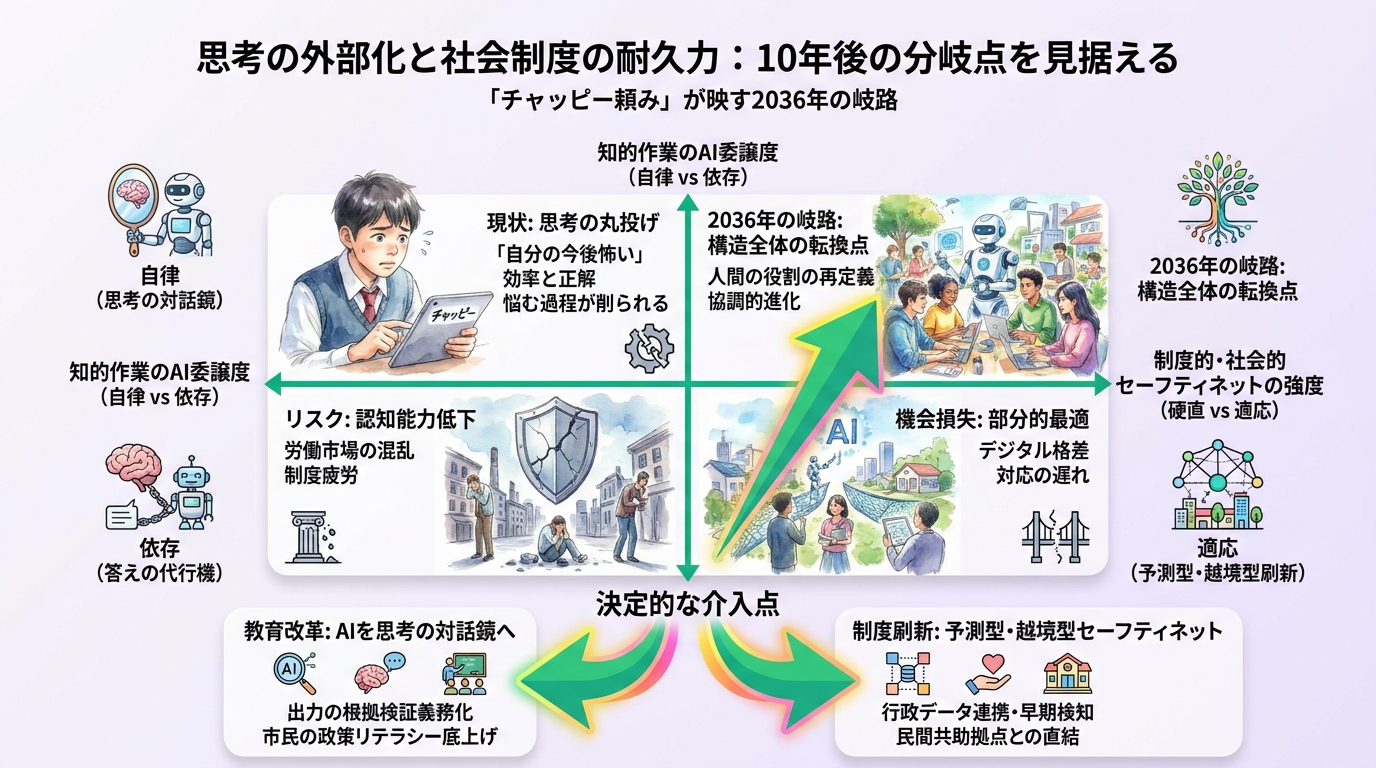
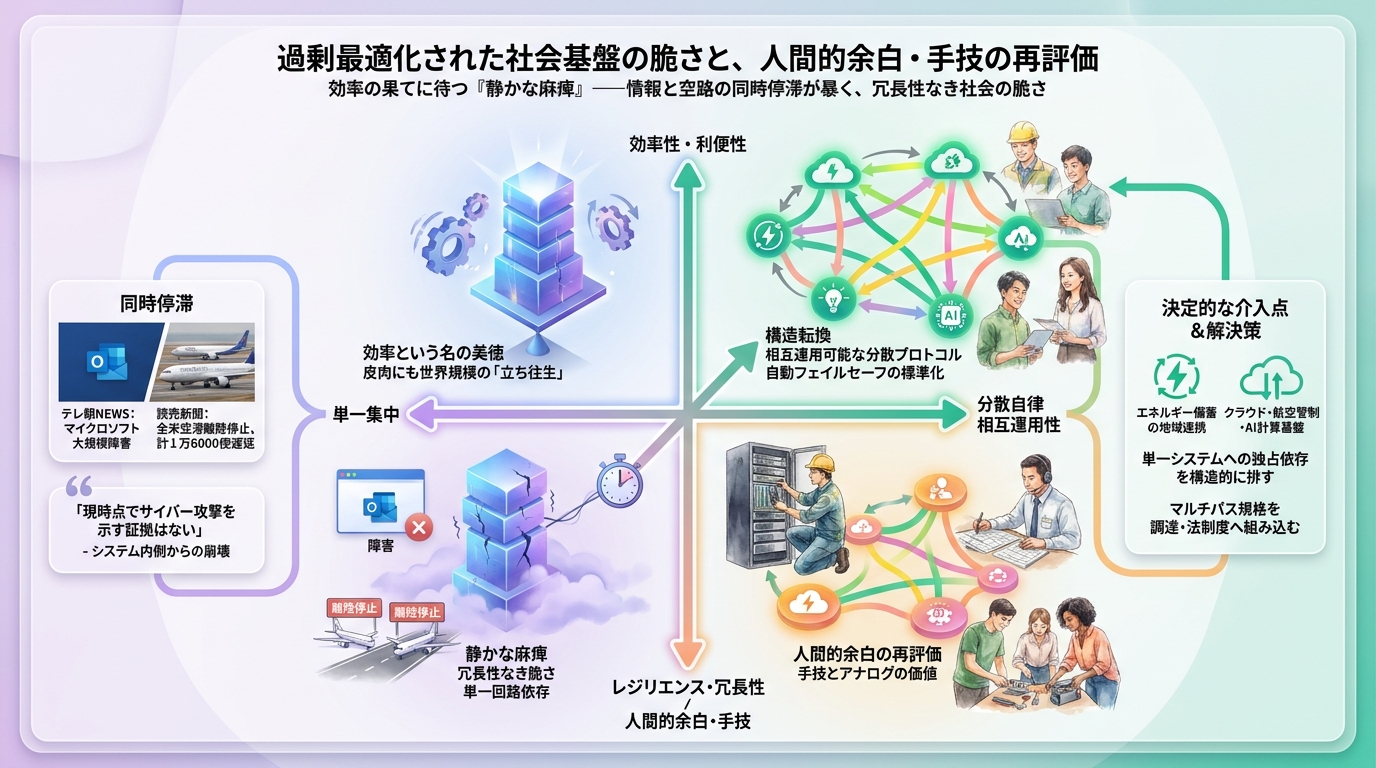
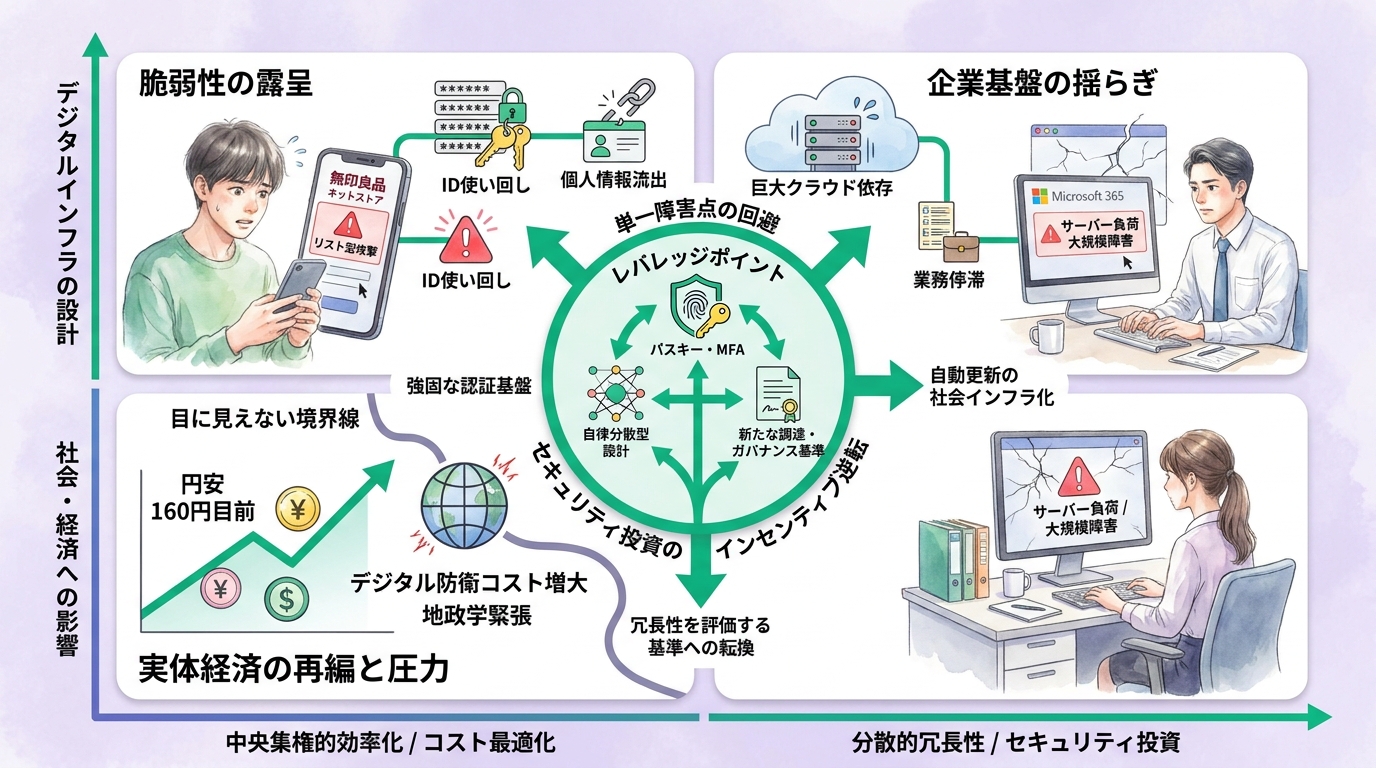
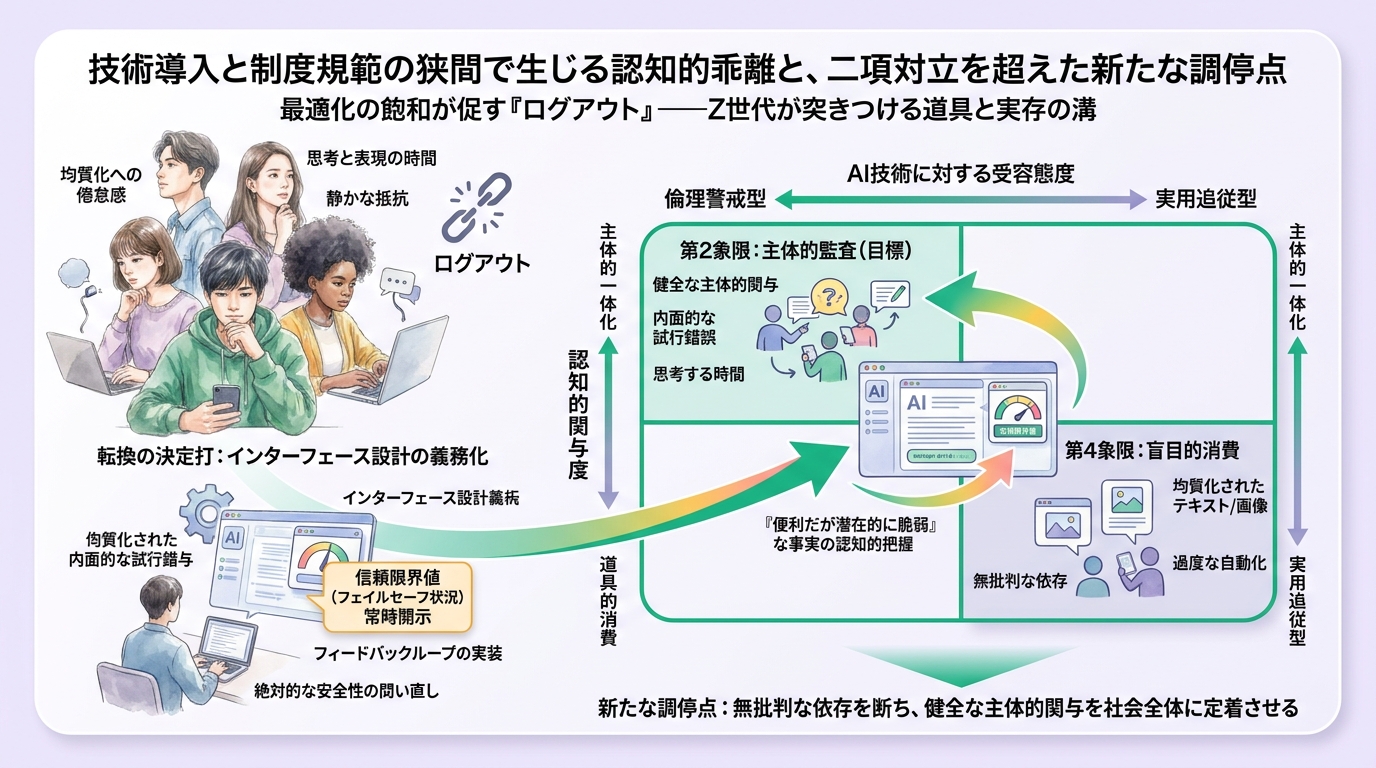
Ultimately, this high-level institutional conflict trickles down to daily social life and office terminals. From diagnostic support in medical institutions and risk screening in financial institutions to individual daily coding, foundational models like Claude are increasingly embedded as the nervous system of society. Consequently, a sudden decision to implement a 'complete shutdown' signifies not merely a single corporation's deteriorating performance, but the localized paralysis of societal infrastructure. The acceleration of capital pursuing convenience and wealth creation versus the emergency brake designed to prevent uncontrollable catastrophe. Anthropic's decision to submit to the judgment of public markets poses a profound question to all citizens enjoying the fruits of intelligence: who should bear the irreversible cost of safety, and how?