Reused Passwords and Cloud Overload Expose Corporate Fragility as Weak Yen Approaches 160, Inflating Cyber-Defence Costs
Credential-stuffing attack halts MUJI e-commerce while Microsoft 365 outage underscores the perils of hyper-centralisation
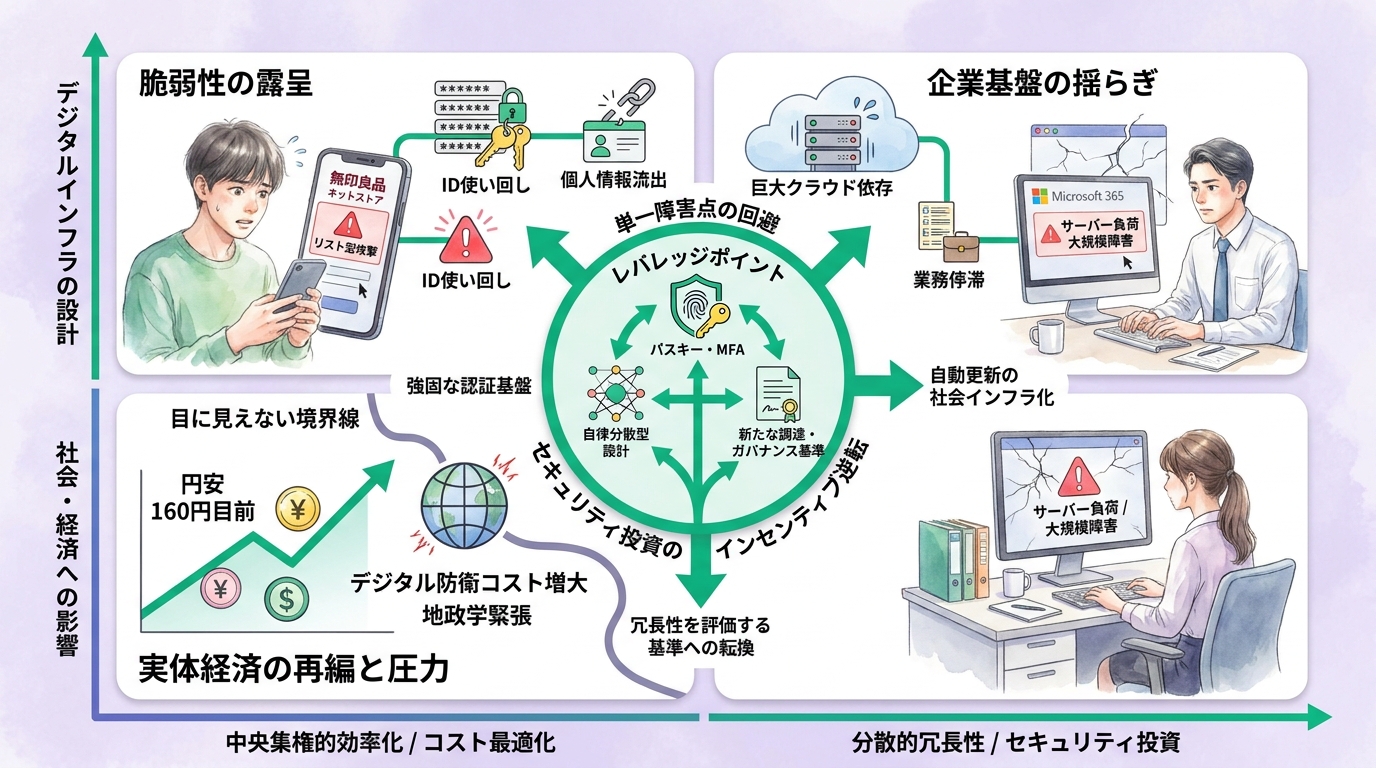
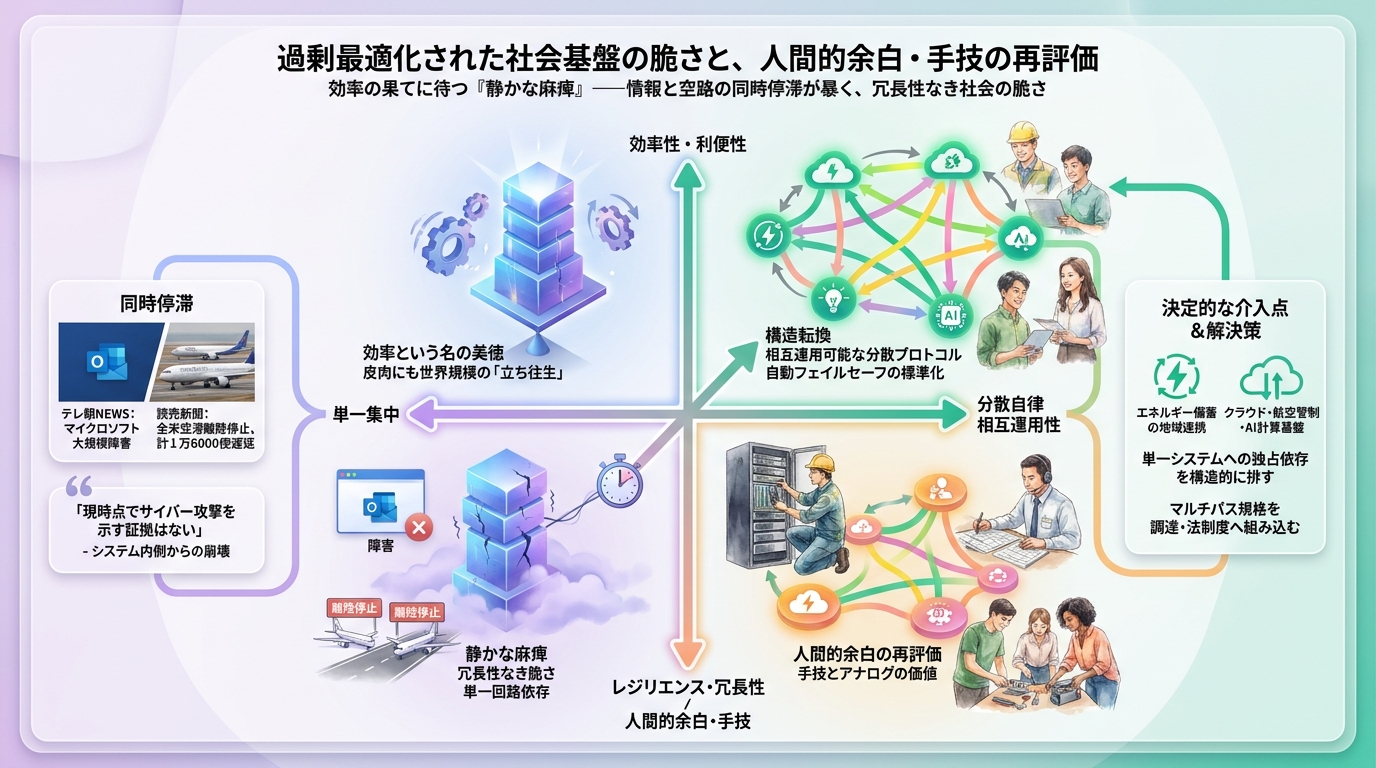
What greeted smartphone users in the morning was not their shopping basket, but a service suspension notice. As reported by TBS NEWS DIG, the assault on MUJI did not rely on sophisticated code-breaking; instead, it deployed a classic yet relentless tactic of mechanically feeding lists of credentials leaked from unrelated platforms into the login portal. Automated scripts coldly exploited a modest human habit—reusing familiar strings of characters for convenience—prying at authentication doors one after another. Meanwhile, in the Microsoft 365 outage reported by the Nikkei, shared files and email clients froze on desks across offices and home workspaces alike as concentrated server loads ground daily operations to a halt. Behind the login prompt and inside the enterprise suite, the digital entry points at users' fingertips faltered in unison.
Viewed side by side, the two incidents expose a shared vulnerability at the heart of contemporary corporate infrastructure. Retailers and consumer platforms bind payments and purchase histories to member IDs in pursuit of seamless convenience; yet when authentication layers prove brittle, automated waves of illicit login attempts force an entire storefront offline. Conversely, countless corporations reluctant to bear the overhead of maintaining in-house systems have consolidated everything from email to document drafting onto a handful of foreign cloud platforms. Hyper-centralisation delivers operational efficiency and cost savings in calm weather, but when excessive load strikes core servers, business continuity across entire sectors paralyses simultaneously. Though one disruption hit the authentication perimeter and the other struck the productivity core, both shared a fatal flaw: the absence of viable fallback paths when traffic or threats converge on a single choke point.
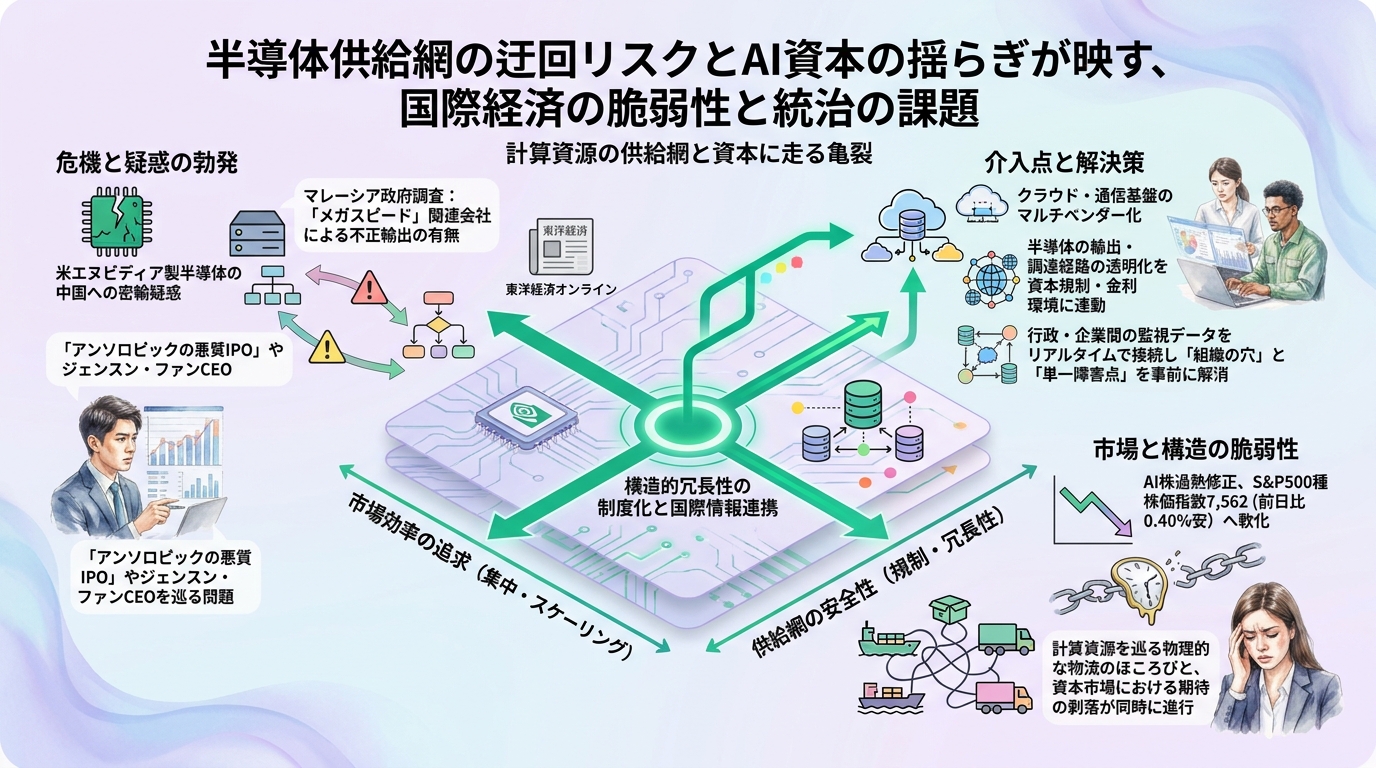
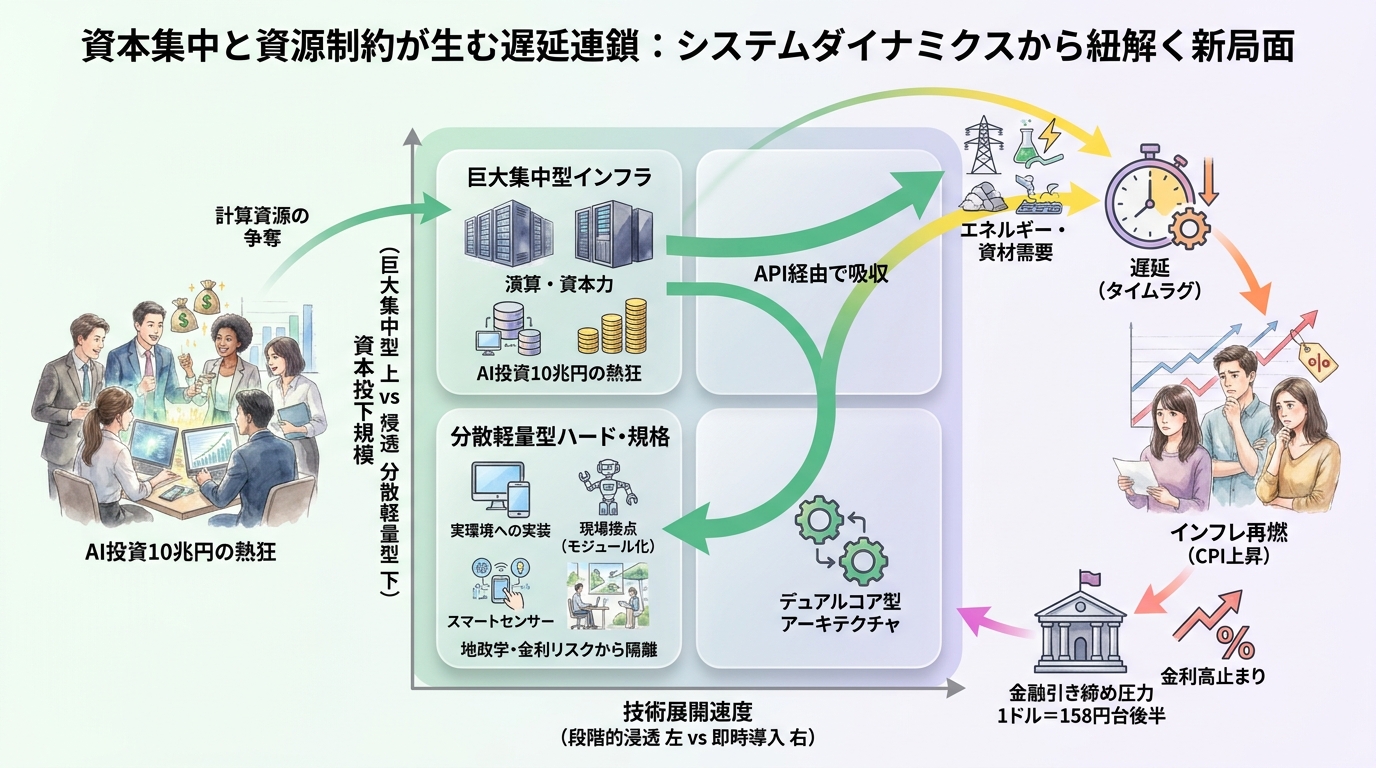
Compounding this technical fragility is the squeeze from currency and capital markets. With the yen hovering at 159.89 per dollar—teetering on the 160 threshold—the Nikkei 225 slipped 0.70% to 60,819 and the S&P 500 eased 0.35% to 7,593 amid palpable market caution. For Japanese enterprises seeking to deploy anti-bot defences, multi-factor authentication, or multi-cloud redundancy against outages, licensing fees and security tooling are predominantly billed in US dollars. Under a weakened yen, simply maintaining last year's defensive posture drives real IT expenditure steadily higher. The fiercer the pressure to curb costs, the easier it becomes to defer system upgrades and architectural diversification—deepening a structural dilemma in which defensive gaps and single points of failure are left unaddressed.
Vast currency swings and server bottlenecks at hyperscale providers do not remain abstractions confined to economic tickers or overseas data centres. Ultimately, the toll lands on individual time: the shopper stranded before an empty checkout page, or the employee waiting anxiously for a status-page update. Precisely because yen depreciation is squeezing corporate security budgets, the individual discipline of abandoning reused passwords in favour of passkeys and two-factor authentication carries unprecedented weight. At the same time, companies must resist over-reliance on cheap, monolithic platforms, investing steadily in hardened authentication and offline contingencies. Safeguarding the screens of daily life rests not on lamenting macroeconomic headwinds, but on the quiet accumulation of deliberate choices to change the locks at hand.