Machine 'Individual Identification' Drives Industrial Data Realignment: The Calculations and Friction of the Public-Private 100-Company Alliance
The DMG Mori-Led Infrastructure Initiative Forces a Defining Boundary Between the Openness of 'Tacit Intellectual Property' and Corporate Enclosure
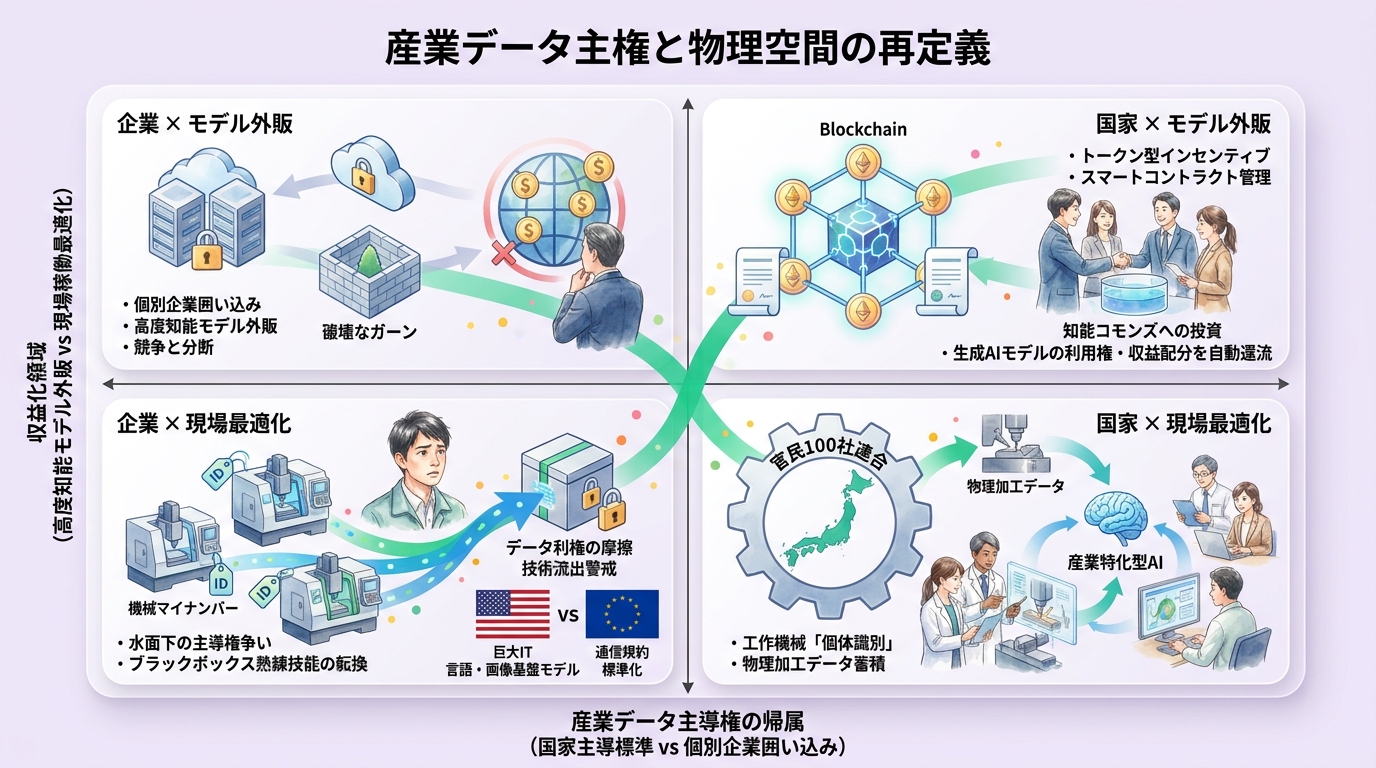
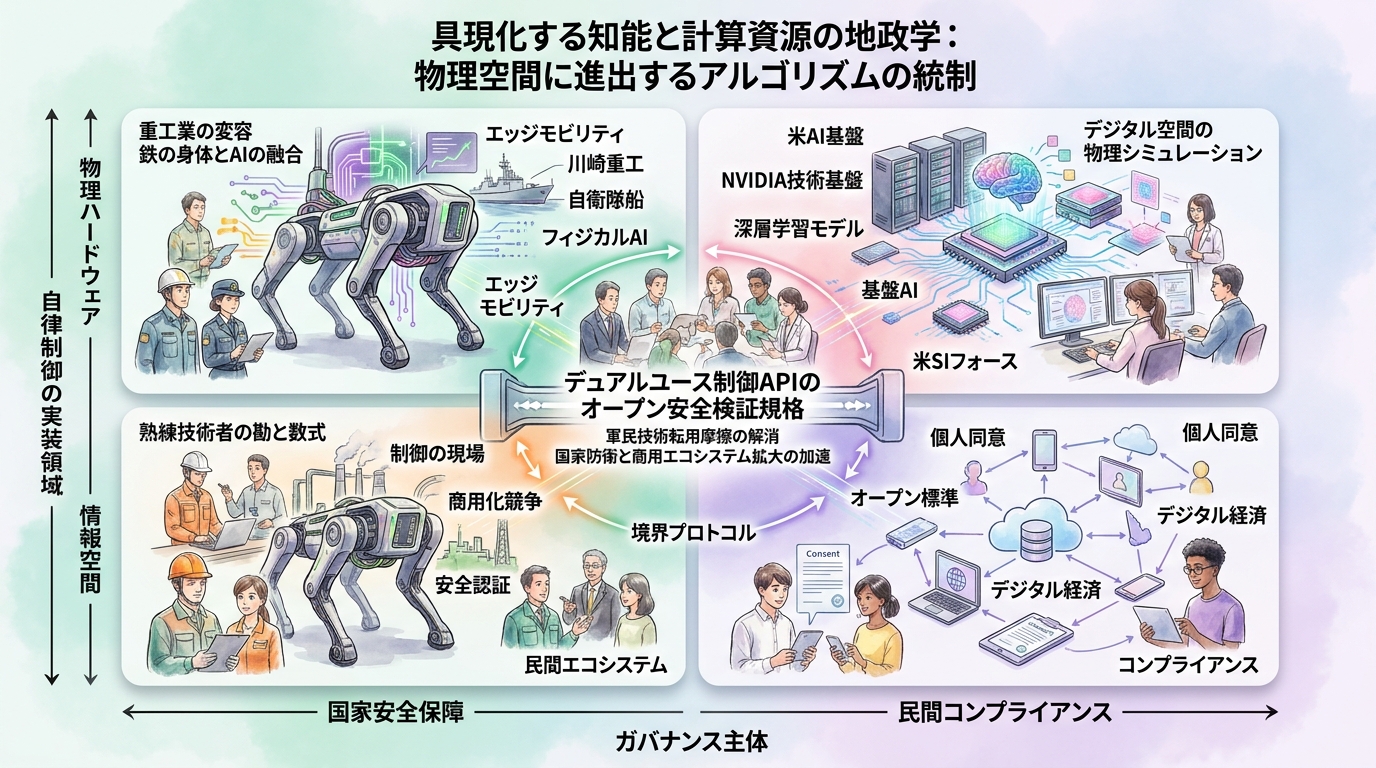
The framework, brought to light through reporting by the Nihon Keizai Shimbun, assigns a unique identifier to every machine tool deployed on a factory floor. This enables the precise collection and correlation of continuous operational data, including tool wear, cutting vibrations, temperature fluctuations, and power consumption. Around 100 entities—including machine tool builders, component processors, and IT vendors—have coalesced around DMG Mori to develop a common infrastructure for industrial generative AI, with support from the Ministry of Economy, Trade and Industry (METI). The aggregated data is expected to drive predictive detection of tool breakage, automated generation of optimal cutting paths, and the automation of parameter adjustments previously reliant on veteran craftsmanship. The ultimate aim is to transcend the standalone sale of hardware, establishing an industrial foundation that seamlessly delivers operational support tied to software.
The backdrop to this initiative is the migration of manufacturing's competitive axis from 'mechanical rigidity and precision' to 'data-driven optimization capabilities.' While Germany-led 'Industry 4.0' spearheaded the unification of inter-factory communication standards, and American forces enclosed vast swaths of industrial data within the cloud, Japan's machine tool industry retained its edge in individual machine performance while lagging in cross-sectional data sharing. Discarding the legacy decentralized approach where individual companies relied on disparate communication protocols and data formats, this architecture—which uses national identification codes to make data interoperable—strongly reflects a policy intent to build a defensive wall against the monopolization of manufacturing platforms by foreign forces.
However, within the supply chain trenches that will dictate the system's efficacy, anticipation and apprehension are intricately intertwined. For small- and medium-sized cutting and mold-making factories acting as subcontractors for automotive and precision machinery, minute machining conditions—such as tool angle and feed rate—represent trade secrets and survival strategies cultivated over decades. If raw data siphoned from machine tools via identification numbers is generalized as AI training data, deep-seated concerns persist that competitors could easily mimic proprietary techniques. A critical governance question hangs in the balance: will data-providing parties receive adequate financial and functional returns, or will the sovereignty over collected data tilt excessively toward equipment manufacturers and platform operators?
The success or failure of machine individual identification and data integration extends far beyond factory efficiency; it serves as a watershed moment determining whether Japanese manufacturing can break free from hardware dependency and provide high-value-added industrial infrastructure. Because machining data is directly tied to physical phenomena, it possesses a high-definition value unattainable through mere web scraping. Whether this unique strength can be preserved while ensuring an openness compatible with Western markets will define the trajectory of the new industrial data order. How the boundary between enclosure and cooperation is drawn, and how artisanal craft knowledge can be institutionally protected, will dictate the future landscape of industrial data.