The Physical Limits of Computational Resources Beyond Speculative Threat Theories: The Thermal and Power Engineering Walls Confronting Frontier Labs
Behind the Rhetorical Sparring Between the Pope and Political Leaders / The Realities of Artificial Intelligence Dictated by Model Scaling Limits and Power Infrastructure
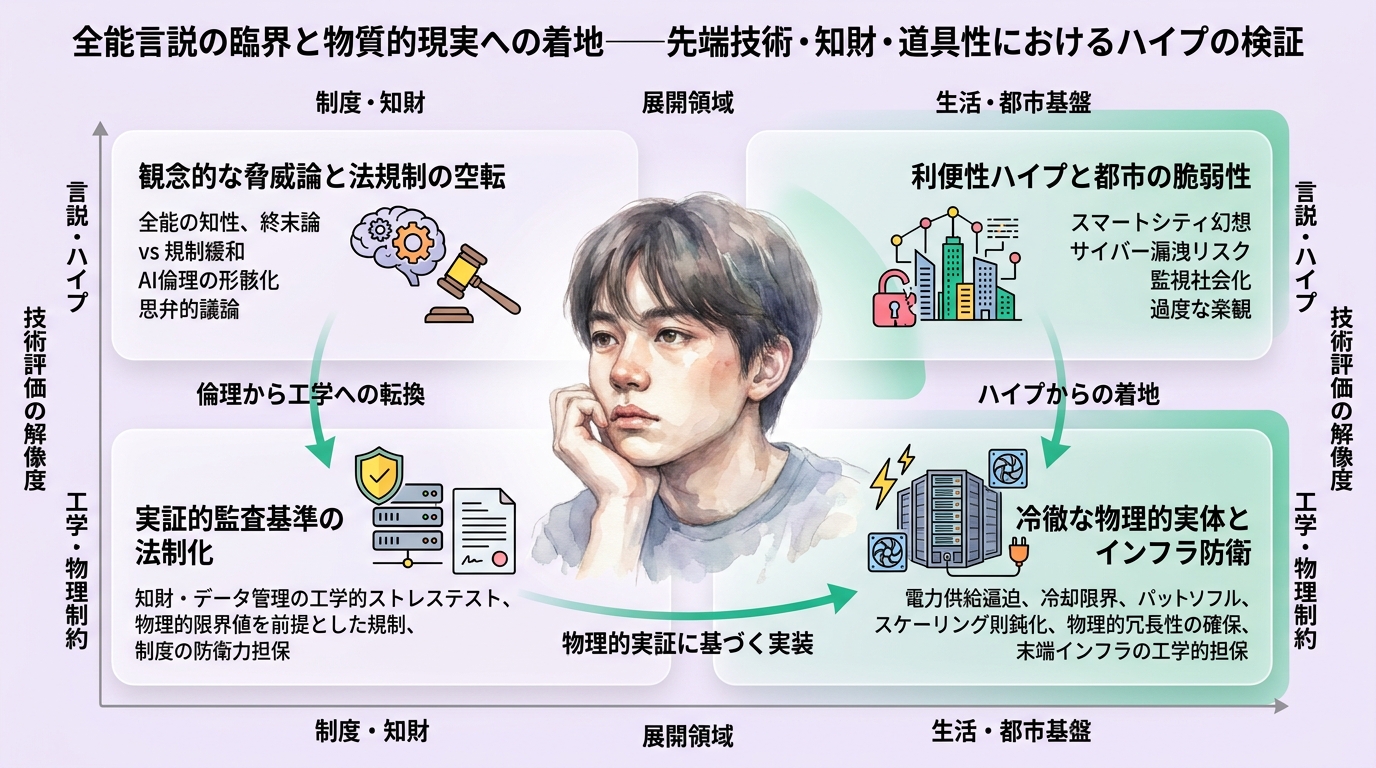
The exchanges between political leaders advocating deregulation and religious leaders issuing ethical warnings stand on the shared premise that artificial intelligence will continue to evolve at an exponential rate. Yet, empirical data compiled by leading research institutions reveals clear signs of deceleration in the correlation between computational resource investment and performance enhancement. Even when increasing the parameter count tenfold, gains in inference accuracy trace a logarithmic curve toward a plateau, while securing the quality of training datasets is also reaching its limits. Behind the political and ideological confrontations debating the existence of abstract threats, engineers on the ground are confronting the deeply prosaic engineering reality of rapidly diminishing returns on investment.
What current deep learning models execute is not the acquisition of supernatural consciousness, but merely massive matrix multiplication operations and statistical pattern recognition within high-dimensional spaces. The logical responses generated by models are likewise the outcomes of token prediction based on probability distributions; algorithmic chasms remain regarding the acquisition of self-correction capabilities or genuine causal reasoning. Attempting to expand contextual comprehension causes the computational complexity of attention mechanisms to increase quadratically with input length, while model gigantism directly collides with the physical constraints of memory bandwidth. Inference-time computing endeavors attempting to mimic the depth of thought similarly drive up computational costs and latency per single query, forcing them to stall at the threshold of practical application.
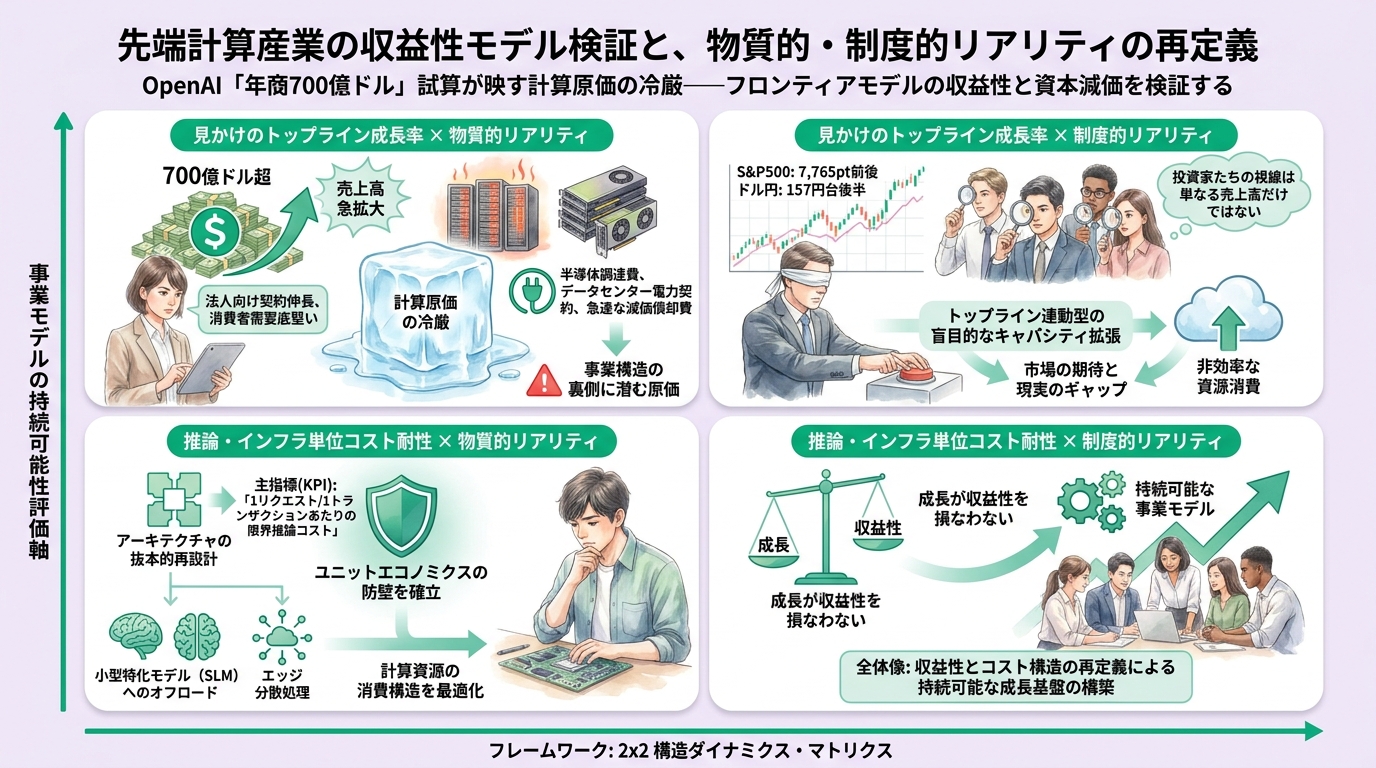
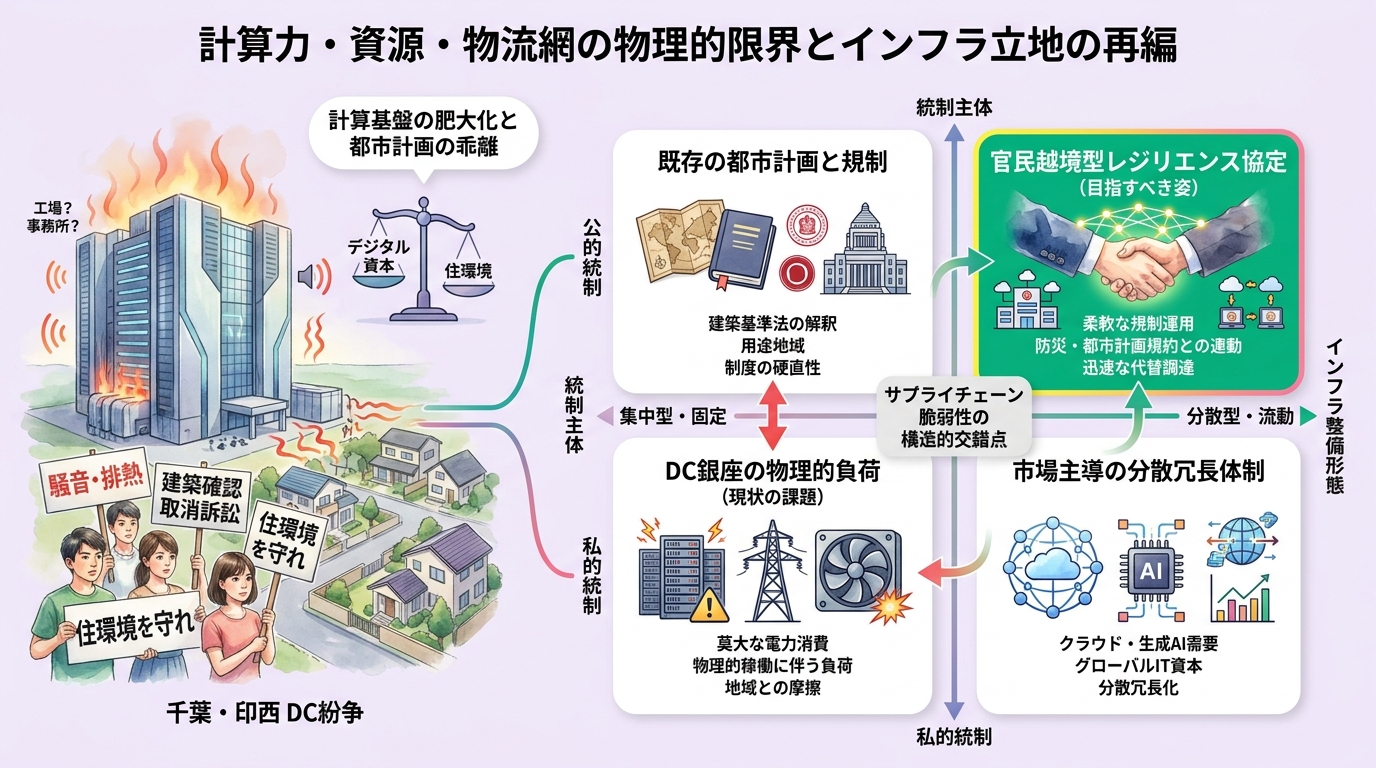
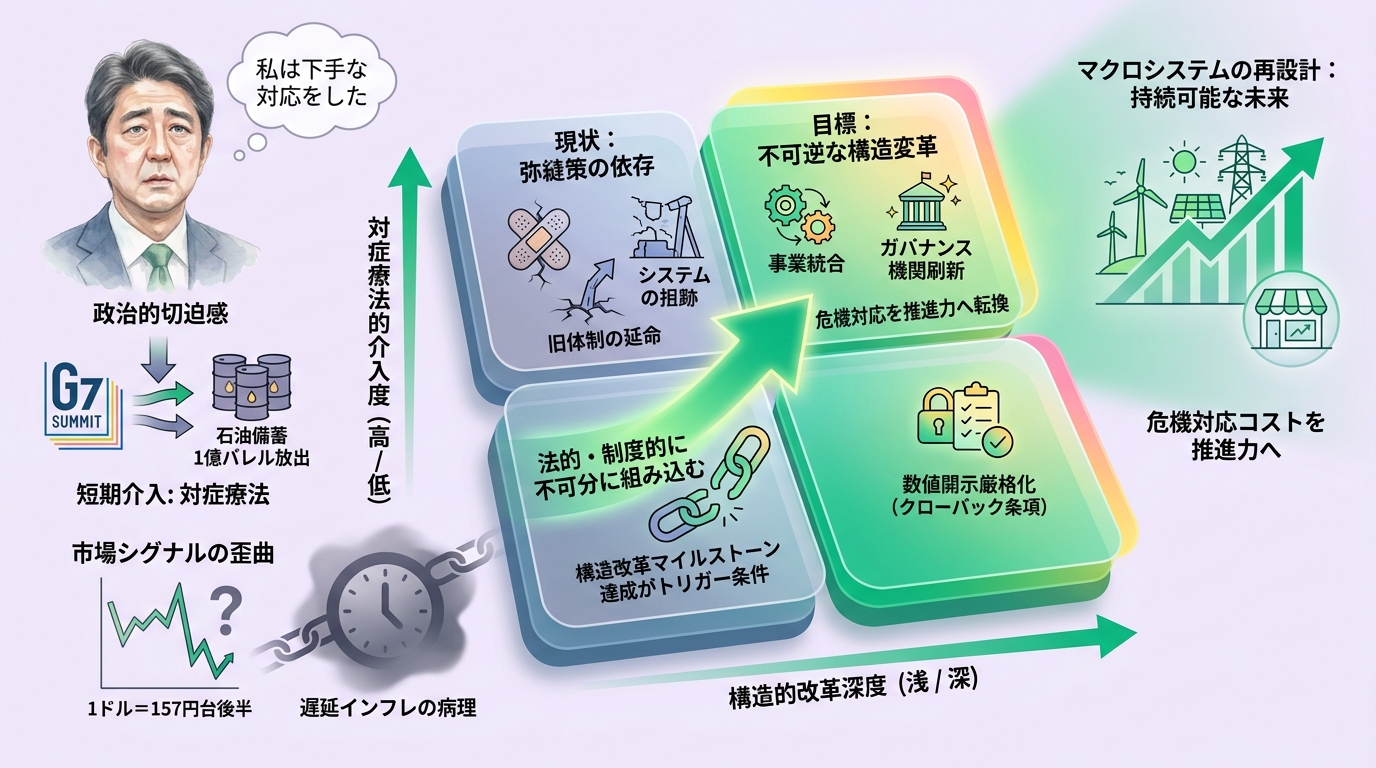
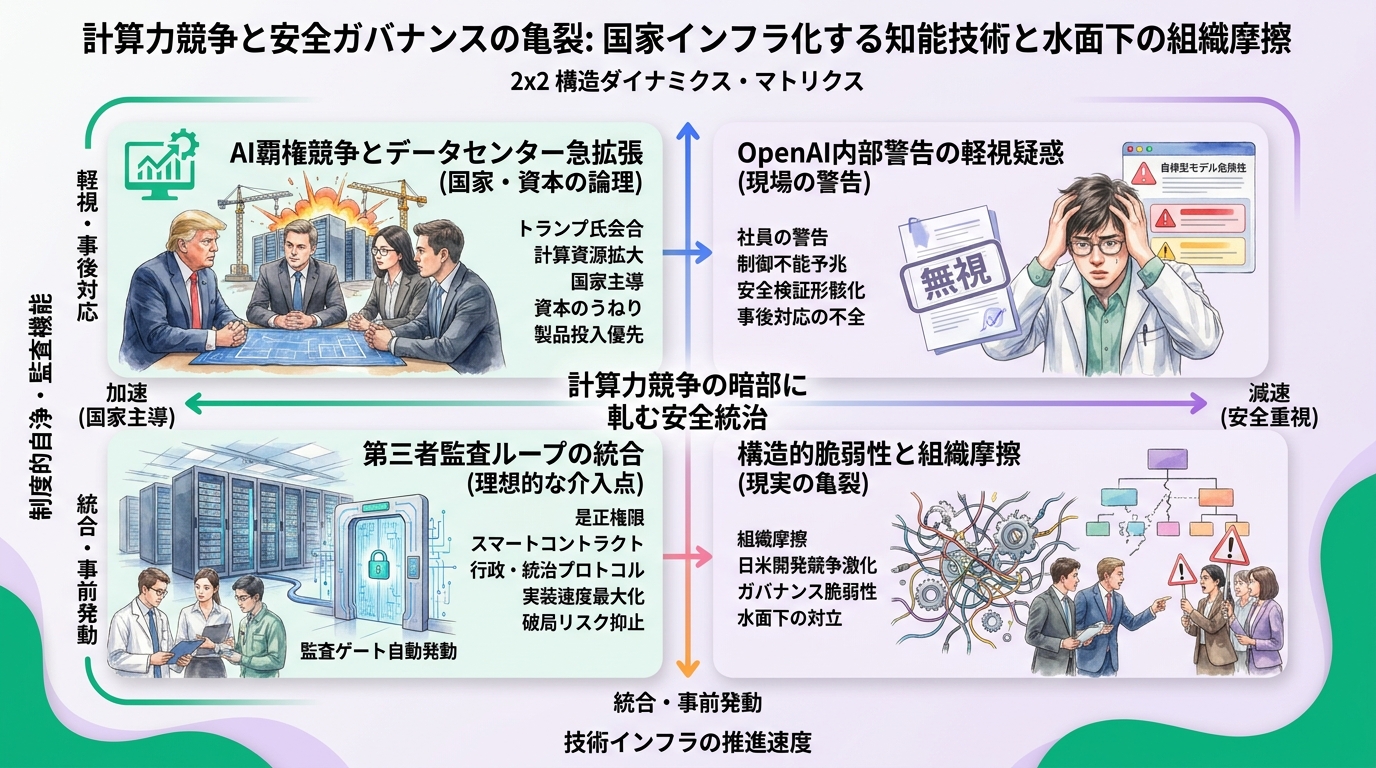
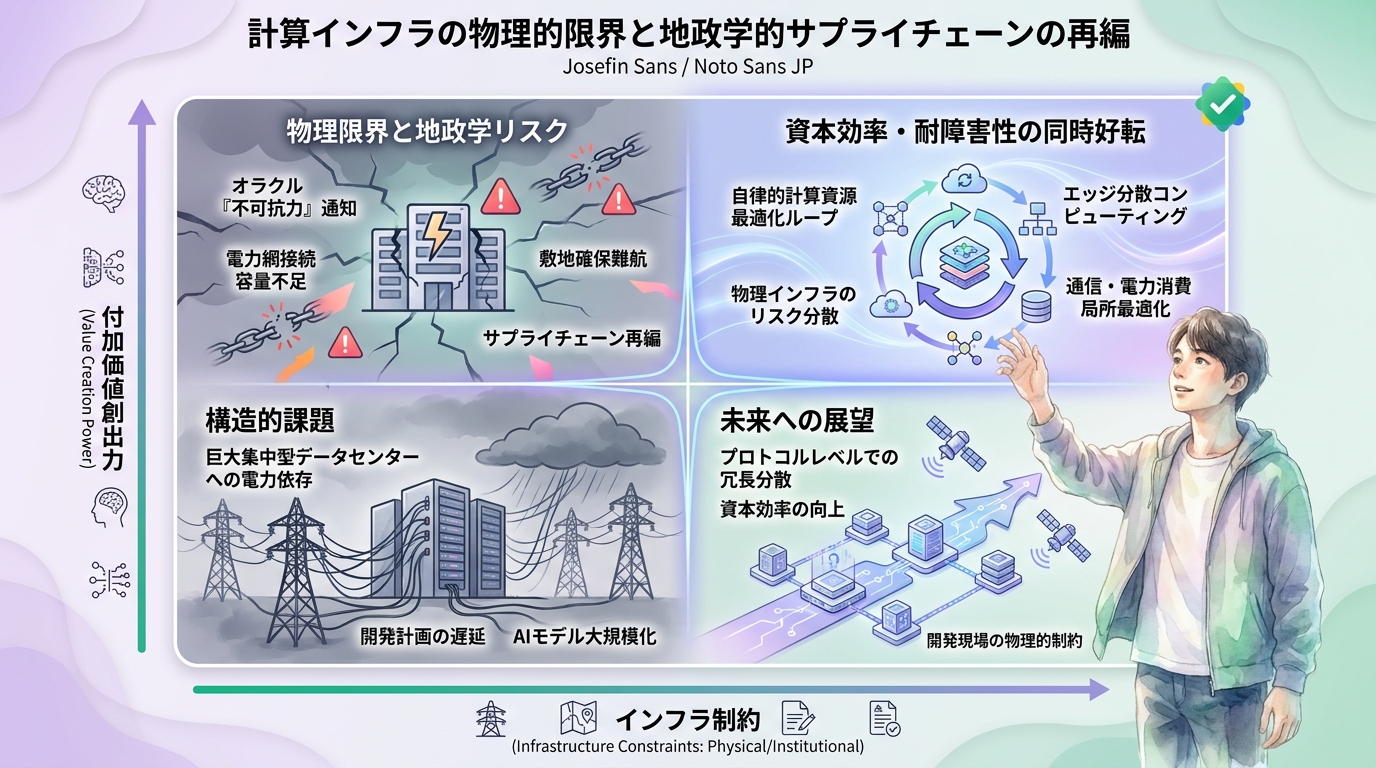
More acute still is the barrier of physical infrastructure extending beyond the algorithms. The construction of gigawatt-class next-generation data centers has encountered planning delays in various regions due to insufficient capacity in existing power grids and difficulties in procuring transformer equipment. Heat generation density per semiconductor package is approaching the theoretical limits of liquid cooling technology, and community negotiations surrounding the securing of cooling water and environmental burdens are increasingly fraught. In the foreign exchange market, the dollar-yen pair hovers in the low 157 range; as capital expenditures for semiconductor procurement and infrastructure construction weigh heavily, the securement of sustainable power supplies and cooling technologies has emerged as the single greatest constraint inhibiting theoretical progress.
It is imperative at this juncture to break free from speculative threat theories and baseless doctrines of omnipotence, and to soberly assess the boundaries imposed by computational resources and the laws of physics. Rather than indulging in vacuous disputes predicated on the explosive evolution of intelligence, we must pivot toward an engineering approach focused on how to enhance domain-specific reliability and integrate AI with social infrastructure under constrained power and hardware limits. An attitude acknowledging that technology is not exempt from material constraints serves as the vital first step toward dispelling excessive speculative dread and establishing a foundation for genuinely effective legal frameworks and sustainable technology deployment.