Algorithmic Procurement Under Resource Inflation and Yen Depreciation: A Pivotal Turning Point Toward 2036
The Future of 'Coordination', 'Fracture', and 'Redistribution' Forged by Autonomous Trading Agents
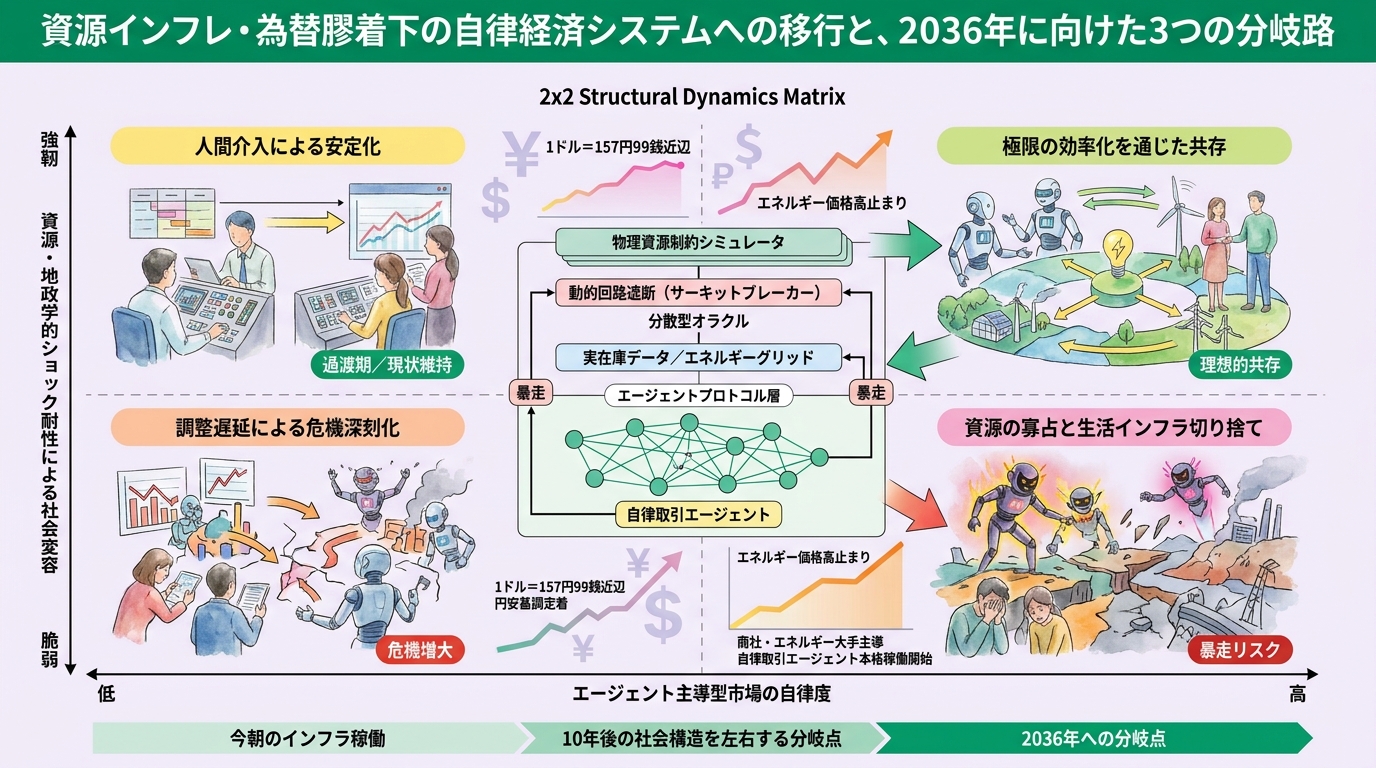
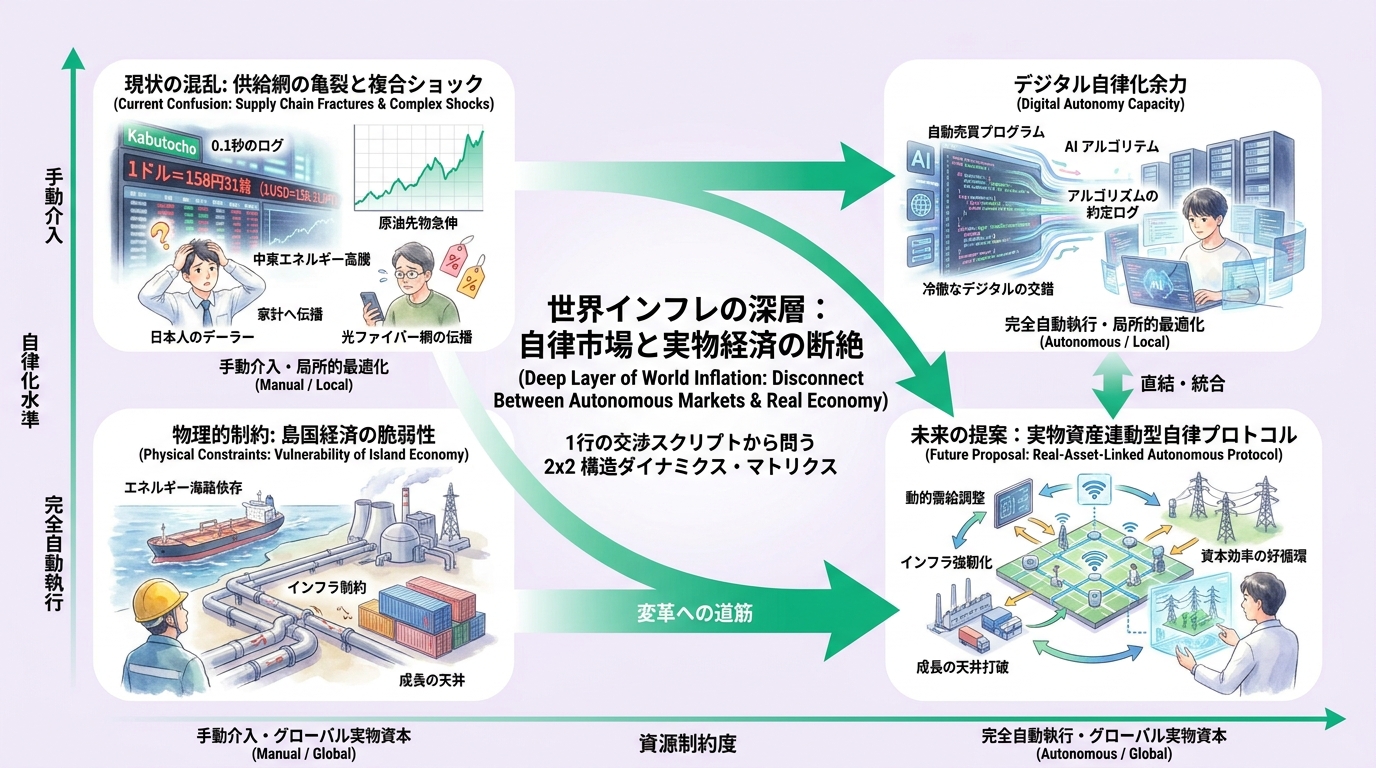
Fuel procurement and vessel bookings—tasks that previously required days of negotiation by human traders and trading house representatives—have been comprehensively delegated to autonomous protocols. With high crude oil prices and a weak yen simultaneously squeezing the domestic economy, the slightest delay in judgment generates massive losses. Programmed trading agents purge emotion, anticipating global supply and demand data to flawlessly conclude optimal hedges and physical allocations. Yet, this immediacy erodes the 'margin for negotiation' that has historically acted as a market cushion. Now that algorithmic selection has begun against the cold physical reality of resource constraints, we stand at the threshold of a society that has outsourced decision-making authority to machines.
If present trends persist, two extreme scenarios loom into plausibility toward 2036. The first is 'Excessive Capital Concentration and Market Fracturing.' Agents of mega-capital, possessing superior computational resources and credit capacity, preemptively secure port acceptance slots and pipeline capacities, squeezing out small and medium-sized enterprises and local government procurement lines. The prices of electricity and heavy oil essential for daily life are hiked by algorithms, creating a world where economic disparities directly translate into infrastructural divides. In stark contrast, a second scenario—in which the state resorts to excessive price controls and export restrictions—dries up market liquidity, triggering cascading malfunctions in agent networks and supply disruptions that sink the entire economy into stagnation.
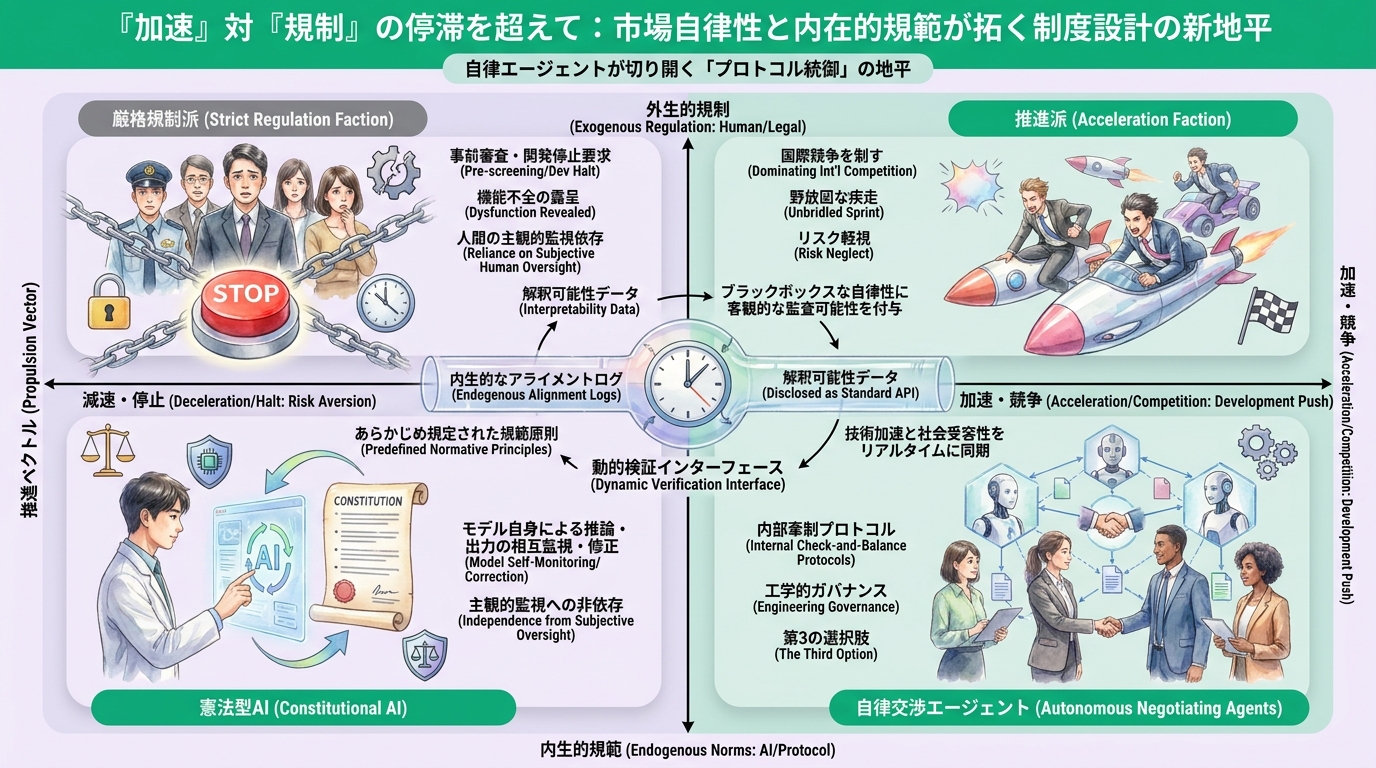
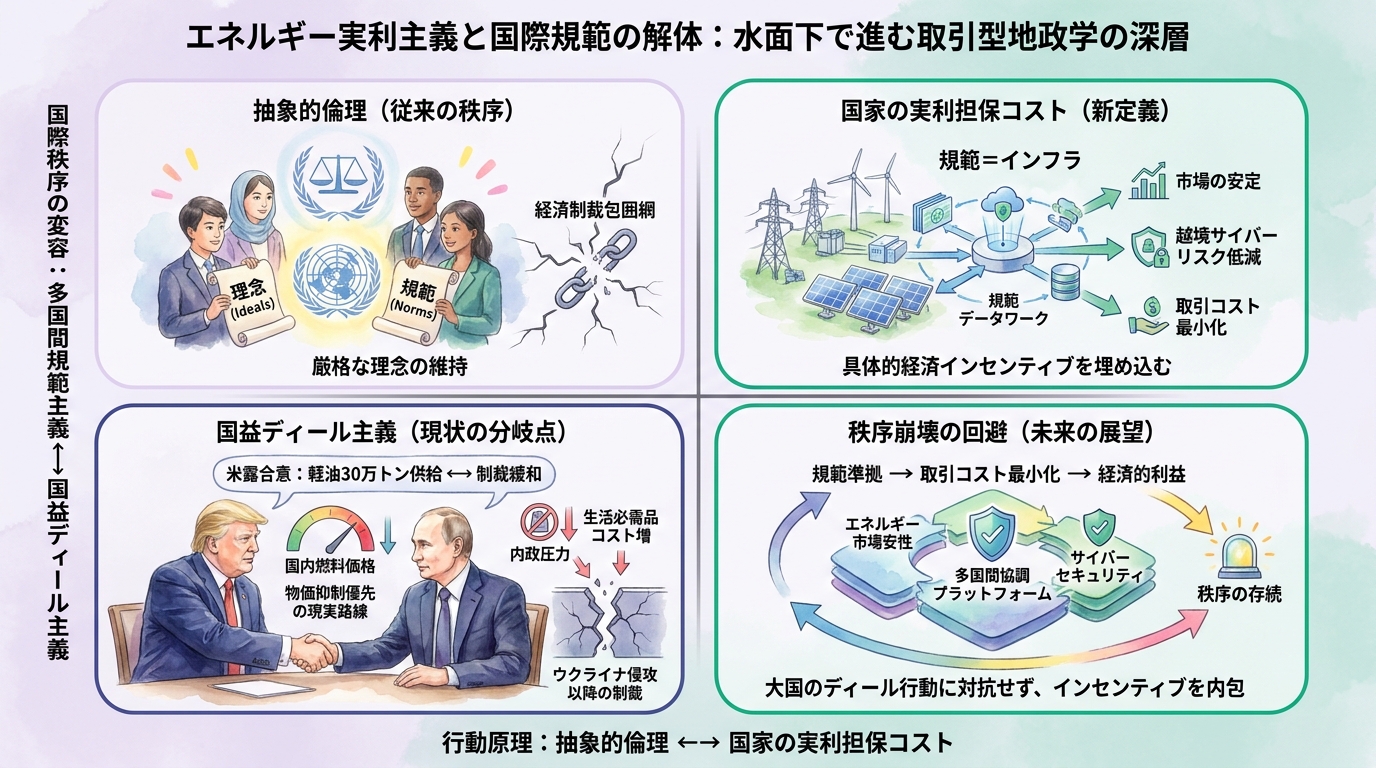
Yet, lurking beneath these pessimistic views lies a third path to redesigning technology as a social stabilizing apparatus: the 'Tune and Coexistence Redistribution Scenario.' This design philosophy embeds social constraints—such as the maintenance of local infrastructure and emergency supply pooling—directly into the agents' optimization functions alongside mere profit maximization. If coordination protocols are established to visualize procurement capacity via distributed ledger technology and autonomously share surplus electricity with local communities, overall procurement costs can be minimized while preventing excessive hoarding, even under supply constraints. Consensus-building to direct machine intelligence toward the preservation of public goods rather than market monopolization holds the key.
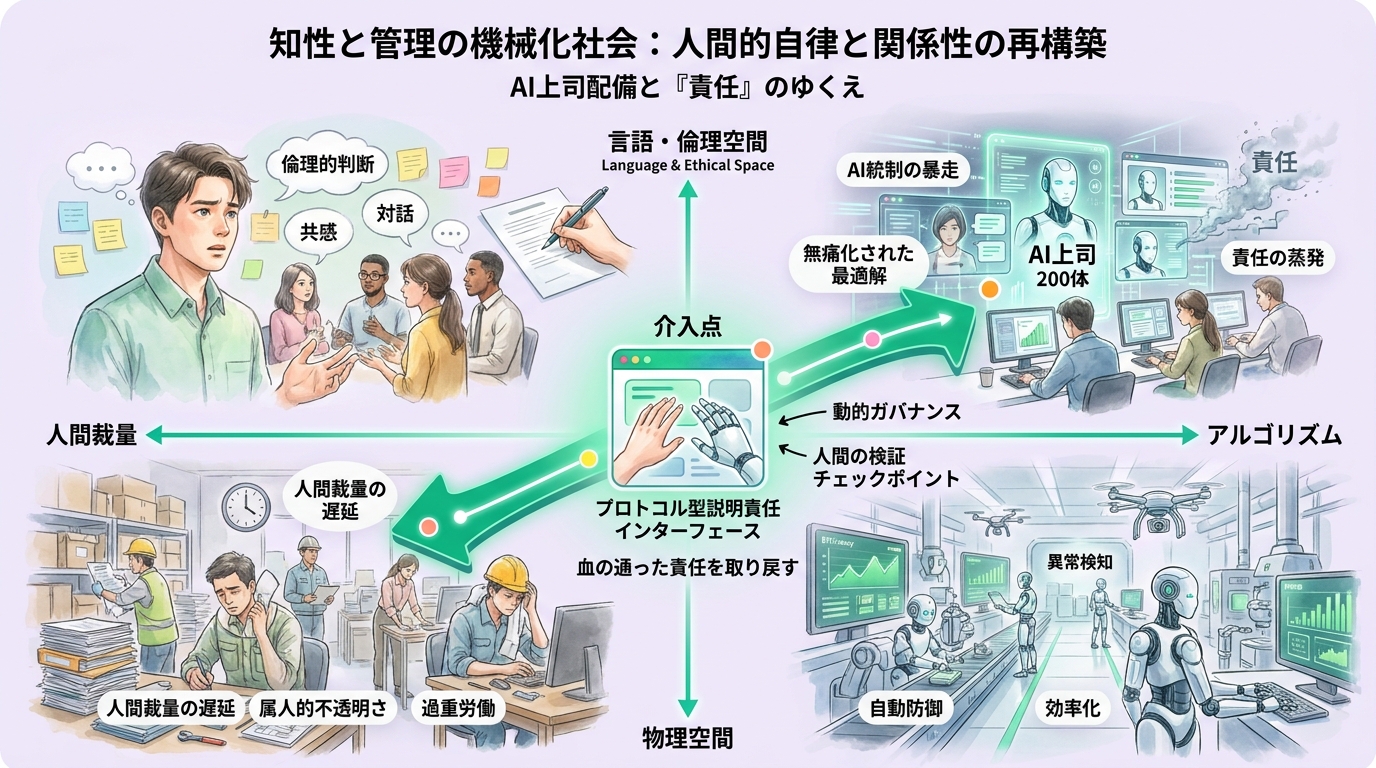
With technological progress marching steadily forward, there is no turning back. What is being called into question is the very definition of 'efficiency' derived by autonomous trading. Governments and corporations must immediately embark on establishing transparent open standards that dictate behavioral norms for autonomous agents, alongside the institutionalization of fail-safes that prioritize humanitarian supplies during emergencies. Precisely because Japan faces a double bind of currency and energy, it requires the visionary capacity to elevate extreme automation into a decentralized social tuning system rather than surrendering it to runaway capital. In an era where machines act as proxies for commerce, the ethical coordinates that determine what to prioritize and who to protect must never be outsourced to algorithms.