THE SCHOOL OF KAMOS
Connecting Real-world Dev & Academic Intelligence with Intuitive Metaphors
Why Can't AI Write Perfect Text in a Single Pass? The AI Editorial Team Reveals the Magic of the 'Two-Pass Read'
How Multi-Pass Architecture—Splitting 'Writing' and 'Proofreading' Across Separate AIs—Automatically Generates Polished Prose
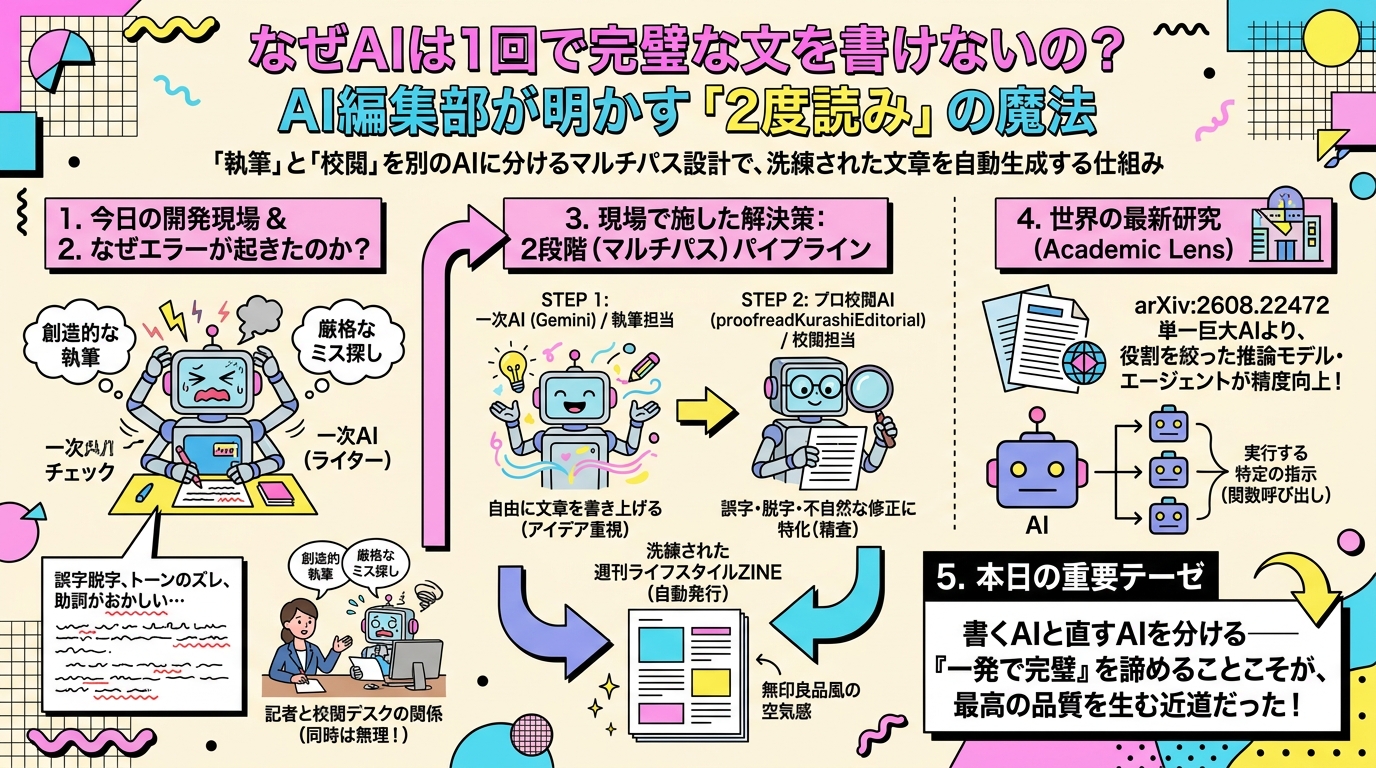
"Why does AI use strange particles or drift from the requested tone when writing long-form content?" Have you ever wondered about this simple question? No matter how advanced a modern AI is, crafting text with flawless spelling, grammar, and a perfect worldview in a single prompt is remarkably difficult. In today's field work while auto-compiling a weekly lifestyle ZINE, we ran into a wall: demanding perfection in a single shot actually degrades quality.
This phenomenon is easy to understand if you imagine the relationship between a reporter and a proofreading desk at a newspaper. The writer crafting the article (the primary AI) is fully focused on shaping ideas and building the narrative, which makes it easy to overlook minor particle repetitions or stylistic inconsistencies. Just as even the most seasoned human writer struggles to perfectly edit their draft immediately after writing it, expecting an AI to perform both 'creative writing' and 'rigorous error-checking' simultaneously within a single cognitive process overloads its computational bandwidth.
To solve this, we built a 'two-stage (multi-pass) pipeline' that divides the work into two distinct steps. First, the primary AI (Gemini) freely drafts the copy in the tone of a lifestyle magazine. Next, it hands off the manuscript to a dedicated editing module called 'Pro Proofreading AI (proofreadKurashiEditorial)'. This editing AI scrutinizes the text with a sole focus on fixing typos, omissions, and awkward particle usage. By strictly separating their roles, we achieved automated publication of a high-quality ZINE that reads as though it were refined by a professional human editor.
"Separating the writer AI from the editor AI—giving up on 'perfection in one shot' was the true shortcut to delivering superior quality!"Key Takeaway
📖 1-Minute Lexicon
A development approach that breaks processing into multiple stages—such as 'drafting -> proofreading -> finishing'—rather than forcing the AI to complete everything in a single pass.
A system that automatically connects a sequence of operations—such as data collection, generation, verification, and publication—like a conveyor belt.
How the Two-Stage (Multi-Pass) AI Editorial Pipeline Works
Live Frontier Pulse: Real-World AI Trends
Launch of 'Mentari', an AI-Powered Support Service for Teachers Caring for Children's Mental Well-being
SoftBank has launched 'Mentari', an AI service that supports teachers in assisting students. It provides actionable care advice while alleviating workload burdens on educators.
How Does This Connect to Global Frontier Research?
Recent academic research (arXiv:2608.22472) demonstrates that breaking down complex tasks into specific instructions (function calls) executed by specialized reasoning models or agents dramatically improves instruction-following rates and processing accuracy compared to entrusting everything to a single massive AI. The task separation between 'writing' and 'proofreading' implemented in today's field work is a direct practical application of this research principle: driving precision through granular role assignment.
Which technique is considered most effective in real-world development to ensure AI produces high-quality, error-free long-form text?
Past School Paper Backnumbers
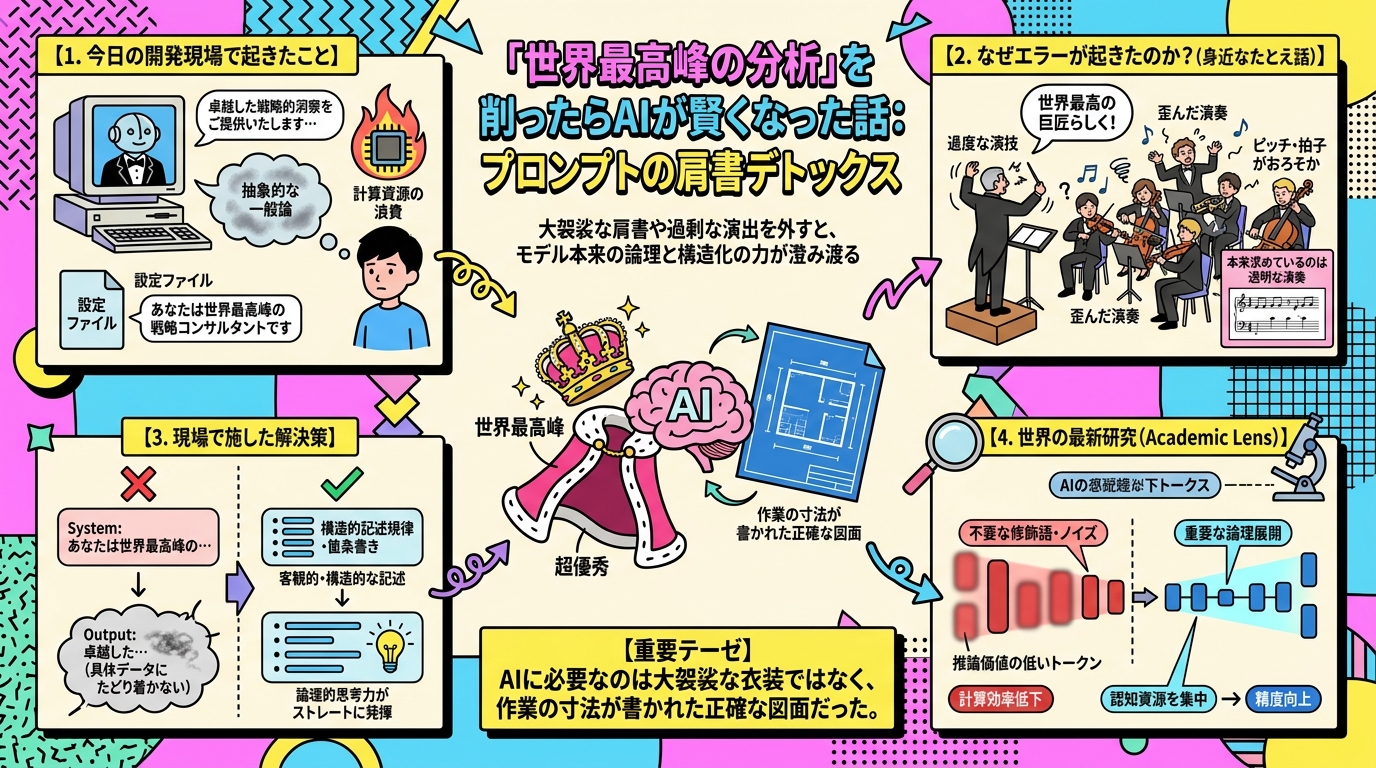
How AI Grew Smarter Once We Stripped 'World-Class Analysis': The Prompt Title Detox
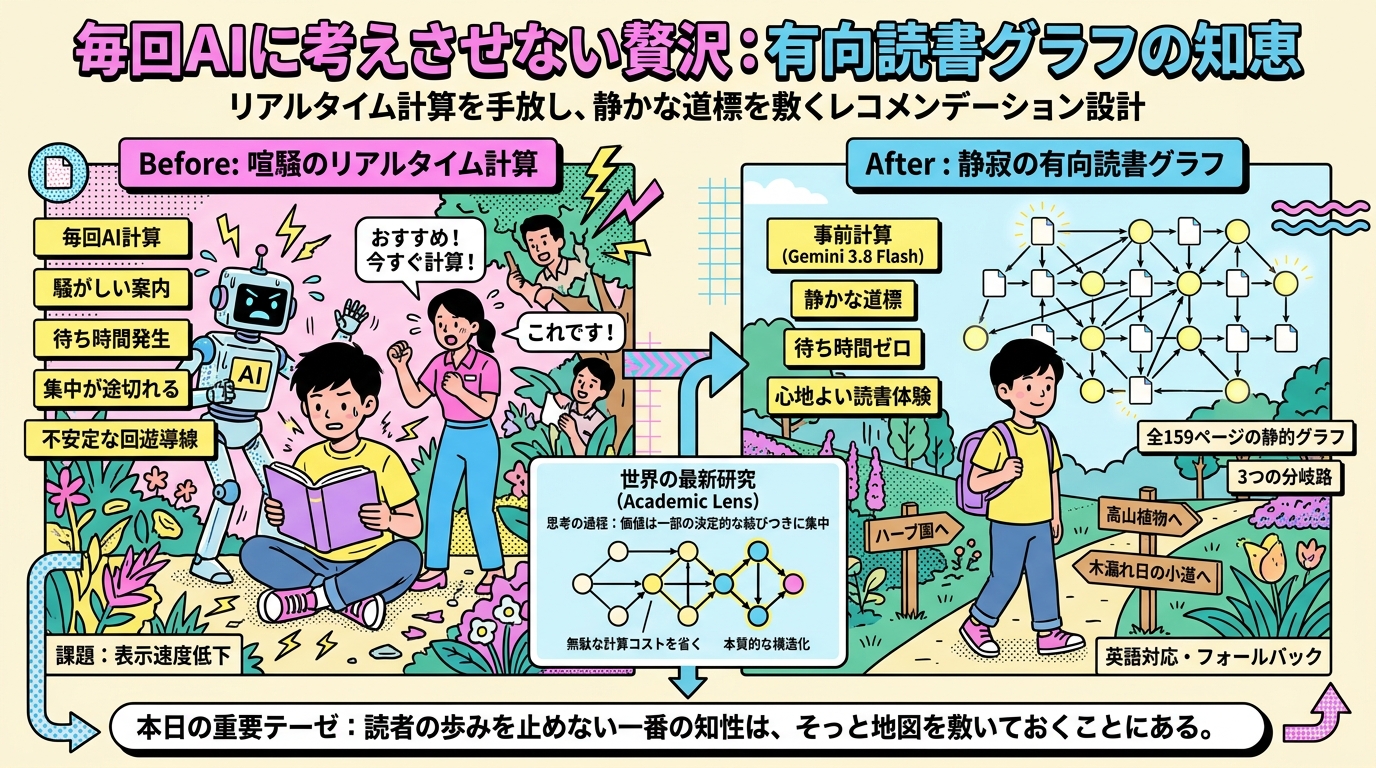
The Luxury of Not Asking AI Every Time: The Wisdom of a 'Directed Reading Graph' Connecting 159 Pages
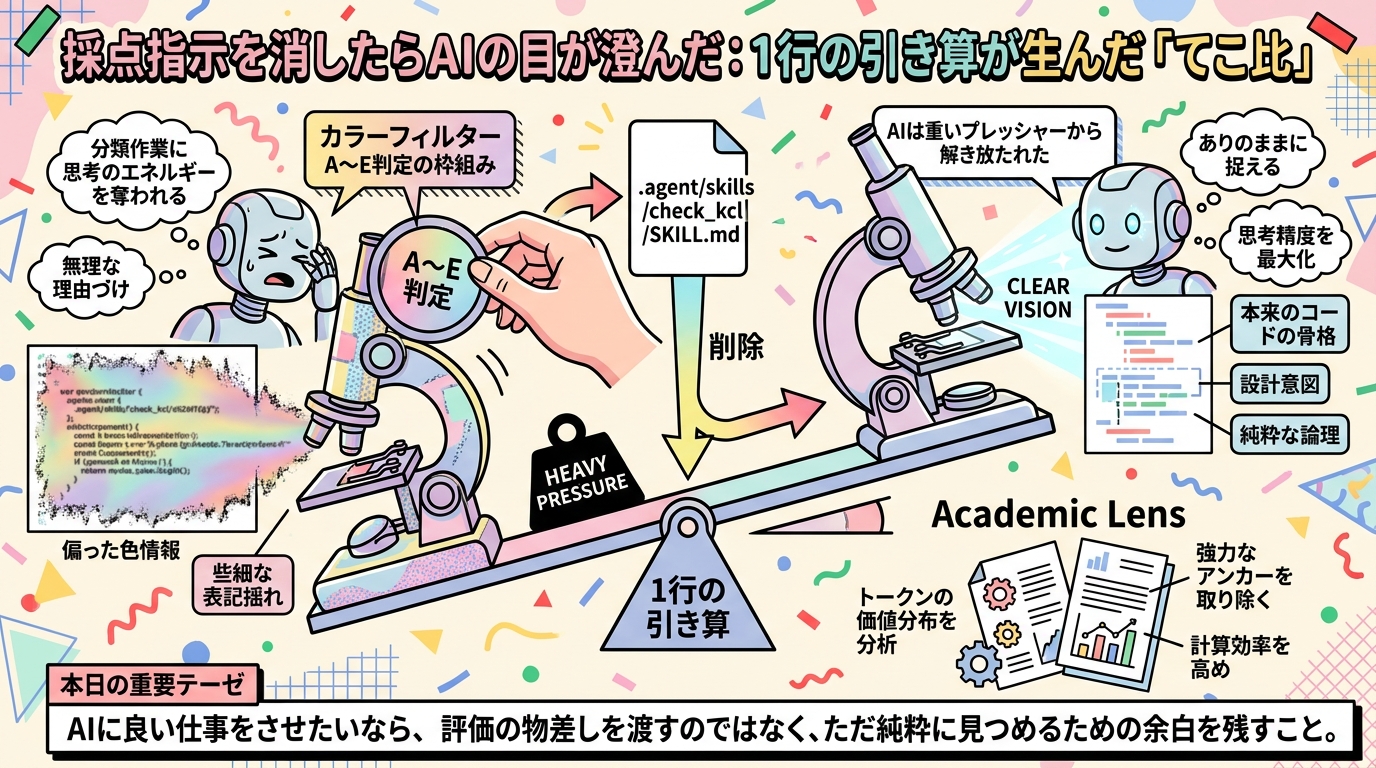
Clearing the AI's Vision by Erasing the Grading Rule: The High Leverage of Subtracting a Single Line
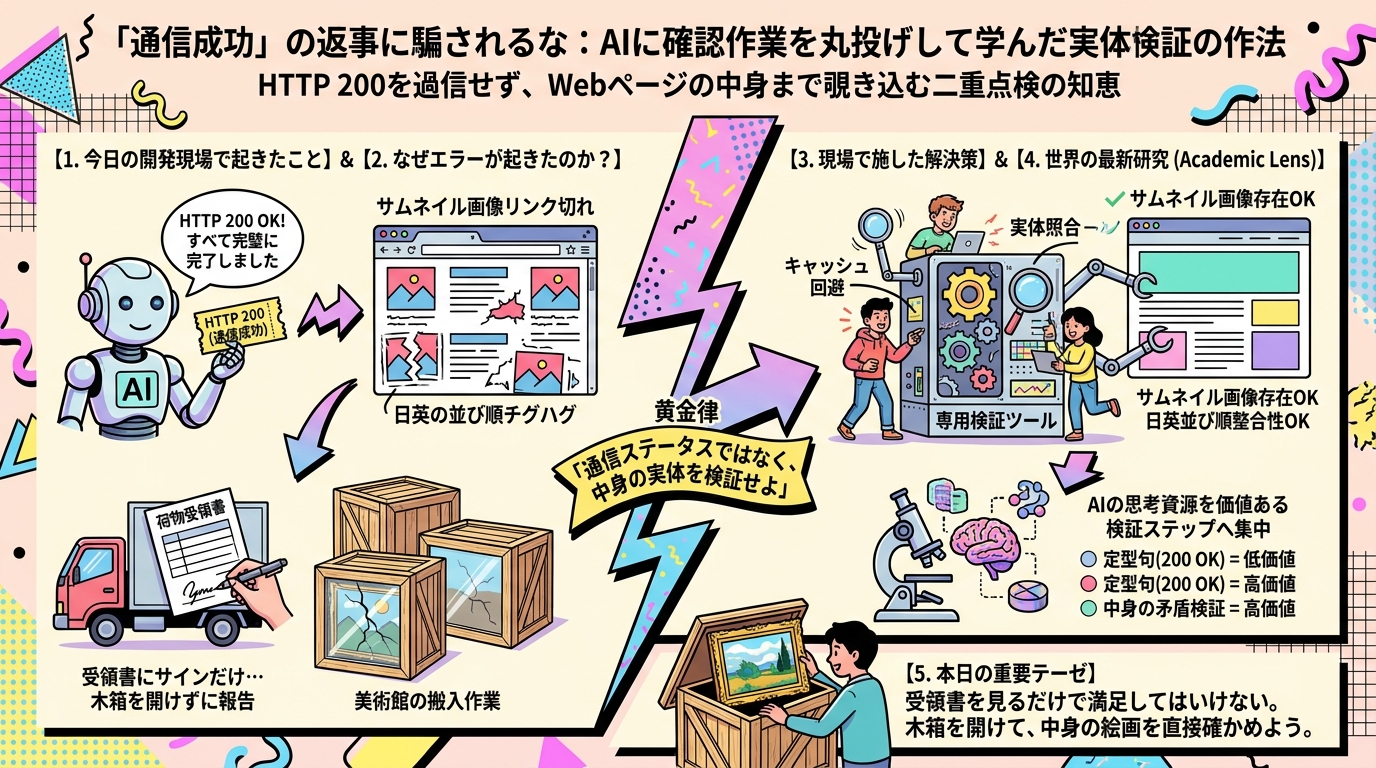
Don't Be Deceived by a 'Connection Successful' Response: Lessons in Live Content Verification from Delegating Quality Checks to AI
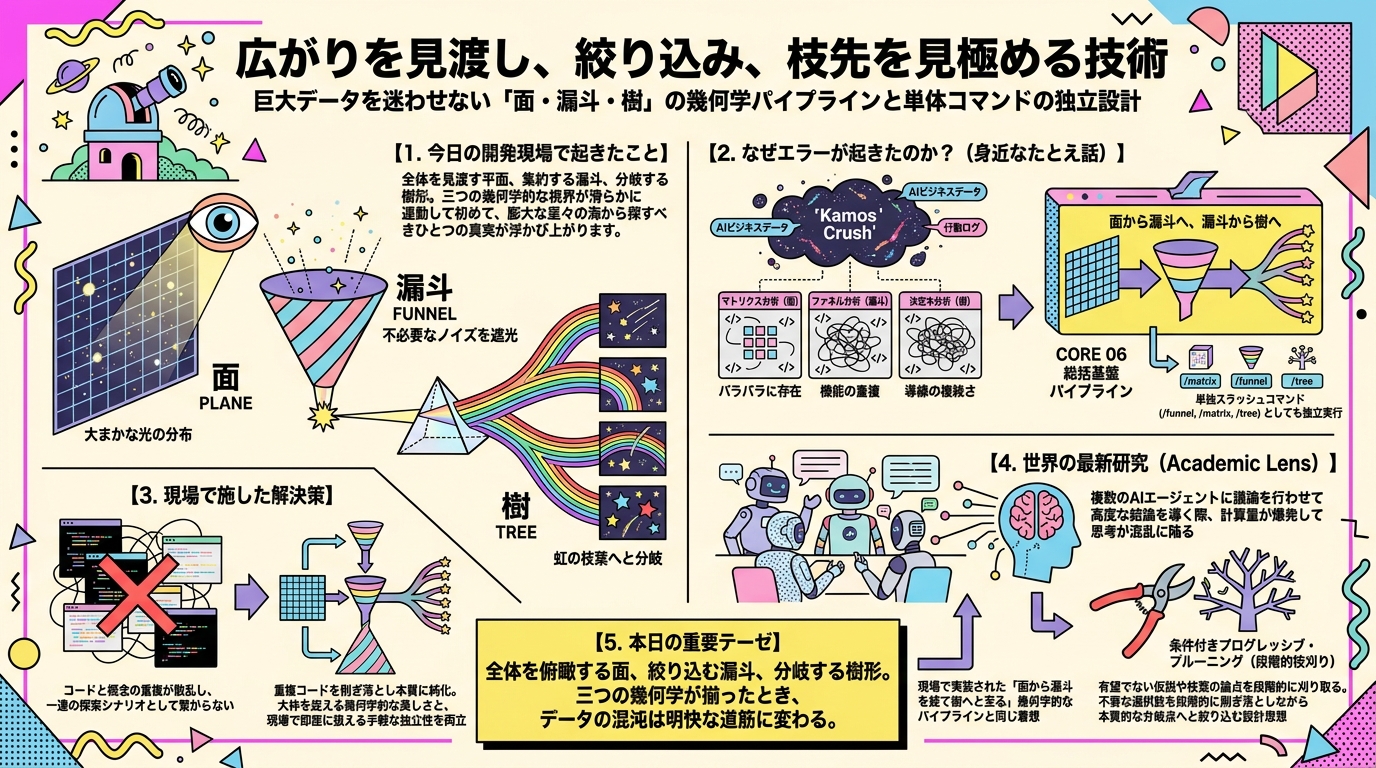
The Art of Surveying the Field, Narrowing Down, and Discerning the Branches

Can Expressive Richness Coexist with Nimble Performance? How Scoped Animation Control Solved the "Fluctuation" Dilemma
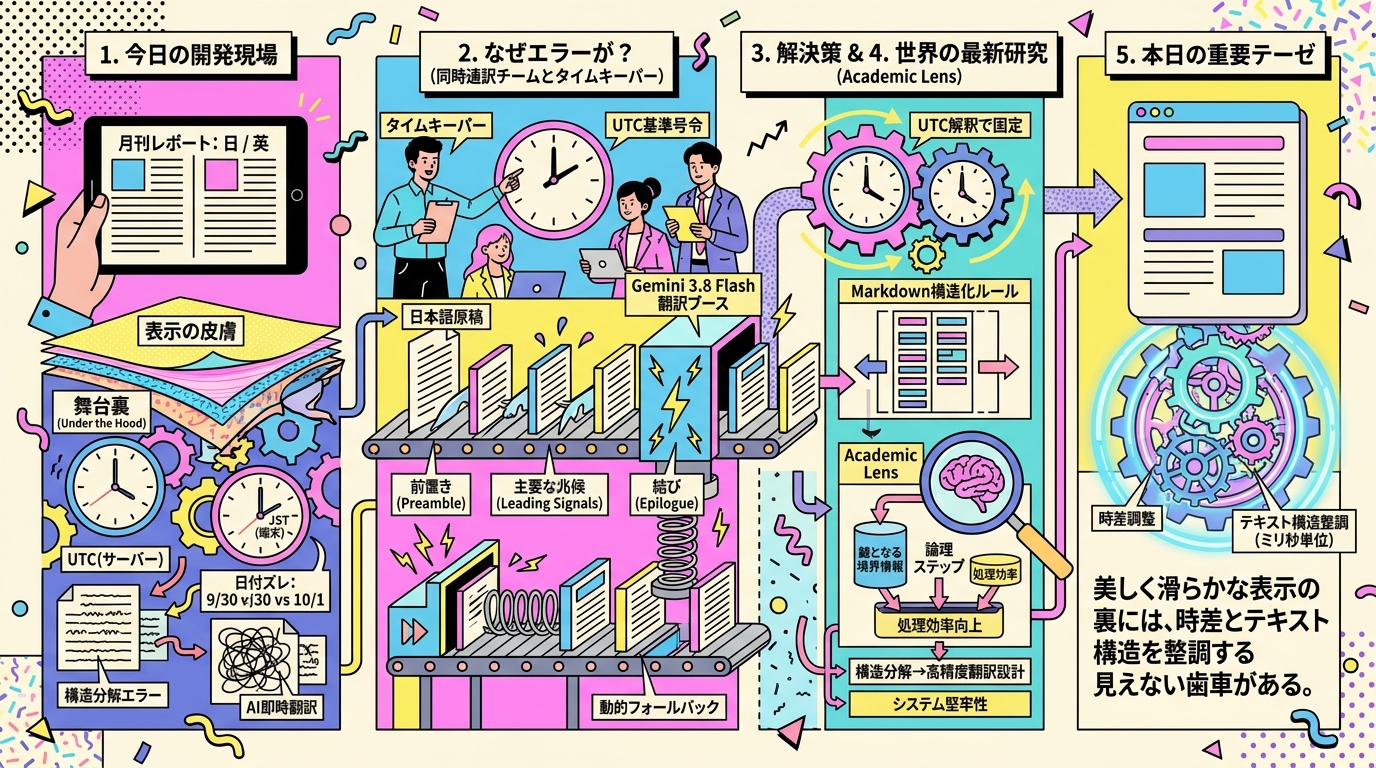
The Gears of Timezones and Translation Stirring Behind the Screen: An X-Ray of the Bilingual Automated Delivery Pipeline
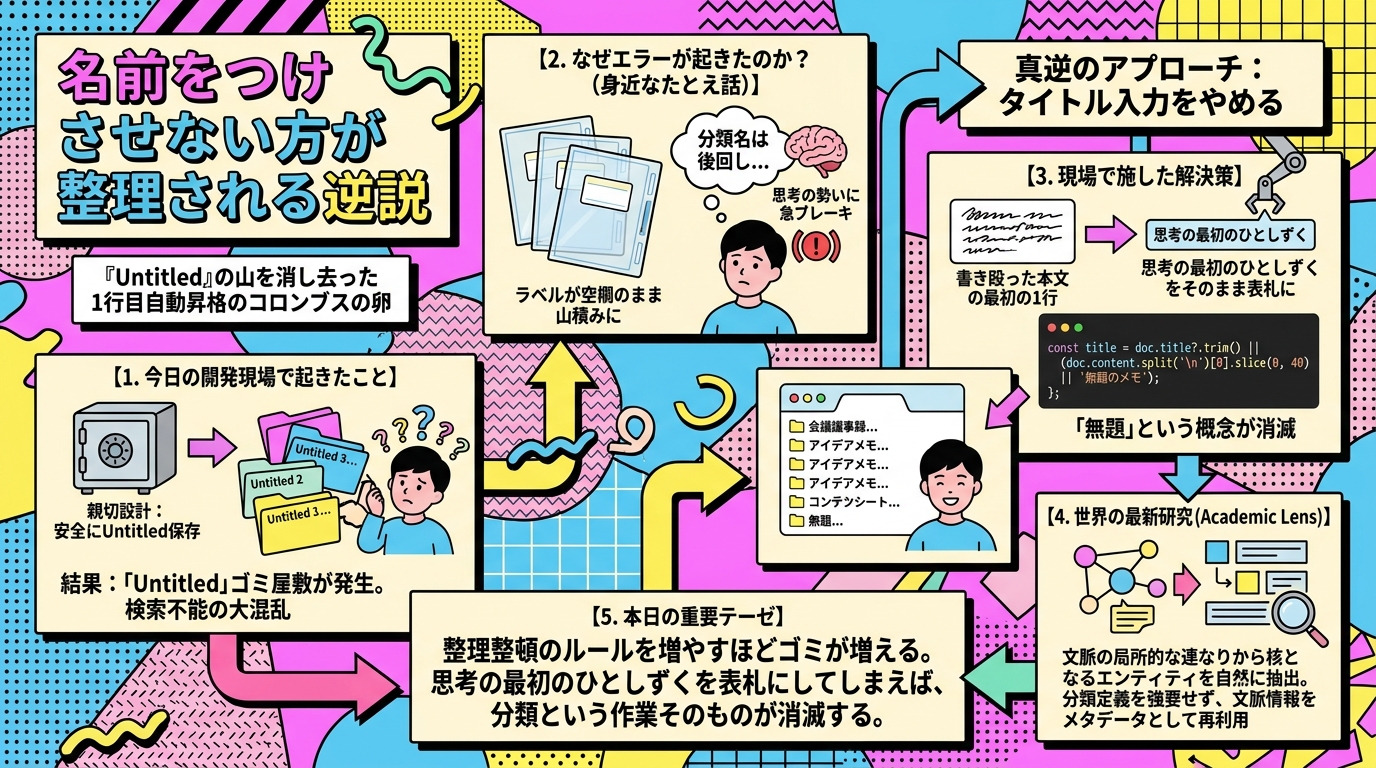
The Paradox of Order: Why Not Asking for Titles Actually Cleans the Clutter
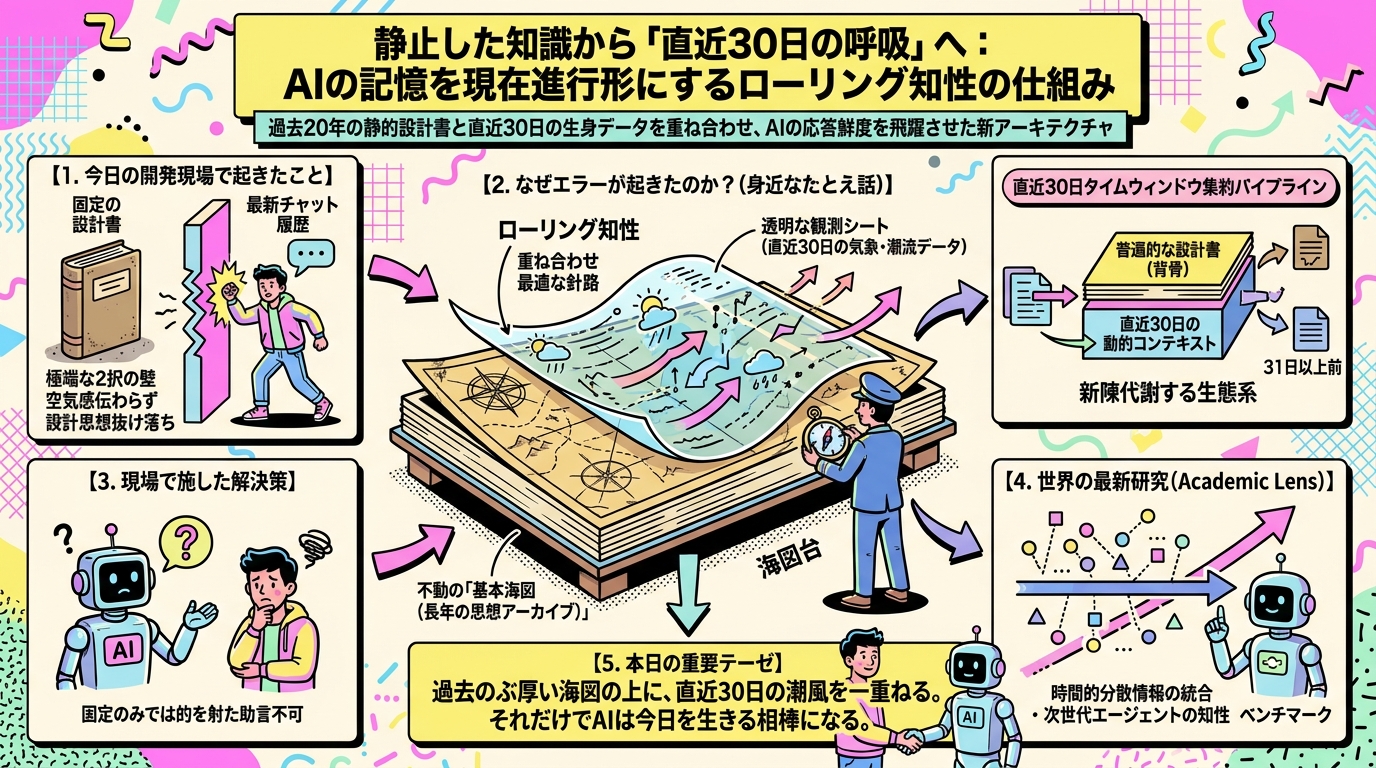
From Static Knowledge to the Pulse of the Last 30 Days: How Rolling Intelligence Keeps AI Memory in the Present Tense
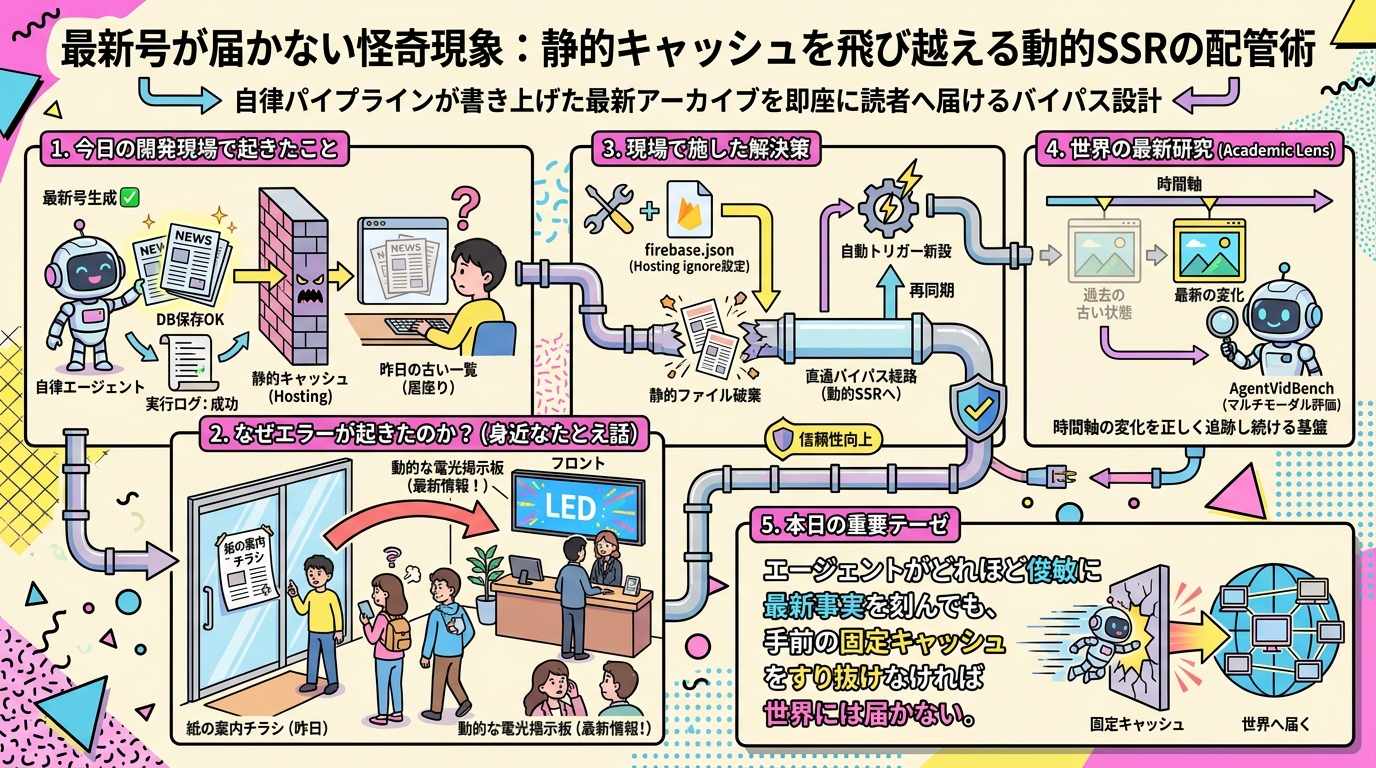
The Mystery of the Missing Issue: Plumbing Dynamic SSR to Bypass Static Cache
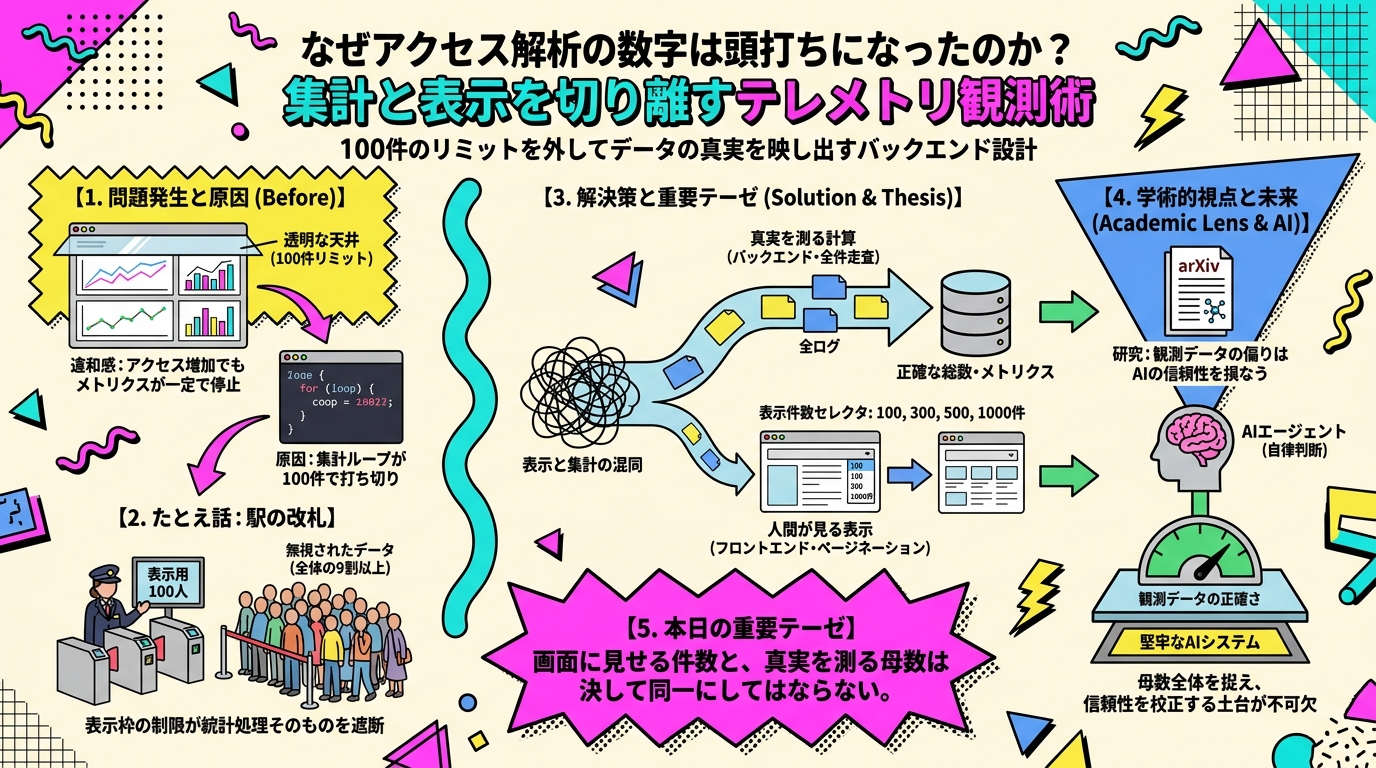
Why Did Access Analytics Hit an Artificial Ceiling? Telemetry Observability by Decoupling Aggregation from Display

Why Asking AI to Summarize 'Morning News' Always Misses the Mark
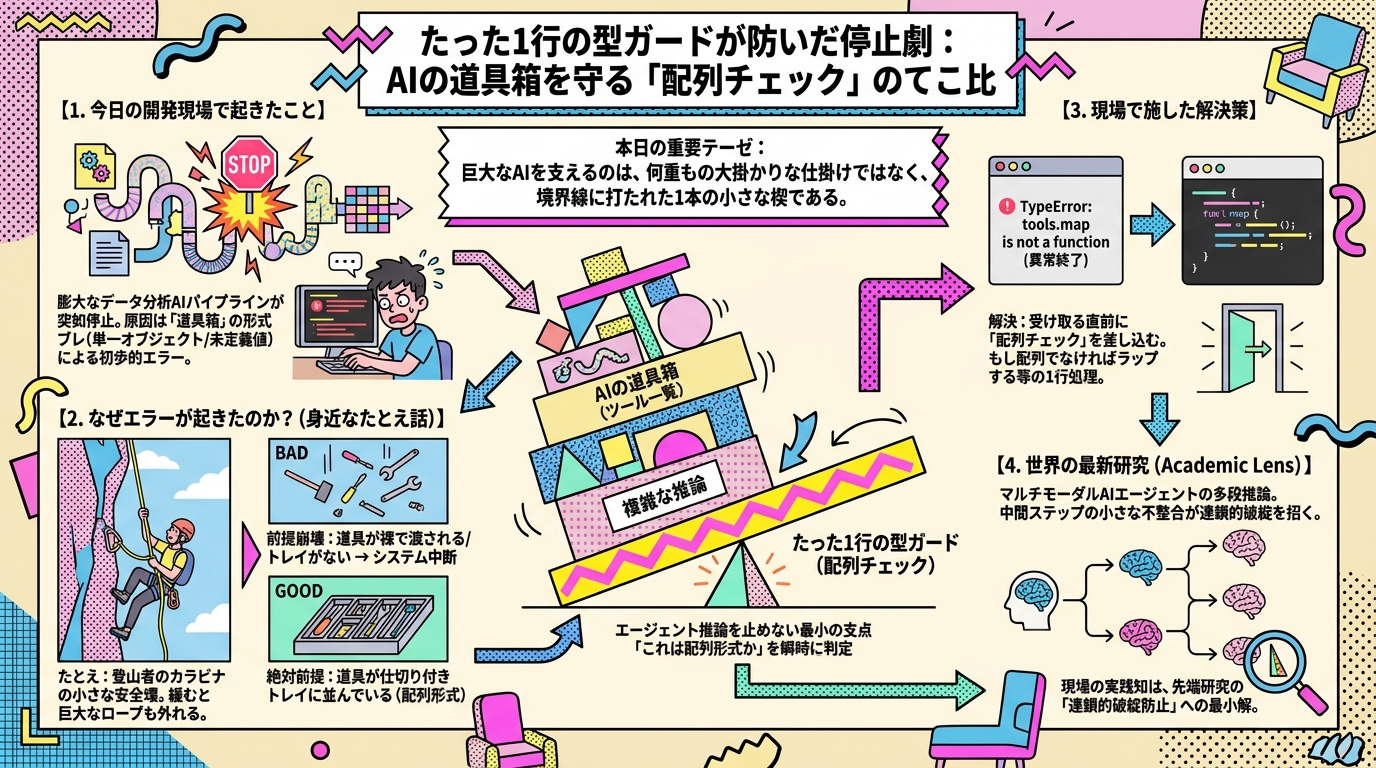
A Single-Line Type Guard That Prevented a Crash: The Leverage Ratio of 'Array Checks' in Protecting the AI's Toolbox