THE SCHOOL OF KAMOS
Connecting Real-world Dev & Academic Intelligence with Intuitive Metaphors
A Hybrid Control Architecture Bridging Free-Form Screen Navigation and Lean, Precision Execution
Unifying the pipeline from Computer Use video capture and idle-wait trimming to official Illustrator MCP integration
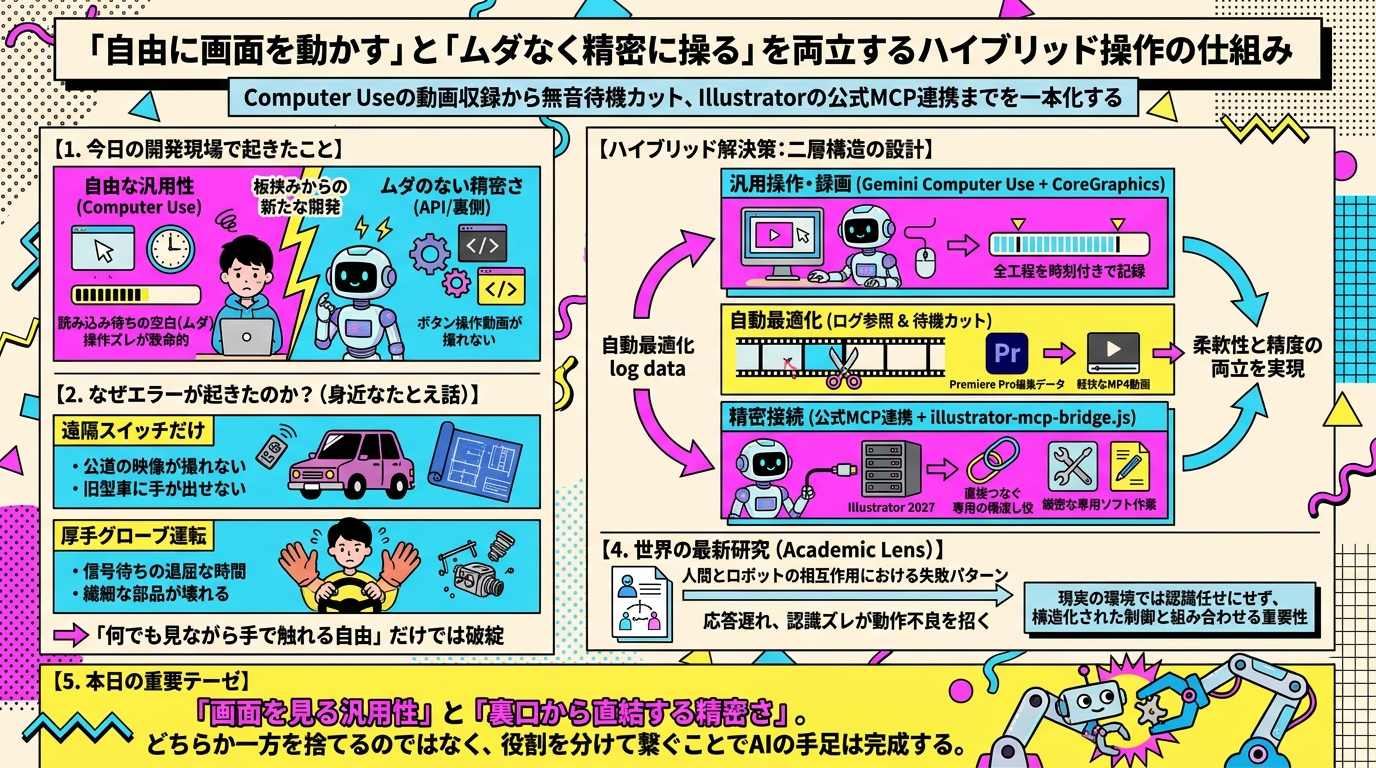
'We want AI to operate any app or browser just like a human and capture the whole process as a walkthrough video.' While that request echoed from the field, a harsher reality stood in the way. When AI watches the screen to move the mouse, long loading pauses bleed straight into the footage, and in specialized software, a microscopic slip triggers fatal errors. Yet relying purely on under-the-hood programmatic calls makes it impossible to film even a single button click. Open-ended versatility versus lean precision—caught between these two competing imperatives, a new engineering effort began.
Why does choosing just one approach fall short? Imagine trying to film scenic footage from a car while simultaneously fine-tuning its chassis. If you rely solely on factory blueprints and remote switches, you can never capture real-world footage on open roads, nor can you touch vintage models lacking dedicated switches. Conversely, what happens if you sit in the driver's seat wearing thick racing gloves and try to adjust microscopic engine screws by hand while filming the scenery? Tedious stops at red lights fill up the recording tape, and a slight slip of the hand damages delicate components. The freedom to 'see anything and touch it manually' cannot escape wasted wait times and physical clumsiness. On the engineering frontlines, forcing general-purpose screen clicking and pro-grade precision work into a single method inevitably breaks down.
To resolve this, the team arrived at a two-tier hybrid architecture that multiplies the strengths of both approaches. First, for general screen operation and capture (/record and /computer), Gemini Computer Use is paired with macOS CoreGraphics drivers so the AI actively navigates the UI while logging every step with timestamps. Immediately afterward, an export tool cross-references the action log, automatically trimming away the 'red-light' idle pauses from the footage to output clean Premiere Pro edit files alongside a crisp MP4 video. Second, for specialized software demanding pinpoint accuracy like Adobe Illustrator 2027, the system bypasses mouse emulation entirely, routing through a dedicated bridge (illustrator-mcp-bridge.js) directly into the official MCP server. The agility to film on the open road paired with direct diagnostic-port control in the pit—by dividing these roles, the system achieves both flexibility and precision.
"Visual versatility on the surface, direct precision through the backdoor. Instead of sacrificing one for the other, dividing and connecting their roles completes the AI's hands and feet."Key Takeaway
📖 1-Minute Lexicon
Technology that enables AI to operate a computer by visually reading the screen and controlling the mouse and keyboard just like a human.
An open standard for securely and uniformly connecting AI directly to external software, enabling precise command execution and data exchange.
Hybrid Autonomous Control Bridging Free-Form UI Navigation and Precision Direct Integration
Live Frontier Pulse: Real-World AI Trends
Why 'Smells Like AI' Backlash Is Heating Up on Social Media
This report examines rising pushback on social media against the uncanny, formulaic feel of AI-generated content—often dismissed as 'smelling like AI.' As the technology matures, merely generating output is no longer enough; creators are increasingly judged on whether their work feels natural, nuanced, and effortless to the audience.
Sakana AI Eyes Autumn 2027 IPO in What Could Be Japan's Largest Startup Listing and First GenAI Debut
Sakana AI, a leading Tokyo-based generative AI startup, is reportedly targeting a public listing as early as autumn 2027. Projected to be Japan's first generative AI IPO and among the nation's largest startup debuts, the milestone signals that Japan's AI sector is entering a new era of commercialization and market maturity.
How Does This Connect to Global Frontier Research?
This paper analyzes failure patterns in human-robot interaction discovered over several years of deploying foundation-model robots in real-world environments. When autonomous models perceive and act within physical spaces, accumulated latency and minor perceptual drifts frequently compound into unexpected malfunctions. Our engineering effort encountered the exact same challenge: relying solely on visual screen perception led to bloated wait times and subtle execution errors. The study's key insight—that real-world deployment cannot rely on raw perception alone and must be paired with structured control—resonates deeply with our frontline solutions of automated video trimming and direct MCP integration.
When delegating computer operations to AI, why did the engineering team combine 'visual screen clicking' with 'direct connection to specialized software (MCP)'?
Past School Paper Backnumbers
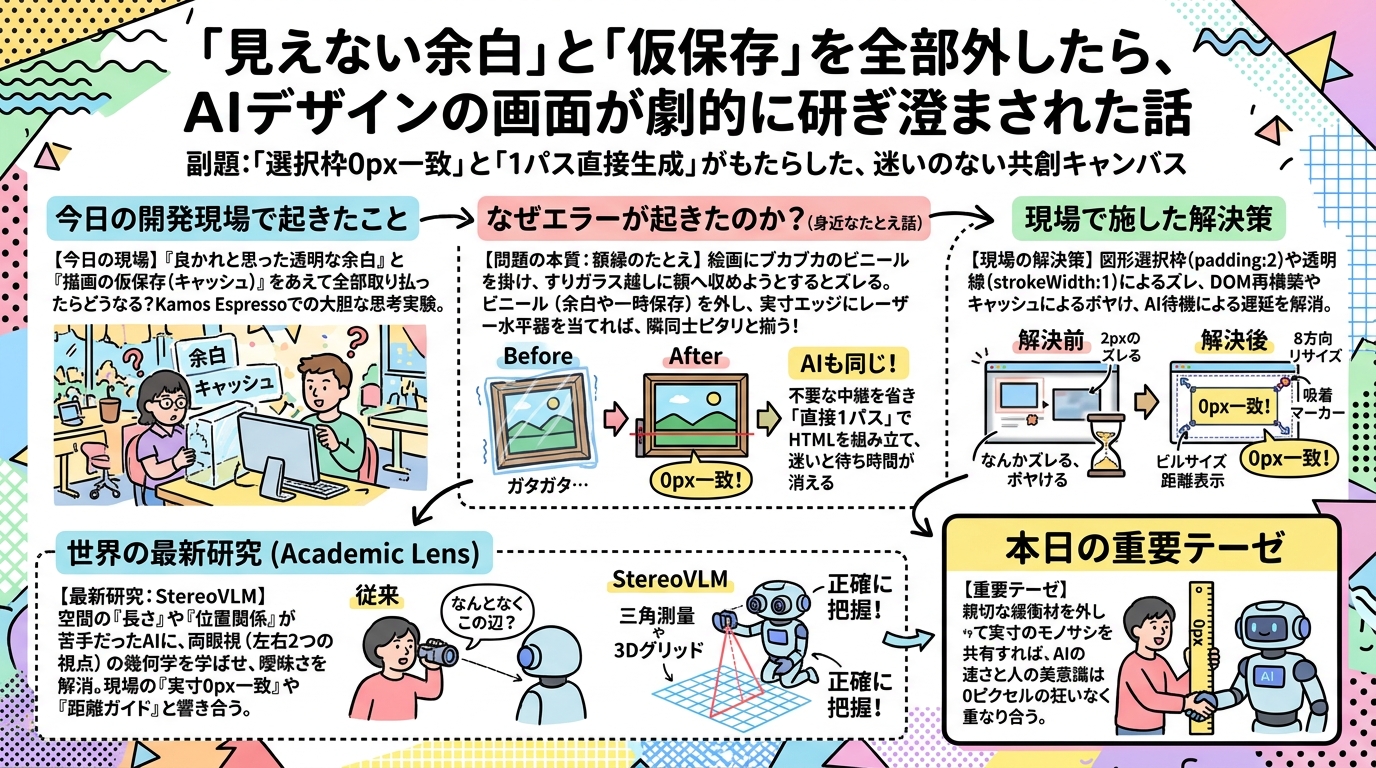
How Stripping Away Invisible Padding and Caching Dramatically Sharpened Our AI Design Canvas
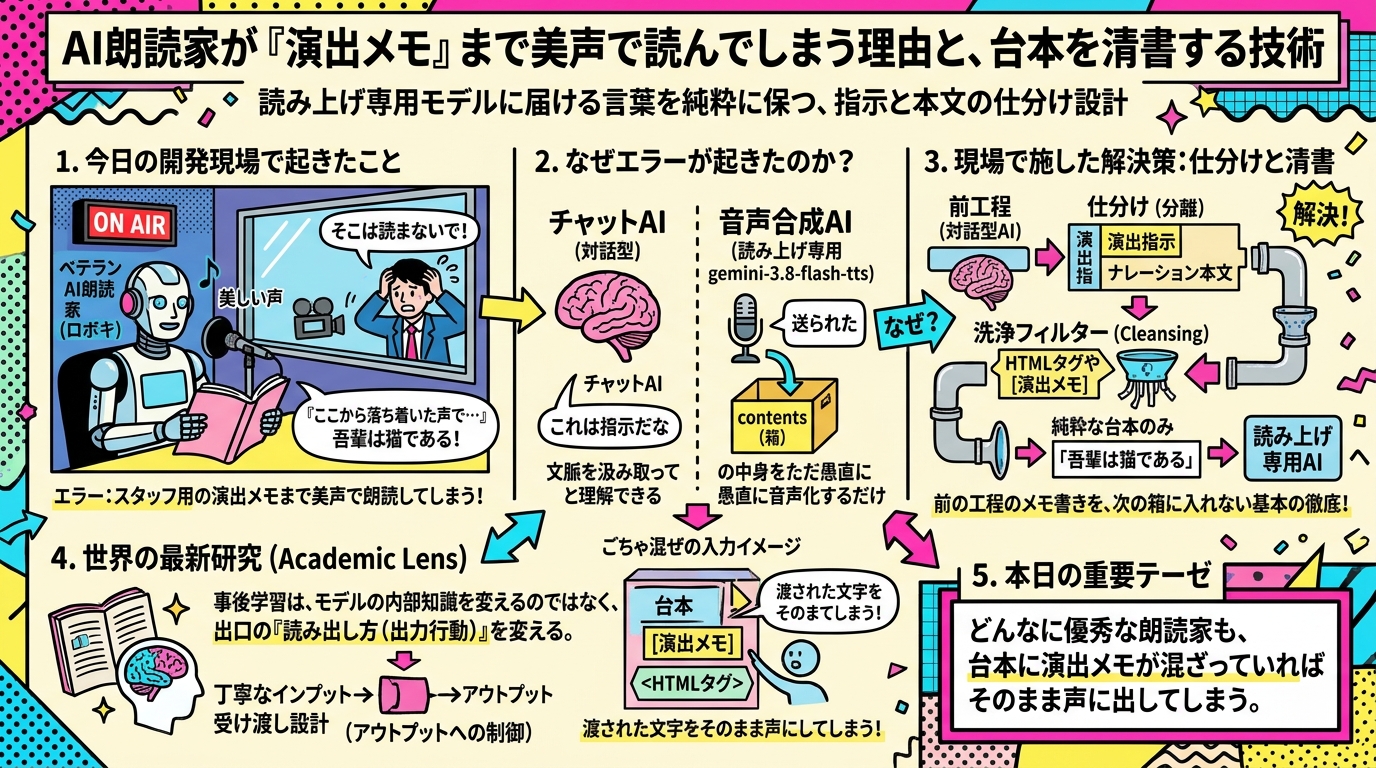
Why an AI Narrator Reads 'Stage Directions' Aloud—and the Art of Scrubbing the Script Clean
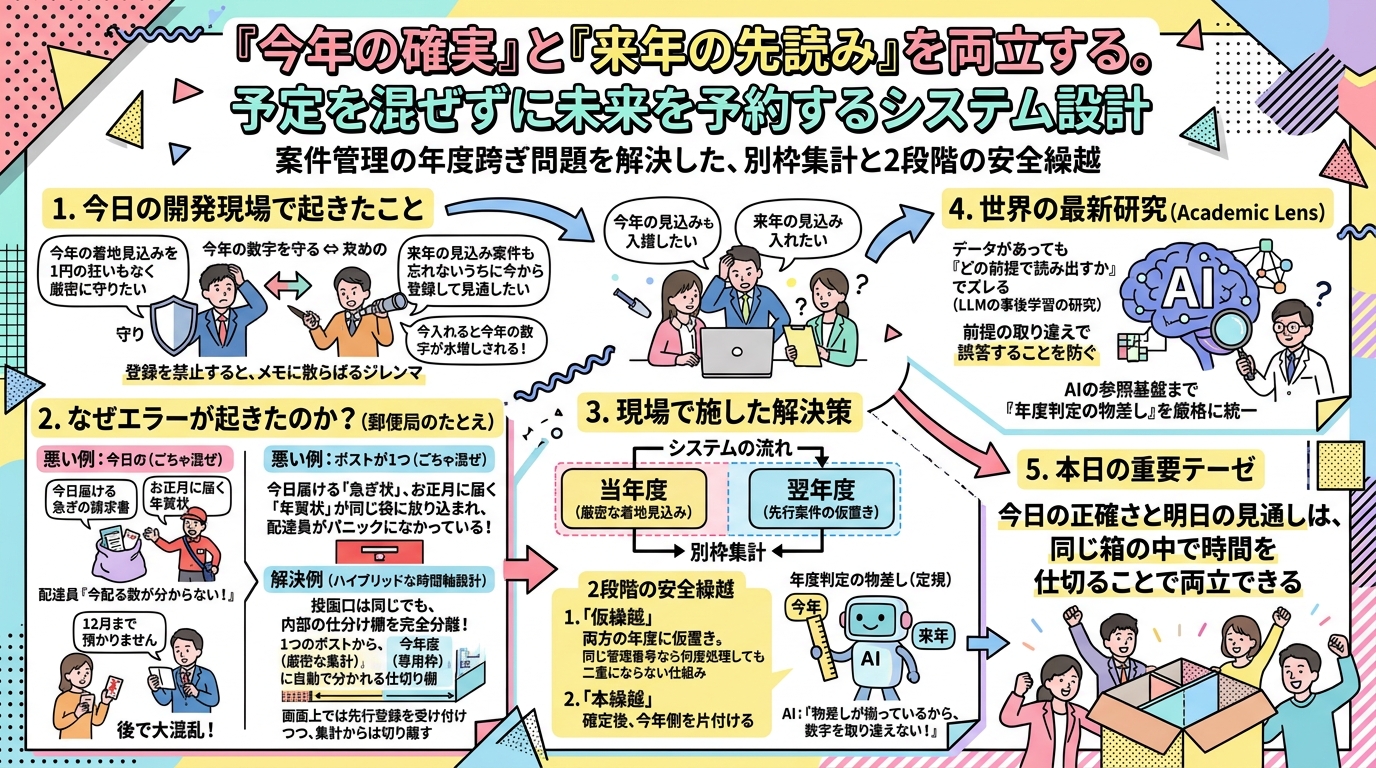
Balancing 'This Year's Certainty' with 'Next Year's Foresight': System Design That Reserves the Future Without Mixing Schedules
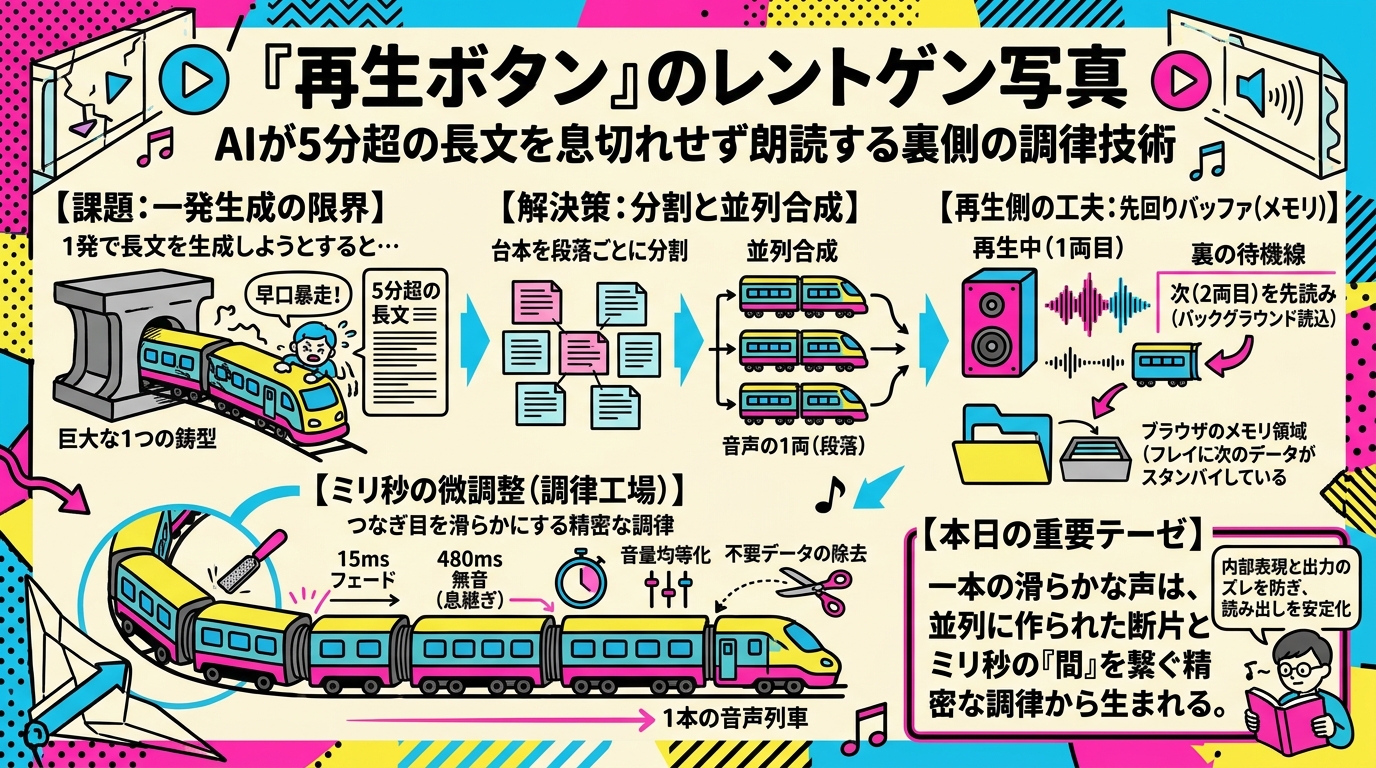
An X-Ray of the Play Button: The Precision Tuning Behind Unhurried Five-Minute AI Narration
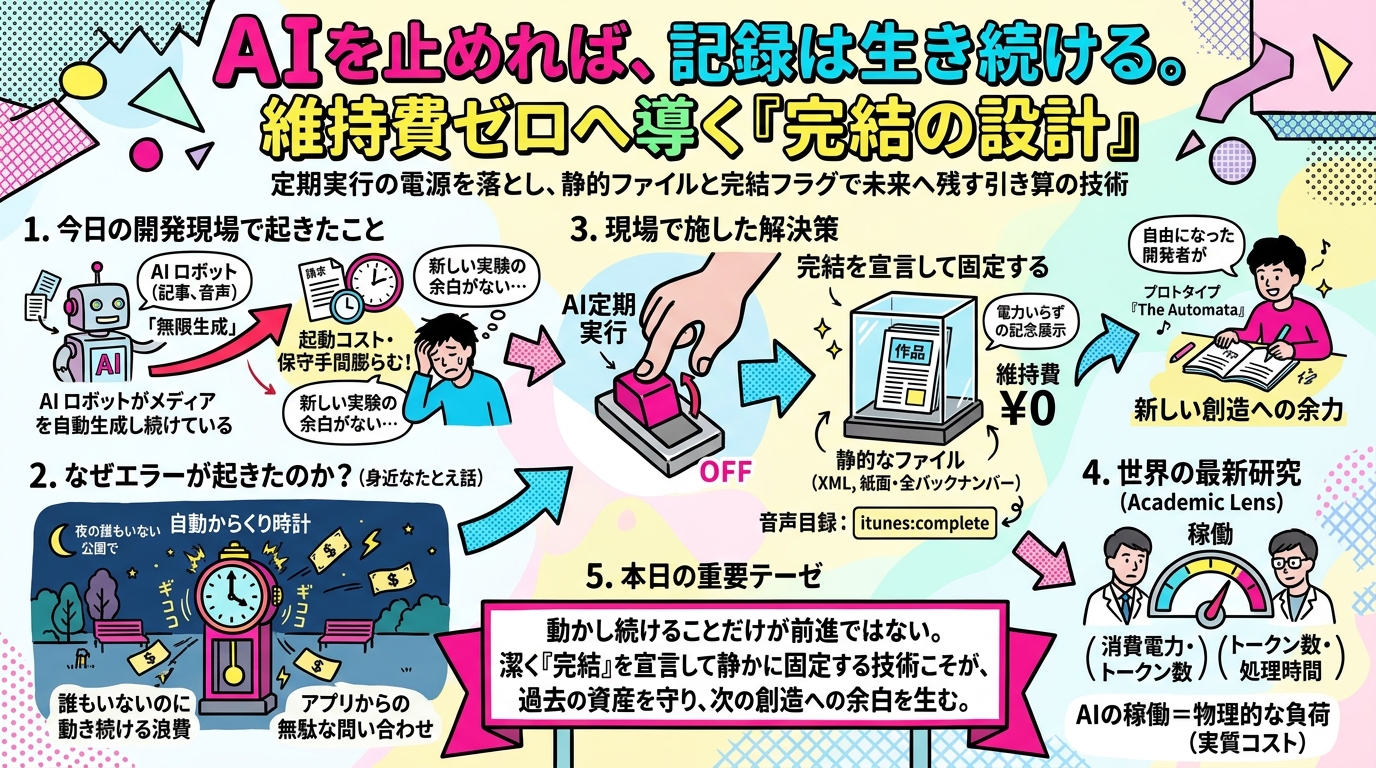
Stop the AI, and the Archive Lives On: Designing for Completion at Zero Maintenance Cost
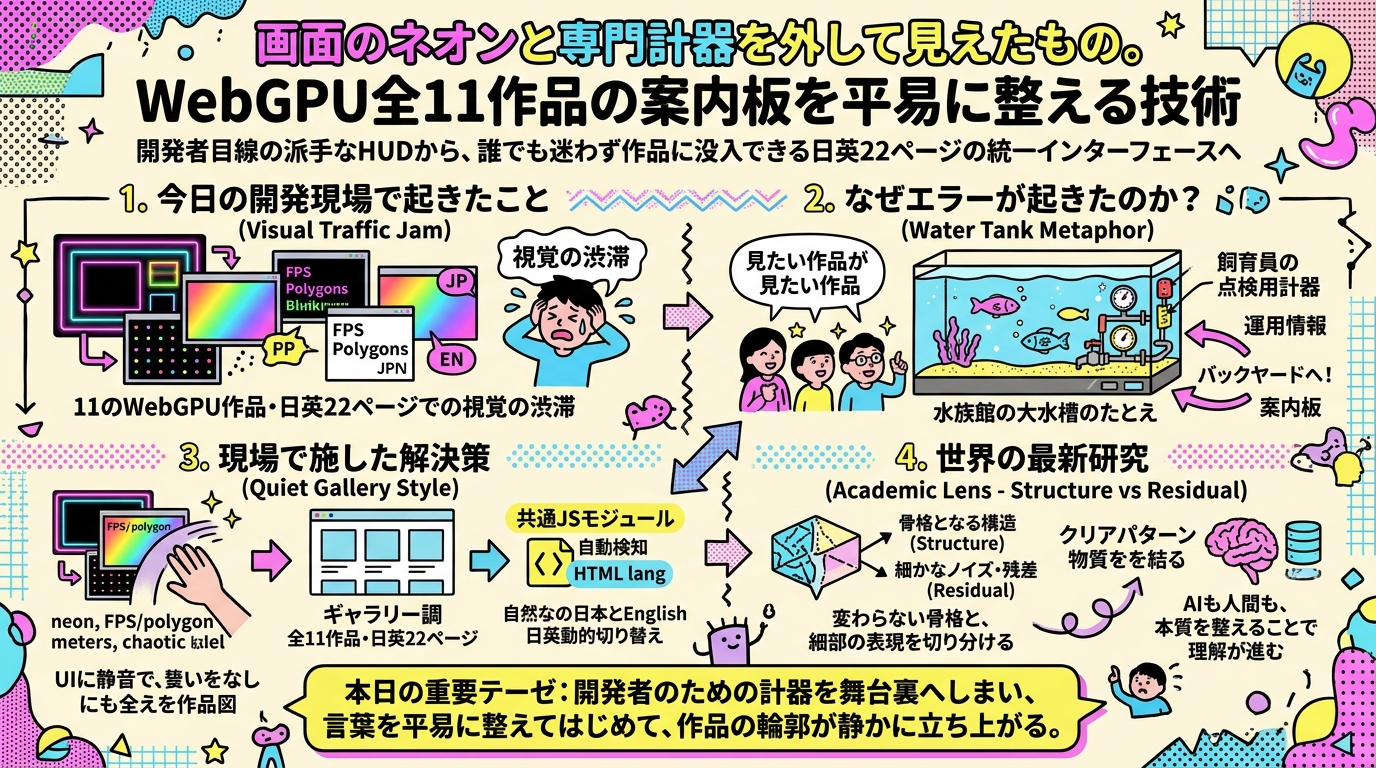
What Appeared When We Removed the Neon and Technical Gauges: Crafting Effortless Wayfinding Across 11 WebGPU Works
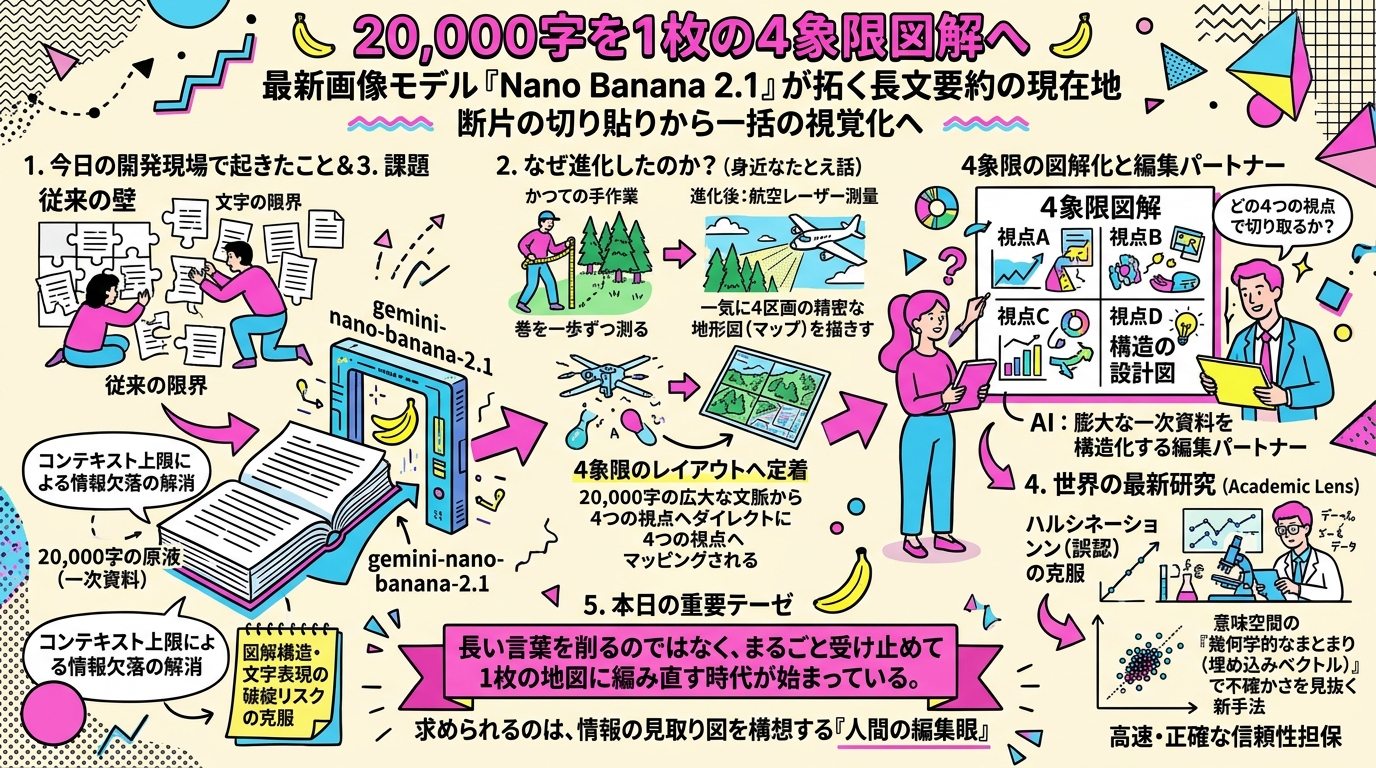
20,000 Characters Distilled into a Single Four-Quadrant Diagram: Where Long-Form Summarization Stands Today with the Latest Image Model, Nano Banana 2.1
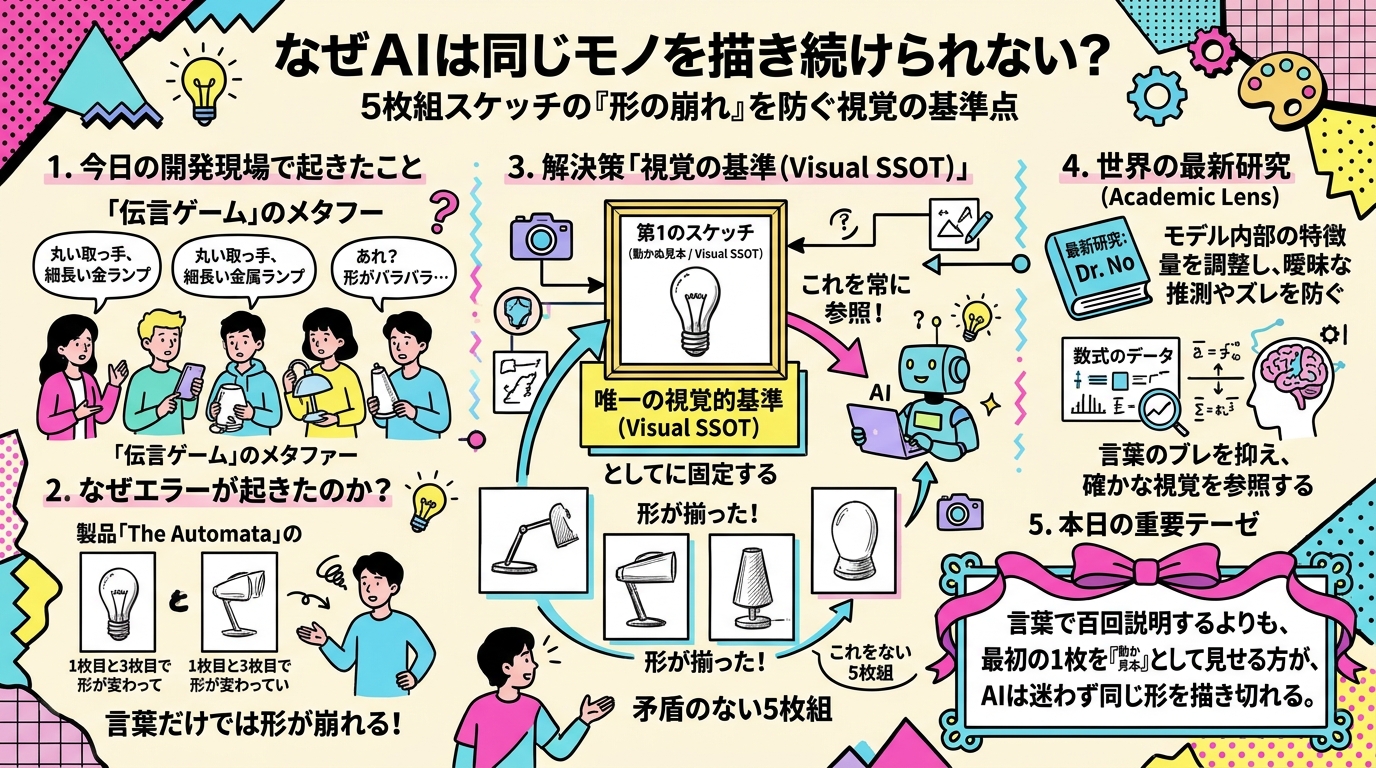
Why Can't AI Keep Drawing the Same Object? A Visual Anchor to Prevent Structural Drift in 5-Panel Sketches
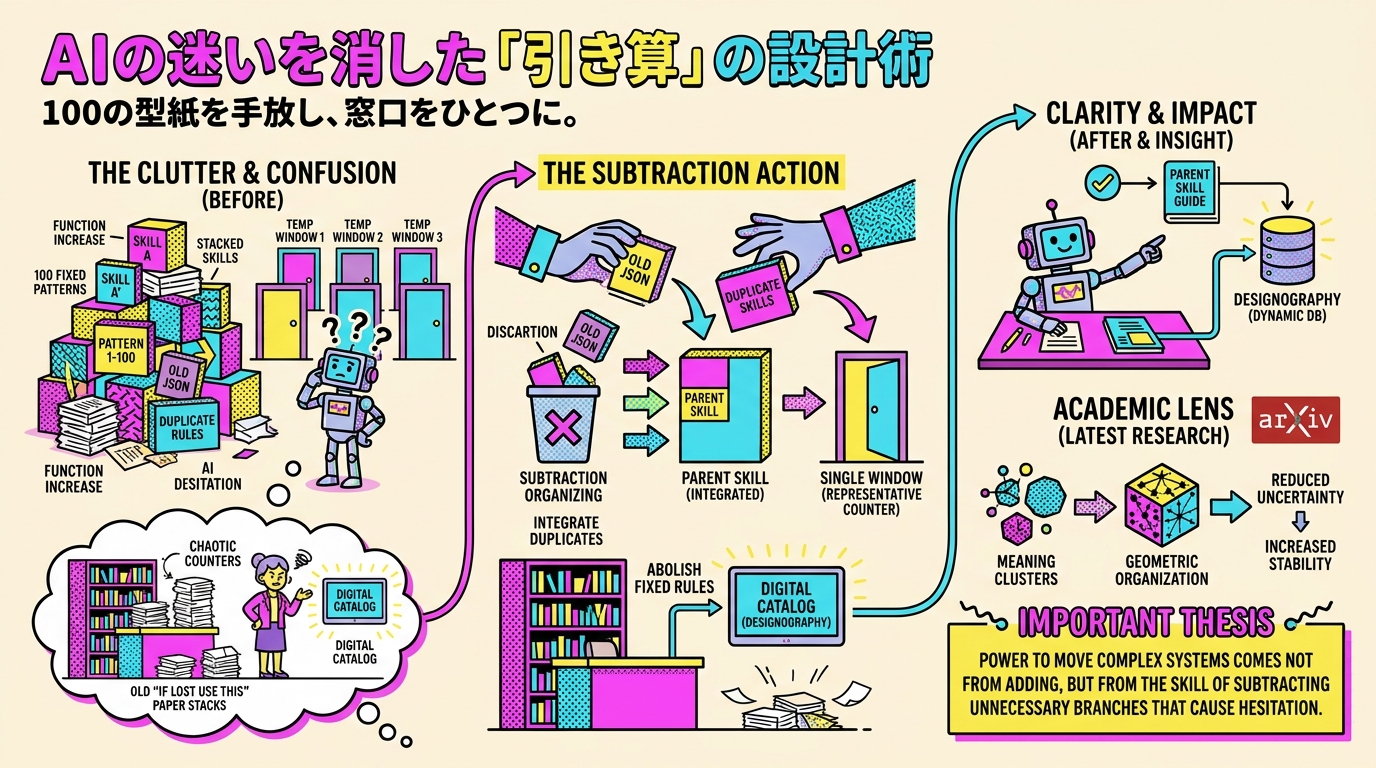
Letting Go of 100 Templates for a Single Desk: The Art of Subtractive Design That Eliminated AI Hesitation
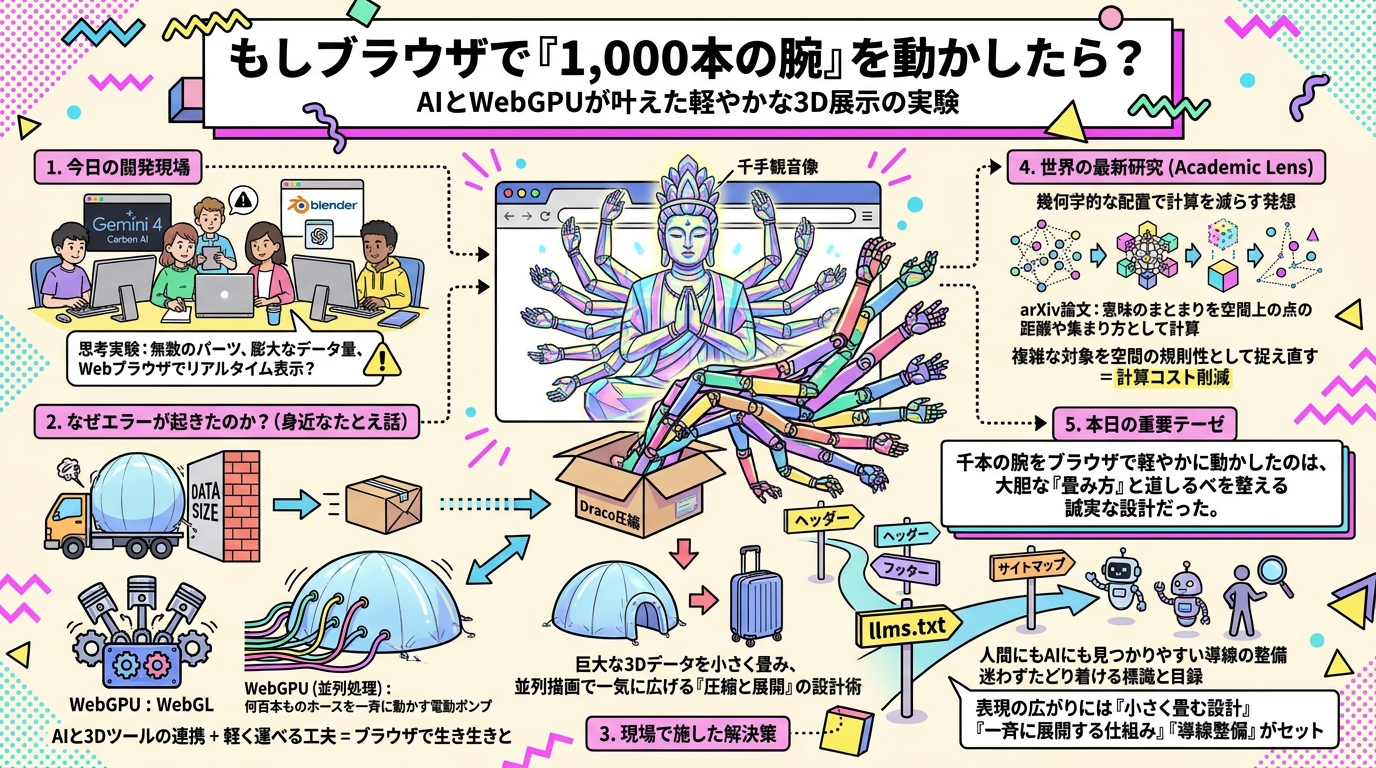
What If You Animated '1,000 Arms' in a Browser? A Lightweight 3D Exhibition Experiment Powered by AI and WebGPU
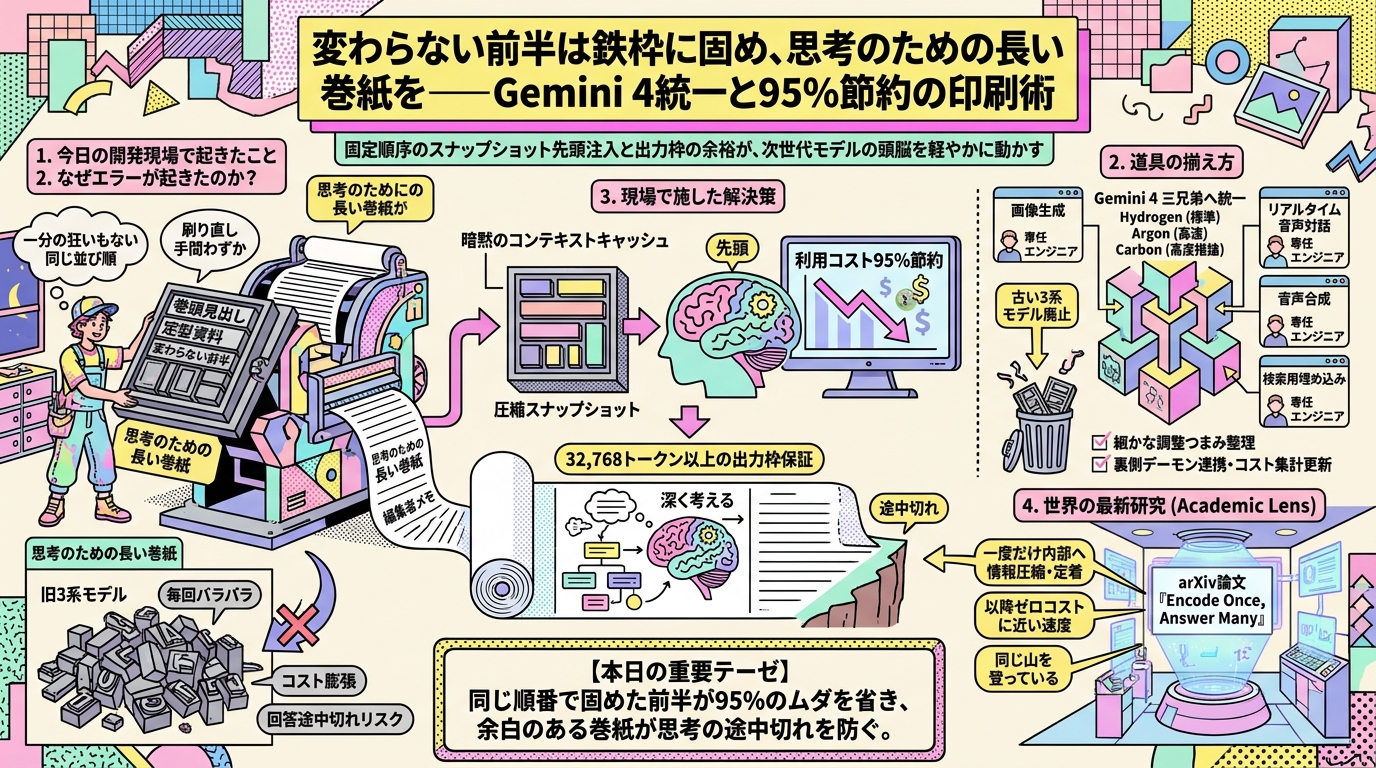
Locking the Constant Lead in Iron, Unrolling Long Scrolls for Thought — Gemini 4 Unification and the Art of 95% Printing Savings
Current
A Hybrid Control Architecture Bridging Free-Form Screen Navigation and Lean, Precision Execution
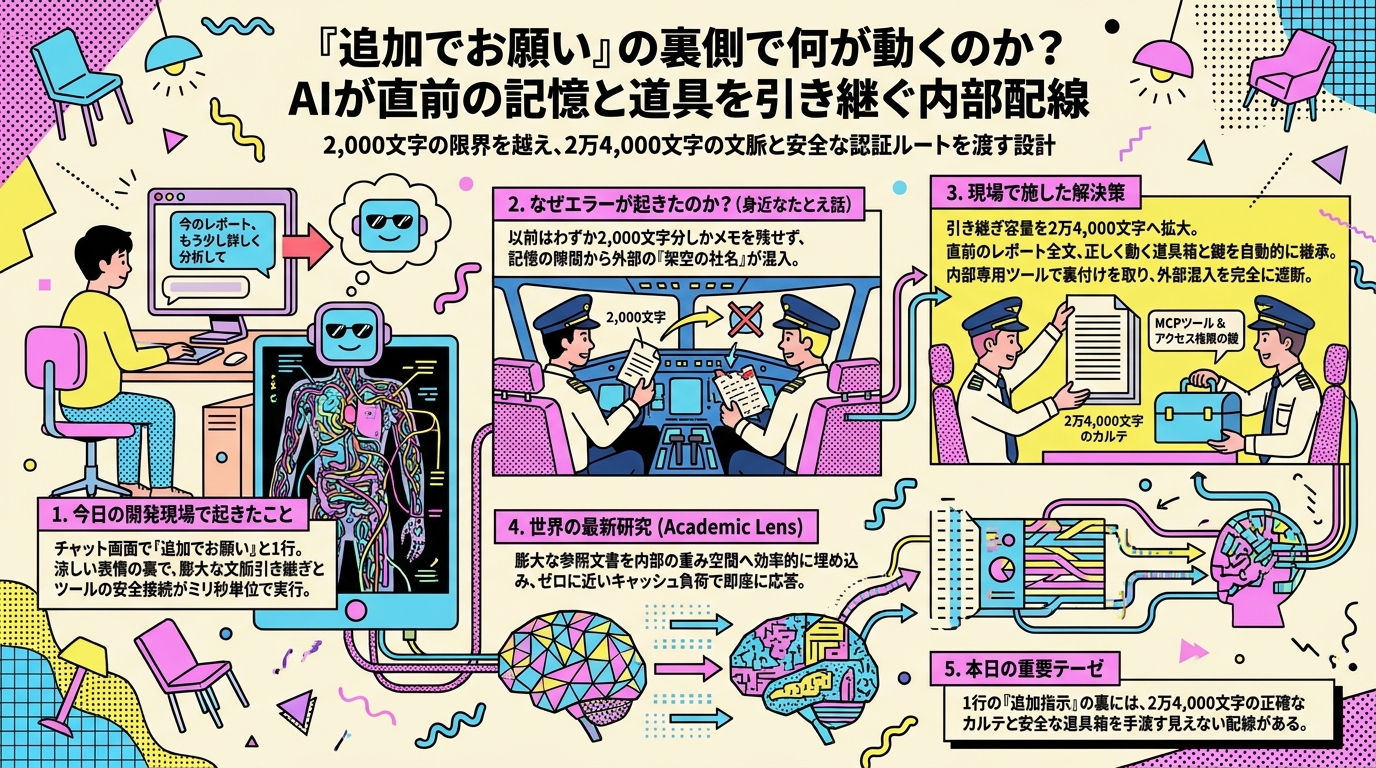
Behind "Just One More Request": The Internal Wiring That Hands Off Memory and Tools Between AIs