THE SCHOOL OF KAMOS
Connecting Real-world Dev & Academic Intelligence with Intuitive Metaphors
Locking the Constant Lead in Iron, Unrolling Long Scrolls for Thought — Gemini 4 Unification and the Art of 95% Printing Savings
Prepending fixed-order snapshots and guaranteeing generous output headroom keep next-generation model minds moving with effortless agility
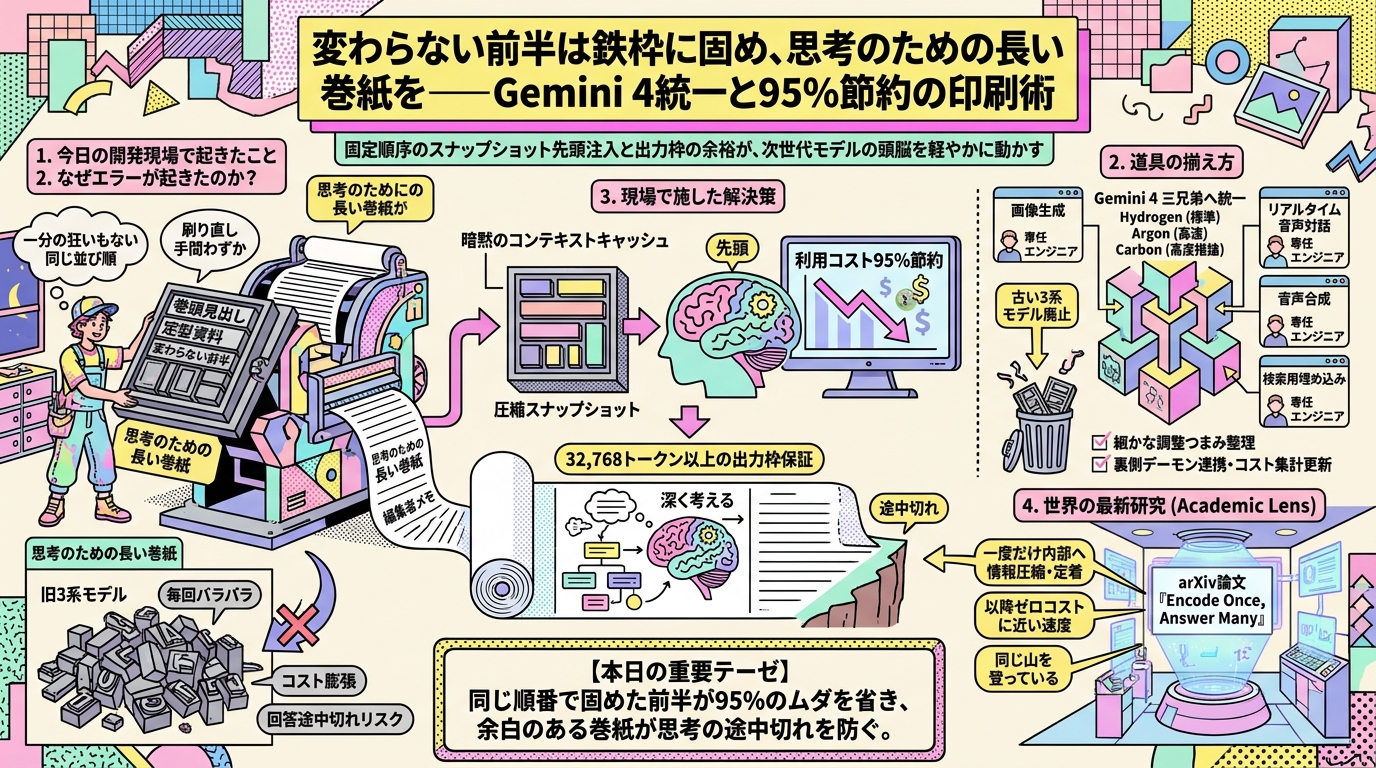
In a quiet letterpress print shop just before dawn, a veteran typesetter facing vast pages reprinted daily never picks up lead type from the very first character all over again. The front matter—masthead headlines, recurring reference tables, and unchanging opening pages—is locked firmly into a sturdy iron chase in the exact same order without a hair's breadth of deviation. That way, no matter how many times the trailing pages are swapped out, reprinting takes only a fraction of the effort. And before starting the press, the craftsman always loads an extra-long roll of paper into the machine—ensuring that even if the editor fills the margins with dense draft notes, the vital ending of the article is never cut off mid-sentence.
In truth, this allegory mirrors the exact architecture behind today's migration to the latest 'Gemini 4' models and our cache overhaul. When passing lengthy background knowledge to an AI, shifting the order on every request forces the model to read everything anew from page one. Enter 'Implicit Context Caching.' By locking a compressed snapshot in a fixed order right at the front of the conversation, the AI recognizes that it has already read the opening chapters—slashing usage costs by an astonishing 95%. Meanwhile, the print shop's extra-long paper roll corresponds to our 'guaranteed 32,768+ token output budget.' Because modern reasoning models deliberate deeply in their heads before writing a reply, that internal thought process consumes character headroom. By provisioning a generous scroll from the start, we eliminated the accident of a crucial answer cutting off after deep contemplation.
Our toolset itself underwent a thorough print-shop spring cleaning. We retired the legacy 3-series models scattered across our tools and unified our core text engines around the Gemini 4 trio: 'Hydrogen' as the standard workhorse, alongside 'Argon' and 'Carbon' for high-speed execution and advanced reasoning. At the same time, specialized capabilities—image generation, real-time voice dialogue, speech synthesis, and search embeddings—remain dedicated endpoints, much like specialist engineers at their own stations. We also pruned obsolete tuning knobs that no longer fit the latest spec, and updated both our backend daemon integrations and cost-accounting rate tables to the new baseline. With typesetting, paper length, and role allocation aligned from top to bottom, we now have an environment that runs decisively, swiftly, and economically.
"A front section locked in unchanging order eliminates 95% of waste, while a generous scroll keeps deep thought from cutting off mid-line."Key Takeaway
📖 1-Minute Lexicon
A mechanism where placing unchanging reference material in the exact same order at the start of a conversation lets the AI automatically recognize it as 'already read' and apply a steep discount to re-reading fees.
The invisible scratchpad budget an AI consumes to organize its reasoning internally before displaying its final response on screen.
Fixed-Order Caching and Generous Paper for Thought
Live Frontier Pulse: Real-World AI Trends
Japanese Government Weighs New Penalties to Curb AI Runaway Risks, Mandating Safety Measures for Model Providers (Business + IT)
Reports indicate the Japanese government is considering mandatory safety safeguards for foundation model providers—along with penalties for violations—to prevent AI misuse and runaway behavior. As rapidly advancing generative AI enters broader societal deployment, legal safety frameworks are moving into full gear.
Sakana AI Eyes IPO as Early as Fall 2027, Potentially Japan's First Listed Generative AI Startup
Tokyo-based AI developer Sakana AI is reportedly aiming for an initial public offering as early as autumn 2027. If realized, it would mark the first domestic listing for a generative AI startup in Japan, underscoring surging investor enthusiasm for homegrown AI foundation development.
How Does This Connect to Global Frontier Research?
Our engineering move—placing unchanging opening context in a fixed order at the front to skip redundant computation—aligns directly with the frontier of academic research. The arXiv paper 'Encode Once, Answer Many' proposes a method that, rather than re-reading long documents and inflating transient working memory each time, compresses and internalizes information into the model once, enabling it to answer countless follow-up questions at near-zero marginal cost. Both our production caching strategy and the research frontier's vision of 'reusing encoded memory as a lasting asset' are climbing the same mountain toward smarter, more economical AI.
What is the most important technique for activating 'Implicit Context Caching' so an AI can answer cheaply and quickly when given long background documents?
Past School Paper Backnumbers
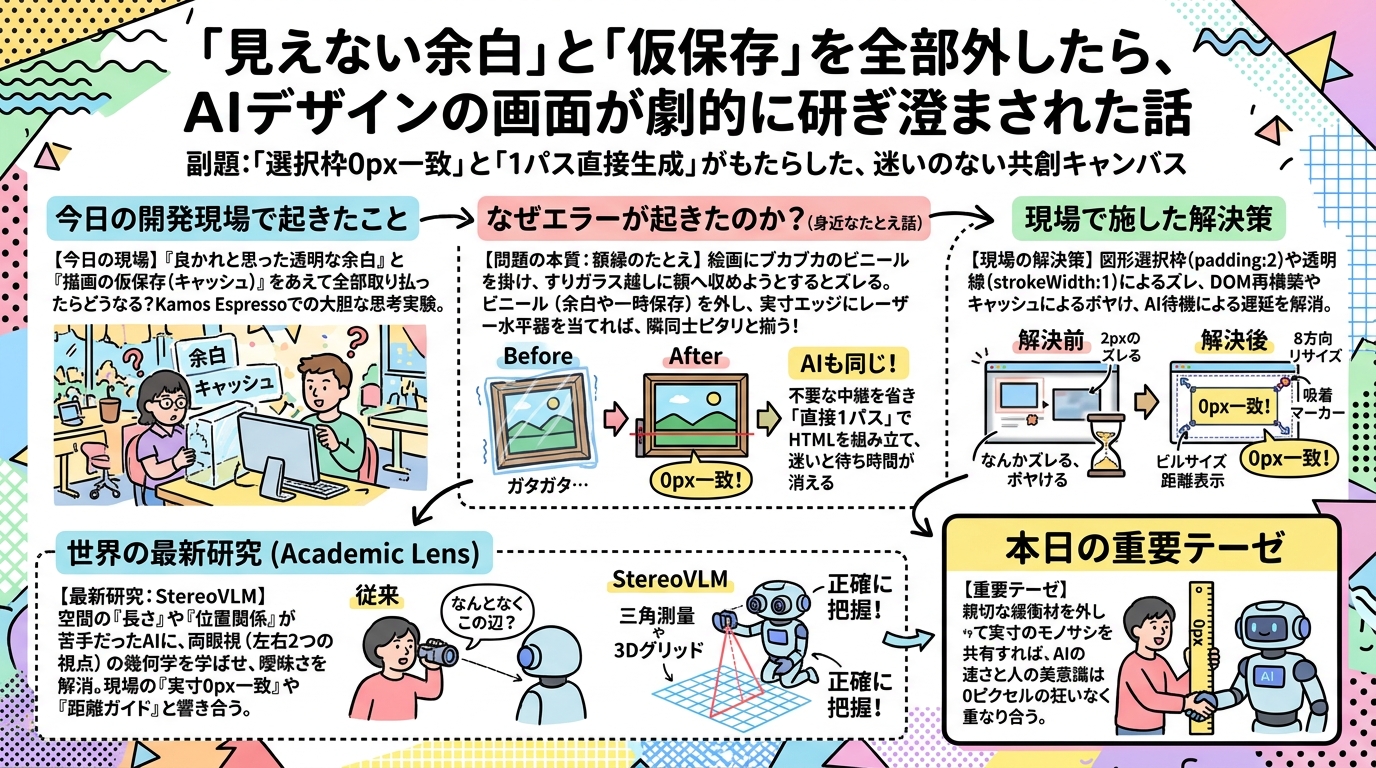
How Stripping Away Invisible Padding and Caching Dramatically Sharpened Our AI Design Canvas
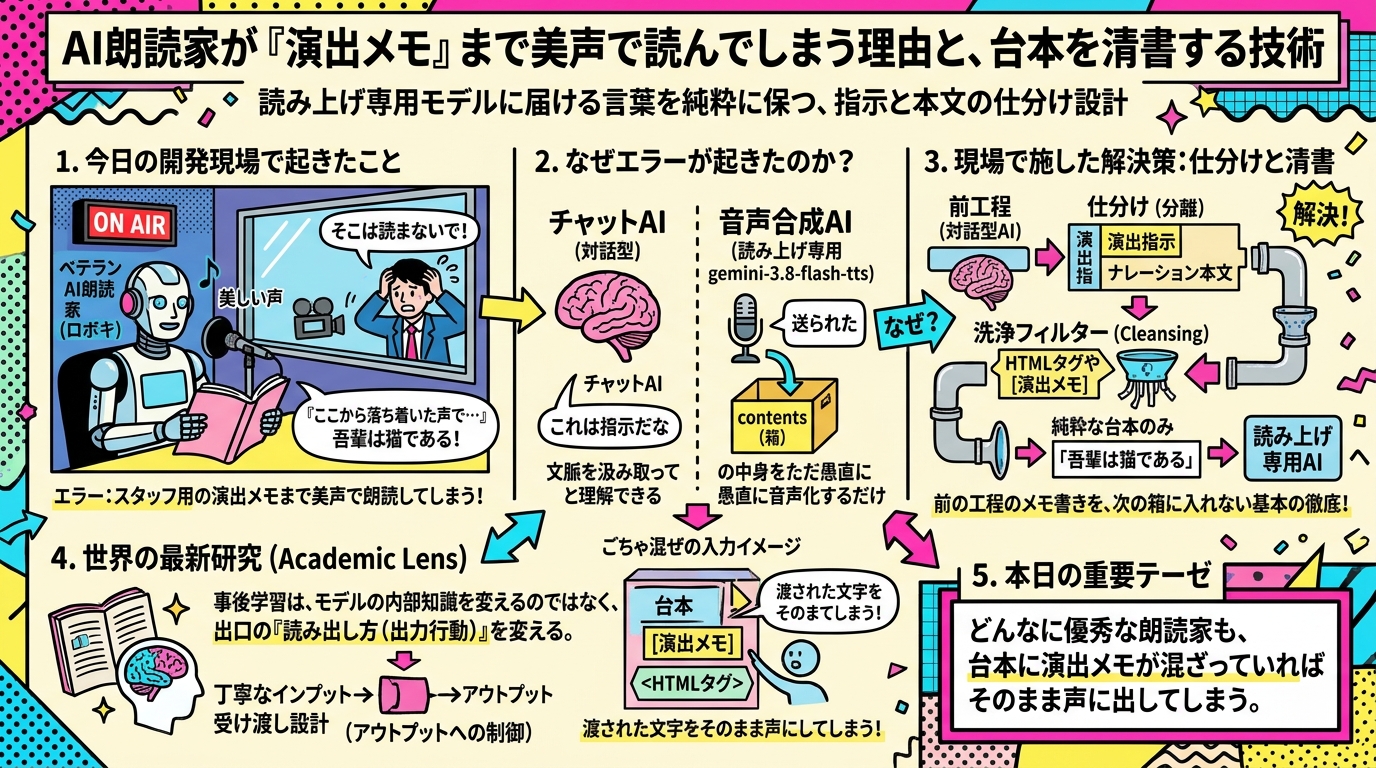
Why an AI Narrator Reads 'Stage Directions' Aloud—and the Art of Scrubbing the Script Clean
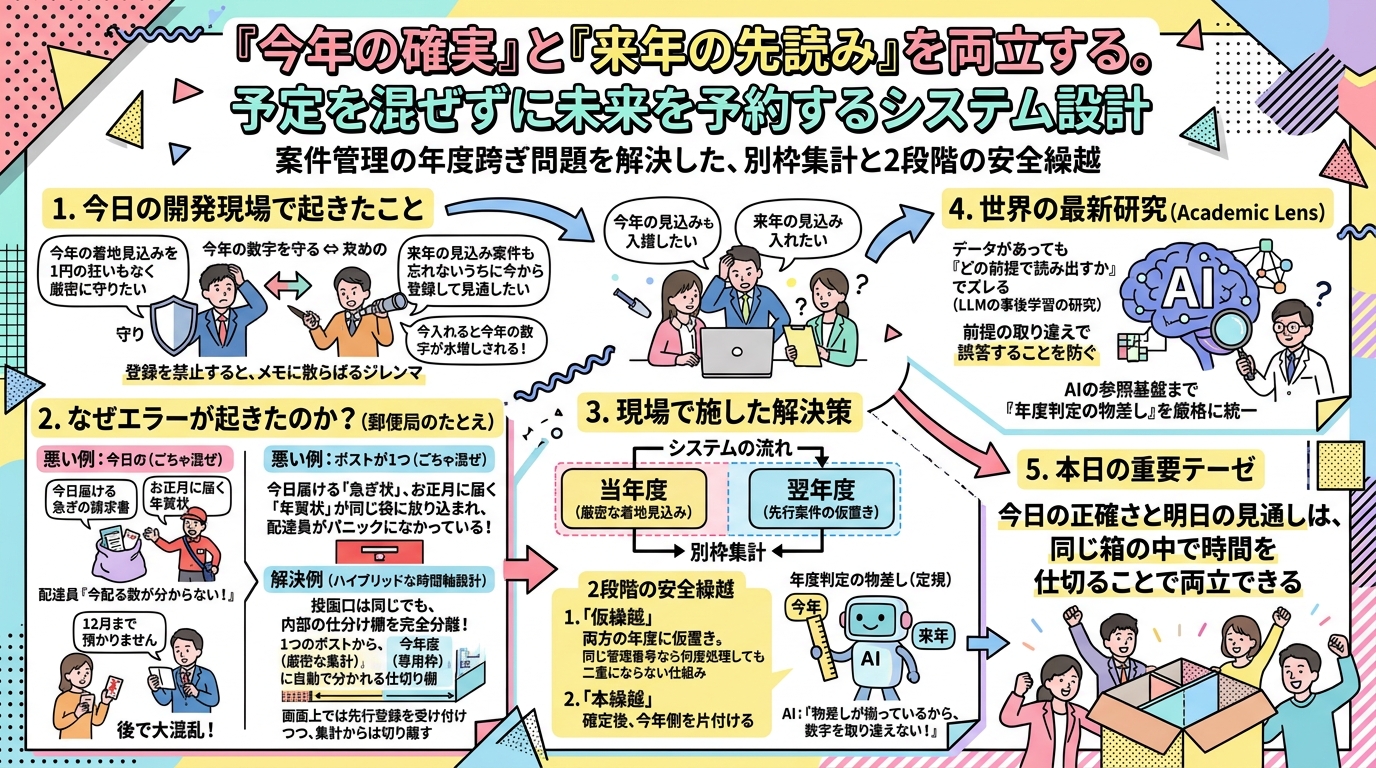
Balancing 'This Year's Certainty' with 'Next Year's Foresight': System Design That Reserves the Future Without Mixing Schedules
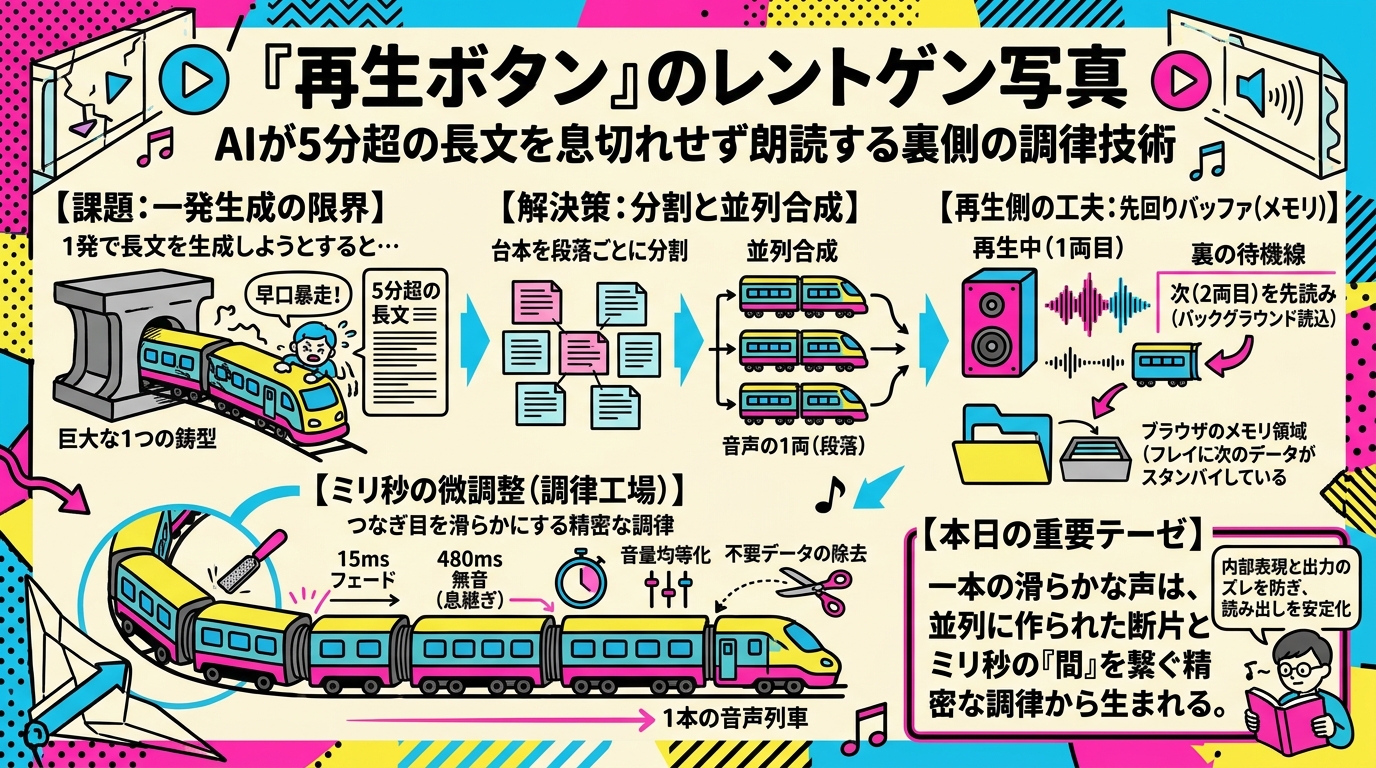
An X-Ray of the Play Button: The Precision Tuning Behind Unhurried Five-Minute AI Narration
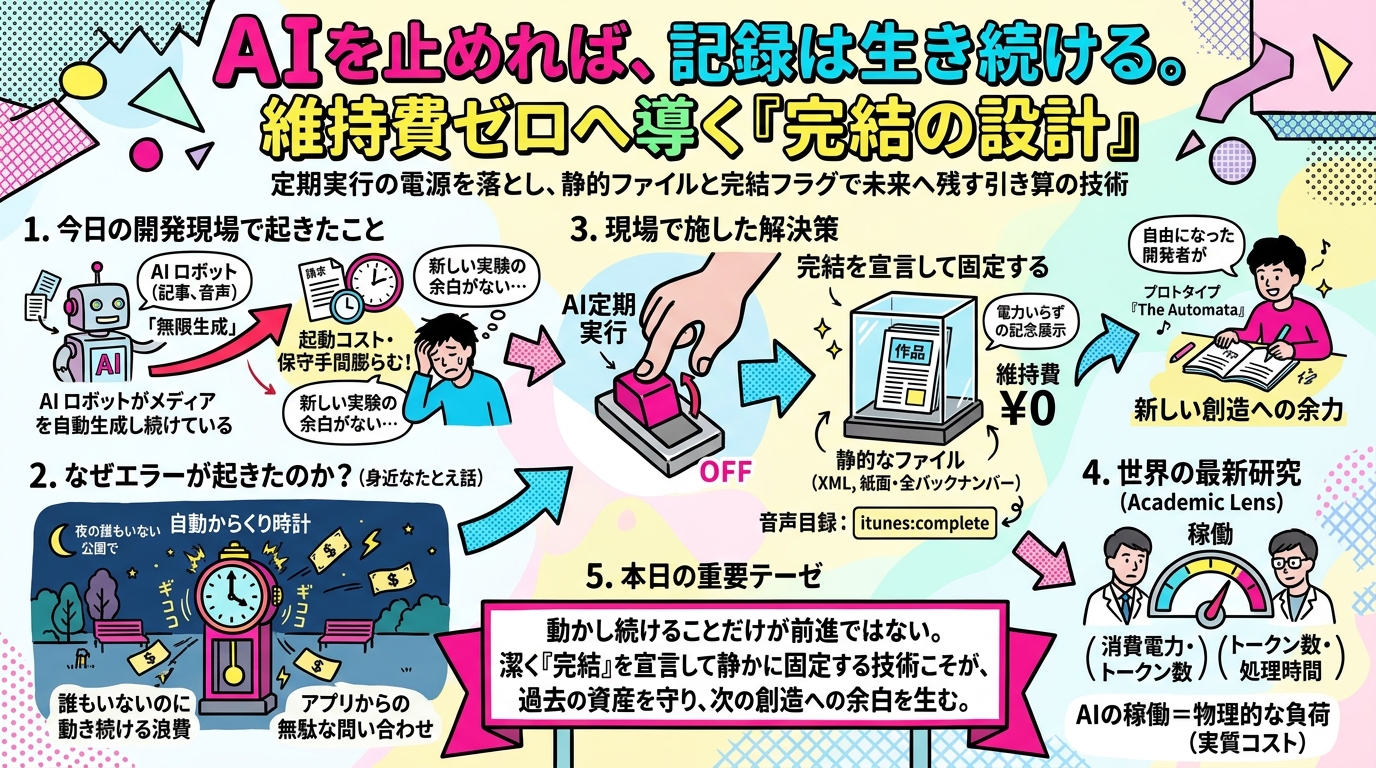
Stop the AI, and the Archive Lives On: Designing for Completion at Zero Maintenance Cost
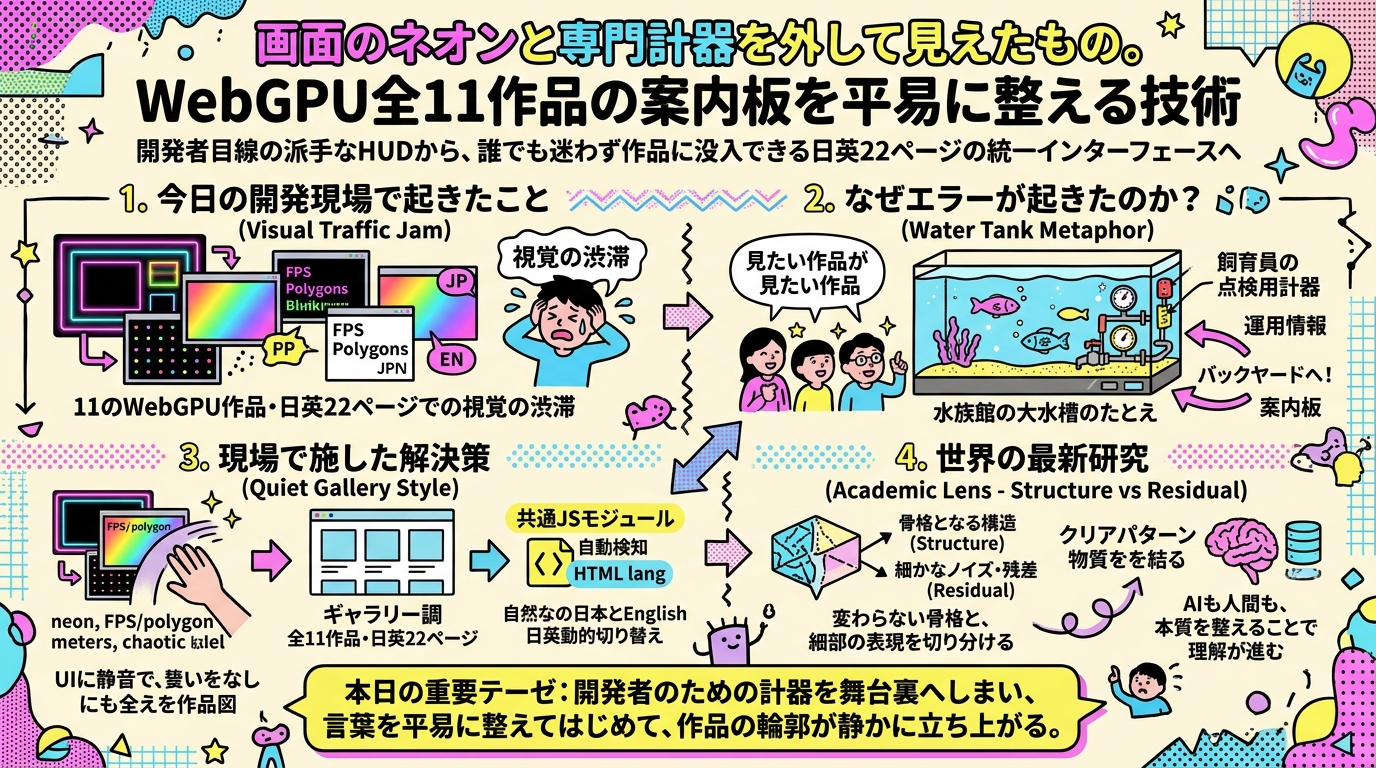
What Appeared When We Removed the Neon and Technical Gauges: Crafting Effortless Wayfinding Across 11 WebGPU Works

20,000 Characters Distilled into a Single Four-Quadrant Diagram: Where Long-Form Summarization Stands Today with the Latest Image Model, Nano Banana 2.1
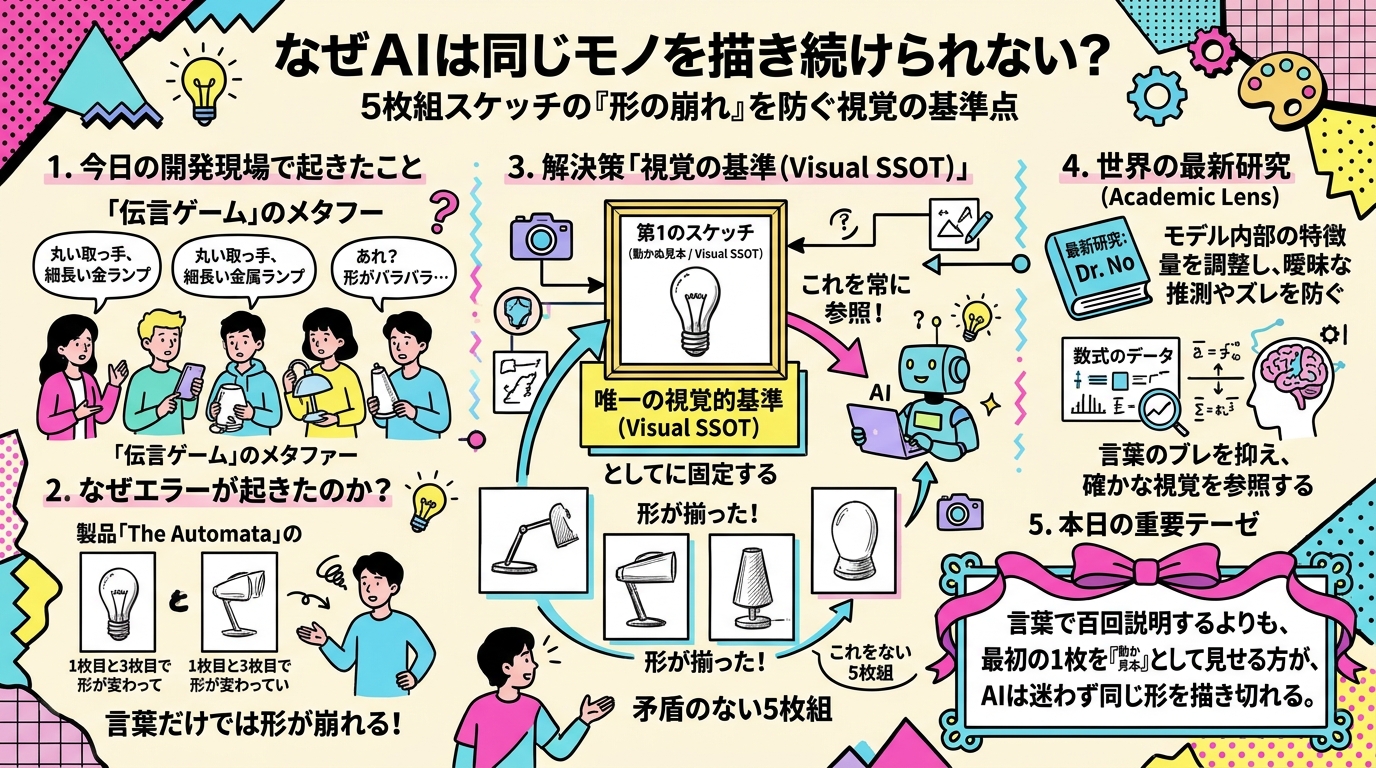
Why Can't AI Keep Drawing the Same Object? A Visual Anchor to Prevent Structural Drift in 5-Panel Sketches
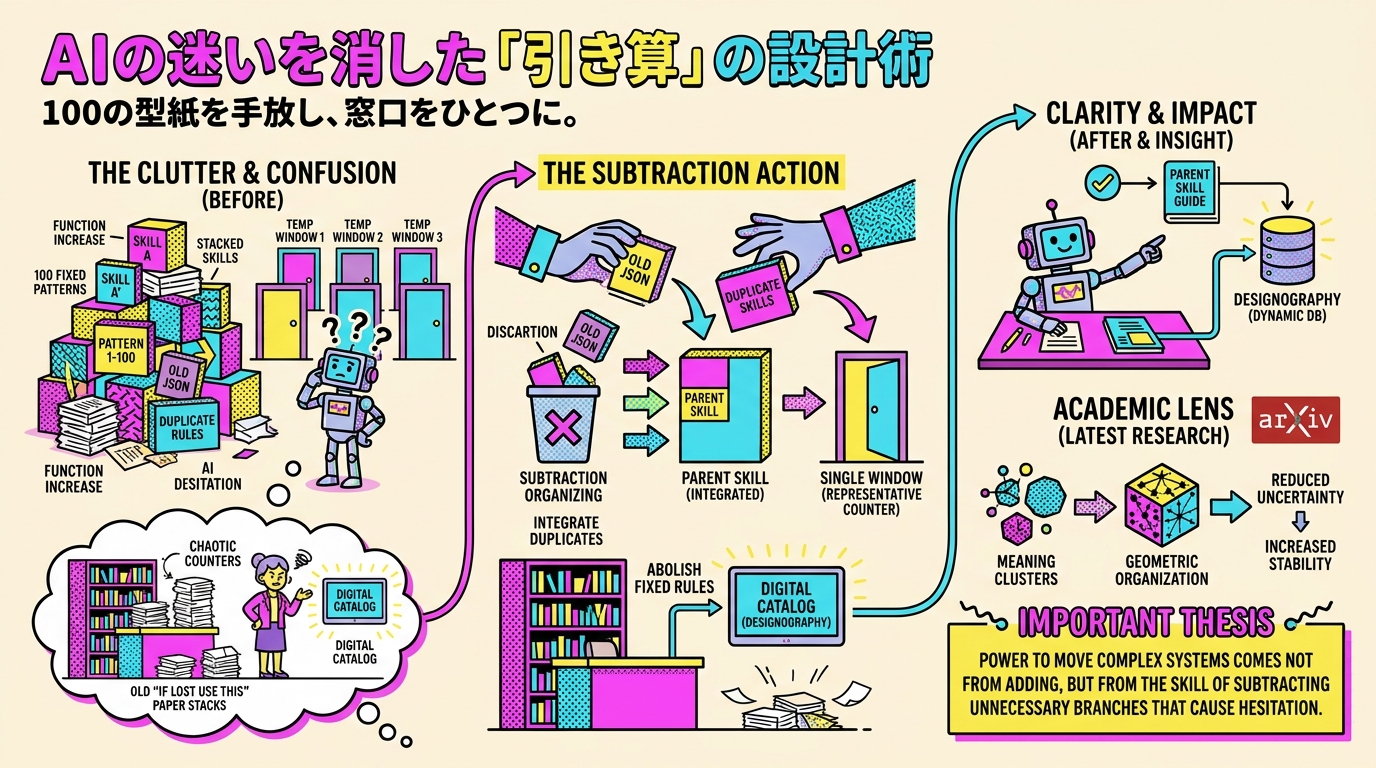
Letting Go of 100 Templates for a Single Desk: The Art of Subtractive Design That Eliminated AI Hesitation
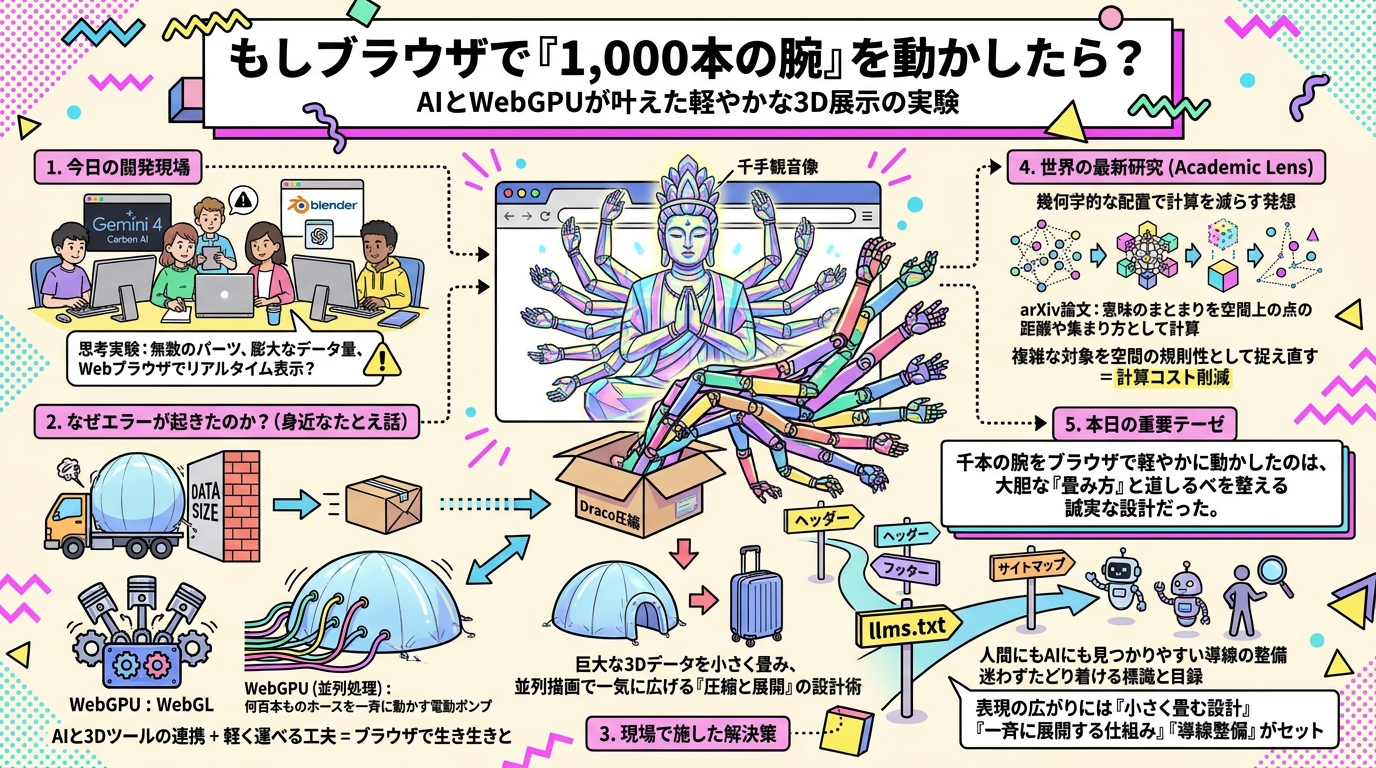
What If You Animated '1,000 Arms' in a Browser? A Lightweight 3D Exhibition Experiment Powered by AI and WebGPU
Current
Locking the Constant Lead in Iron, Unrolling Long Scrolls for Thought — Gemini 4 Unification and the Art of 95% Printing Savings
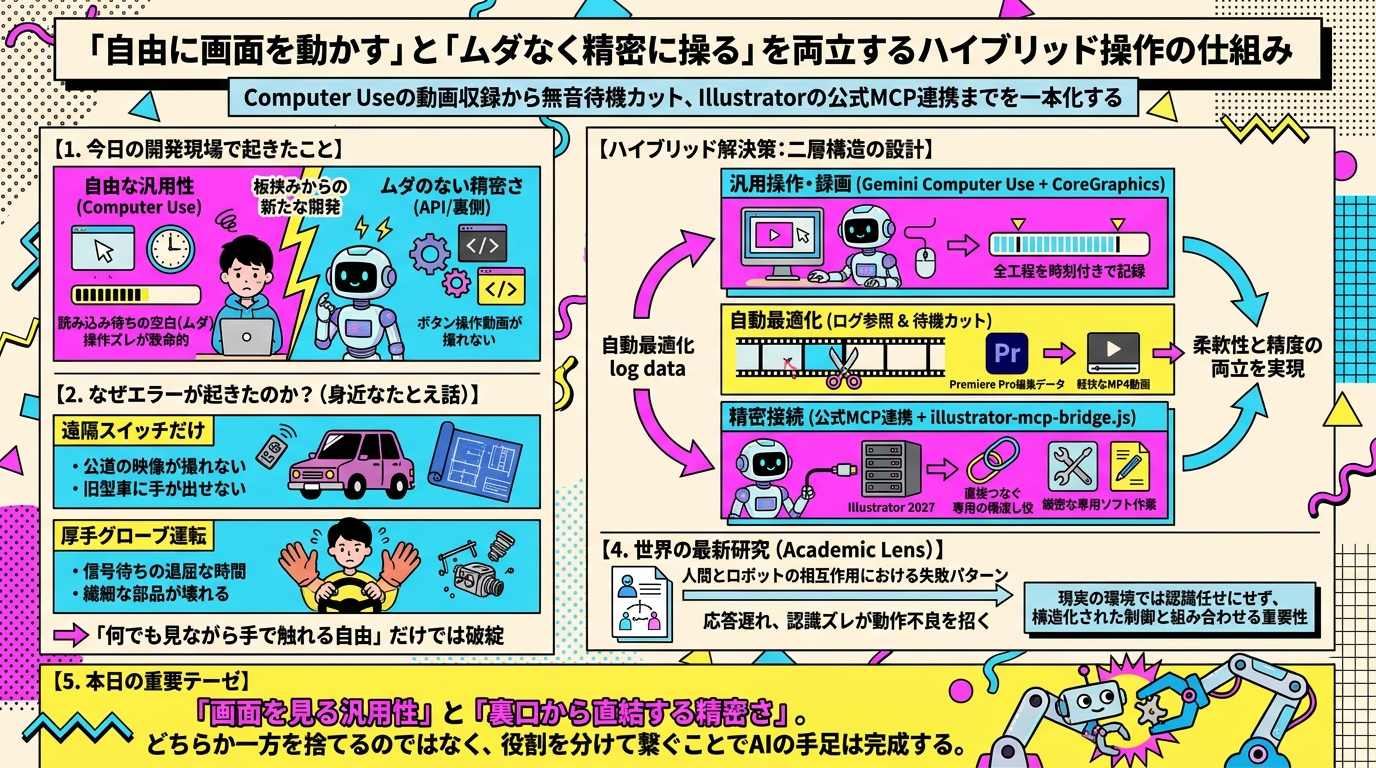
A Hybrid Control Architecture Bridging Free-Form Screen Navigation and Lean, Precision Execution
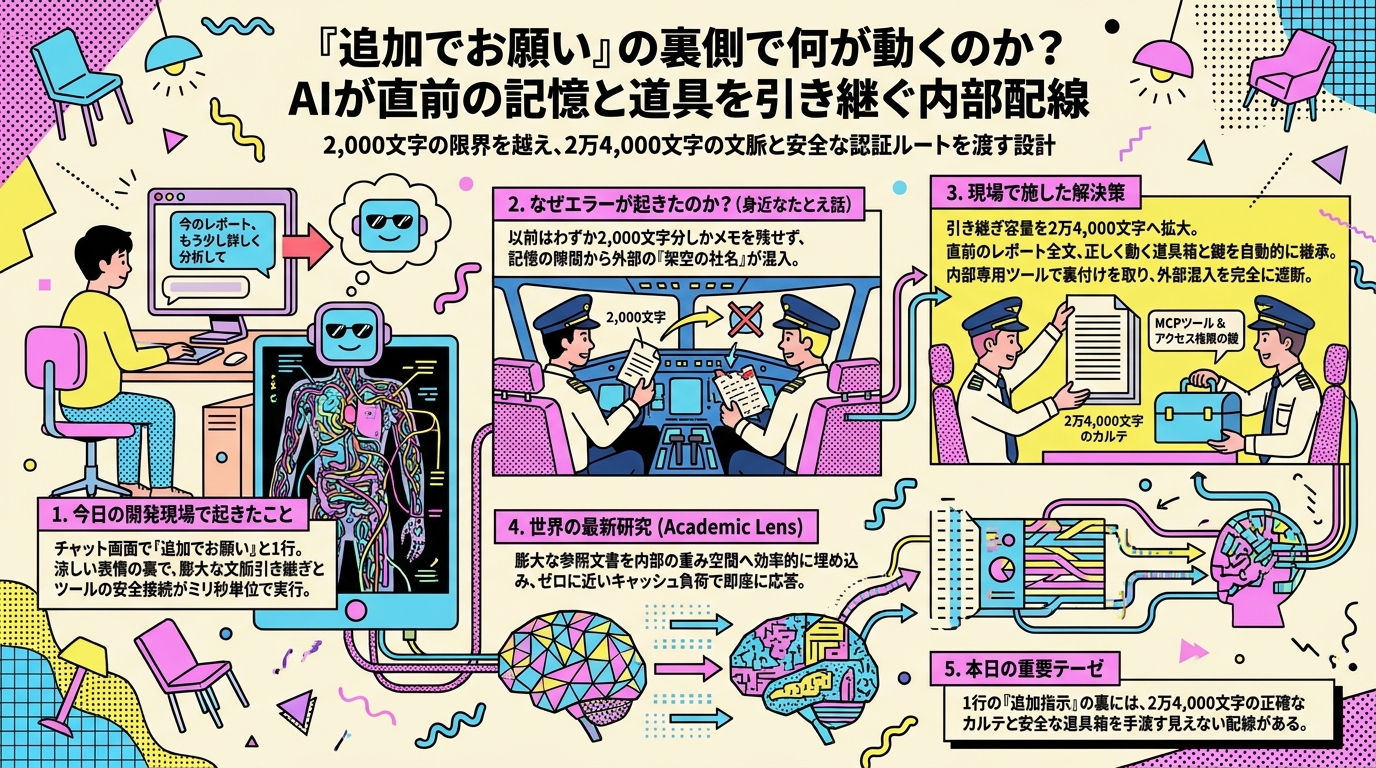
Behind "Just One More Request": The Internal Wiring That Hands Off Memory and Tools Between AIs