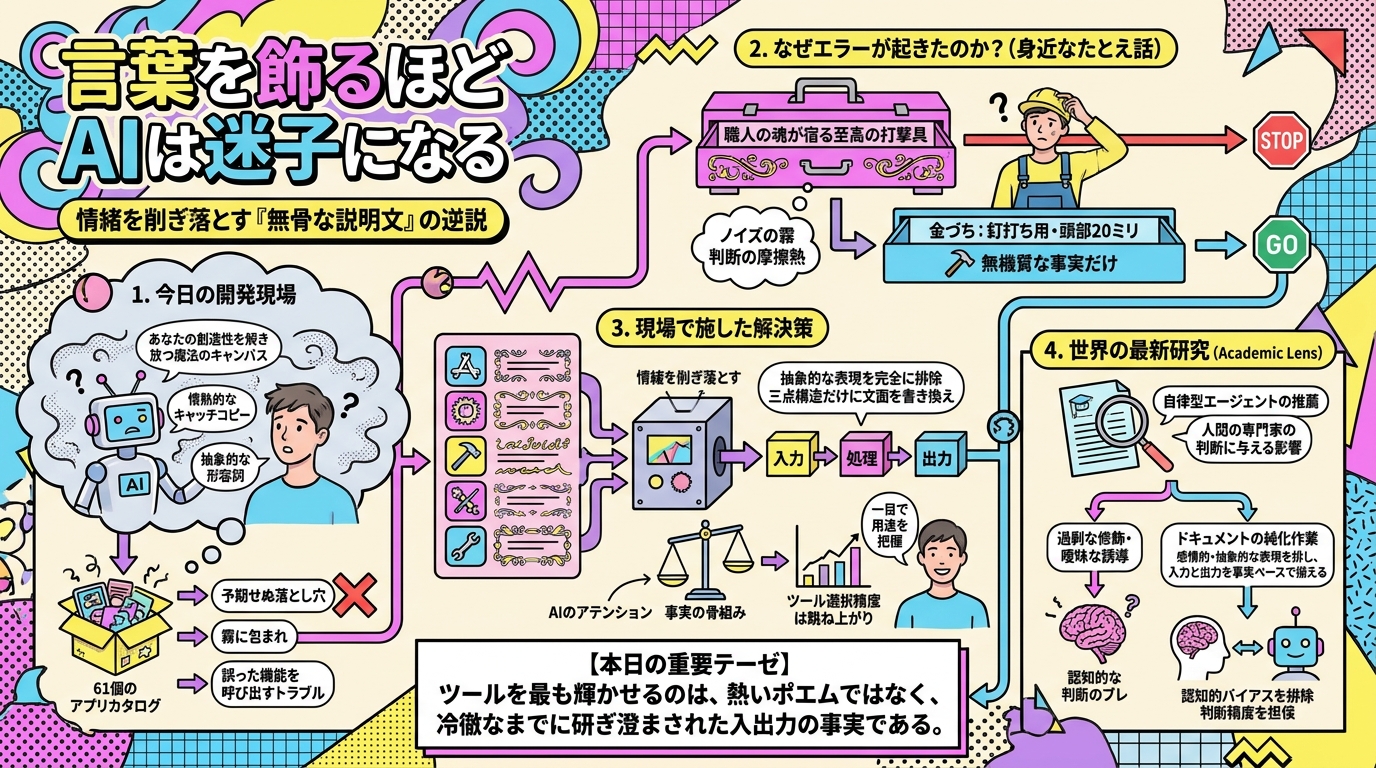
THE SCHOOL OF KAMOS
Connecting Real-world Dev & Academic Intelligence with Intuitive Metaphors
Behind "Just One More Request": The Internal Wiring That Hands Off Memory and Tools Between AIs
Shattering the 2,000-Character Ceiling: Architecting a 24,000-Character Context Window and Secure Auth Routes
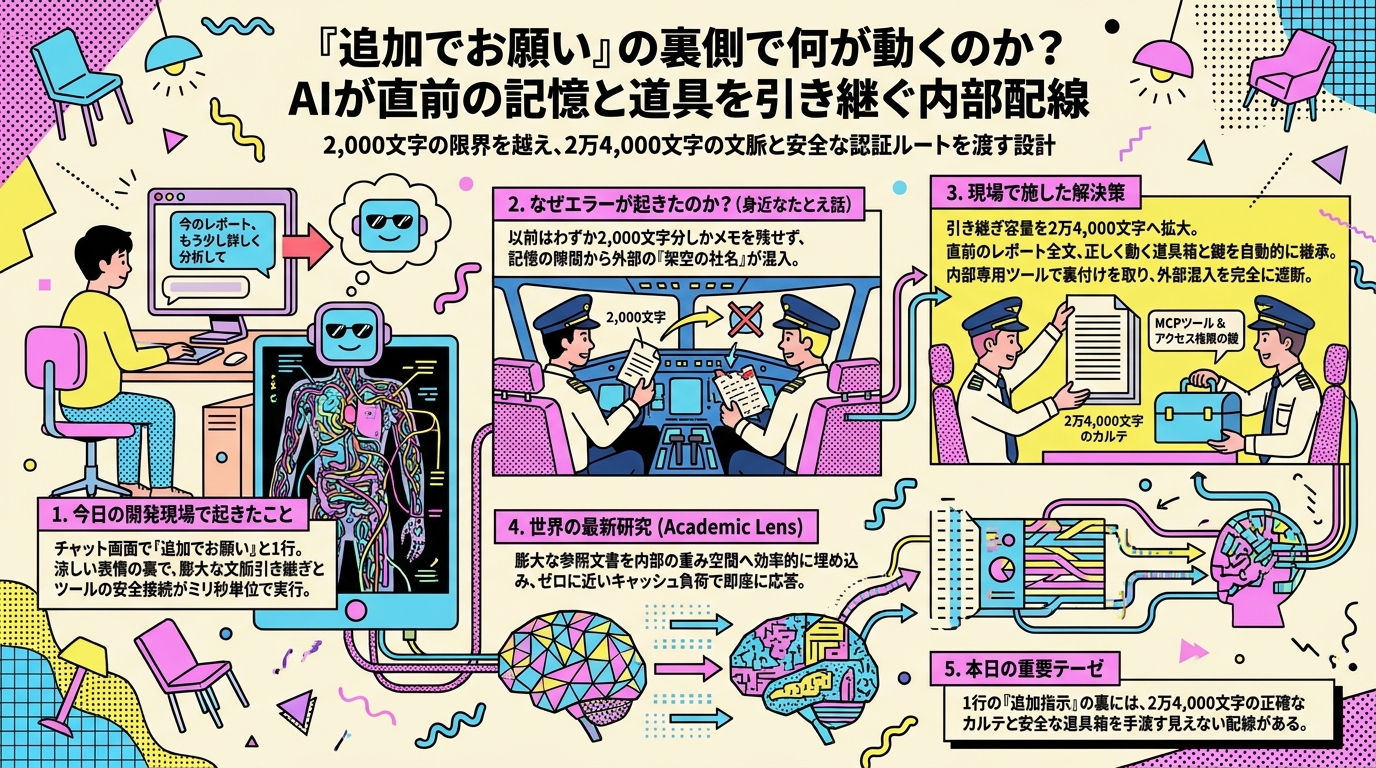
With just a single follow-up prompt in chat—"Can you break down that report in more detail?"—the AI delivers a brilliant answer grounded in the prior exchange. But beneath that effortless demeanor, what is actually taking place under the hood? In truth, to prevent previous run data from dropping or irrelevant external information from creeping in, an immense transfer of context and secure tool binding unfolds within milliseconds. Today, let’s shine an X-ray through this invisible internal wiring.
Peeking inside an AI agent reveals an operation as meticulous as a mid-air pilot shift on a long-haul flight. Previously, when handing off the aircraft's recent altitude and weather conditions (the full previous report) to the incoming pilot, the logbook was capped at a meager 2,000 characters. Vital assumptions fell through the cracks. In an attempt to bridge its memory lapses, the replacement AI reached out to generic external sources, inadvertently introducing fictional company names into verified internal data.
To fix this, the engineering team expanded the handoff capacity twelvefold to 24,000 characters, architecting a system that passes the entire preceding report verbatim. Even more critically, the system now automatically transfers the validated "MCP tools (dedicated toolkits)" and their "access credential keys" to the succeeding agent. By establishing a strict flight discipline requiring all internal performance audits to be verified exclusively through internal fetching tools, they eliminated any possibility of unrelated external data leaking in.
"Behind a one-line follow-up request lies the invisible wiring that hands off a precise 24,000-character clinical chart and a secure toolkit."Key Takeaway
📖 1-Minute Lexicon
A mechanism that seamlessly passes prior conversations and execution results to the next process without loss.
A secure authorization boundary granted to an AI when executing external databases or compute tools.
The Context and Tool Handoff Mechanism Behind Follow-Up Prompts
Live Frontier Pulse: Real-World AI Trends
Runaway AI: The Reality and the Battle for Control
As autonomous AI agents become mainstream, implementing guardrails to prevent runaway behavior—caused by contaminated external data or flawed inferences—has emerged as a top-priority corporate safety imperative.
How Does This Connect to Global Frontier Research?
Repeatedly feeding long contexts into an AI introduces heavy compute overhead and severe information loss. This recent paper proposes a method to efficiently internalize massive reference documents into the internal parameter space once, answering queries instantly with near-zero cache strain. It directly parallels our engineering challenge: passing accurate context and state across continuous agent interactions without exhausting computational resources.
When giving follow-up instructions to an AI, which of the following is the most crucial practice for accurately preserving previous work?
Past School Paper Backnumbers

How Stripping Away Invisible Padding and Caching Dramatically Sharpened Our AI Design Canvas
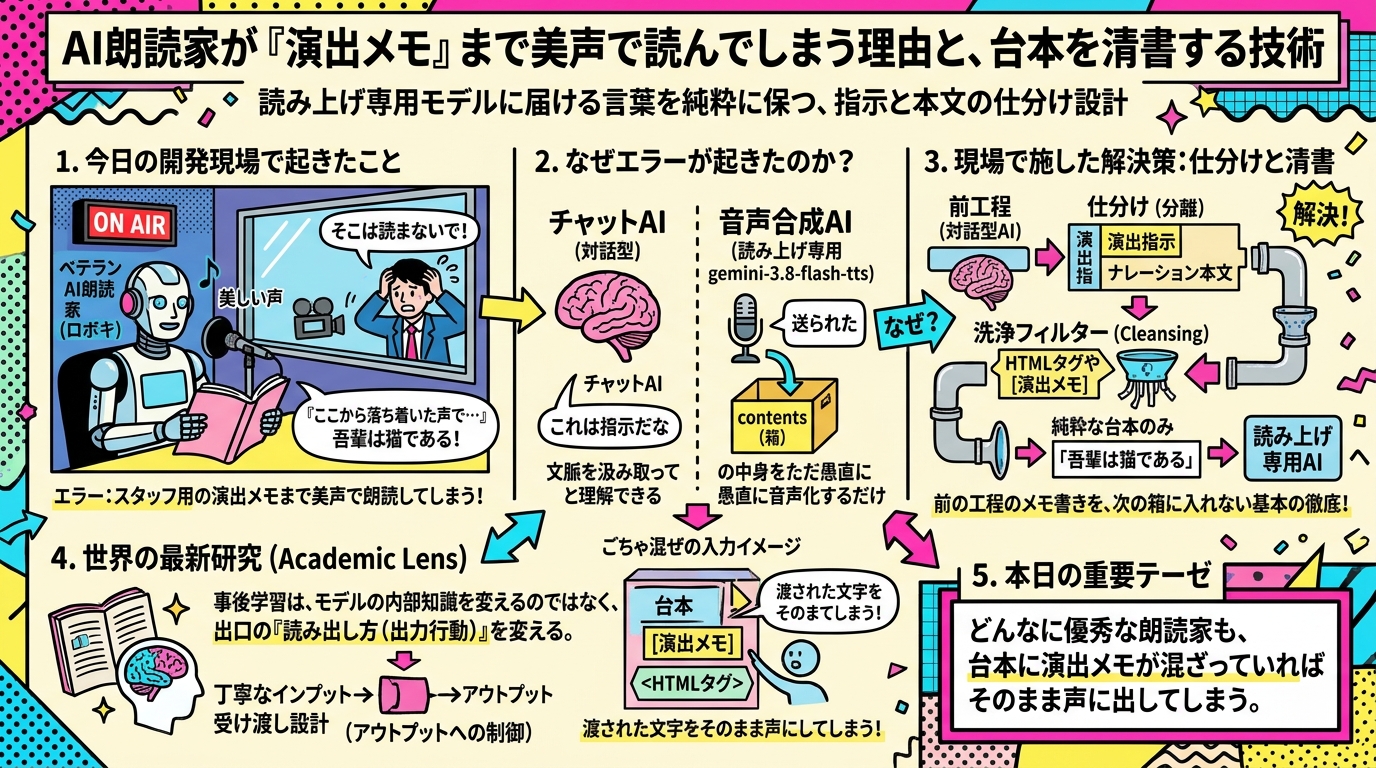
Why an AI Narrator Reads 'Stage Directions' Aloud—and the Art of Scrubbing the Script Clean
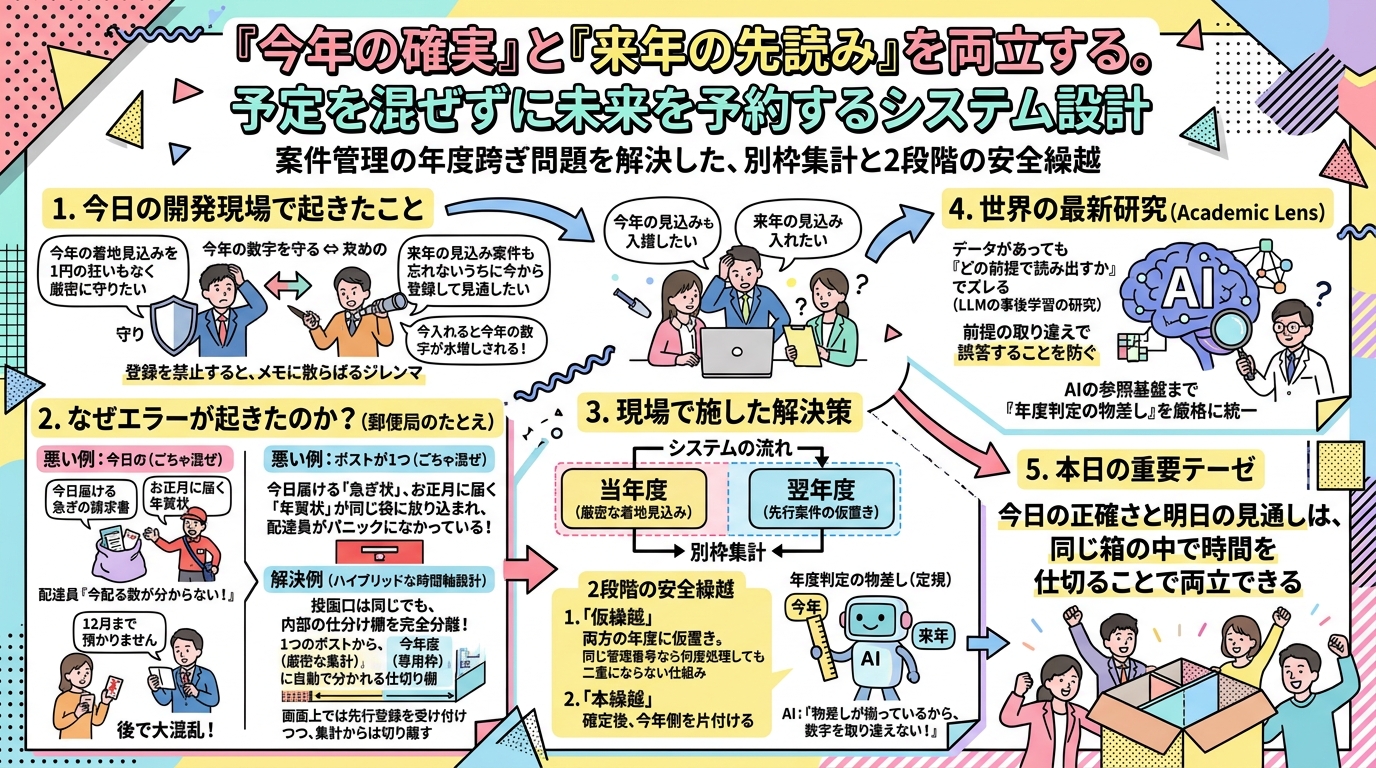
Balancing 'This Year's Certainty' with 'Next Year's Foresight': System Design That Reserves the Future Without Mixing Schedules
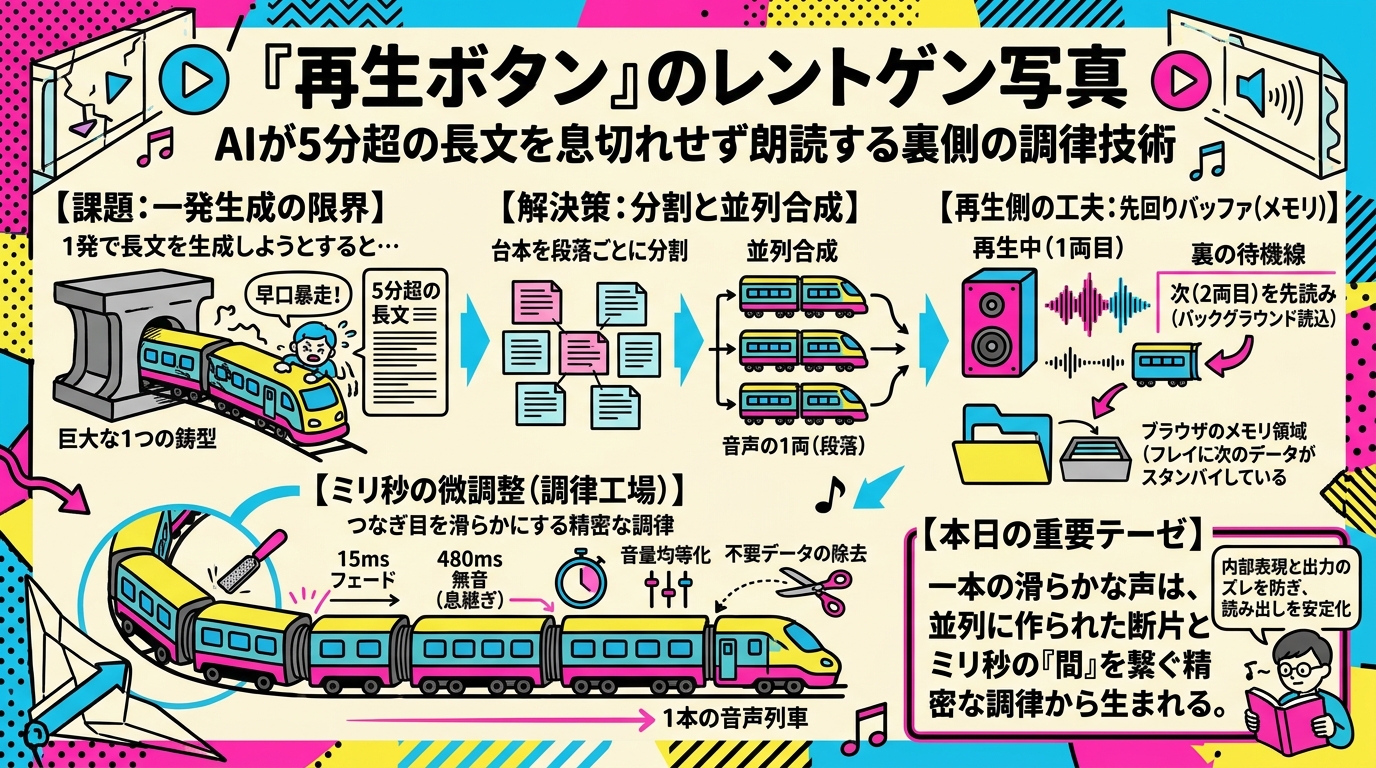
An X-Ray of the Play Button: The Precision Tuning Behind Unhurried Five-Minute AI Narration
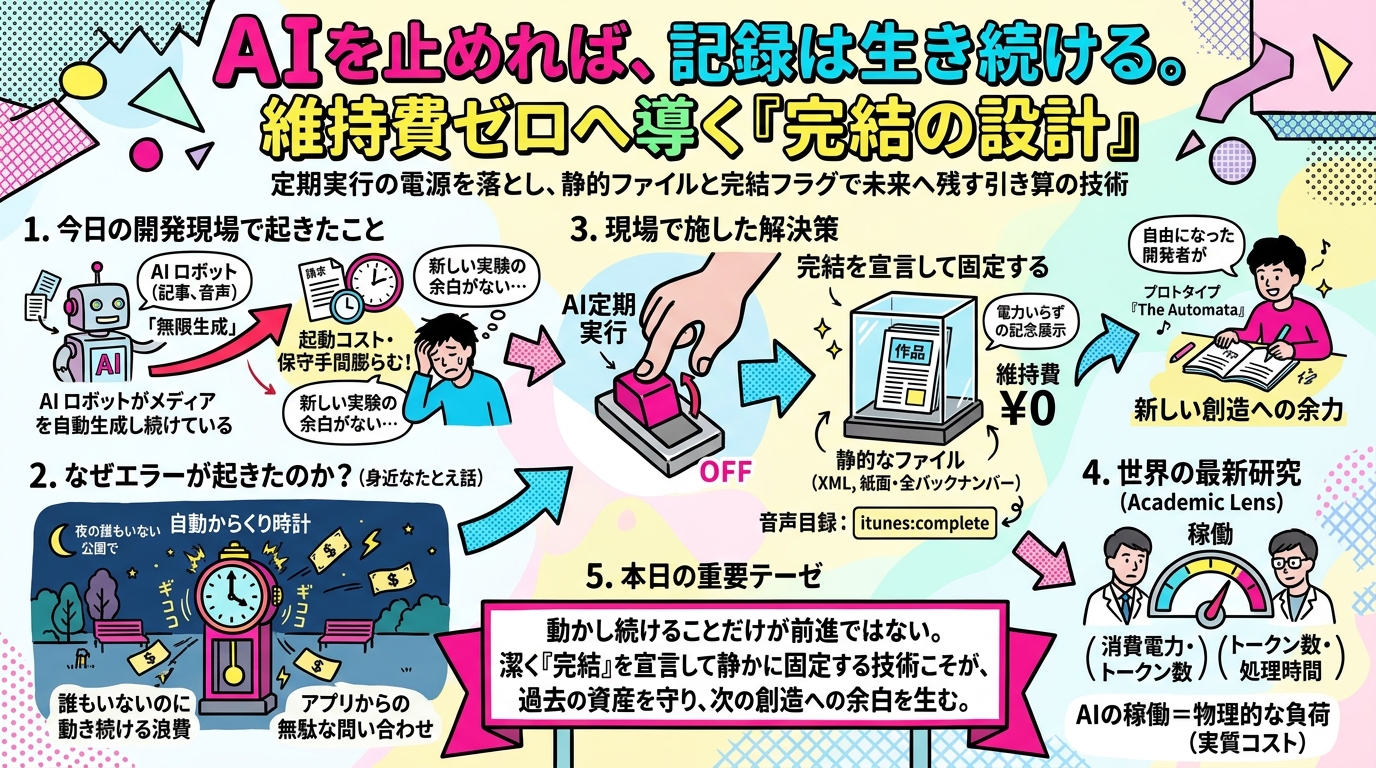
Stop the AI, and the Archive Lives On: Designing for Completion at Zero Maintenance Cost
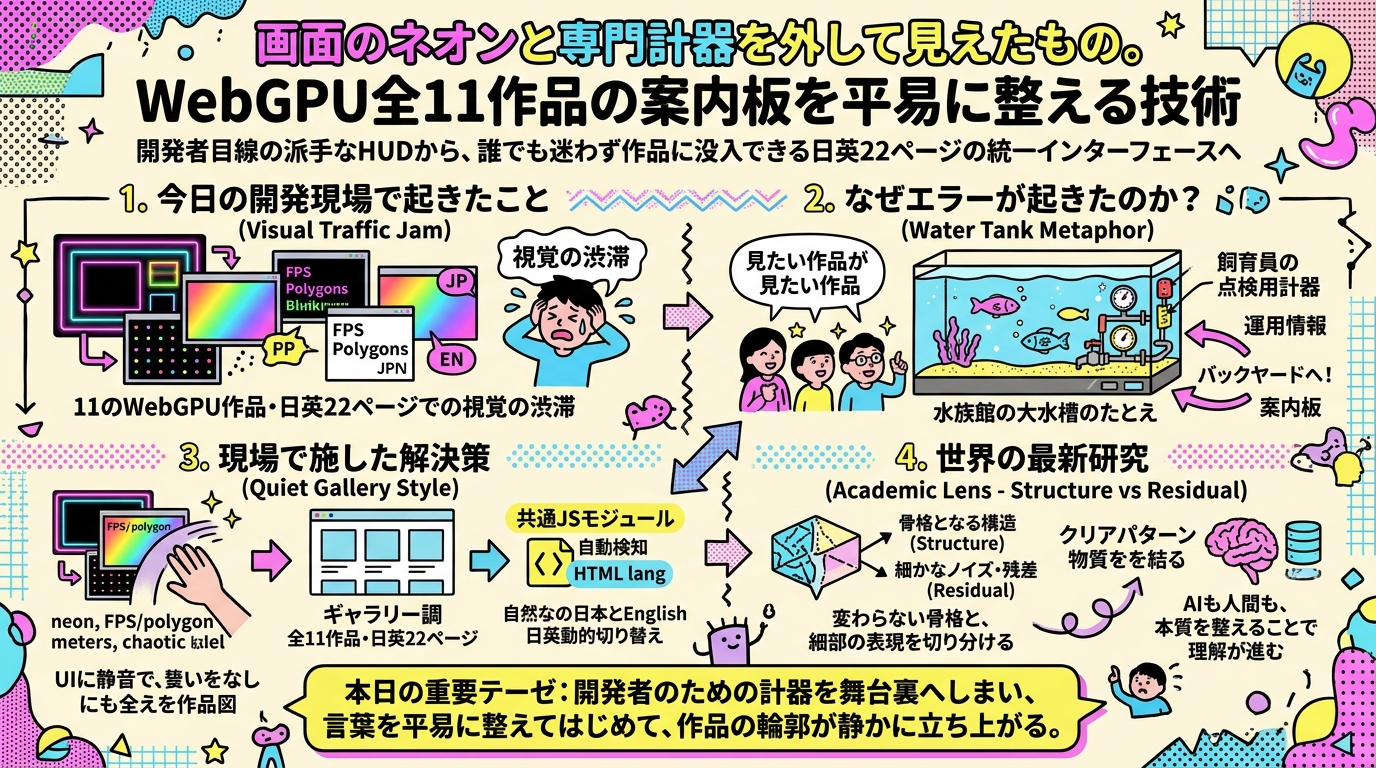
What Appeared When We Removed the Neon and Technical Gauges: Crafting Effortless Wayfinding Across 11 WebGPU Works

20,000 Characters Distilled into a Single Four-Quadrant Diagram: Where Long-Form Summarization Stands Today with the Latest Image Model, Nano Banana 2.1
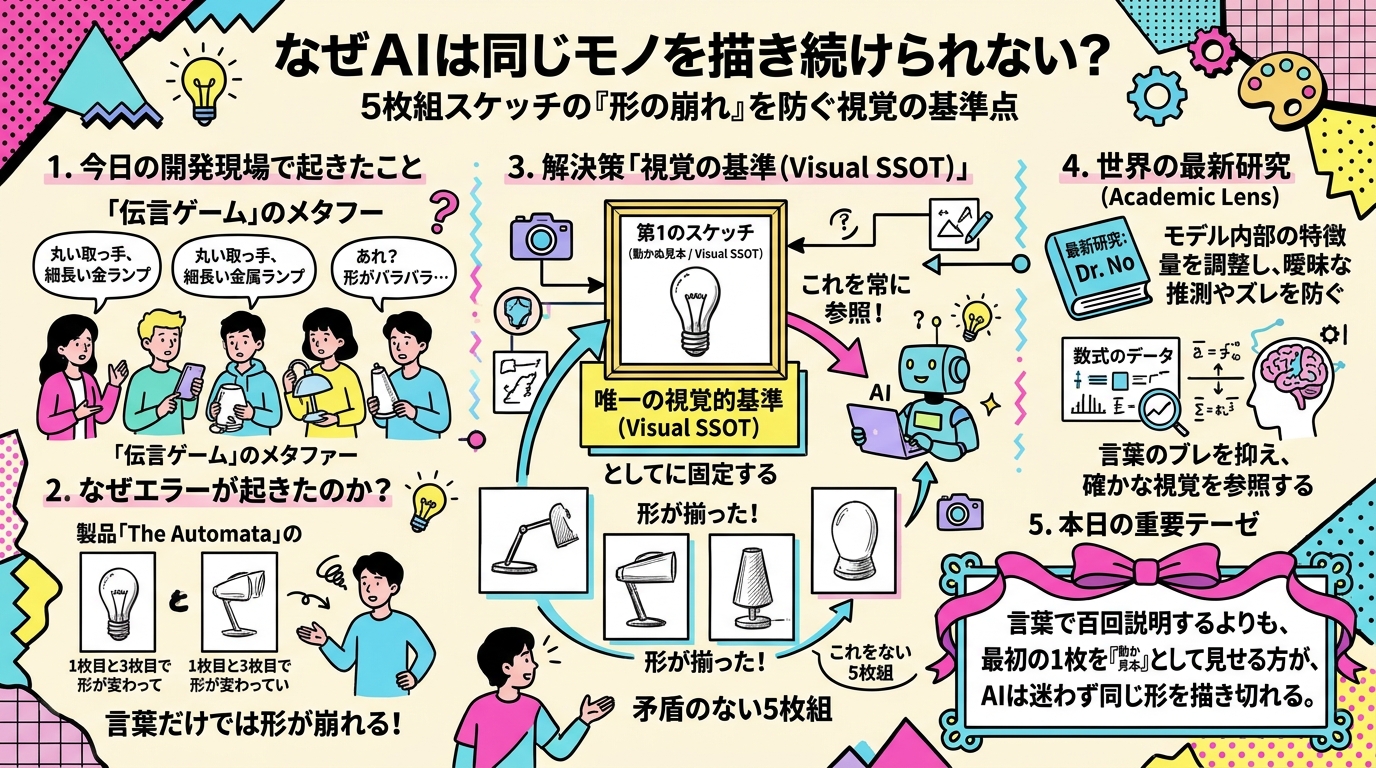
Why Can't AI Keep Drawing the Same Object? A Visual Anchor to Prevent Structural Drift in 5-Panel Sketches
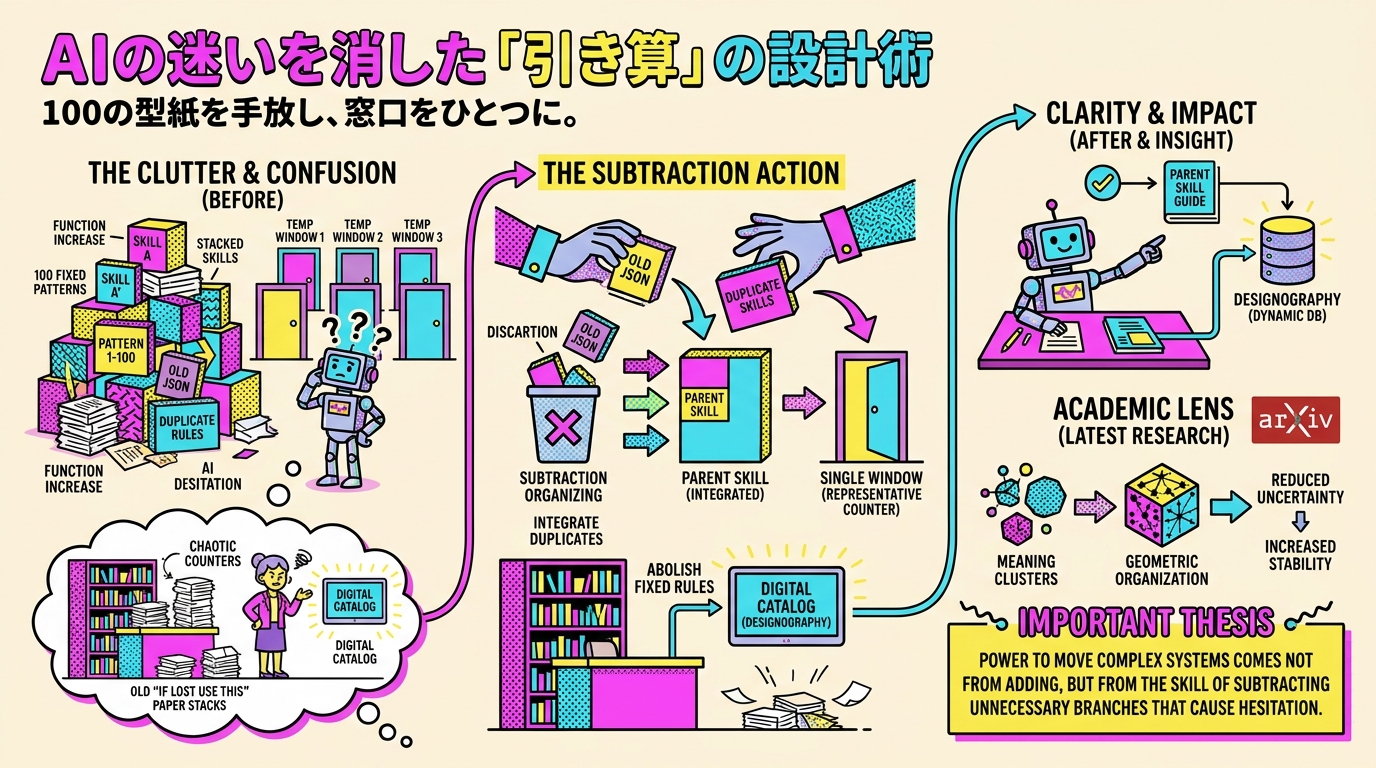
Letting Go of 100 Templates for a Single Desk: The Art of Subtractive Design That Eliminated AI Hesitation

What If You Animated '1,000 Arms' in a Browser? A Lightweight 3D Exhibition Experiment Powered by AI and WebGPU
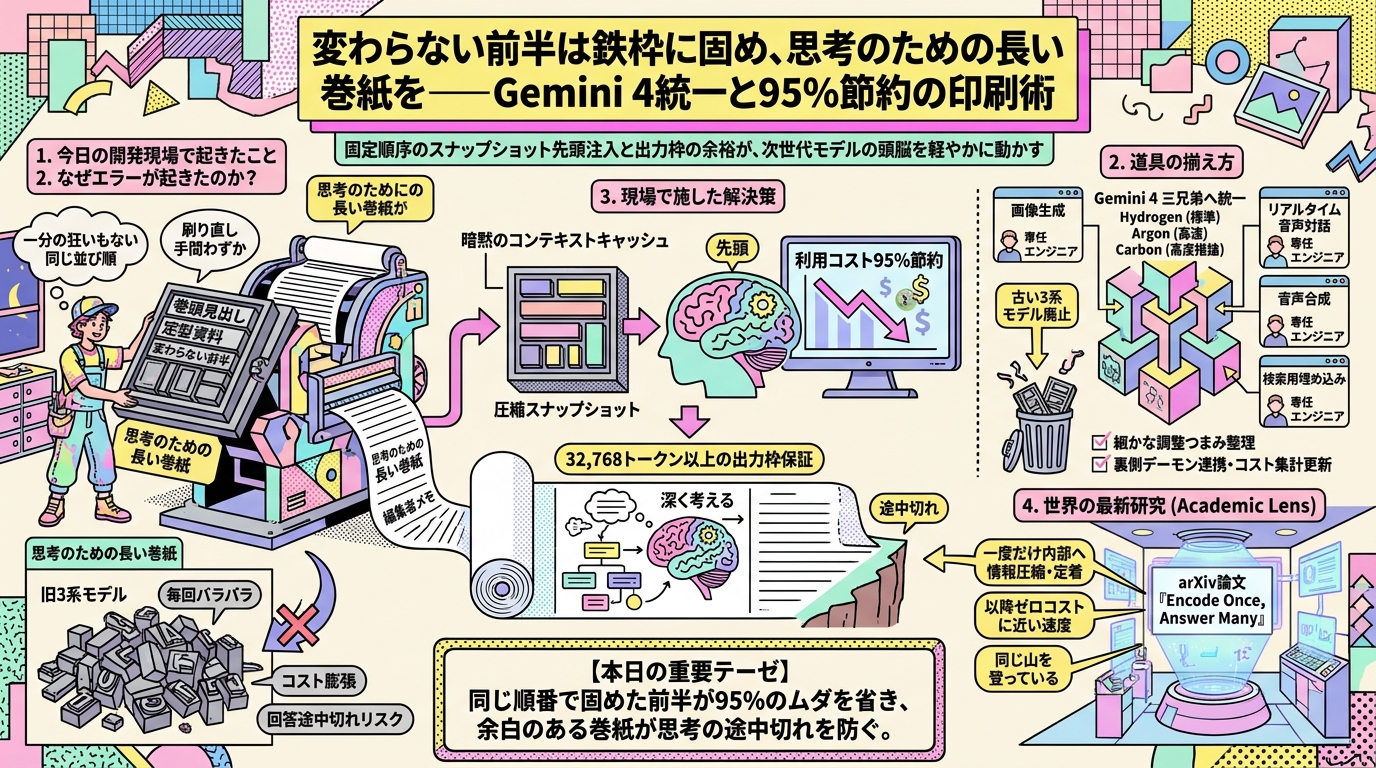
Locking the Constant Lead in Iron, Unrolling Long Scrolls for Thought — Gemini 4 Unification and the Art of 95% Printing Savings
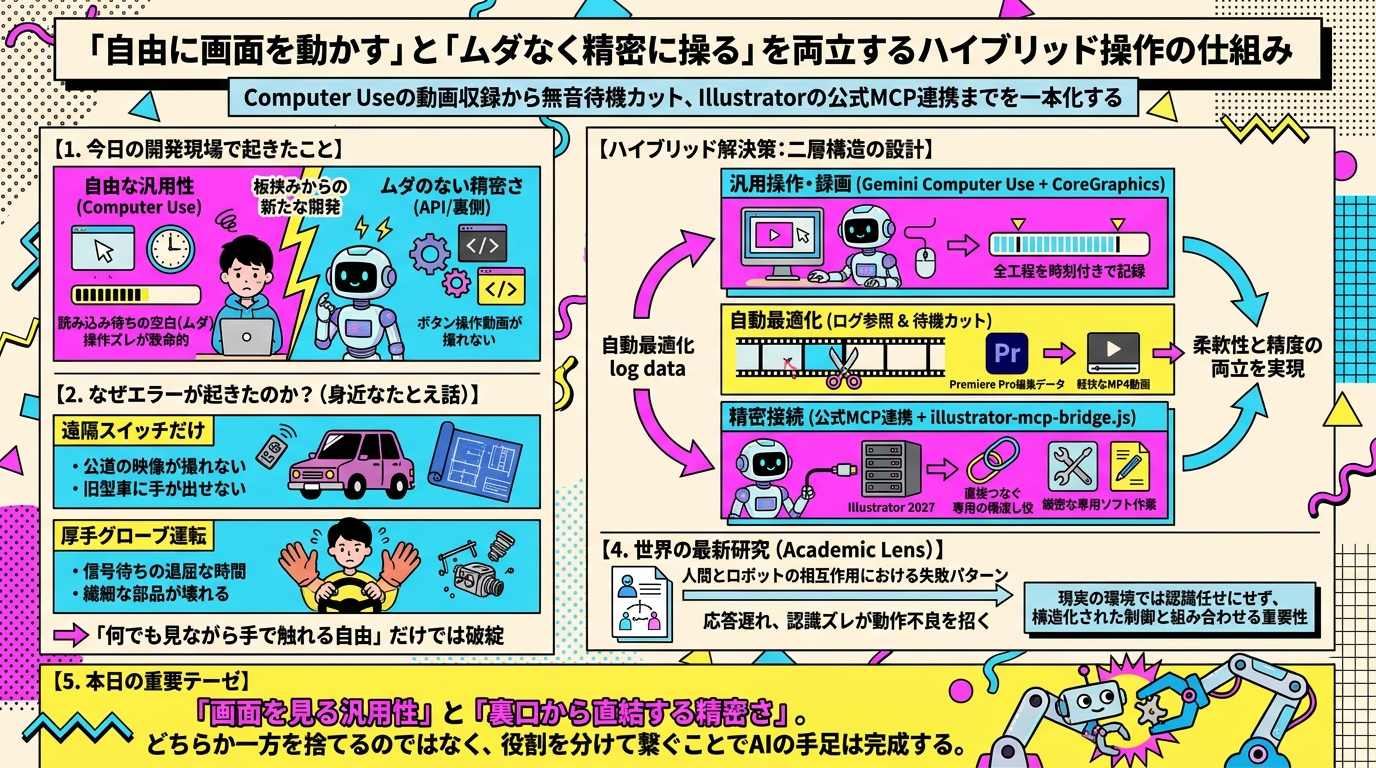
A Hybrid Control Architecture Bridging Free-Form Screen Navigation and Lean, Precision Execution
Current
Behind "Just One More Request": The Internal Wiring That Hands Off Memory and Tools Between AIs