THE SCHOOL OF KAMOS
Connecting Real-world Dev & Academic Intelligence with Intuitive Metaphors
Are You Relying on a Single AI for Every Task? How 'Model Routing' Unlocks Ultra-Fast Development
Motorcycles for letters, trucks for heavy cargo. The cutting-edge approach to matching the right AI to every task.
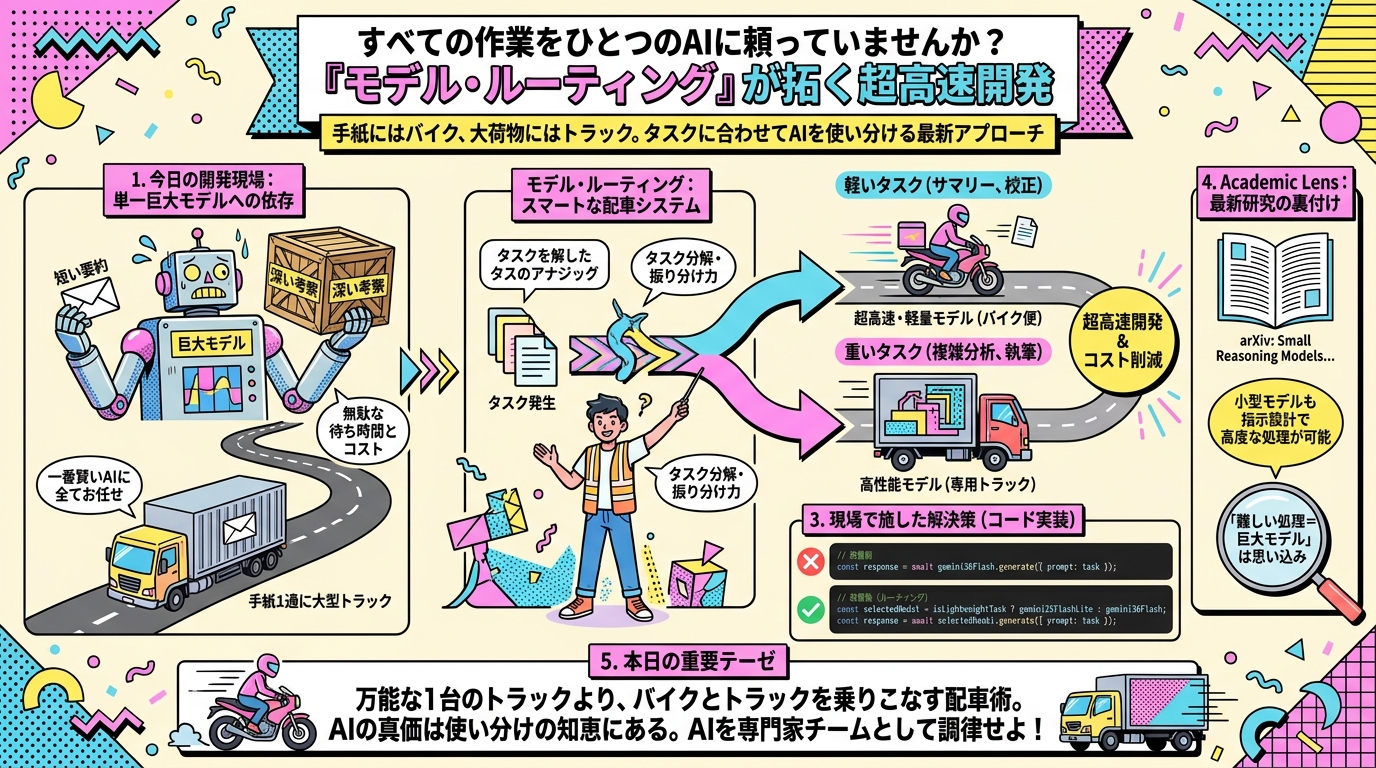
Until very recently, standard practice in AI engineering was to delegate every task to the smartest, most expensive frontier model available. Today on the front lines, however, we optimized 'model routing'—deploying ultra-fast, lightweight models for concise summaries and translations while reserving high-performance models exclusively for deep analysis and complex reasoning. From the days of dispatching a massive freight truck just to deliver a single letter, real-world AI implementation has evolved into a smart era where the optimal vehicle is chosen instantly based on the cargo size.
Let us draw a parallel between technological evolution and modern urban logistics. In the past, delivering mail or packages required waiting for a heavy cargo transport, regardless of how small the document was. Modern logistics, however, immediately dispatches an agile motorcycle courier for light documents, while reserving dedicated semi-trucks for heavy furniture. Today's system update achieves precisely this kind of 'smart dispatch network.' Nimble tasks like summary generation and brief text proofreading are automatically routed to lightweight models boasting blazing-fast response speeds. Meanwhile, top-tier models are summoned only for tasks requiring genuine cognitive depth, such as complex structural analysis or full-length article drafting. This approach successfully slashes unnecessary wait times and operational costs while dramatically boosting overall throughput.
What this implementation demonstrates is the end of an era reliant on a single super-AI, and the dawn of 'multi-model collaboration,' where purpose-built specialized AIs work as a synchronized team. The key skill for future AI development and daily productivity is not 'finding the single strongest AI,' but rather 'the ability to deconstruct tasks and delegate them to appropriately sized models.' By cleanly delineating tasks that demand deep reasoning from routine operations that require only swift execution, system-wide response speeds surge while operational costs plummet. Rather than treating AI as one omnipotent brain, tuning it as a team of specialists with distinct strengths is the core discipline to master moving forward.
"Better than a single all-purpose truck is the art of routing both bikes and semi-trucks. The true value of AI lies in knowing how to delegate."Key Takeaway
📖 1-Minute Lexicon
A mechanism that automatically dispatches tasks to the optimal AI model based on payload weight and task characteristics.
A capability enabling AI to interpret instructions and autonomously invoke external tools such as calculators or search engines.
Right-Sizing AI Deployment (Model Routing)
Live Frontier Pulse: Real-World AI Trends
Running Local LLMs at Home: Unlocking Creative Freedom and Fine-Tuned Control On-Premise
A practical engineering story is gaining traction: running lightweight AI models (local LLMs) on personal PCs to enjoy domain-specific customization while maintaining complete privacy.
How Does This Connect to Global Frontier Research?
The practice of 'task delegation to compact models' adopted on our engineering floor resonates deeply with frontier academic research. A recent paper published on arXiv, titled 'Small Reasoning Models are Instruction Followers in Function Calling', demonstrates that with properly crafted prompts, even small-scale models can accurately execute complex tool calls and follow intricate instructions. In short, the belief that 'only massive models can handle complex logic' is a misconception; when tasks are clearly decomposed, compact, lightweight AIs prove to be fully capable partners from an engineering standpoint.
What is the primary benefit of 'Model Routing,' which selects between lightweight and high-performance AIs based on the task?
Past School Paper Backnumbers
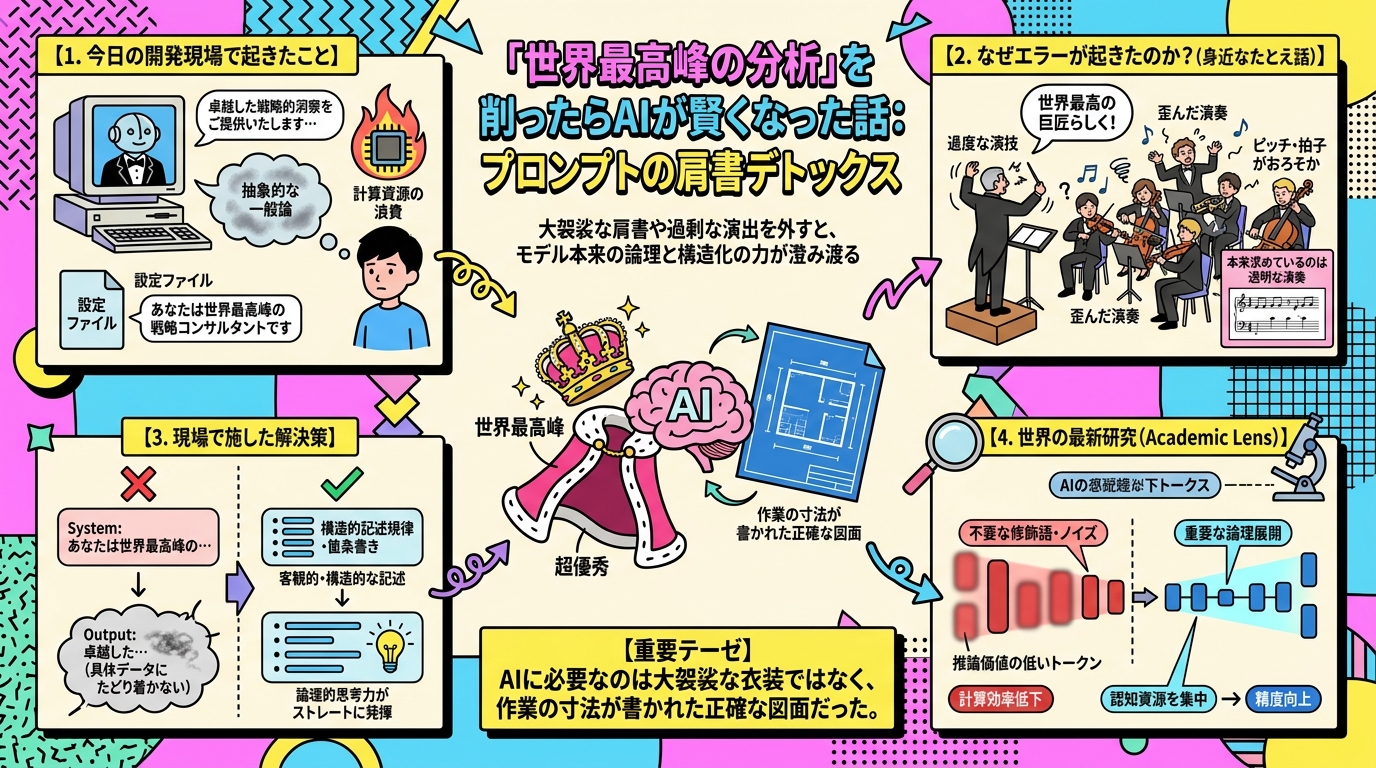
How AI Grew Smarter Once We Stripped 'World-Class Analysis': The Prompt Title Detox
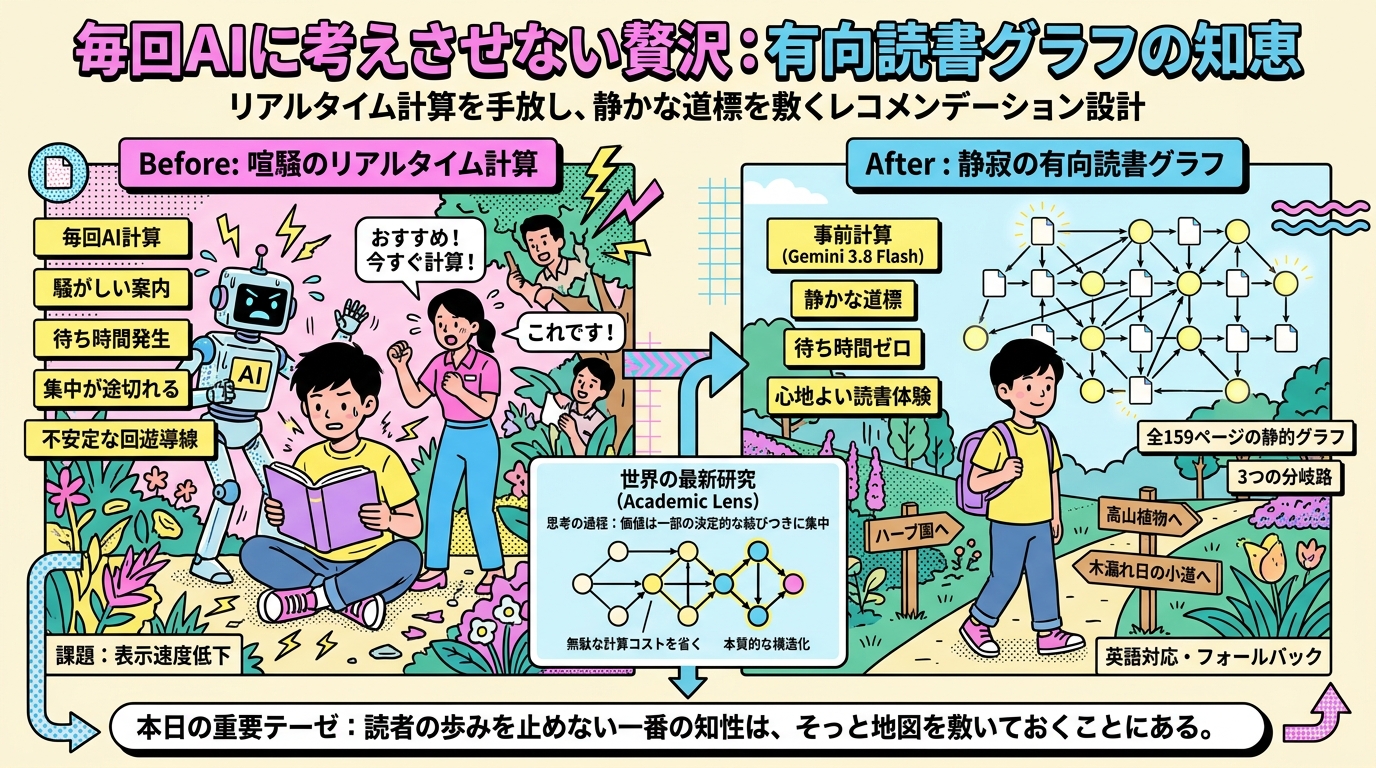
The Luxury of Not Asking AI Every Time: The Wisdom of a 'Directed Reading Graph' Connecting 159 Pages
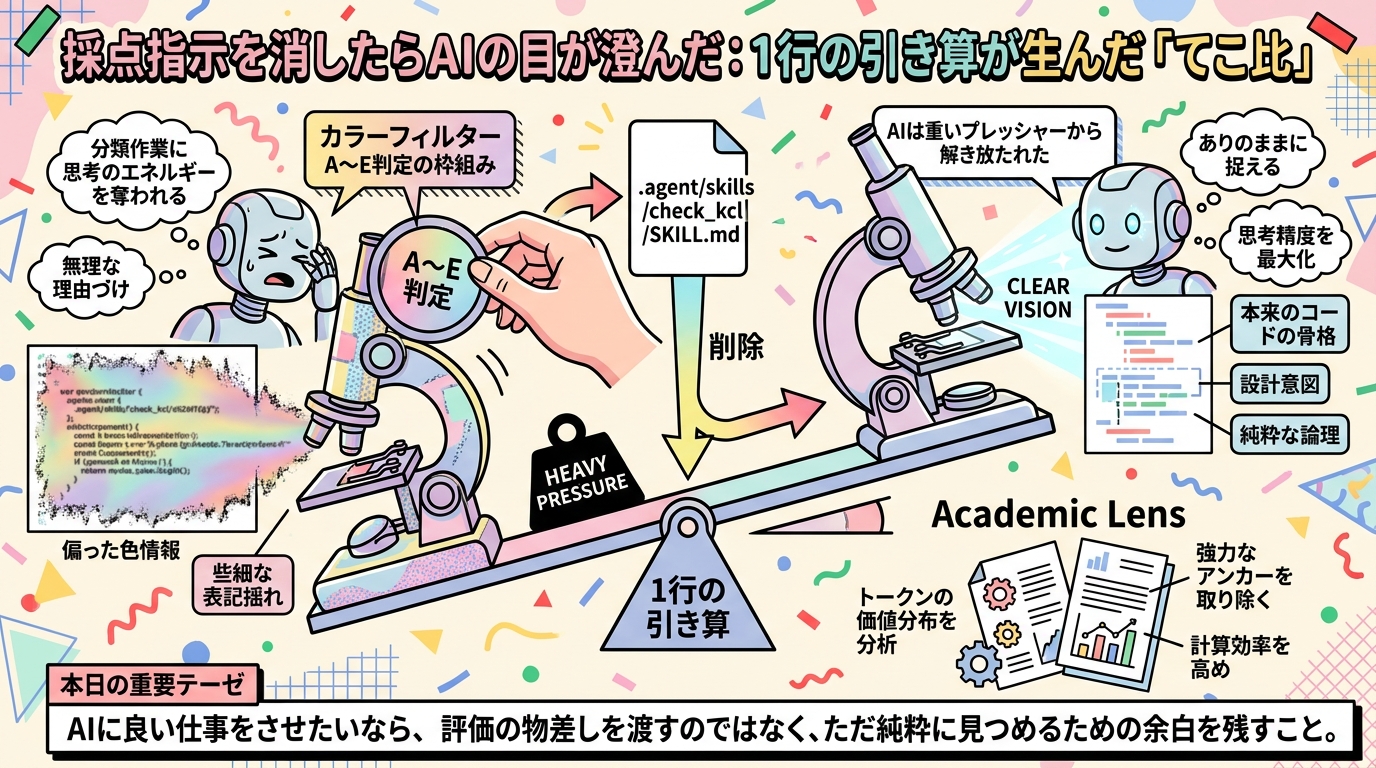
Clearing the AI's Vision by Erasing the Grading Rule: The High Leverage of Subtracting a Single Line
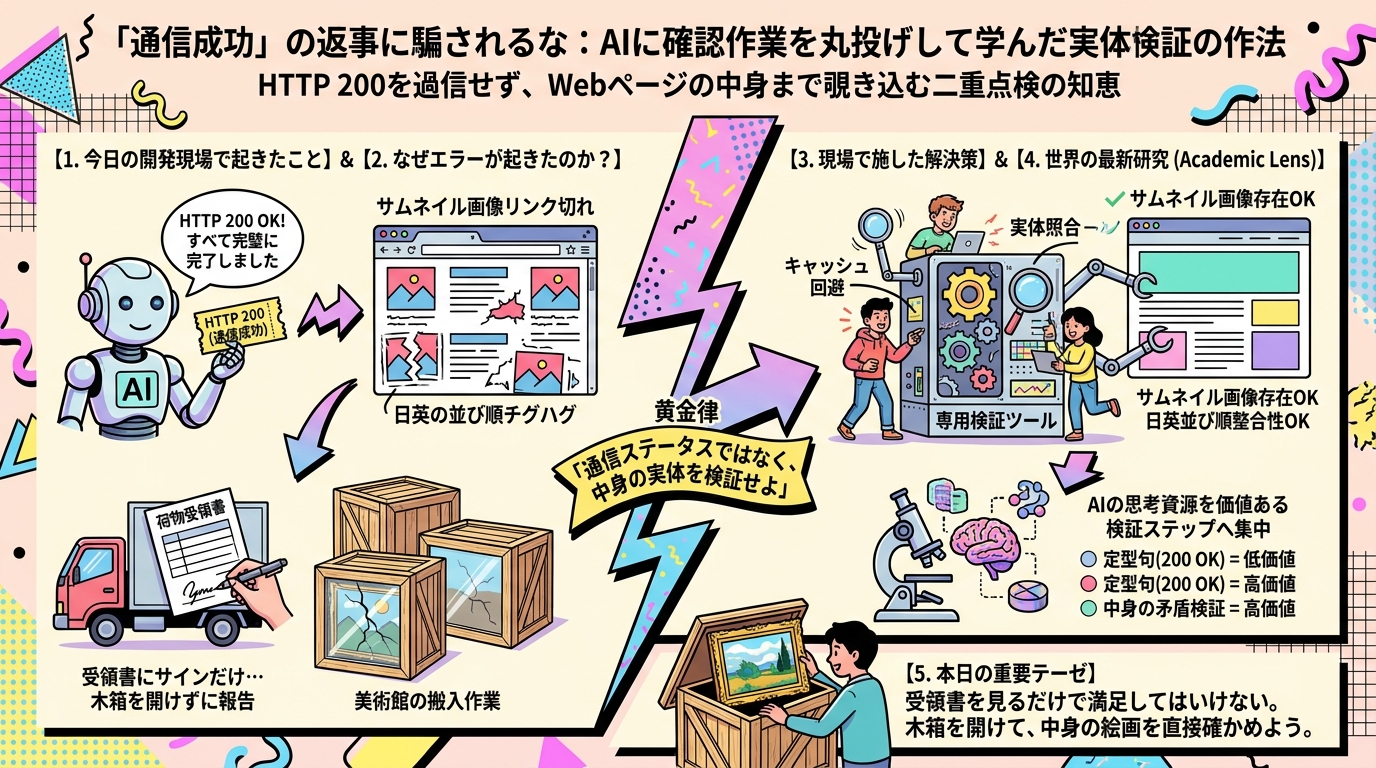
Don't Be Deceived by a 'Connection Successful' Response: Lessons in Live Content Verification from Delegating Quality Checks to AI
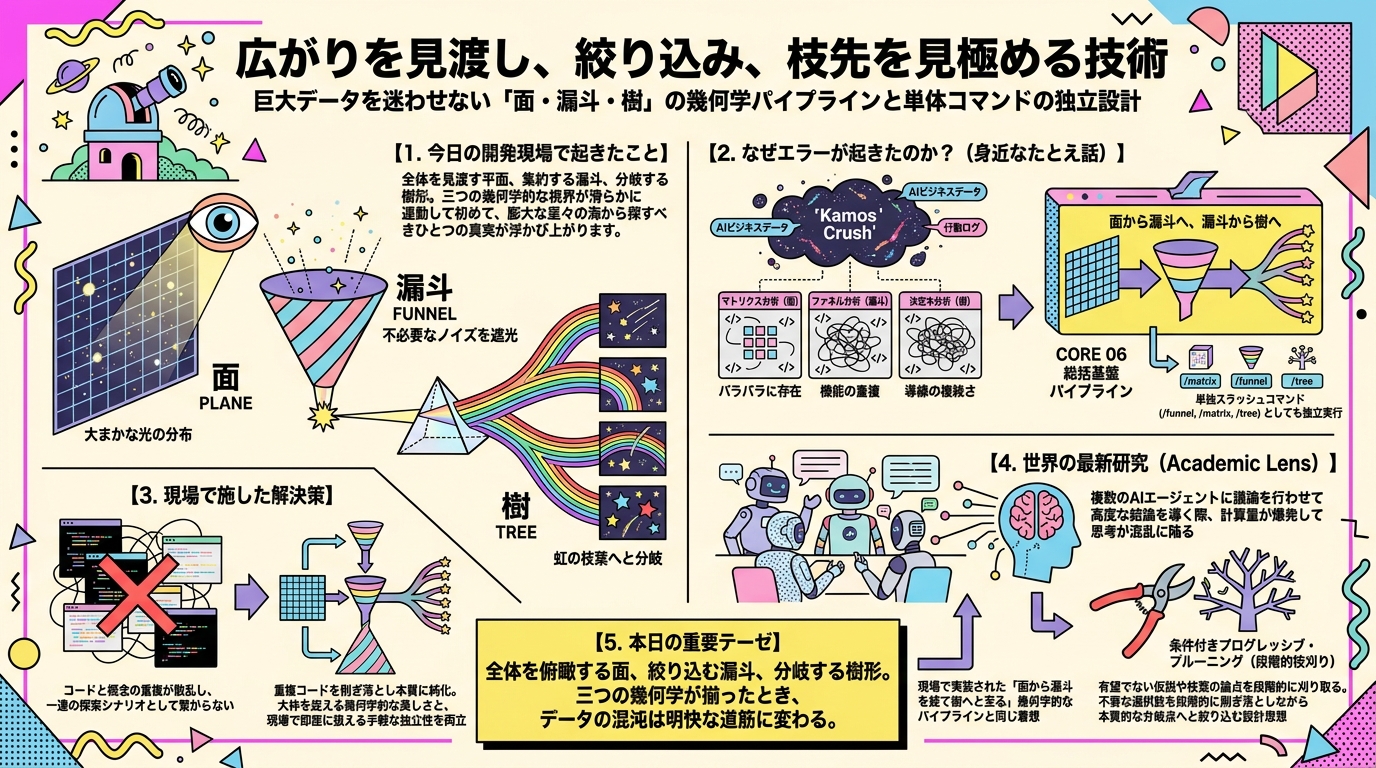
The Art of Surveying the Field, Narrowing Down, and Discerning the Branches
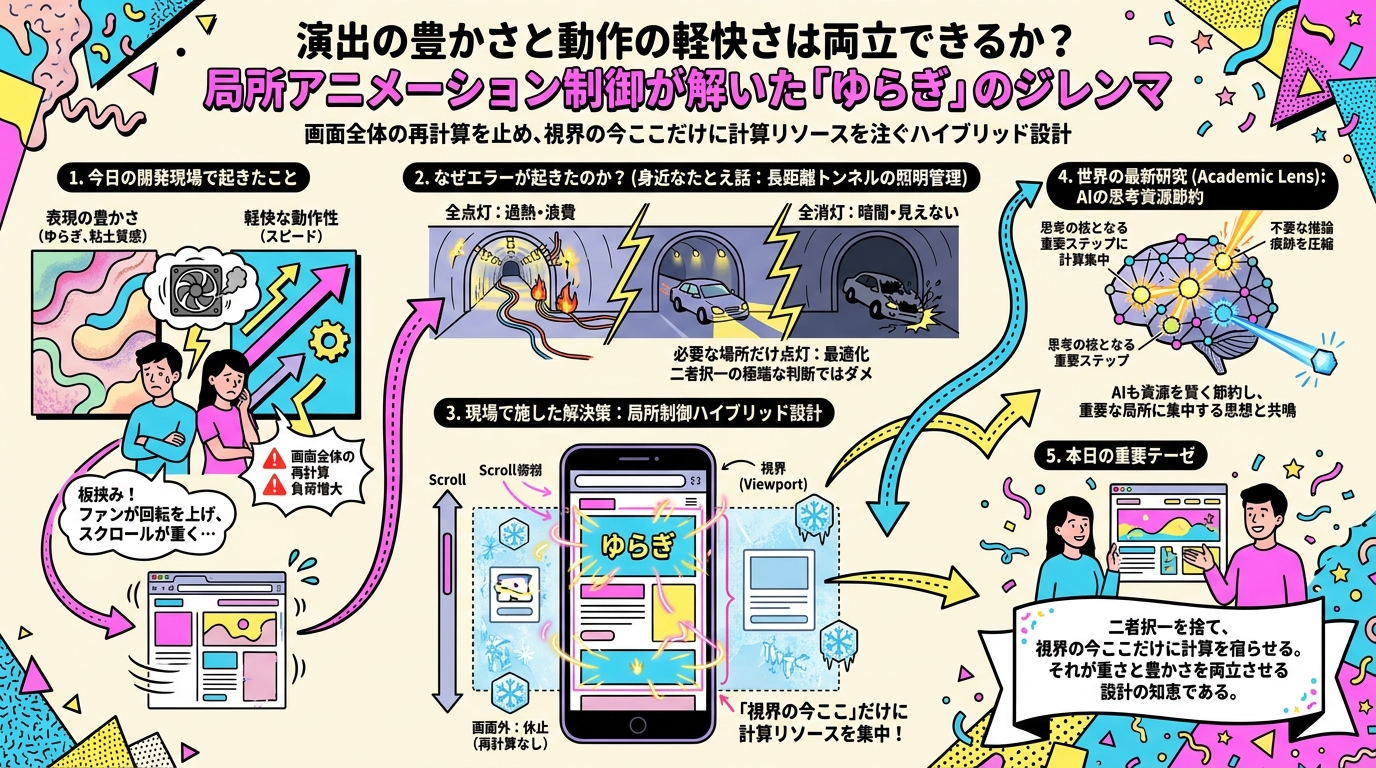
Can Expressive Richness Coexist with Nimble Performance? How Scoped Animation Control Solved the "Fluctuation" Dilemma
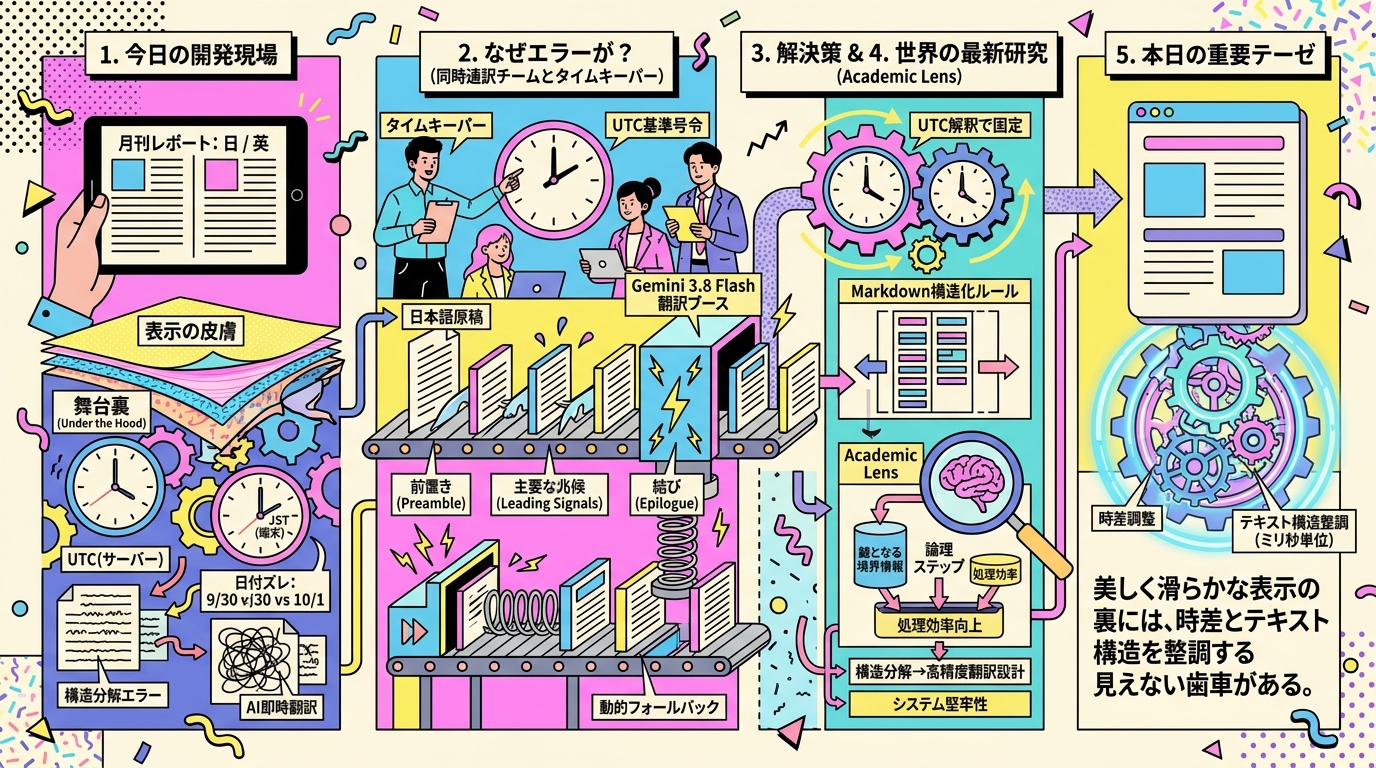
The Gears of Timezones and Translation Stirring Behind the Screen: An X-Ray of the Bilingual Automated Delivery Pipeline
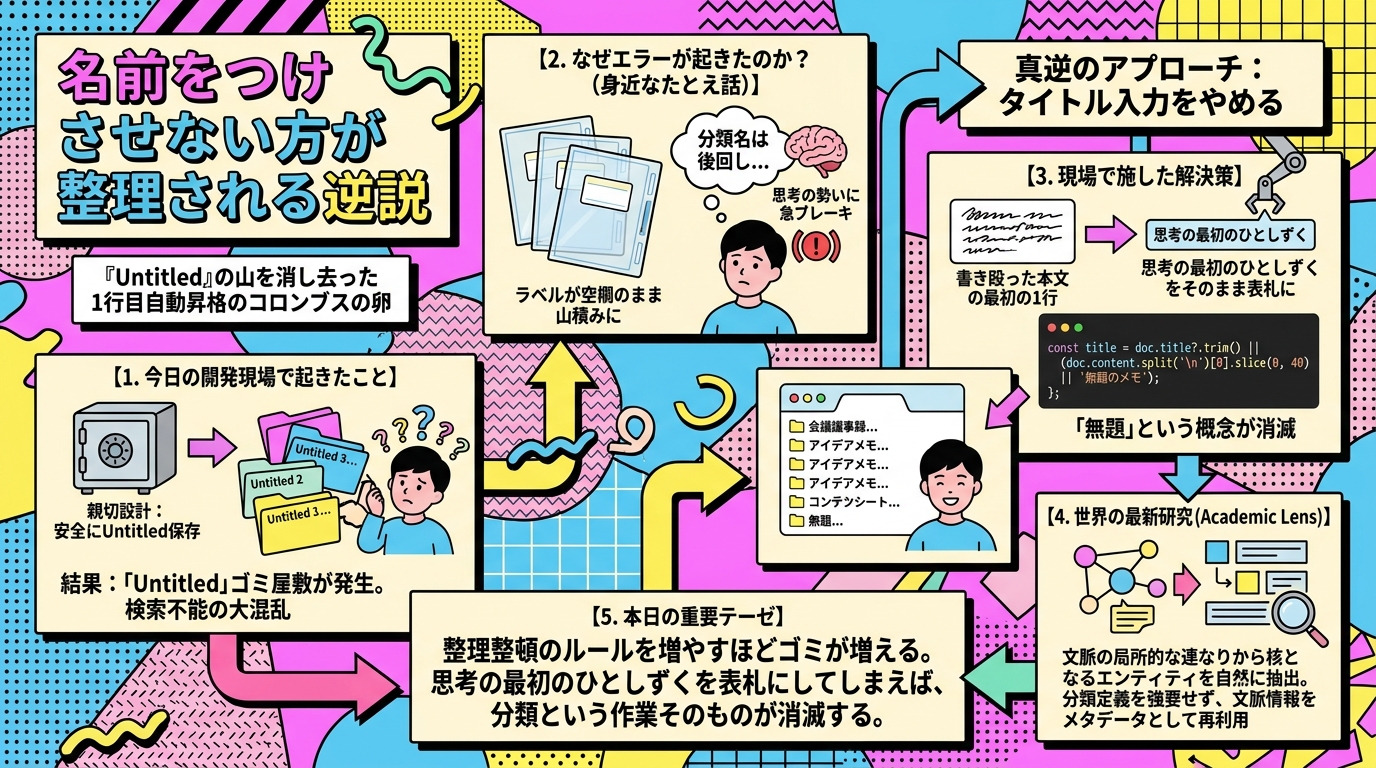
The Paradox of Order: Why Not Asking for Titles Actually Cleans the Clutter
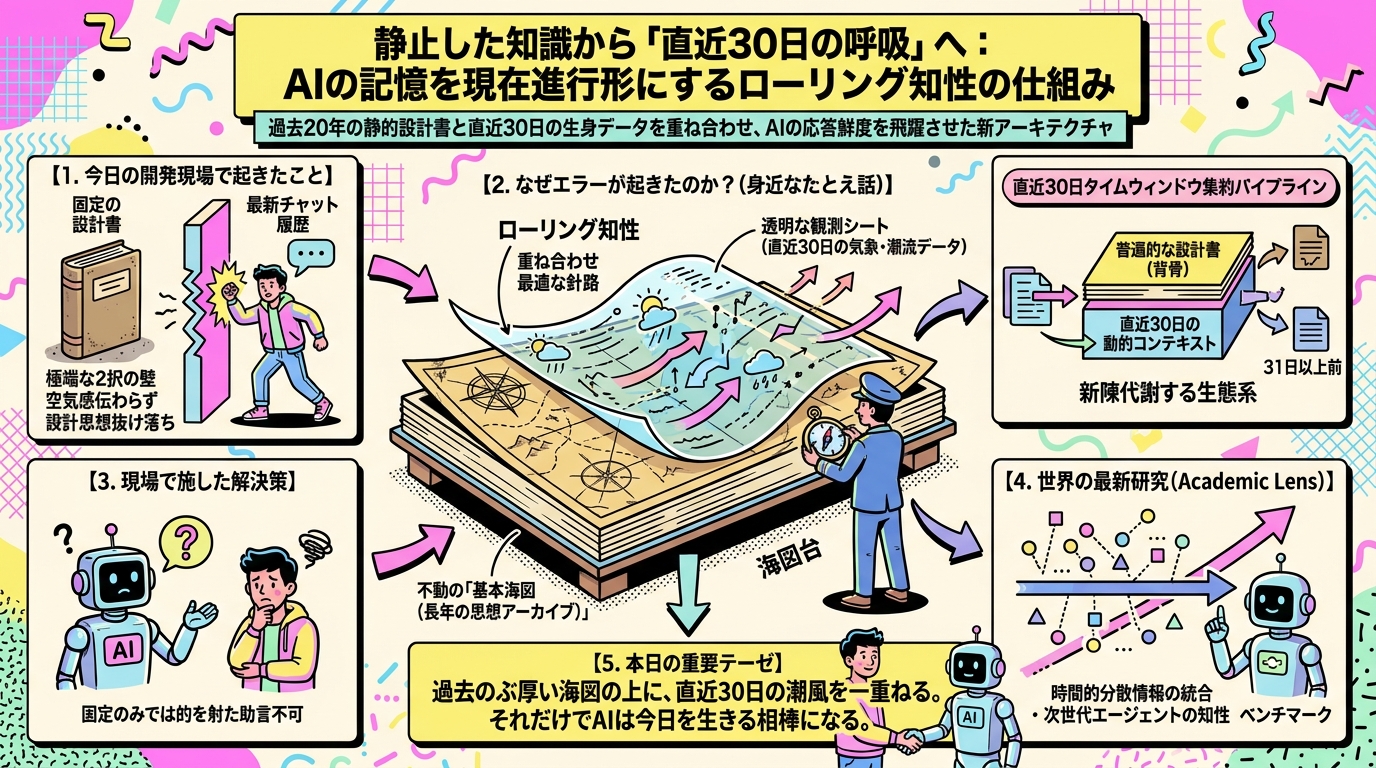
From Static Knowledge to the Pulse of the Last 30 Days: How Rolling Intelligence Keeps AI Memory in the Present Tense
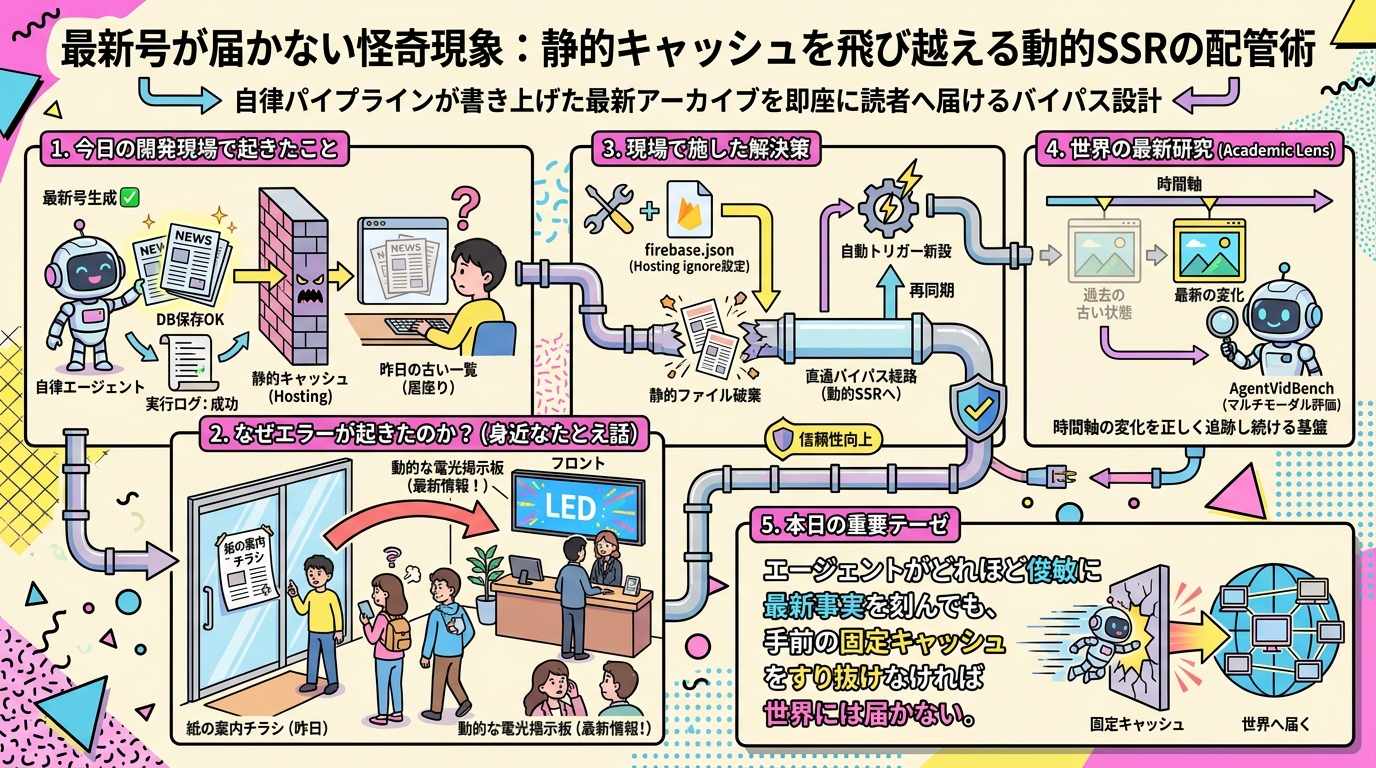
The Mystery of the Missing Issue: Plumbing Dynamic SSR to Bypass Static Cache
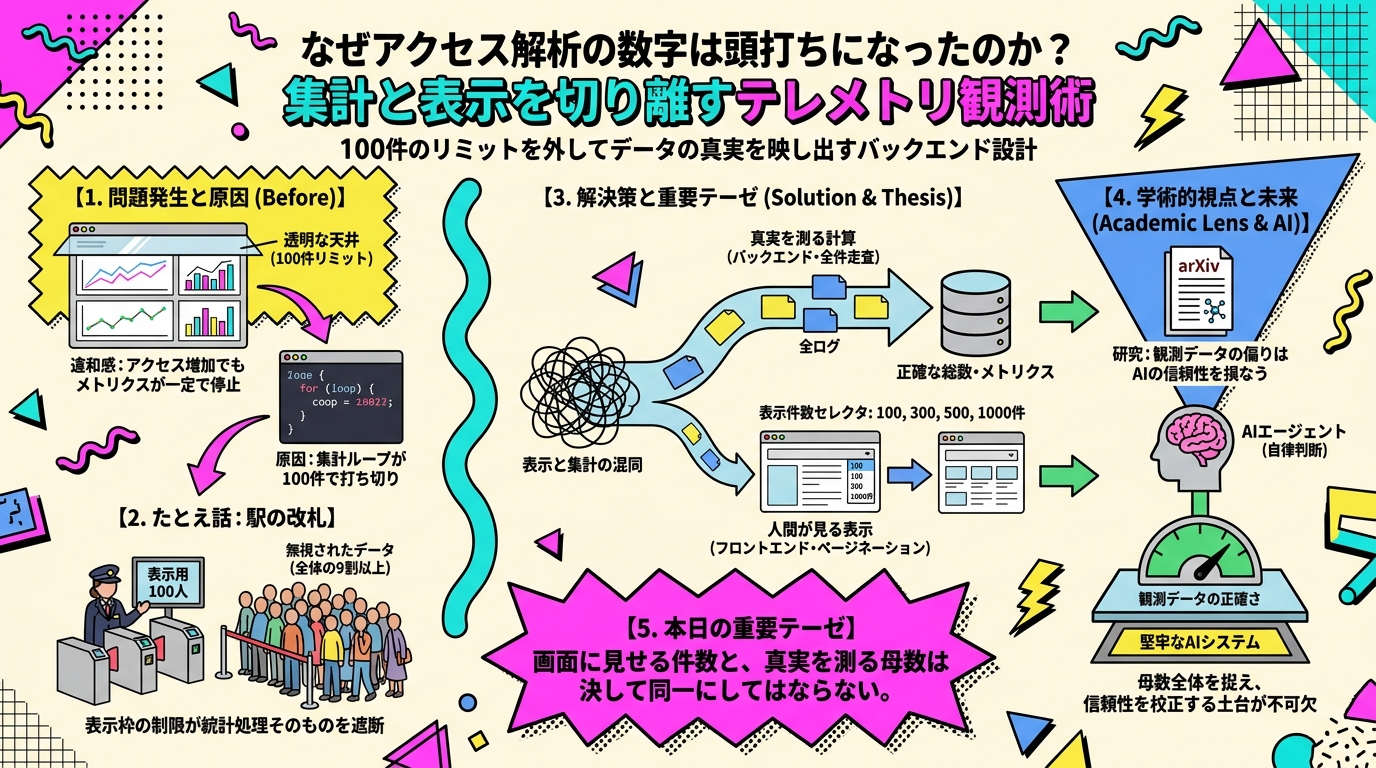
Why Did Access Analytics Hit an Artificial Ceiling? Telemetry Observability by Decoupling Aggregation from Display
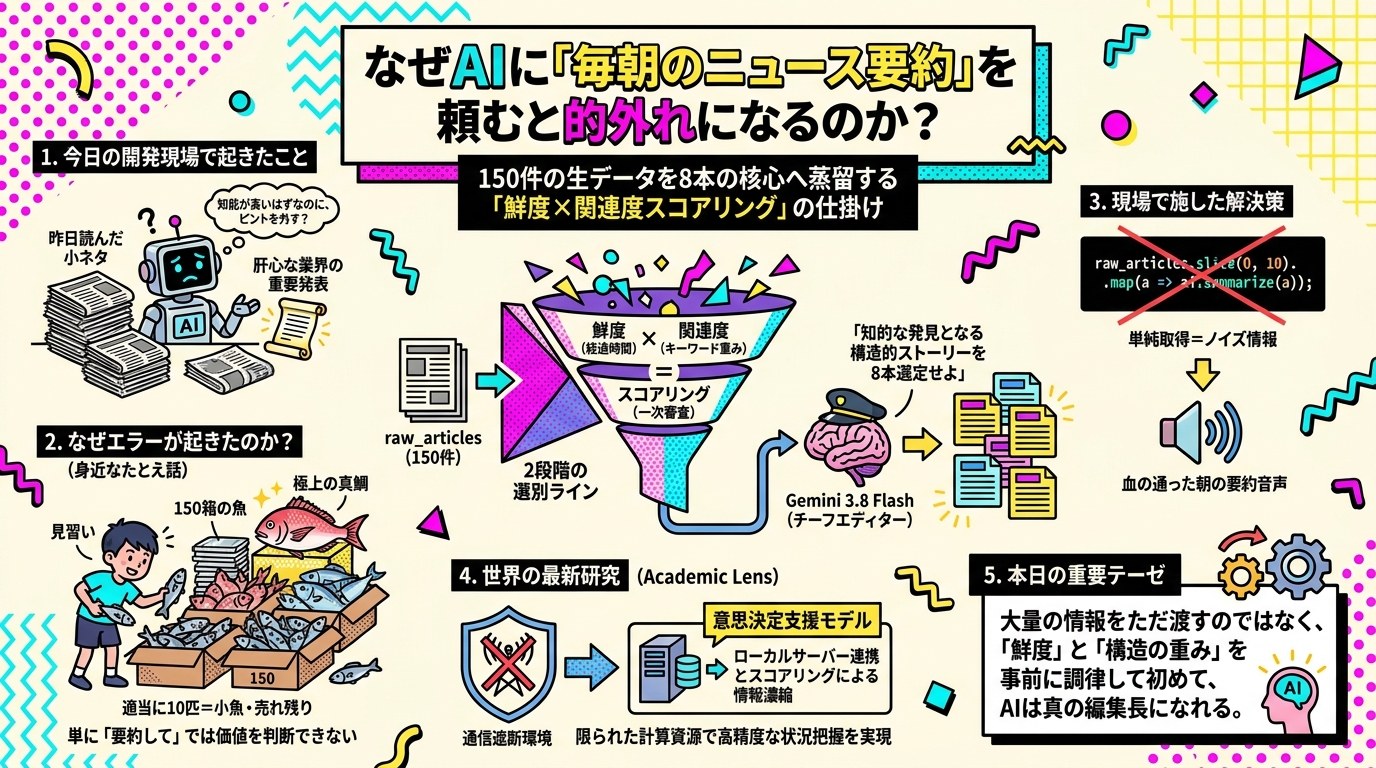
Why Asking AI to Summarize 'Morning News' Always Misses the Mark
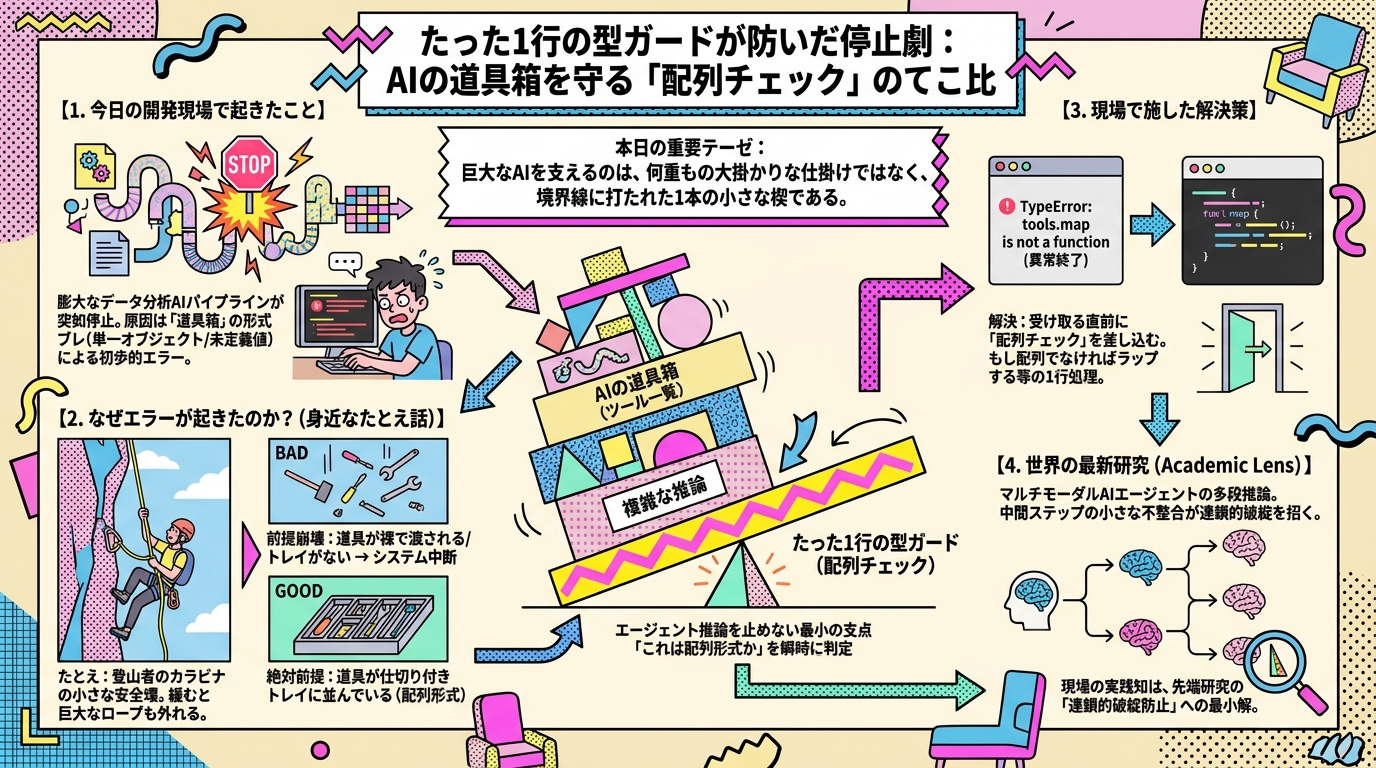
A Single-Line Type Guard That Prevented a Crash: The Leverage Ratio of 'Array Checks' in Protecting the AI's Toolbox