THE SCHOOL OF KAMOS
Connecting Real-world Dev & Academic Intelligence with Intuitive Metaphors
The Design Philosophy of Harnesses: Preventing AI UI Hallucinations
Safety Belts and Fixtures: Bringing Freeform Generative Code into Precise Production Standards
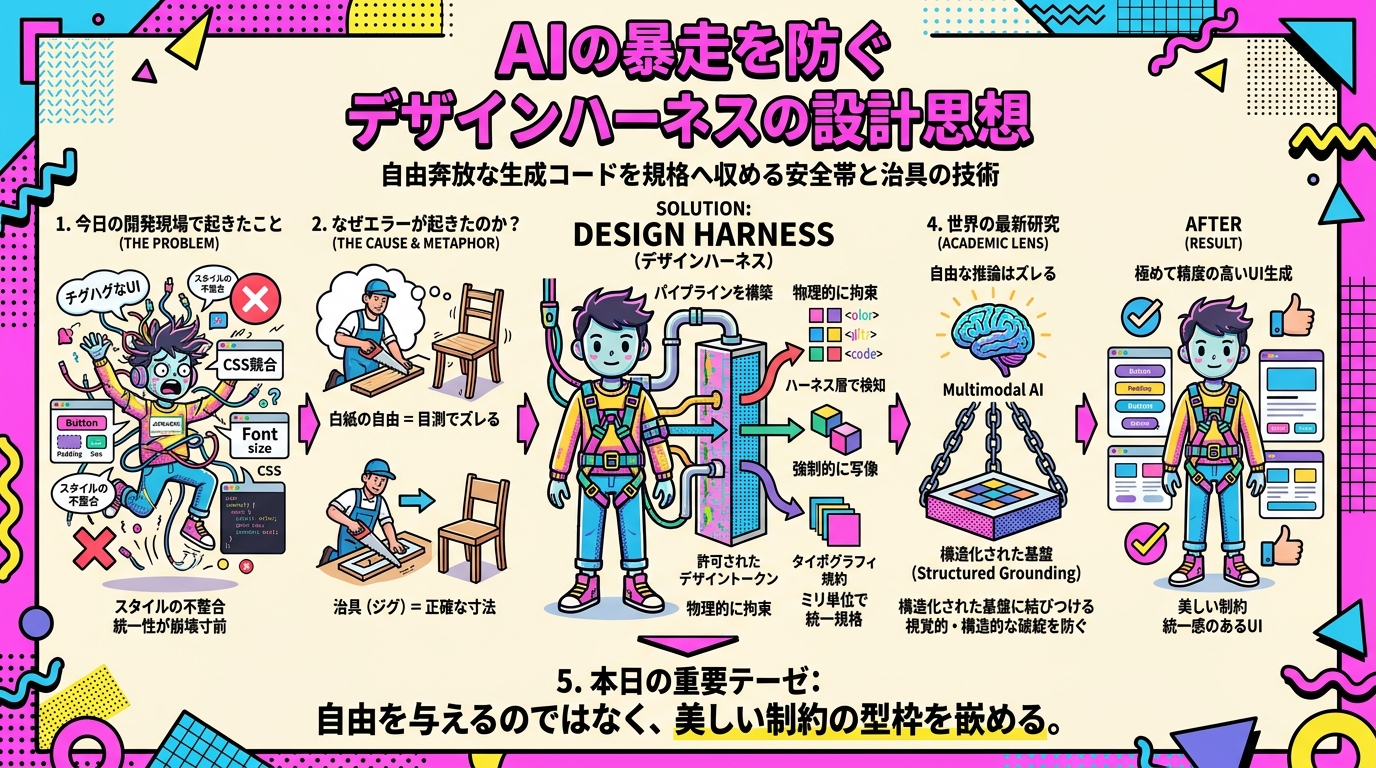
When we entrusted new feature screen creation to AI agents, an incident unfolded: while functionally working at first glance, each generated screen had subtly mismatched font sizes, button paddings, and brand color hex values. No matter how many times we prompted 'maintain design consistency,' CSS collisions and style drifts erupted across pages. The AI opportunistically shifted its interpretation per context, bringing overall UI harmony to the brink of collapse.
The root cause was giving the AI blank-slate freedom. It is akin to asking a woodworker to 'build a nice chair' without providing dimensional blueprints or jigs. Even a master carpenter relying purely on eye estimation will wander off by millimeters, resulting in wobbly legs. What production needs is not reliance on artisanal intuition, but a 'jig'—a fixture that ensures whoever applies the saw cuts only at exact dimensions. Without strict templates constraining generative output before creation begins, minute drifts inevitably compound across iterations.
Hence, we introduced the 'Design Harness.' Much like a safety harness protecting workers at elevated heights, it establishes a pipeline that physically restrains generative processes within brand tokens and typography rules. Even if the AI attempts arbitrary color hex codes or rogue CSS classes, the harness layer intercepts and forcefully maps them onto approved design tokens. By preserving creative flexibility while locking output code into millimeter-grade unified specifications, we achieved robust production stability.
"Do not grant absolute freedom; equip the pipeline with beautiful, structured constraints."Key Takeaway
📖 1-Minute Lexicon
A runtime enforcement framework ensuring generated code and design adheres strictly to predefined brand tokens and layout rules.
The foundational values (colors, spacing, typography) managed under semantic names as the single source of visual truth.
UI Generation Control via Design Harness Architecture
Live Frontier Pulse: Real-World AI Trends
NEC Launches 'NEC SCM AI Agent' for Autonomous Supply Chain Operations
NEC released an enterprise AI agent that autonomously assesses and executes complex supply chain operations like demand forecasting and inventory management, embedding strict production constraints.
How Does This Connect to Global Frontier Research?
When multimodal AI interprets and outputs complex visual or tabular data, unconstrained reasoning often causes coordinate and value misalignments. This paper proposes a reinforcement learning method anchoring perception and thinking to 'Structured Grounding.' The Design Harness embodies this exact philosophy: restraining generated code not by vague prose prompts, but by structured design tokens as ground truth, preventing structural and visual collapses and ensuring high-fidelity UI synthesis.
What is the most effective approach to have AI generate a visually cohesive Web design?
Past School Paper Backnumbers

How Stripping Away Invisible Padding and Caching Dramatically Sharpened Our AI Design Canvas

Why an AI Narrator Reads 'Stage Directions' Aloud—and the Art of Scrubbing the Script Clean
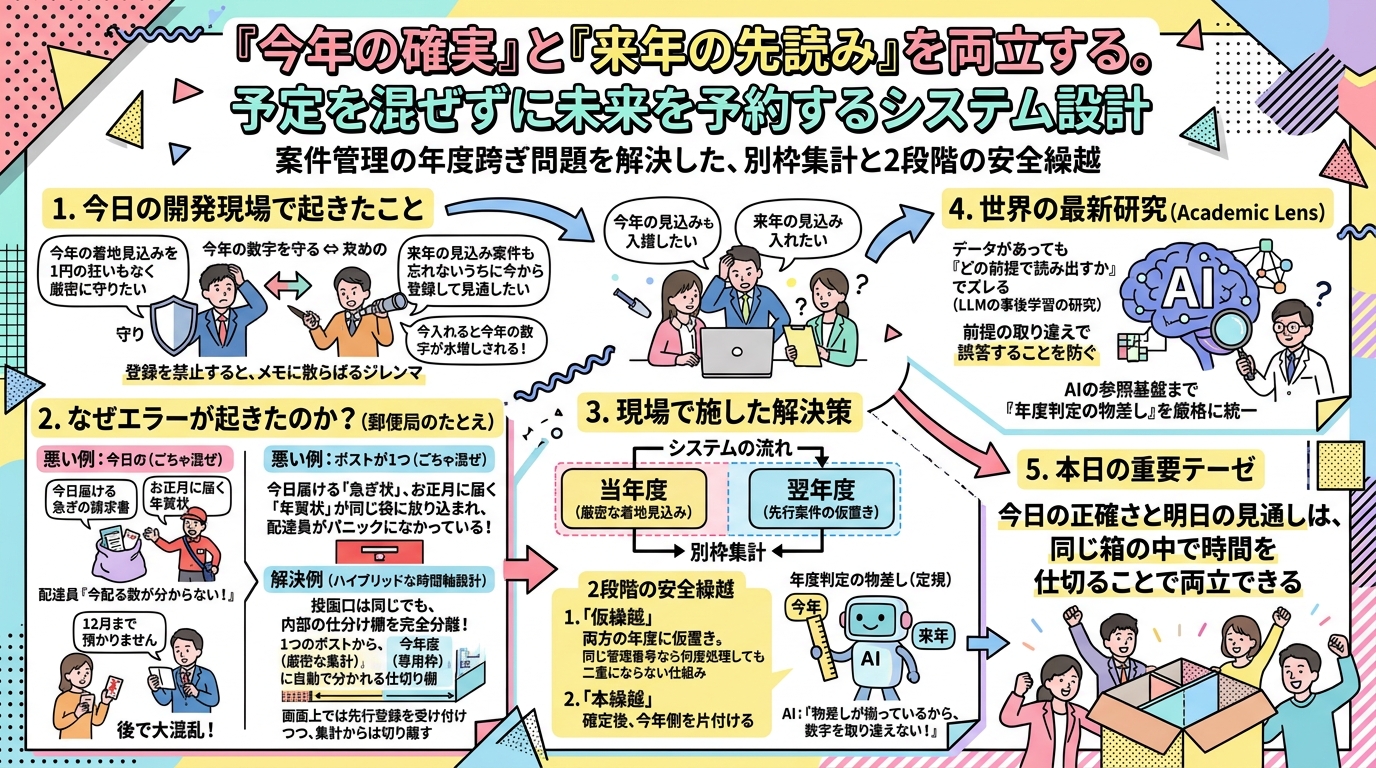
Balancing 'This Year's Certainty' with 'Next Year's Foresight': System Design That Reserves the Future Without Mixing Schedules
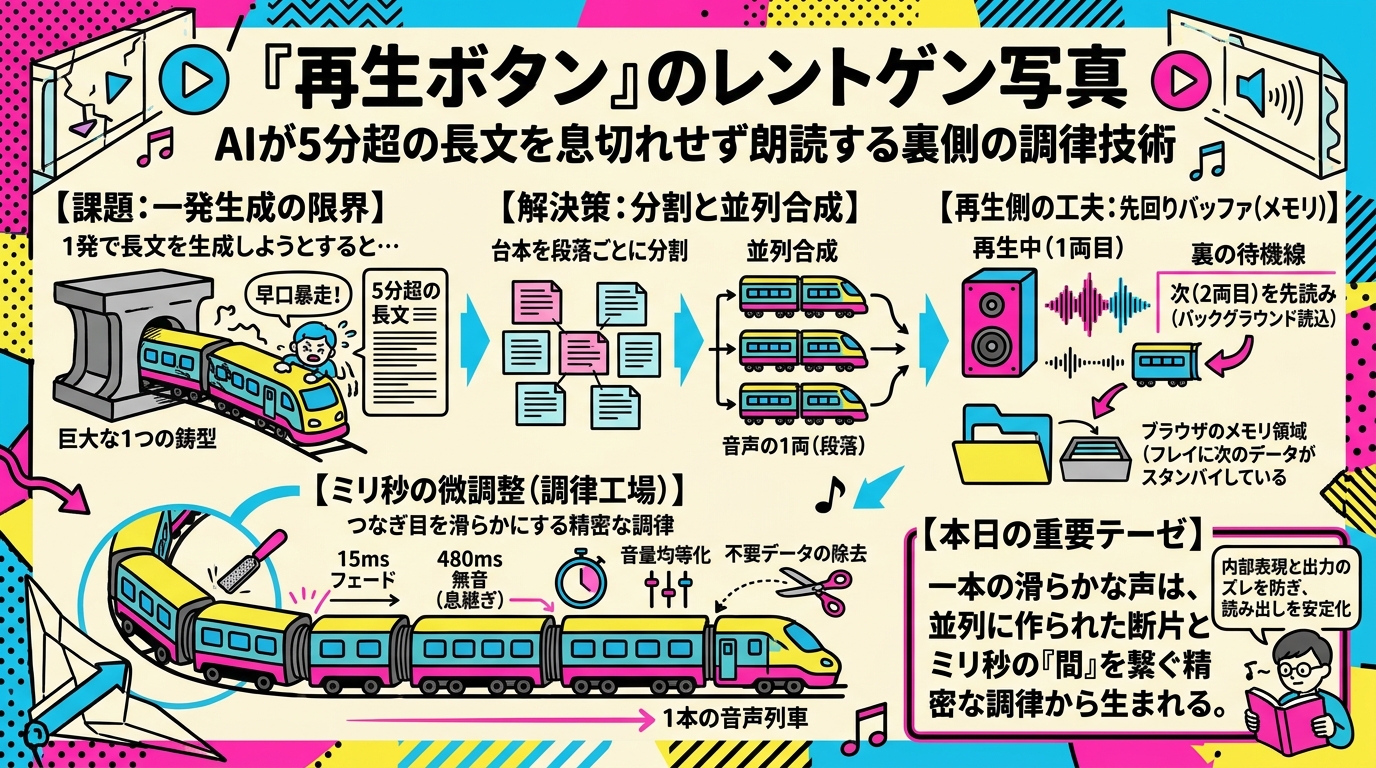
An X-Ray of the Play Button: The Precision Tuning Behind Unhurried Five-Minute AI Narration

Stop the AI, and the Archive Lives On: Designing for Completion at Zero Maintenance Cost
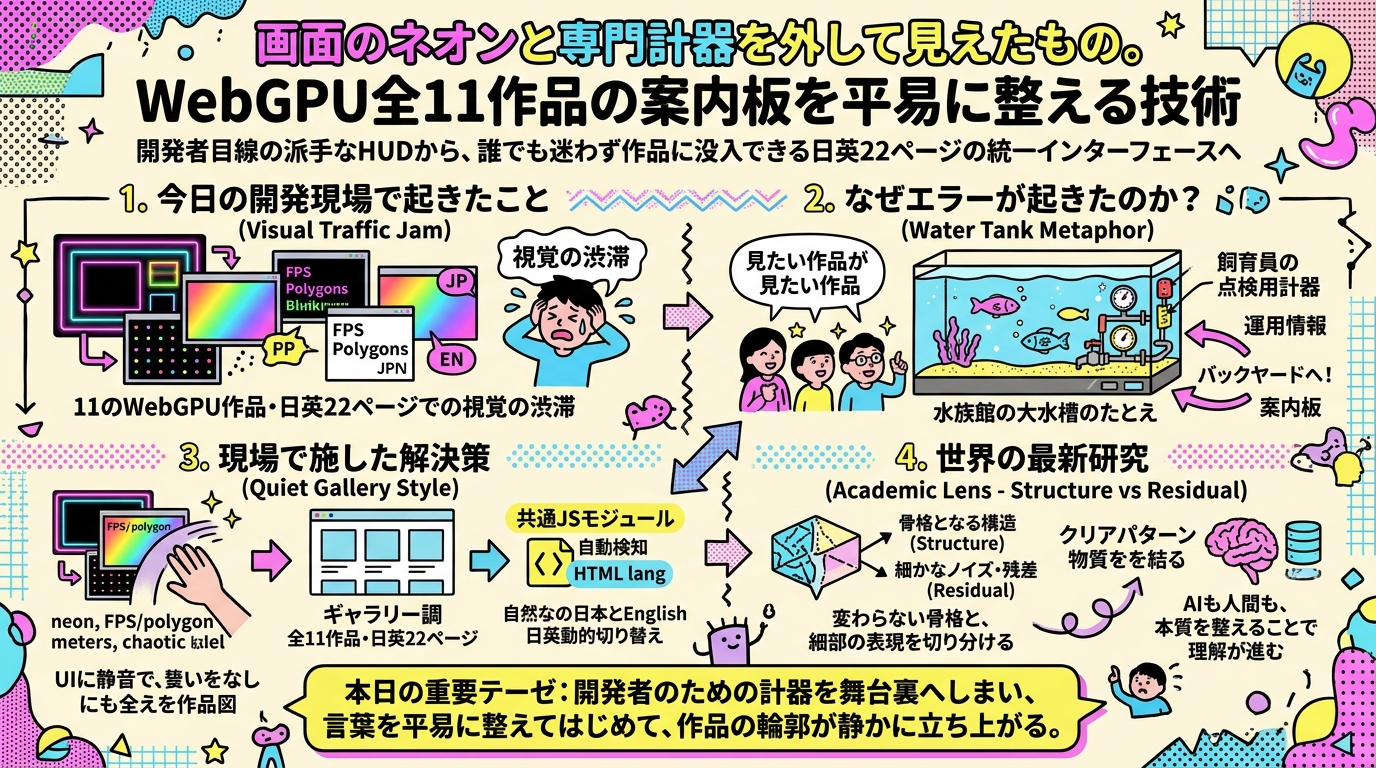
What Appeared When We Removed the Neon and Technical Gauges: Crafting Effortless Wayfinding Across 11 WebGPU Works

20,000 Characters Distilled into a Single Four-Quadrant Diagram: Where Long-Form Summarization Stands Today with the Latest Image Model, Nano Banana 2.1
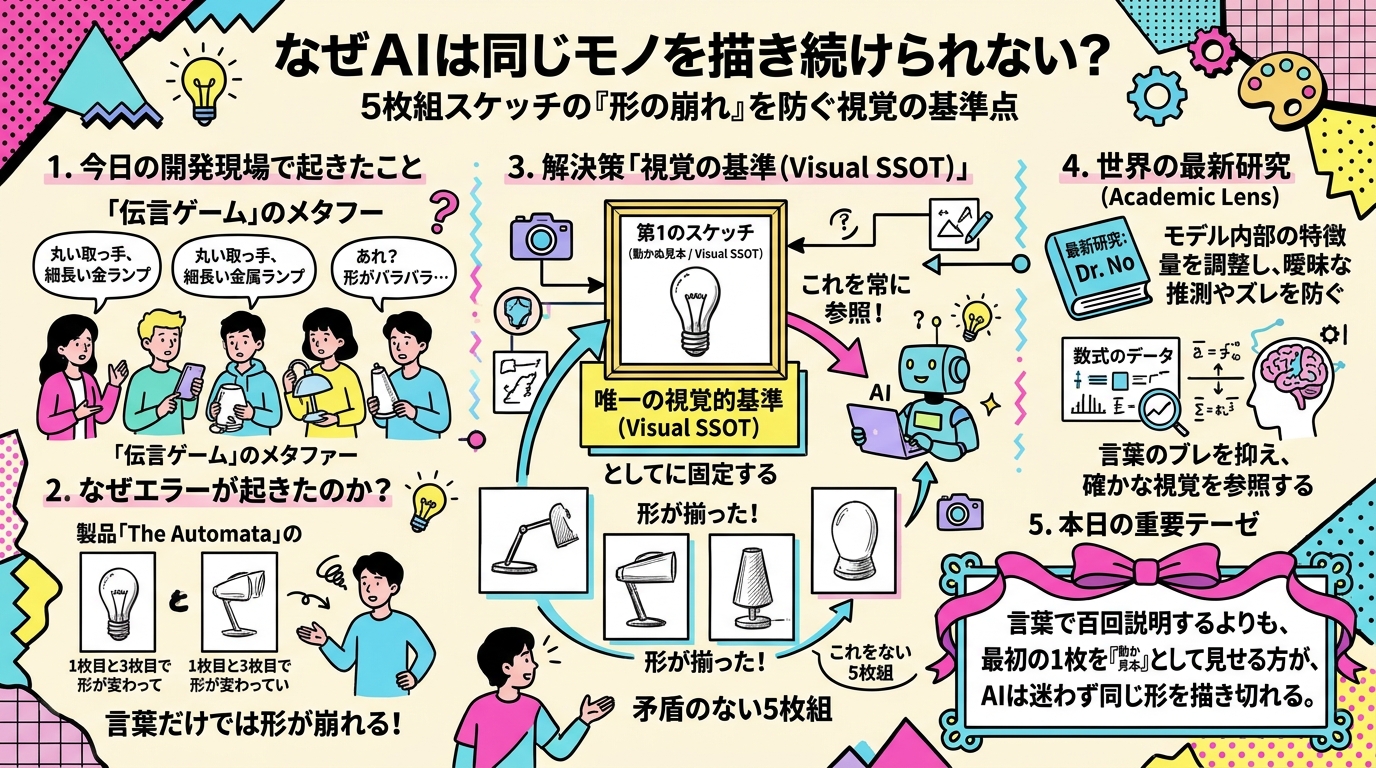
Why Can't AI Keep Drawing the Same Object? A Visual Anchor to Prevent Structural Drift in 5-Panel Sketches
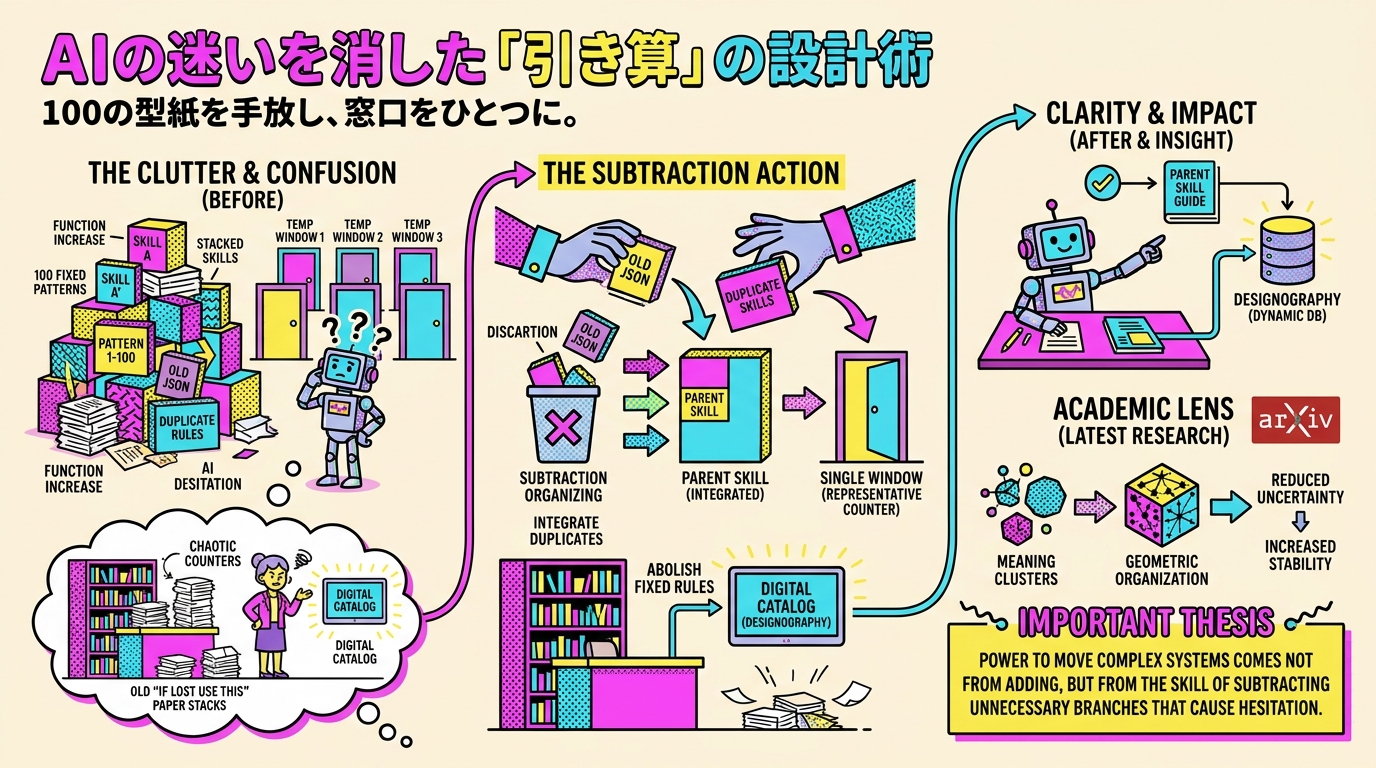
Letting Go of 100 Templates for a Single Desk: The Art of Subtractive Design That Eliminated AI Hesitation
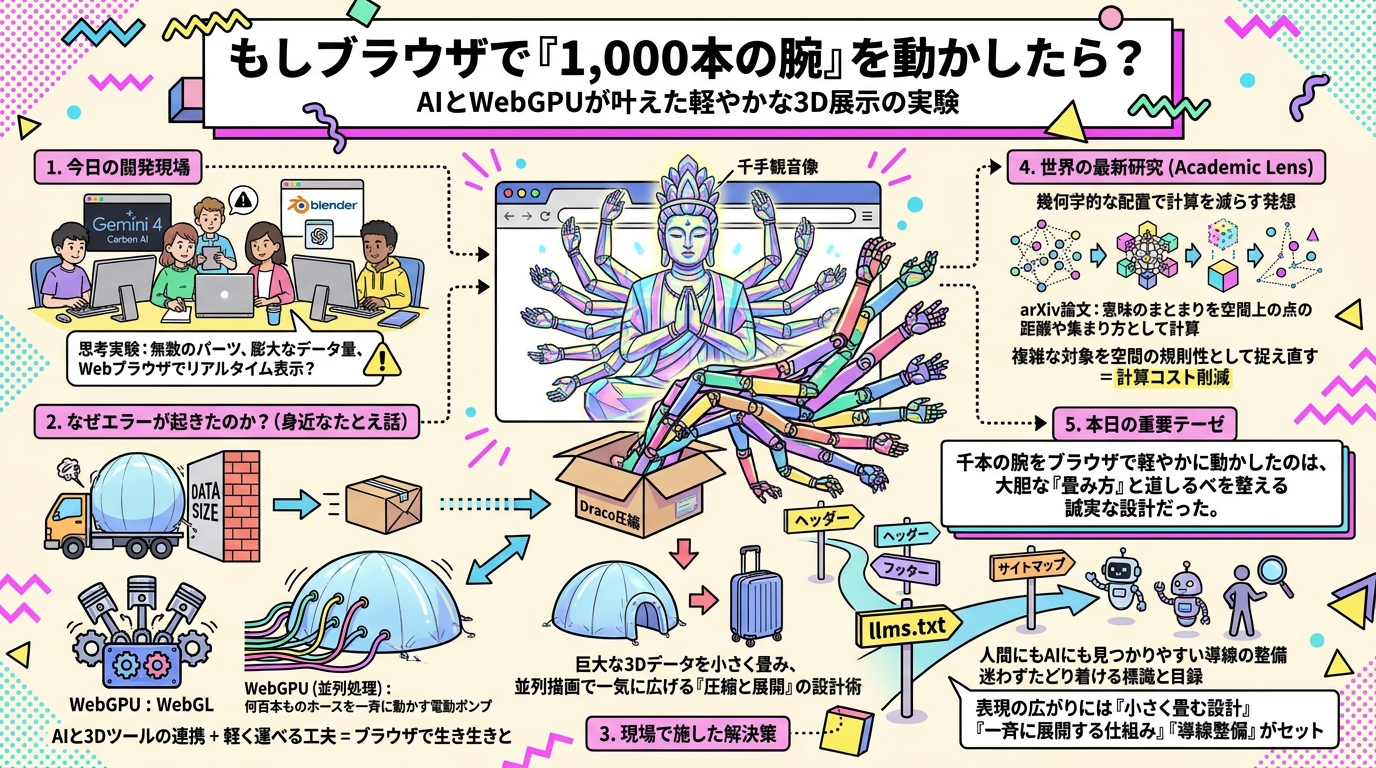
What If You Animated '1,000 Arms' in a Browser? A Lightweight 3D Exhibition Experiment Powered by AI and WebGPU
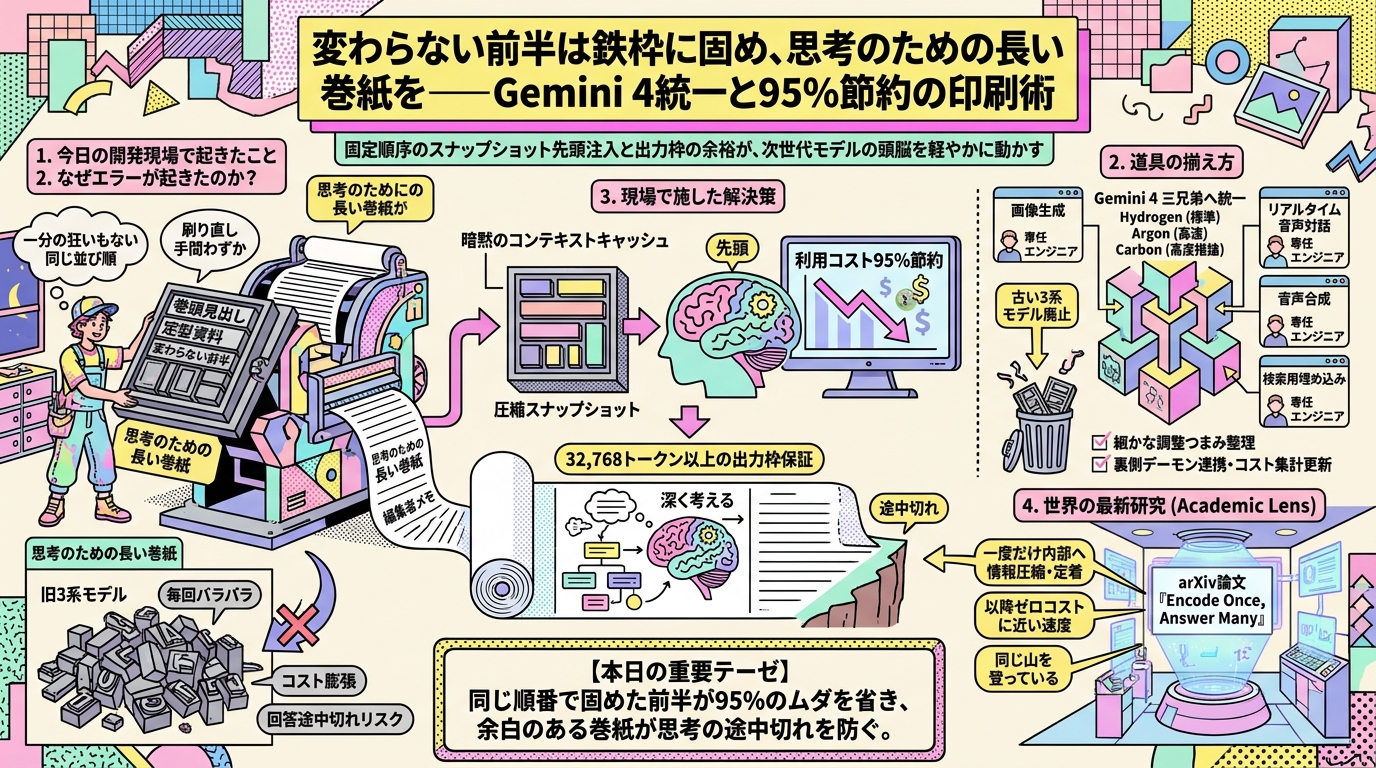
Locking the Constant Lead in Iron, Unrolling Long Scrolls for Thought — Gemini 4 Unification and the Art of 95% Printing Savings
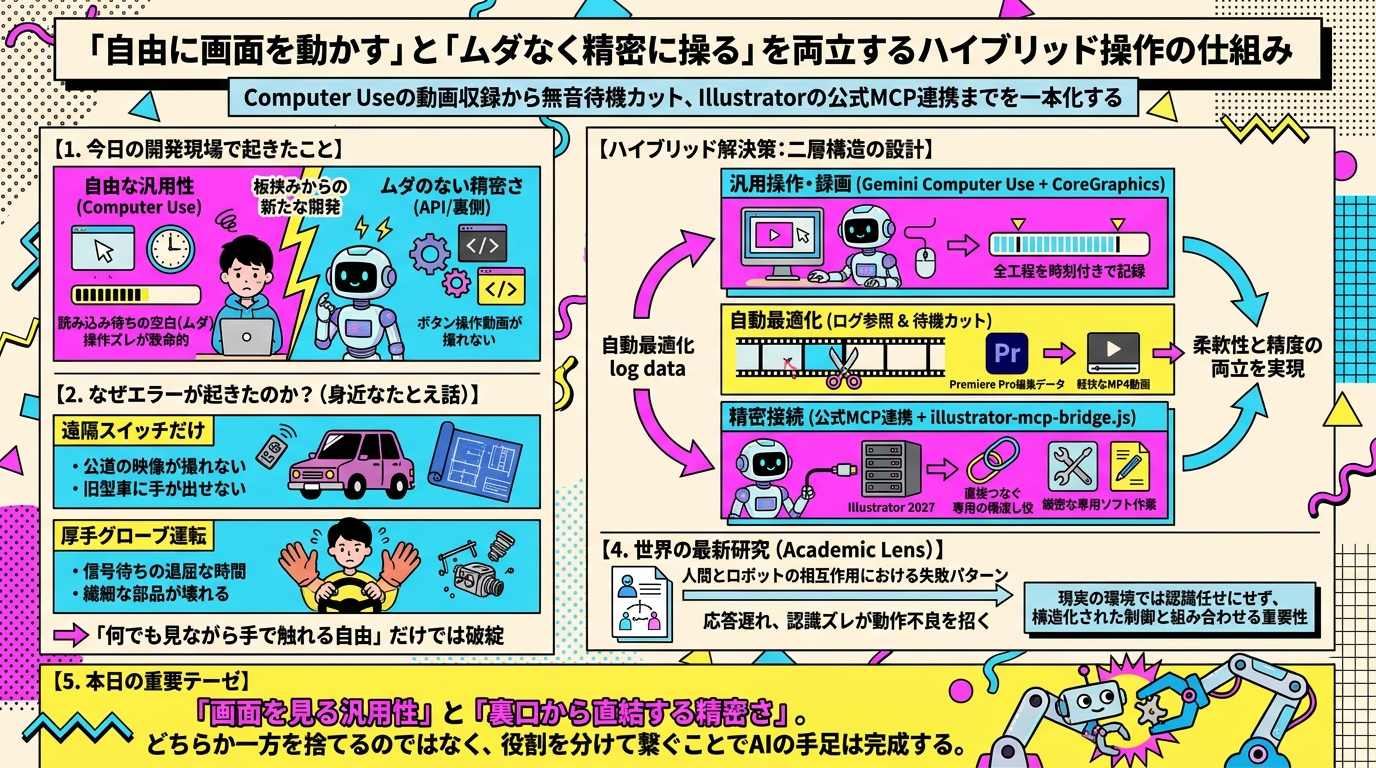
A Hybrid Control Architecture Bridging Free-Form Screen Navigation and Lean, Precision Execution
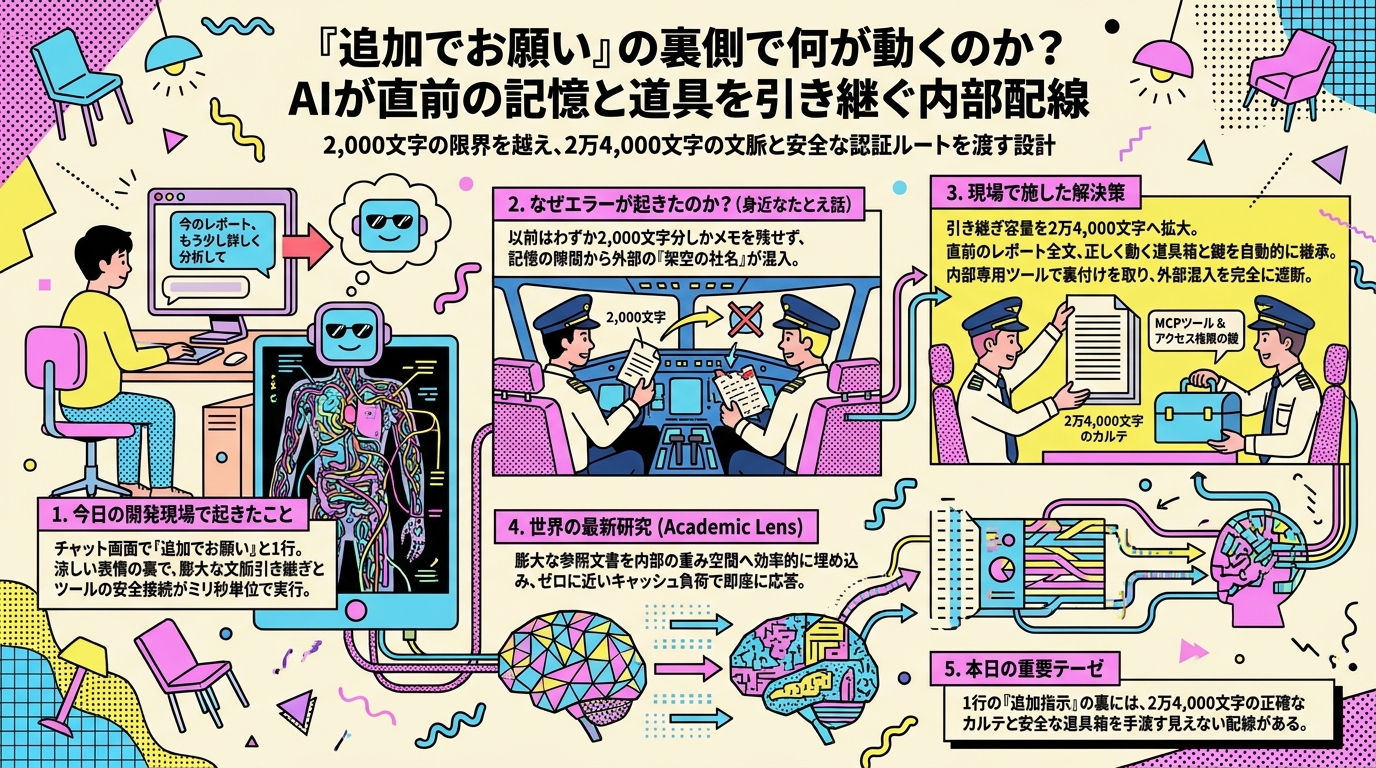
Behind "Just One More Request": The Internal Wiring That Hands Off Memory and Tools Between AIs