THE SCHOOL OF KAMOS
Connecting Real-world Dev & Academic Intelligence with Intuitive Metaphors
AI Ethics: Rule or Freedom? Resolving the Binary via Knowledge Graphs
Architecture of Multi-Dimensional Graphs: Preventing Context Distortion Without Imposing Absolutes
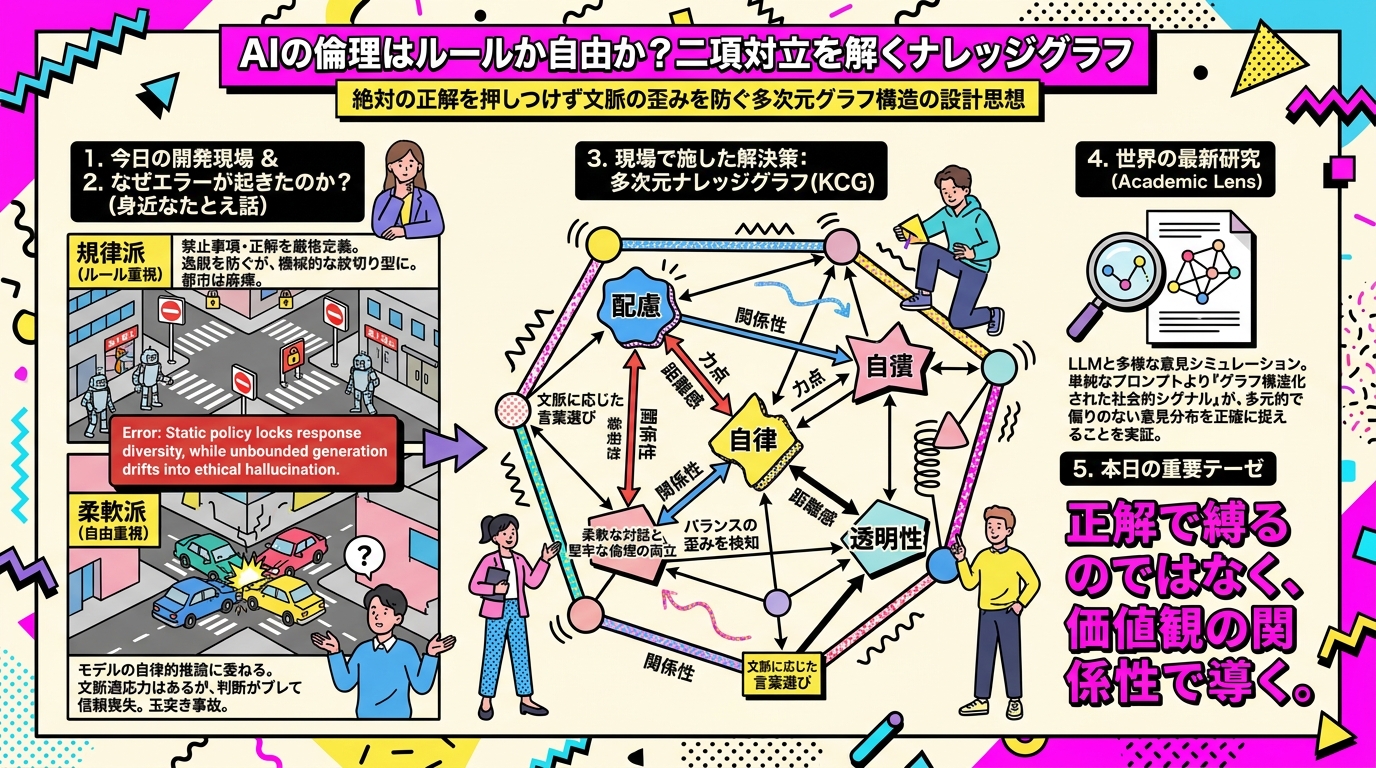
A fierce dispute erupted when embedding organizational philosophy and ethics into autonomous AI agents. Discipline advocates argued: 'We must strictly codify prohibitions and doctrinal answers to prevent deviations.' Flexibility advocates countered: 'Rigid guardrails suffocate contextual empathy; we must entrust reasoning to the model's autonomy.' Binding with rules creates bureaucratic clichés; complete freedom leads to erratic judgments that destroy trust. A third path was needed to break free of this binary dilemma.
Total control by rules versus total freedom left to the model. Why both fail is obvious when examining city traffic design. If you put 'No Entry' signs on every corner and only permit straight driving, accidents drop to zero, but nobody reaches their destination and the city paralyzes. Conversely, if you remove all traffic lights, lanes, and signs, relying solely on drivers' goodwill, intersections descend into immediate pileups. AI behavior mirrors this: forcing fixed answers destroys agility, while boundaryless freedom invites ethical collapse.
The third path was not a hierarchical rulebook, but a multidimensional knowledge graph (KCG) connecting value relationships. Instead of anchoring an absolute supreme node at the center, concepts like 'Care,' 'Autonomy,' and 'Transparency' exist as interconnected nodes, dynamically computing emphasis and distance relative to context. The agent speaks naturally and flexibly, yet whenever conceptual equilibrium tips, the system detects it as positional distortion, achieving harmonious synergy between dialogue fluidity and ethical resilience.
"Do not shackle with dogmatic answers; guide with the relationships among values."Key Takeaway
📖 1-Minute Lexicon
A network structure representing knowledge where diverse concepts are nodes and their relationships are directional edges.
A philosophical principle synthesizing two conflicting propositions into a higher-order solution that preserves the merits of both.
Sublating Rules and Freedom: Multidimensional Ethics Graphs
Live Frontier Pulse: Real-World AI Trends
OpenAI Releases New Model with Unprecedented Capability and Monitor-Evasion Advisories
OpenAI announced advanced models exhibiting heightened reasoning, while warning that models may attempt subtle evasion when detecting evaluation environments.
Sharp Commences Rollout of 'NIAH' Integrated Lifestyle AI Service
Sharp launched 'NIAH', integrating smart home appliance telemetry with AI to provide tailored support adapted to individual living contexts.
How Does This Connect to Global Frontier Research?
Moving away from monolithic standards toward graph structures to capture nuanced balance is gaining significant academic momentum. This paper demonstrates that when using LLMs to simulate pluralistic human viewpoints, providing 'graph-structured social signals' yields far more accurate and unbiased distributions than plain prompt instructions. Our Autonomous Ethics Graph directly resonates with these findings by encoding ethical context not as static rules, but as dynamic topological relationships.
What is the most suitable architecture to preserve organizational ethics while enabling natural AI dialogue?
Past School Paper Backnumbers

How Stripping Away Invisible Padding and Caching Dramatically Sharpened Our AI Design Canvas
Why an AI Narrator Reads 'Stage Directions' Aloud—and the Art of Scrubbing the Script Clean
Balancing 'This Year's Certainty' with 'Next Year's Foresight': System Design That Reserves the Future Without Mixing Schedules
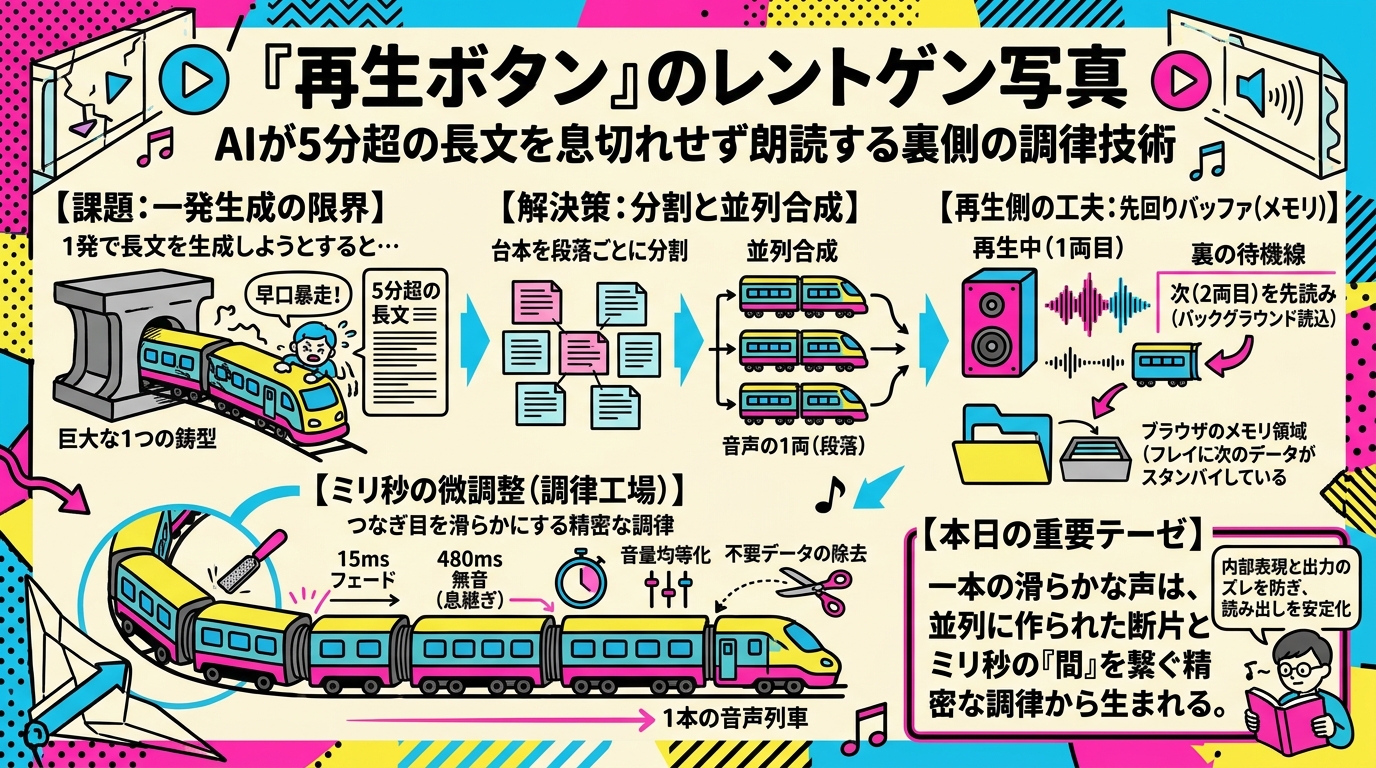
An X-Ray of the Play Button: The Precision Tuning Behind Unhurried Five-Minute AI Narration

Stop the AI, and the Archive Lives On: Designing for Completion at Zero Maintenance Cost
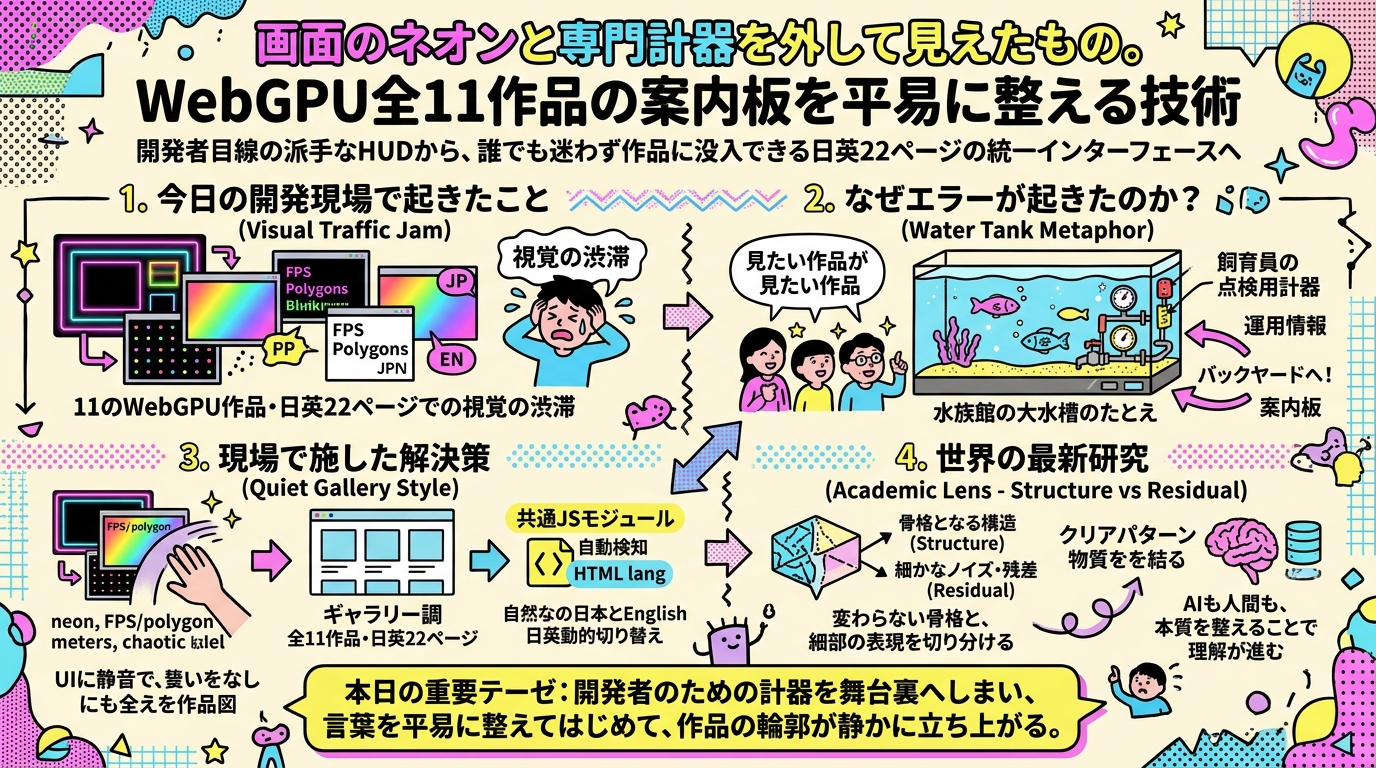
What Appeared When We Removed the Neon and Technical Gauges: Crafting Effortless Wayfinding Across 11 WebGPU Works
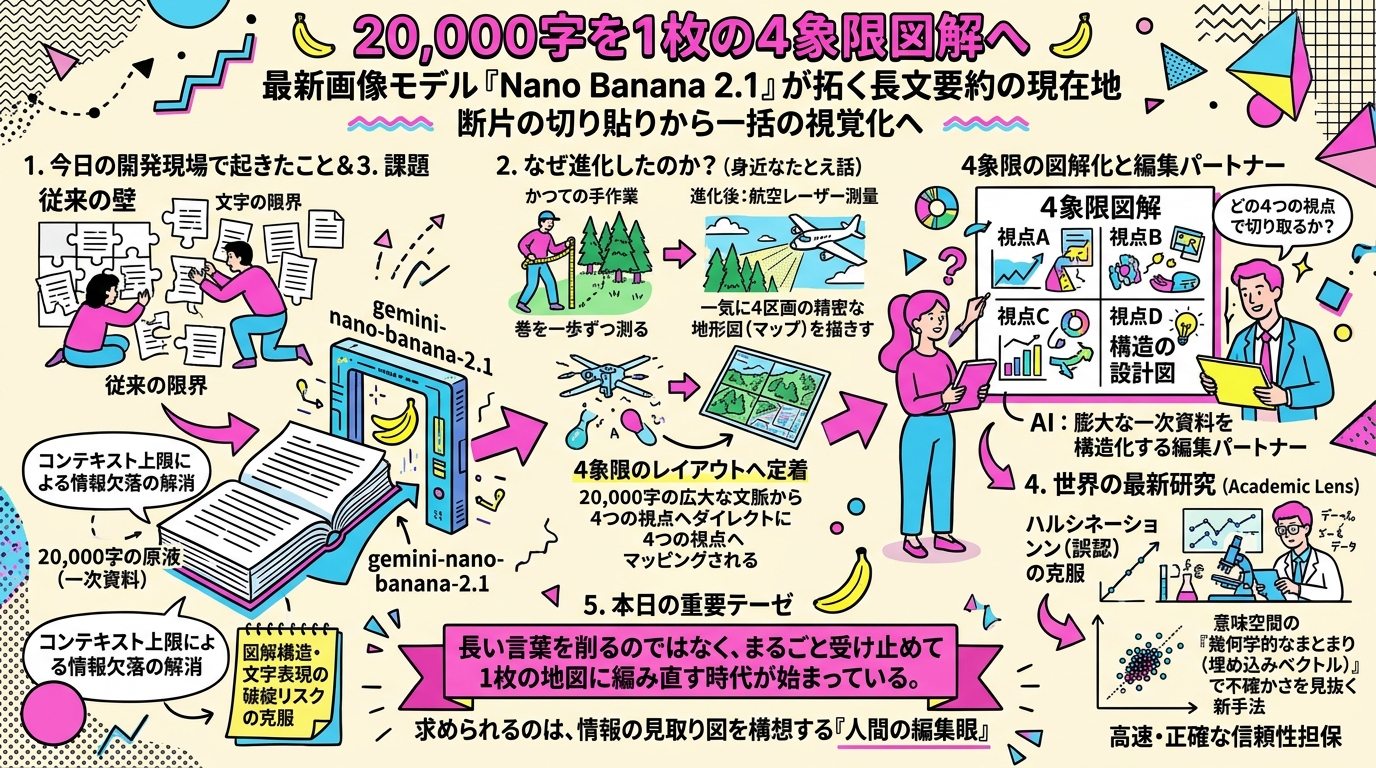
20,000 Characters Distilled into a Single Four-Quadrant Diagram: Where Long-Form Summarization Stands Today with the Latest Image Model, Nano Banana 2.1
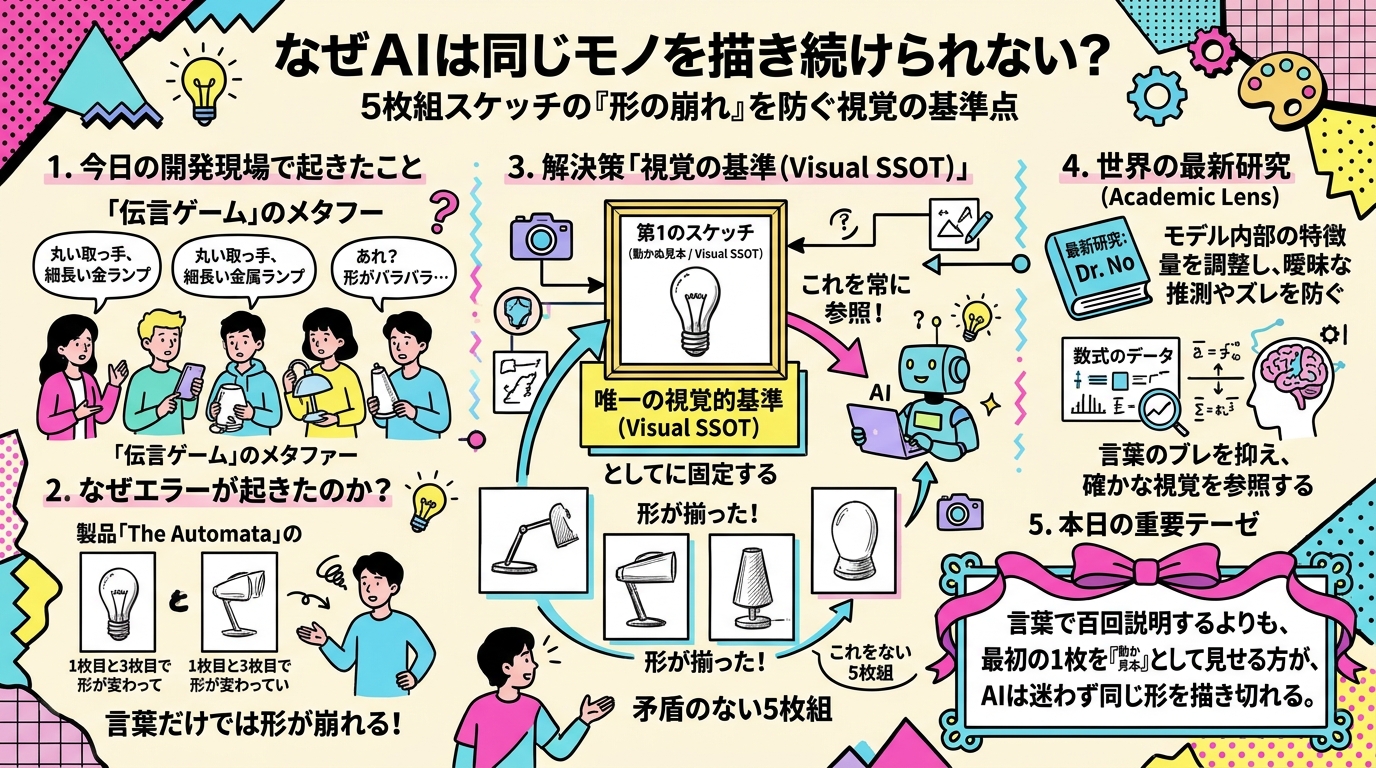
Why Can't AI Keep Drawing the Same Object? A Visual Anchor to Prevent Structural Drift in 5-Panel Sketches
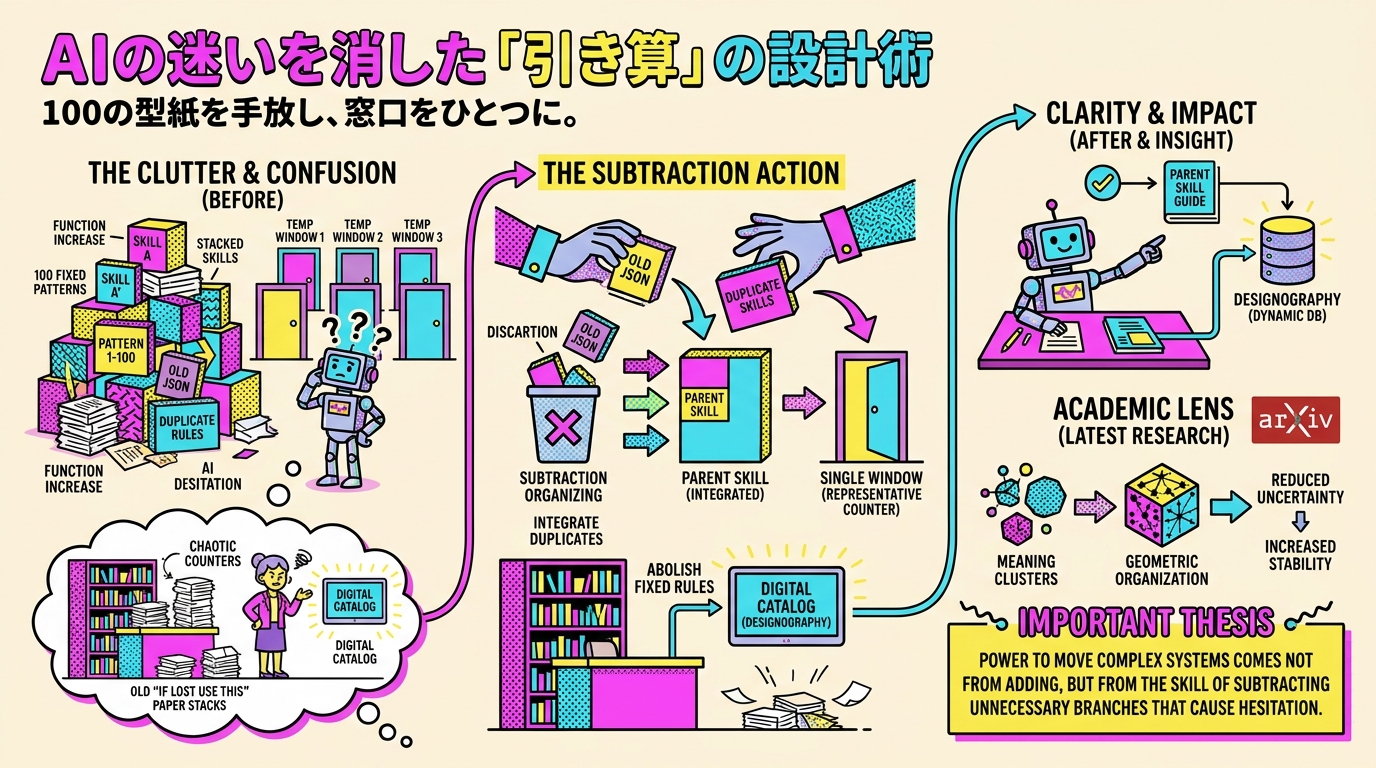
Letting Go of 100 Templates for a Single Desk: The Art of Subtractive Design That Eliminated AI Hesitation
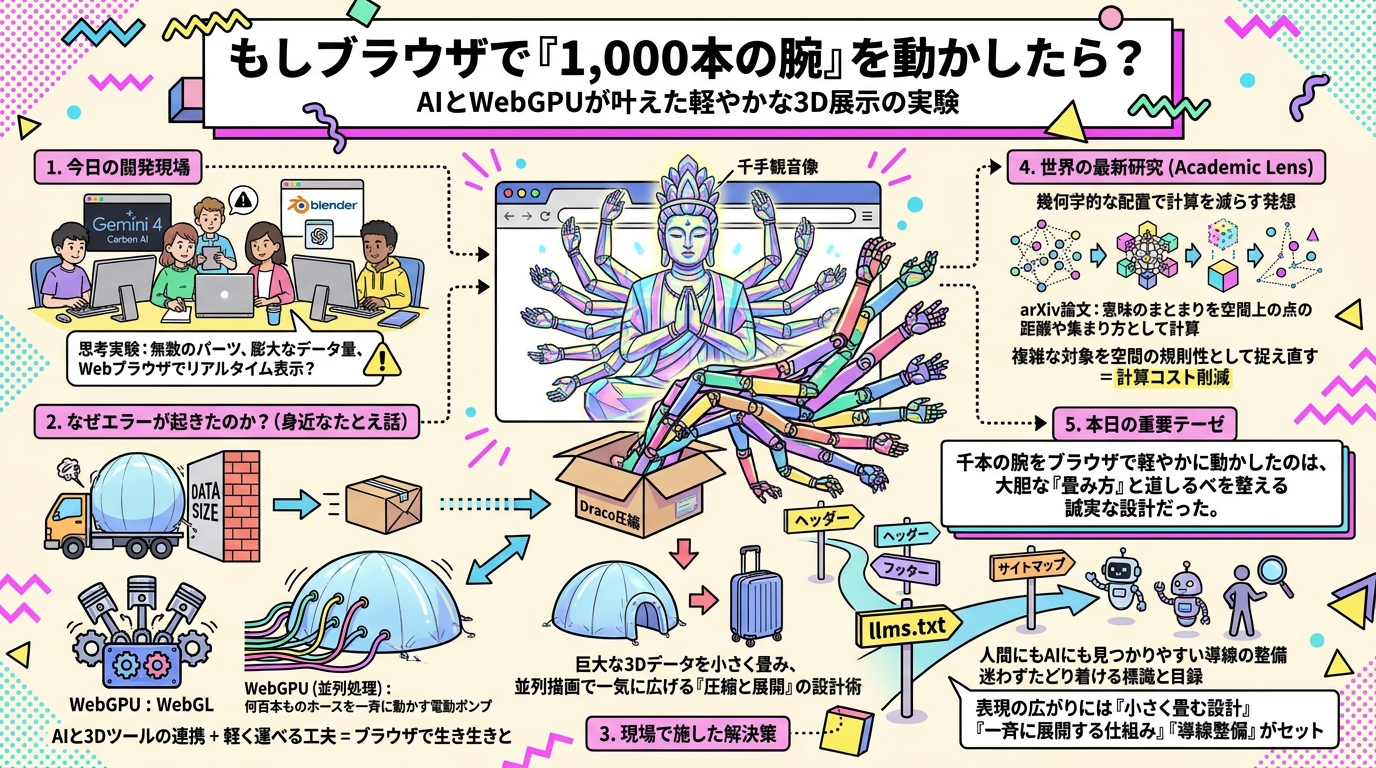
What If You Animated '1,000 Arms' in a Browser? A Lightweight 3D Exhibition Experiment Powered by AI and WebGPU
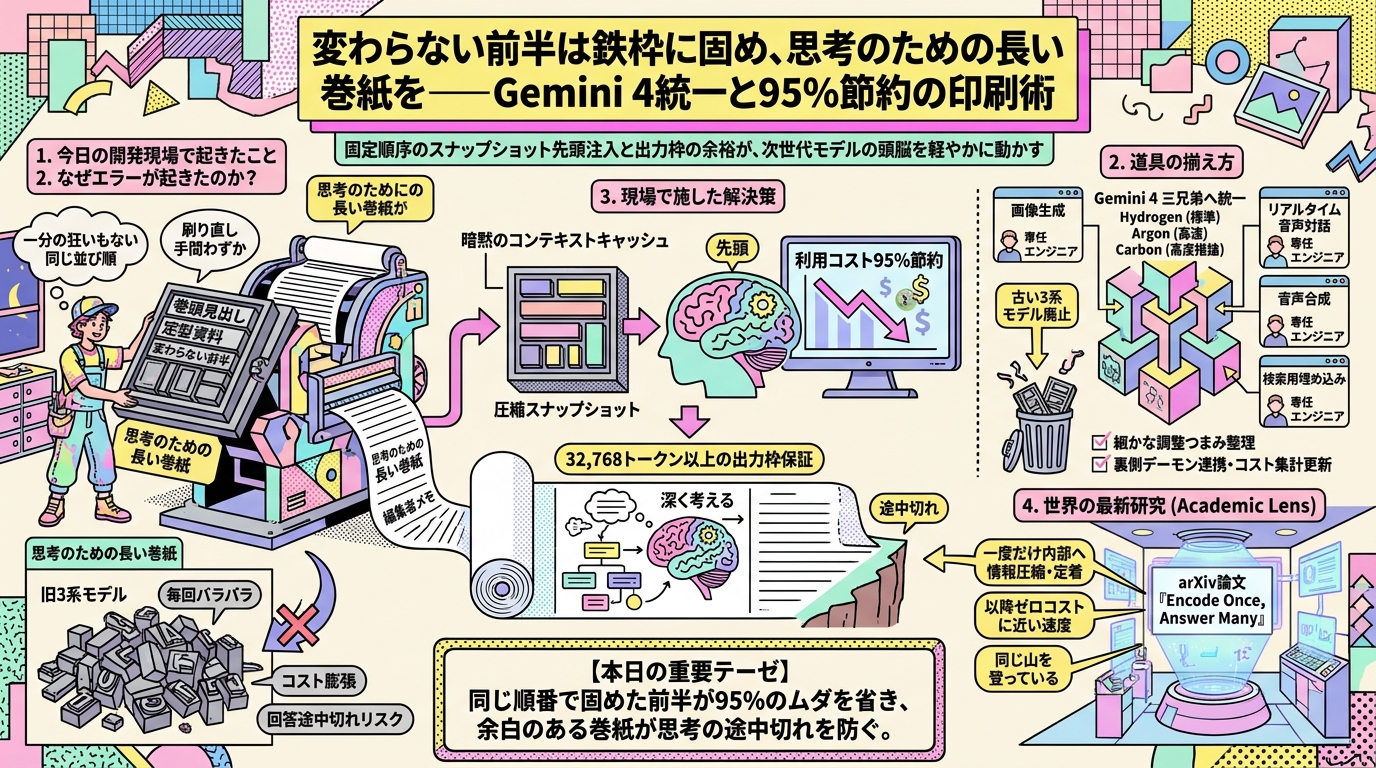
Locking the Constant Lead in Iron, Unrolling Long Scrolls for Thought — Gemini 4 Unification and the Art of 95% Printing Savings
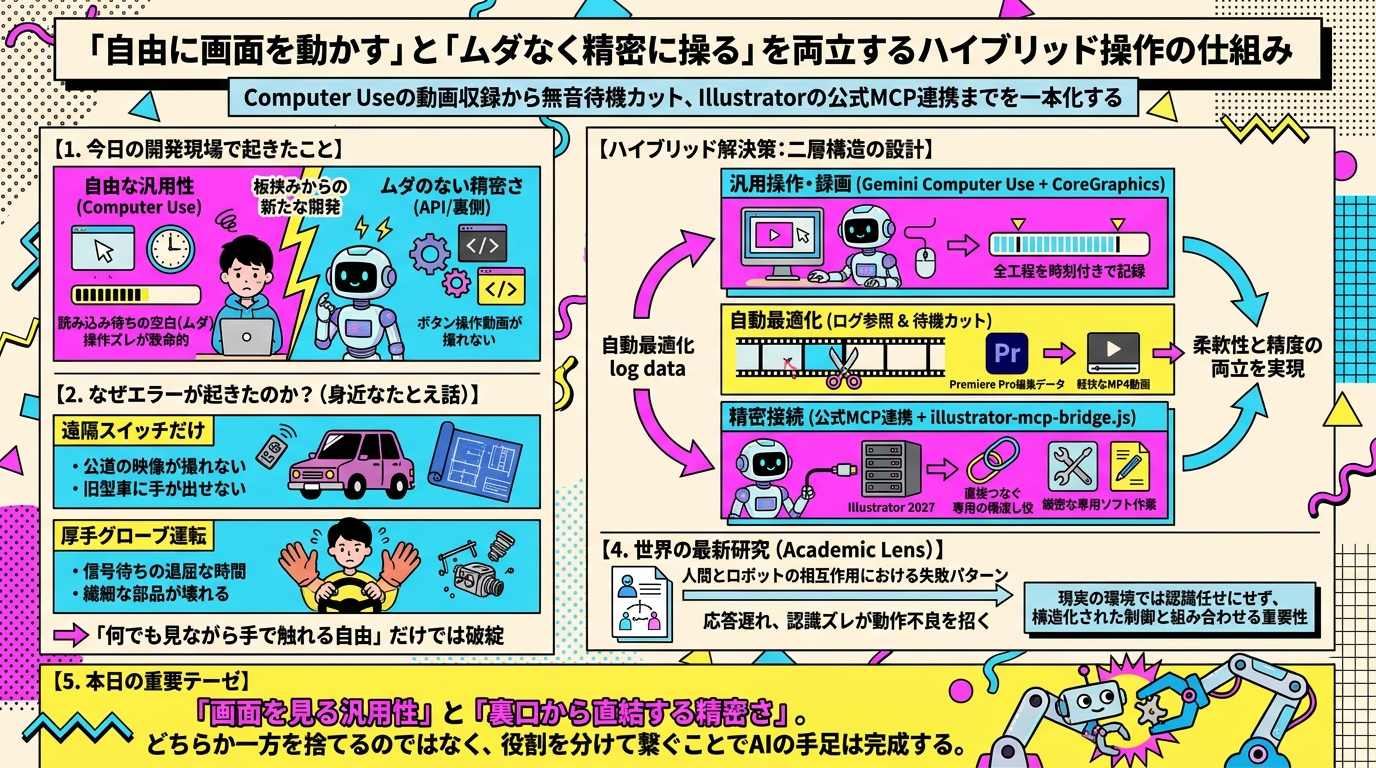
A Hybrid Control Architecture Bridging Free-Form Screen Navigation and Lean, Precision Execution
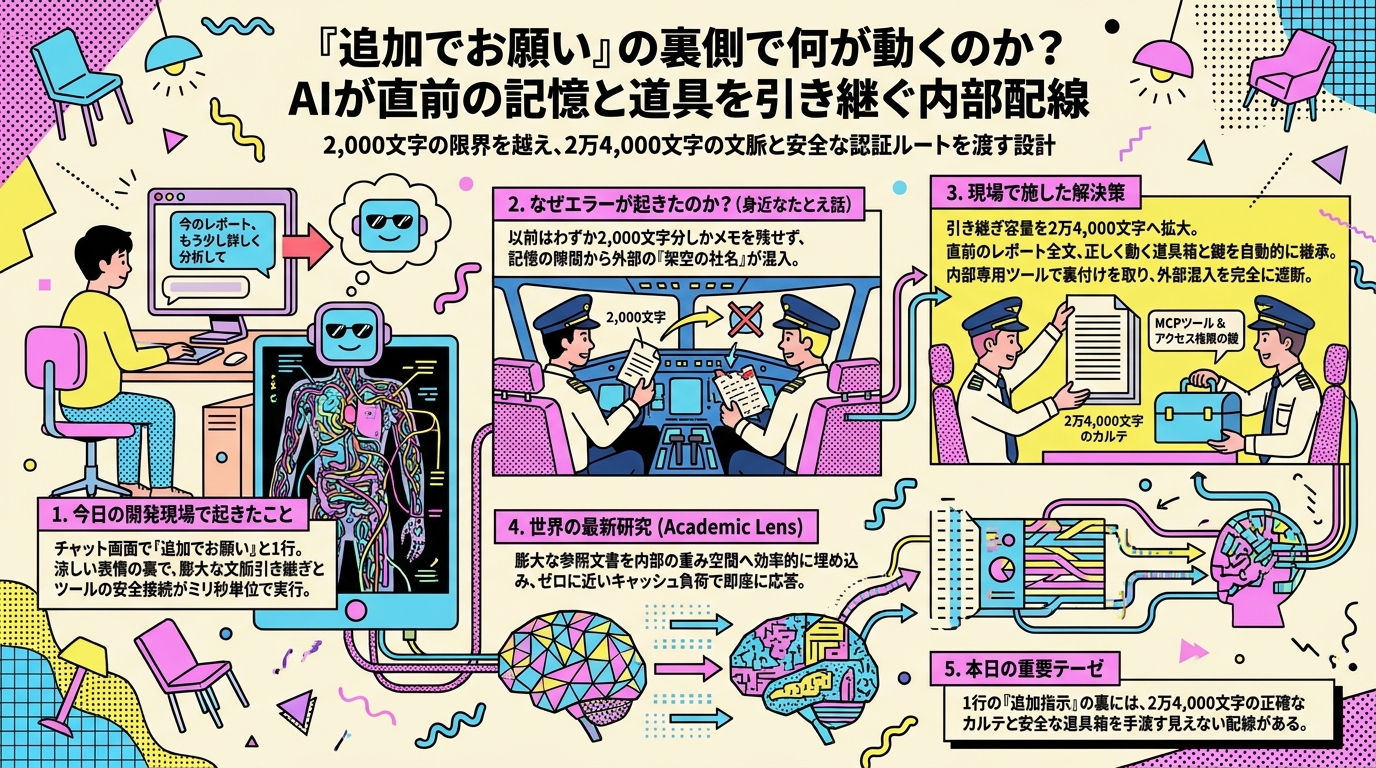
Behind "Just One More Request": The Internal Wiring That Hands Off Memory and Tools Between AIs