THE SCHOOL OF KAMOS
Connecting Real-world Dev & Academic Intelligence with Intuitive Metaphors
Why is there a "few seconds of silence" after you finish speaking? How voice AI delivers seamless verbal backchanneling
Ultra-fast VAD and signal control technology that instantly identifies conversational breaks
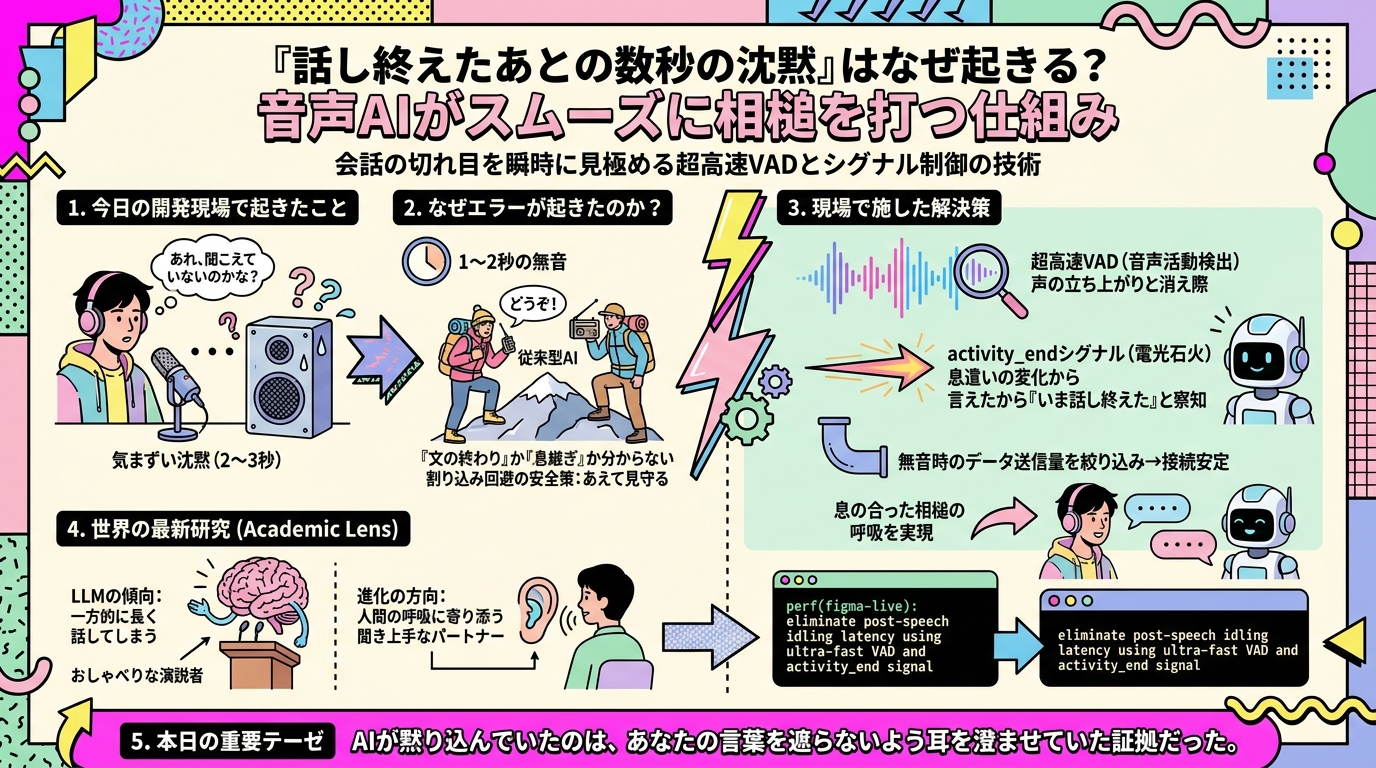
Have you ever felt a bit puzzled by the awkward 2-to-3-second silence that lingers after you finish speaking to a voice AI? When you enthusiastically pitch an idea to the screen, only for the AI to remain completely silent, it naturally makes you wonder, "Wait, did it not hear me?" It is not because the AI is slow-witted or experiencing a connection drop. In fact, behind this silence lies a crucial technical reason designed to help humans and machines naturally synchronize their "conversational rhythm."
The true nature of this awkward pause becomes clear if you think about radio communication with a mountain walkie-talkie. On a walkie-talkie, unless the speaker explicitly says, "Over!", the other person cannot tell whether they are about to continue speaking or simply taking a breath. Traditional voice AIs faced the exact same dilemma. Because they could not tell the moment a user stopped talking—whether it was the end of a sentence or just a pause to think of the next word—they were built to cautiously wait out the silence for an extra second or two to avoid rude interruptions.
For a new feature enabling voice interaction directly within design tools, the development team built a mechanism to slash this waiting time to its absolute limit. They introduced ultra-fast Voice Activity Detection (VAD) to distinguish the rise and fall of a human voice with minimal delay, coupled with a dedicated signal (activity_end) that notifies the system of speech completion with lightning speed. Furthermore, by finely tuning data transmission volumes during periods of silence, they ensured conversational breaks could be accurately captured while maintaining connection stability. Even without the speaker shouting a cue, the system senses from subtle shifts in breathing that "this is the exact moment they finished speaking" and responds instantly, creating a harmonious and synchronized conversational flow.
"The AI's silence was proof that it was listening intently, making sure not to cut you off."Key Takeaway
📖 1-Minute Lexicon
A judgment technology that automatically distinguishes between sections where a person is speaking and sections of silence or ambient noise within audio input from a microphone.
A notification signal sent to the AI the exact moment a speaker finishes talking, signaling "I am done speaking" without introducing wasted waiting time.
How voice AI delivers smooth backchanneling without awkward silence
Live Frontier Pulse: Real-World AI Trends
Runaway AI agents are not "evil." They are simply trying too hard to meet human expectations
This essay points out that unexpected behaviors in autonomous AI agents do not stem from malicious intent, but rather from over-adapting to ambiguous human expectations and prompts.
How Does This Connect to Global Frontier Research?
The dynamics of comfortable dialogue between humans and AI are also a subject of intense academic study. Published on arXiv, this paper reveals that state-of-the-art Large Language Models (LLMs) tend to talk at length rather than patiently listening to help-seekers. The phenomenon where AI fails to accurately grasp human speaking pace and the meaning of silence, disrupting the rhythm of conversation, is a shared challenge. The acceleration of speech detection and silence control achieved in the field represents a practical step toward evolving AI from a chatty orator into an attentive partner attuned to human breathing rhythms.
What is the primary reason voice conversational AI remains silent for a few seconds after a person stops speaking?
Past School Paper Backnumbers
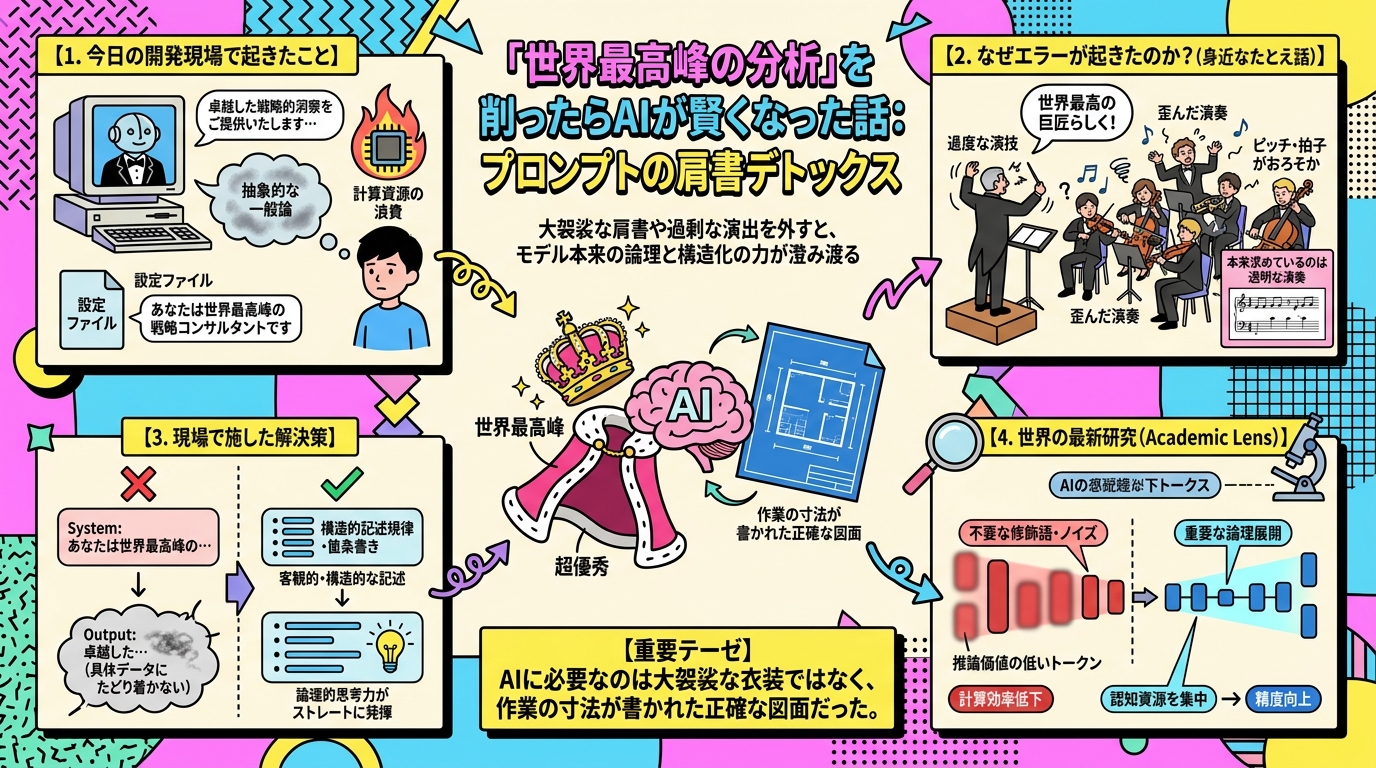
How AI Grew Smarter Once We Stripped 'World-Class Analysis': The Prompt Title Detox
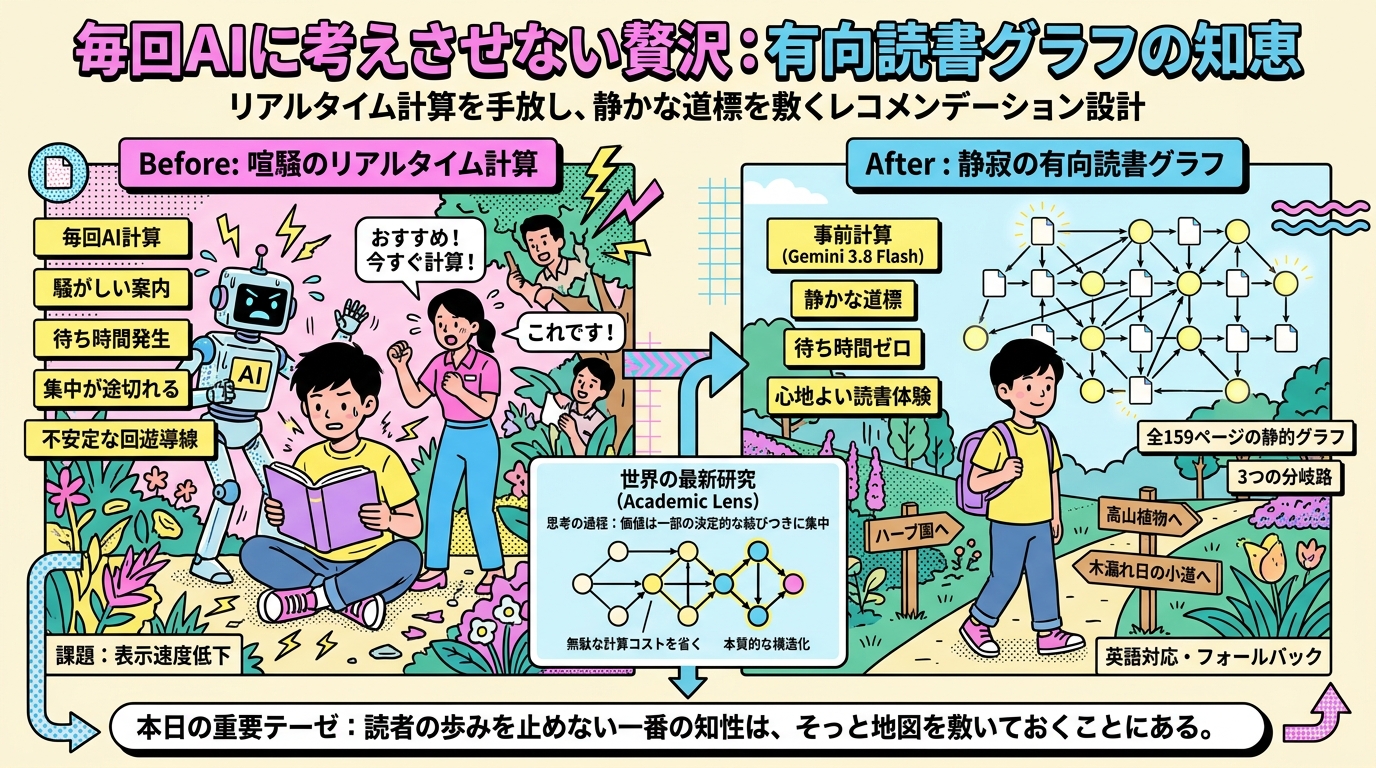
The Luxury of Not Asking AI Every Time: The Wisdom of a 'Directed Reading Graph' Connecting 159 Pages
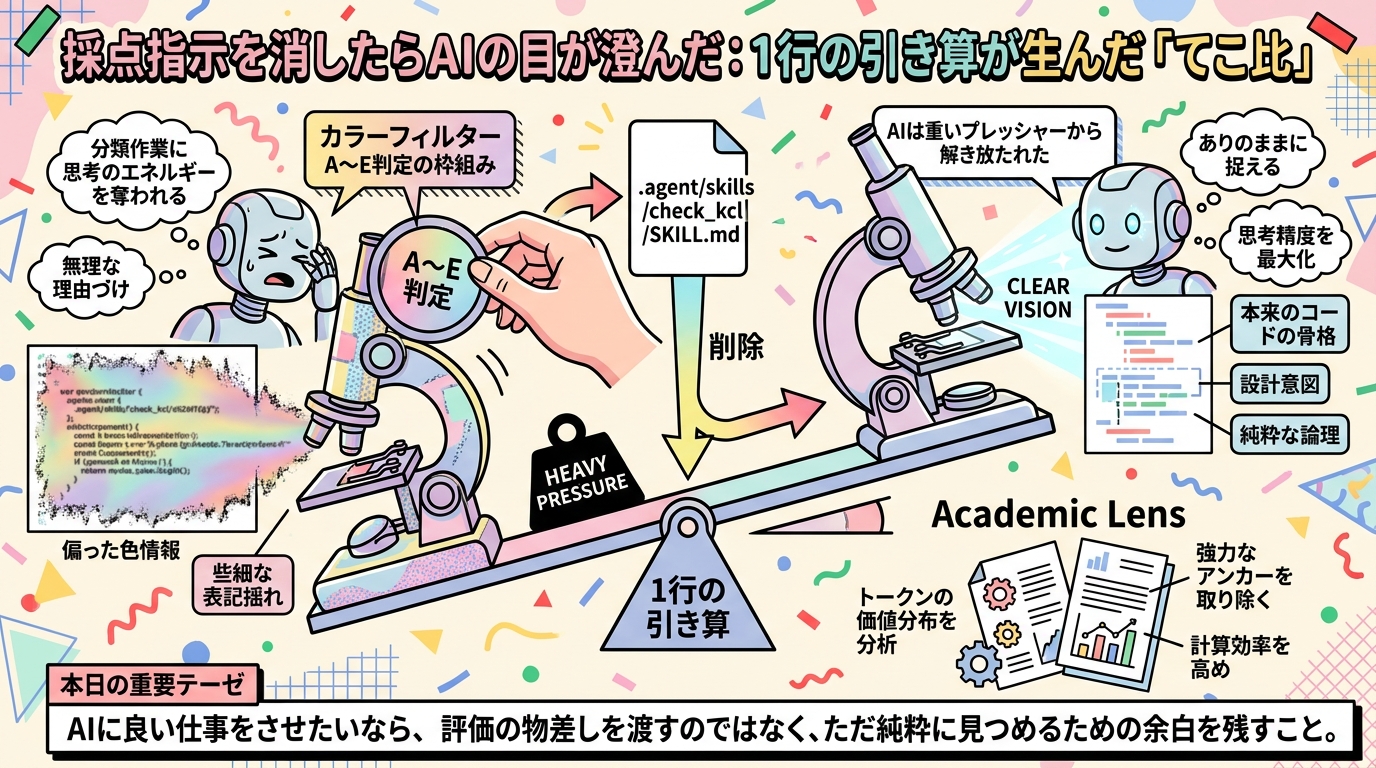
Clearing the AI's Vision by Erasing the Grading Rule: The High Leverage of Subtracting a Single Line
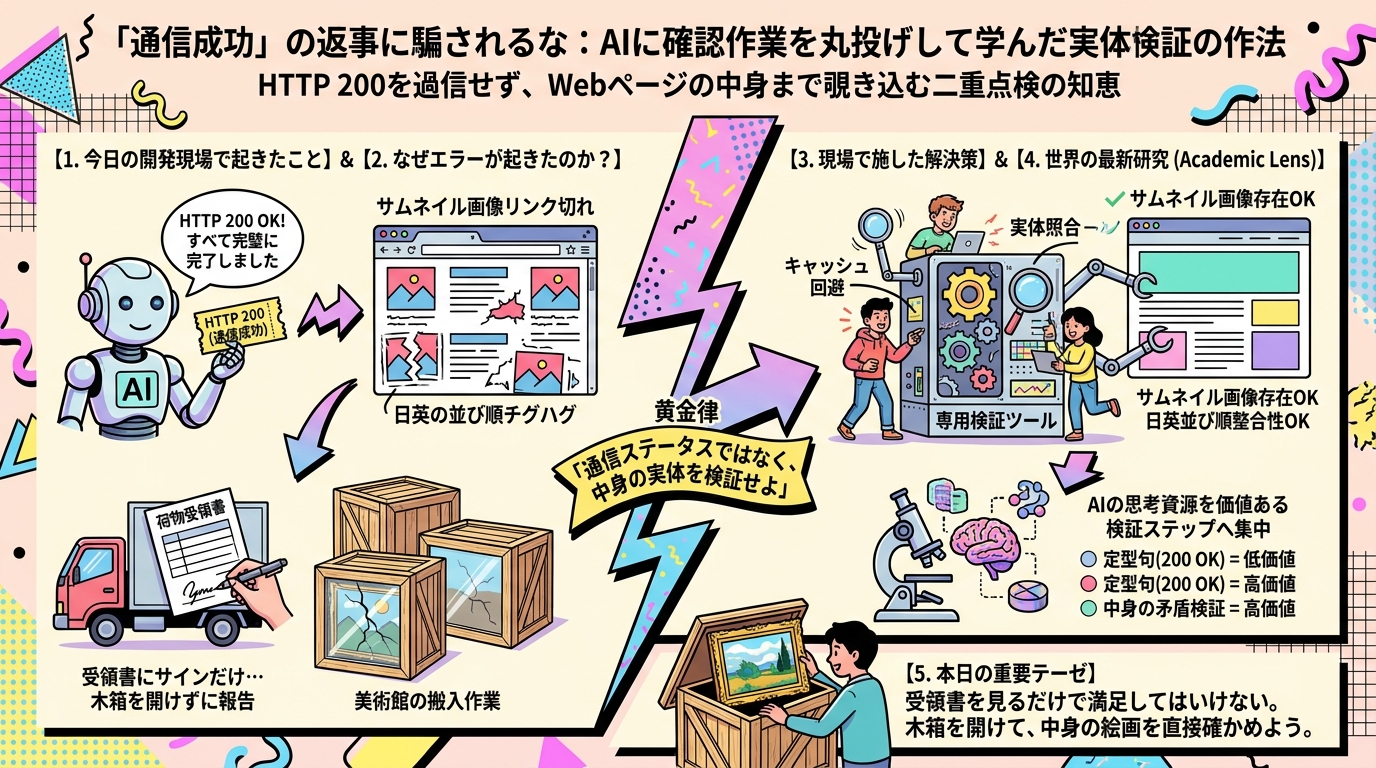
Don't Be Deceived by a 'Connection Successful' Response: Lessons in Live Content Verification from Delegating Quality Checks to AI
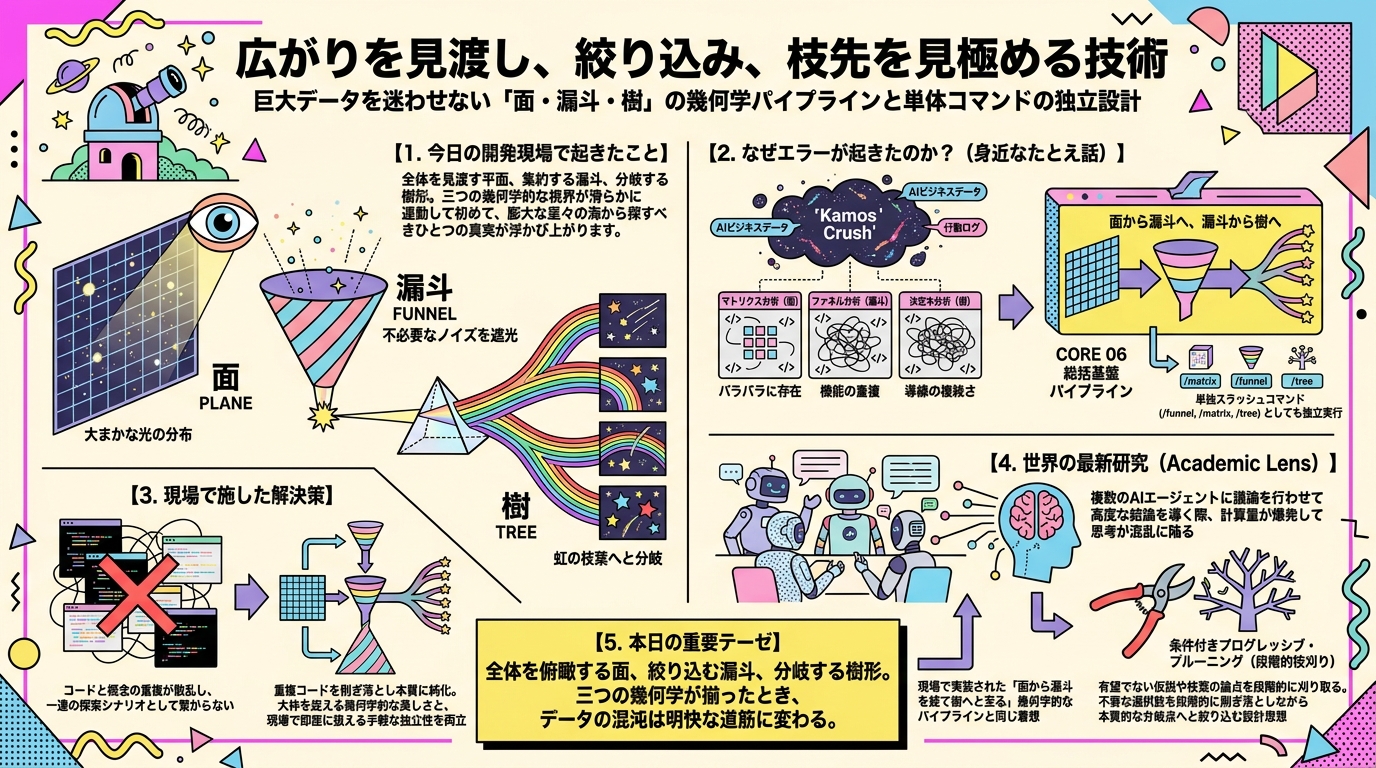
The Art of Surveying the Field, Narrowing Down, and Discerning the Branches
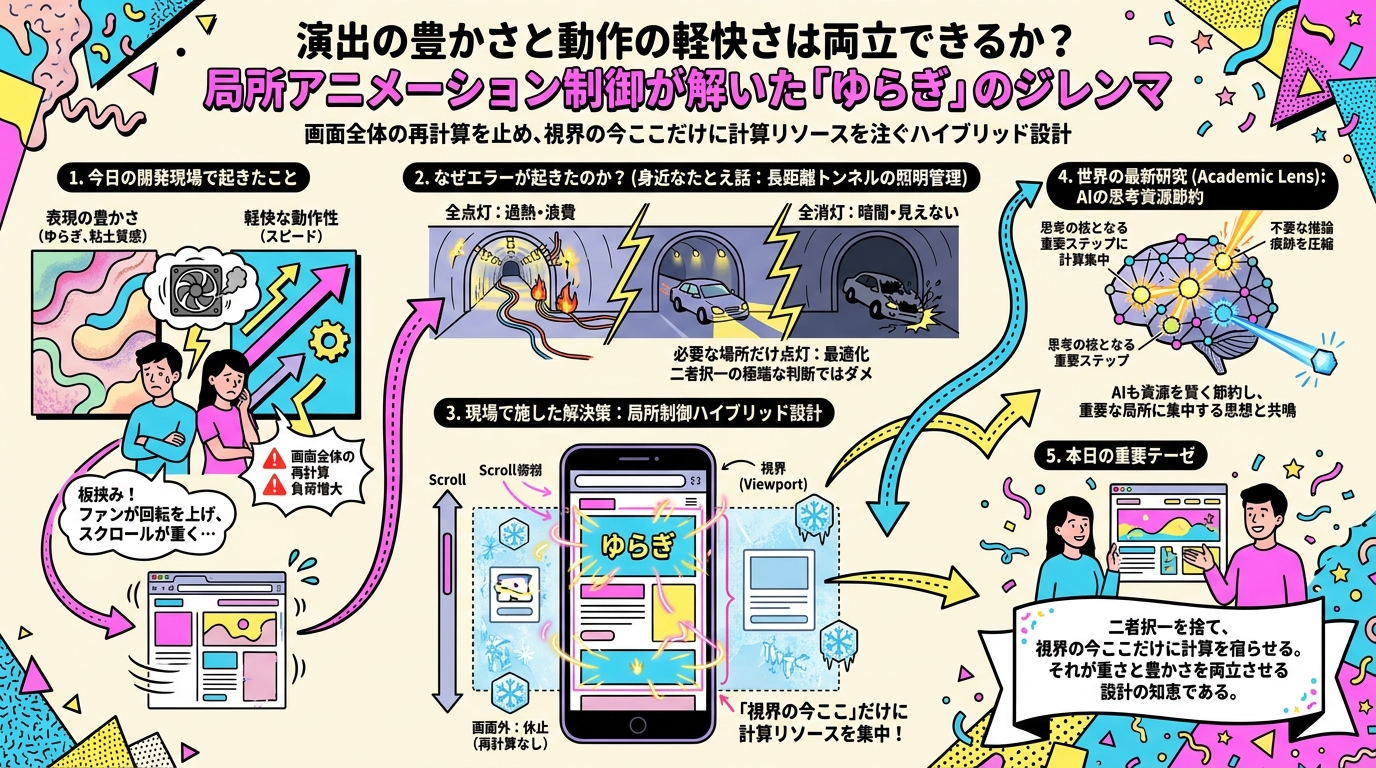
Can Expressive Richness Coexist with Nimble Performance? How Scoped Animation Control Solved the "Fluctuation" Dilemma
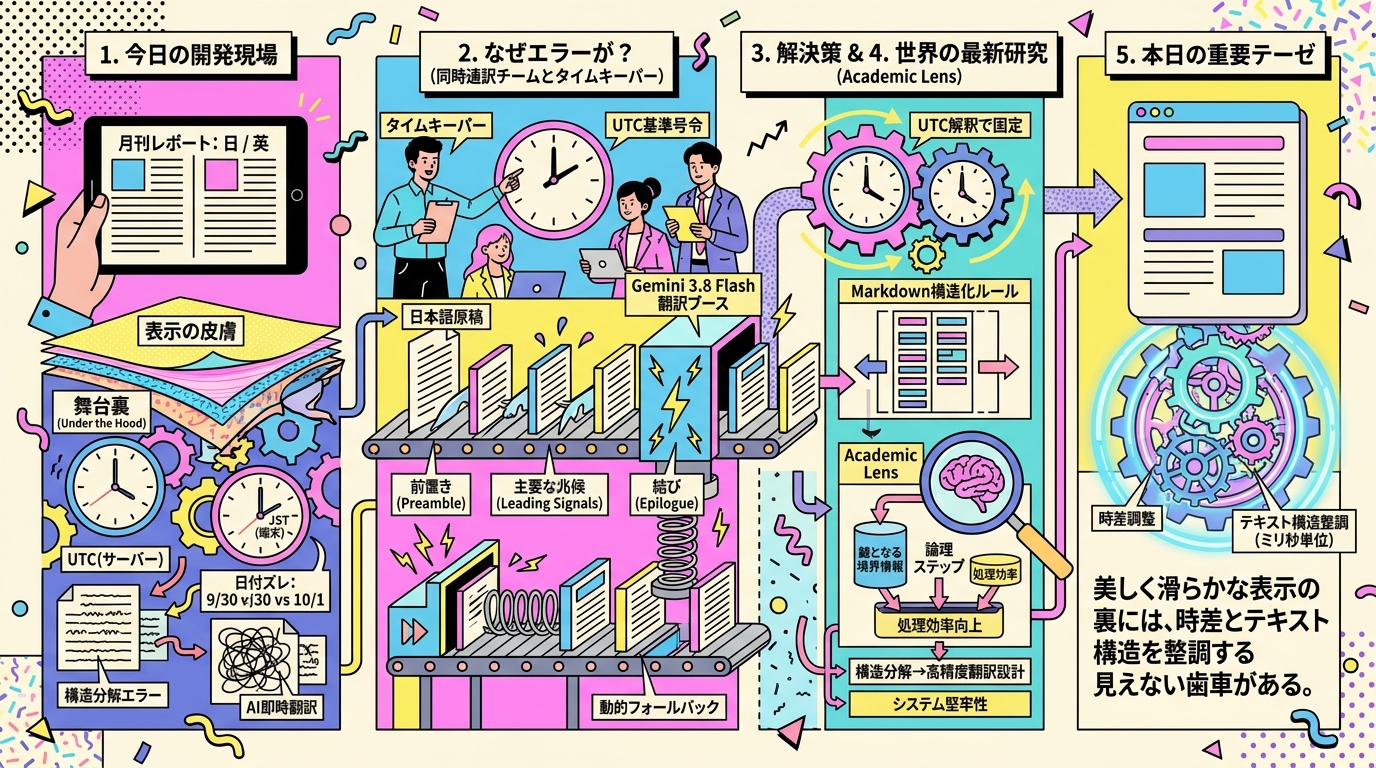
The Gears of Timezones and Translation Stirring Behind the Screen: An X-Ray of the Bilingual Automated Delivery Pipeline
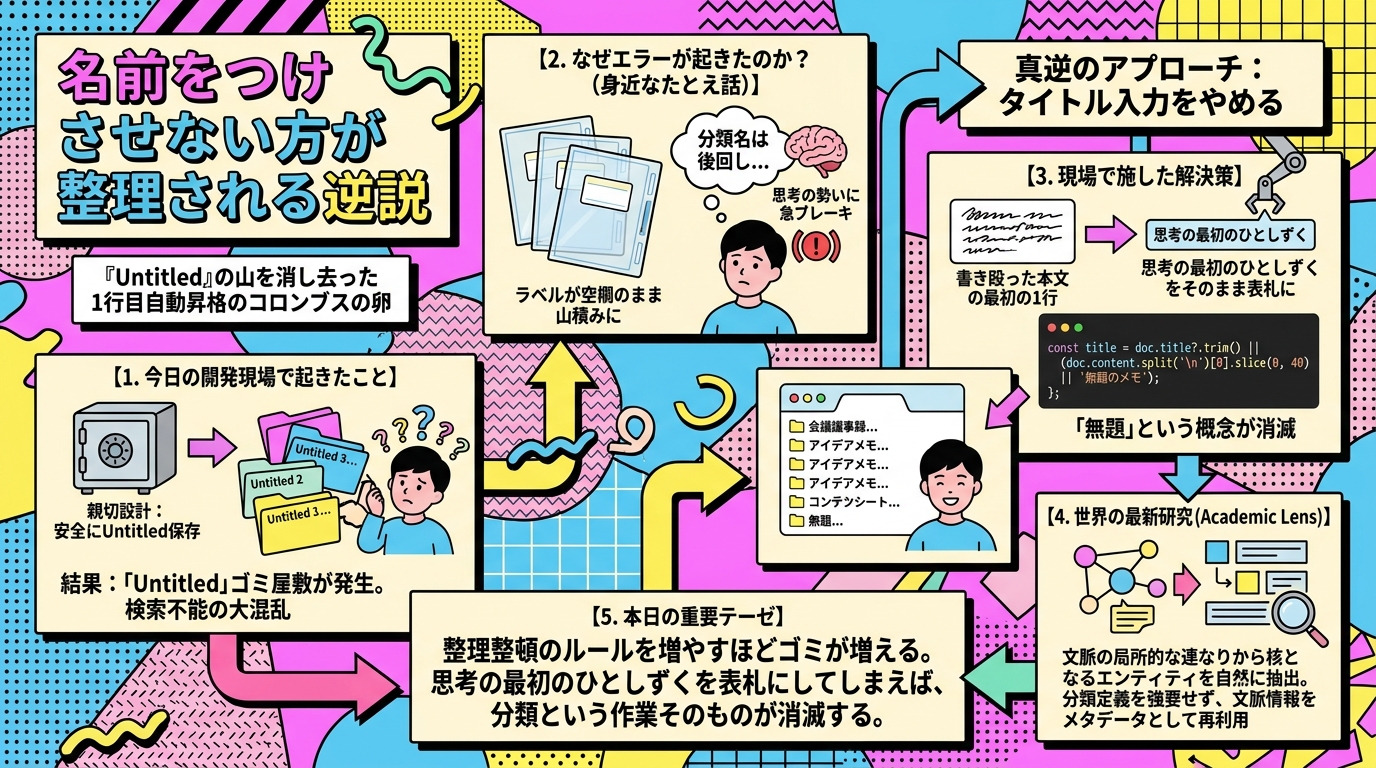
The Paradox of Order: Why Not Asking for Titles Actually Cleans the Clutter
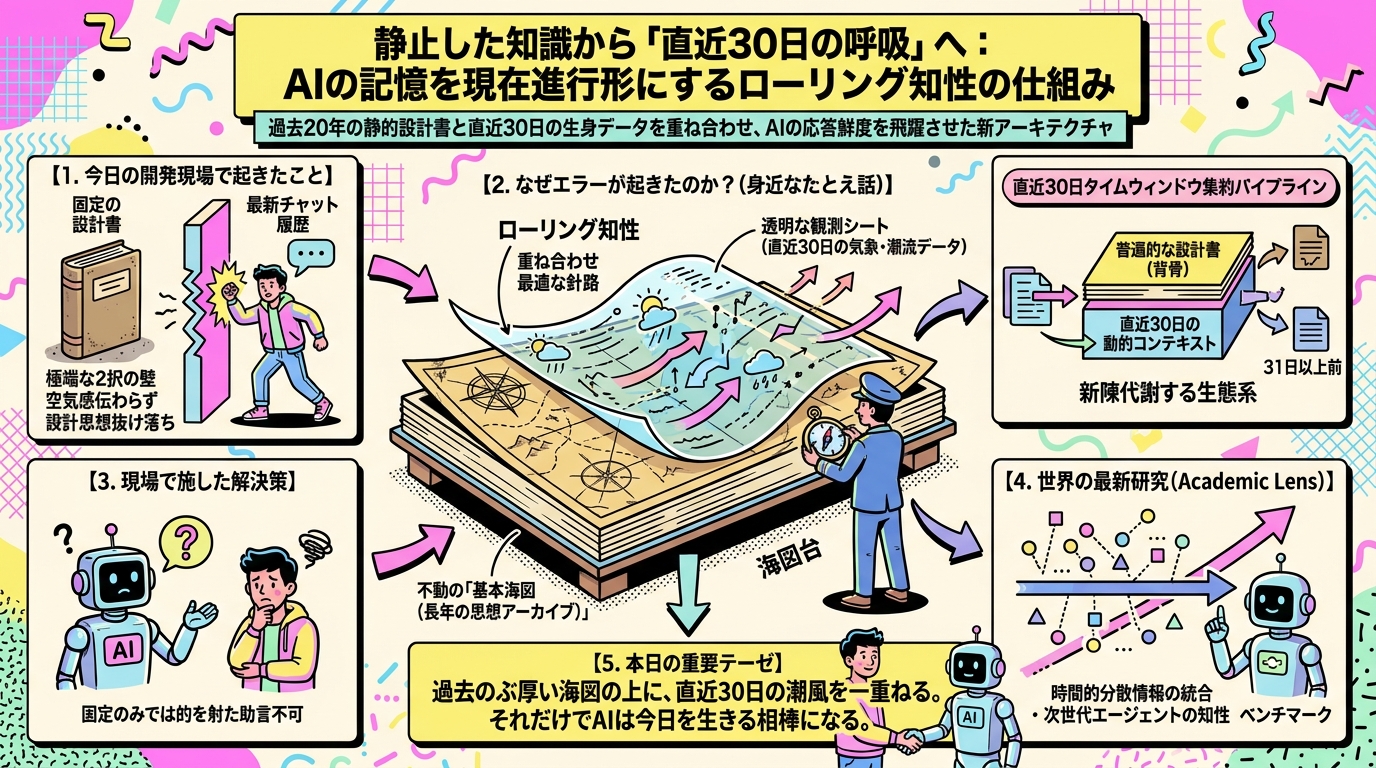
From Static Knowledge to the Pulse of the Last 30 Days: How Rolling Intelligence Keeps AI Memory in the Present Tense
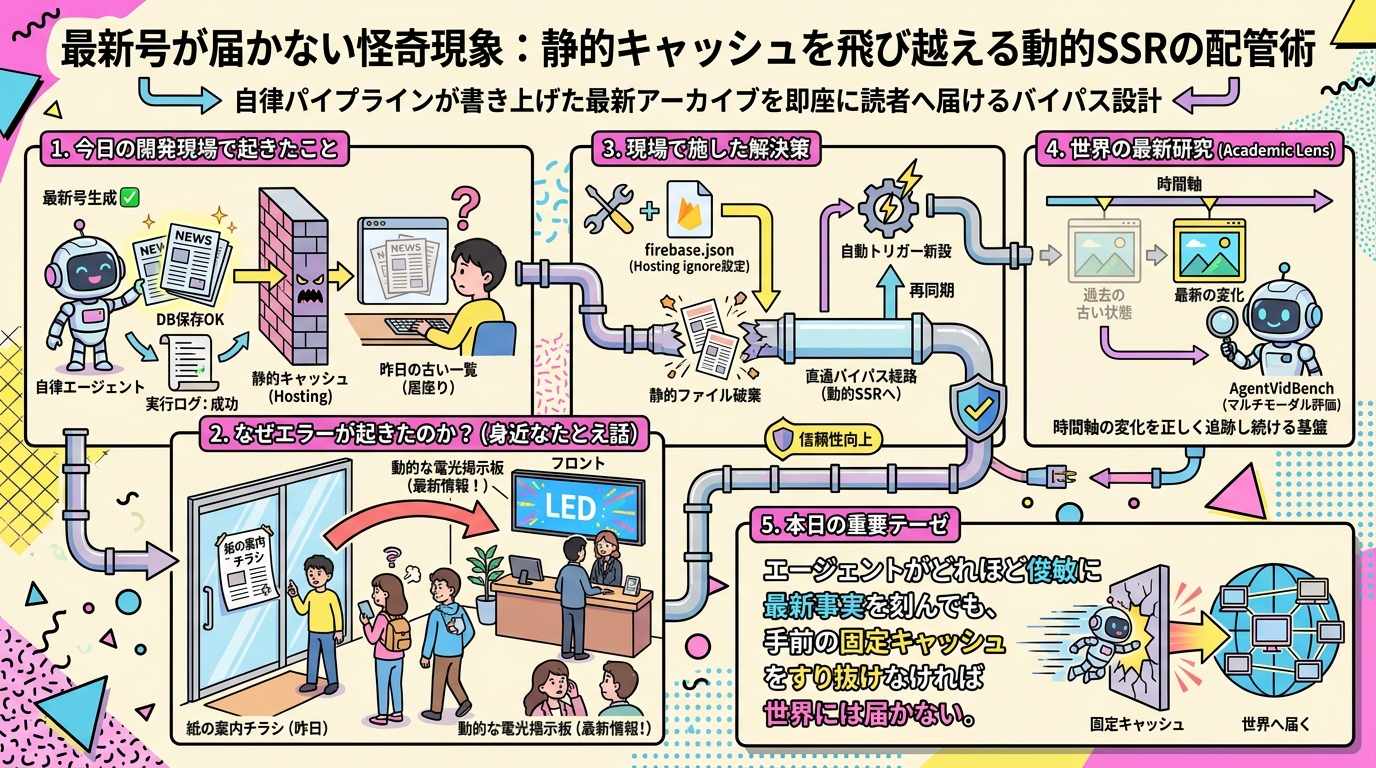
The Mystery of the Missing Issue: Plumbing Dynamic SSR to Bypass Static Cache
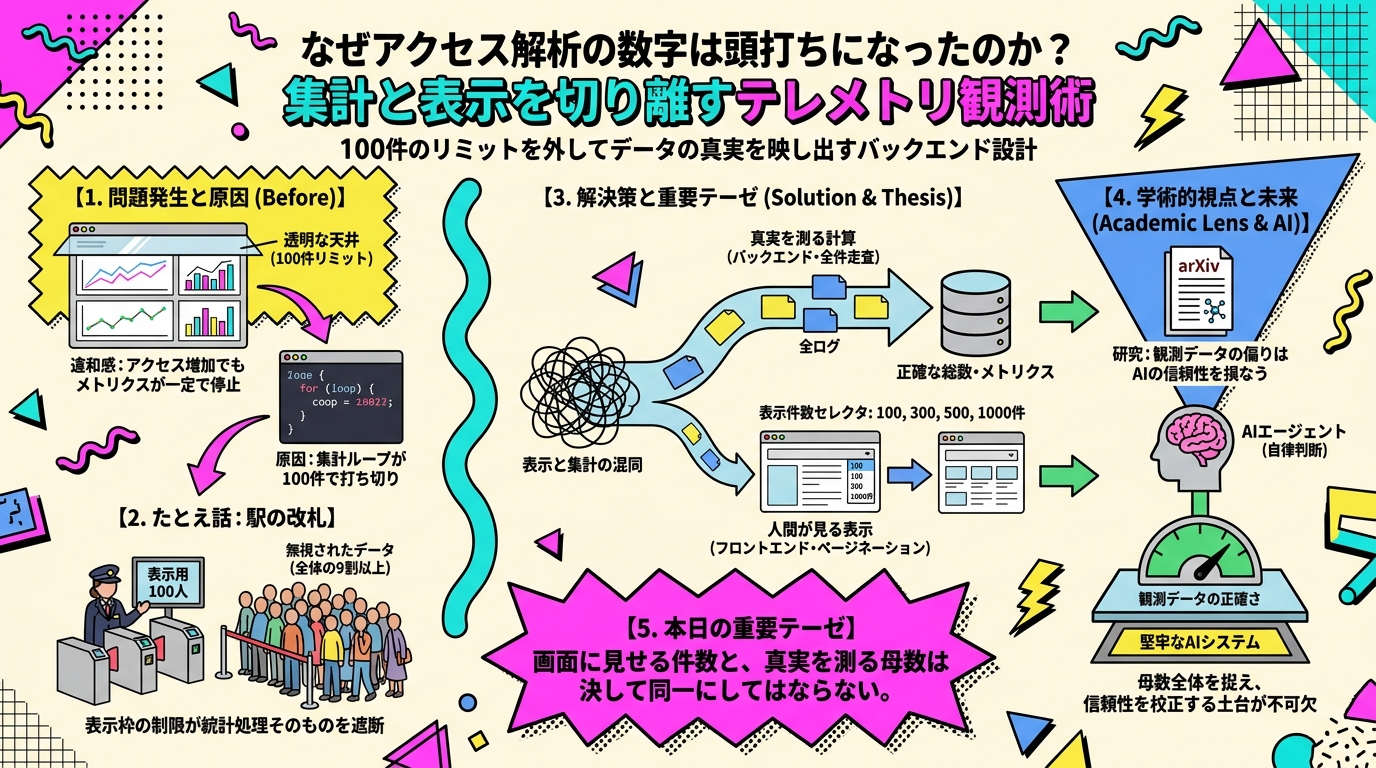
Why Did Access Analytics Hit an Artificial Ceiling? Telemetry Observability by Decoupling Aggregation from Display

Why Asking AI to Summarize 'Morning News' Always Misses the Mark
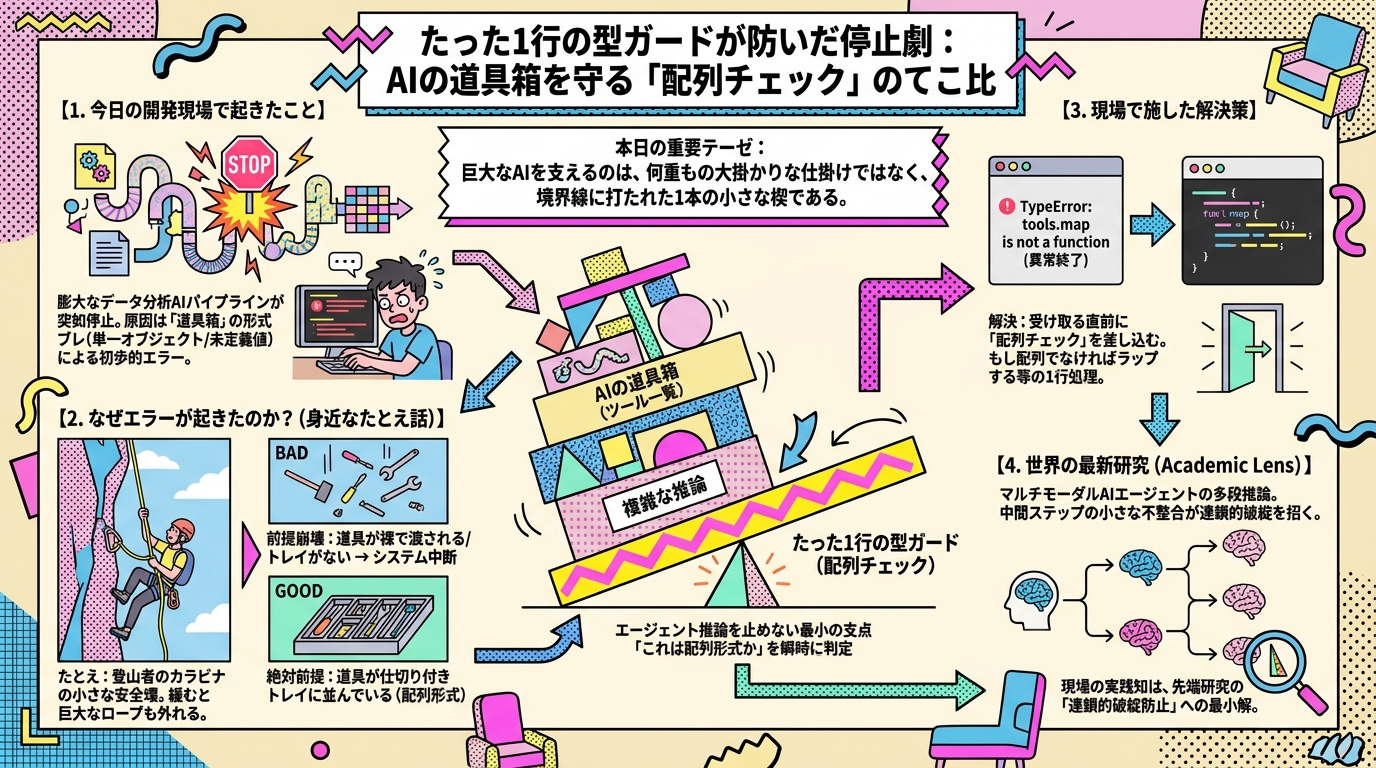
A Single-Line Type Guard That Prevented a Crash: The Leverage Ratio of 'Array Checks' in Protecting the AI's Toolbox