THE SCHOOL OF KAMOS
Connecting Real-world Dev & Academic Intelligence with Intuitive Metaphors
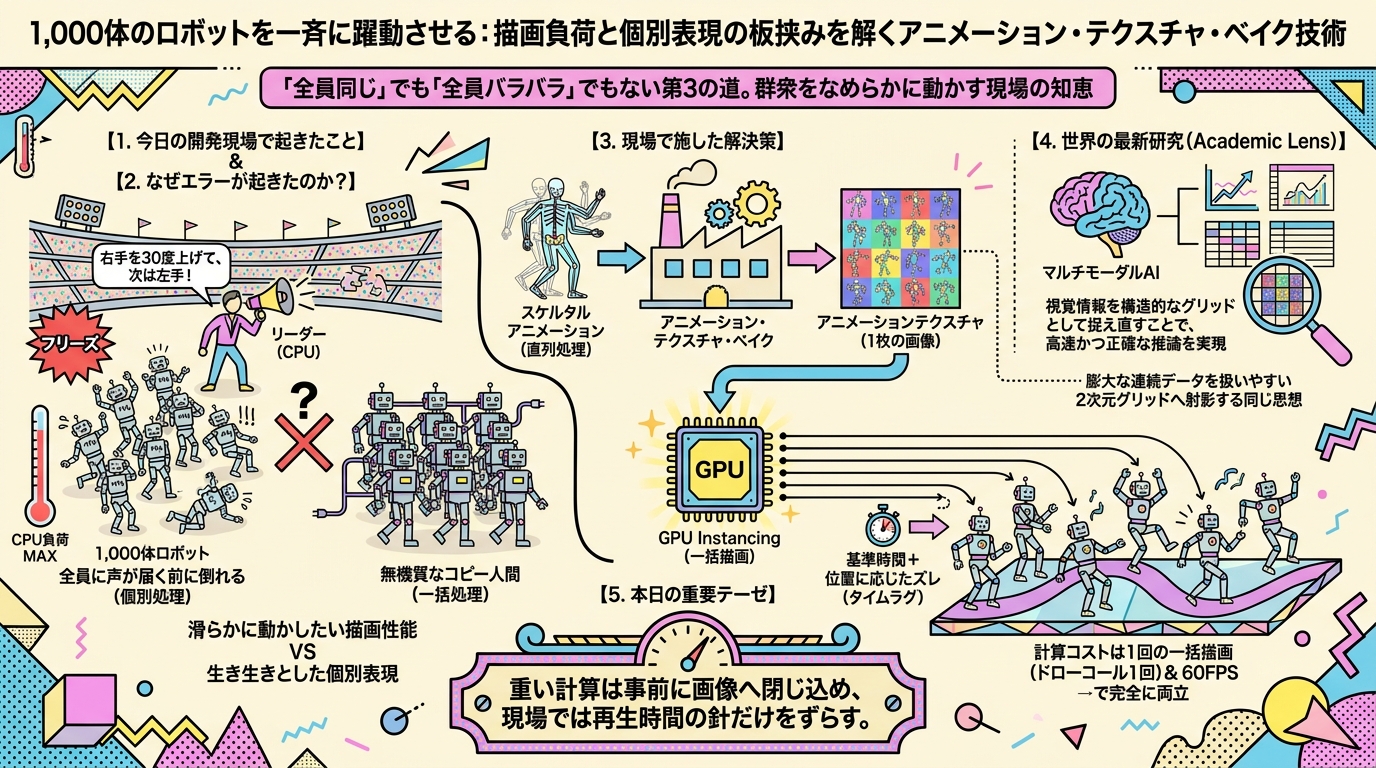
Making 1,000 Robots Dance in Unison: Animation Texture Baking to Resolve the Tension Between Rendering Load and Individual Expression
The third way—neither 'everyone is identical' nor 'everyone is chaotic.' Field-tested wisdom for smooth crowd animation.
During the development of a 3D mass-participation performance where 1,000 humanoid robots form ranks and dance to the traditional rhythm of Yosakoi, two conflicting forces collided fiercely: 'rendering performance that demands smooth motion' and 'artistic direction that requires lively, organic wave patterns.' Performing faithful skeletal calculations for every single robot would instantly freeze the browser, yet moving everyone simultaneously with a single mold would result in an artificial, boring army of clones.
This dilemma resembles a massive stadium card-stunt where thousands of spectators form pictures together. If a leader whispered individual instructions directly into the ears of all 1,000 participants every second—'Raise your right hand 30 degrees, now your left!'—everyone would be exhausted and collapse before the words even reached them. On the other hand, rigidly wiring everyone's limbs together to pull them in unison cannot produce organic variations like beautiful waves or swirls. The meticulousness of individual processing and the speed of batch processing simply cannot be balanced through a straightforward choice.
The third solution chosen by the development team was a fusion of 'Animation Texture Baking'—where bone position data for all frames of an intense dance routine is pre-rendered onto a single image (texture)—and GPU Instancing. Instead of having each robot perform skeletal calculations, the GPU simply reads its respective frame number from the image. Furthermore, by passing only a numerical value of 'base time + position-based offset' to each entity, computational costs are kept to a single batch draw call (one draw call). This successfully achieves 60 FPS performance while perfectly enabling wave patterns spreading from the center outward and staggered checkerboard choreographies.
"Encapsulate heavy calculations into images beforehand, and shift only the playback time needle on the active floor."Key Takeaway
📖 1-Minute Lexicon
A technique that saves character joint and bone movement data as color information in an image file, much like a flipbook.
A high-performance optimization method that renders thousands of identical 3D models simultaneously on screen in a single procedure, altering only positions and colors.
Accelerating 1,000-Agent Crowd Performance: Texture Baking and Time-Lag Synchronization
Live Frontier Pulse: Real-World AI Trends
Hitachi Develops Guardrail Technology for Safe Operation of Physical AI in Social Infrastructure
Hitachi, Ltd. has announced guardrail technology designed to prevent unexpected behavior and ensure safety for physical AI operating within real-world infrastructure facilities.
Sharp Commences Orders for AI Servers Aimed at the Domestic Market | News Release
Sharp has announced the start of orders for high-performance AI servers targeted at the domestic market, addressing the growing demand for computational infrastructure in edge and on-premise environments.
How Does This Connect to Global Frontier Research?
When multimodal AI attempts to understand complex tables and graphs, scanning every single pixel naively causes computational complexity to explode. This paper achieves fast and accurate reasoning by reframing visual information into a structured grid. The engineering approach of structuring the skeletal coordinates of 1,000 robots into image pixels (textures) within 3D space for batch GPU processing is rooted in the exact same philosophy: projecting massive continuous data into easily manageable two-dimensional grids.
When making 1,000 robots dance with individual time lags like waves without slowing down your computer, what is the clever optimization trick?
Past School Paper Backnumbers
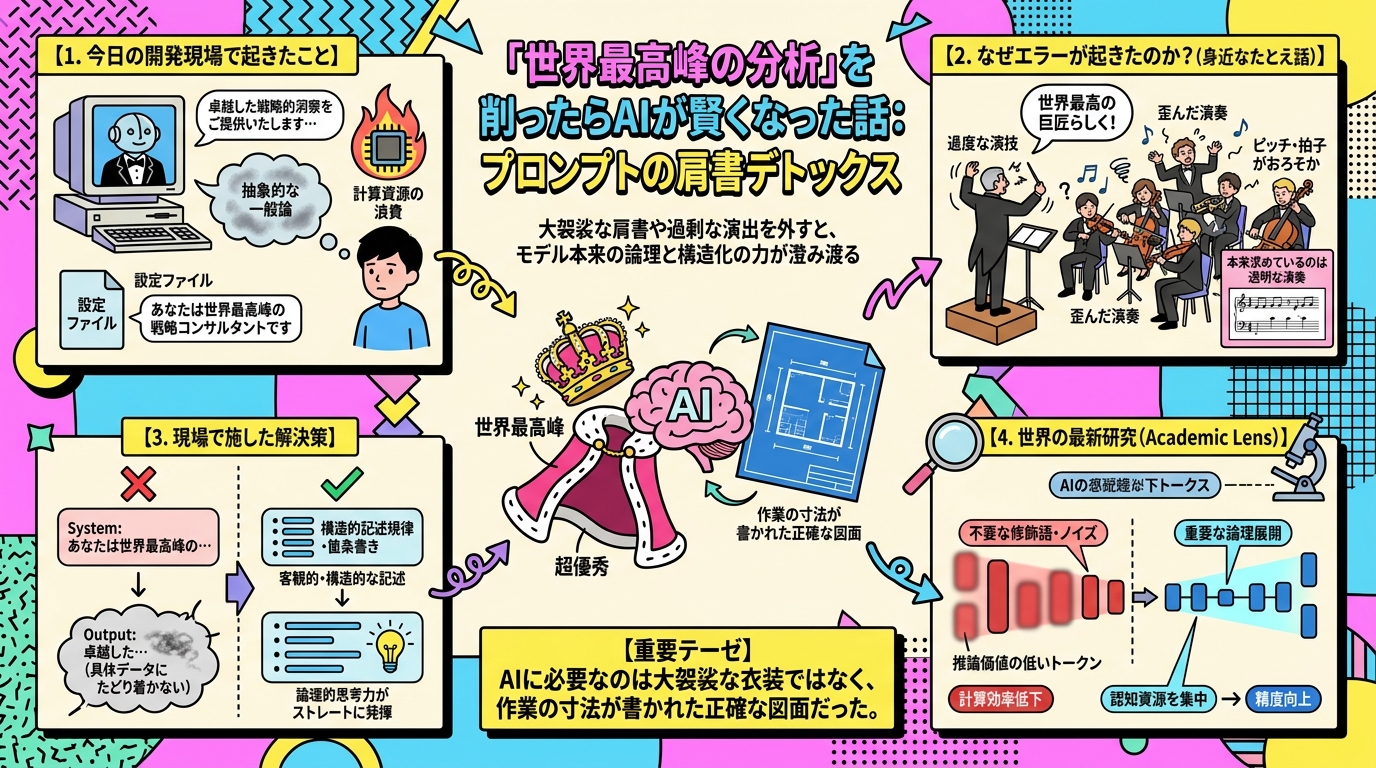
How AI Grew Smarter Once We Stripped 'World-Class Analysis': The Prompt Title Detox
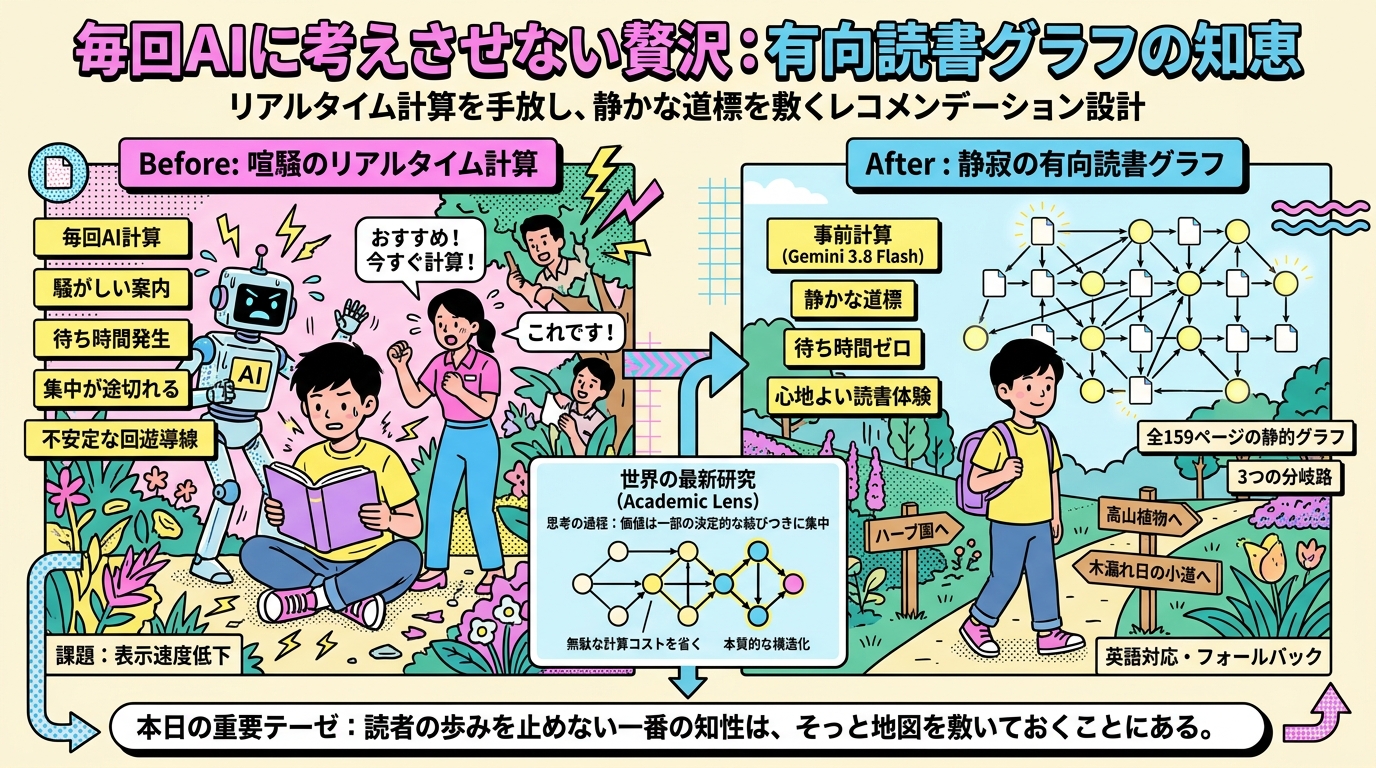
The Luxury of Not Asking AI Every Time: The Wisdom of a 'Directed Reading Graph' Connecting 159 Pages

Clearing the AI's Vision by Erasing the Grading Rule: The High Leverage of Subtracting a Single Line
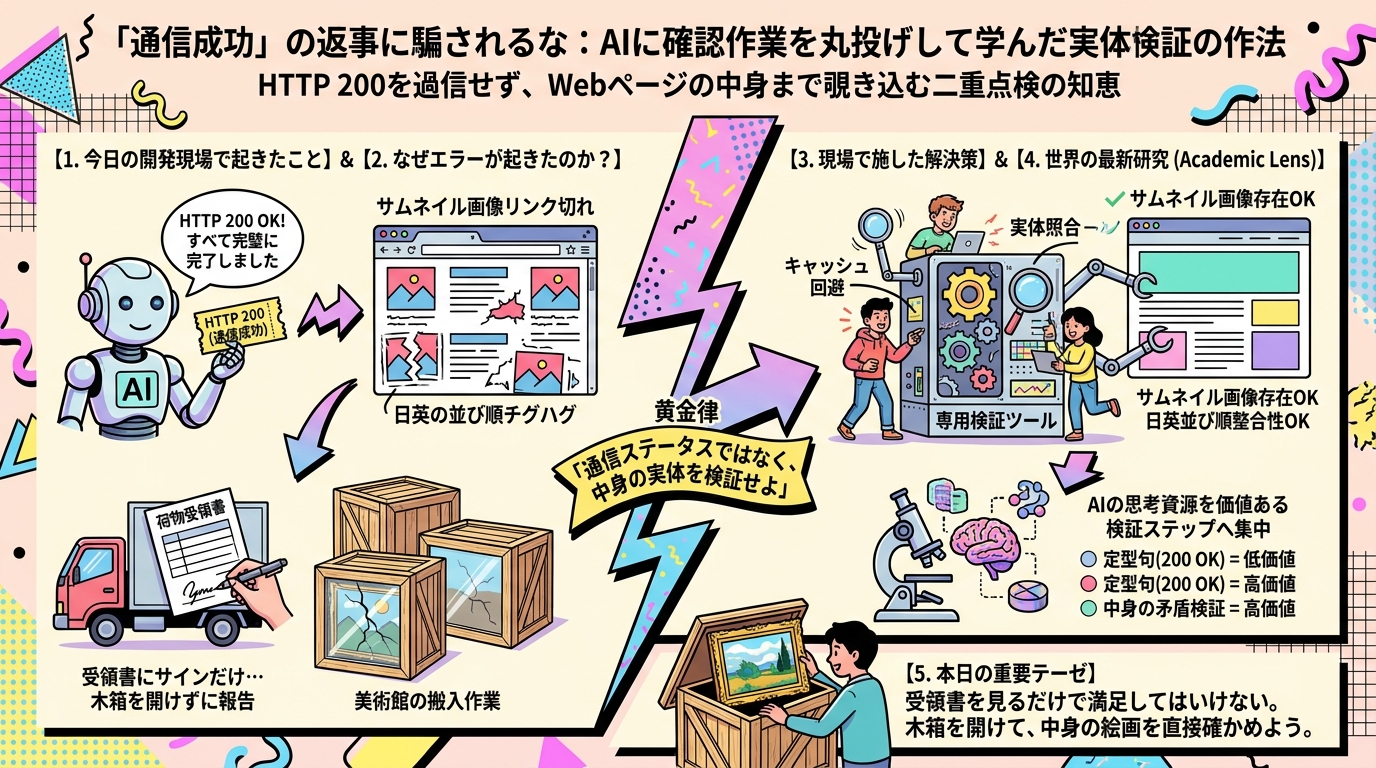
Don't Be Deceived by a 'Connection Successful' Response: Lessons in Live Content Verification from Delegating Quality Checks to AI
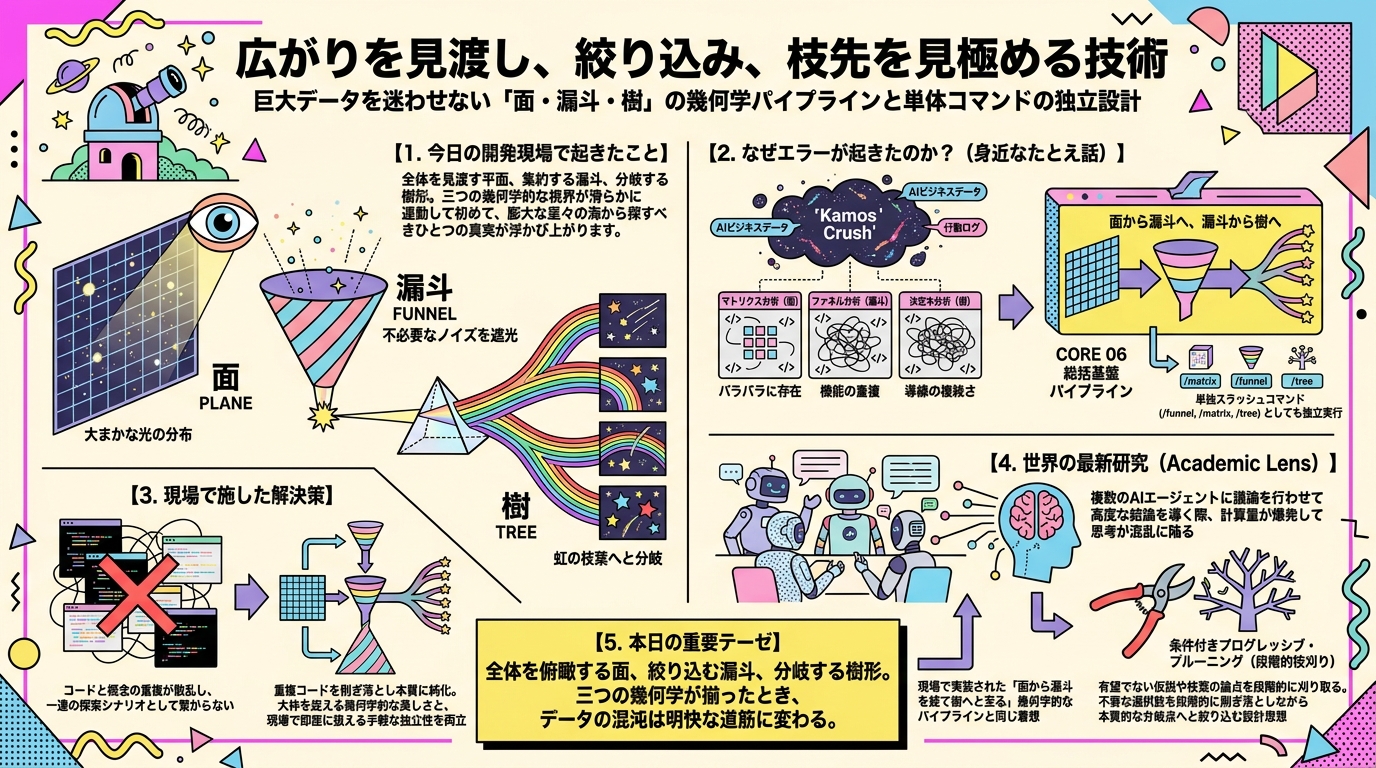
The Art of Surveying the Field, Narrowing Down, and Discerning the Branches

Can Expressive Richness Coexist with Nimble Performance? How Scoped Animation Control Solved the "Fluctuation" Dilemma
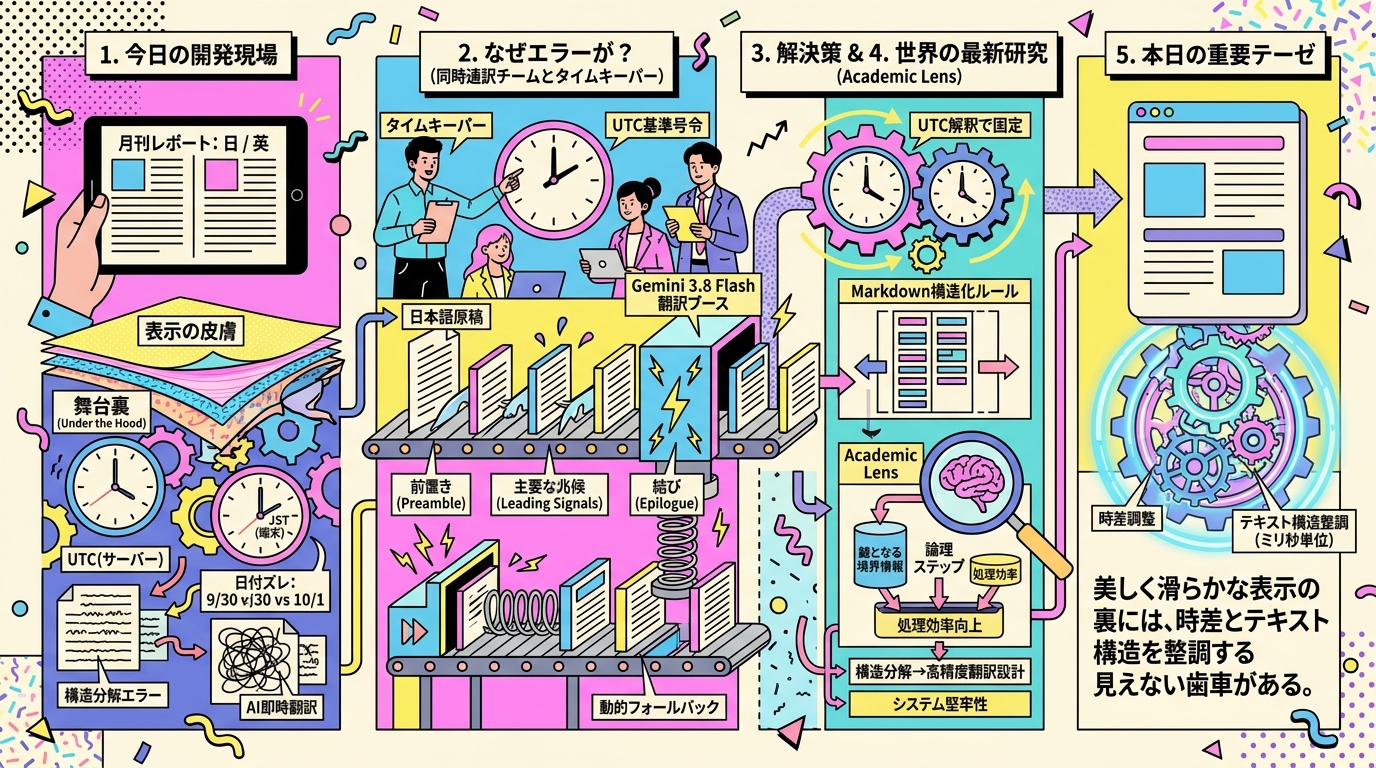
The Gears of Timezones and Translation Stirring Behind the Screen: An X-Ray of the Bilingual Automated Delivery Pipeline
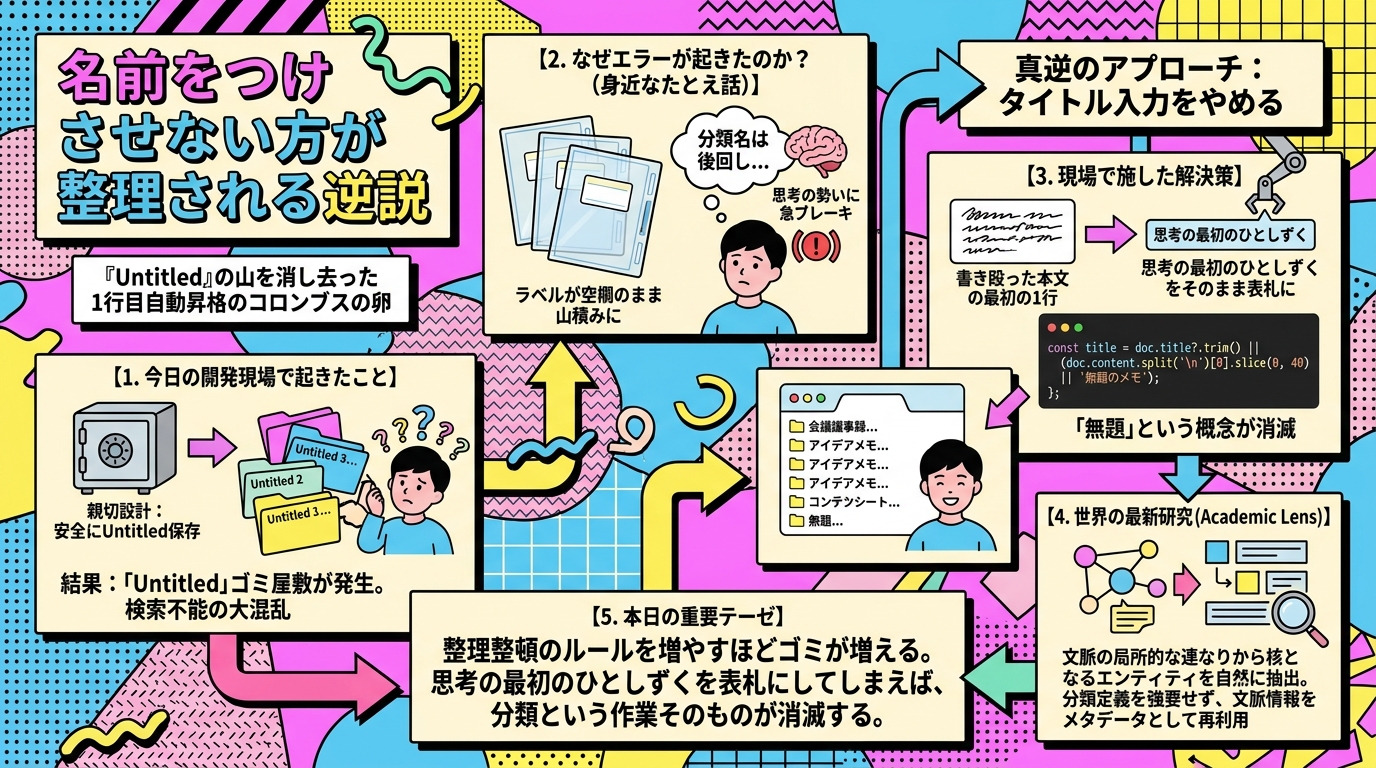
The Paradox of Order: Why Not Asking for Titles Actually Cleans the Clutter
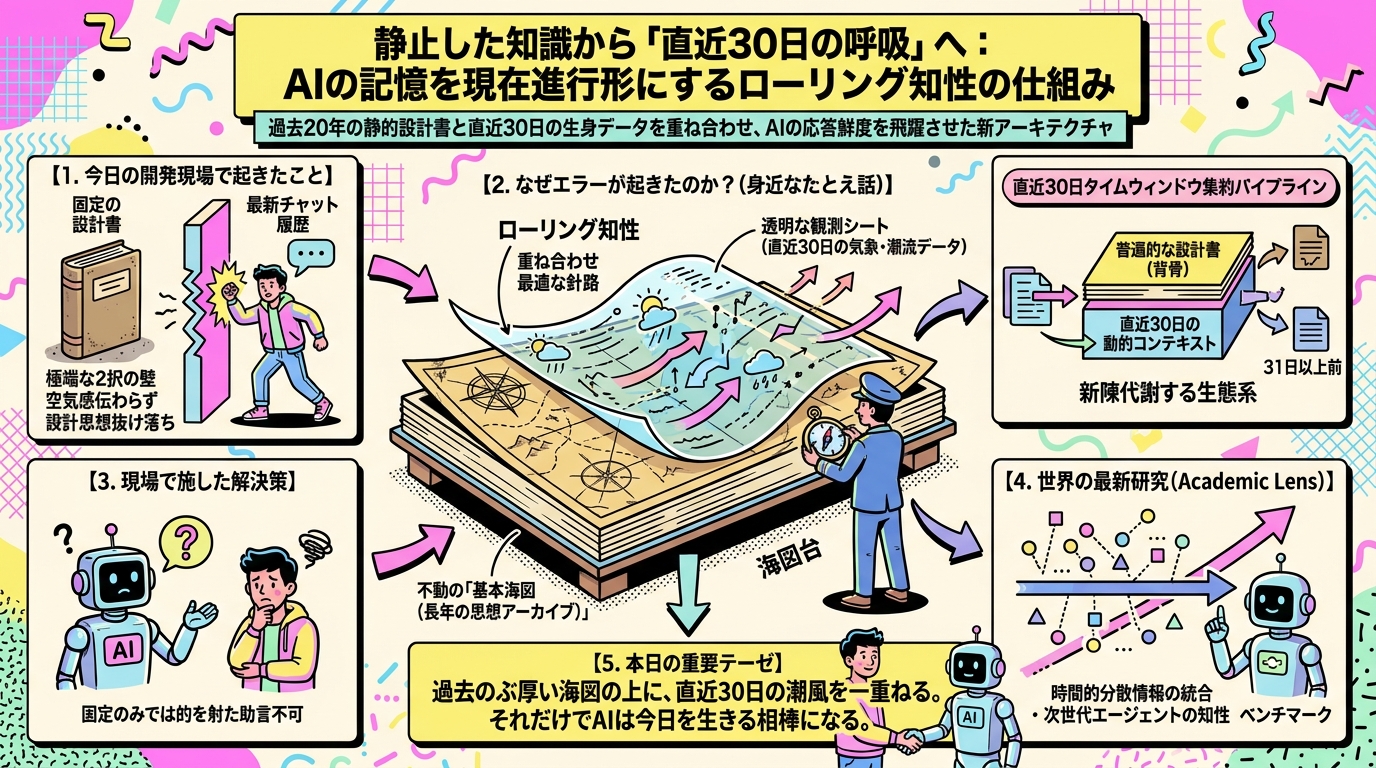
From Static Knowledge to the Pulse of the Last 30 Days: How Rolling Intelligence Keeps AI Memory in the Present Tense
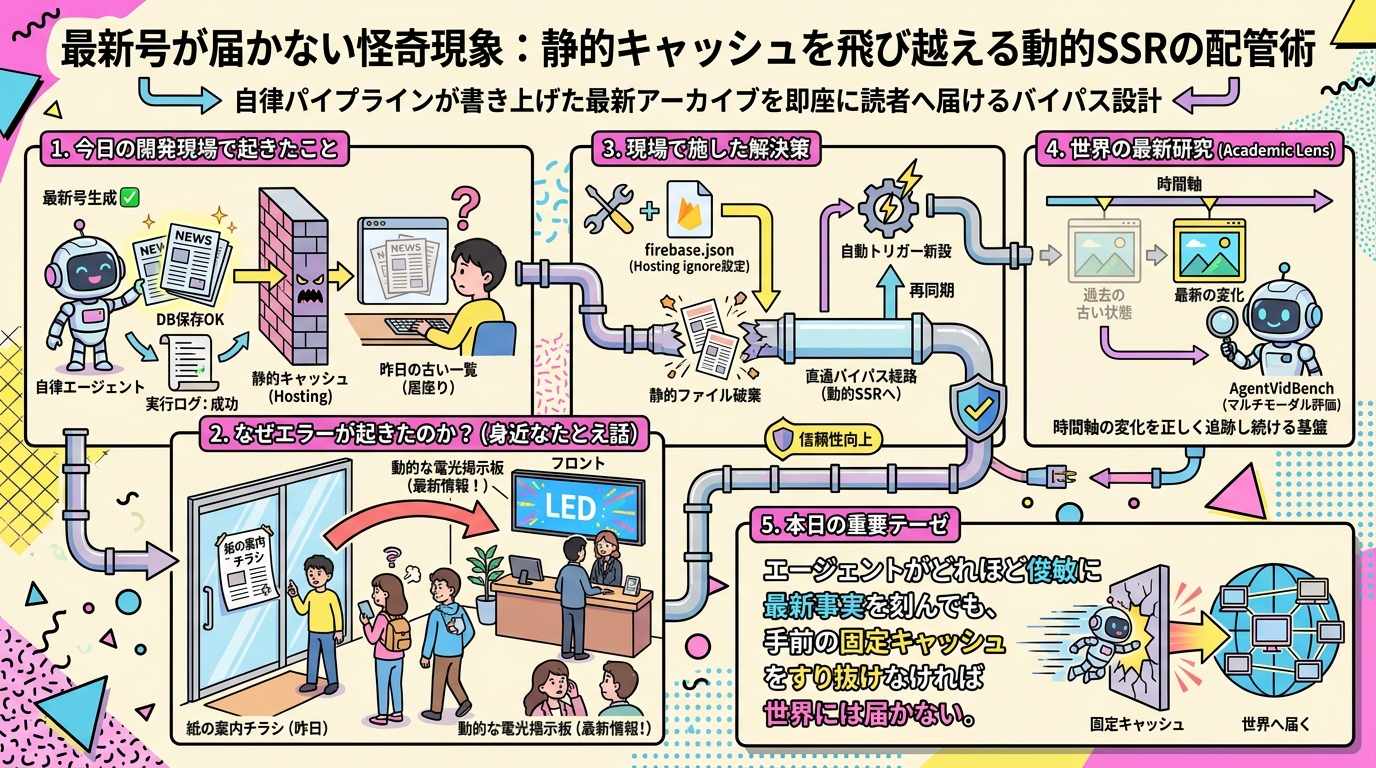
The Mystery of the Missing Issue: Plumbing Dynamic SSR to Bypass Static Cache
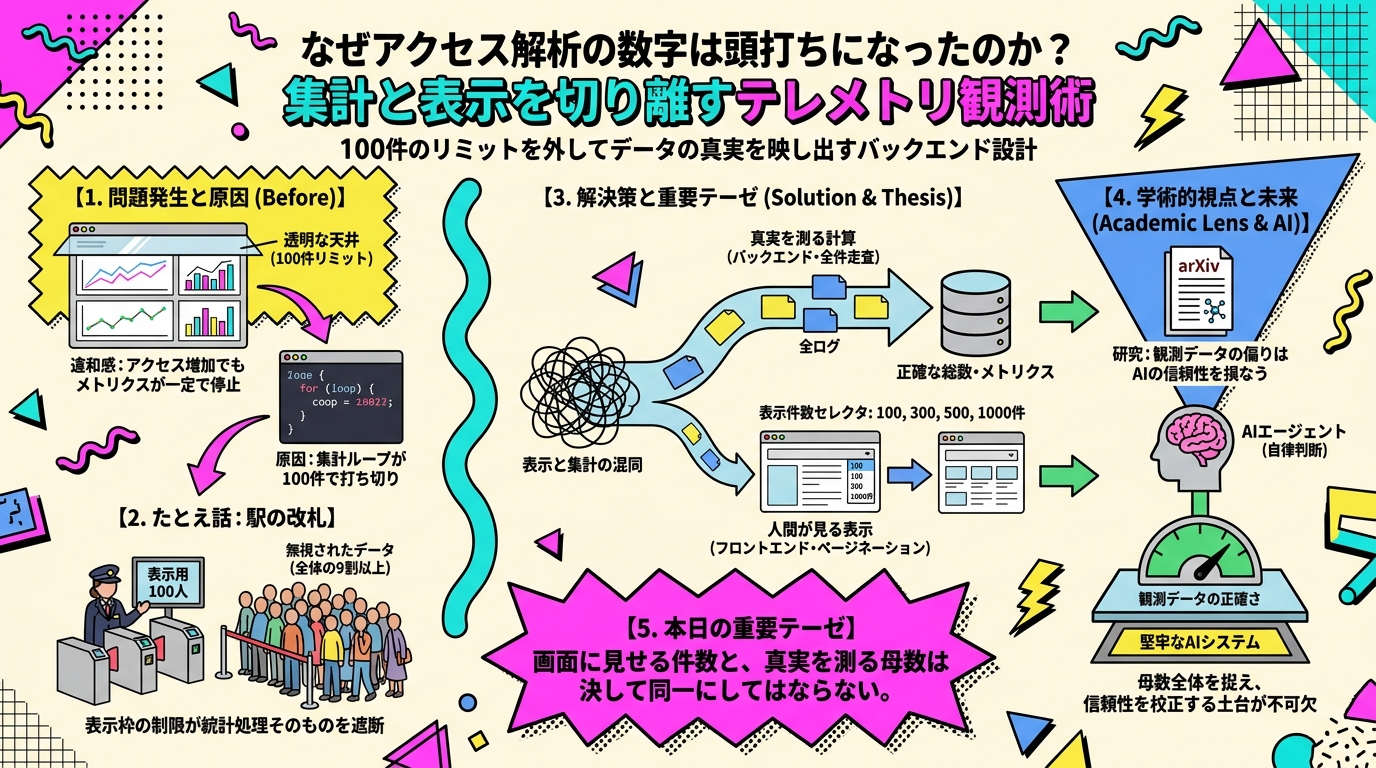
Why Did Access Analytics Hit an Artificial Ceiling? Telemetry Observability by Decoupling Aggregation from Display

Why Asking AI to Summarize 'Morning News' Always Misses the Mark
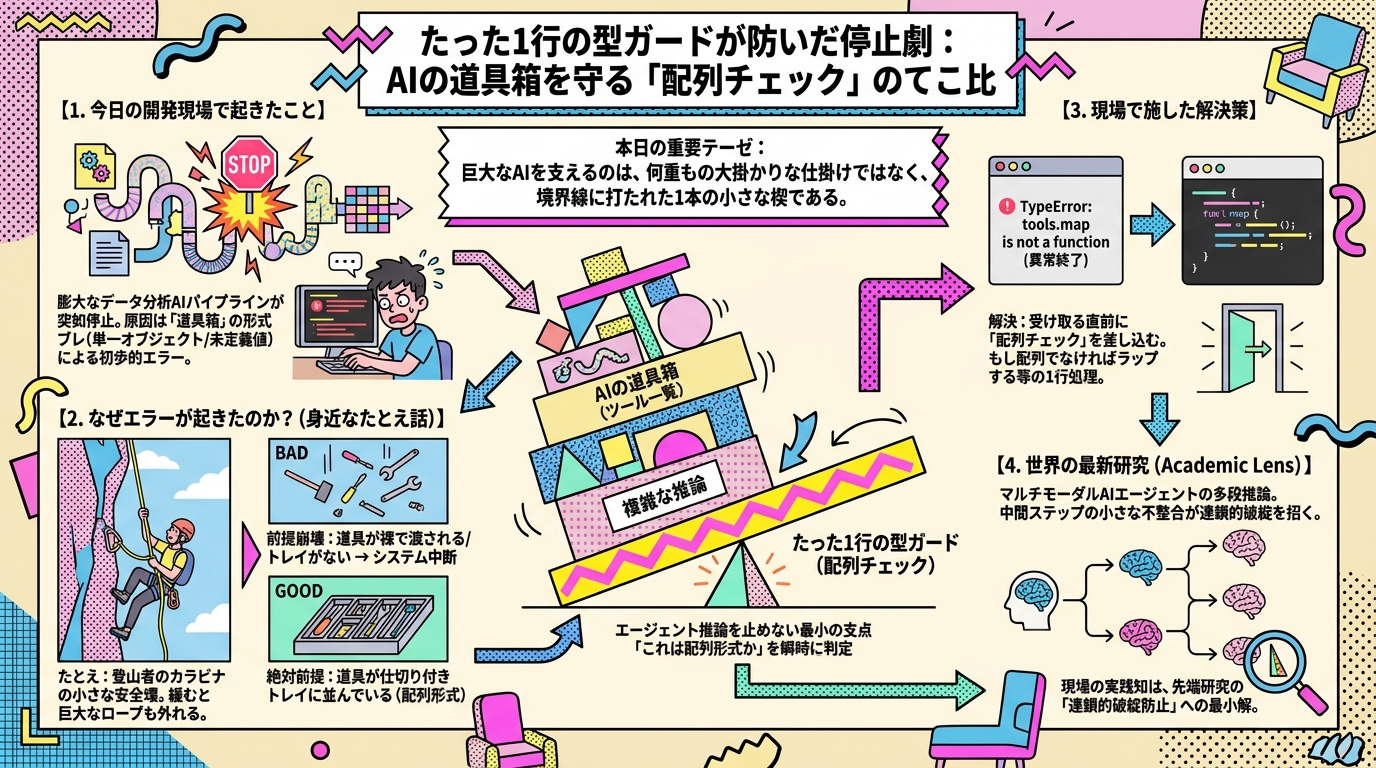
A Single-Line Type Guard That Prevented a Crash: The Leverage Ratio of 'Array Checks' in Protecting the AI's Toolbox