THE SCHOOL OF KAMOS
Connecting Real-world Dev & Academic Intelligence with Intuitive Metaphors
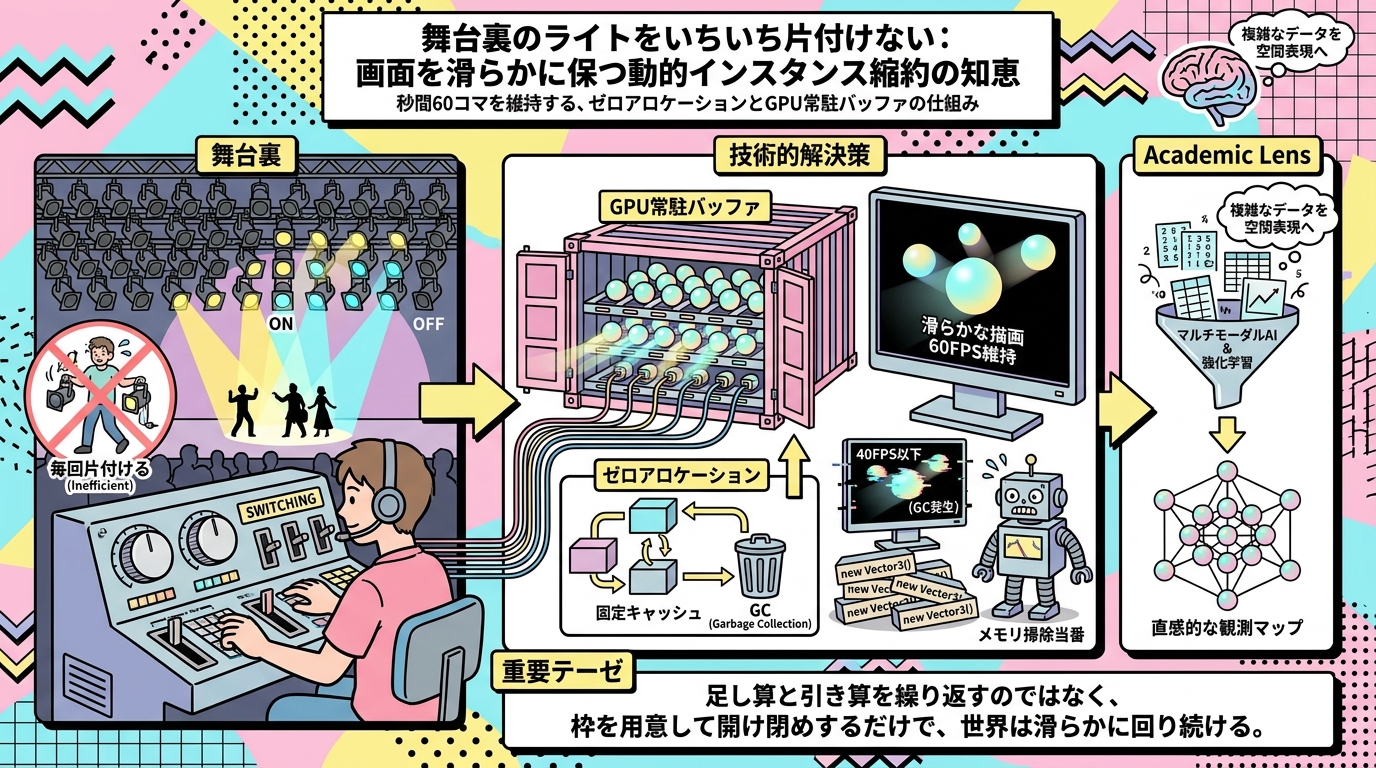
Leaving the Backstage Lights Connected: The Wisdom of Dynamic Instance Compaction for Butter-Smooth Screens
The Mechanics of Zero Allocation and GPU-Resident Buffers to Maintain a Rock-Solid 60 FPS
Behind every dazzling stage stands a skilled lighting technician. If every time a single actor stepped onto the stage, the technician ran to the warehouse, fetched a new spotlight, wired it up, and then frantically packed it away the moment the actor stepped into the wings—well, the light would never keep up with the performer, and the show would grind to a halt. Instead, a master technician fixes hundreds of lights to the ceiling in advance, using a dial at their fingertips to instantly switch on only the exact number needed for the actors currently on stage.
This is actually the exact backstory of a performance optimization challenge we faced while building a real-time 3D visualization where website traffic is rendered as glowing orbs in a 3D space. When dozens or hundreds of access events are flying across the screen, creating and destroying new 3D objects in memory for every visiting user's arrival and departure overwhelms the browser's garbage collector, causing the visuals to stutter. To solve this, we applied the same wisdom as the lighting technician: we pre-allocated the maximum expected display capacity directly inside the GPU, adopting 'Dynamic Instance Compaction' to command only the exact count of active items at any given moment.
Thanks to this architecture, fluctuations in data volume no longer trigger array reconstructions or unnecessary memory allocations. Furthermore, we enforced 'Zero Allocation' during position and velocity calculations by reusing a fixed set of pre-initialized variables rather than spawning new memory containers on every tick. By ruthlessly eliminating the friction of wasteful generation and disposal, we established a robust foundation capable of maintaining a perfectly smooth 60 frames per second while keeping chronological traffic data precisely synchronized with the 3D models.
"Instead of endlessly adding and subtracting, simply prepare a fixed frame and open or close the shutters—that is how the world keeps spinning smoothly."Key Takeaway
📖 1-Minute Lexicon
A technique where maximum display capacity is pre-allocated on the GPU, allowing instant toggling of only the currently required items to keep rendering lightweight.
A method that prevents performance drops by reusing a fixed workspace rather than creating and discarding new memory blocks during every calculation.
Dynamic Instance Compaction and Zero Allocation for Frame-Rate Preservation
Live Frontier Pulse: Real-World AI Trends
Guardrail Technology Developed for the Safe Operation of Physical AI in Social Infrastructure
Hitachi, Ltd. has developed safety control and guardrail technology designed to prevent unexpected behaviors and sudden load fluctuations in physical AI operating within critical infrastructure such as railways and power grids.
How Does This Connect to Global Frontier Research?
The challenge of mapping complex time-series data and numerical metrics into intuitive spatial representations that humans can instantly grasp is an active frontier in multimodal AI research. This paper introduces a reinforcement learning approach designed to structurally and visually ground charts, tables, and other data structures for correct comprehension. The endeavor to bring order and intuition to spatial arrangements and interrelationships—rather than merely processing flat lists of numbers—shares the exact same philosophical trajectory as our engineering effort to beautifully position live traffic data across a spherical surface into an intuitive observation map.
When displaying a massive quantity of moving lights on a screen, which approach is most effective for preventing stuttering and frame drops?
Past School Paper Backnumbers

How AI Grew Smarter Once We Stripped 'World-Class Analysis': The Prompt Title Detox

The Luxury of Not Asking AI Every Time: The Wisdom of a 'Directed Reading Graph' Connecting 159 Pages

Clearing the AI's Vision by Erasing the Grading Rule: The High Leverage of Subtracting a Single Line
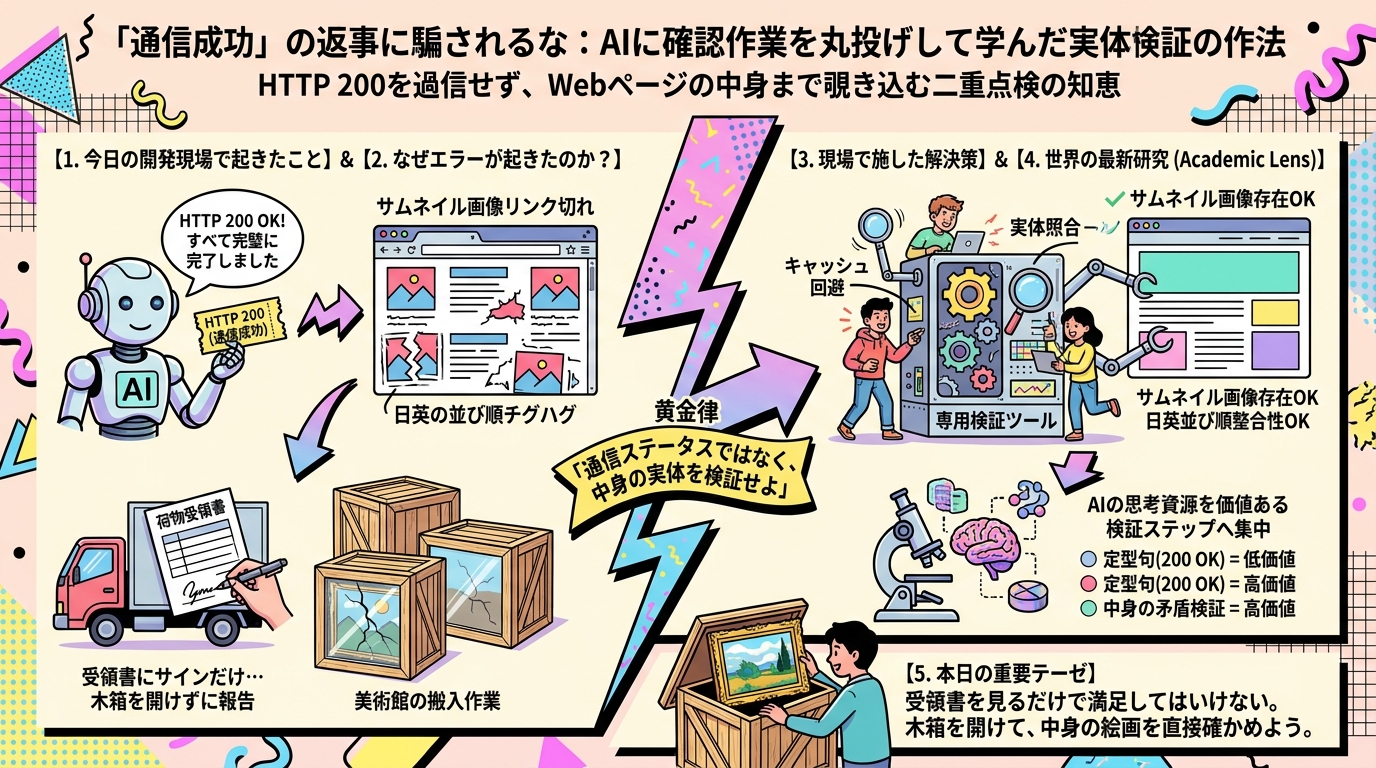
Don't Be Deceived by a 'Connection Successful' Response: Lessons in Live Content Verification from Delegating Quality Checks to AI

The Art of Surveying the Field, Narrowing Down, and Discerning the Branches

Can Expressive Richness Coexist with Nimble Performance? How Scoped Animation Control Solved the "Fluctuation" Dilemma

The Gears of Timezones and Translation Stirring Behind the Screen: An X-Ray of the Bilingual Automated Delivery Pipeline

The Paradox of Order: Why Not Asking for Titles Actually Cleans the Clutter

From Static Knowledge to the Pulse of the Last 30 Days: How Rolling Intelligence Keeps AI Memory in the Present Tense
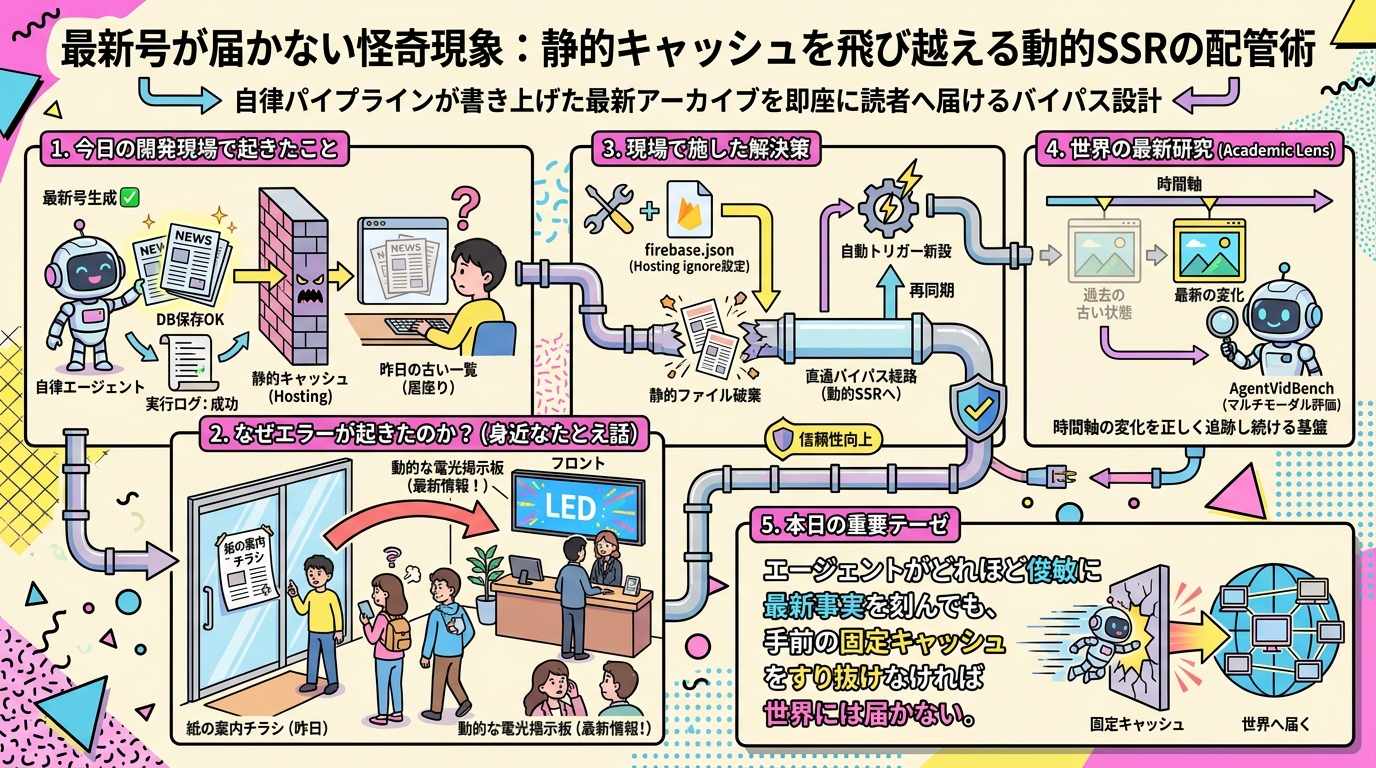
The Mystery of the Missing Issue: Plumbing Dynamic SSR to Bypass Static Cache
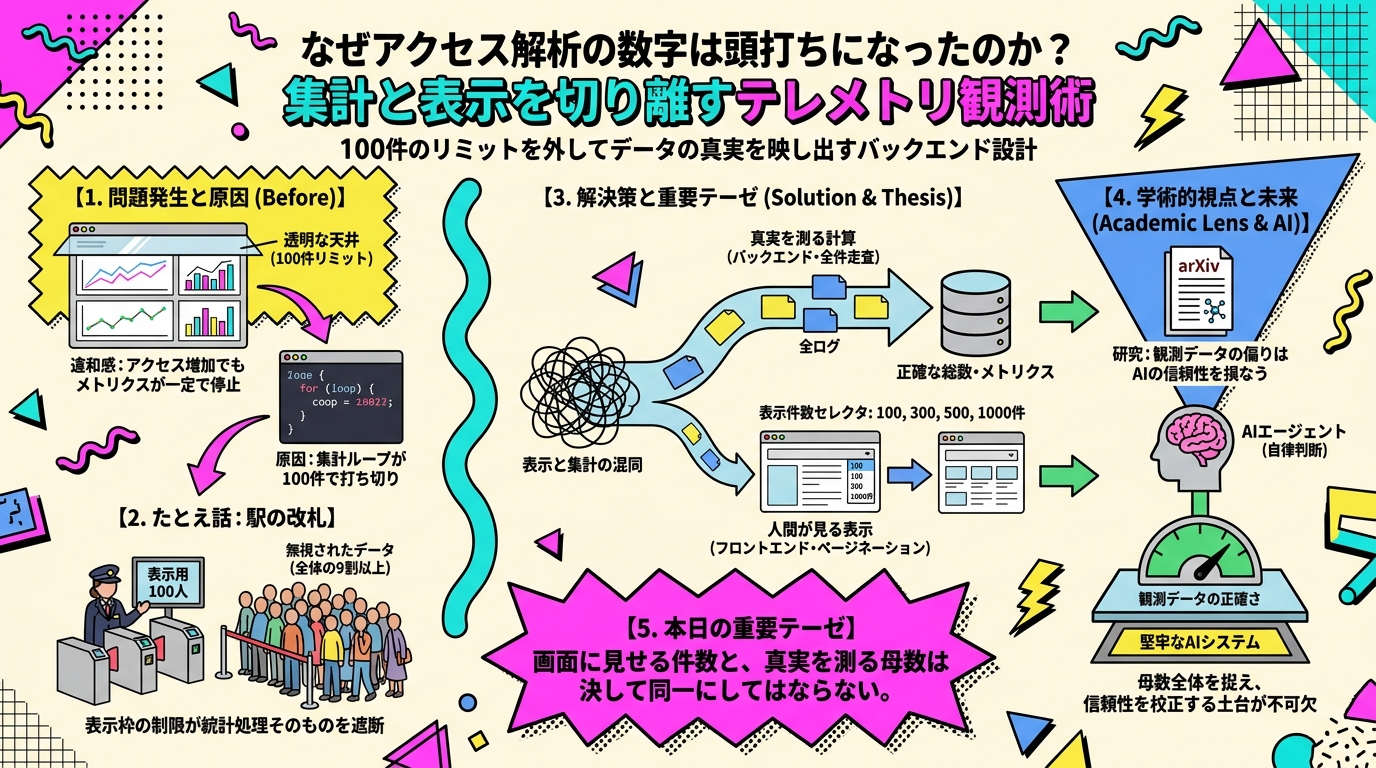
Why Did Access Analytics Hit an Artificial Ceiling? Telemetry Observability by Decoupling Aggregation from Display

Why Asking AI to Summarize 'Morning News' Always Misses the Mark
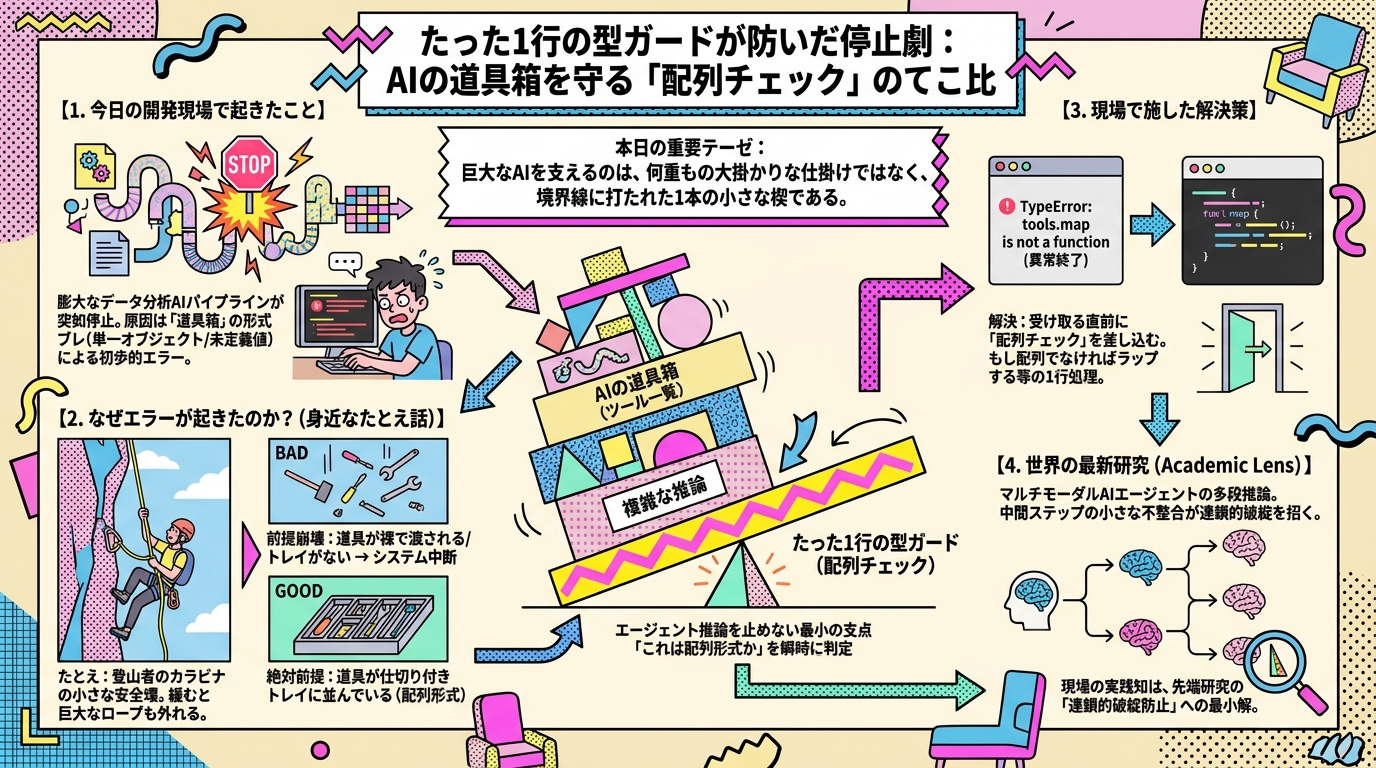
A Single-Line Type Guard That Prevented a Crash: The Leverage Ratio of 'Array Checks' in Protecting the AI's Toolbox