THE SCHOOL OF KAMOS
Connecting Real-world Dev & Academic Intelligence with Intuitive Metaphors
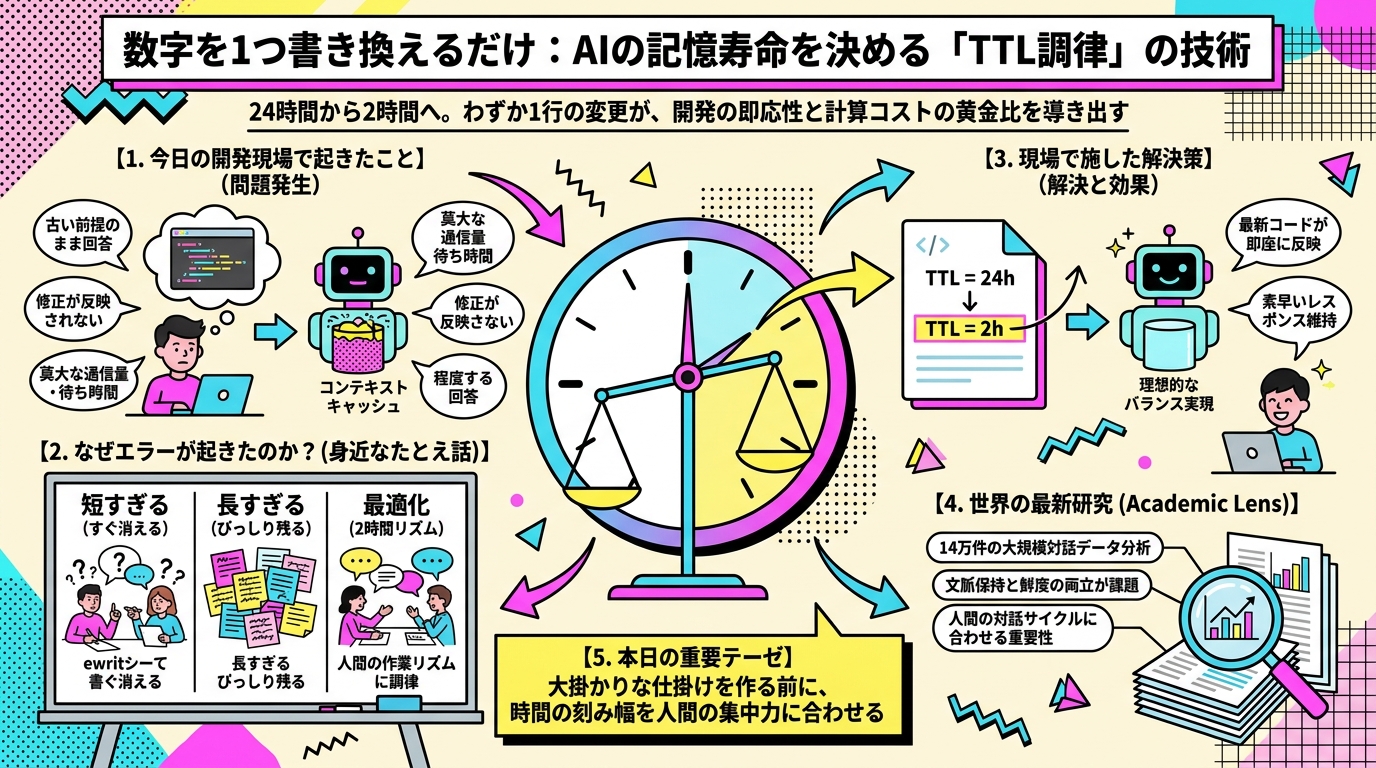
Rewriting Just One Number: The Art of 'TTL Tuning' for AI Memory Lifespan
From 24 hours to 2 hours. A mere one-line change unlocks the golden ratio between development responsiveness and compute costs.
Constantly feeding massive source codebases and past conversation histories into an AI generates astronomical data traffic and frustrating wait times. The ultimate trump card to curb this burden is context caching, which temporarily stores previously loaded prerequisite data on the server side. However, a frustrating phenomenon kept occurring on the ground: the latest code modifications made locally were not being reflected in the AI, which continued to answer based on outdated assumptions. There was no need to rebuild a massive synchronization program. The decisive fix was a mere one-line numeric adjustment in a configuration file, shortening the cache expiration time from 24 hours to 2 hours.
This is remarkably similar to installing an auto-erase timer on an office shared whiteboard. If you wipe the whiteboard pristine the moment a discussion ends, you'll be forced to redraw the exact same premise diagrams from scratch when resuming the meeting an hour later, creating tremendous friction. On the other hand, if you leave the board untouched all day long, by evening you'll be left with a dense mess of outdated morning notes mingling with new topics, causing total confusion. What happens if you set the timer to an exquisite two hours? While you are deep in consecutive discussions, the immediate context is fully utilized, and by the time you shift to another task and take a breath, the board is cleanly reset. Rather than rebuilding the system from the ground up, simply tuning information retention time to human workflow rhythms smoothly aligns the entire flow.
AI context caching slashes input processing wait times and compute costs by reusing tens of thousands of tokens of instructions and code analysis results. However, if the expiration time is set too long—like 24 hours—developers can modify files locally, yet the AI will continue responding based on the old worldview cached in the past. Conversely, if you disable caching entirely, the system must reread the entire text from scratch with every single query, causing response speeds to plummet noticeably. Observing actual engineering environments reveals that the boundaries of sessions where humans immerse themselves in a task and engage in dialogue with the AI naturally cluster around the two-hour mark. By narrowing the expiration time to this workflow rhythm, we achieved the ideal balance: maintaining snappy responses during active work while smoothly falling back to the latest code after appropriate intervals.
"Before building elaborate mechanisms, align temporal increments with human focus."Key Takeaway
📖 1-Minute Lexicon
A mechanism that temporarily stores long prerequisite texts or code fed to the AI on the server side to make subsequent responses faster and cheaper.
Short for Time To Live; the expiration period before stored temporary data is automatically deleted.
Work Rhythm Synchronization via Cache Lifespan Tuning
Live Frontier Pulse: Real-World AI Trends
Fujitsu Evolves 'Uvance' Business Model Toward AI Transformation
Fujitsu announced the evolution of its flagship 'Fujitsu Uvance' business model to support enterprise AI-driven transformation. The company plans to organically integrate industry-specific data with AI agents to strengthen the foundation supporting corporate decision-making and operational automation.
How Does This Connect to Global Frontier Research?
Analyzing actual large-scale operational data from 140,000 conversations, this paper reports that balancing conversational context retention with the freshness of external information is a major practical challenge. Dragging context out too long binds the system to outdated past premises, while keeping it too short compromises conversational coherence. This lesson from real-world operations reinforces the critical importance of finely tuning cache lifespan to match human dialogue cycles, aligning deeply with the optimization of cache expiration times in development environments.
What is the greatest benefit of appropriately shortening and adjusting the TTL (Time To Live) of an AI's context cache?
Past School Paper Backnumbers
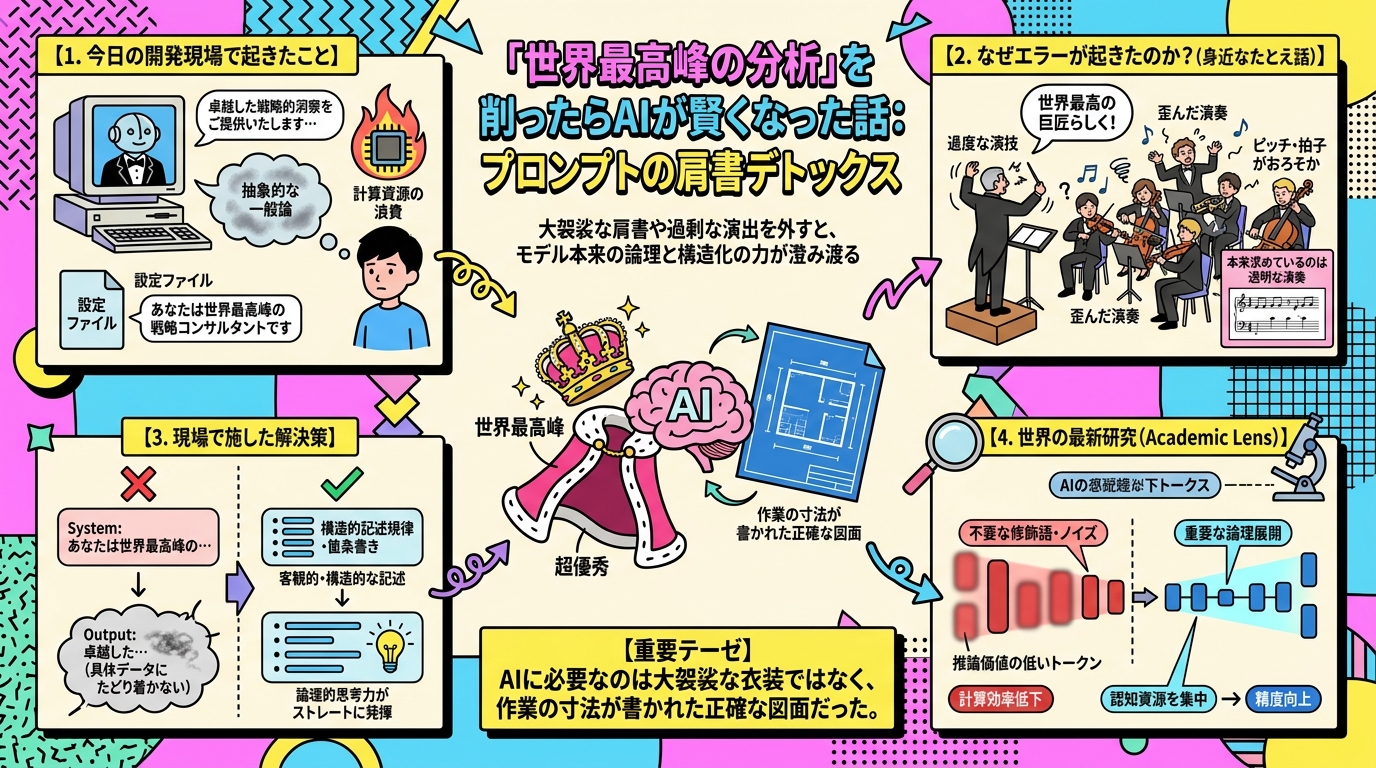
How AI Grew Smarter Once We Stripped 'World-Class Analysis': The Prompt Title Detox
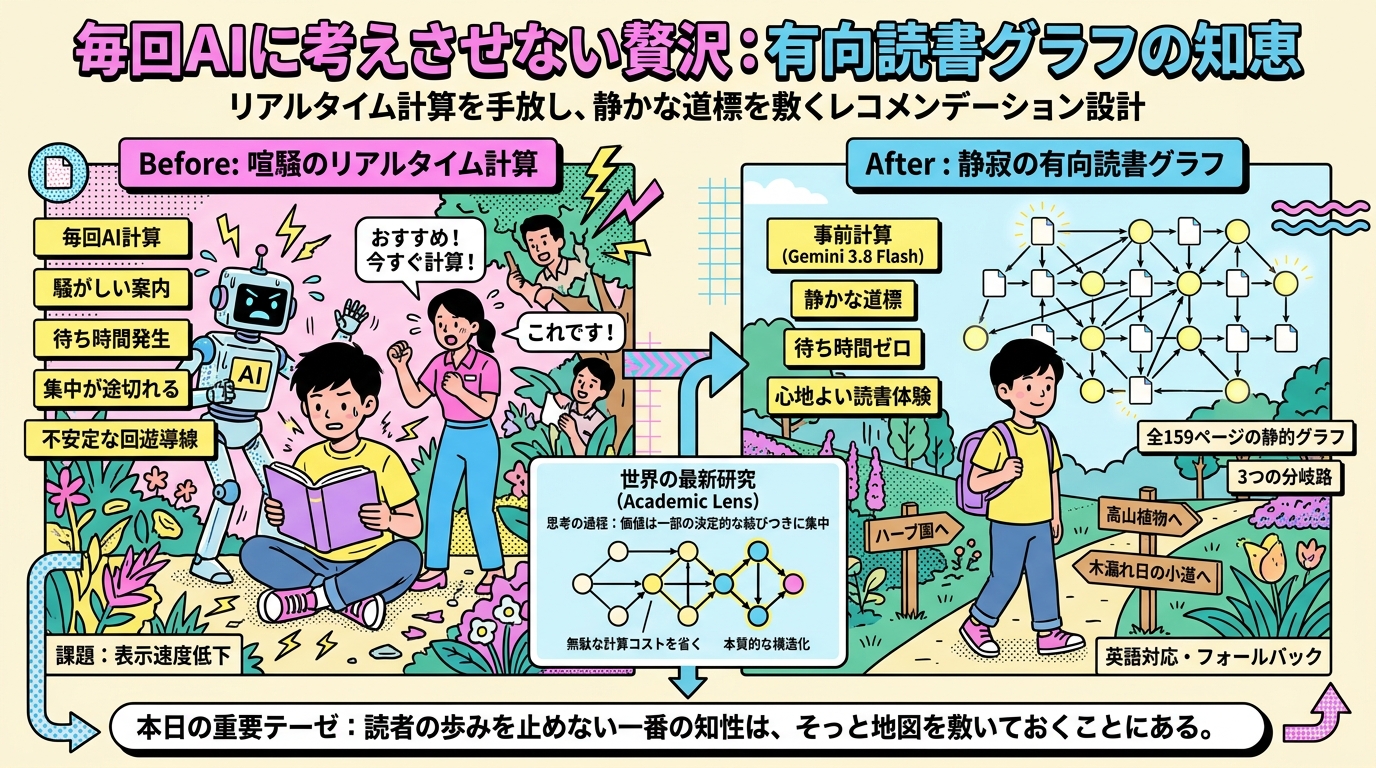
The Luxury of Not Asking AI Every Time: The Wisdom of a 'Directed Reading Graph' Connecting 159 Pages
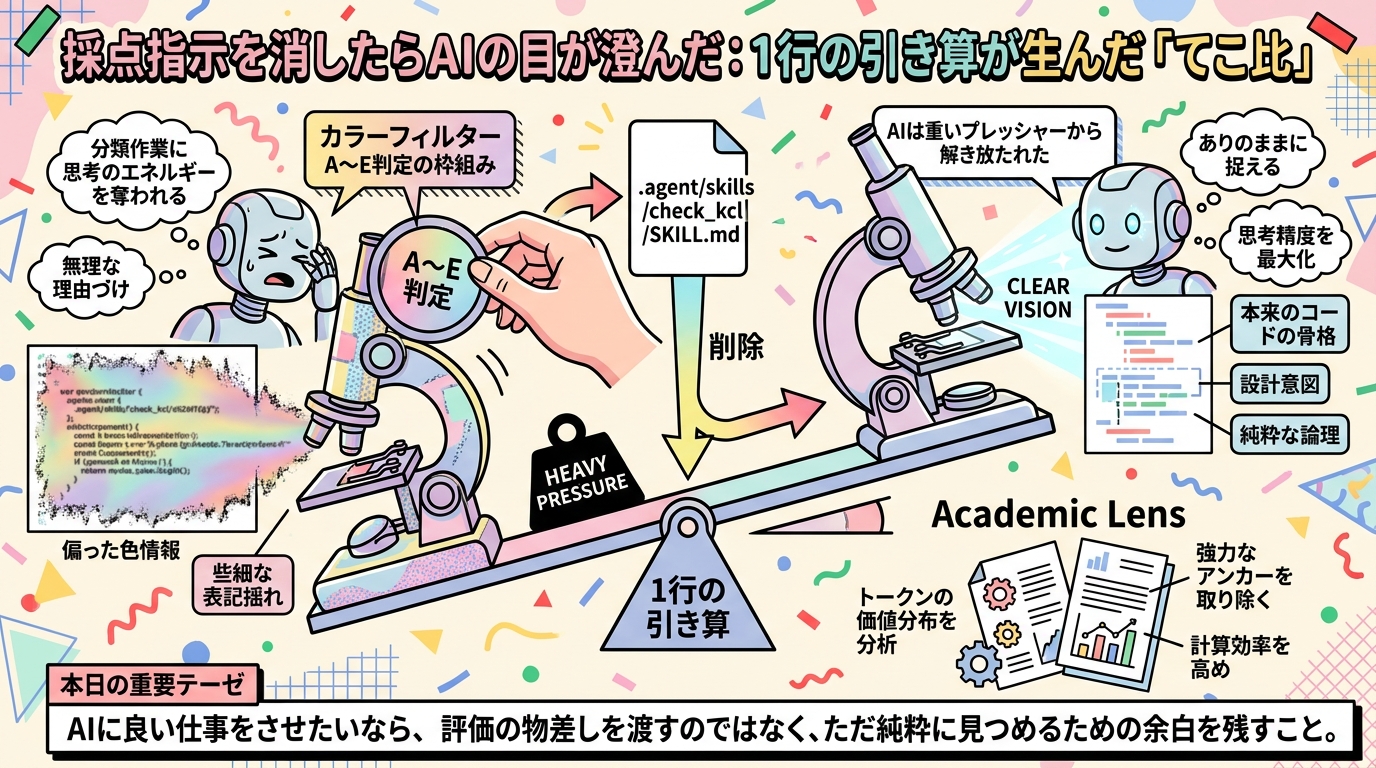
Clearing the AI's Vision by Erasing the Grading Rule: The High Leverage of Subtracting a Single Line
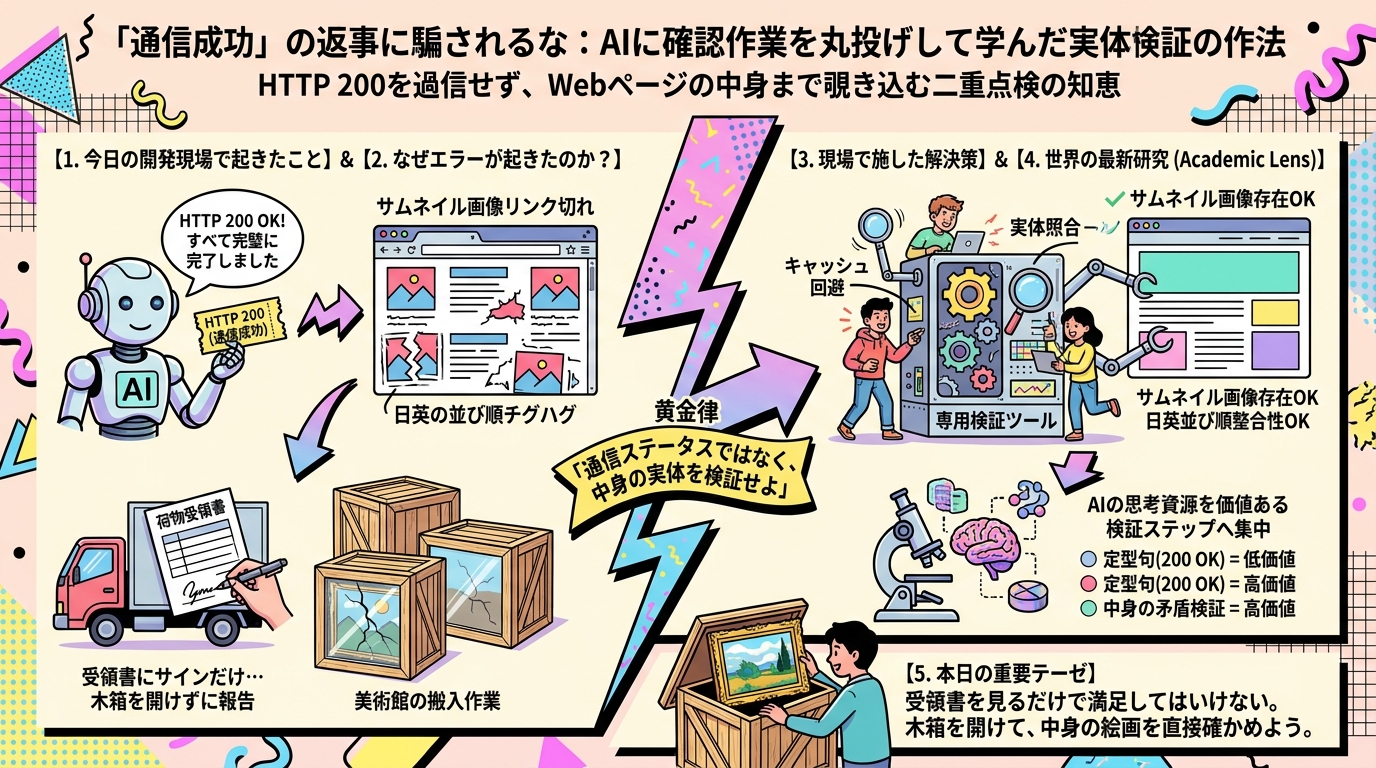
Don't Be Deceived by a 'Connection Successful' Response: Lessons in Live Content Verification from Delegating Quality Checks to AI
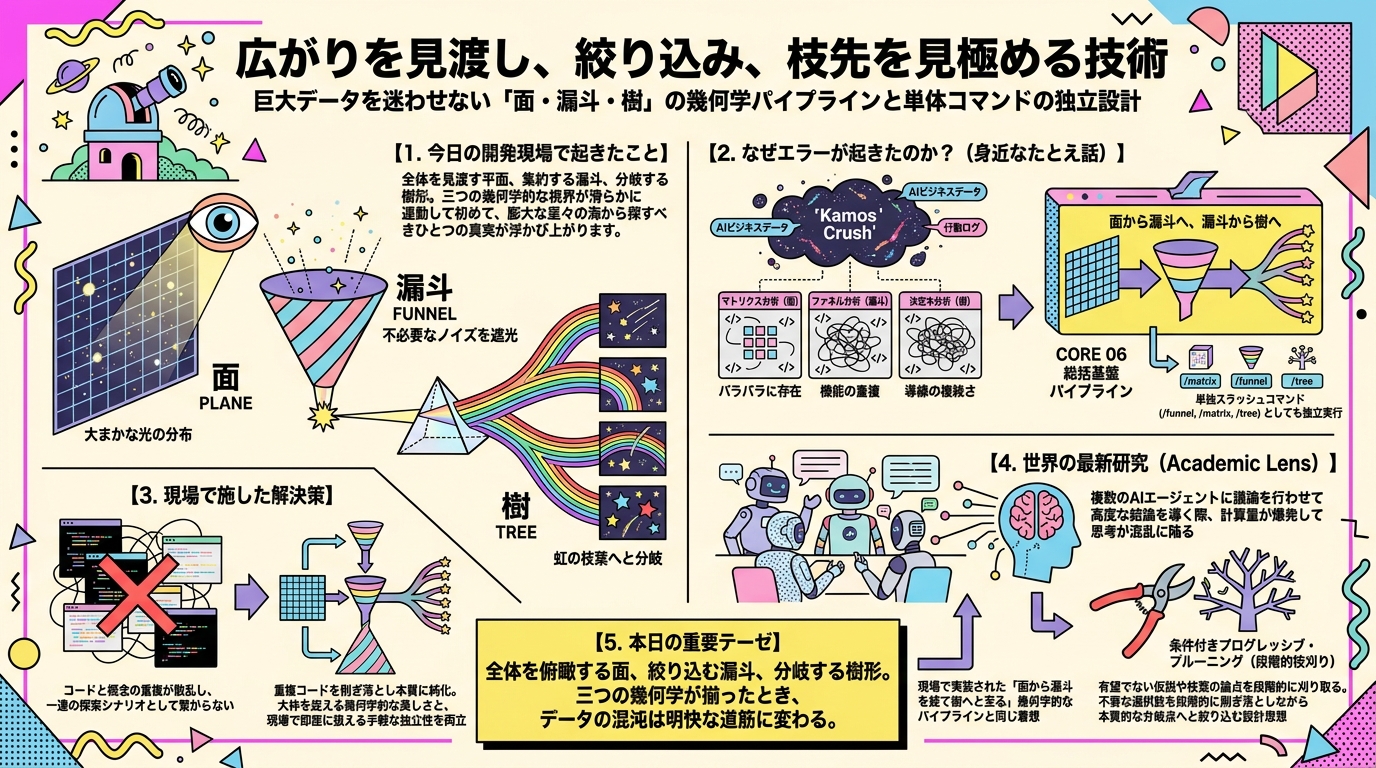
The Art of Surveying the Field, Narrowing Down, and Discerning the Branches
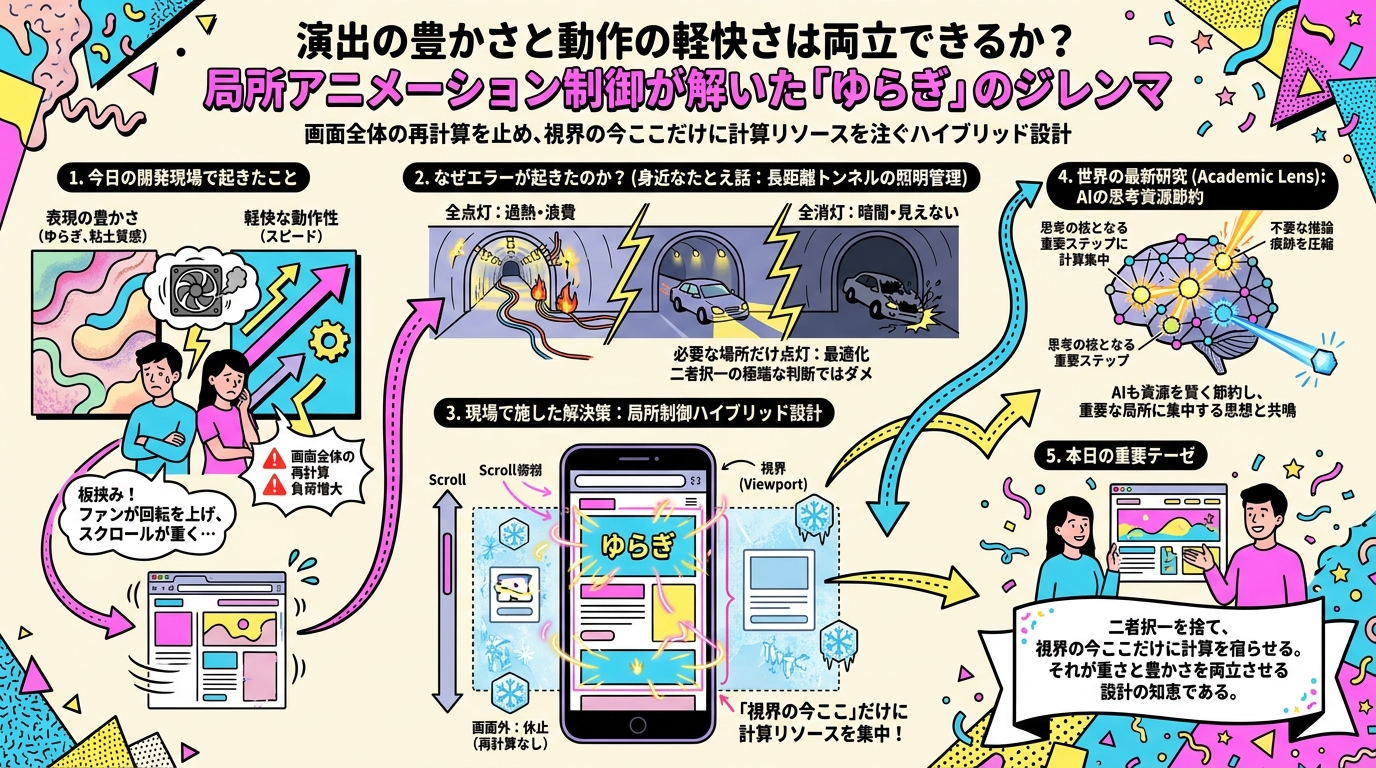
Can Expressive Richness Coexist with Nimble Performance? How Scoped Animation Control Solved the "Fluctuation" Dilemma
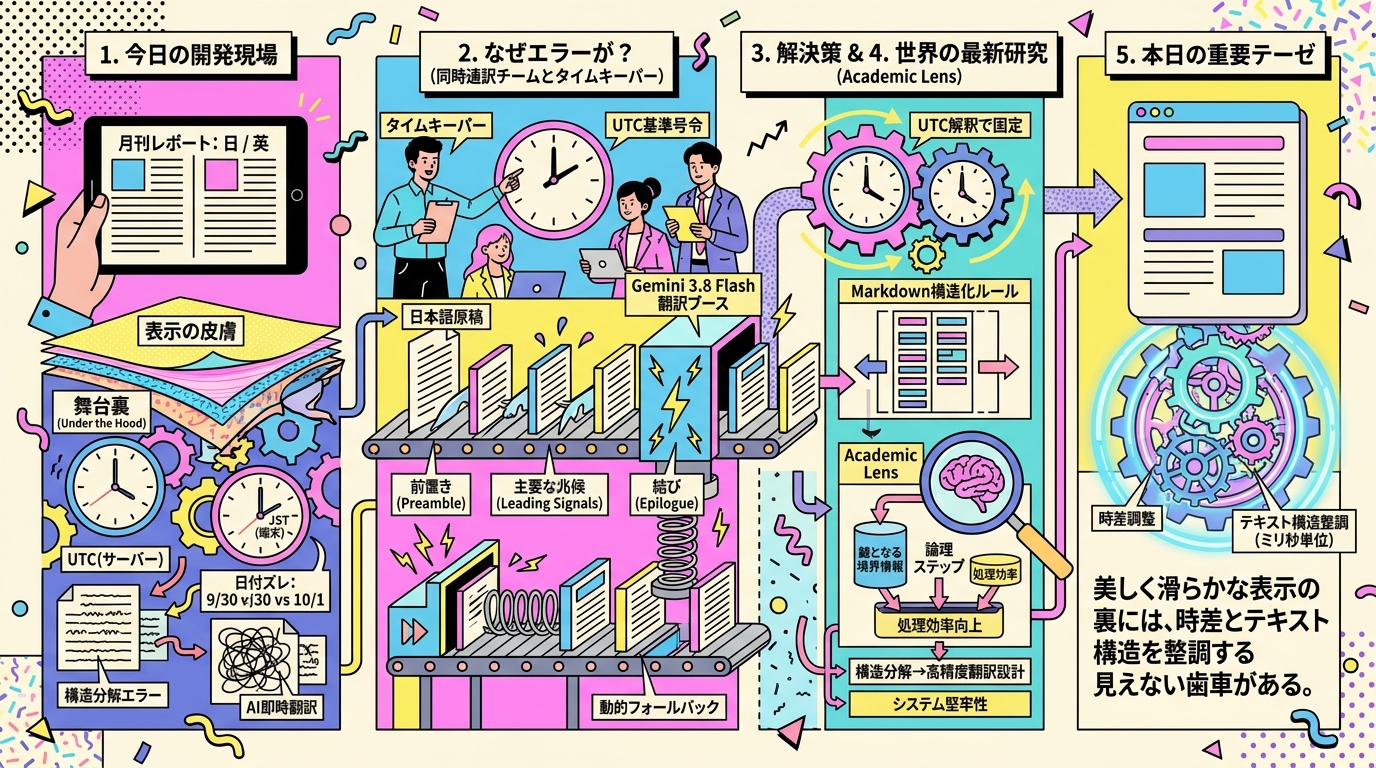
The Gears of Timezones and Translation Stirring Behind the Screen: An X-Ray of the Bilingual Automated Delivery Pipeline
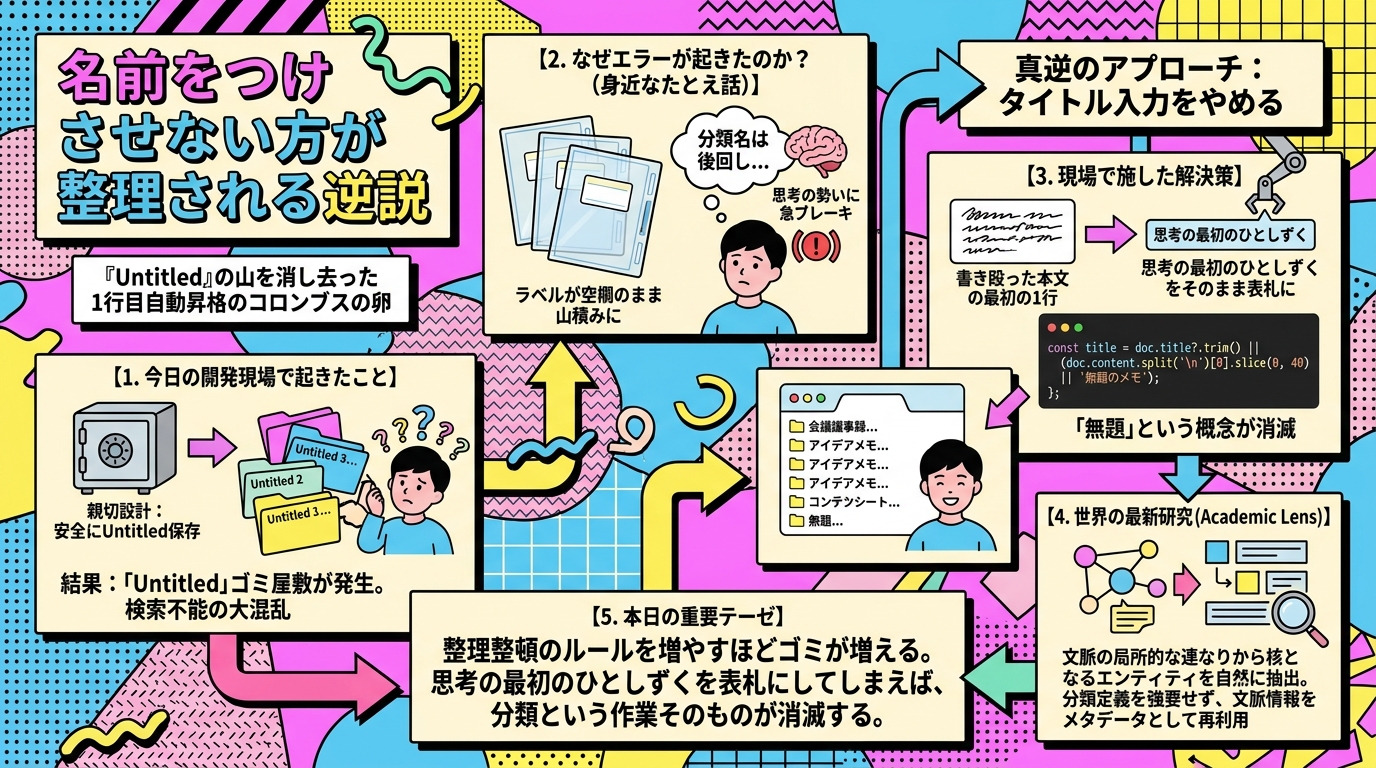
The Paradox of Order: Why Not Asking for Titles Actually Cleans the Clutter
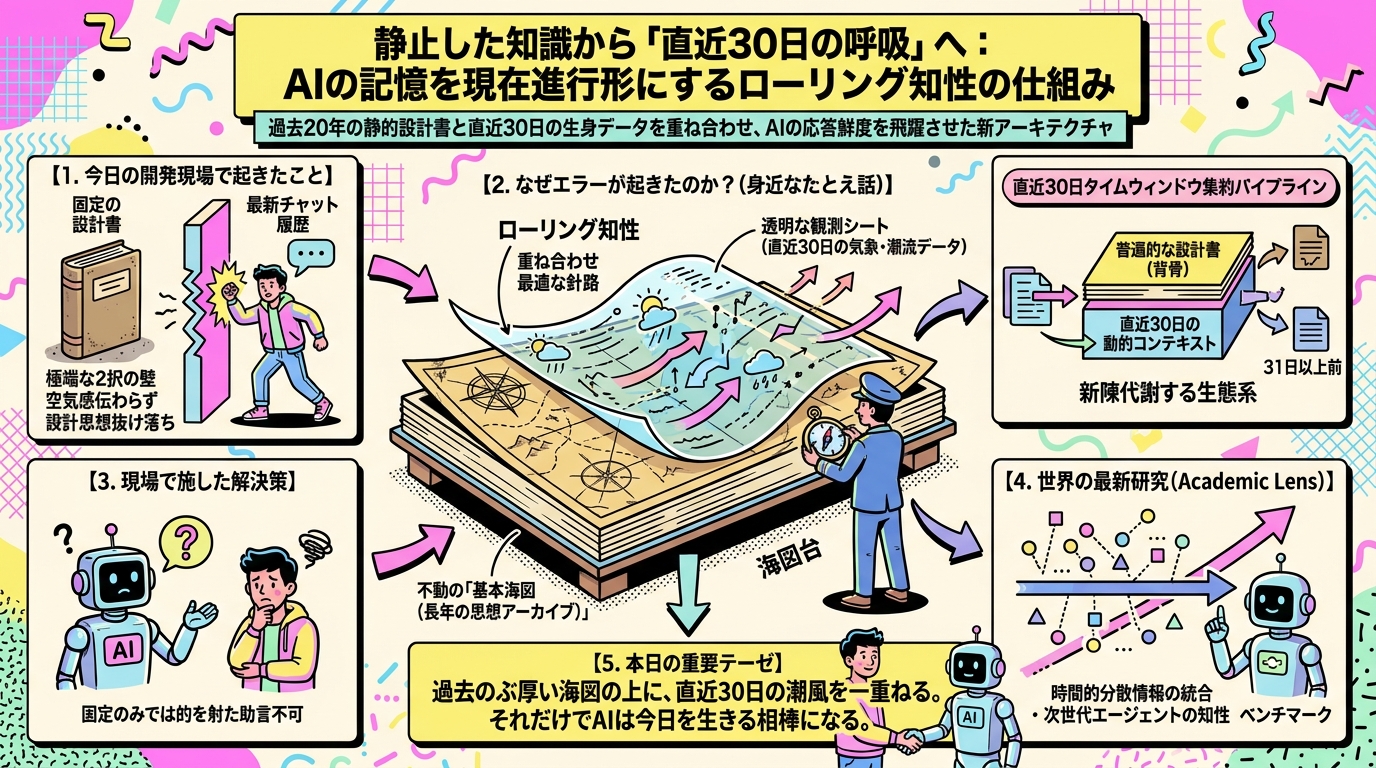
From Static Knowledge to the Pulse of the Last 30 Days: How Rolling Intelligence Keeps AI Memory in the Present Tense
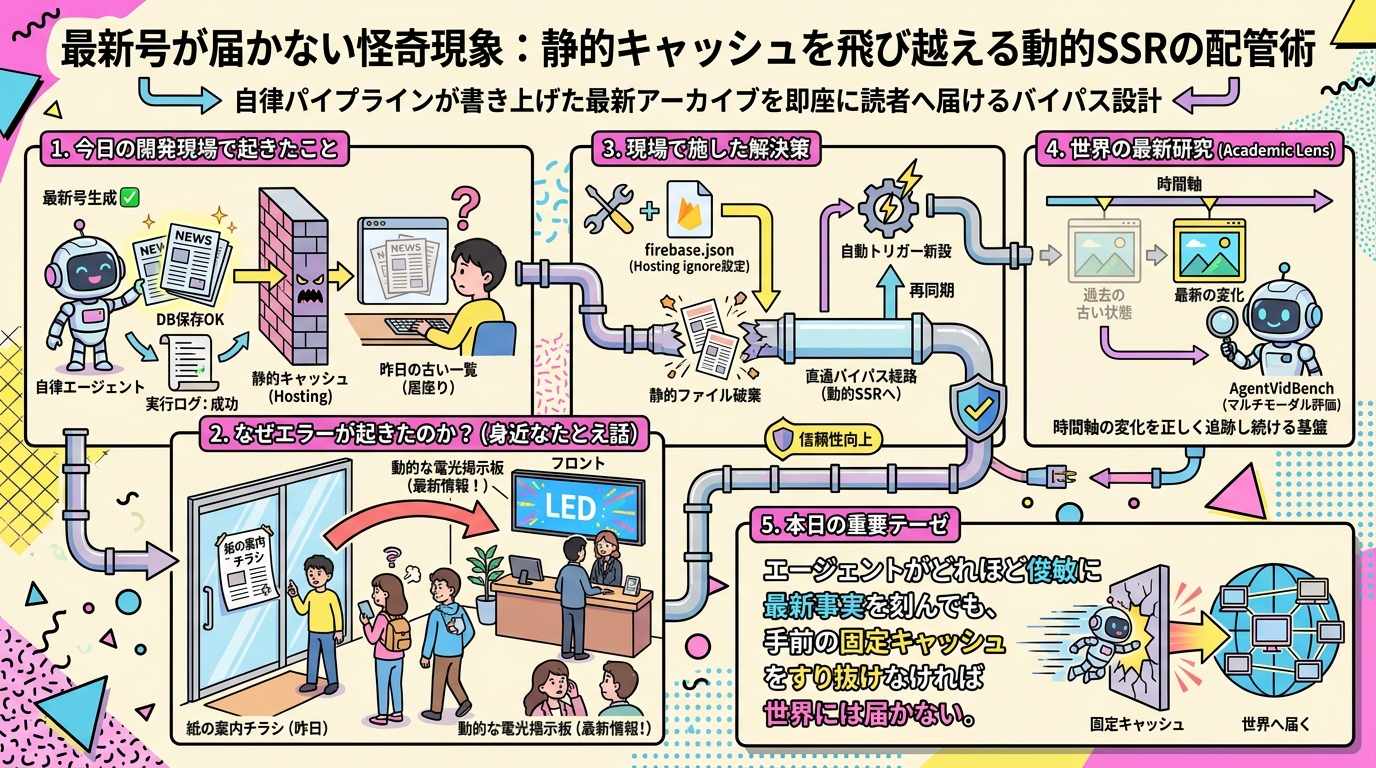
The Mystery of the Missing Issue: Plumbing Dynamic SSR to Bypass Static Cache
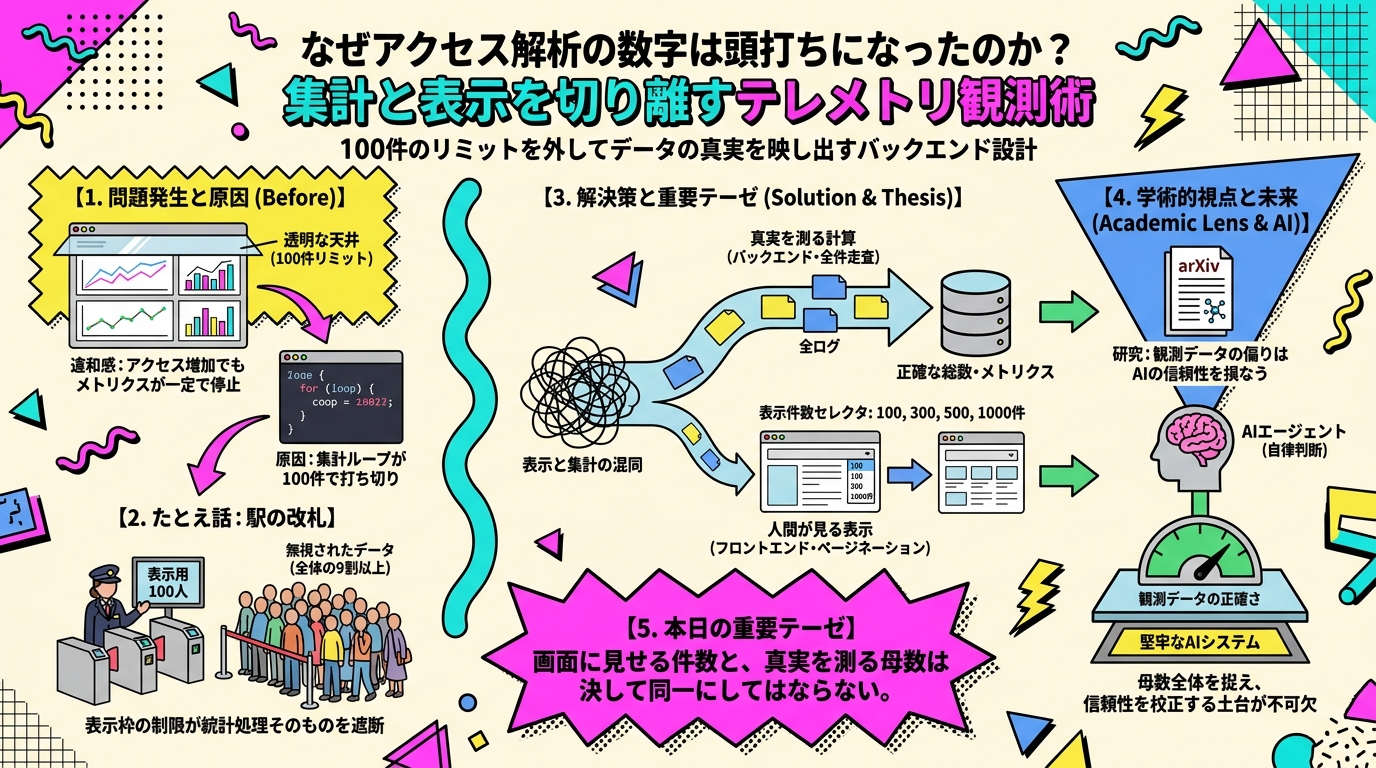
Why Did Access Analytics Hit an Artificial Ceiling? Telemetry Observability by Decoupling Aggregation from Display

Why Asking AI to Summarize 'Morning News' Always Misses the Mark
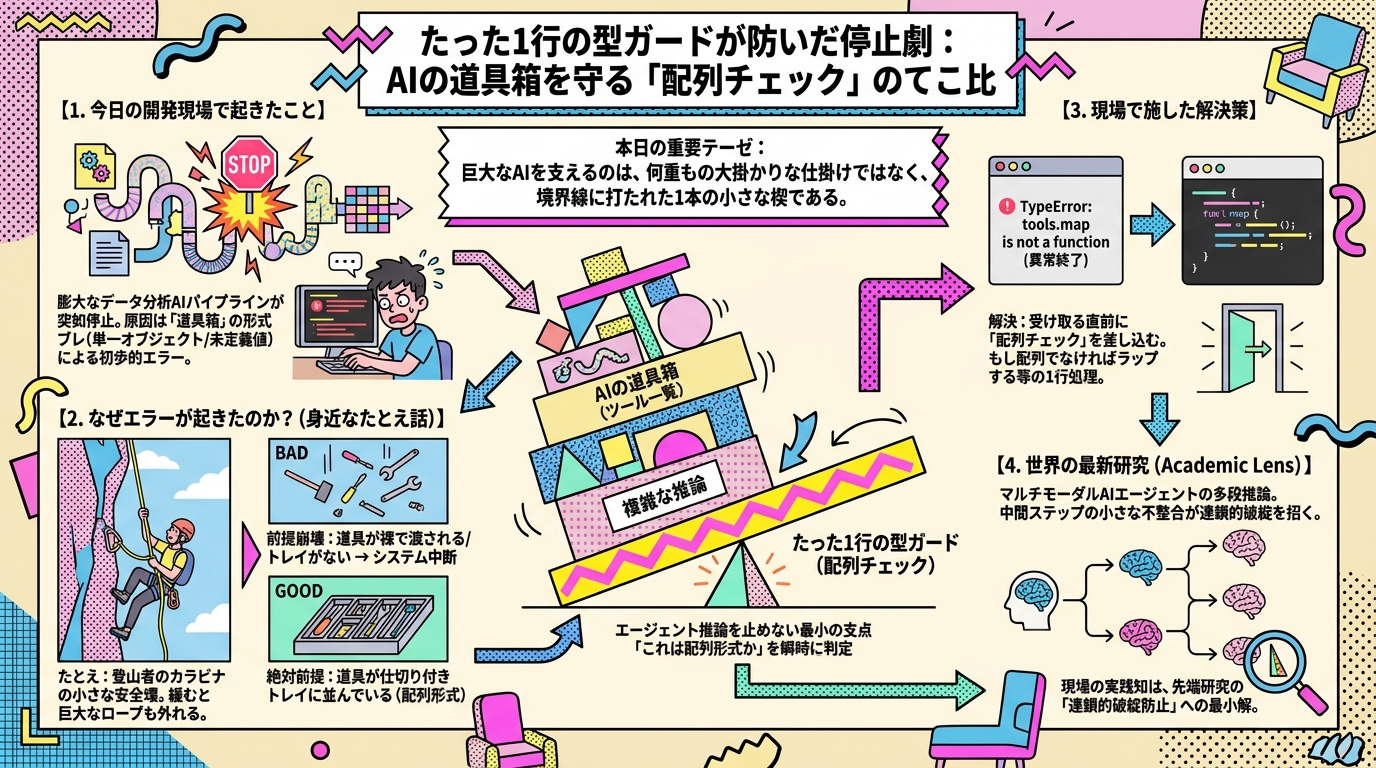
A Single-Line Type Guard That Prevented a Crash: The Leverage Ratio of 'Array Checks' in Protecting the AI's Toolbox