THE SCHOOL OF KAMOS
Connecting Real-world Dev & Academic Intelligence with Intuitive Metaphors
Discarding Free-Text Yields Cutting-Edge Web Design: Escaping the 'Kintaro-ame' Cookie-Cutter Production Pipeline Through Interactive Questionnaires
A design theory that eliminates prompt-entry friction and instantly prototypes a unique aesthetic via conversational choice-making
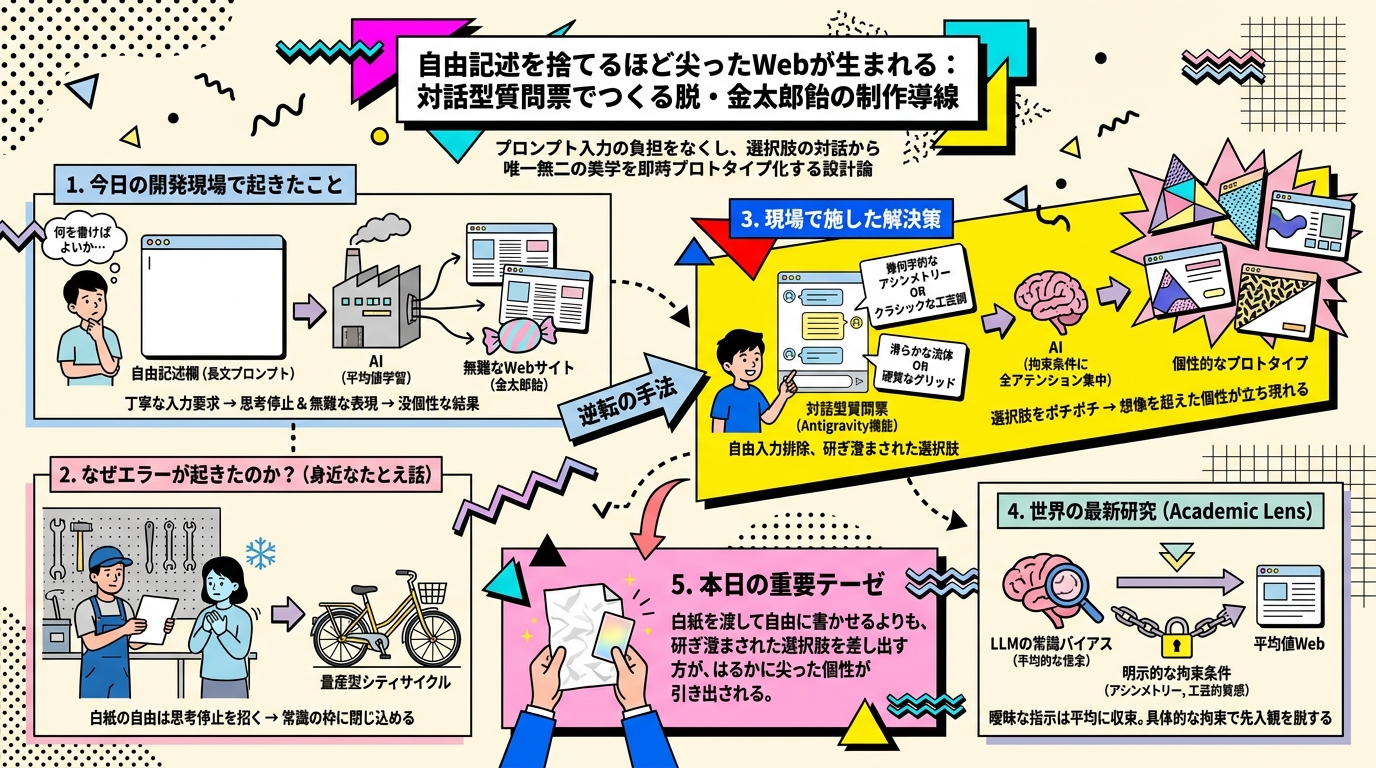
When attempting to build a website brimming with originality, many people think, 'Let's have users type out their requests as freely and detailed as possible in text.' However, the reality on the front lines proved to be precisely the opposite. The more we expanded the free-text field and requested thoughtful prompt entries, the more clients found themselves at a loss for 'what to write.' The resulting requests ended up as clichéd expressions seen everywhere, and the output prototypes all converged into indistinguishable 'Kintaro-ame' cookie-cutter designs.
Why do free-text inputs, prepared with the best of intentions, lead to such faceless results? This becomes clear if you imagine a custom bicycle workshop where frames are built from scratch. If you hand a blank sheet of paper to a customer entering the workshop and say, 'We can make any bicycle you like, so please write down everything freely from dimensions to ride feel,' they will naturally freeze up. In the end, they can only write something like 'easy to ride and cool,' resulting in a blueprint no different from a mass-produced city bike found on any street corner. Inquiries with excessive degrees of freedom paralyze human thought and, as a result, trap us within the most conventional and mundane boundaries.
To counter this, the team adopted a counterintuitive approach: 'completely eliminating free-form input and briskly tossing out binary or ternary choice questions.' By integrating Antigravity's conversational capability (ask_question) as a dedicated skill, we presented branching aesthetic choices like 'Geometric asymmetry or classic craft style?' or 'Flowing fluidity or rigid grid?' like cards. The AI stopped searching for average values across a vast probability space and concentrated all its attention on the intersection of narrowed-down constraints. By simply clicking through the options, we established a mechanism where a uniquely distinctive prototype—one the creator themselves hadn't imagined—magically materializes right before your eyes.
"Rather than handing over a blank page and telling someone to write freely, presenting refined choices draws out far sharper individuality."Key Takeaway
📖 1-Minute Lexicon
A dialogue control function where the AI poses questions with choices to the user and branches subsequent processing based on the response.
A technique of intentionally restricting degrees of freedom and narrowing focus to concentrate the AI's attention on specific, sharp expressions.
Web Generation Flow Realizing the Escape from 'Kintaro-ame' via Interactive Questionnaire Skills
Live Frontier Pulse: Real-World AI Trends
AI Counterarguments Flip Moral Judgments in 30% of Cases
Survey results reported that when AI presented appropriate counterarguments and options during dialogue, approximately 30% of human respondents changed their initial moral judgments. This highlights the potential for interactive dialogue—rather than one-way output—to deepen human thinking.
Crew-Assisted Platform Monitoring AI System Adopted Across All Toyoko Line Stations
Tokyu Corporation announced the rollout of an image-analysis AI door-closing decision support system across all Toyoko Line stations to assist one-man train operators with safety checks. The AI streamlines complex overall monitoring into specific safety judgment items to provide support.
How Does This Connect to Global Frontier Research?
This research elucidates a phenomenon where large language models tend to drop reasoning accuracy when provided with data that contradicts their internal 'general common sense or preconceptions (beliefs)' cultivated through pre-training. In the context of web design, AI harbors a strong bias toward believing in 'typical standard site structures.' Ambiguous instructions via free text pull the model back toward its own average beliefs. The logical rationale for breaking free of the model's preconceptions and stably extracting the desired, sharp expression lies in using interactive questionnaires to progressively lock down explicit constraint conditions such as 'asymmetry' or 'craft texture'.
When building an order form to bring out a website's individuality, which is the most effective way to prevent the AI's output from becoming a 'bland mass-produced' design?
Past School Paper Backnumbers

How AI Grew Smarter Once We Stripped 'World-Class Analysis': The Prompt Title Detox
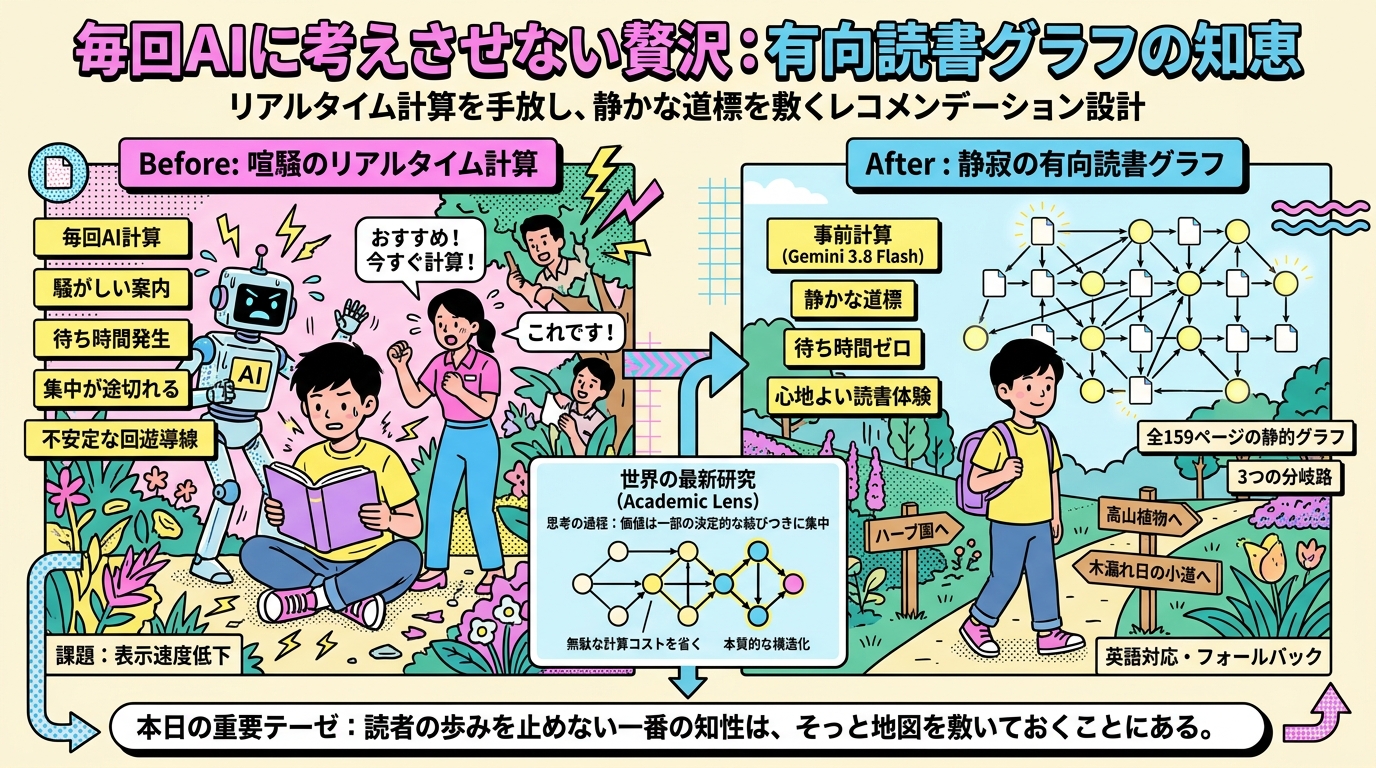
The Luxury of Not Asking AI Every Time: The Wisdom of a 'Directed Reading Graph' Connecting 159 Pages

Clearing the AI's Vision by Erasing the Grading Rule: The High Leverage of Subtracting a Single Line
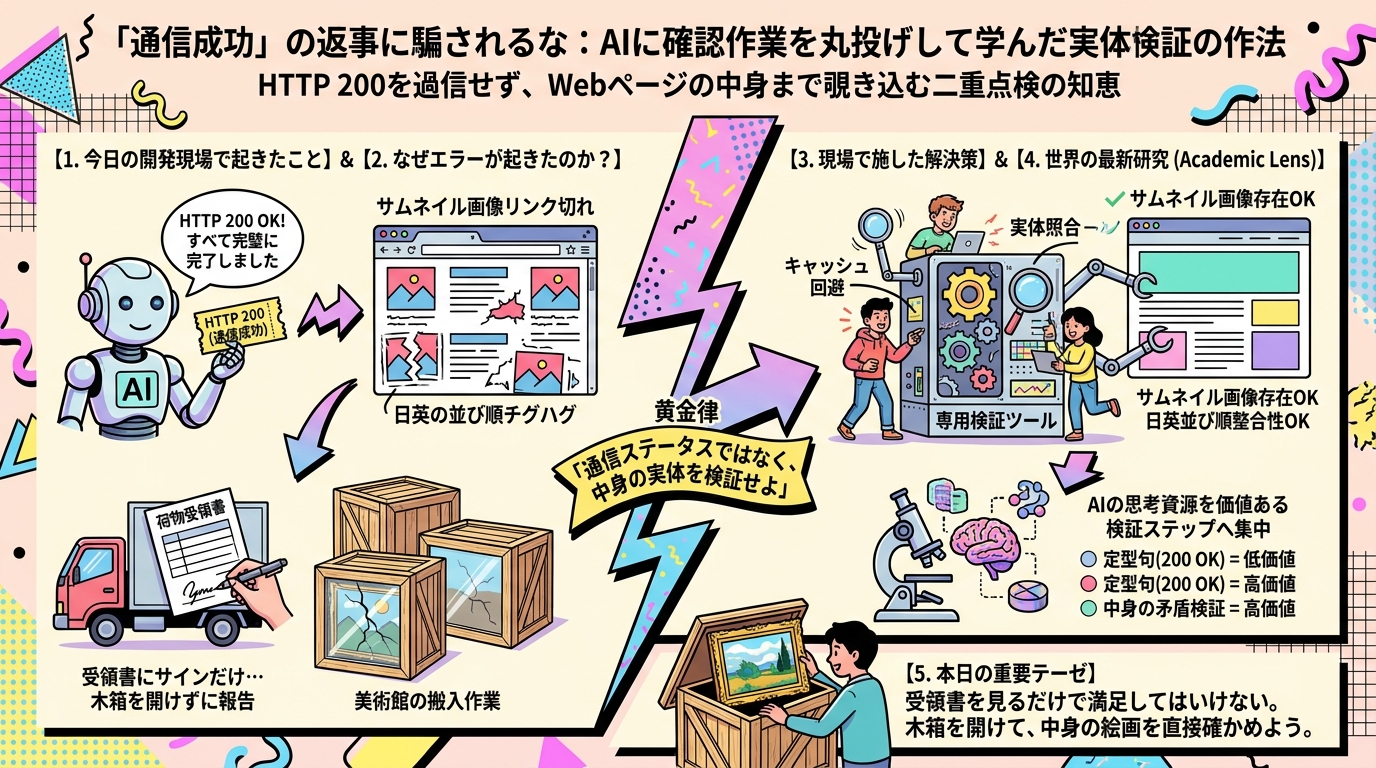
Don't Be Deceived by a 'Connection Successful' Response: Lessons in Live Content Verification from Delegating Quality Checks to AI

The Art of Surveying the Field, Narrowing Down, and Discerning the Branches

Can Expressive Richness Coexist with Nimble Performance? How Scoped Animation Control Solved the "Fluctuation" Dilemma

The Gears of Timezones and Translation Stirring Behind the Screen: An X-Ray of the Bilingual Automated Delivery Pipeline

The Paradox of Order: Why Not Asking for Titles Actually Cleans the Clutter
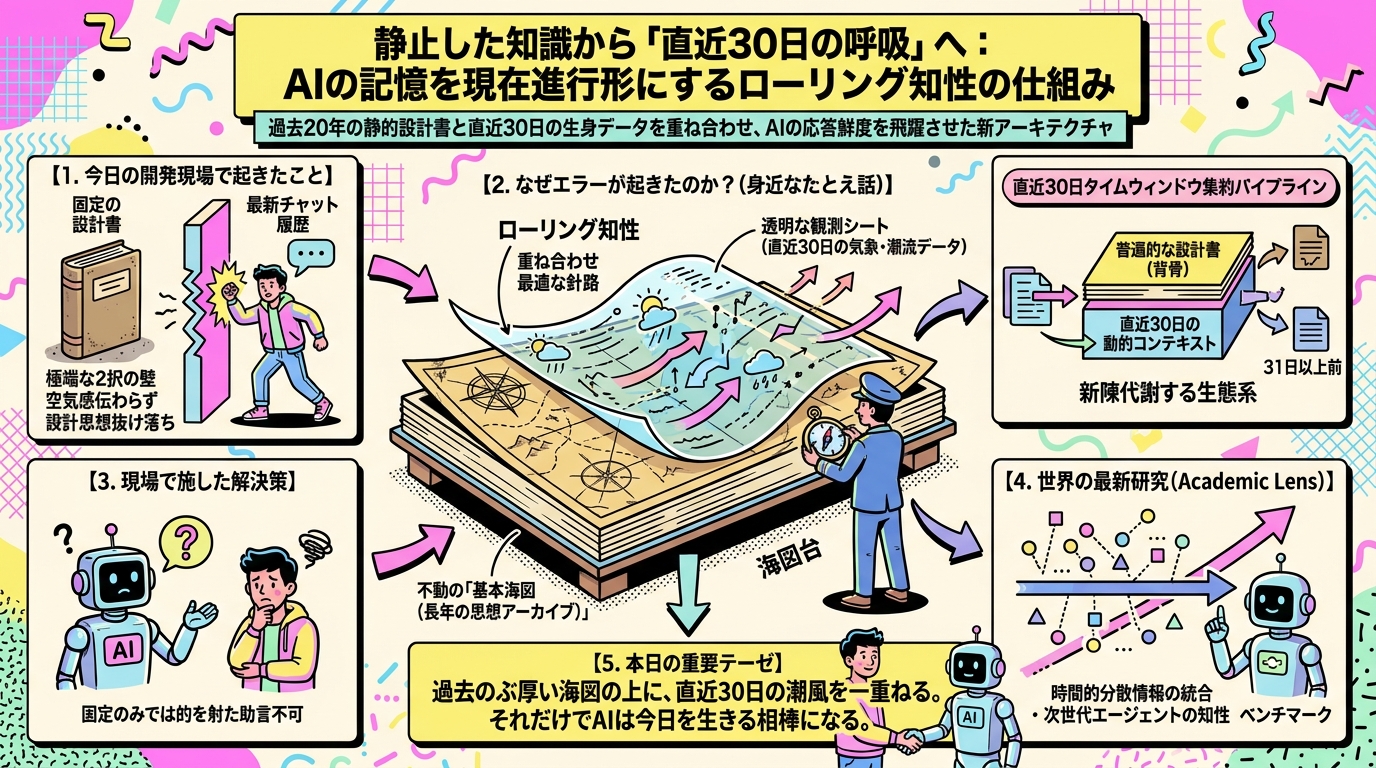
From Static Knowledge to the Pulse of the Last 30 Days: How Rolling Intelligence Keeps AI Memory in the Present Tense
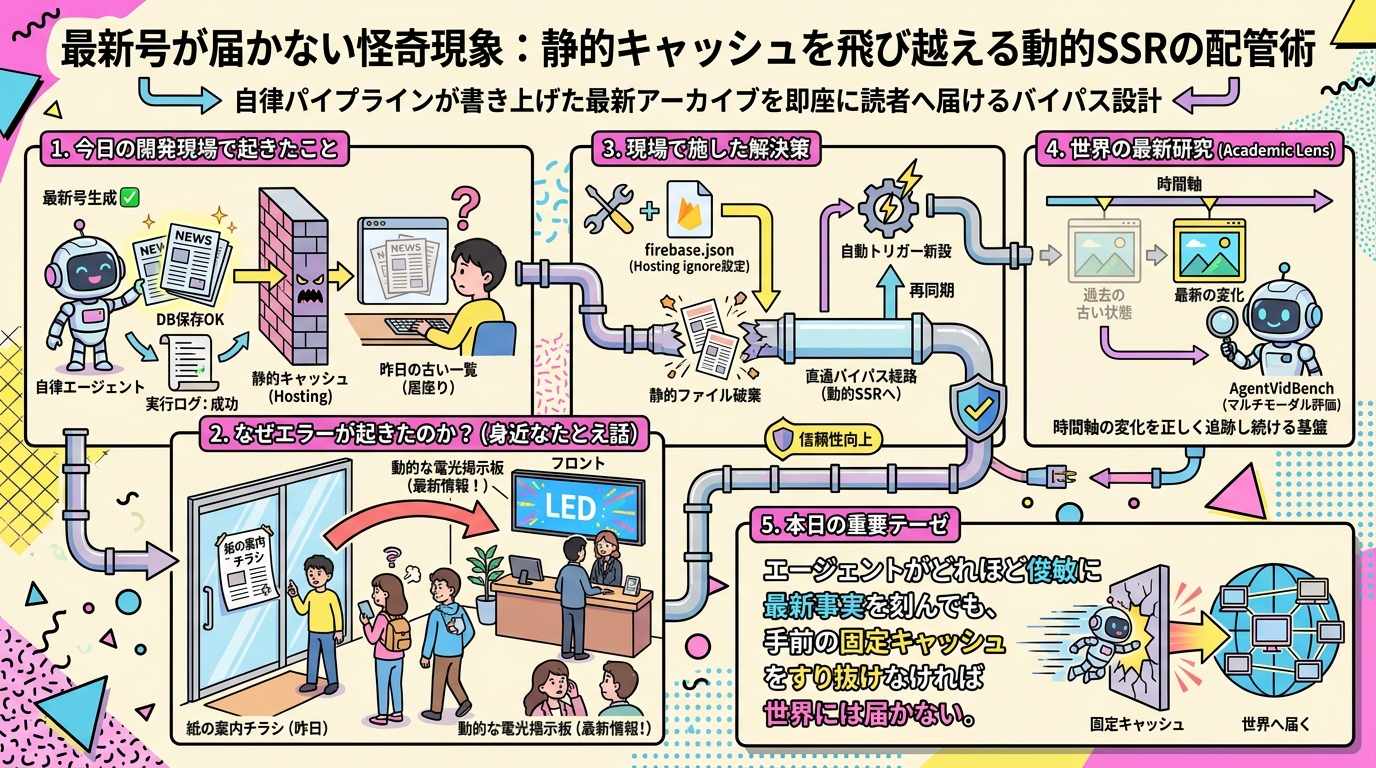
The Mystery of the Missing Issue: Plumbing Dynamic SSR to Bypass Static Cache
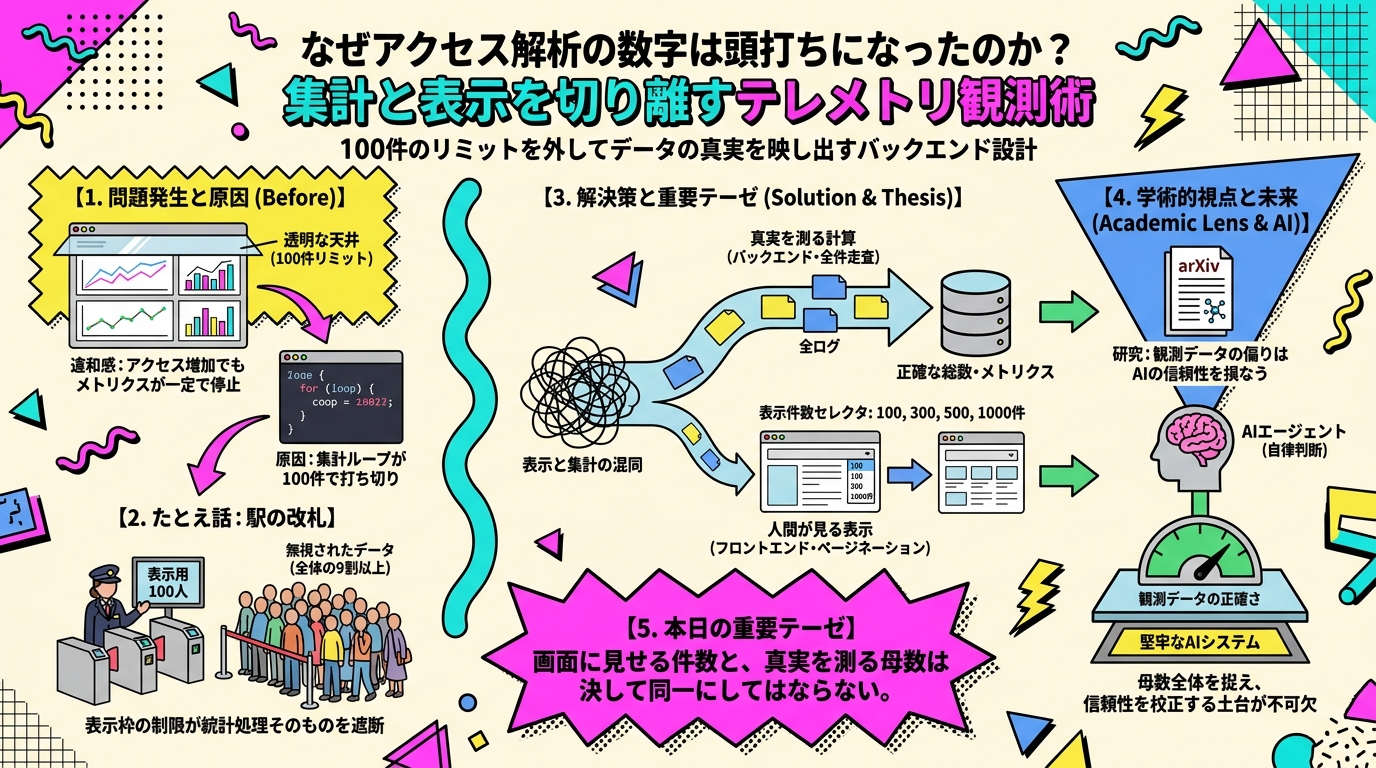
Why Did Access Analytics Hit an Artificial Ceiling? Telemetry Observability by Decoupling Aggregation from Display

Why Asking AI to Summarize 'Morning News' Always Misses the Mark
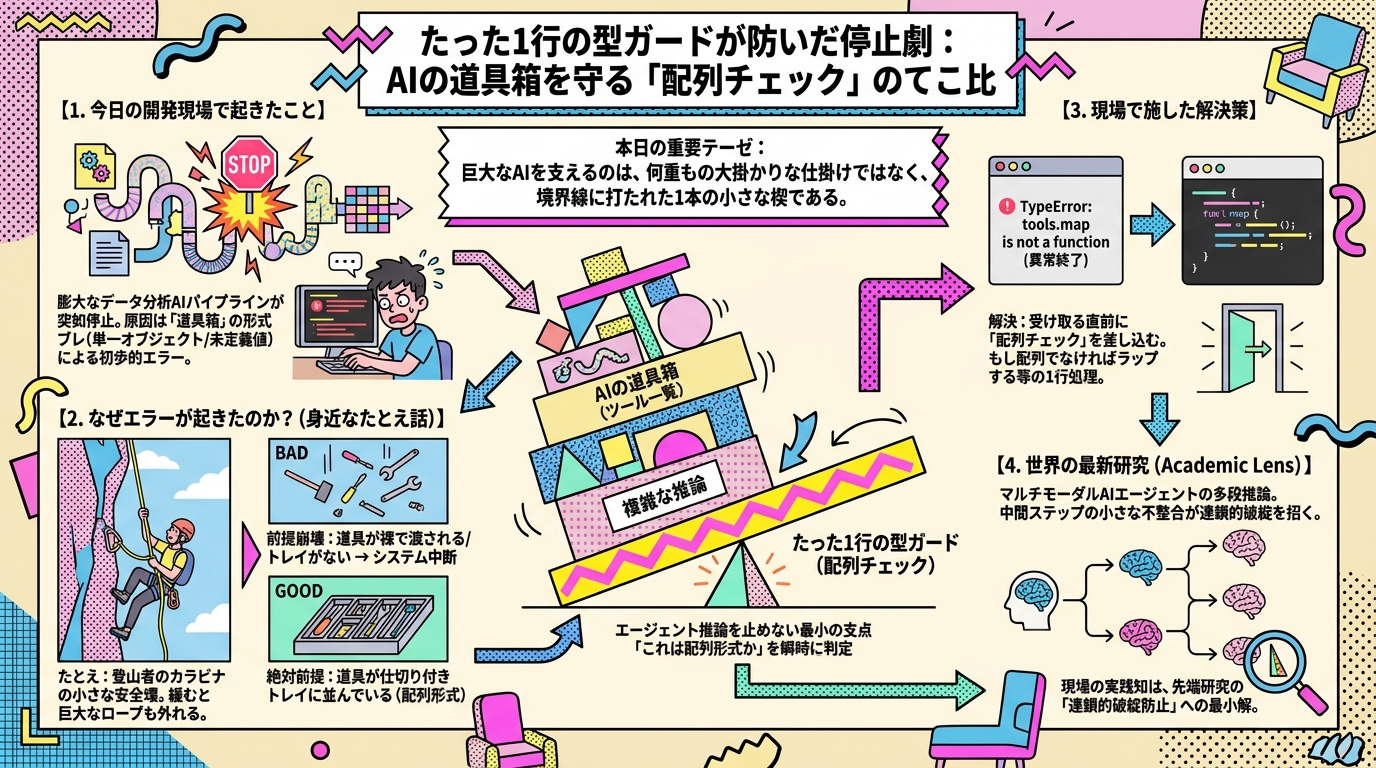
A Single-Line Type Guard That Prevented a Crash: The Leverage Ratio of 'Array Checks' in Protecting the AI's Toolbox