THE SCHOOL OF KAMOS
Connecting Real-world Dev & Academic Intelligence with Intuitive Metaphors
Tuning Giant AI from Your MacBook: The Batch Caching Wisdom That Cuts 5 Hours Down with 30 Seconds of Preprocessing
Bridging an 8GB laptop and a cloud A100 to unravel the communication bottleneck halting FLUX.2 fine-tuning
In a workshop restoring cathedral stained glass, measuring each piece of glass by the window frame and making round trips to a distant kiln every single time would leave you stranded by sunset. A master craftsperson instead cuts all the colored glass at once to match the layout bench, arranges them in racks by number, and then snaps them into the frame in one fluid sweep. Elimination of travel waste is precisely what separates success from failure in monumental work.
This stained-glass workshop workflow mirrors the exact challenge we faced when remotely operating a cloud monster machine (A100-80GB) from an 8GB-memory MacBook to fine-tune (LoRA) 150 brand asset images on 'FLUX.2-dev,' the cutting-edge 24-billion parameter image generation AI. Standard training procedures meticulously execute computations for the 'VAE'—which compresses images into numerical data—and the 'Text Encoder'—which interprets prompts—at every single step. As a result, heavy data shuttled back and forth repeatedly across the internal communication pathway (PCIe bus), causing massive gridlock and taking over 5 hours just to train 150 images. The connection between the local terminal and the cloud became unstable, pushing our supposed 80GB of memory to the brink of overflow (OOM).
To counter this, the development team introduced '2-Stage Ultra-Fast Batch Caching,' completing the heavy prep work entirely before the training loop begins. In the first stage, all 150 images are converted into feature representations by the VAE in one go (taking a mere 12 seconds), and in the second stage, text vectorization via the text encoder is collectively finished (18 seconds). Totaling just 30 seconds to wrap up preprocessing for all materials, the results are neatly and permanently resident on the GPU's ultra-fast memory (VRAM). By concentrating computing resources exclusively on the massive core brain (the Transformer), communication wait times were completely eliminated. We established an exceptionally smooth training pipeline that allows us to issue instructions from a small local laptop without ever overflowing the 80GB workspace.
"Stop making round trips to the kiln; simply arranging pre-prepared palettes allows the giant brain to reclaim its innate speed."Key Takeaway
📖 1-Minute Lexicon
A lightweight training technique that teaches new art styles or concepts in a short time by training only small auxiliary parts rather than rewriting the entire giant AI brain.
A mechanism that stores pre-calculated preparatory data on ultra-fast dedicated memory directly accessible by the GPU.
Accelerating FLUX.2 LoRA Training via 2-Stage Ultra-Fast Batch Caching

Live Frontier Pulse: Real-World AI Trends
AI Used in Explosion Scenes for Drama 'VIVANT': TV Stations Harness Tech to Cut Production Costs
Reports revealed that TBS introduced generative AI for CGI production, such as explosion scenes, in the sequel production of its hit drama, achieving a significant reduction in production costs alongside advanced expression.
How Does This Connect to Global Frontier Research?
In High-Level Synthesis (HLS) design aimed at maximizing hardware performance, eliminating data transfer bottlenecks between computing units and memory is a primary focal point in modern AI engineering. This paper evaluates the capability of autonomous agents to decipher hardware resource constraints and derive efficient circuit designs. Our practical implementation in the field—the 2-stage optimization that eliminates on-the-fly data transfers and lays out pre-caches on ultra-fast VRAM—aligns perfectly with the cutting-edge hardware design philosophy of pushing hardware computational efficiency to its absolute limit within restricted communication bandwidths.
In image generation AI fine-tuning (LoRA), which measure successfully achieved a dramatic reduction in training time from 5 hours?
Past School Paper Backnumbers

How AI Grew Smarter Once We Stripped 'World-Class Analysis': The Prompt Title Detox
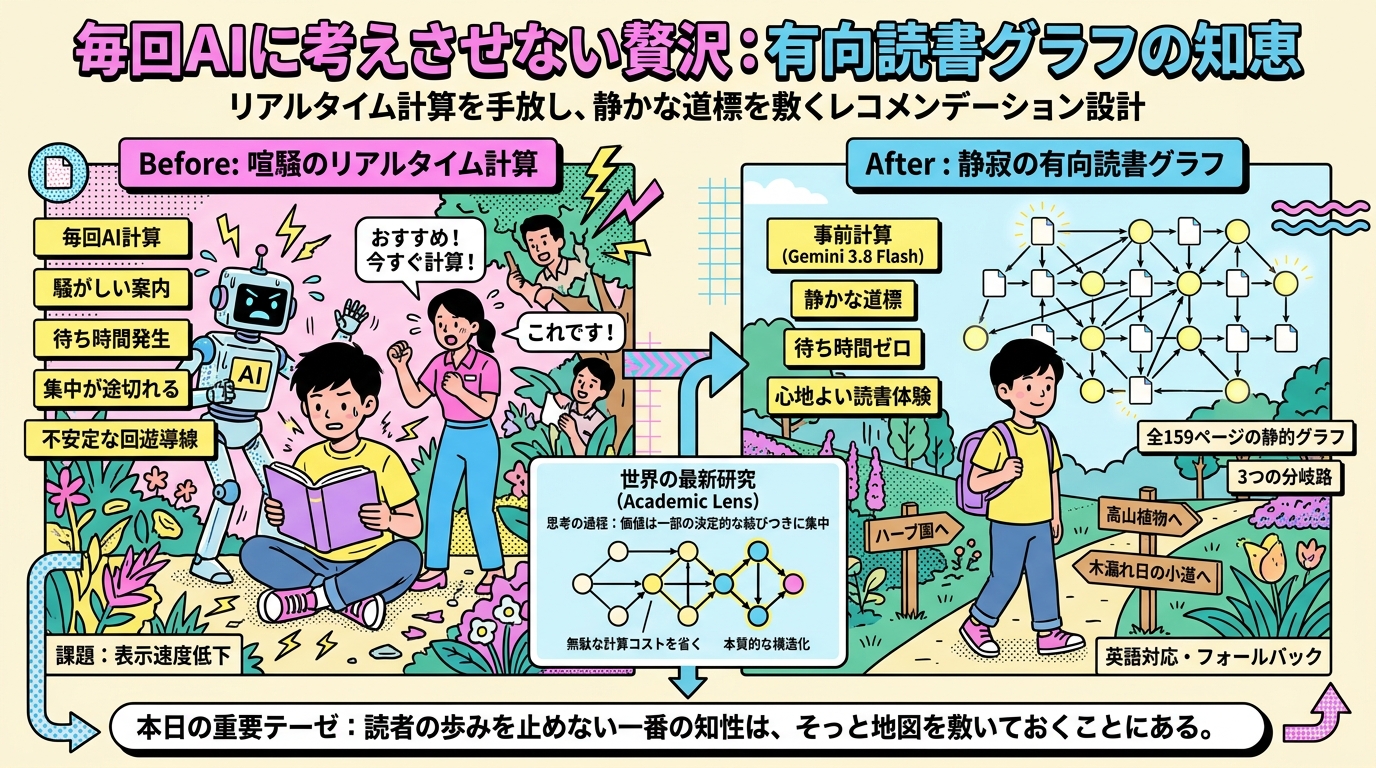
The Luxury of Not Asking AI Every Time: The Wisdom of a 'Directed Reading Graph' Connecting 159 Pages

Clearing the AI's Vision by Erasing the Grading Rule: The High Leverage of Subtracting a Single Line
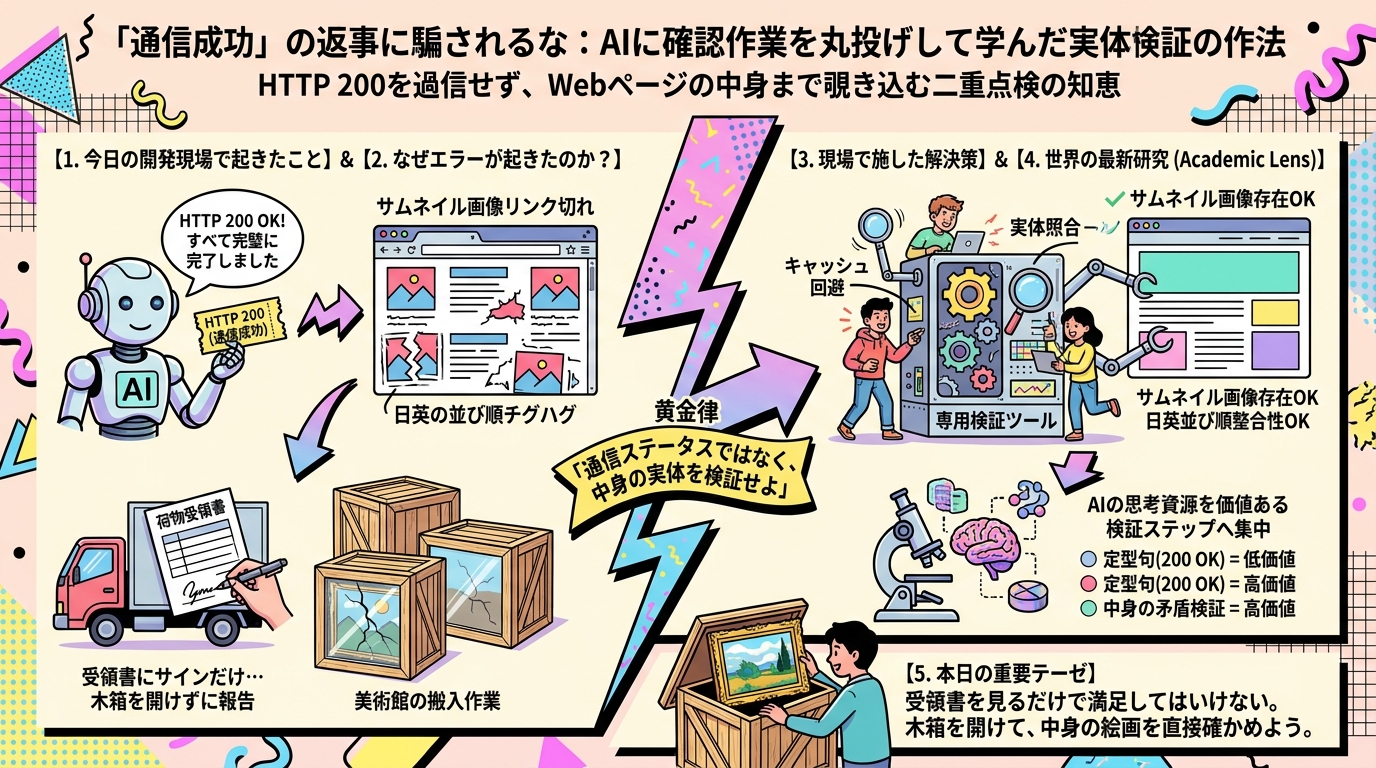
Don't Be Deceived by a 'Connection Successful' Response: Lessons in Live Content Verification from Delegating Quality Checks to AI
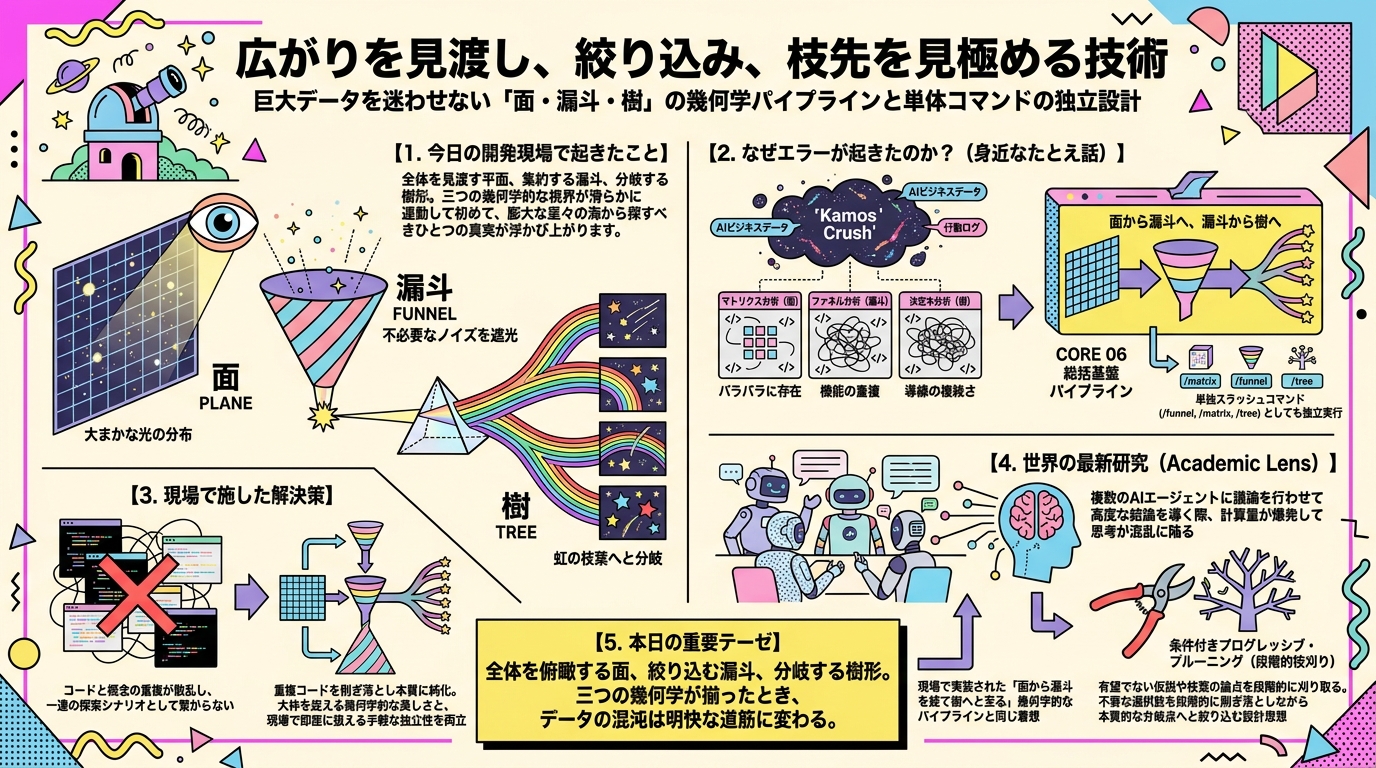
The Art of Surveying the Field, Narrowing Down, and Discerning the Branches

Can Expressive Richness Coexist with Nimble Performance? How Scoped Animation Control Solved the "Fluctuation" Dilemma
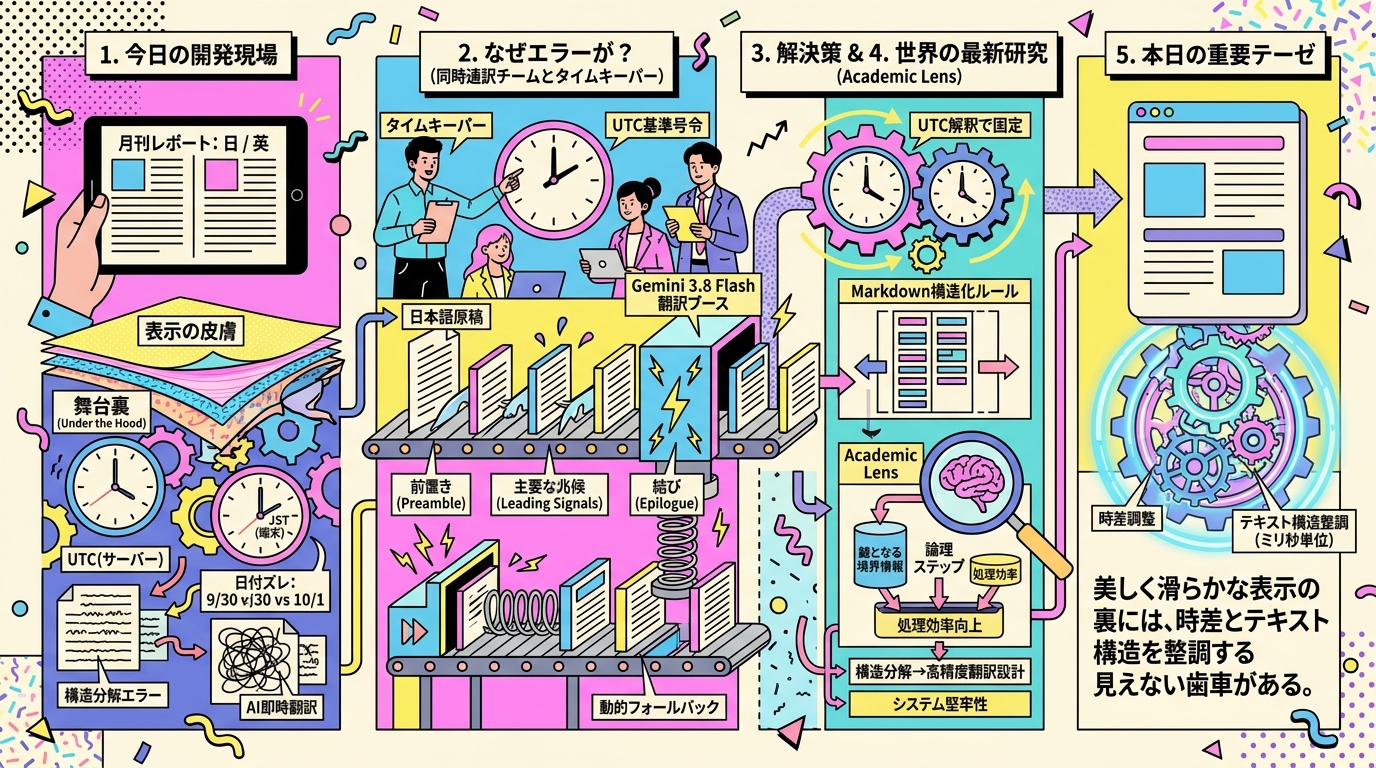
The Gears of Timezones and Translation Stirring Behind the Screen: An X-Ray of the Bilingual Automated Delivery Pipeline
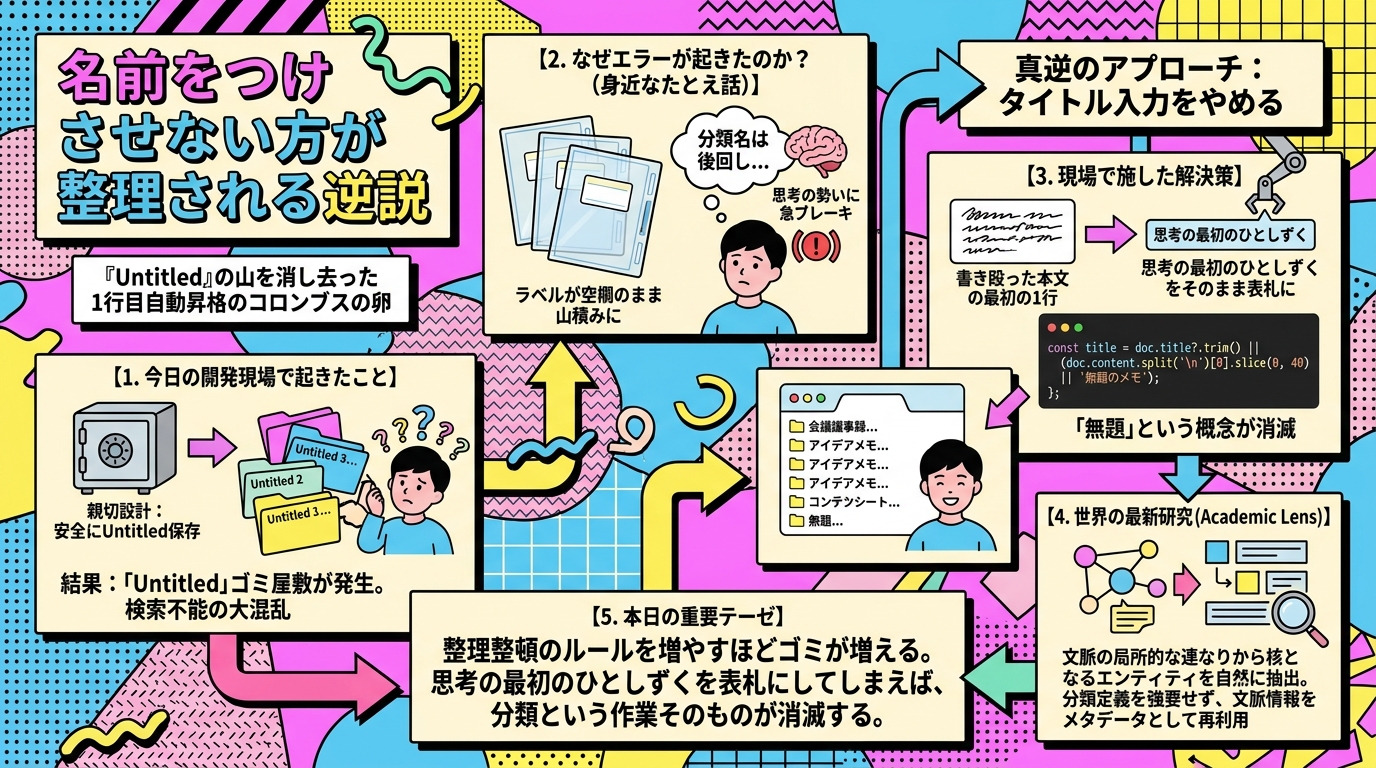
The Paradox of Order: Why Not Asking for Titles Actually Cleans the Clutter
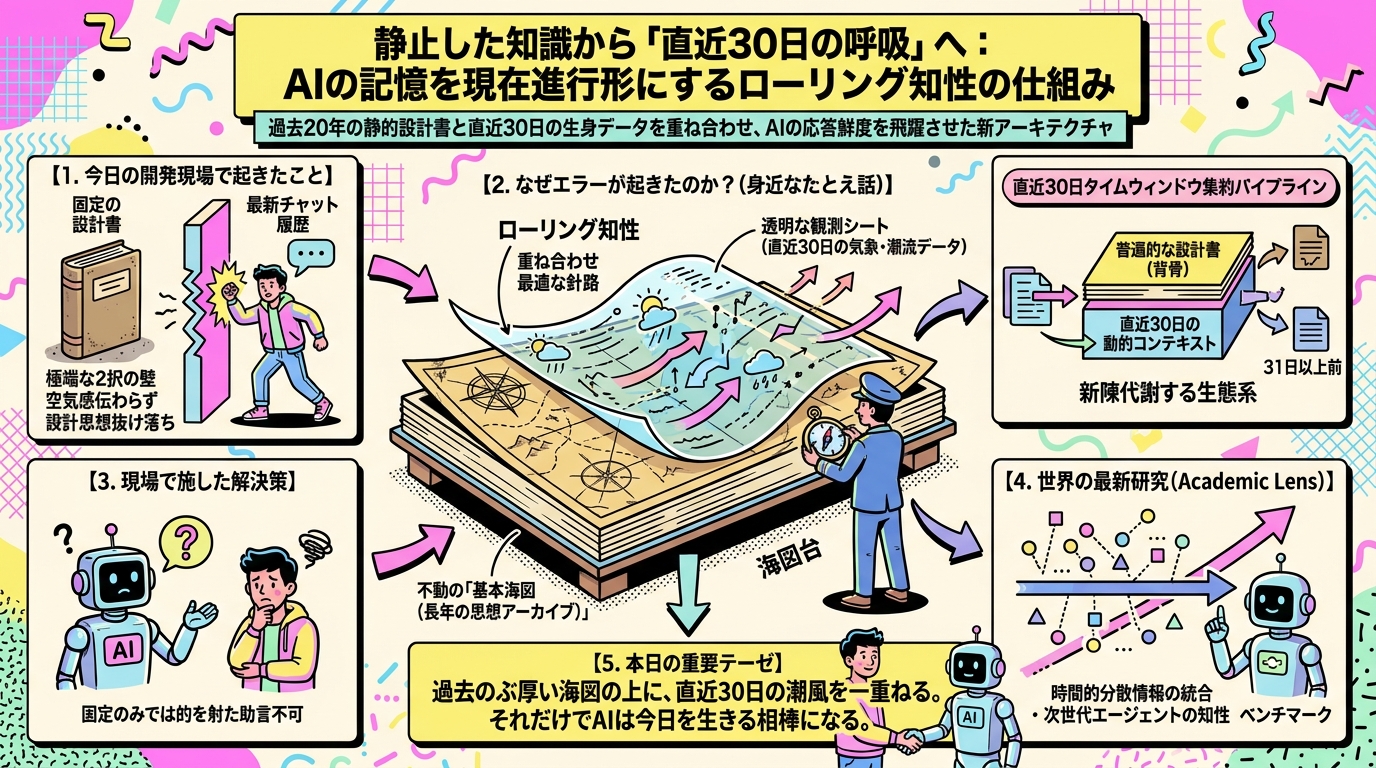
From Static Knowledge to the Pulse of the Last 30 Days: How Rolling Intelligence Keeps AI Memory in the Present Tense
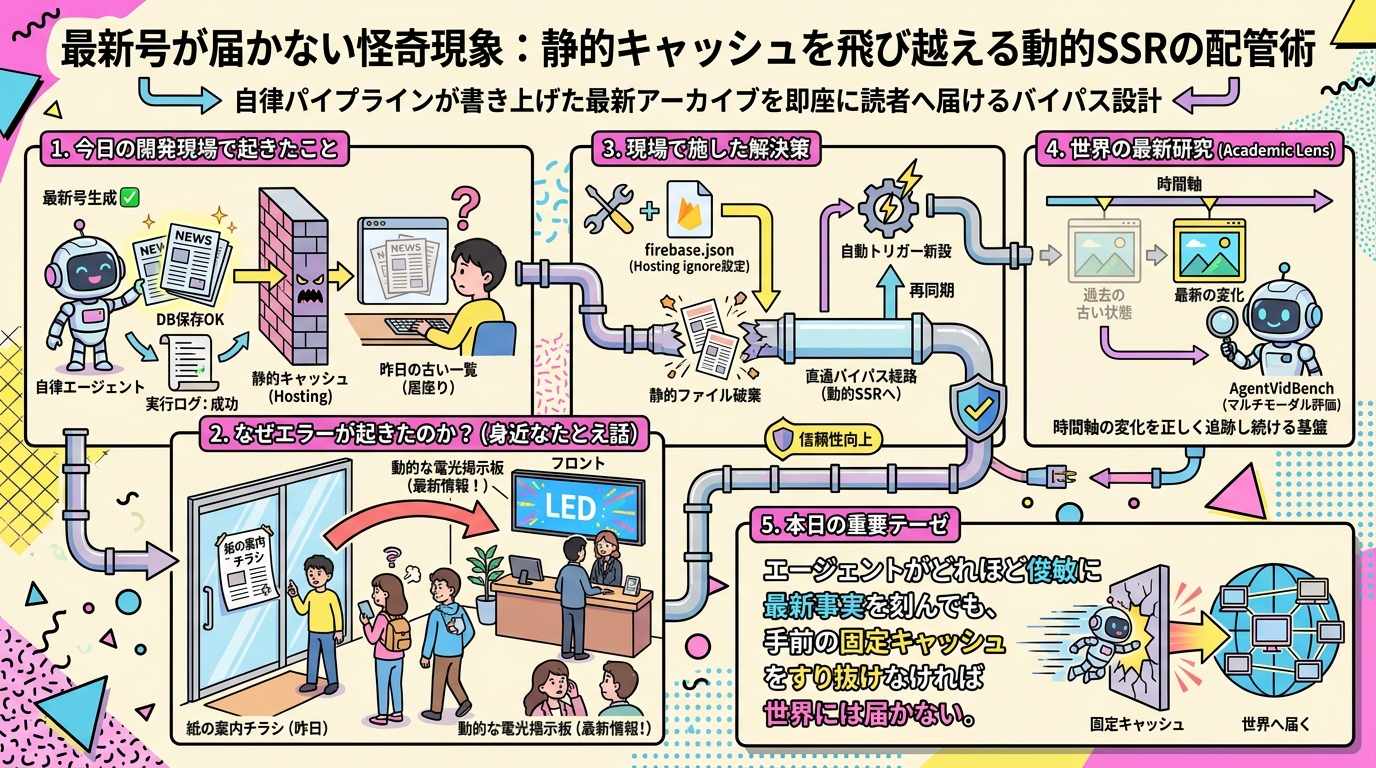
The Mystery of the Missing Issue: Plumbing Dynamic SSR to Bypass Static Cache
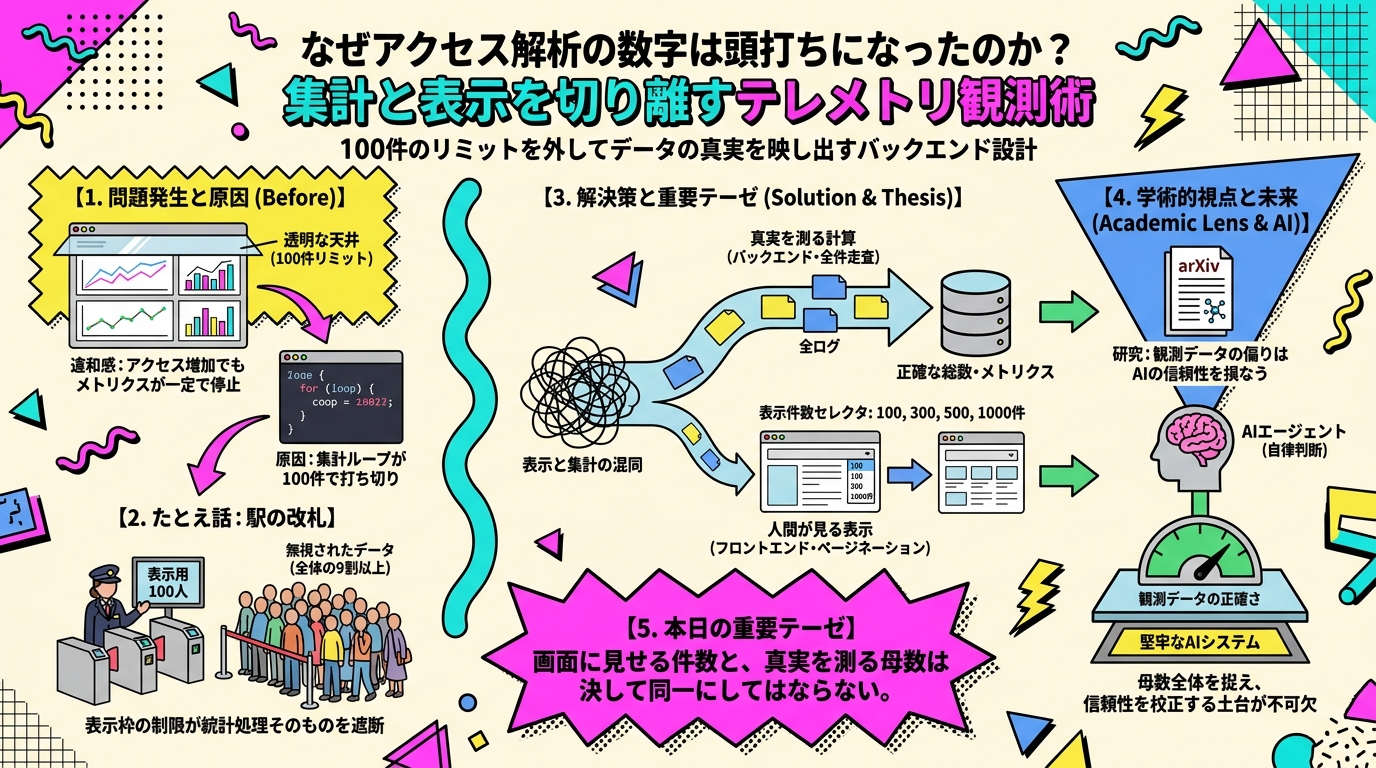
Why Did Access Analytics Hit an Artificial Ceiling? Telemetry Observability by Decoupling Aggregation from Display

Why Asking AI to Summarize 'Morning News' Always Misses the Mark
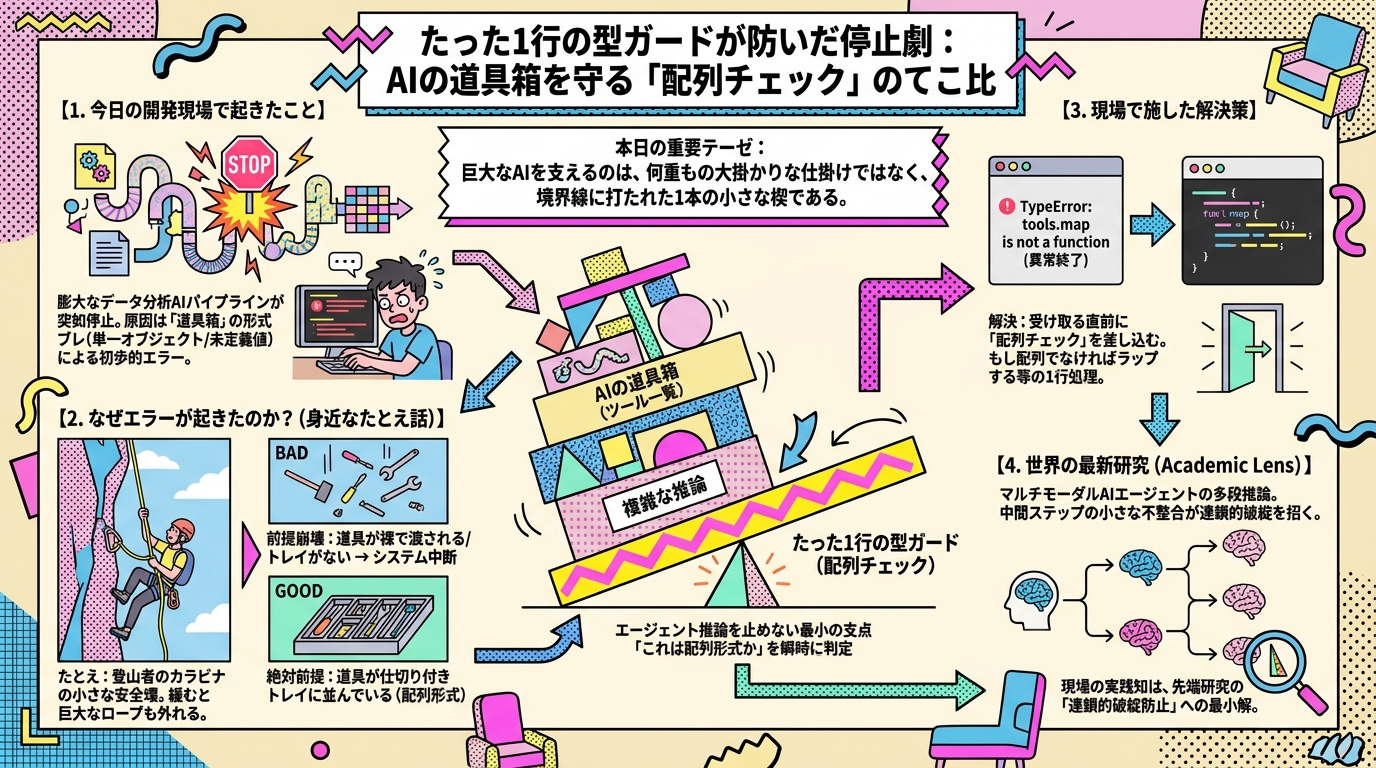
A Single-Line Type Guard That Prevented a Crash: The Leverage Ratio of 'Array Checks' in Protecting the AI's Toolbox