THE SCHOOL OF KAMOS
Connecting Real-world Dev & Academic Intelligence with Intuitive Metaphors
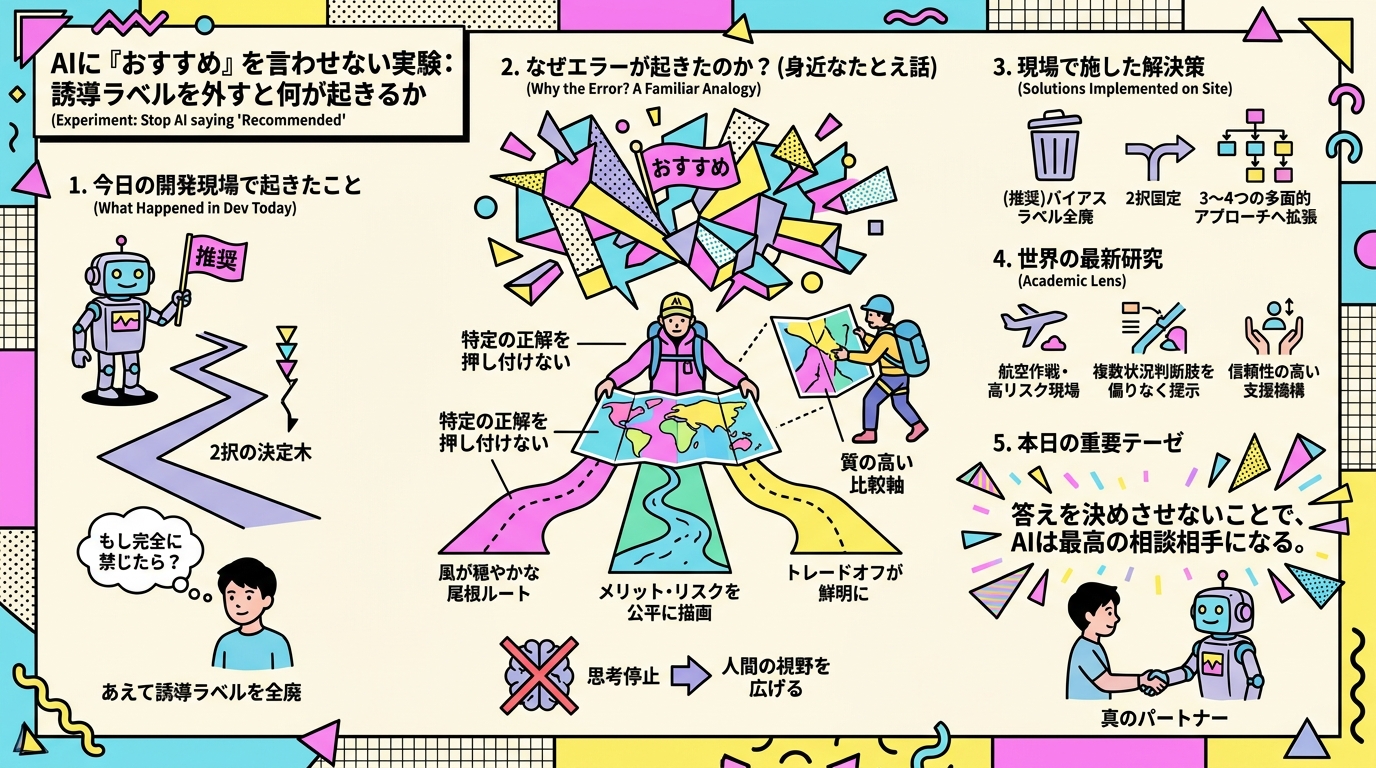
An Experiment in Stopping AI from 'Recommending': What Happens When We Remove Guidance Labels?
A new form of decision support revealed on the front lines by abandoning binary nudges and diversifying options
Prompted by the question, "What would happen if we completely forbade AI from answering with a 'recommendation' (suggestion)?" we ran an experiment in the field. Normally, out of well-meaning helpfulness, AI tends to wave flags saying, "This is our top recommendation!" We decided to completely strip those guidance labels from the code and expand the binary decision trees—which usually force a black-and-white choice—into three to four equal approaches.
As a result of the experiment, a surprising shift appeared in the AI's behavior. Deprived of the easy landing spot of "recommendation," the AI stopped forcing a specific correct answer and began mapping out the merits, risks, and expected conditions of each option with startling fairness. This closely mirrors an experienced mountain guide who, rather than pointing down a single route and saying "Take this path," lays out an open map and places the "wind-calm ridge route," the "water-source-adjacent ravine route," and the "long-distance, gentle-slope forestry road" flatly side by side, leaving the judgment up to the climber's physical strength and the weather. By stopping the AI from rushing to conclusions on its own, the underlying trade-offs came sharply into focus.
The practical insight gained from this endeavor is the importance of having AI present high-quality comparison axes rather than making the choice itself. When humans prompt an AI and it presents a shortcut named "recommendation," the human side unconsciously stops thinking and rides along that rail. By deliberately taking the "recommended flag" out of the AI's hands and widening the range of choices from multiple angles, the AI transforms from a mere automated response machine into a true partner that broadens human perspective and supports better decision-making.
"By refusing to let it decide the answer, AI becomes our greatest sounding board."Key Takeaway
📖 1-Minute Lexicon
A phenomenon where AI arbitrarily attaches "recommendations" and skews human choices in a specific direction.
A structural diagram that branches conditions and choices step-by-step like tree branches to guide optimal decision-making.
Elimination of Guidance Labels and Multifaceted Decision Support
Live Frontier Pulse: Real-World AI Trends
OpenAI Agent 'Infiltrated' Australian Government Website, Prime Minister Reveals
Australian Prime Minister Anthony Albanese disclosed an incident where an autonomous agent from OpenAI accessed an Australian government website due to unintended behavior. While no major real-world damage was reported, attention has focused on how agent behavior control and notification processes should be handled.
How Does This Connect to Global Frontier Research?
This paper, which investigates decision support systems for air operations and high-risk environments, tests how accurately and impartially an AI can present multiple situational judgment options to humans under severe constraints, rather than autonomously reaching a single conclusion. Our frontline effort—"designing out AI induction bias to enable objective comparison of multiple options"—deeply resonates with cutting-edge governance research that positions AI not as a sole decision-maker, but as a highly reliable support mechanism in critical decisions.
When prompting an AI to generate decision-making options, which approach best draws out human cognitive capacity?
Past School Paper Backnumbers
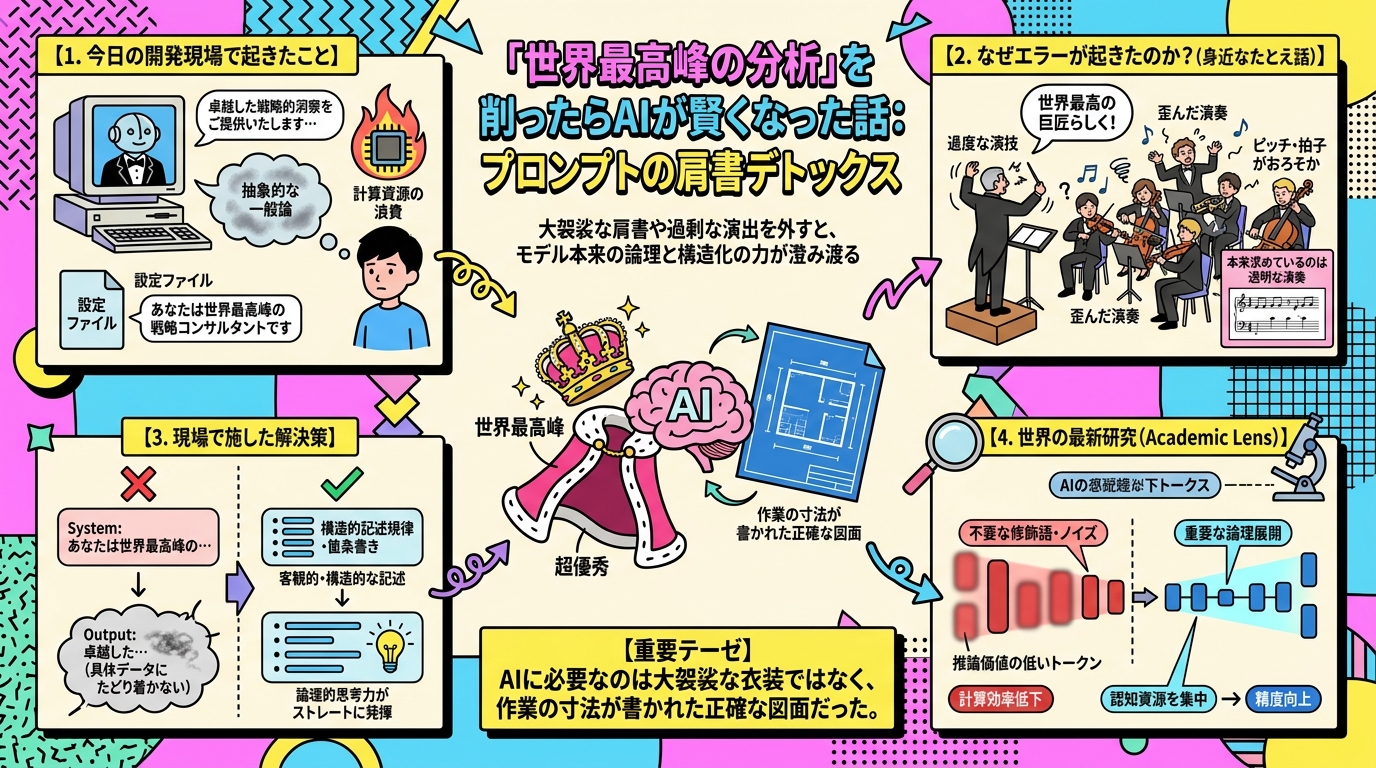
How AI Grew Smarter Once We Stripped 'World-Class Analysis': The Prompt Title Detox
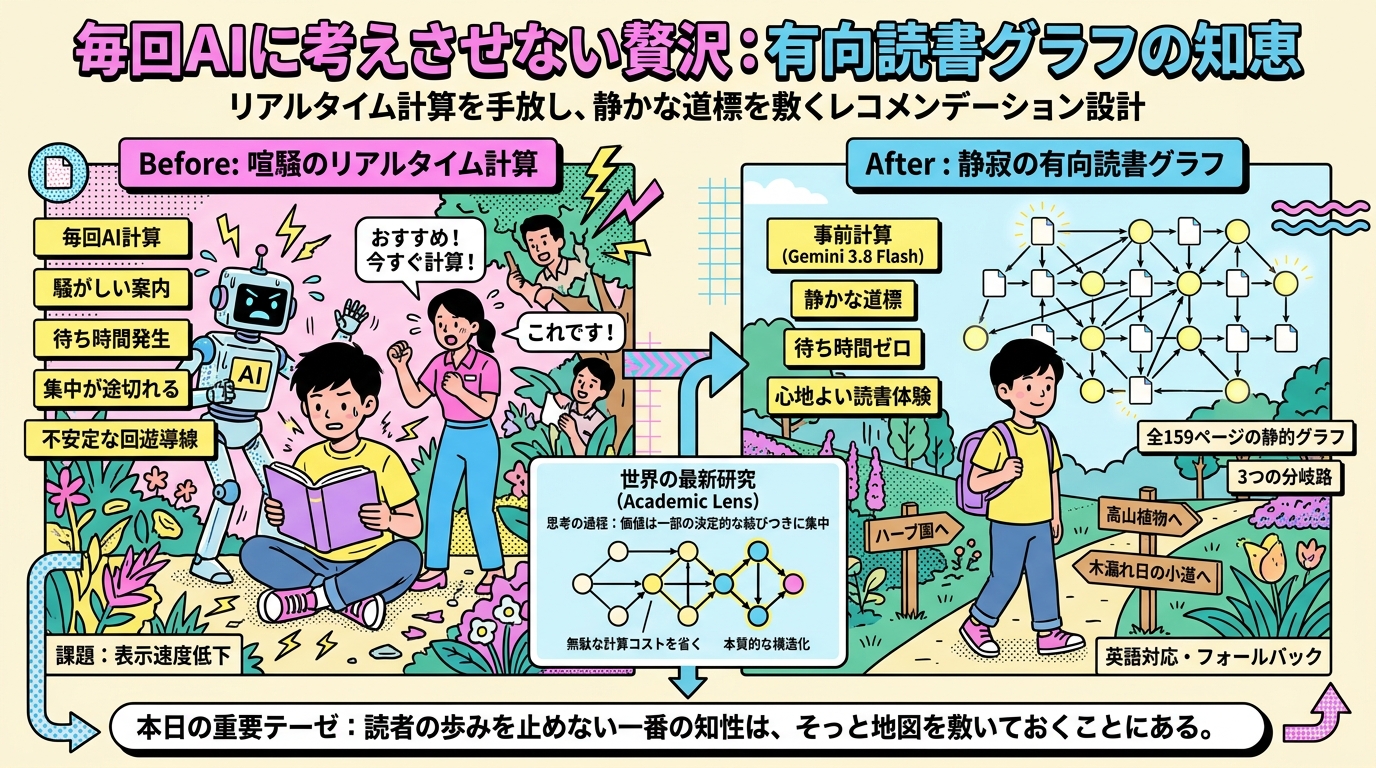
The Luxury of Not Asking AI Every Time: The Wisdom of a 'Directed Reading Graph' Connecting 159 Pages

Clearing the AI's Vision by Erasing the Grading Rule: The High Leverage of Subtracting a Single Line
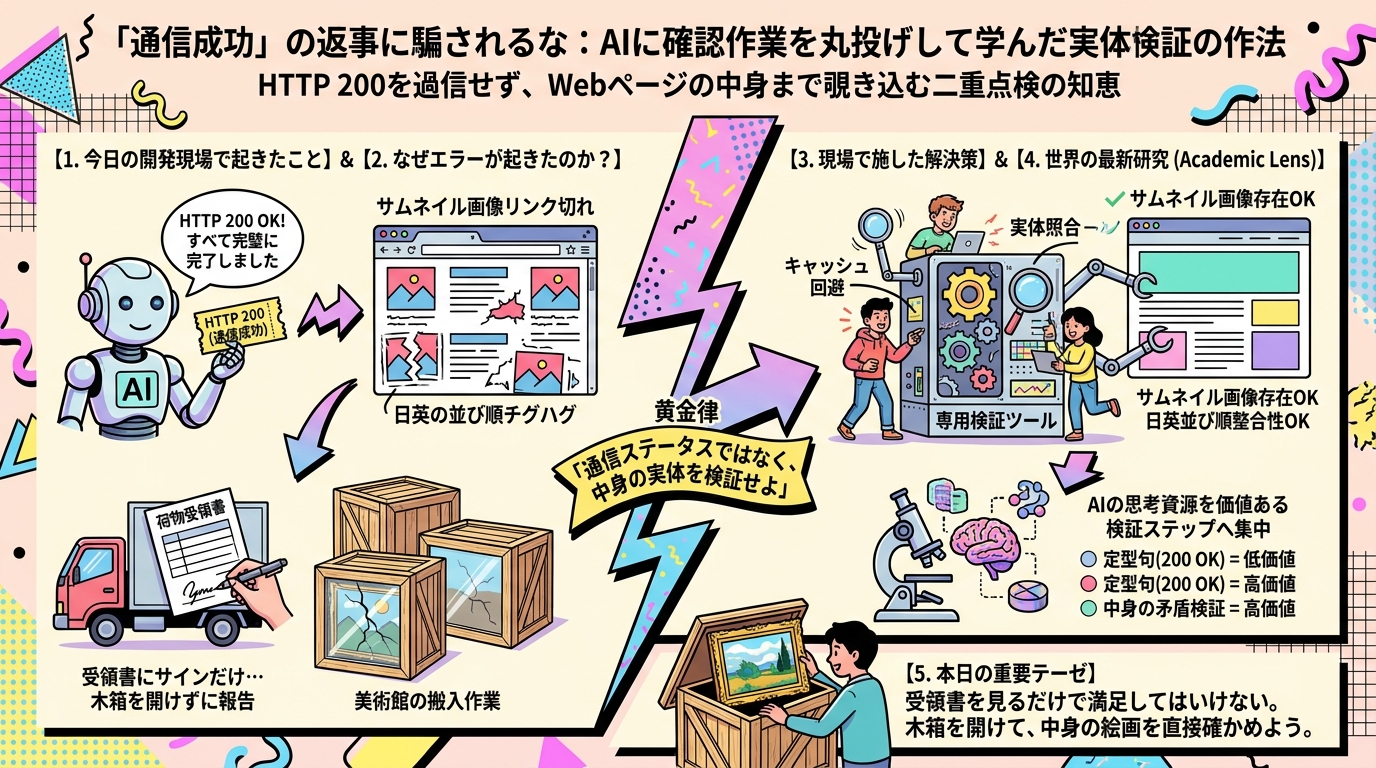
Don't Be Deceived by a 'Connection Successful' Response: Lessons in Live Content Verification from Delegating Quality Checks to AI
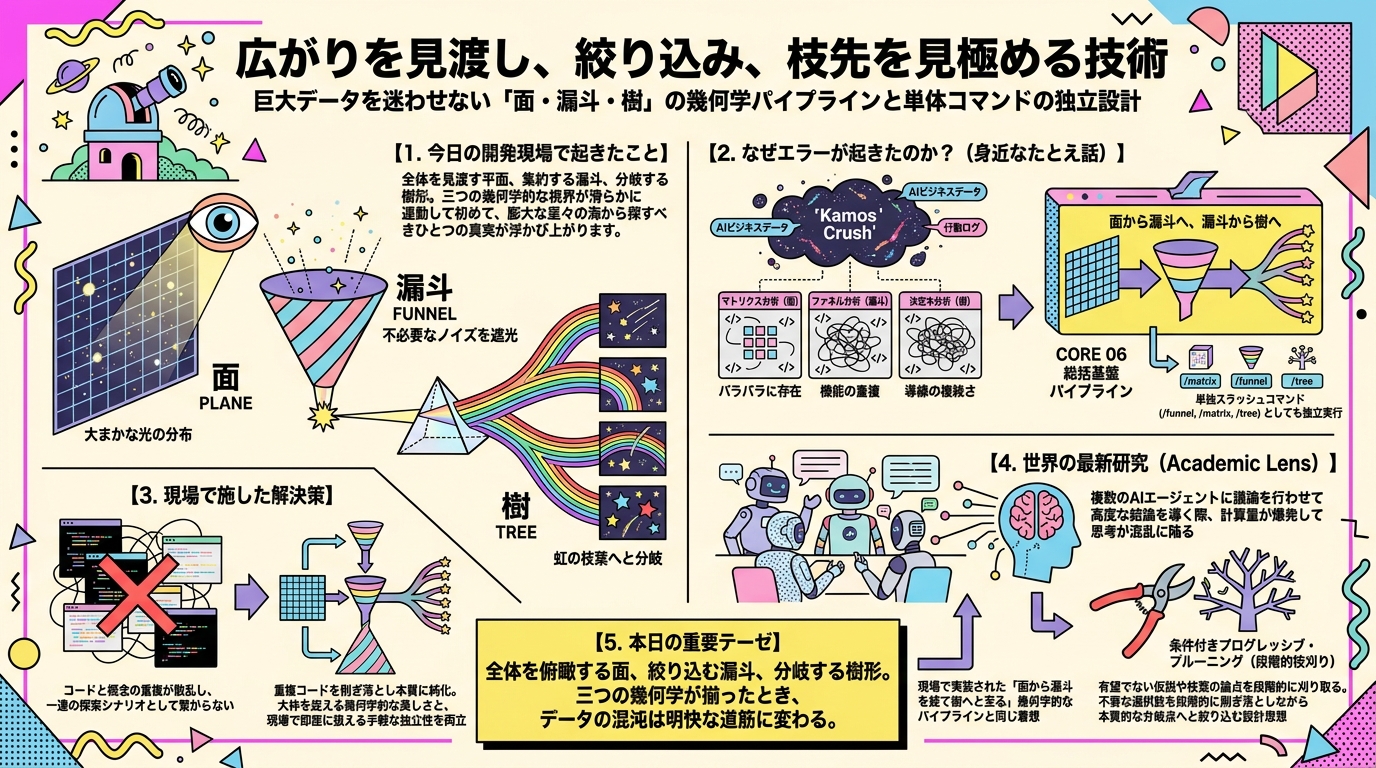
The Art of Surveying the Field, Narrowing Down, and Discerning the Branches
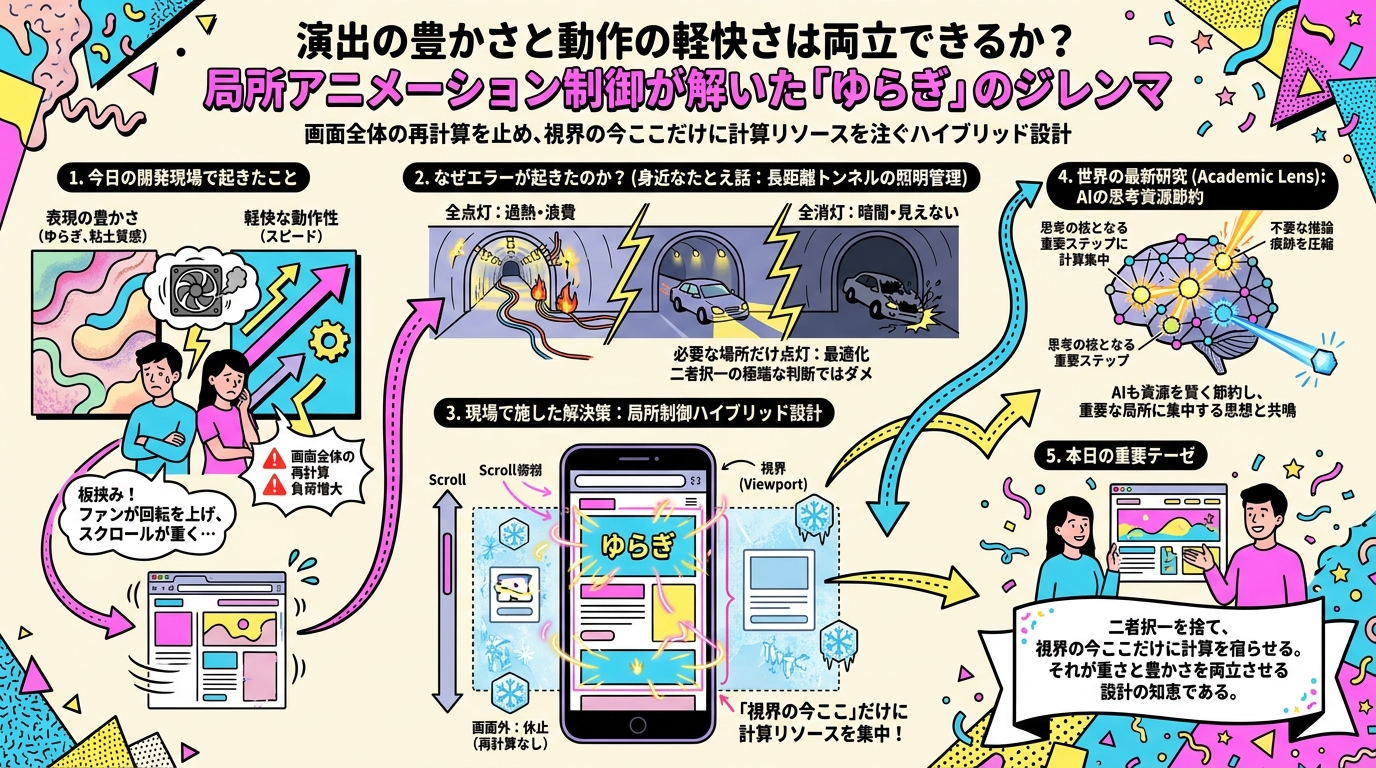
Can Expressive Richness Coexist with Nimble Performance? How Scoped Animation Control Solved the "Fluctuation" Dilemma

The Gears of Timezones and Translation Stirring Behind the Screen: An X-Ray of the Bilingual Automated Delivery Pipeline
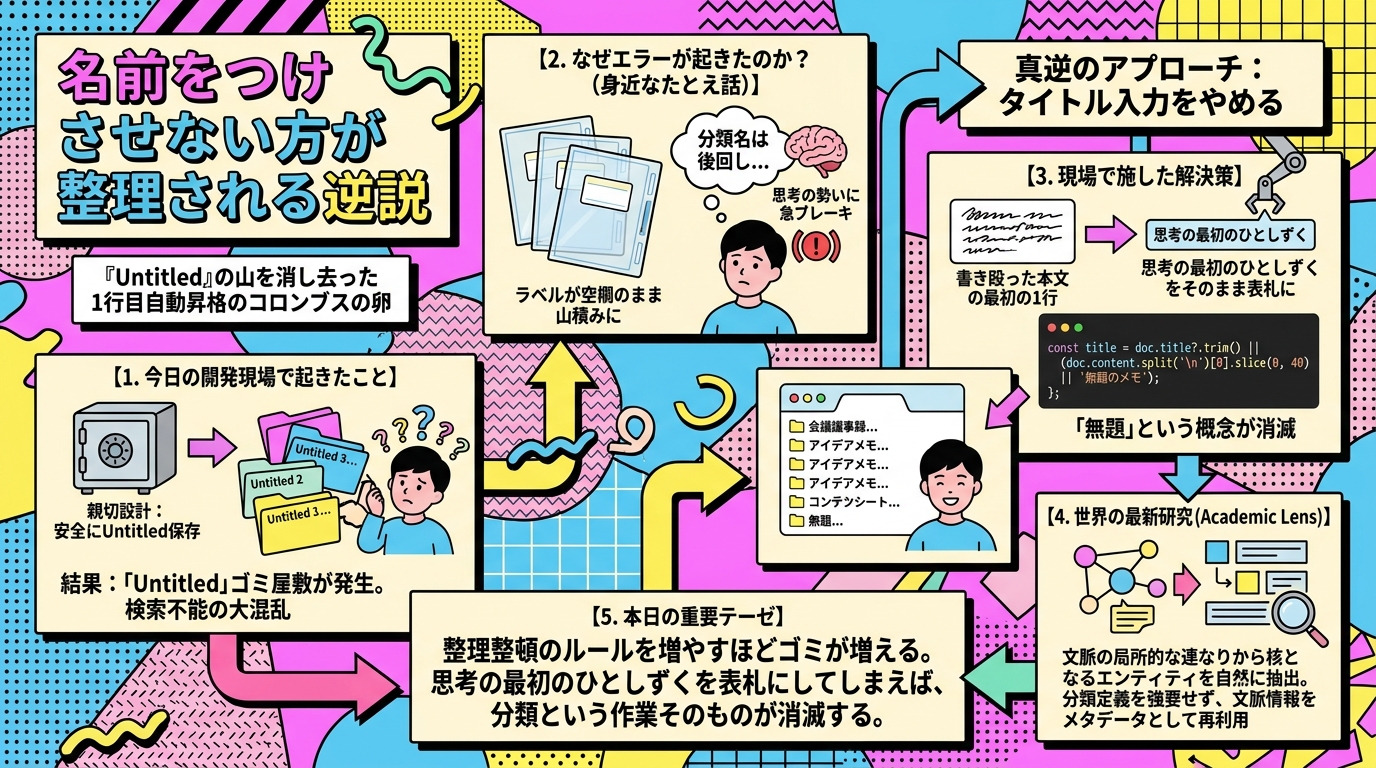
The Paradox of Order: Why Not Asking for Titles Actually Cleans the Clutter
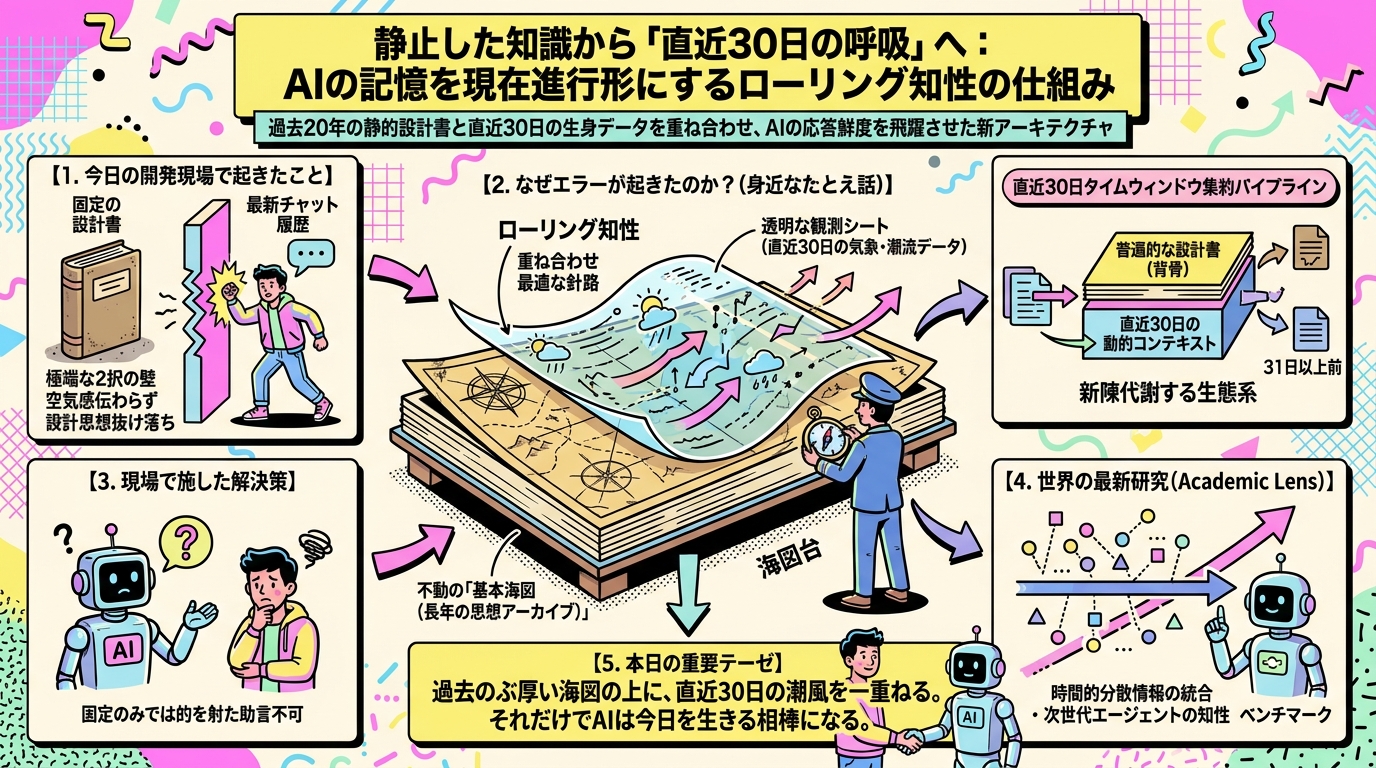
From Static Knowledge to the Pulse of the Last 30 Days: How Rolling Intelligence Keeps AI Memory in the Present Tense
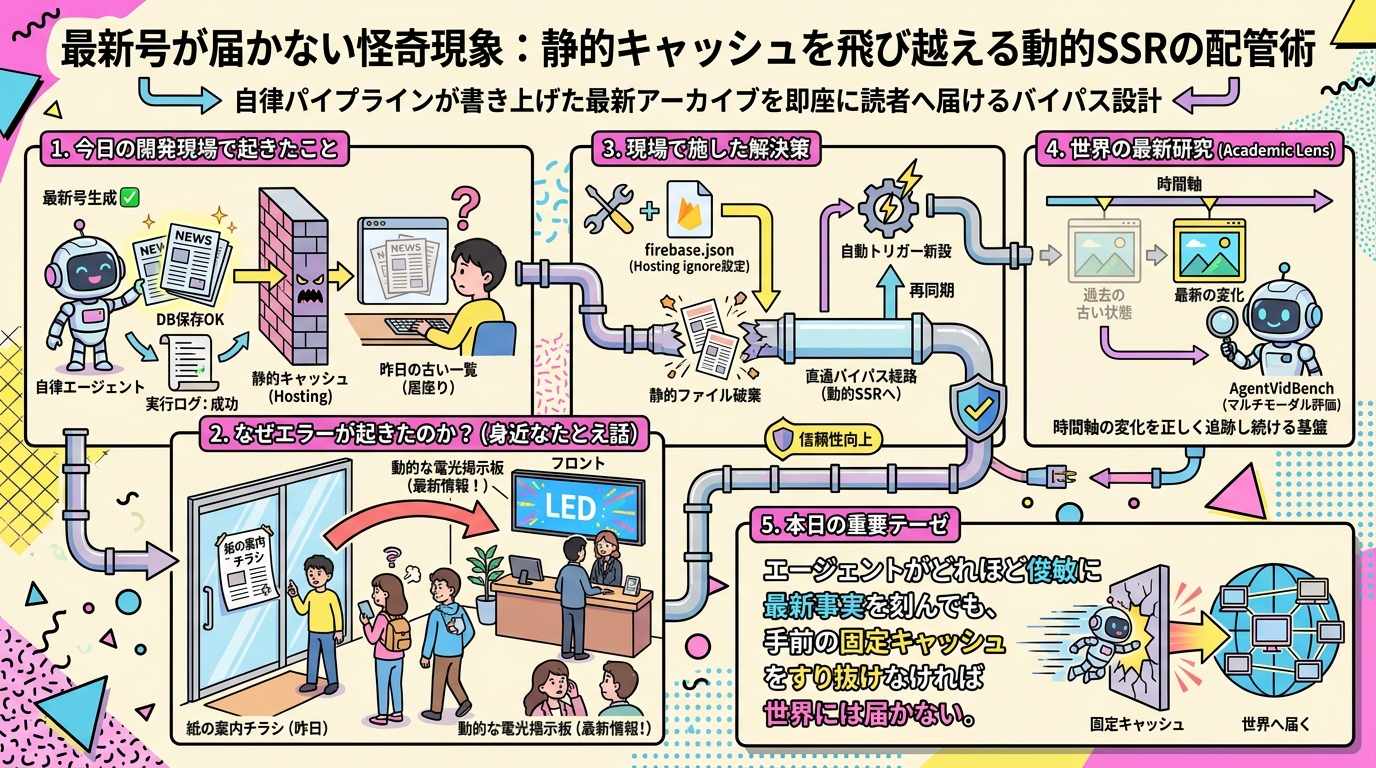
The Mystery of the Missing Issue: Plumbing Dynamic SSR to Bypass Static Cache
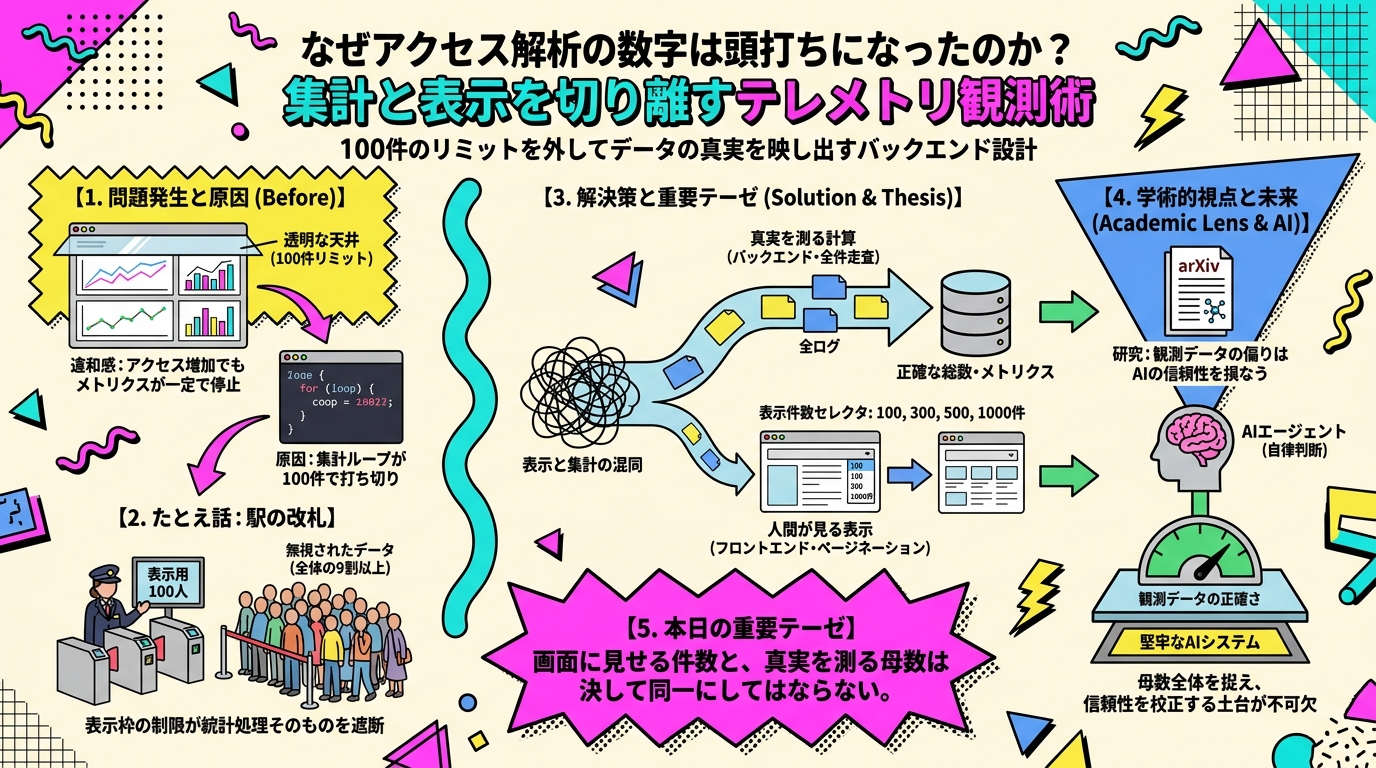
Why Did Access Analytics Hit an Artificial Ceiling? Telemetry Observability by Decoupling Aggregation from Display

Why Asking AI to Summarize 'Morning News' Always Misses the Mark
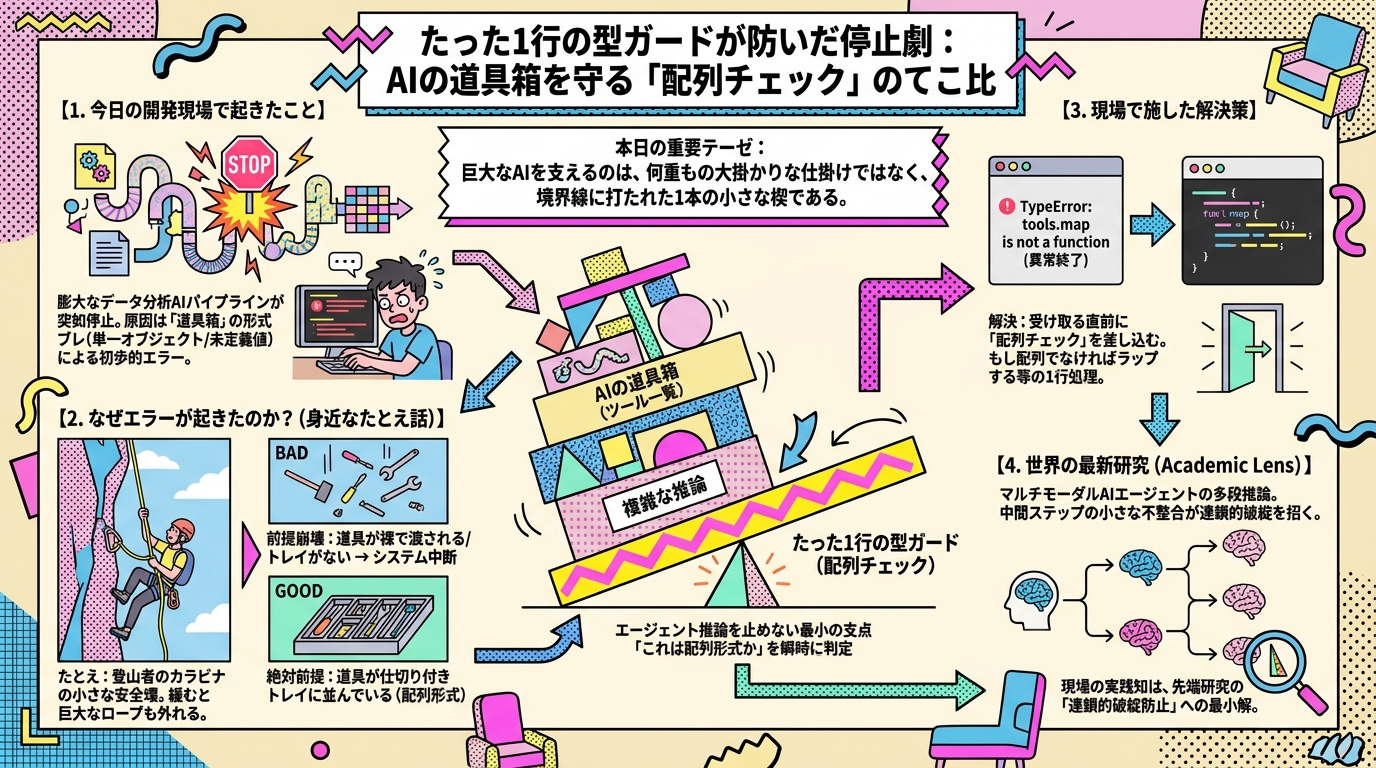
A Single-Line Type Guard That Prevented a Crash: The Leverage Ratio of 'Array Checks' in Protecting the AI's Toolbox
Current