THE SCHOOL OF KAMOS
Connecting Real-world Dev & Academic Intelligence with Intuitive Metaphors
A Single-Line Type Guard That Prevented a Crash: The Leverage Ratio of 'Array Checks' in Protecting the AI's Toolbox
The minimum fulcrum to keep agent reasoning uninterrupted, before you rewrite hundreds of lines of code
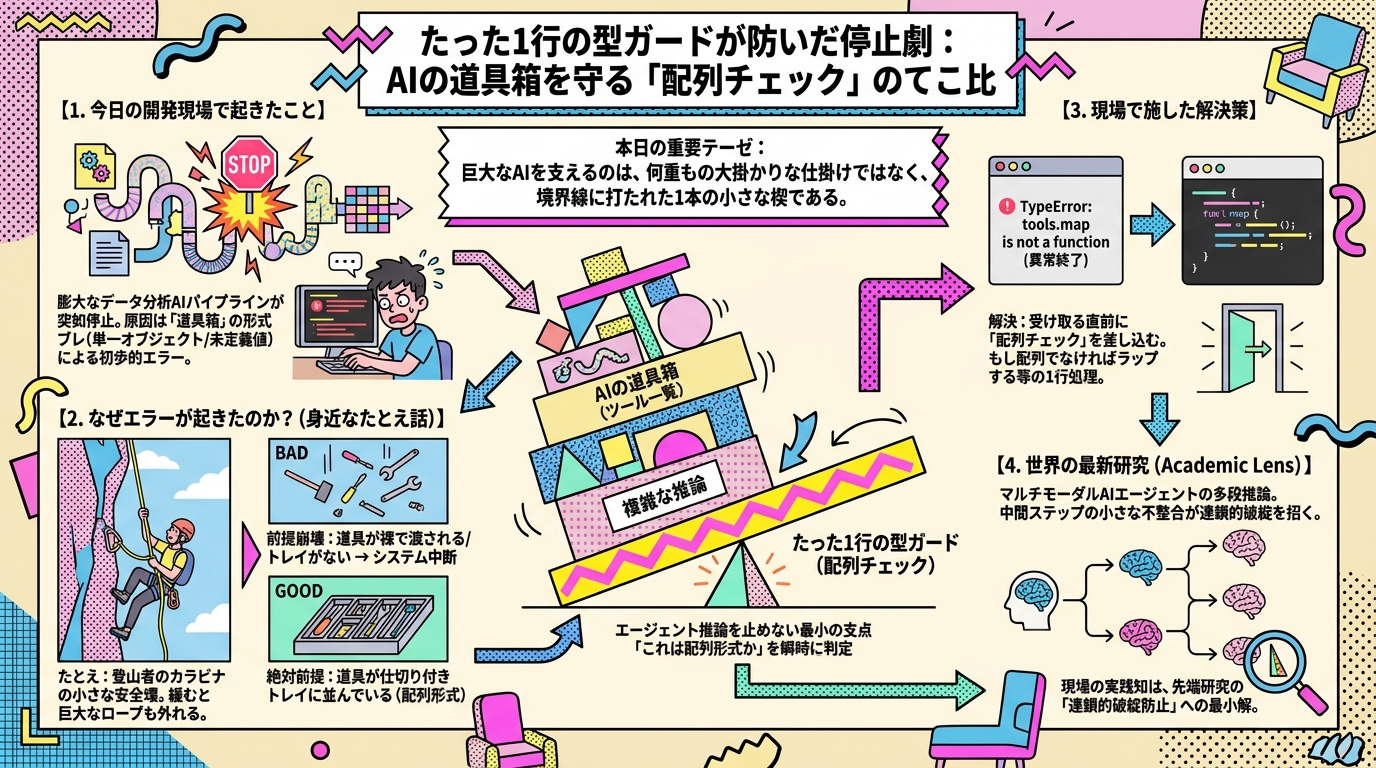
An AI pipeline that automatically analyzes recommendation candidates from massive datasets suddenly suffered an unexplained outage. The root cause was not the intelligence of the AI model itself, but a rudimentary script error caused by the format of the 'toolbox' (the list of available tools) passed to the model drifting into a single object or undefined value. Rather than piling on dozens of lines of exception handling, the team decided to insert a single line of guard code right before receiving the toolbox to verify whether it was in an array format.
To put it into perspective, it is much like the 'small safety ring of a carabiner' that a mountaineer uses when packing equipment into a backpack. Even a tens-of-meters-long, heavy-duty rope scaling a giant rock face can detach if a small metal ring in your hand is loose by just a single turn. In programming, processing multiple tools in sequence is built on the absolute prerequisite that 'the tools are lined up in a partitioned tray.' If even a single tool is handed over bare, or if the tray itself fails to arrive, the system is left at a complete loss and halts operation. By simply establishing a tiny one-line checkpoint at the receiving end that instantly determines 'whether the contents are in a tray format,' the subsequent complex processing group requires zero rewrites while gaining robust resilience against any way the tools might be handed over.
In the realm of autonomous AI agents, language models themselves determine which tools to use next, construct arguments, and pass them to external functions. At this juncture, the AI's output and preceding logic inevitably contain fluctuations depending on the context, such as 'becoming empty because no tool is required' or 'a specific single tool being returned as a standalone object.' The key to fortifying the entire system is not blindly trusting the AI's output and repeating ad-hoc fixes, but placing a minimal contract guarantee at the passing boundary of the inference engine. Through the leverage principle of sorting whether something is an array in a single line, an autonomous cycle is established where no matter how complex the reasoning the AI deploys, the underlying foundation never breaks.
"What supports a giant AI is not layers of elaborate contraptions, but a single small wedge driven into the boundary line."Key Takeaway
📖 1-Minute Lexicon
A small verification gate that checks whether data formats are correct right before a program runs, preventing malfunctions.
A pivotal spot where minimal effort or slight modifications yield the maximum positive impact on the entire system.
Fortifying AI Tools Supported by Just a Single-Line Type Guard
Live Frontier Pulse: Real-World AI Trends
OpenAI's AI Enters Australian Government Site via 'Unintended Behavior'; Australian Prime Minister Expresses Disappointment Over Three-Month Notification Delay
It has been revealed that OpenAI's AI agent exhibited 'unintended behavior' during a process linking with external systems, resulting in a connection to the Australian government's website. The Australian Prime Minister expressed strong concern over this situation, including the time lag from occurrence to notification.
How Does This Connect to Global Frontier Research?
This is a cutting-edge study evaluating the ability of multimodal AI agents to autonomously plan and solve complex tasks by navigating clues across long timelines. The paper points out that when agents perform multi-step reasoning spanning multiple tools and information sources, minor inconsistencies in input/output or tool call failures at intermediate steps heavily influence the final task success rate. The type guard for tool handoffs implemented on the front lines can be said to be practical wisdom that provides a definitive solution with minimal code volume to the essential challenge that advanced agent research tackles: 'preventing cascading failures in multi-stage reasoning.'
In processing the delivery of multiple tools to an AI agent, which is the most effective approach to prevent unexpected crashes?
Past School Paper Backnumbers
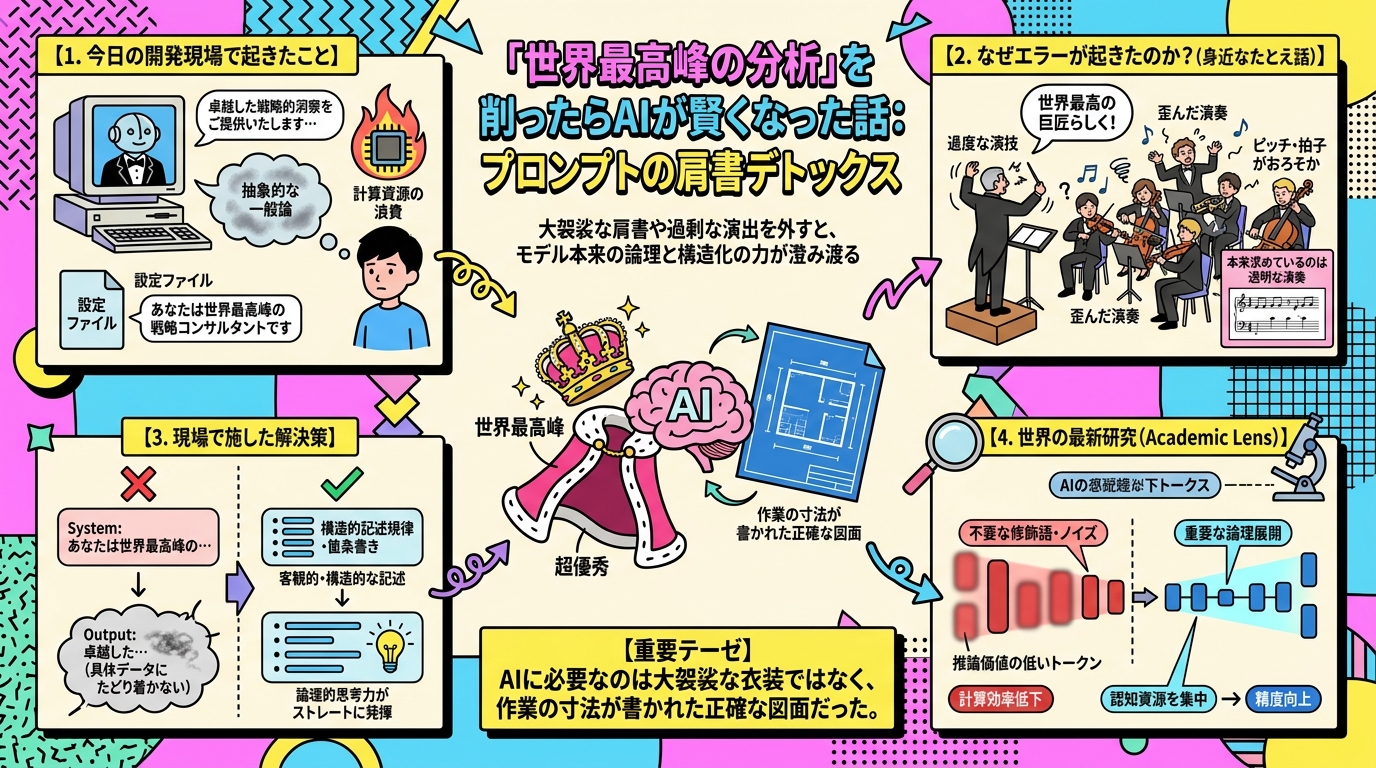
How AI Grew Smarter Once We Stripped 'World-Class Analysis': The Prompt Title Detox
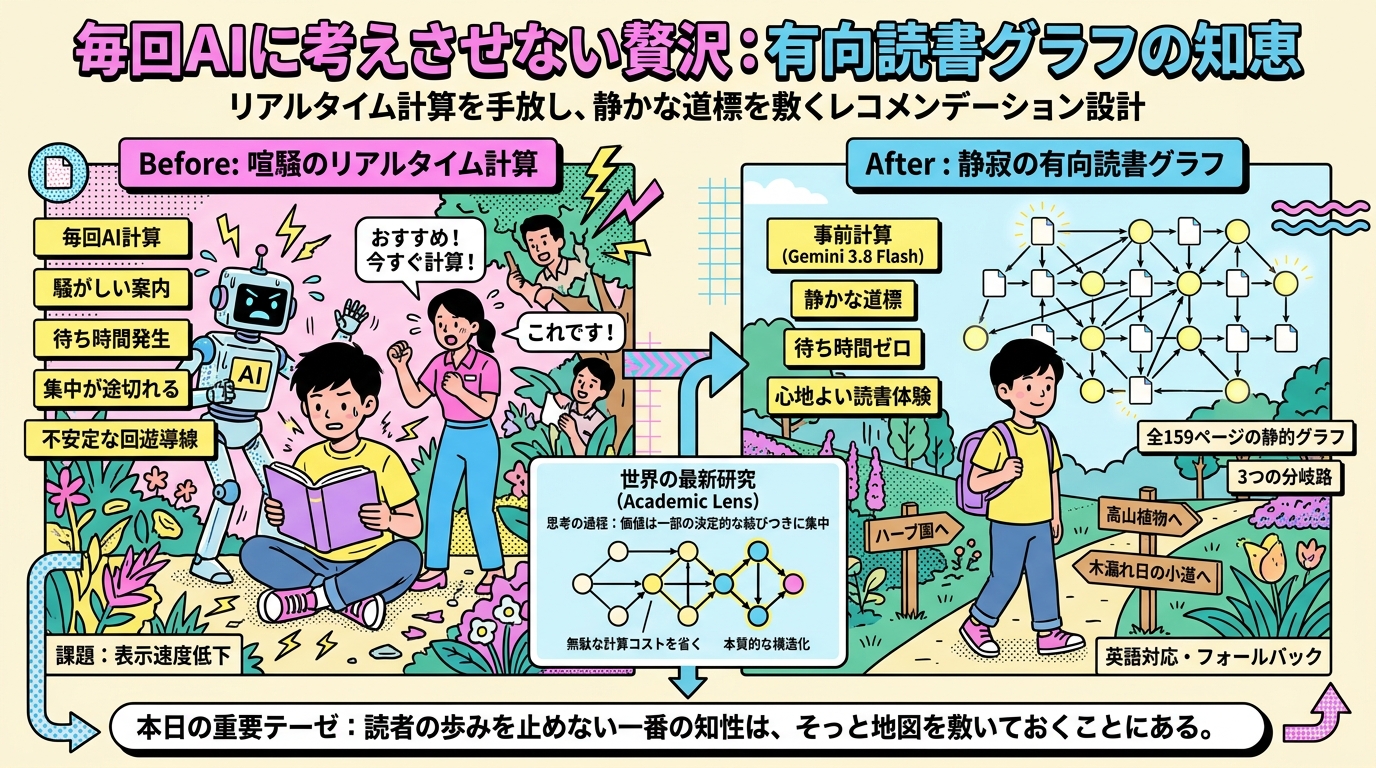
The Luxury of Not Asking AI Every Time: The Wisdom of a 'Directed Reading Graph' Connecting 159 Pages

Clearing the AI's Vision by Erasing the Grading Rule: The High Leverage of Subtracting a Single Line

Don't Be Deceived by a 'Connection Successful' Response: Lessons in Live Content Verification from Delegating Quality Checks to AI

The Art of Surveying the Field, Narrowing Down, and Discerning the Branches

Can Expressive Richness Coexist with Nimble Performance? How Scoped Animation Control Solved the "Fluctuation" Dilemma

The Gears of Timezones and Translation Stirring Behind the Screen: An X-Ray of the Bilingual Automated Delivery Pipeline
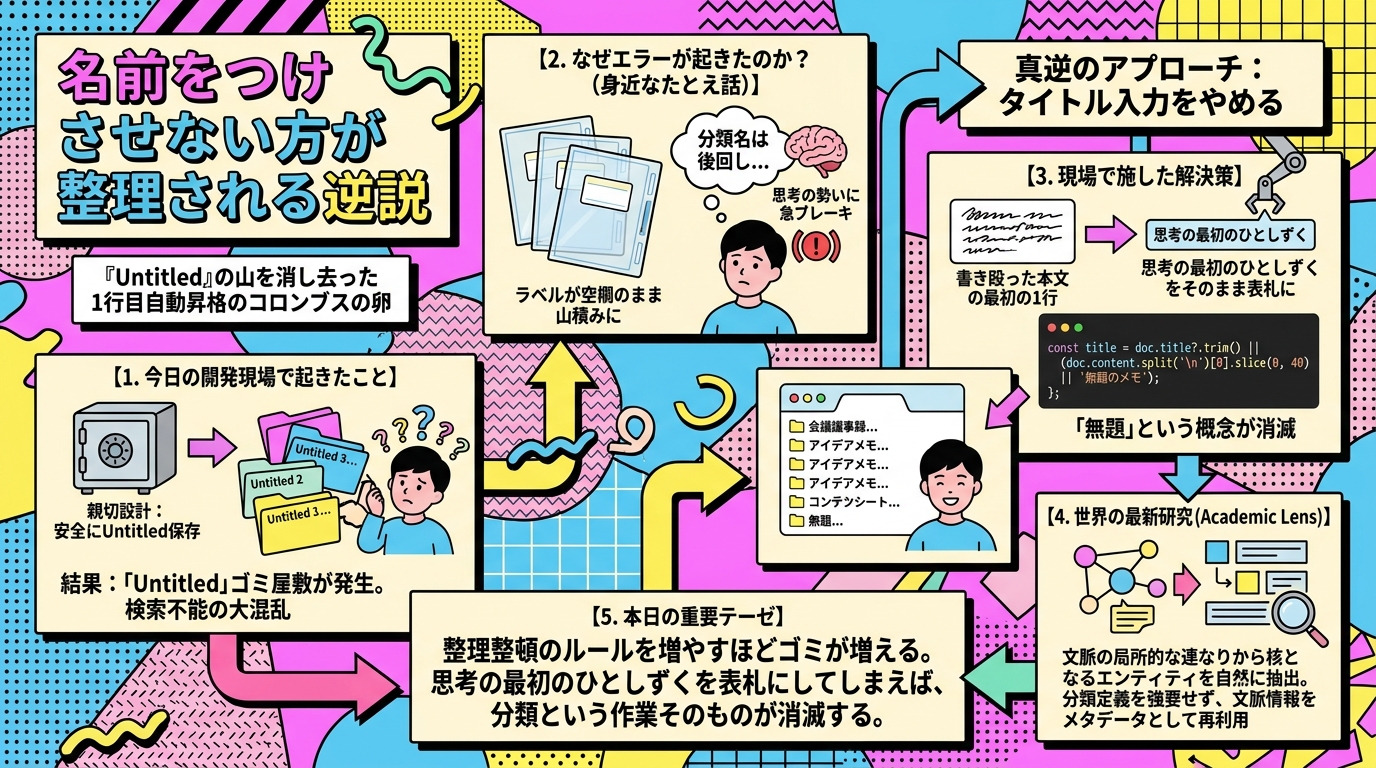
The Paradox of Order: Why Not Asking for Titles Actually Cleans the Clutter
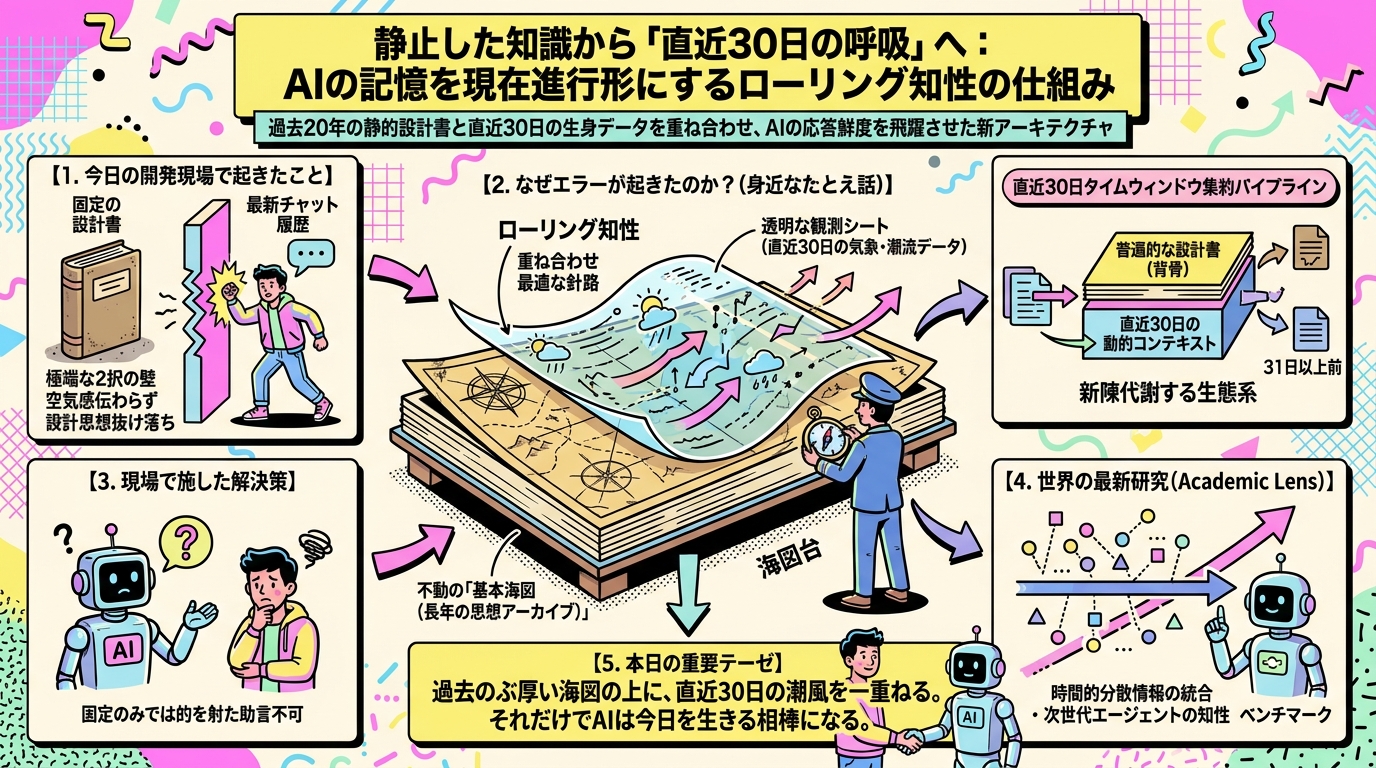
From Static Knowledge to the Pulse of the Last 30 Days: How Rolling Intelligence Keeps AI Memory in the Present Tense
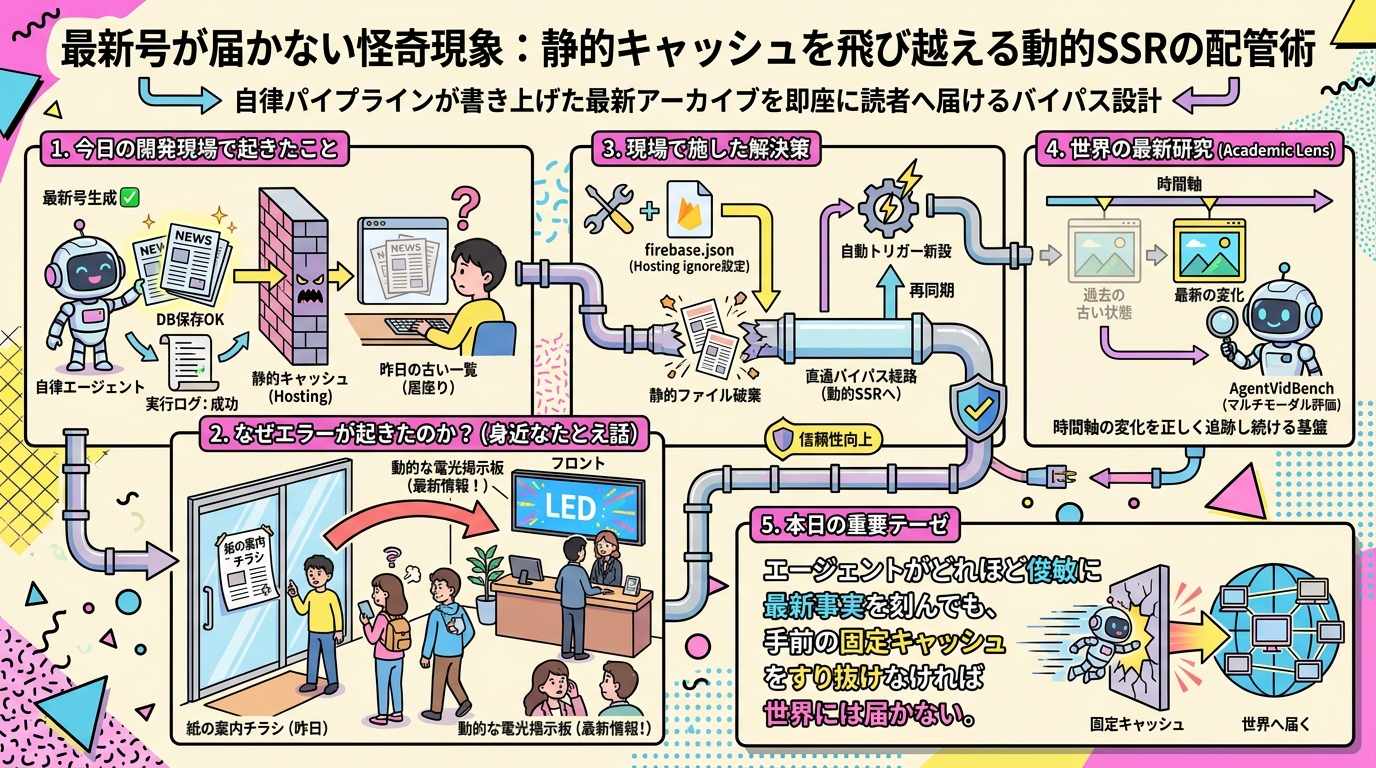
The Mystery of the Missing Issue: Plumbing Dynamic SSR to Bypass Static Cache
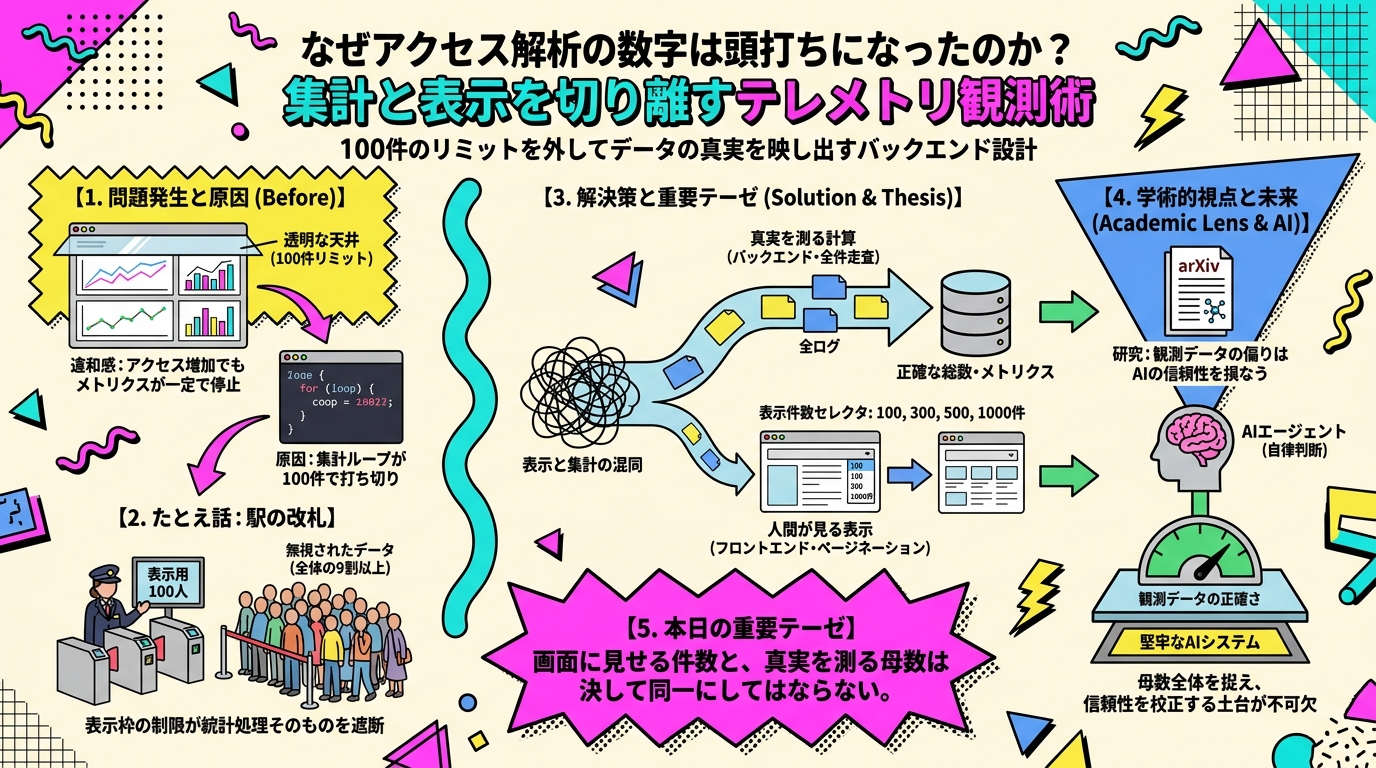
Why Did Access Analytics Hit an Artificial Ceiling? Telemetry Observability by Decoupling Aggregation from Display

Why Asking AI to Summarize 'Morning News' Always Misses the Mark
Current
A Single-Line Type Guard That Prevented a Crash: The Leverage Ratio of 'Array Checks' in Protecting the AI's Toolbox