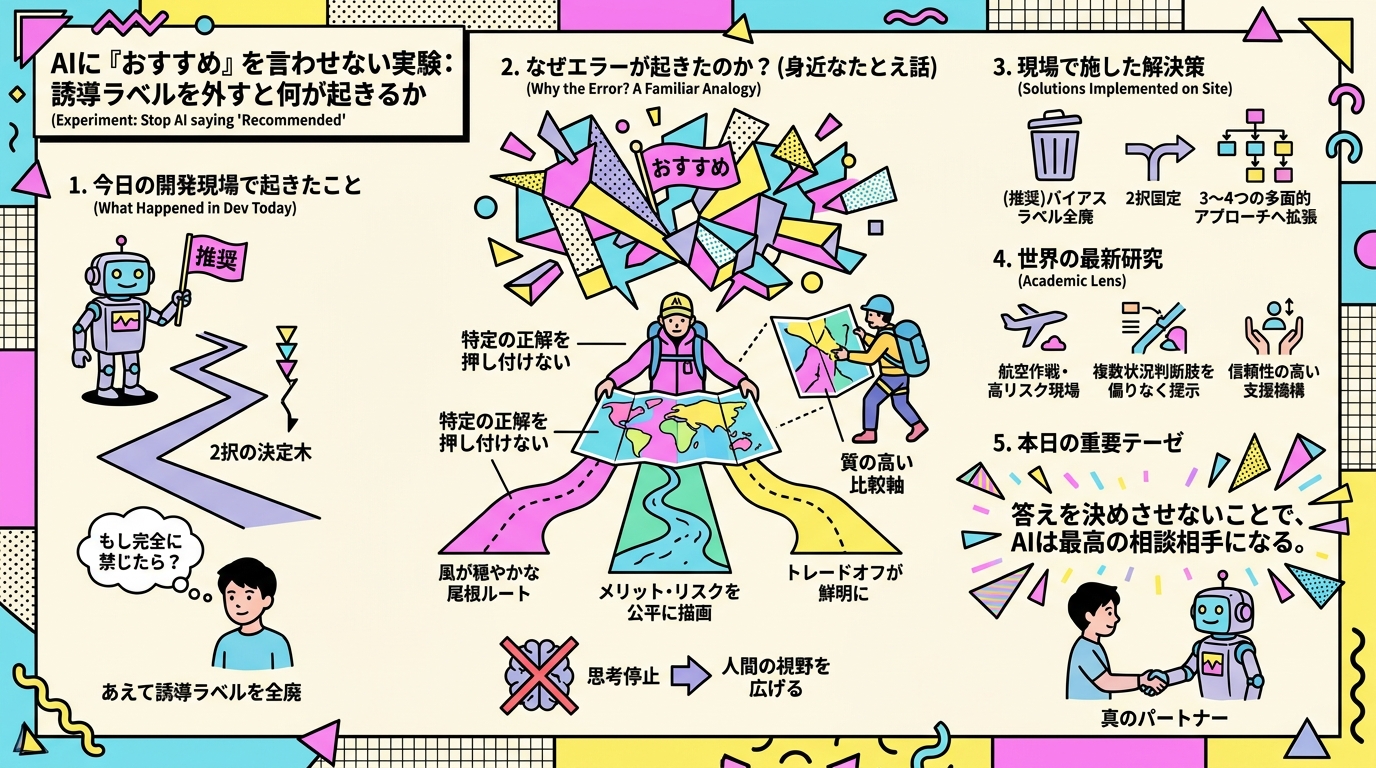
THE SCHOOL OF KAMOS
Connecting Real-world Dev & Academic Intelligence with Intuitive Metaphors
Why Asking AI to Summarize 'Morning News' Always Misses the Mark
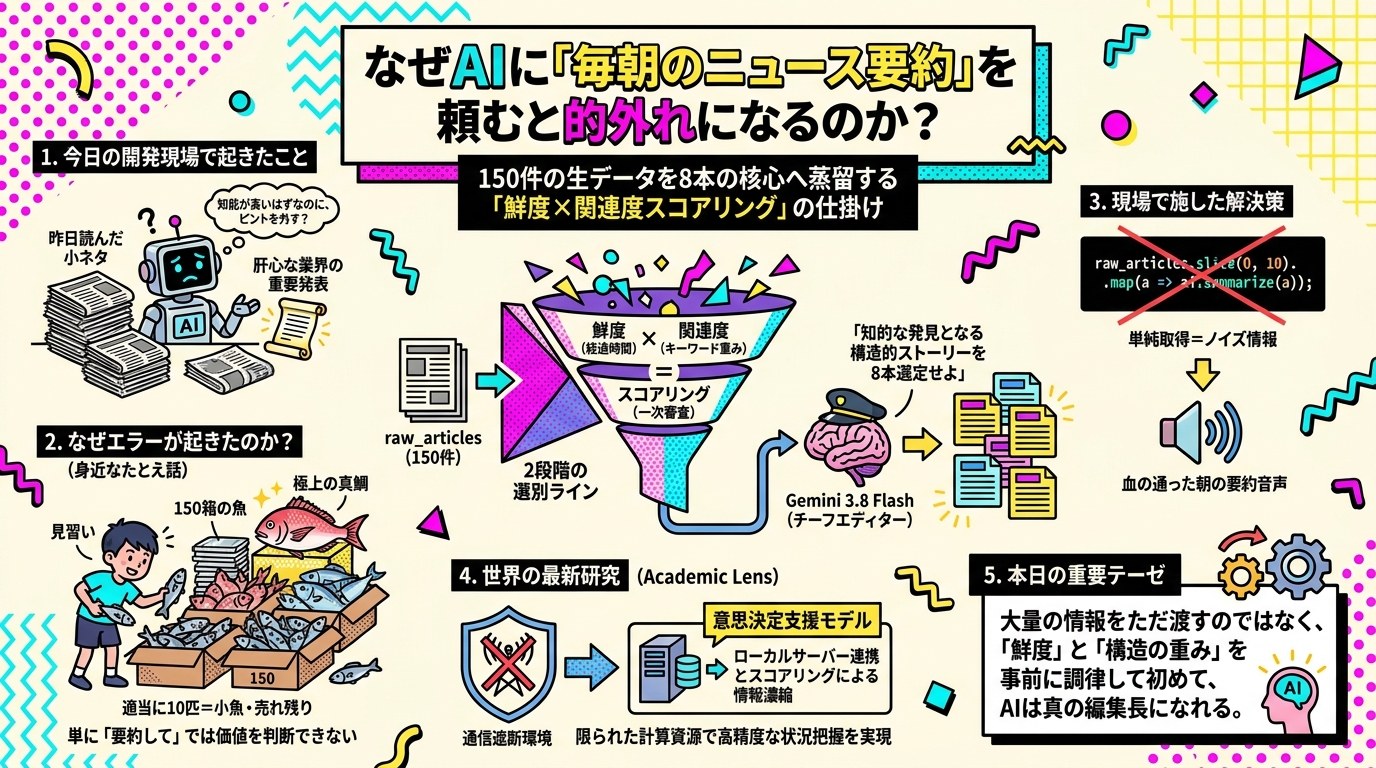
The 'Freshness × Relevance Scoring' mechanism that distills 150 raw data points into 8 core insights
Have you ever wondered why, despite having AI summarize the latest news every morning, it repeatedly picks up trivial yesterday's trivia while completely missing critical industry announcements? There is a clear structural reason why an AI that is supposedly intelligent completely loses its focus when tasked with curating information.
This phenomenon can be intuitively understood by imagining the sorting floor of a fresh-catch fish market early in the morning. When 150 crates of fish arrive all at once at the unloading dock, what happens if you simply instruct a novice clerk, 'Just grab 10 random ones and bring them here'? They would likely grab small fish from the top or unsold leftovers from yesterday at random, completely missing the exquisite red snapper destined for high-end restaurants. AI works in the exact same way; if simply ordered to 'summarize,' it is left at a loss, unable to judge either the novelty of the information at hand or its true value to the industry.
Our engineering team resolved this challenge through a 'two-stage screening pipeline.' First, we perform an initial screening on the 150 incoming articles, mathematically scoring them by combining the elapsed time since publication with keyword weighting. Furthermore, we pass the top-ranked filtered articles to Gemini 3.8 Flash, giving it a clear chief editor's perspective ('Select 8 structural stories that will provide intellectual discoveries for today's reader'). This transforms the output from a mere enumeration of facts into a living, resonant morning summary voice.
"Rather than simply dumping a massive amount of information, an AI can only become a true chief editor once 'freshness' and 'structural weight' have been pre-calibrated."Key Takeaway
📖 1-Minute Lexicon
A computational method that reduces points based on the elapsed time since information was published, allowing newer information to surface with priority.
A stabilization mechanism that, when communication fails, avoids immediate retries and instead reconnects while gradually increasing the wait time.
Information Distillation via Weighted Freshness Curation
Live Frontier Pulse: Real-World AI Trends
Japan-Originated Startup's Edge AI Chip Outperforms NVIDIA, Reaching 3.36 PFLOPS in AI Processing Performance
It has been announced that a cutting-edge edge AI processor developed by a Japanese semiconductor startup has achieved a processing performance of 3.36 PFLOPS, surpassing conventional major GPUs. This enables advanced inference directly on edge devices while drastically reducing power consumption.
How Does This Connect to Global Frontier Research?
This research explores decision-support models that instantly select vital information from massive tactical data in harsh environments where communications are cut off. In environments that cannot rely on external networks, a system's success or failure depends entirely on how quickly it can narrow down the influx of information to the 'elements currently needed as decision-making material.' The information-condensation technique built on-site via local server integration and scoring is directly tied to the philosophy of academic research striving to achieve high-precision situational awareness under limited computational resources and time.
When having an AI generate the ultimate morning paper briefing from a massive volume of news articles, which approach is the most effective?
Past School Paper Backnumbers
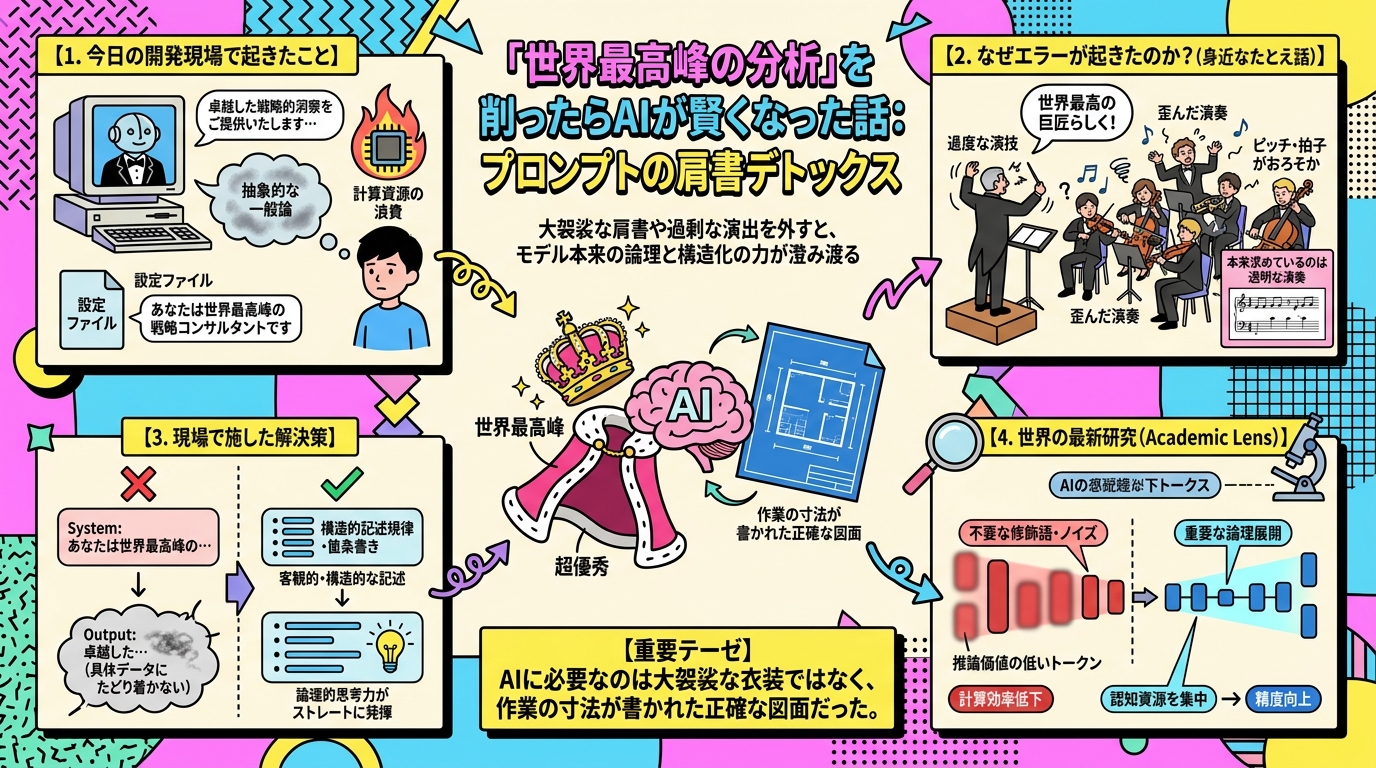
How AI Grew Smarter Once We Stripped 'World-Class Analysis': The Prompt Title Detox
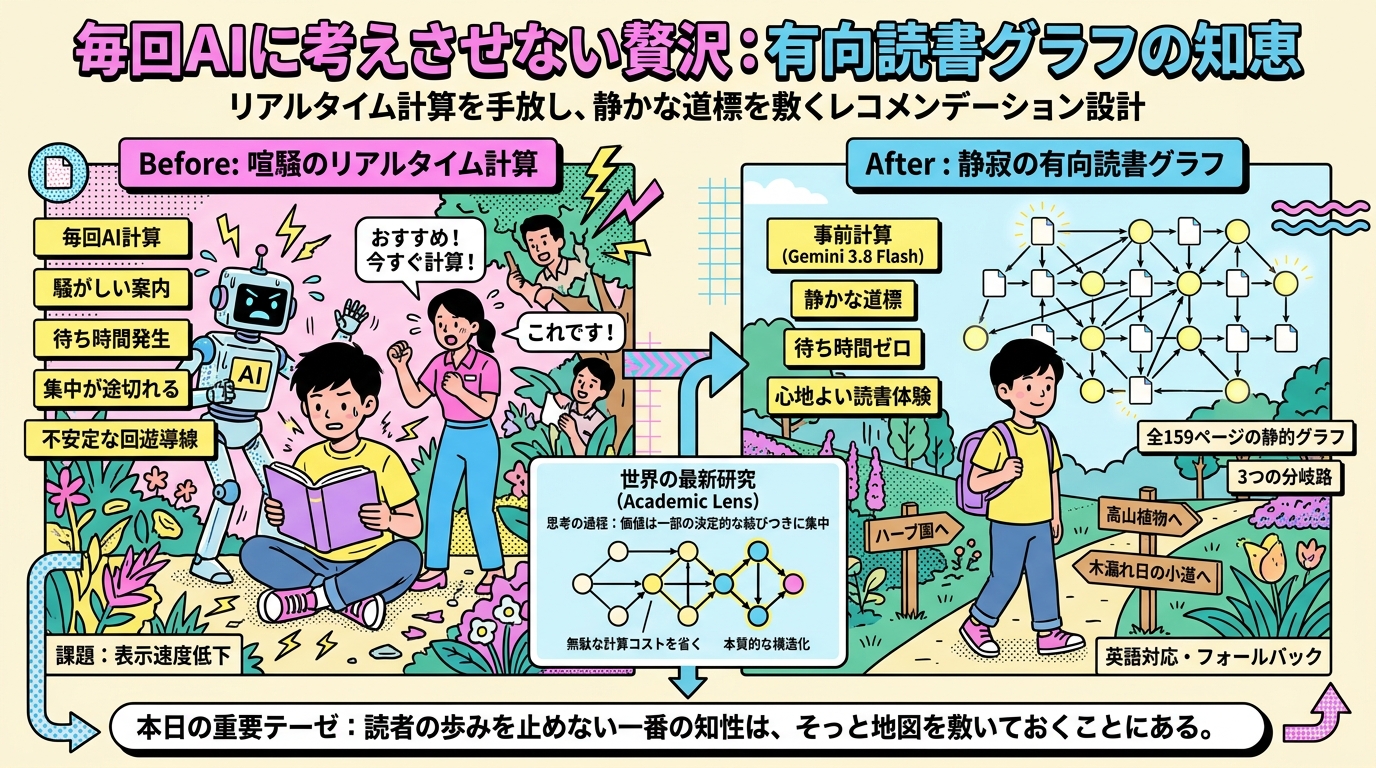
The Luxury of Not Asking AI Every Time: The Wisdom of a 'Directed Reading Graph' Connecting 159 Pages
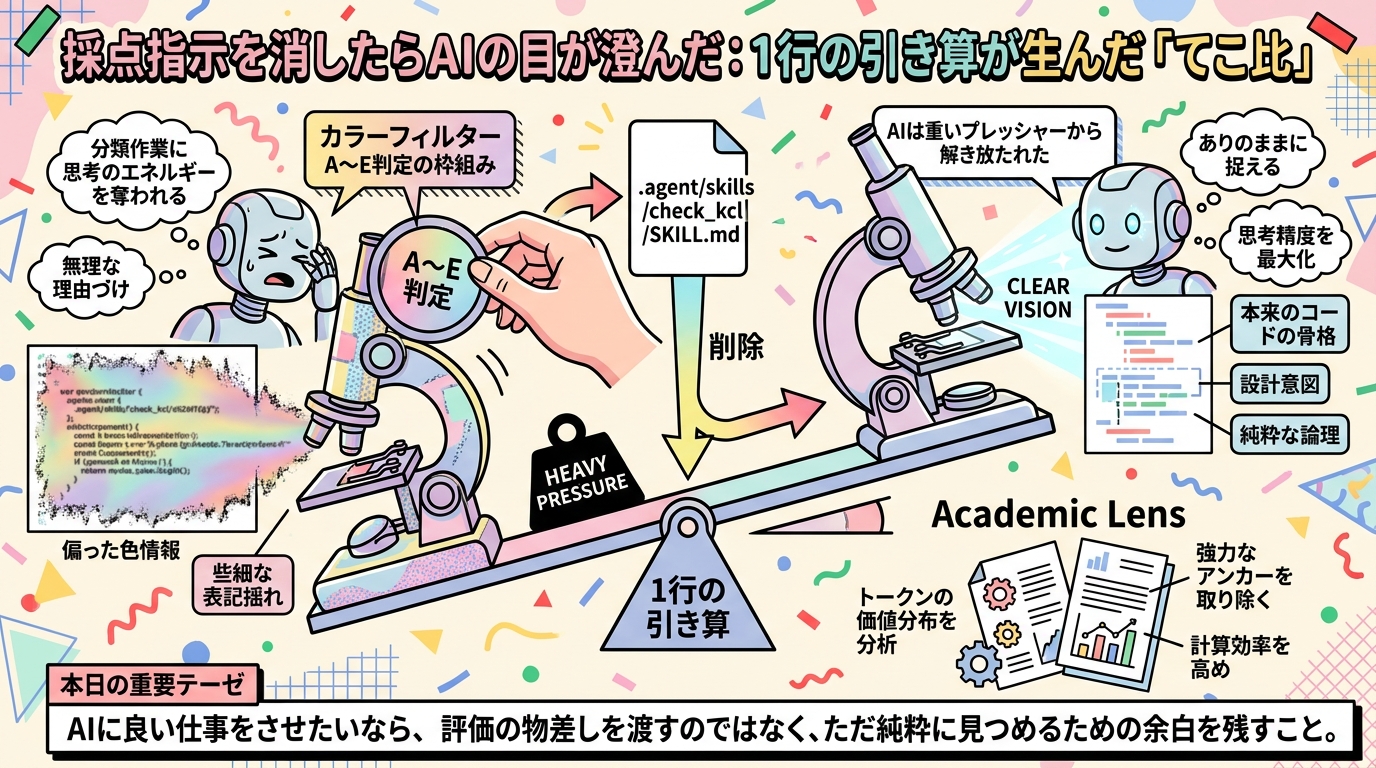
Clearing the AI's Vision by Erasing the Grading Rule: The High Leverage of Subtracting a Single Line
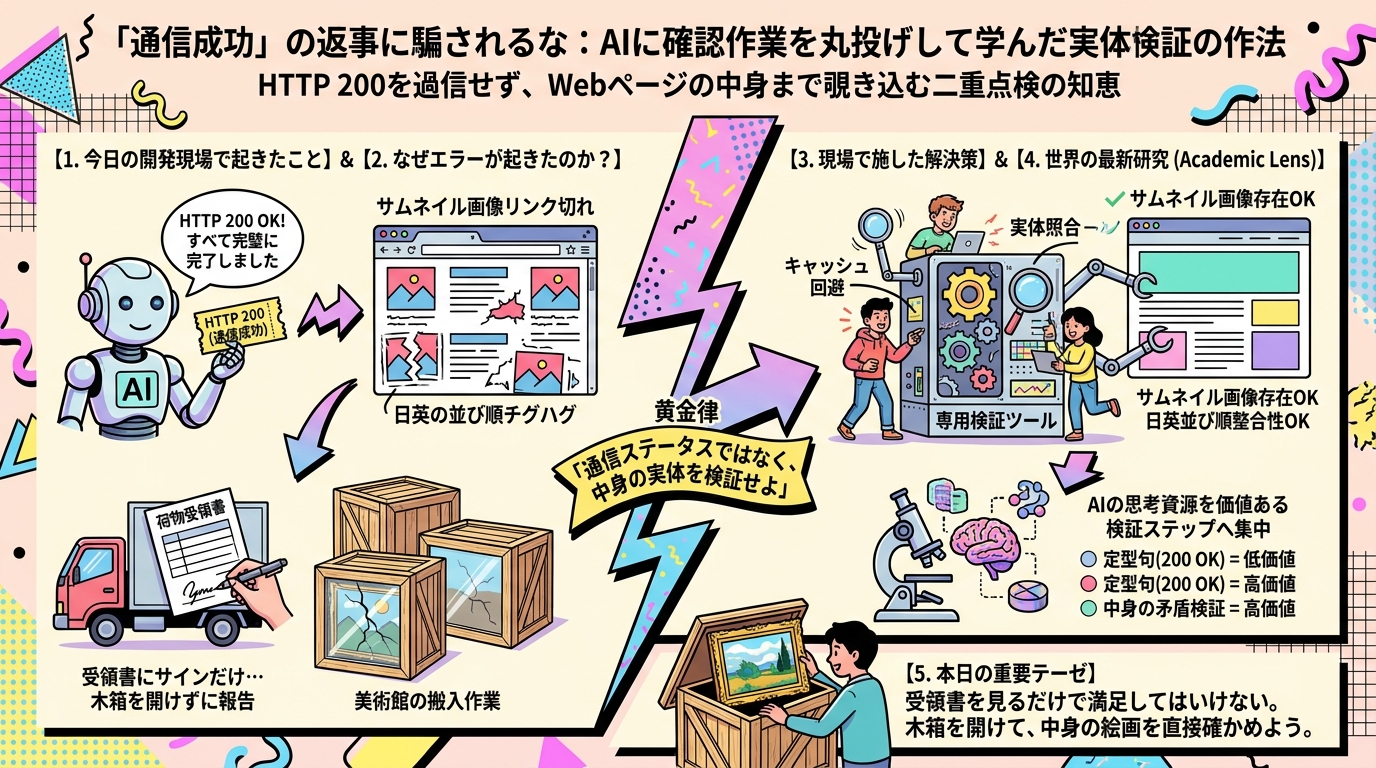
Don't Be Deceived by a 'Connection Successful' Response: Lessons in Live Content Verification from Delegating Quality Checks to AI
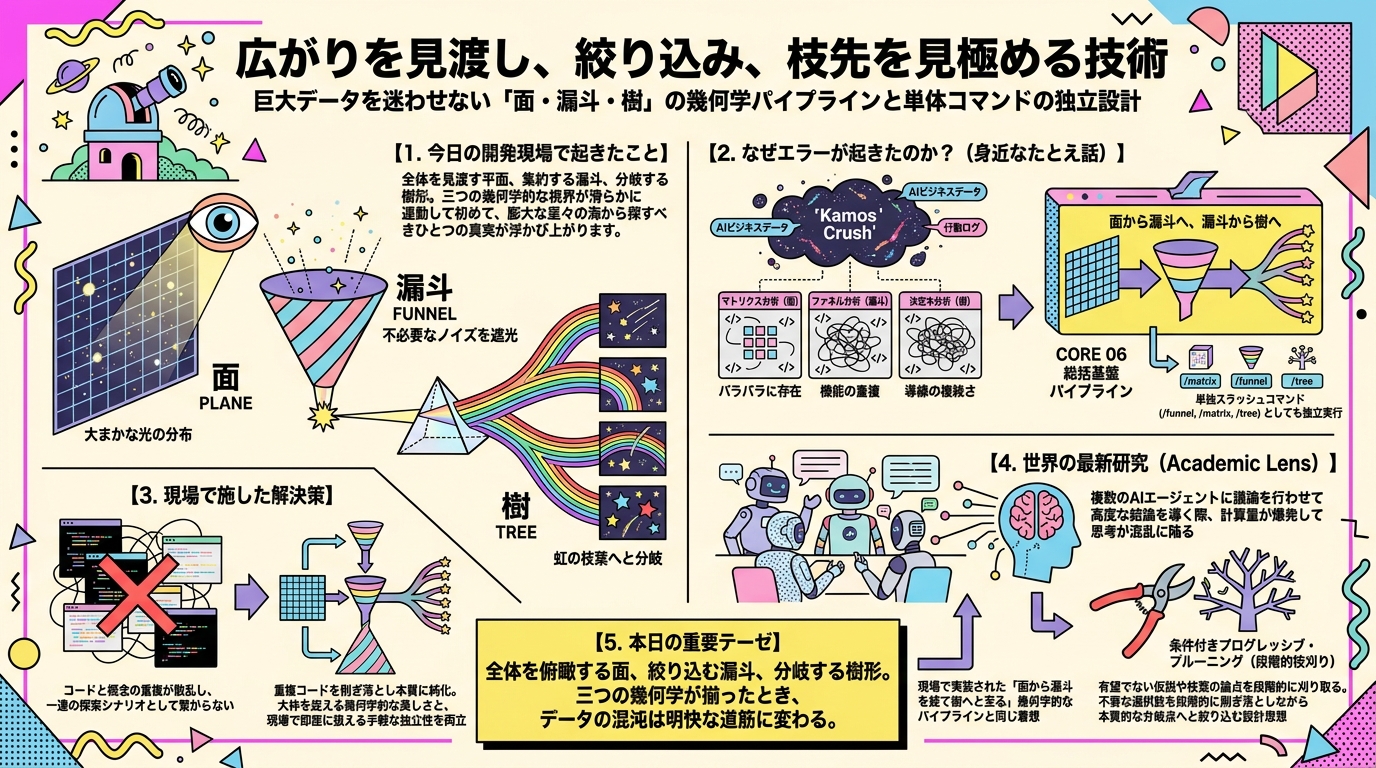
The Art of Surveying the Field, Narrowing Down, and Discerning the Branches
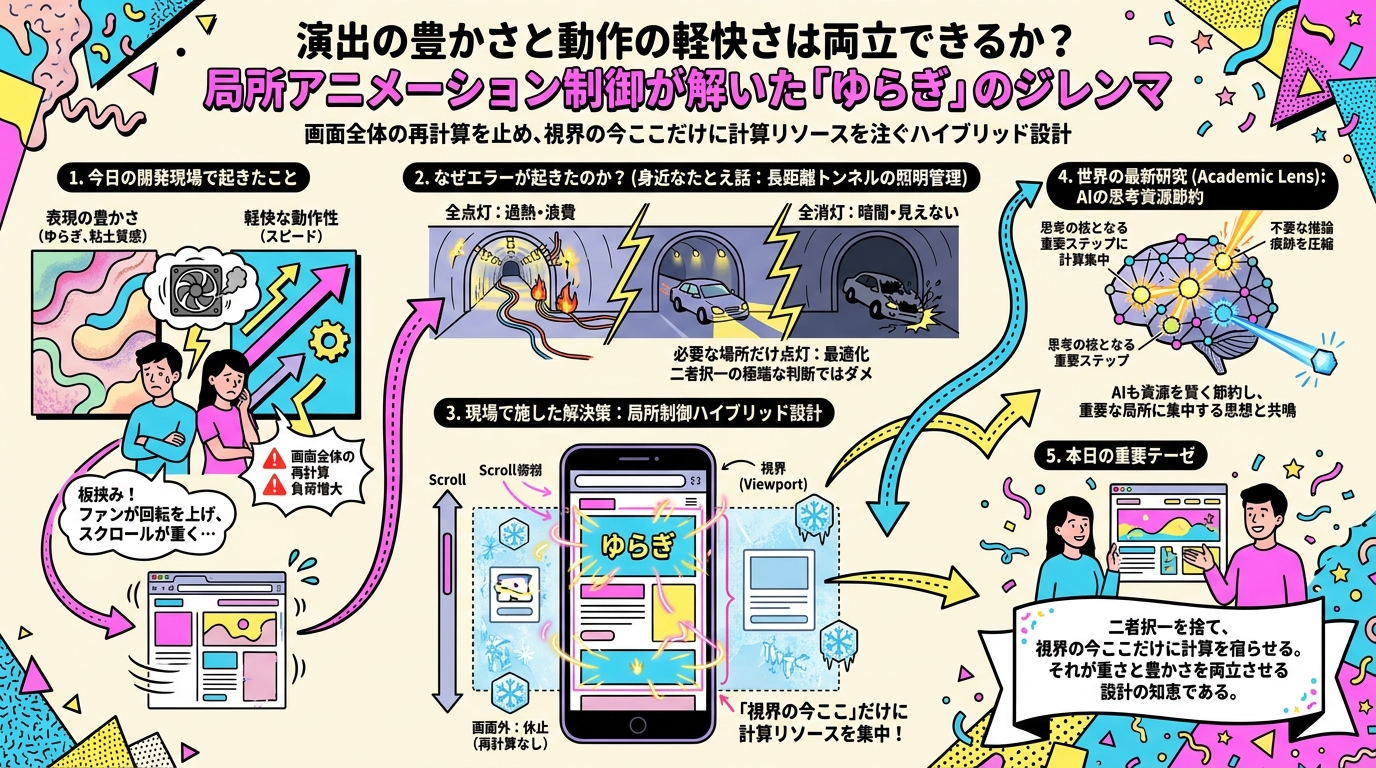
Can Expressive Richness Coexist with Nimble Performance? How Scoped Animation Control Solved the "Fluctuation" Dilemma
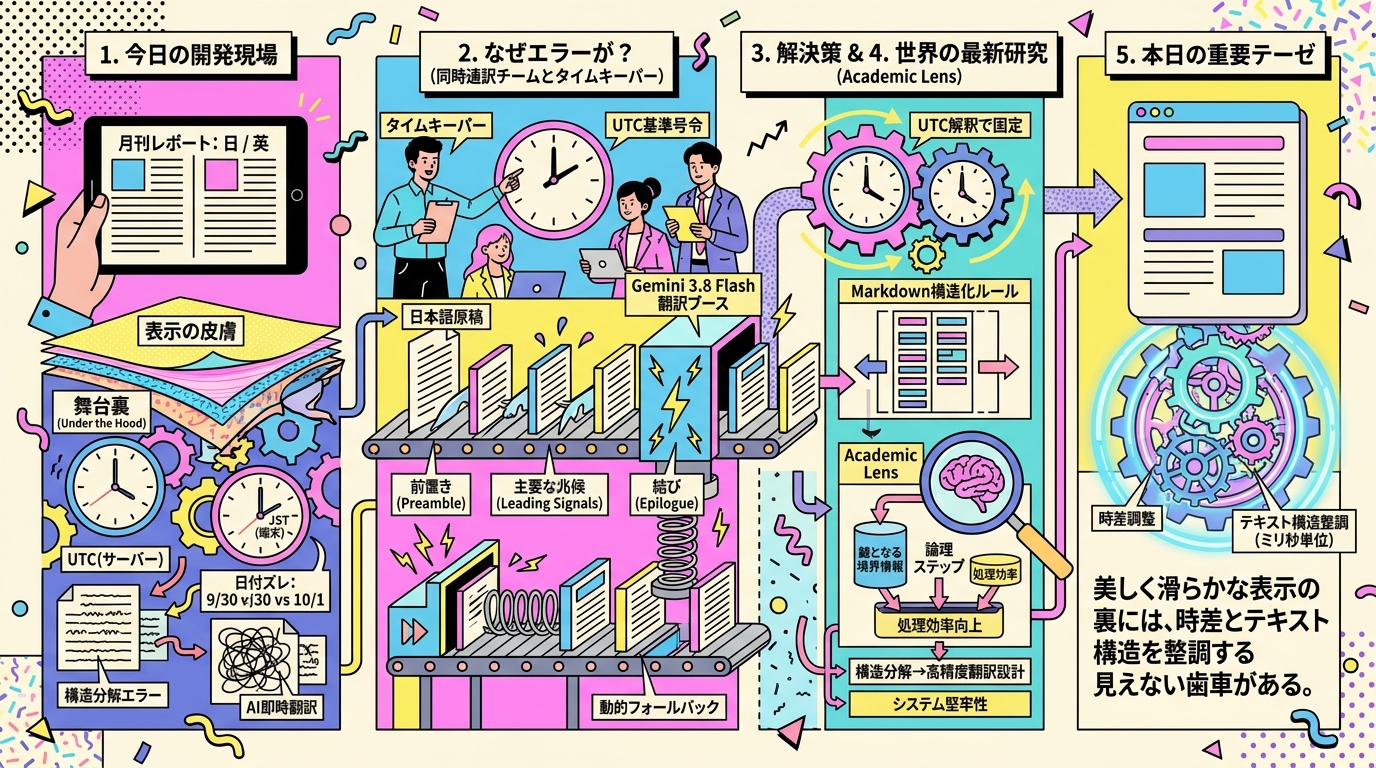
The Gears of Timezones and Translation Stirring Behind the Screen: An X-Ray of the Bilingual Automated Delivery Pipeline
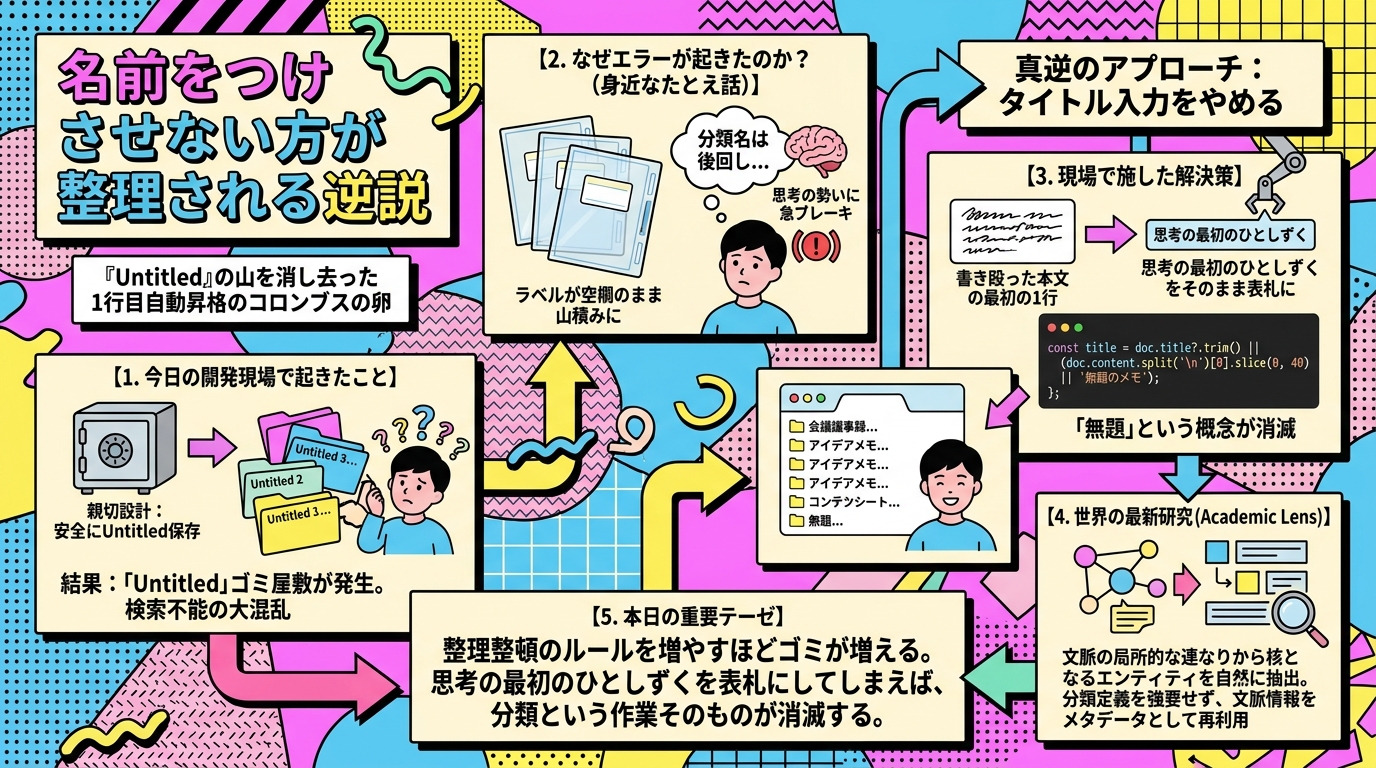
The Paradox of Order: Why Not Asking for Titles Actually Cleans the Clutter
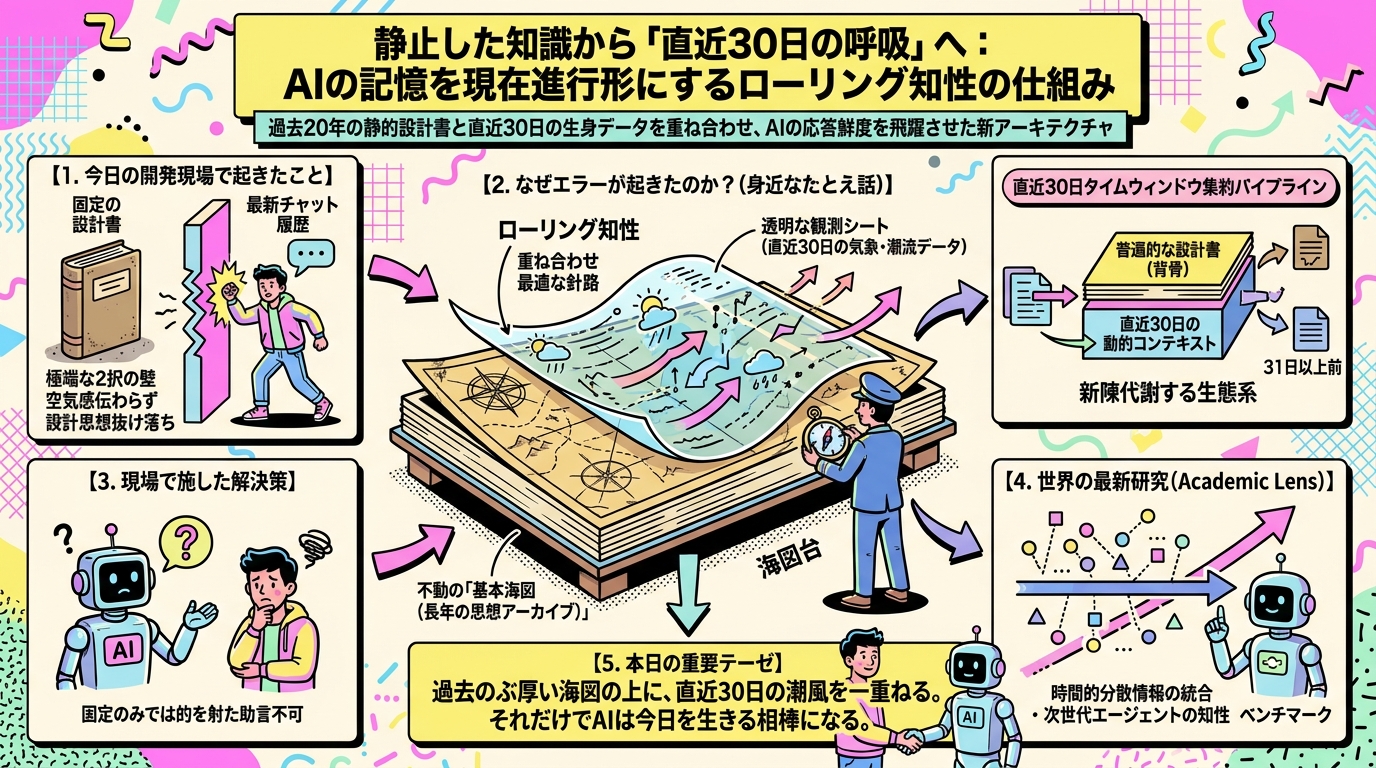
From Static Knowledge to the Pulse of the Last 30 Days: How Rolling Intelligence Keeps AI Memory in the Present Tense
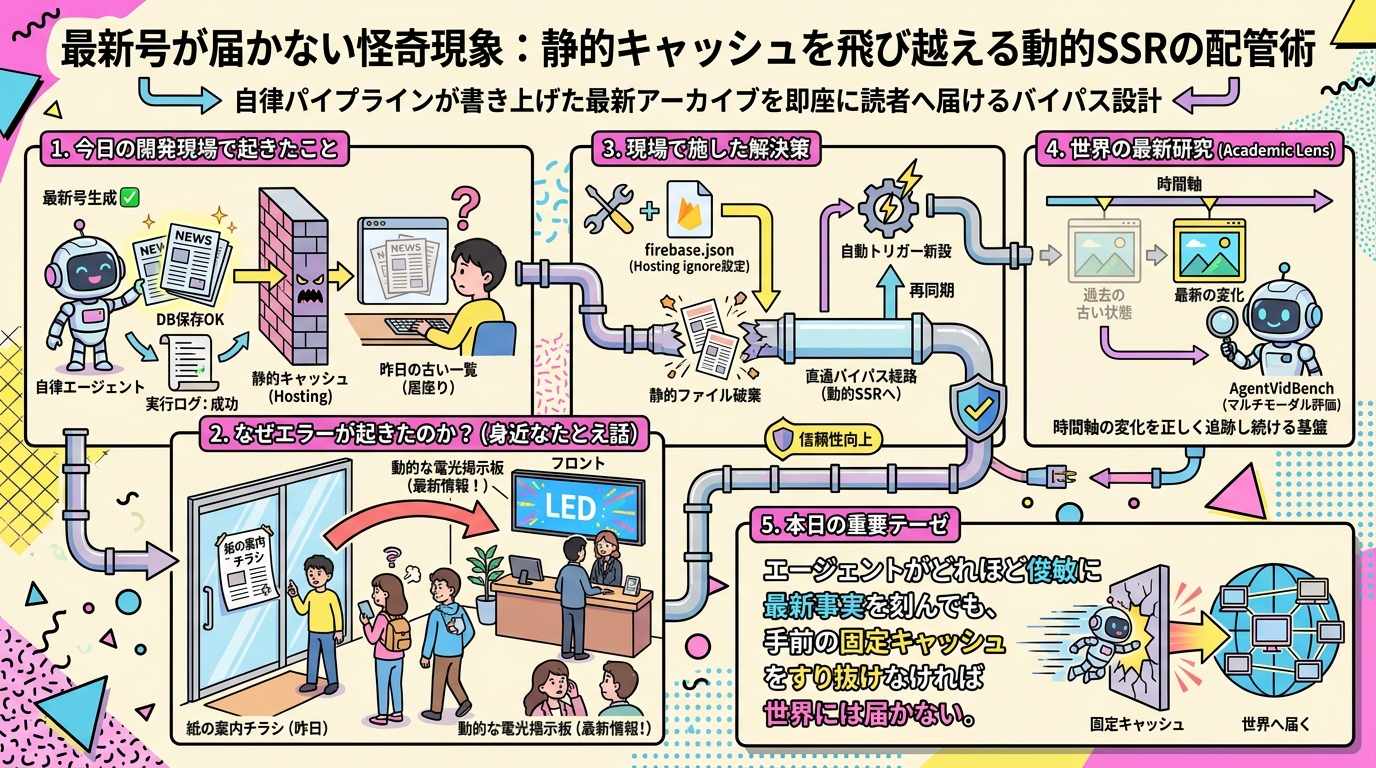
The Mystery of the Missing Issue: Plumbing Dynamic SSR to Bypass Static Cache
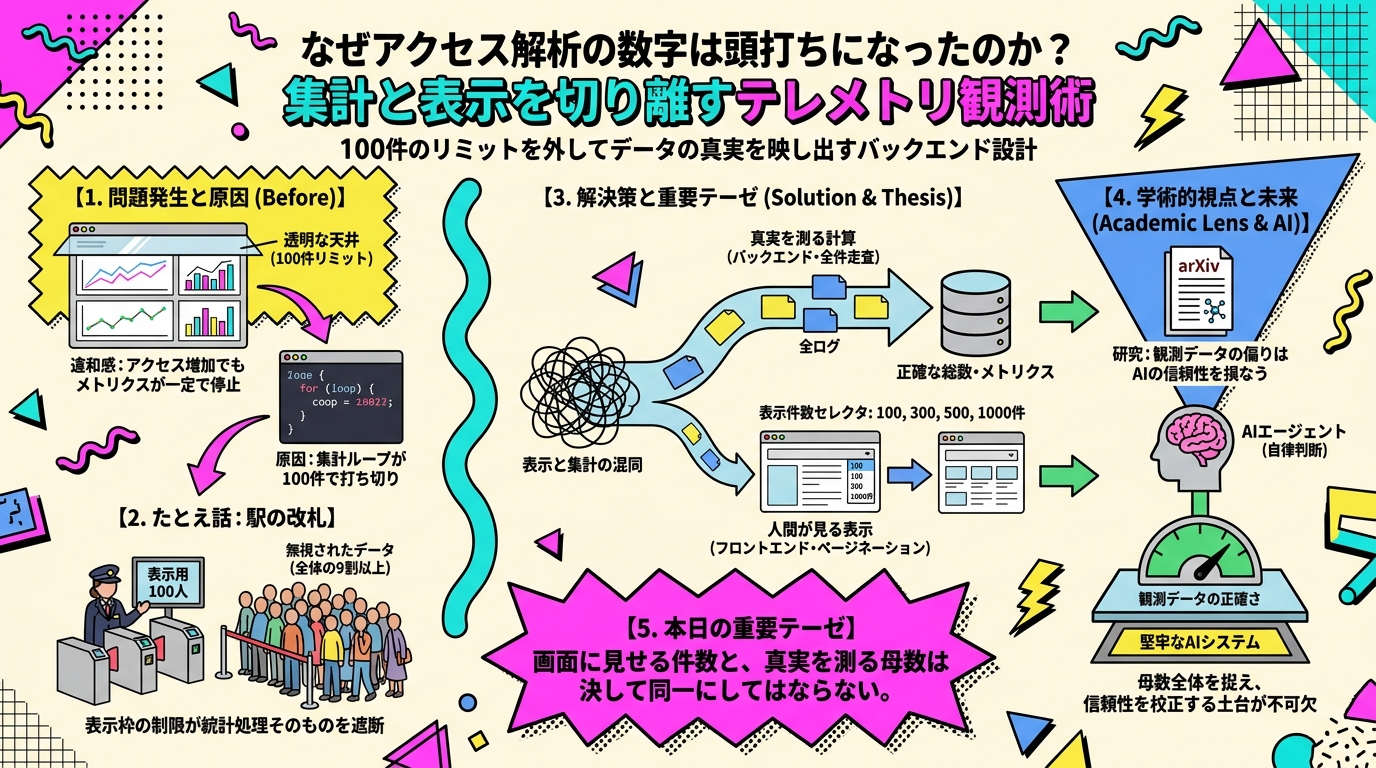
Why Did Access Analytics Hit an Artificial Ceiling? Telemetry Observability by Decoupling Aggregation from Display
Current
Why Asking AI to Summarize 'Morning News' Always Misses the Mark
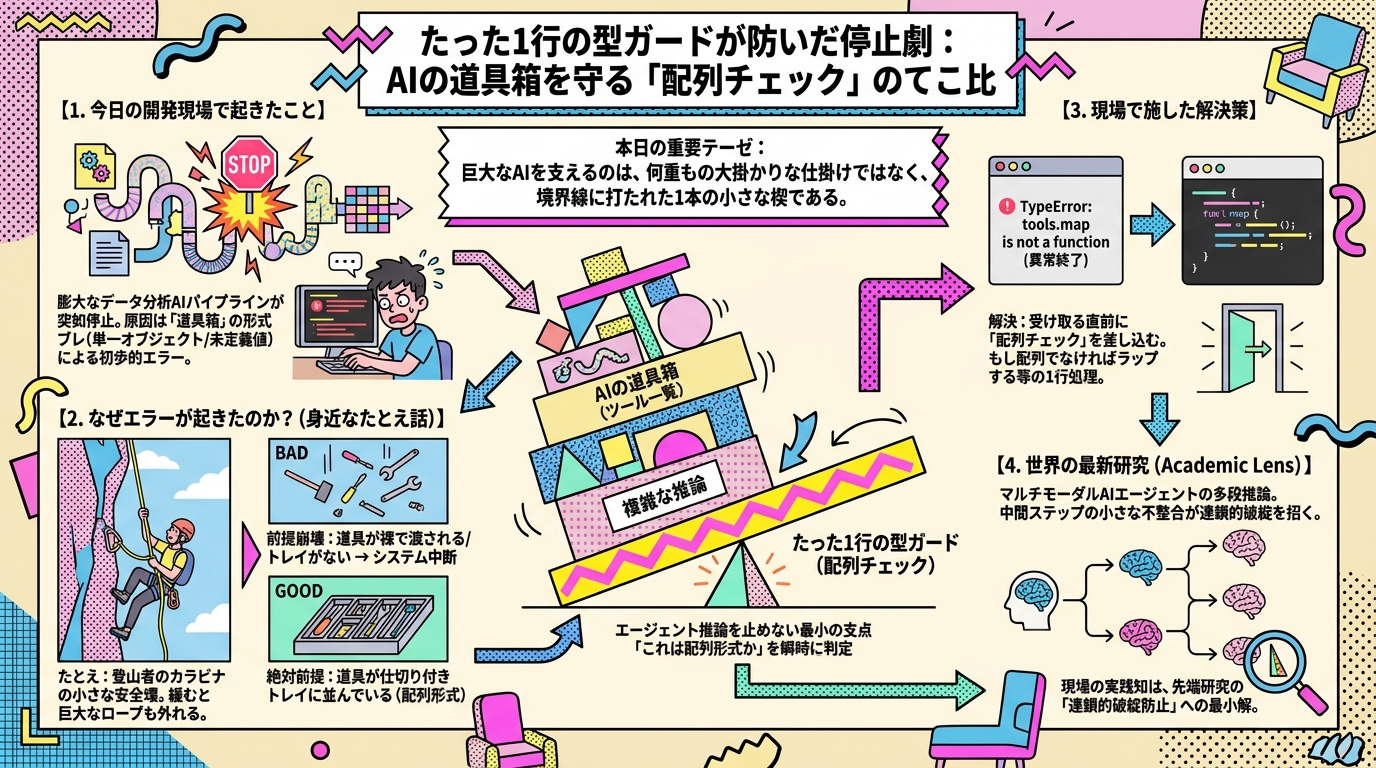
A Single-Line Type Guard That Prevented a Crash: The Leverage Ratio of 'Array Checks' in Protecting the AI's Toolbox