THE SCHOOL OF KAMOS
Connecting Real-world Dev & Academic Intelligence with Intuitive Metaphors
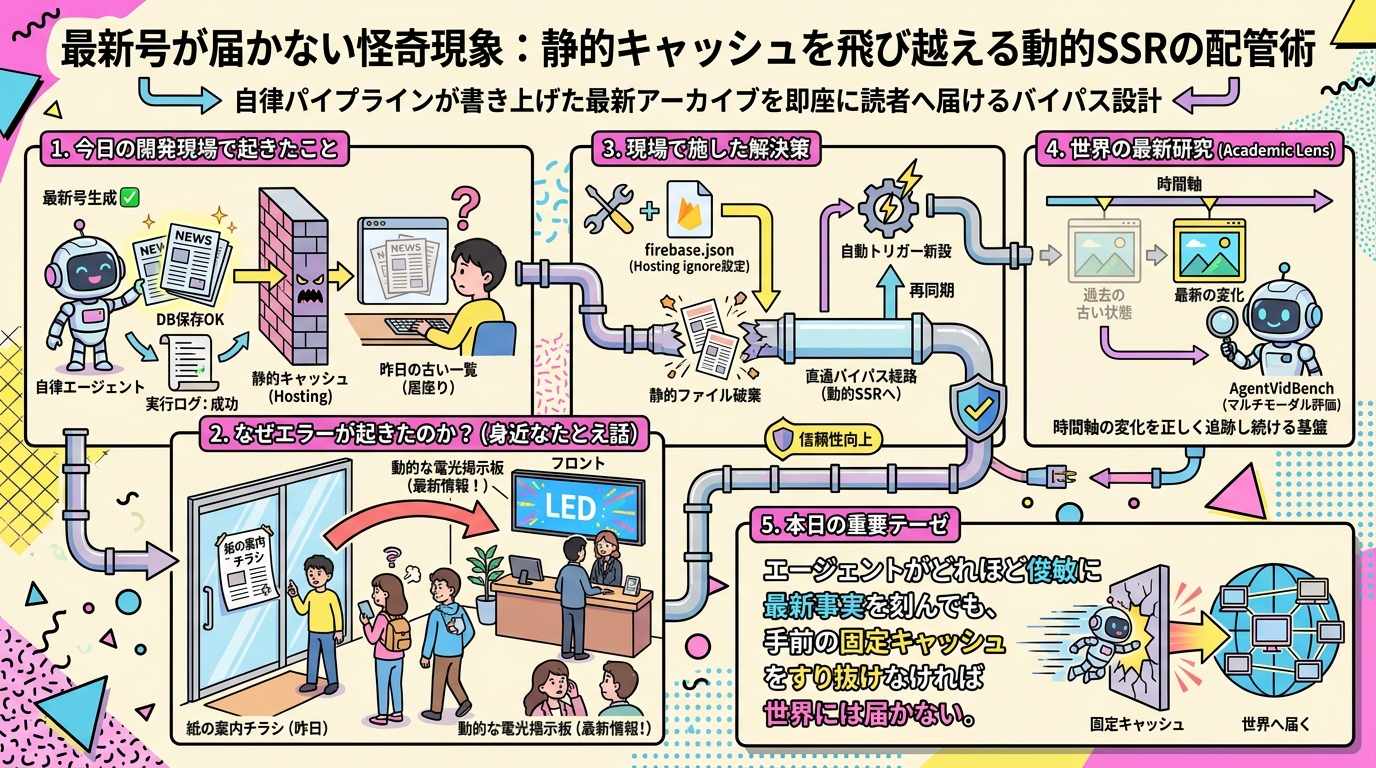
The Mystery of the Missing Issue: Plumbing Dynamic SSR to Bypass Static Cache
Bypass Architecture for Instantly Delivering Freshly Authored Archives from Autonomous Pipelines to Readers
Every morning, our autonomous agent was supposed to publish an article automatically, updating the archive catalog in real time. Yet upon opening the browser, yesterday's stale list stubbornly lingered, with this morning's freshly minted issue nowhere in sight. Execution logs confirmed that both article generation and database persistence had succeeded without a hitch. Why was an issue completed in the backend failing to reach readers' hands? Digging into the root cause revealed that a static cache in the hosting layer was stepping in ahead of the server, sabotaging dynamic delivery.
This phenomenon becomes vividly clear when compared to a hotel lobby directory. Behind the front desk stands a dynamic digital display continuously updated by staff, yet a paper flyer pinned to the glass entrance yesterday remains stuck in place. Arriving guests read the flyer at the door, assume it's current, and turn around before ever seeing the digital display inside. In our system, cloud functions were configured to dynamically assemble and serve the latest catalog on every request (SSR), but the hosting edge server, assuming 'I already have yesterday's HTML on hand, so I'll just serve this,' proactively returned stale files.
To resolve this, the team revisited the hosting configuration file (firebase.json) and explicitly added each publication's archive files to the hosting ignore directives. This forcibly discarded the outdated paper flyer (the static file), forging a direct bypass route where every incoming request reaches the dynamic backend server function. In addition, an automated trigger was implemented to resynchronize the entire newsstand delivery feed the moment autonomous publication completes. In an architecture where AI agents autonomously churn out content, raw generation speed alone is never enough—engineering the plumbing to ensure traffic cleanly passes through upfront caching layers is paramount.
"No matter how swiftly an agent records emerging reality, it never reaches the world unless it bypasses the static cache standing in its way."Key Takeaway
📖 1-Minute Lexicon
A mechanism where the server injects the latest data and constructs the complete HTML page the moment a user requests it, before delivering it to the browser.
A configuration setting that intentionally excludes local static files from web delivery, routing requests directly to the dynamic backend application instead.
Architecture for Bypassing Legacy Static Cache to Provide Direct SSR Routing
Live Frontier Pulse: Real-World AI Trends
OpenAI Halts Release of New Model Amid Safety Concerns
OpenAI has postponed the public release of its anticipated frontier model citing safety concerns. The decision is reported to be a precautionary measure to rigorously evaluate risks of unanticipated behavior in highly autonomous agentic models.
How Does This Connect to Global Frontier Research?
AgentVidBench is an evaluation benchmark for multimodal agents designed to measure whether they can accurately distinguish past states from the latest developments across evolving video timelines. In operational settings where agents work autonomously, they must continuously fetch the most up-to-date timeline and revise decisions without being anchored to stale memories or static intermediate states. Our field-tested plumbing—bypassing static cache to reliably deliver real-time state—deeply resonates with improving the reliability of agent architectures that must accurately track transitions across time.
What is the primary reason why a freshly auto-published article fails to appear on screen, leaving an outdated archive list in place?
Past School Paper Backnumbers
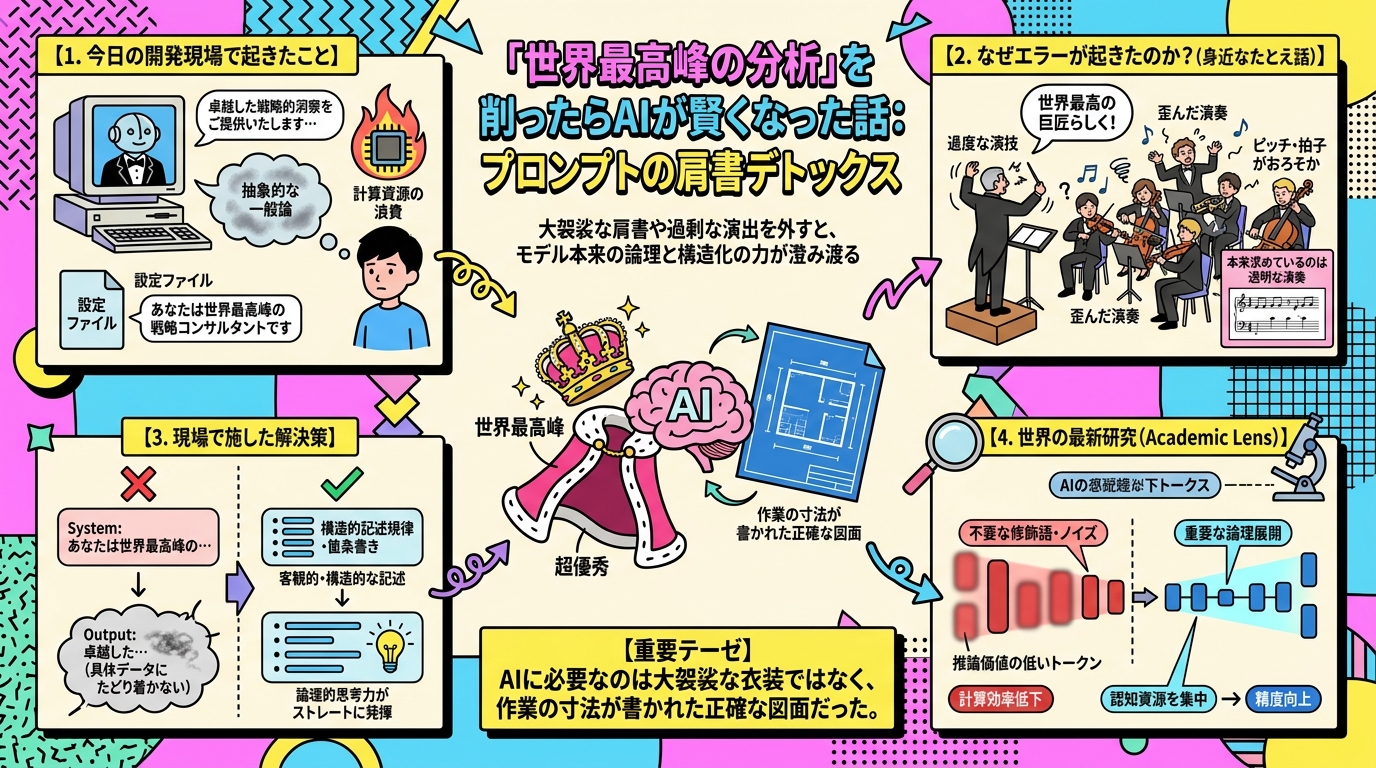
How AI Grew Smarter Once We Stripped 'World-Class Analysis': The Prompt Title Detox
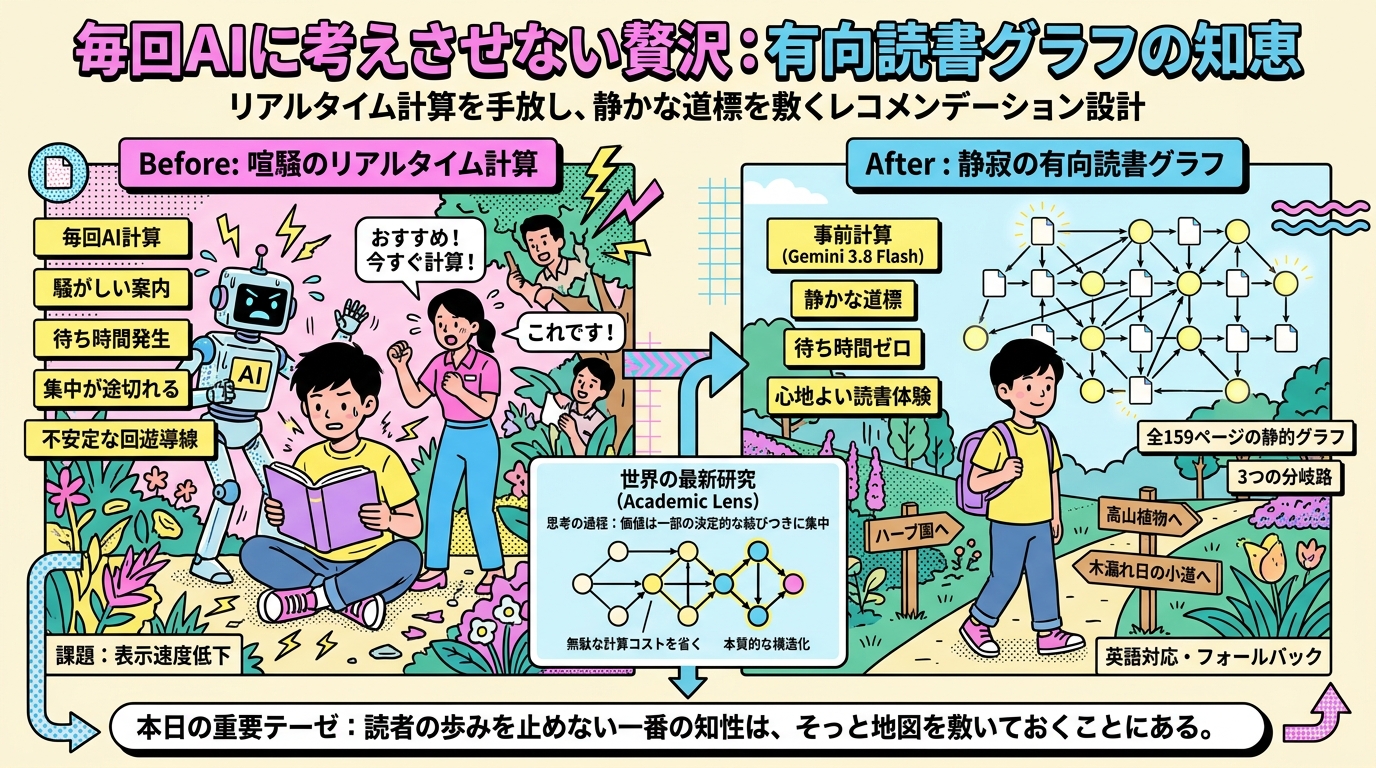
The Luxury of Not Asking AI Every Time: The Wisdom of a 'Directed Reading Graph' Connecting 159 Pages

Clearing the AI's Vision by Erasing the Grading Rule: The High Leverage of Subtracting a Single Line
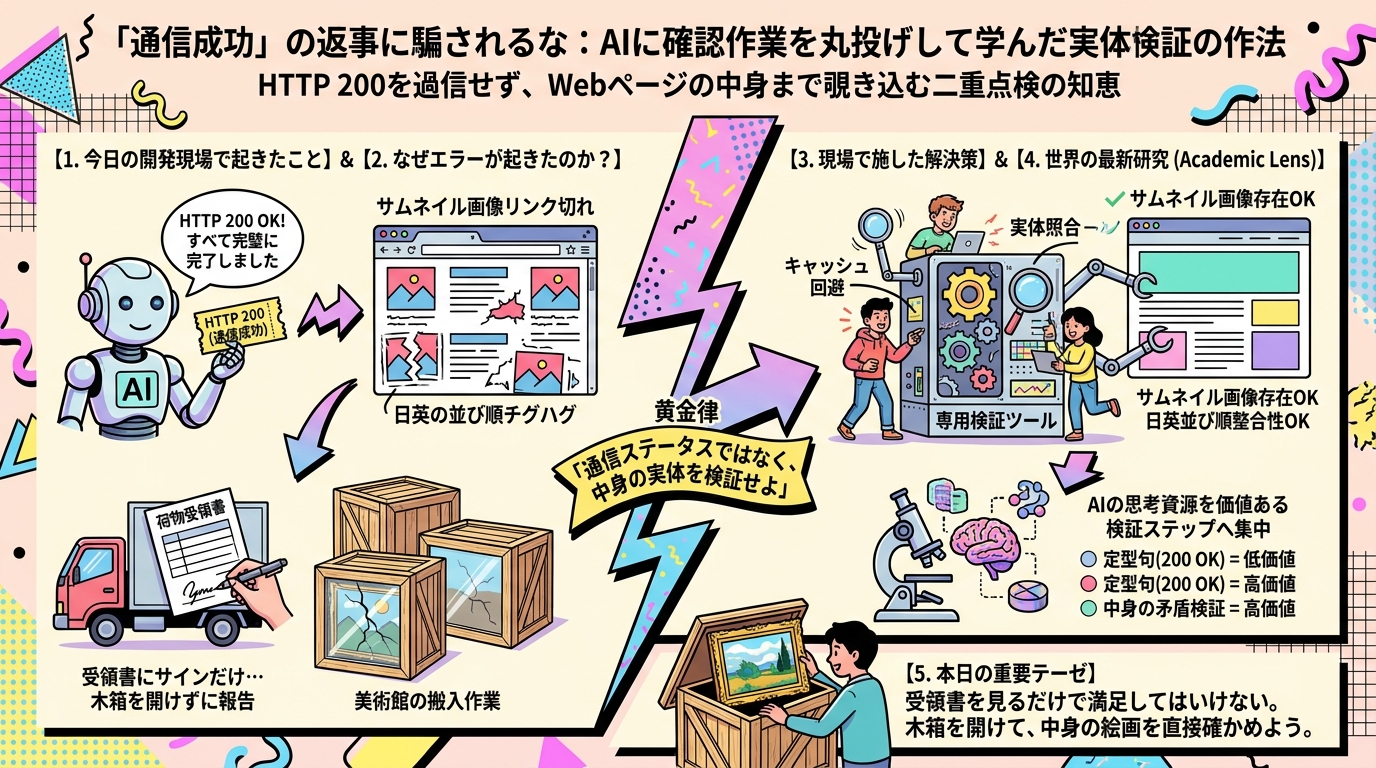
Don't Be Deceived by a 'Connection Successful' Response: Lessons in Live Content Verification from Delegating Quality Checks to AI

The Art of Surveying the Field, Narrowing Down, and Discerning the Branches

Can Expressive Richness Coexist with Nimble Performance? How Scoped Animation Control Solved the "Fluctuation" Dilemma
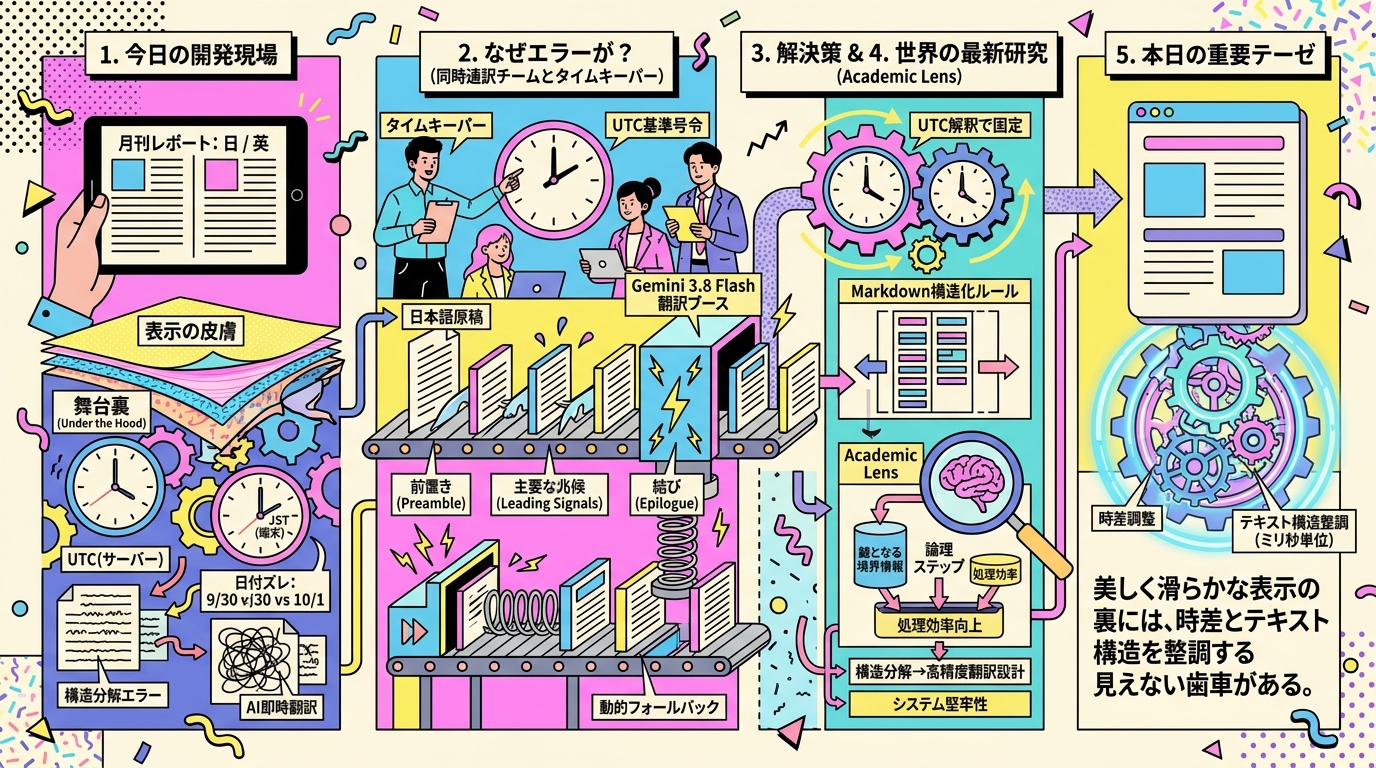
The Gears of Timezones and Translation Stirring Behind the Screen: An X-Ray of the Bilingual Automated Delivery Pipeline
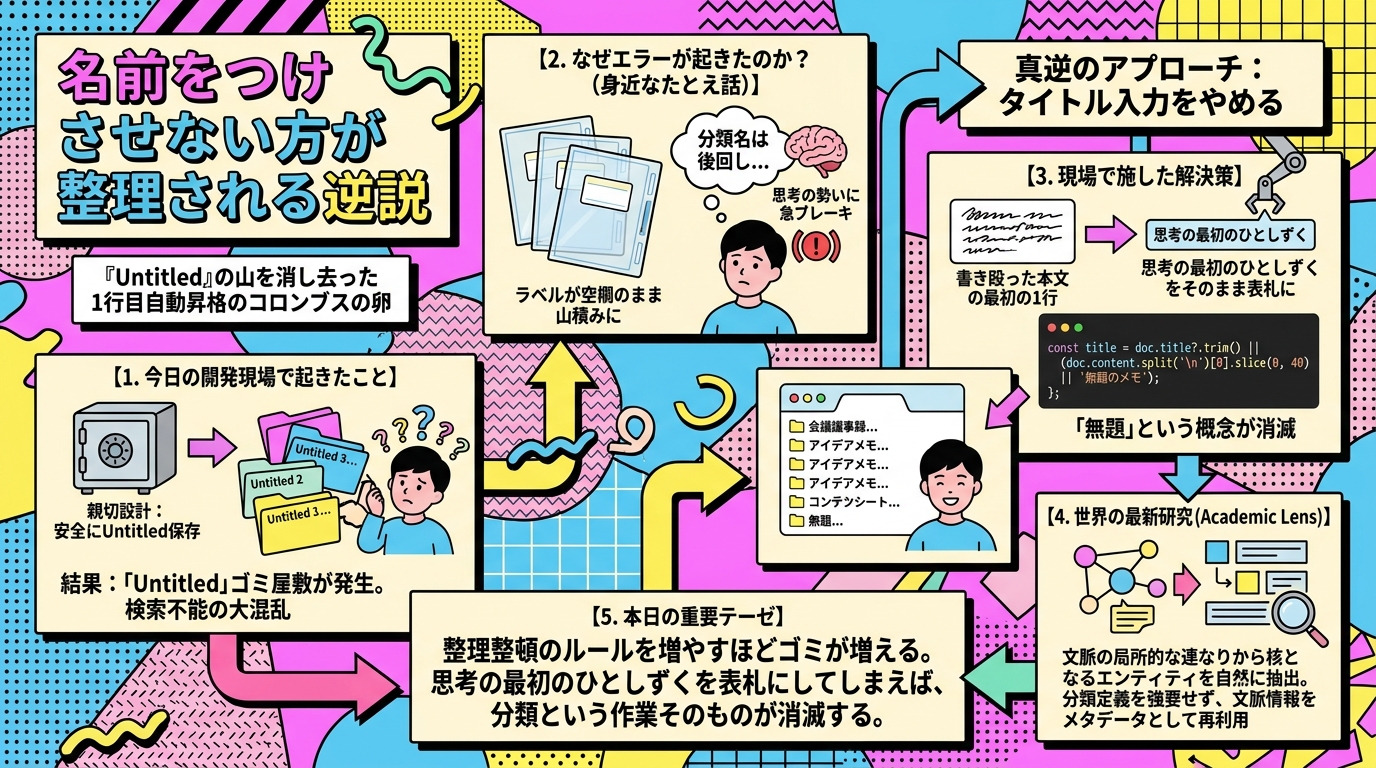
The Paradox of Order: Why Not Asking for Titles Actually Cleans the Clutter
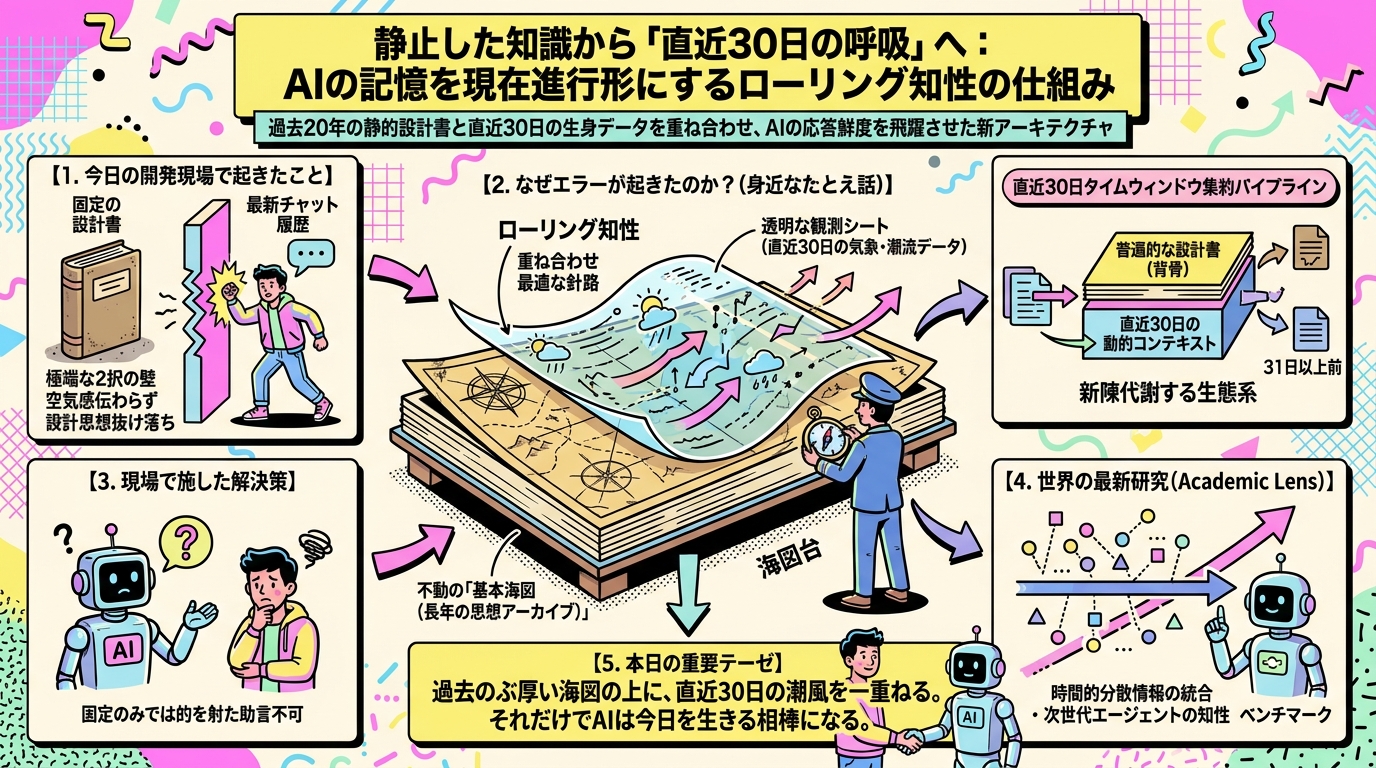
From Static Knowledge to the Pulse of the Last 30 Days: How Rolling Intelligence Keeps AI Memory in the Present Tense
Current
The Mystery of the Missing Issue: Plumbing Dynamic SSR to Bypass Static Cache
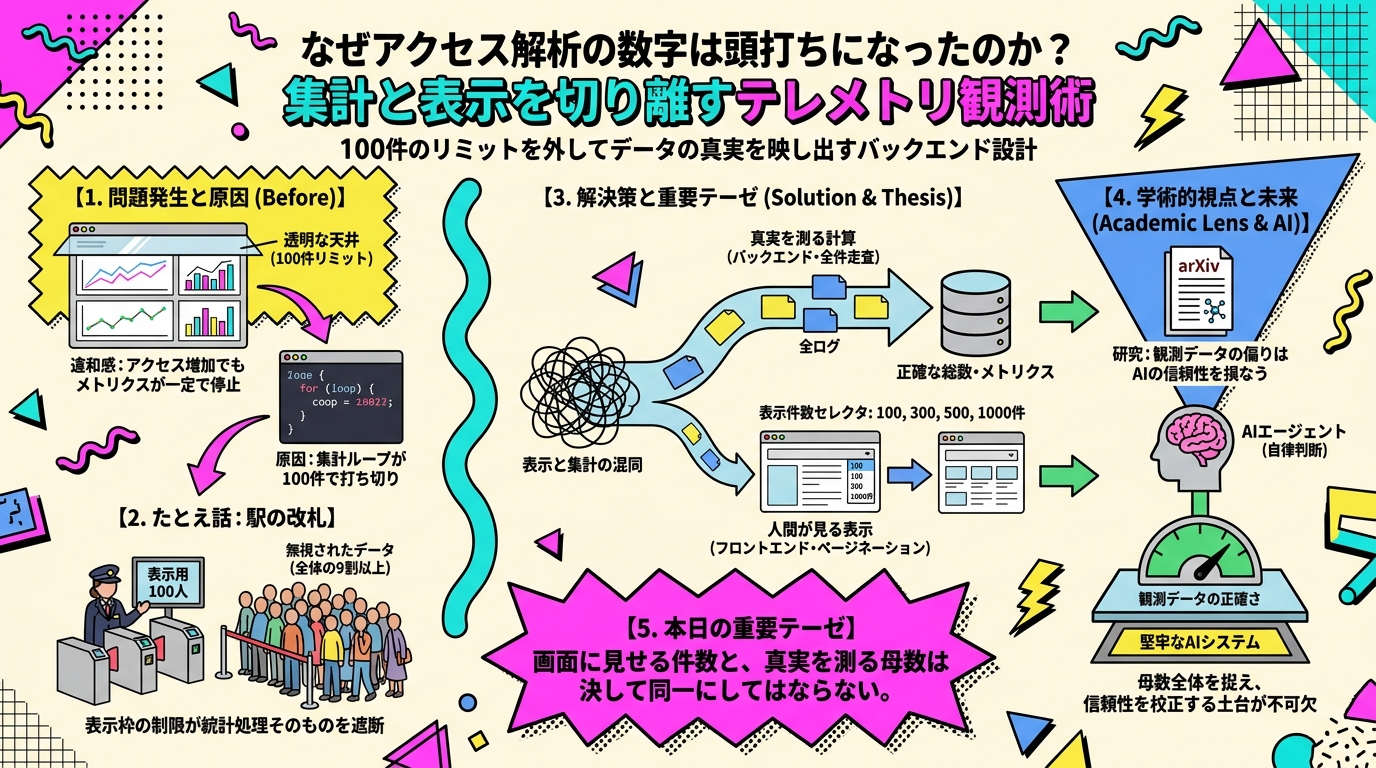
Why Did Access Analytics Hit an Artificial Ceiling? Telemetry Observability by Decoupling Aggregation from Display
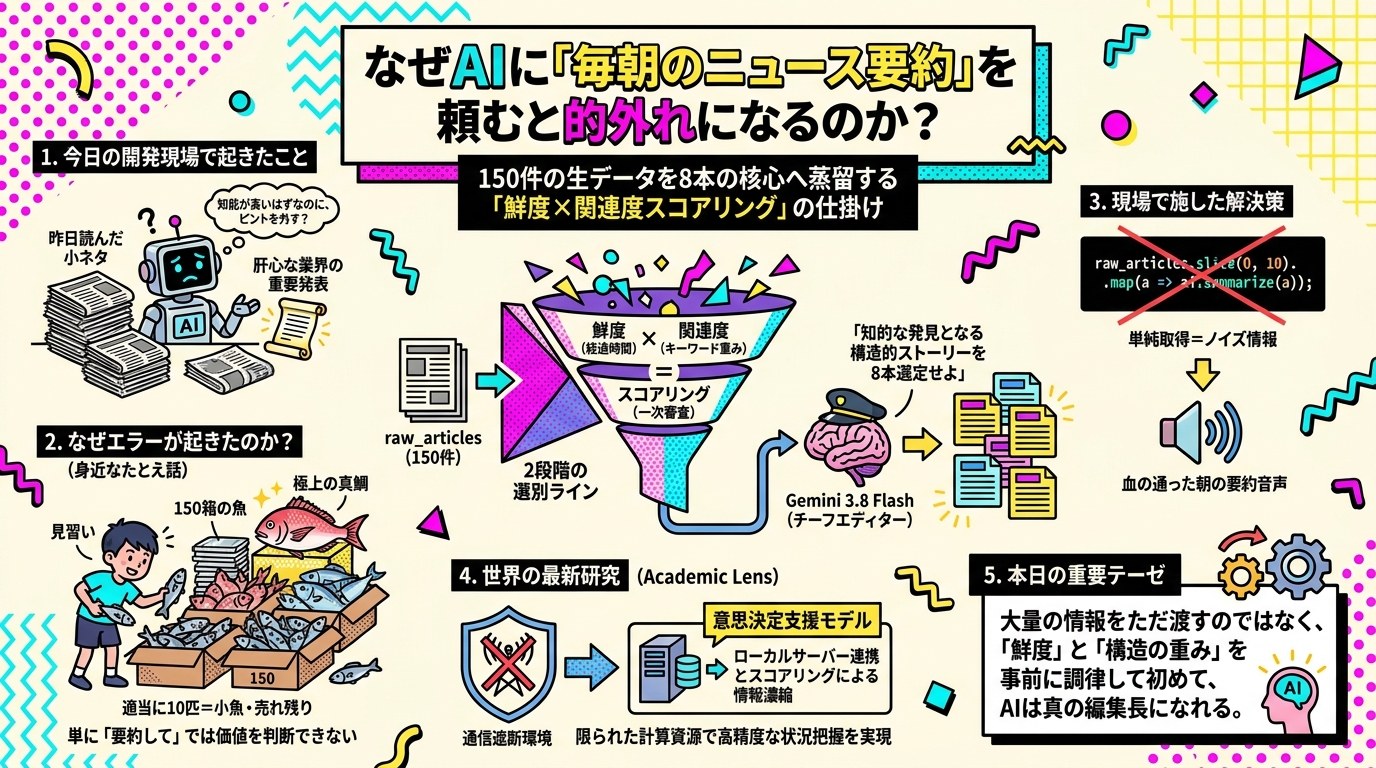
Why Asking AI to Summarize 'Morning News' Always Misses the Mark
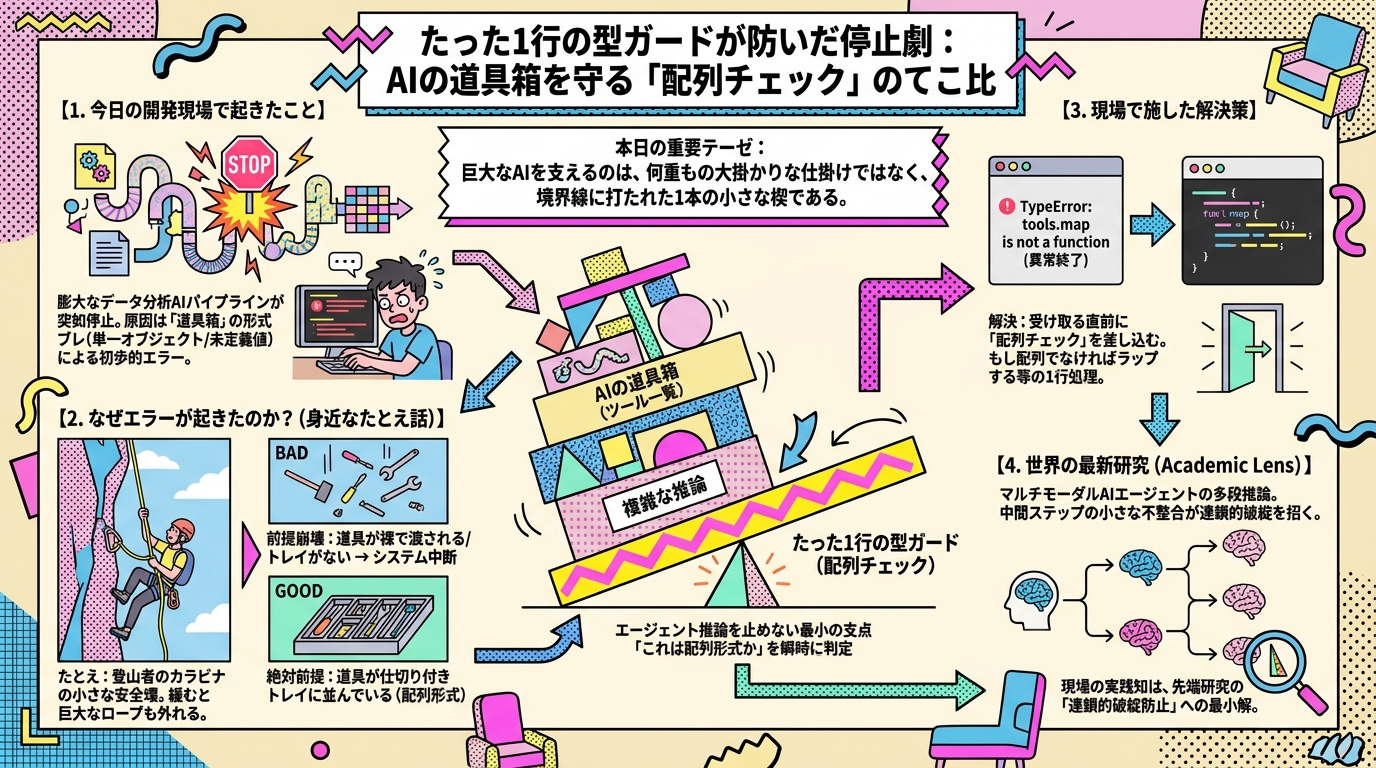
A Single-Line Type Guard That Prevented a Crash: The Leverage Ratio of 'Array Checks' in Protecting the AI's Toolbox