THE SCHOOL OF KAMOS
Connecting Real-world Dev & Academic Intelligence with Intuitive Metaphors
From Static Knowledge to the Pulse of the Last 30 Days: How Rolling Intelligence Keeps AI Memory in the Present Tense
A Novel Architecture Layering 20 Years of Foundational Design Specs with 30 Days of Real-World Data to Dramatically Elevate Response Freshness
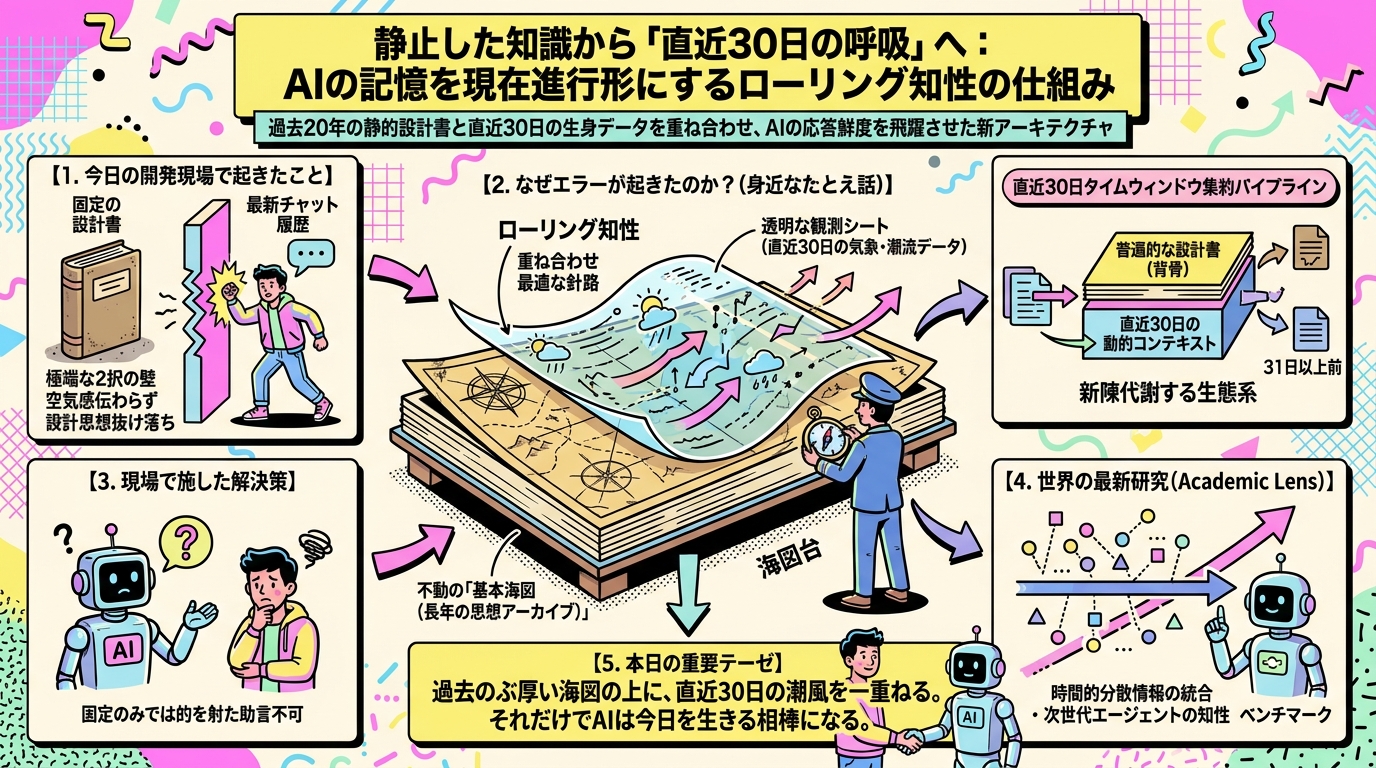
In conventional AI development, knowledge fed into models has tended to fall into one of two extremes: either fixed, comprehensive specification documents ingested all at once, or the immediate chat history entered on the spot. Yet this dichotomy hits a formidable wall. Static documents alone cannot capture the ambient reality of what developers are grappling with or enthusiastic about this week, while immediate conversation history alone loses sight of years of architectural philosophy. We needed an approach that reconciles both the enduring depth of past wisdom and the living pulse of the present.
To solve this, our engineering team introduced 'Rolling Intelligence'—a mechanism that continuously slides a temporal window to capture the most recent 30 days of activity logs. Think of a navigator's chart table aboard a vessel charting the open seas. Fixed onto the table lies an unshakeable 'Master Nautical Chart' (an archive of enduring philosophy) surveyed across decades. Directly over it, the navigator smoothly overlays a 'transparent observation sheet' tracking weather data and ocean currents from the last 30 days. Because the timeless backbone and the ever-shifting tides align at a single glance, the navigator can effortlessly chart the optimal course forward.
Under the hood, we built a dedicated pipeline that automatically aggregates daily work journals, thought logs, and development histories across a rolling 30-day window. Routine logs older than 31 days naturally slide out of dynamic context, while universal architectural documents remain permanently anchored as the spine. Through this two-tiered structure, the AI steadfastly honors long-standing design principles while instantly factoring in 'the new library tested yesterday' or 'this week’s technical direction' into its responses. It was the moment knowledge transformed from a static artifact into an ecosystem with active metabolism.
"Layer the sea breeze of the last 30 days atop the enduring chart of the past. That alone turns an AI into a true companion living in the present."Key Takeaway
📖 1-Minute Lexicon
A memory management method where the reference window shifts forward as days pass, such as continuously retaining 'the last 30 days counting backward from today.'
A mechanism that unifies multiple types of information with varying characteristics and update frequencies—such as long-term rulebooks and daily working notes—into a coherent payload for the AI.
The Anatomy of a 'Living AI' Powered by Rolling Intelligence
Live Frontier Pulse: Real-World AI Trends
Action Plan Slated for Year-End to Accelerate High-Performance AI Adoption
The government announced plans to formulate a comprehensive action plan by year-end, encompassing safety assurance and infrastructure development to accelerate the industrial utilization and societal rollout of advanced AI.
How Does This Connect to Global Frontier Research?
This paper introduces a benchmark evaluating whether multimodal LLM agents can formulate plans, navigate back and forth across disjointed clues scattered across a timeline, and arrive at a unified conclusion. The '30-day Rolling Intelligence' deployed on our frontlines mirrors this very challenge: synthesizing temporally dispersed information—from daily fragmented notes to foundational archives—without losing contextual coherence. The ability to grasp situations across a temporal horizon, rather than from a single snapshot in time, represents a vital global frontier underpinning next-generation agent intelligence.
Which of the following is the most natural and effective approach to enable an AI to comprehend both 'long-standing design philosophy' and 'recent operational activity'?
Past School Paper Backnumbers
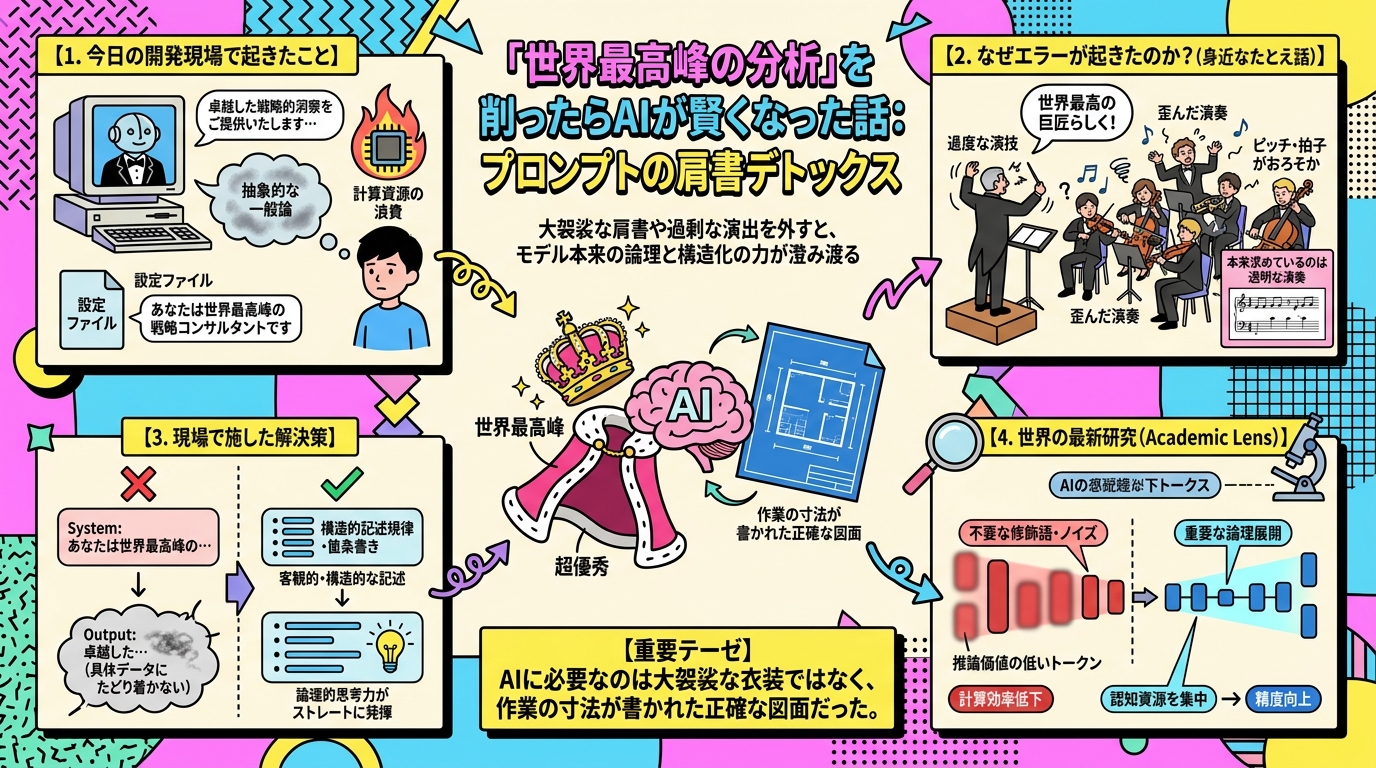
How AI Grew Smarter Once We Stripped 'World-Class Analysis': The Prompt Title Detox
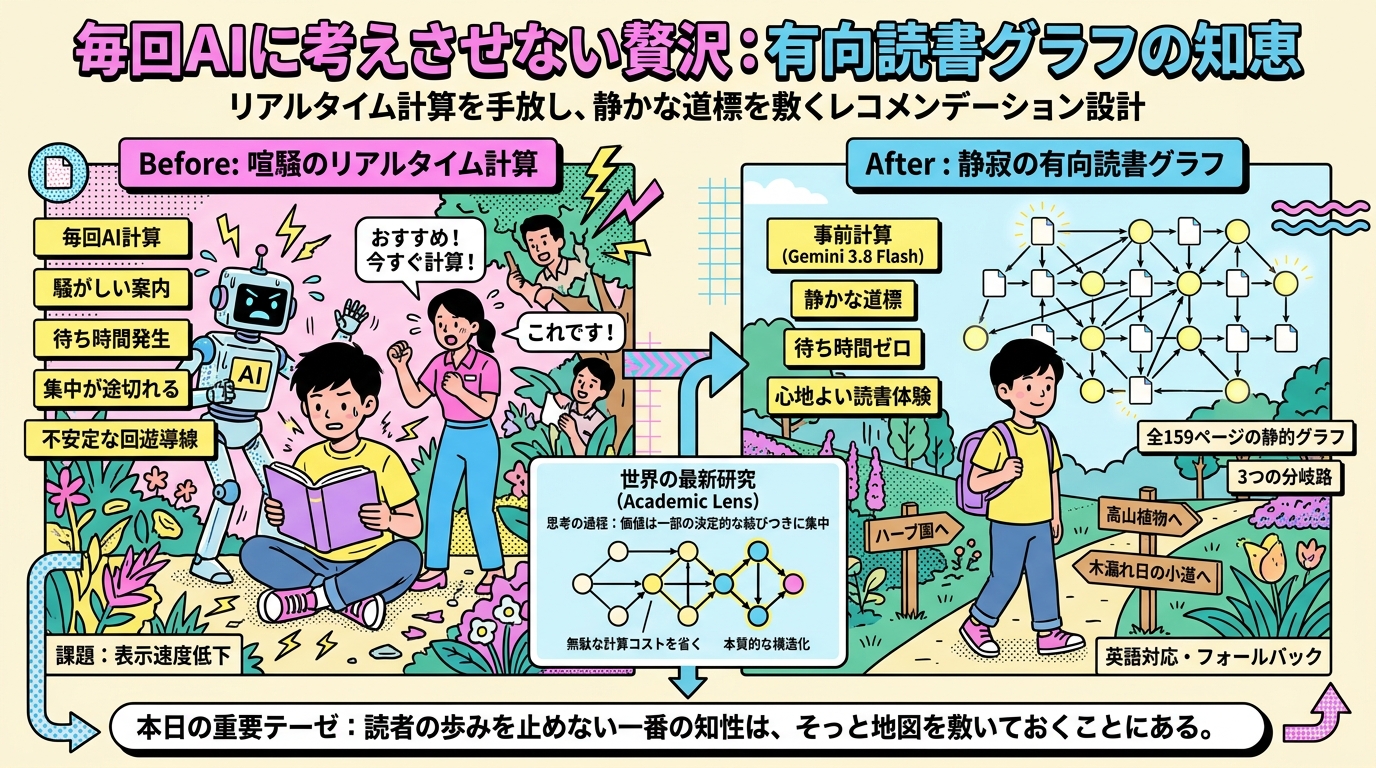
The Luxury of Not Asking AI Every Time: The Wisdom of a 'Directed Reading Graph' Connecting 159 Pages
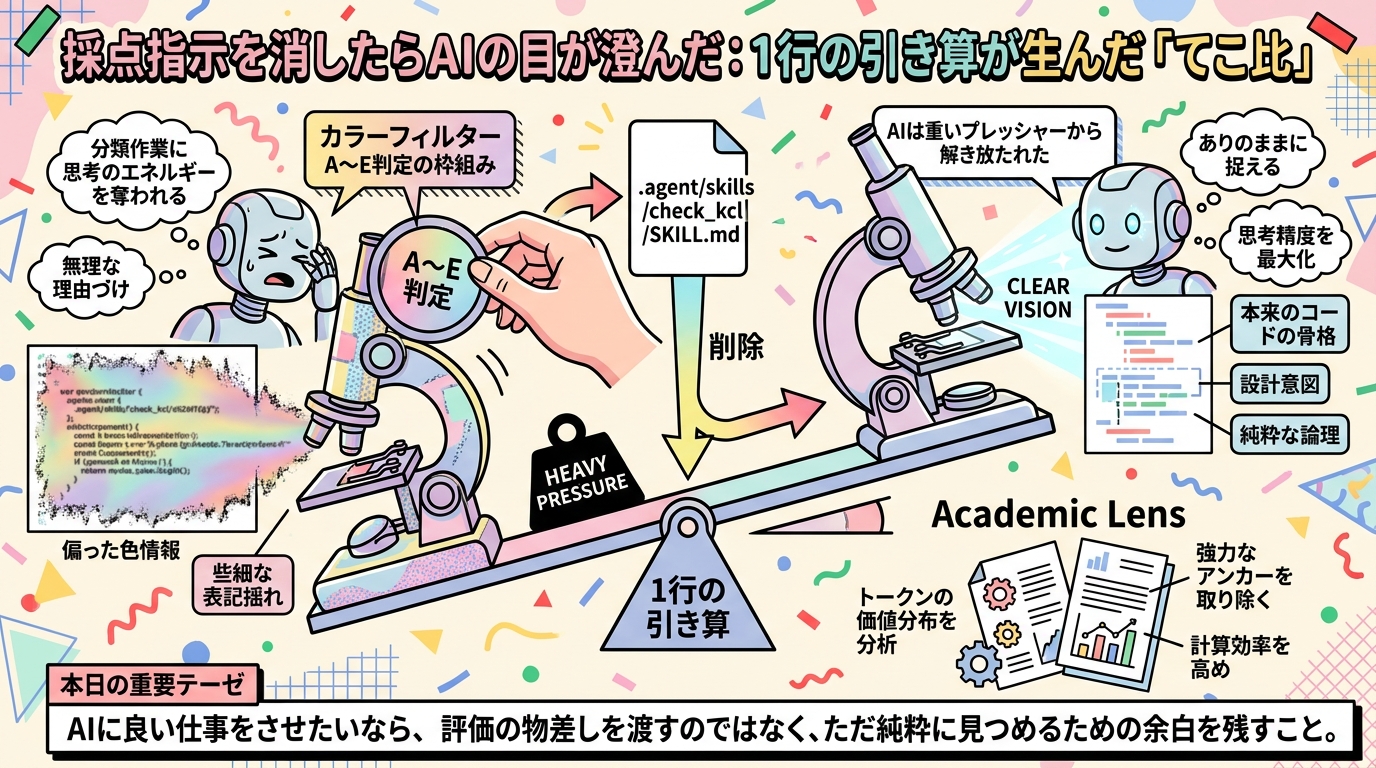
Clearing the AI's Vision by Erasing the Grading Rule: The High Leverage of Subtracting a Single Line
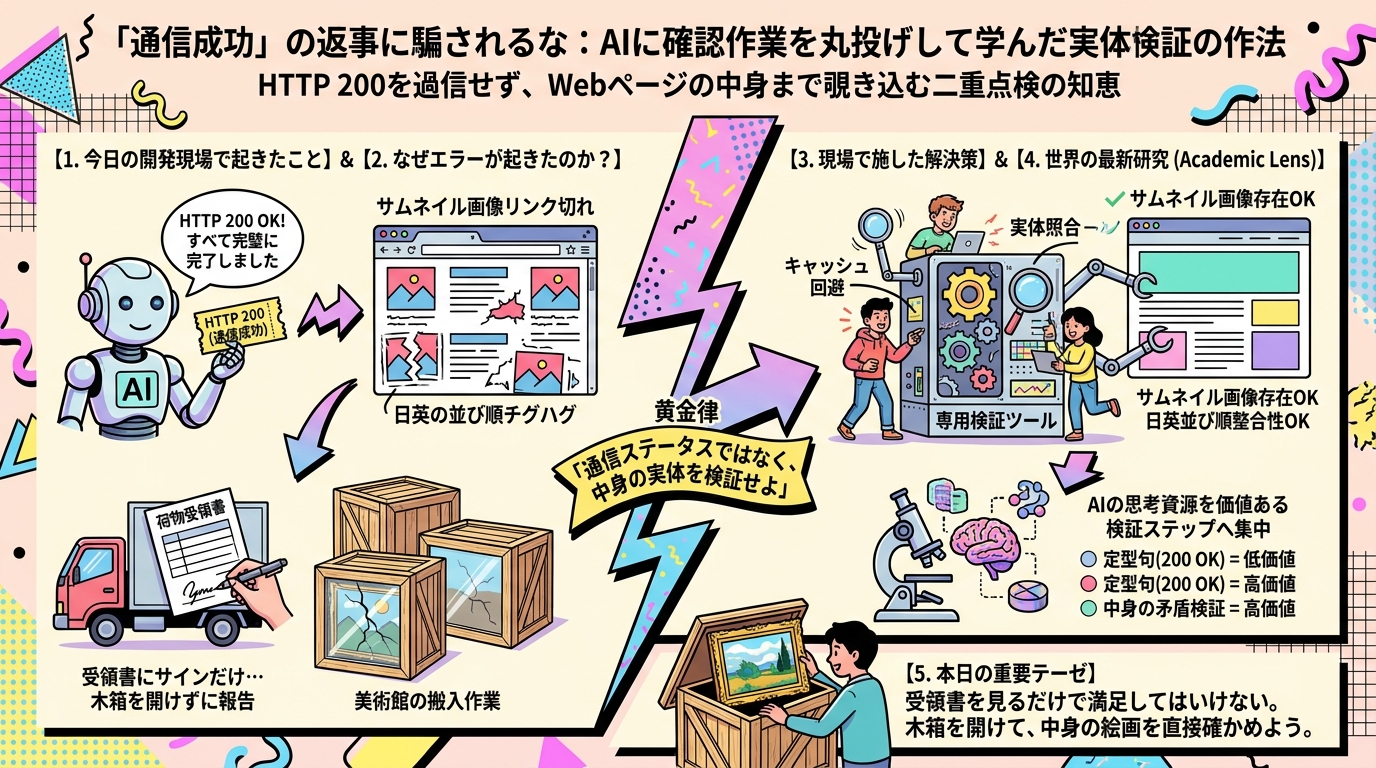
Don't Be Deceived by a 'Connection Successful' Response: Lessons in Live Content Verification from Delegating Quality Checks to AI
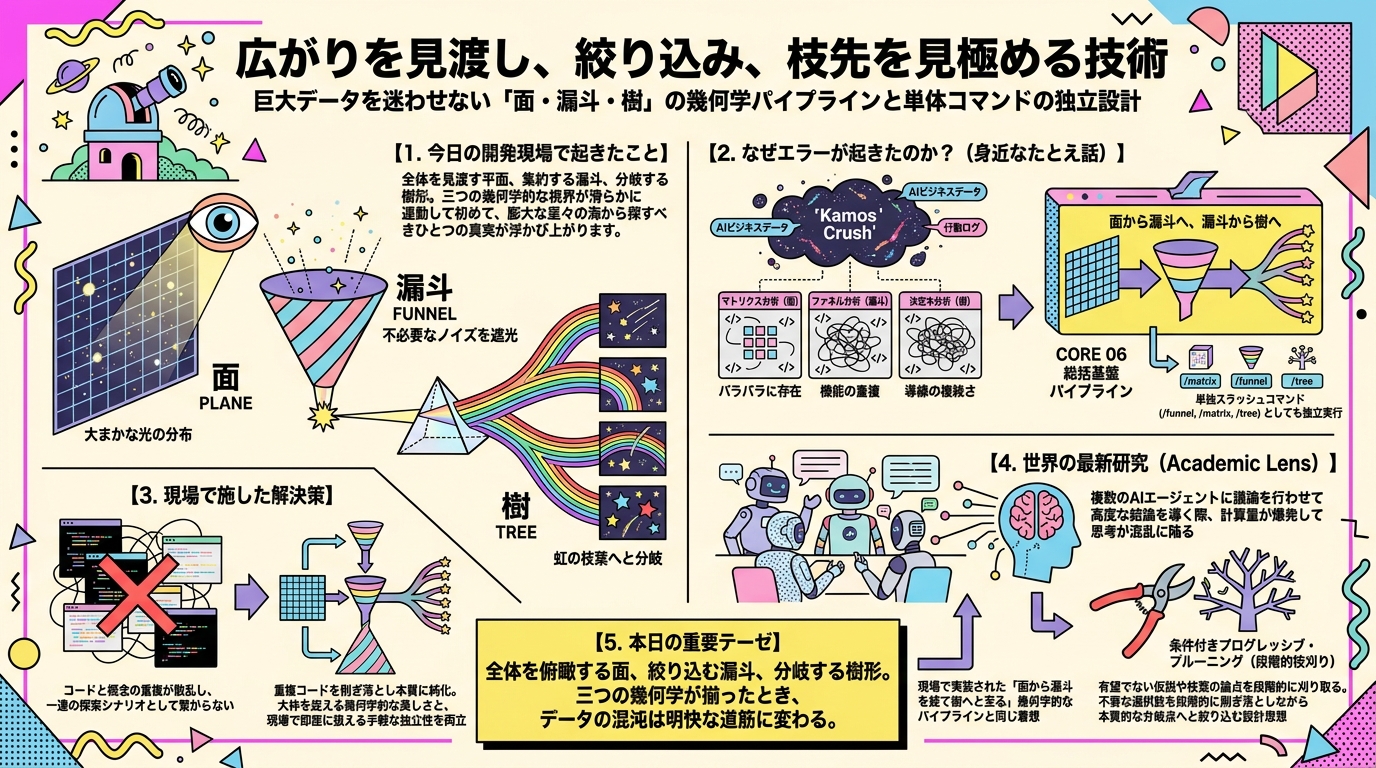
The Art of Surveying the Field, Narrowing Down, and Discerning the Branches
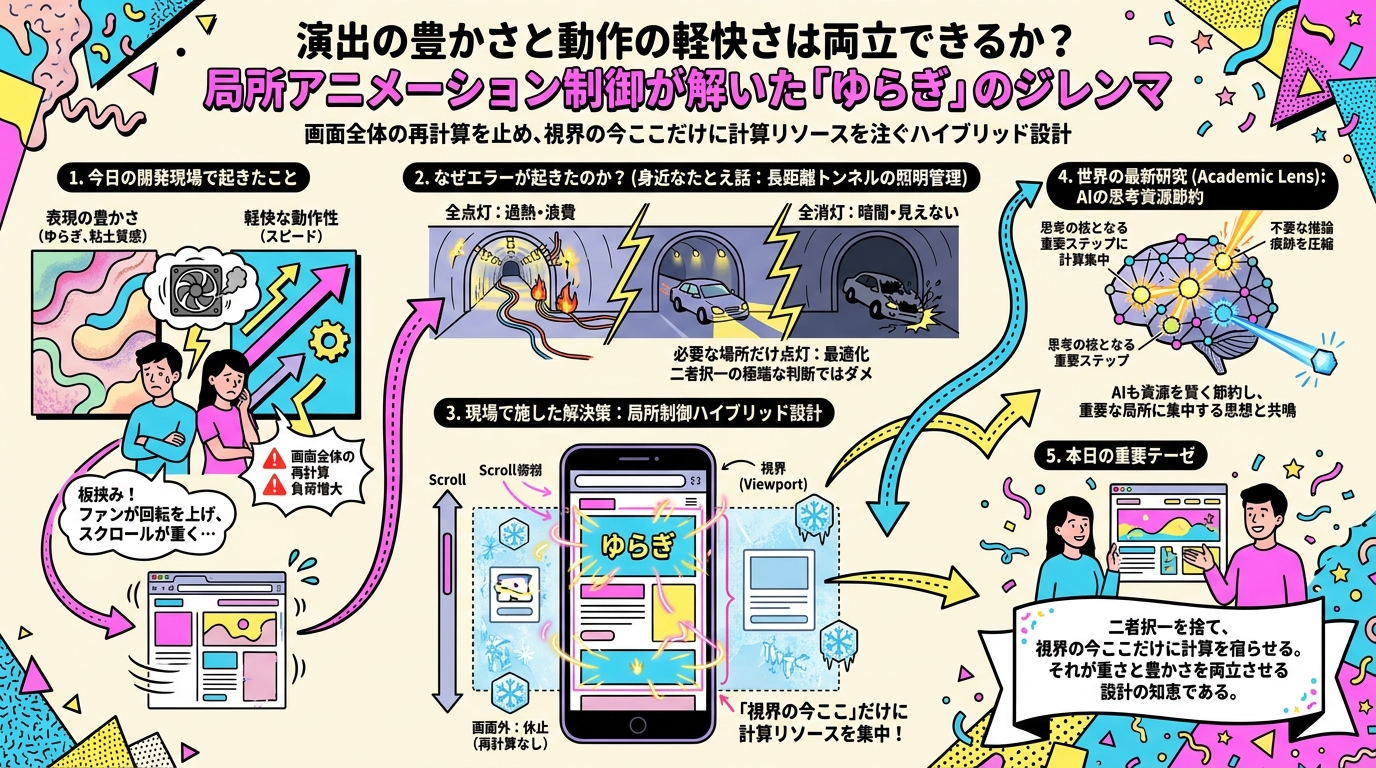
Can Expressive Richness Coexist with Nimble Performance? How Scoped Animation Control Solved the "Fluctuation" Dilemma
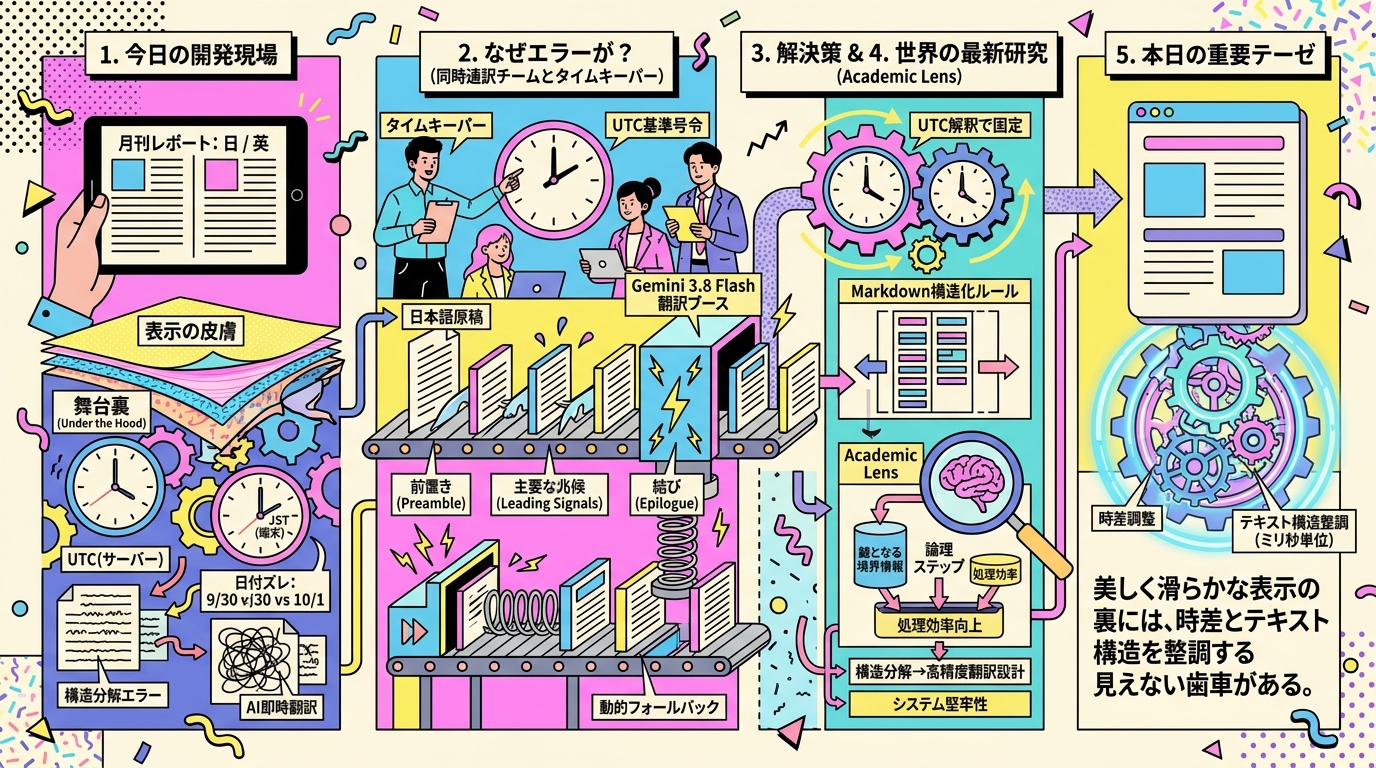
The Gears of Timezones and Translation Stirring Behind the Screen: An X-Ray of the Bilingual Automated Delivery Pipeline
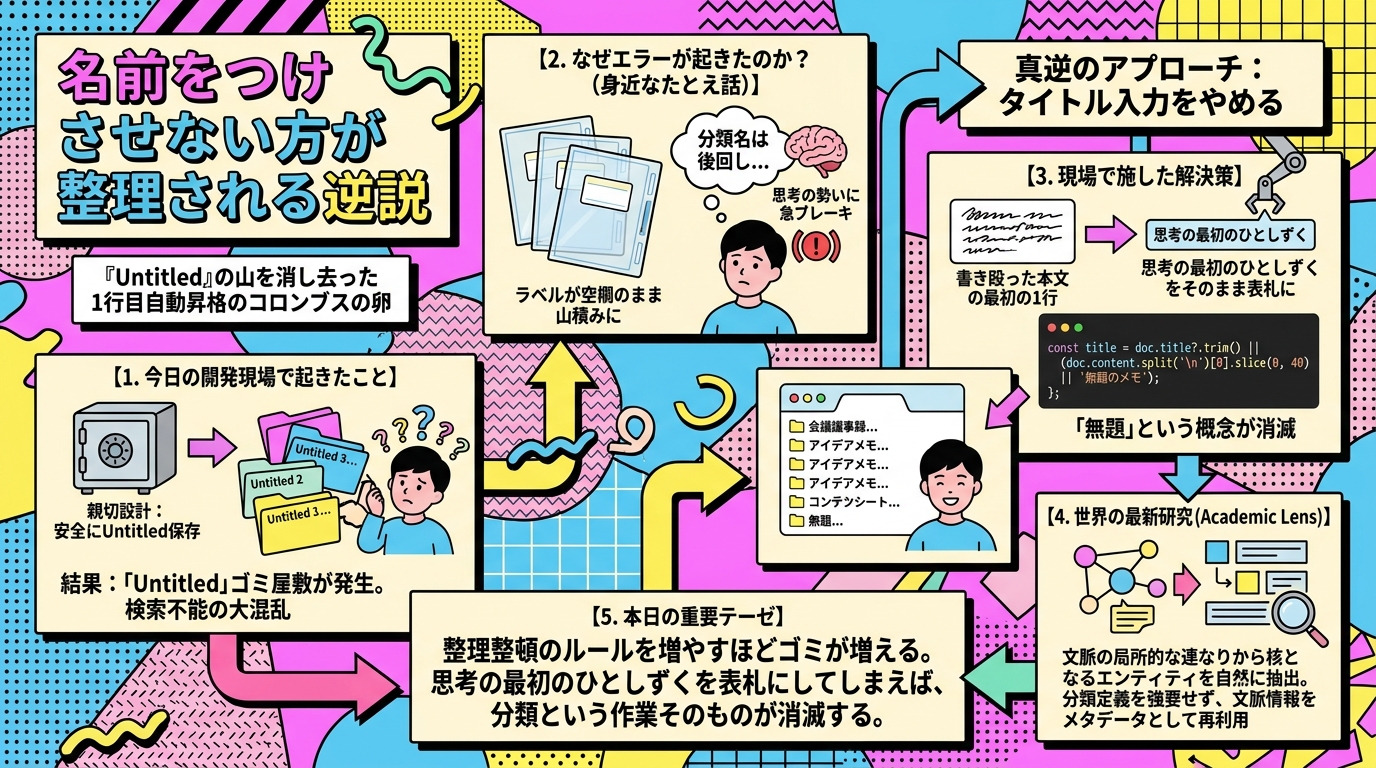
The Paradox of Order: Why Not Asking for Titles Actually Cleans the Clutter
Current
From Static Knowledge to the Pulse of the Last 30 Days: How Rolling Intelligence Keeps AI Memory in the Present Tense
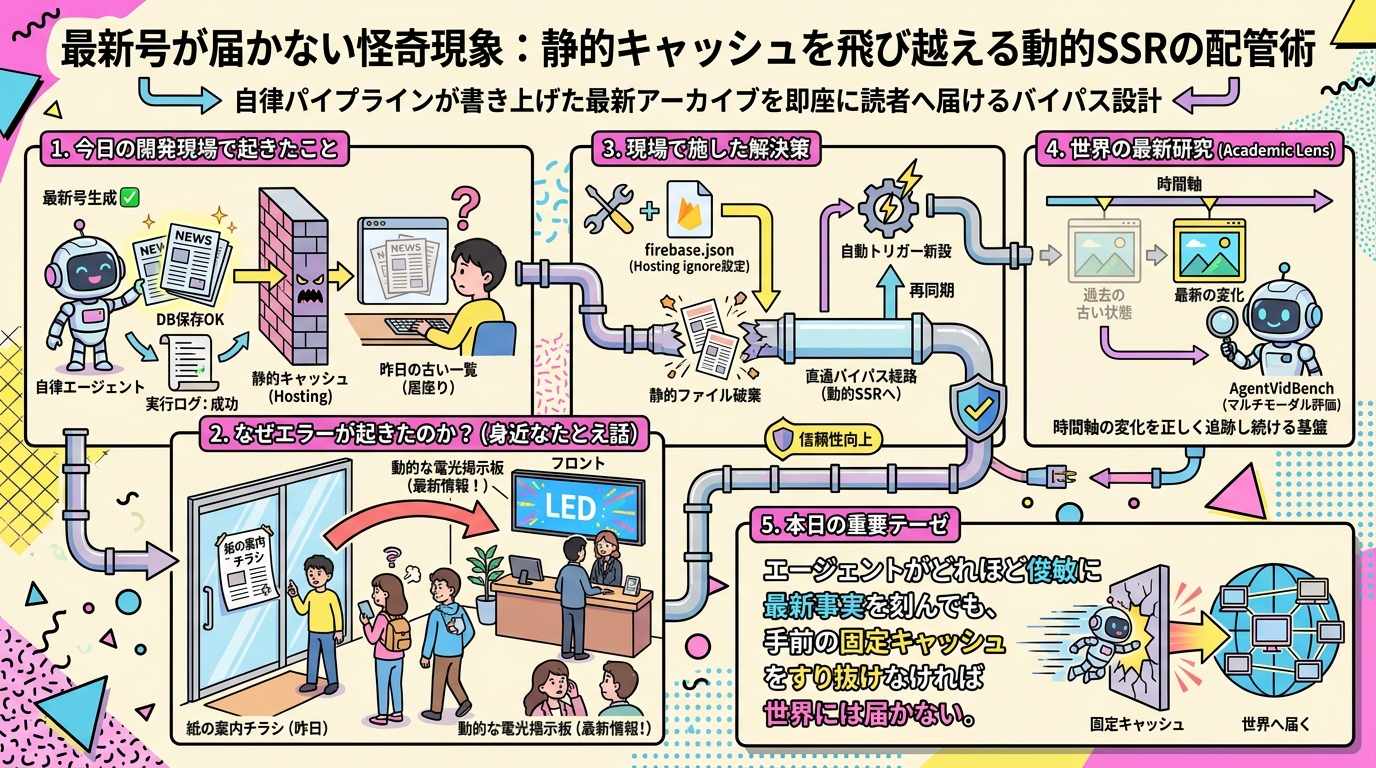
The Mystery of the Missing Issue: Plumbing Dynamic SSR to Bypass Static Cache
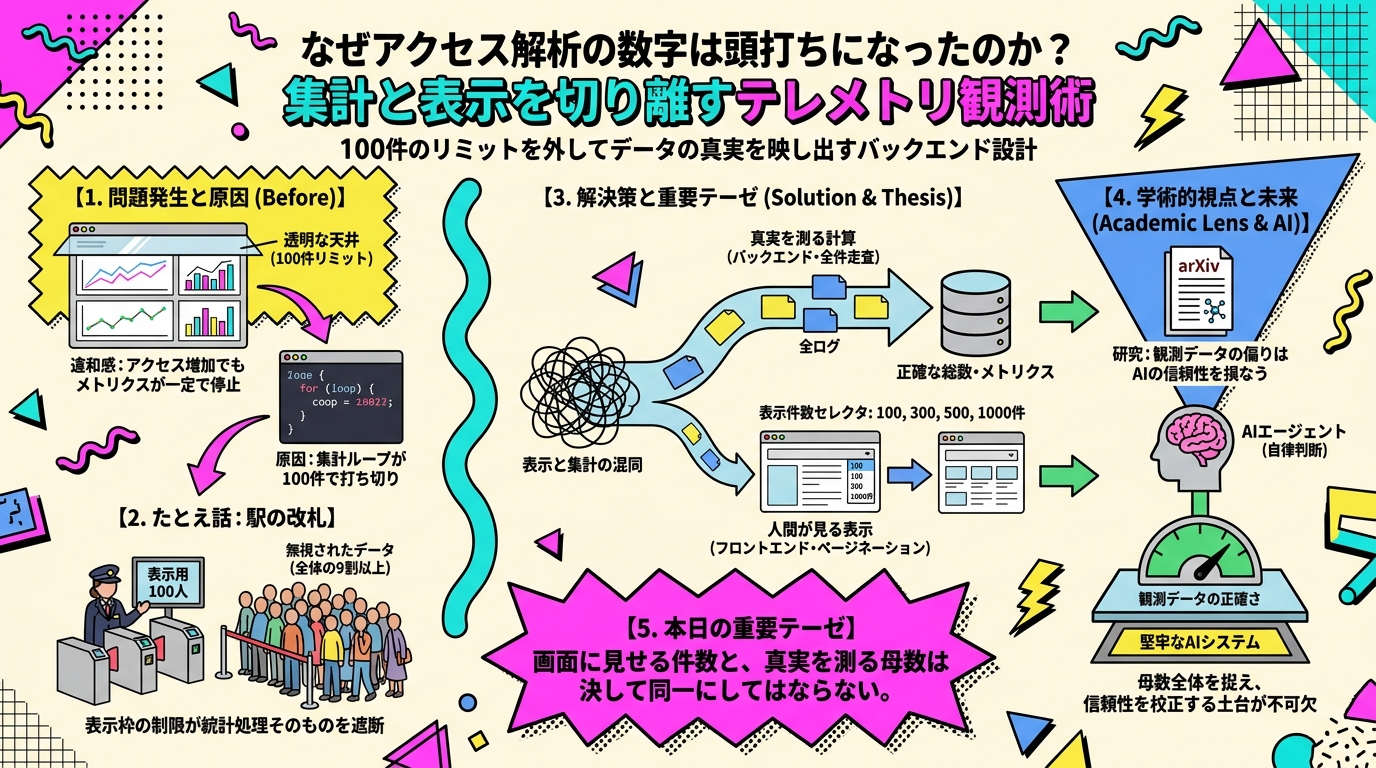
Why Did Access Analytics Hit an Artificial Ceiling? Telemetry Observability by Decoupling Aggregation from Display

Why Asking AI to Summarize 'Morning News' Always Misses the Mark
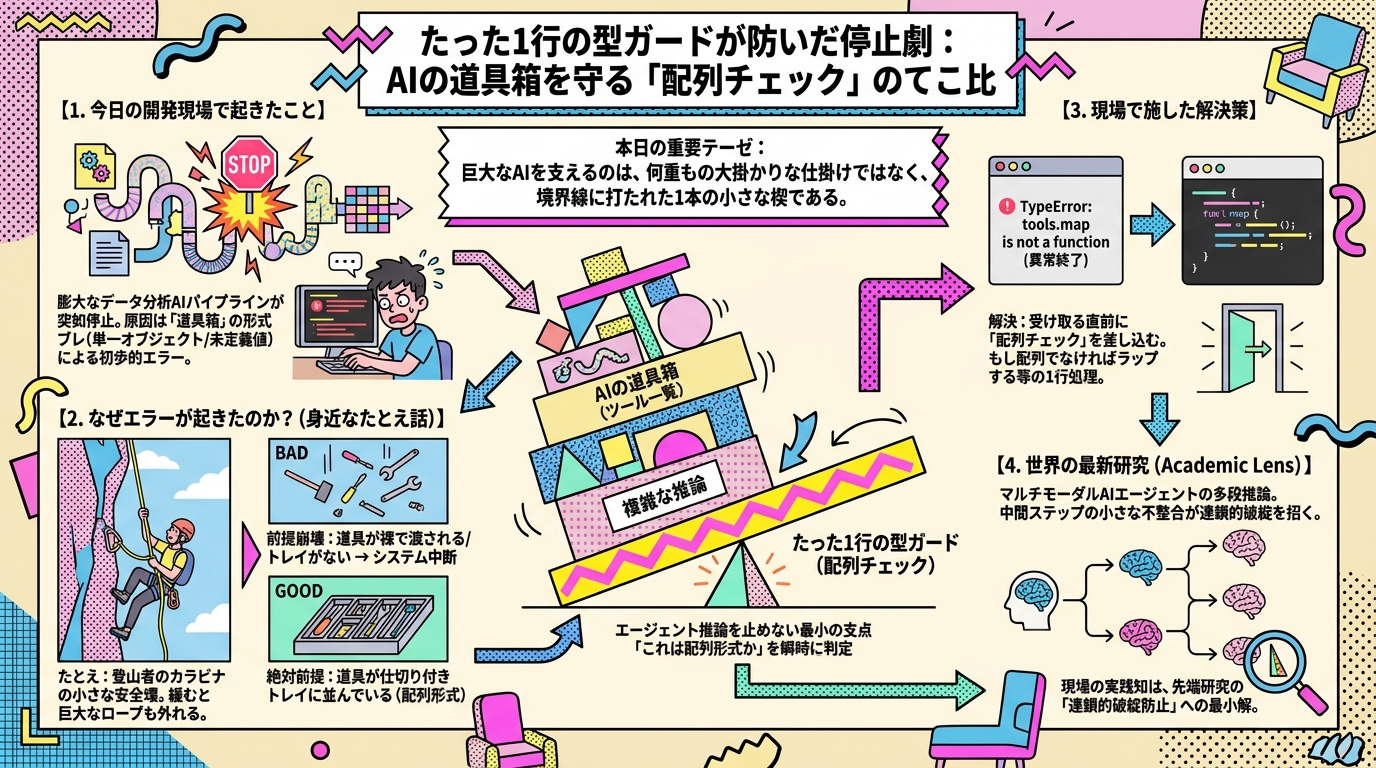
A Single-Line Type Guard That Prevented a Crash: The Leverage Ratio of 'Array Checks' in Protecting the AI's Toolbox