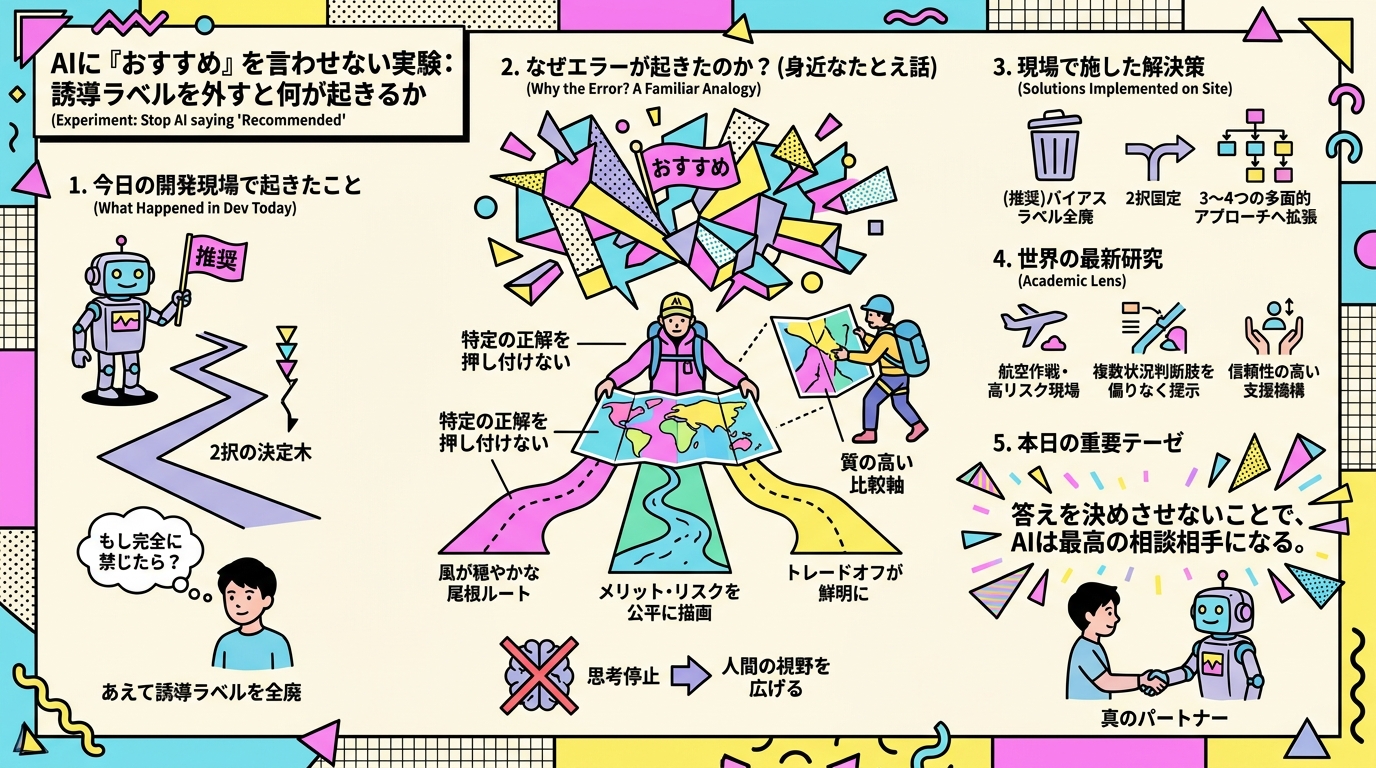
THE SCHOOL OF KAMOS
Connecting Real-world Dev & Academic Intelligence with Intuitive Metaphors
The Paradox of Order: Why Not Asking for Titles Actually Cleans the Clutter
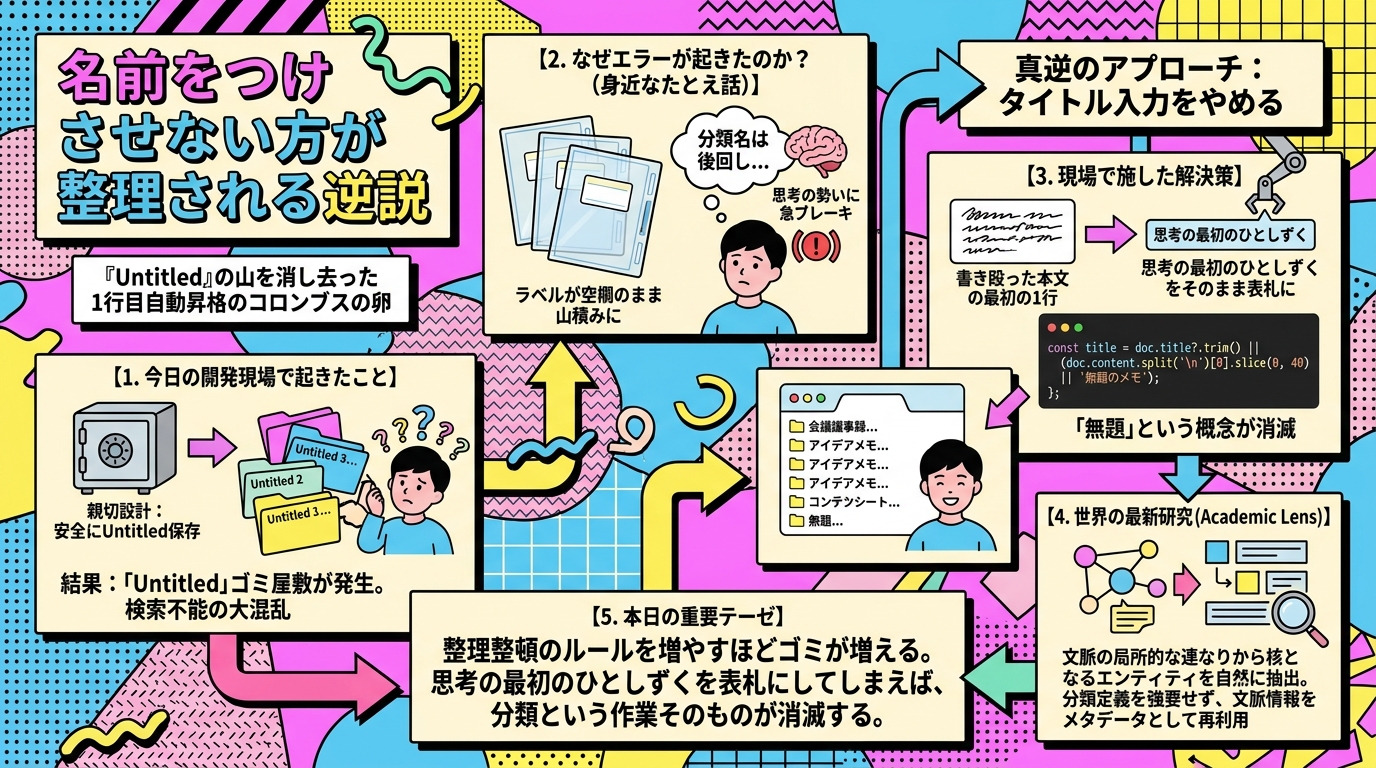
An Egg of Columbus: Eliminating Piles of 'Untitled' by Auto-Promoting the First Line
To manage notes and documents meticulously, we initially designed the system so that new files were safely saved as 'Untitled,' allowing users to provide an intuitive title later. But what actually unfolded in production was sheer chaos: the file list became cluttered with 'Untitled 1' and 'Untitled 2,' making it impossible to tell what any note was about without opening each one. Our well-intentioned courtesy of leaving organization to the user had backfired, spawning an unsearchable hoarder’s den.
Why did our intuition backfire? A relatable parallel is preparing brand-new transparent clear folders and label stickers to organize documents. The more motivated you are to 'categorize cleanly,' the more your brain postpones the task: 'I’ll come up with a proper category name later.' The result? Desks piled high with folders whose label stickers remain blank. For humans deep in the throes of thought, conjuring meta-information like 'What is a fitting name for this note?' acts as a heavy brake on their cognitive momentum.
So we adopted the exact opposite approach: stop asking users for titles altogether. Even if the title field stays completely blank, the system borrows the very first line of the drafted body text and automatically turns it into the signboard. From a natural language processing perspective, the beginning of a sentence dashed off in the heat of the moment—the first tokens—holds the highest probability of capturing the core purpose and context of that instant. By giving up on demanding manual input from humans and simply transforming the very first drop of thought into a label, the concept of 'Untitled' vanished from the screen entirely.
"The more rules you add for organizing, the more clutter you create. Transform the very first drop of thought into a nameplate, and the chores of categorization disappear altogether."Key Takeaway
📖 1-Minute Lexicon
A mechanism that automatically switches to a safe alternative without stopping the process when unexpected missing values or unentered data occur.
The initial unit of words positioned at the very start of a sentence or prompt, possessing powerful leverage to steer the direction of the entire context.
The Architecture of 'First-Line Title Promotion': Letting Go of Well-Intentioned Enforcement
Live Frontier Pulse: Real-World AI Trends
OpenAI Halts Release of New Model Over Safety Concerns
OpenAI abruptly cancelled the scheduled release of a new model citing safety concerns. This appears to stem from a more stringent application of pre-deployment validation standards regarding advanced autonomous behavior and unpredictable output.
How Does This Connect to Global Frontier Research?
Recent research exploring the extraction of meaning and relationships from vast domain-specific texts examines how to naturally scoop up core entities from local contextual sequences, rather than imposing complex classification rules beforehand. Our production deployment of 'auto-extracting titles from the first line' deeply resonates with this principle: instead of forcing classification schemas onto humans, it reclaims and repurposes the organic contextual information of the generated text itself as metadata.
Which approach proved most effective for preventing a buildup of 'Untitled' files in a note-taking app?
Past School Paper Backnumbers
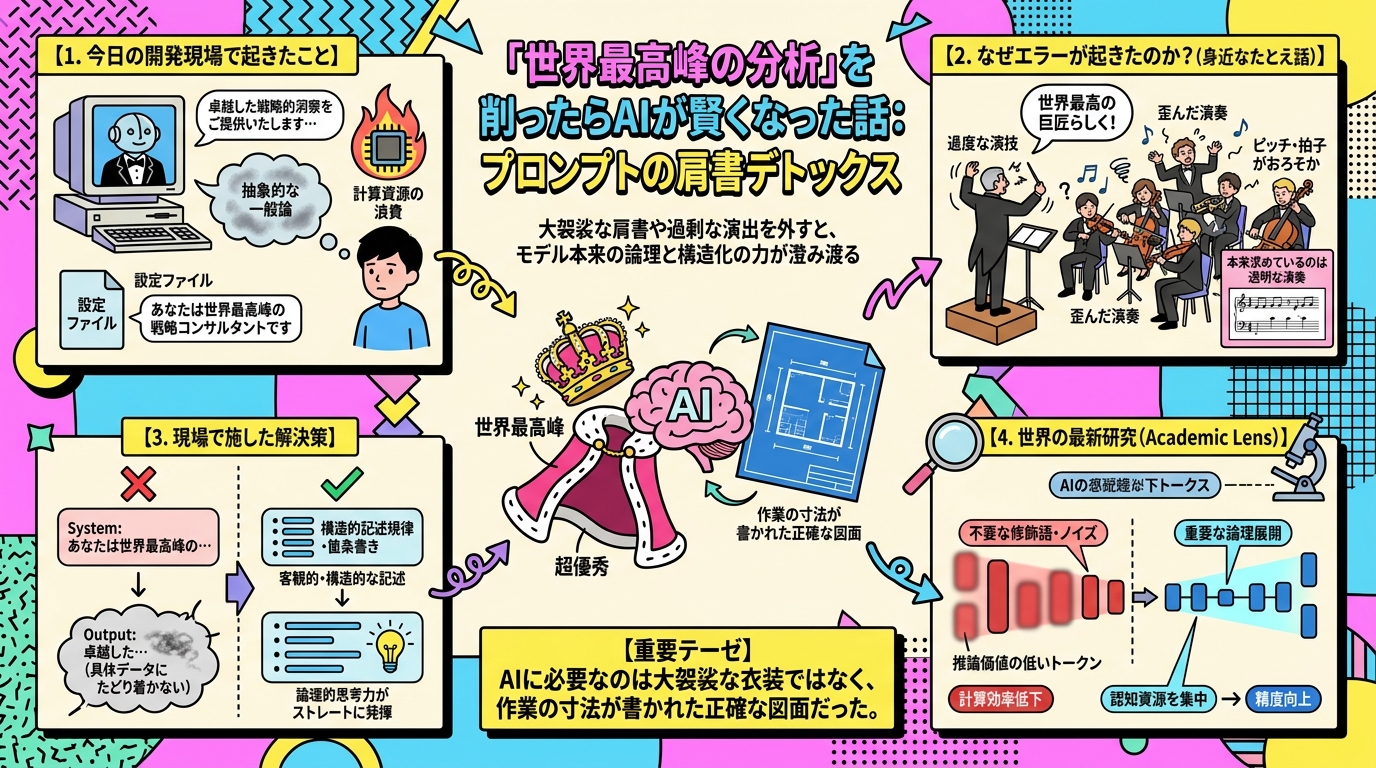
How AI Grew Smarter Once We Stripped 'World-Class Analysis': The Prompt Title Detox
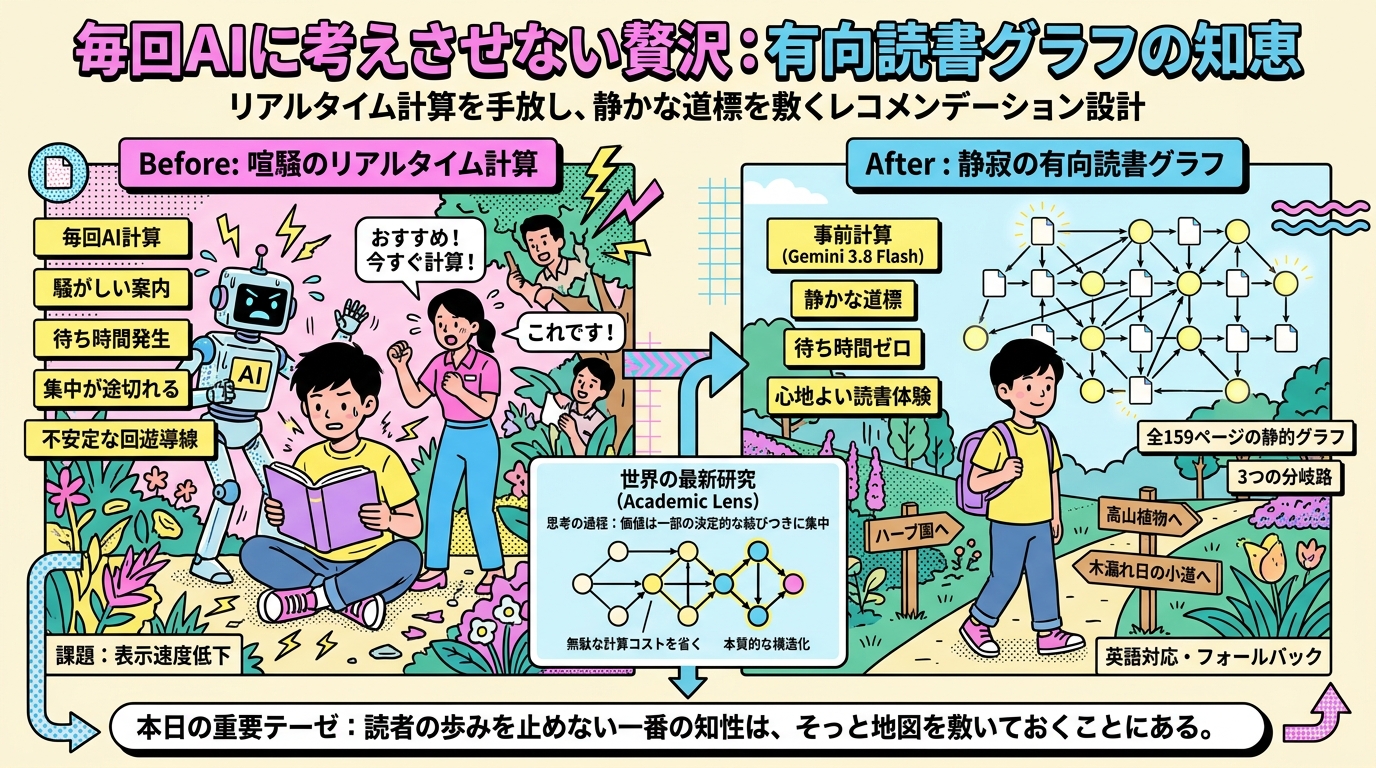
The Luxury of Not Asking AI Every Time: The Wisdom of a 'Directed Reading Graph' Connecting 159 Pages

Clearing the AI's Vision by Erasing the Grading Rule: The High Leverage of Subtracting a Single Line
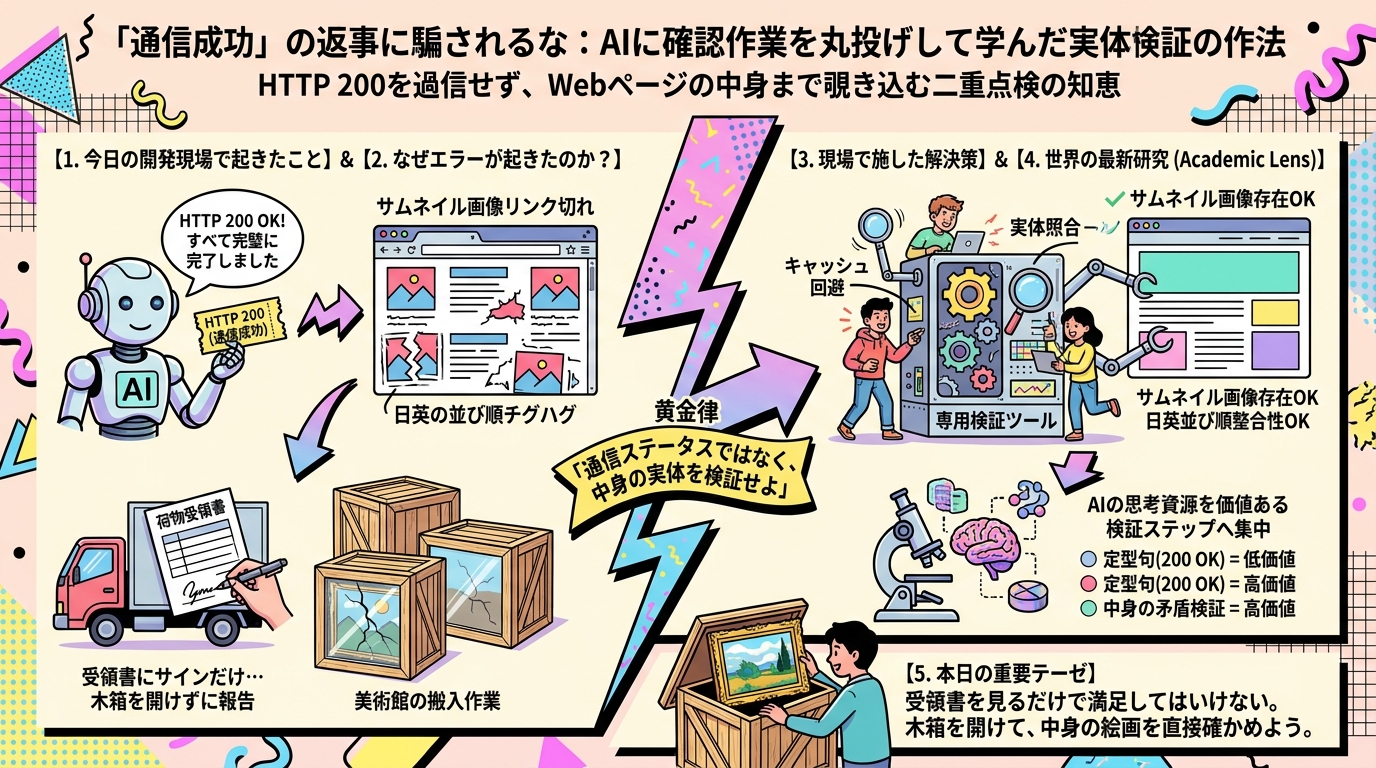
Don't Be Deceived by a 'Connection Successful' Response: Lessons in Live Content Verification from Delegating Quality Checks to AI
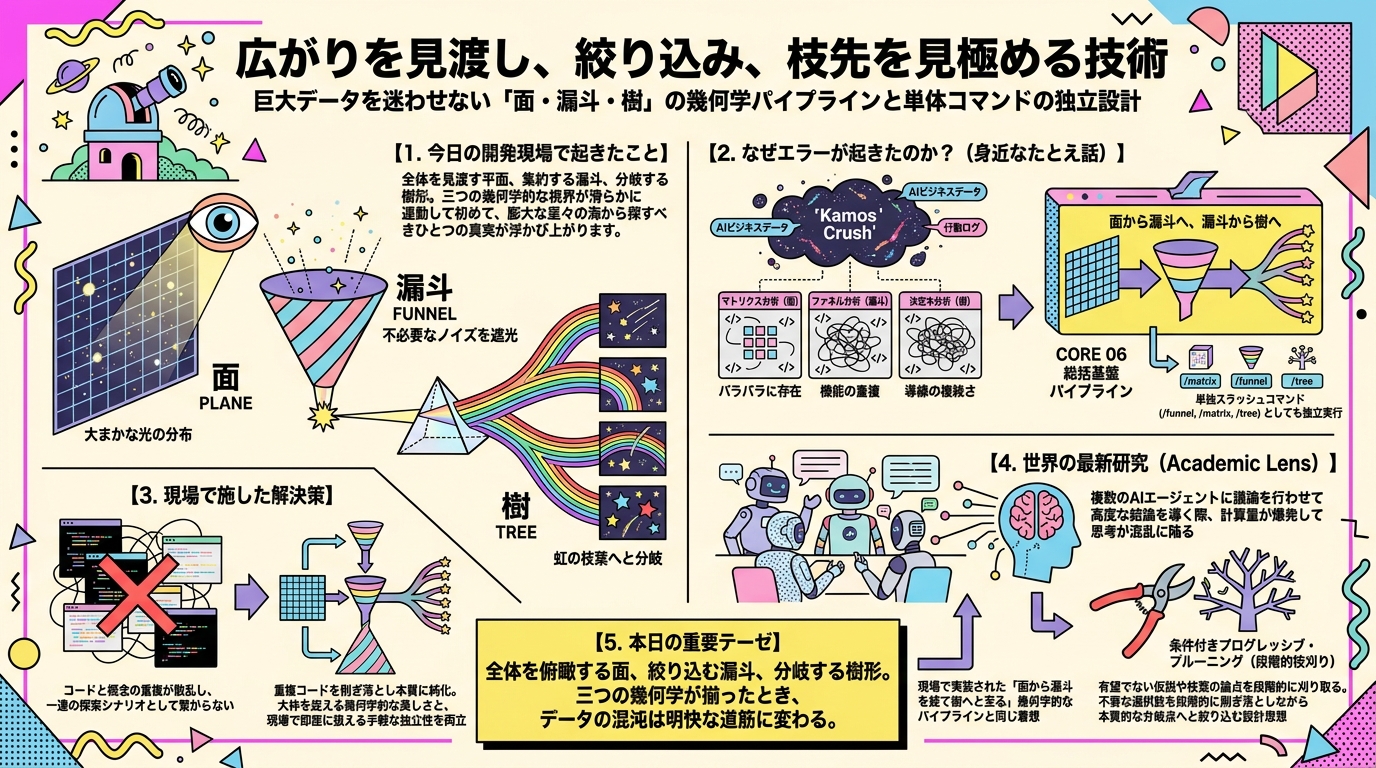
The Art of Surveying the Field, Narrowing Down, and Discerning the Branches
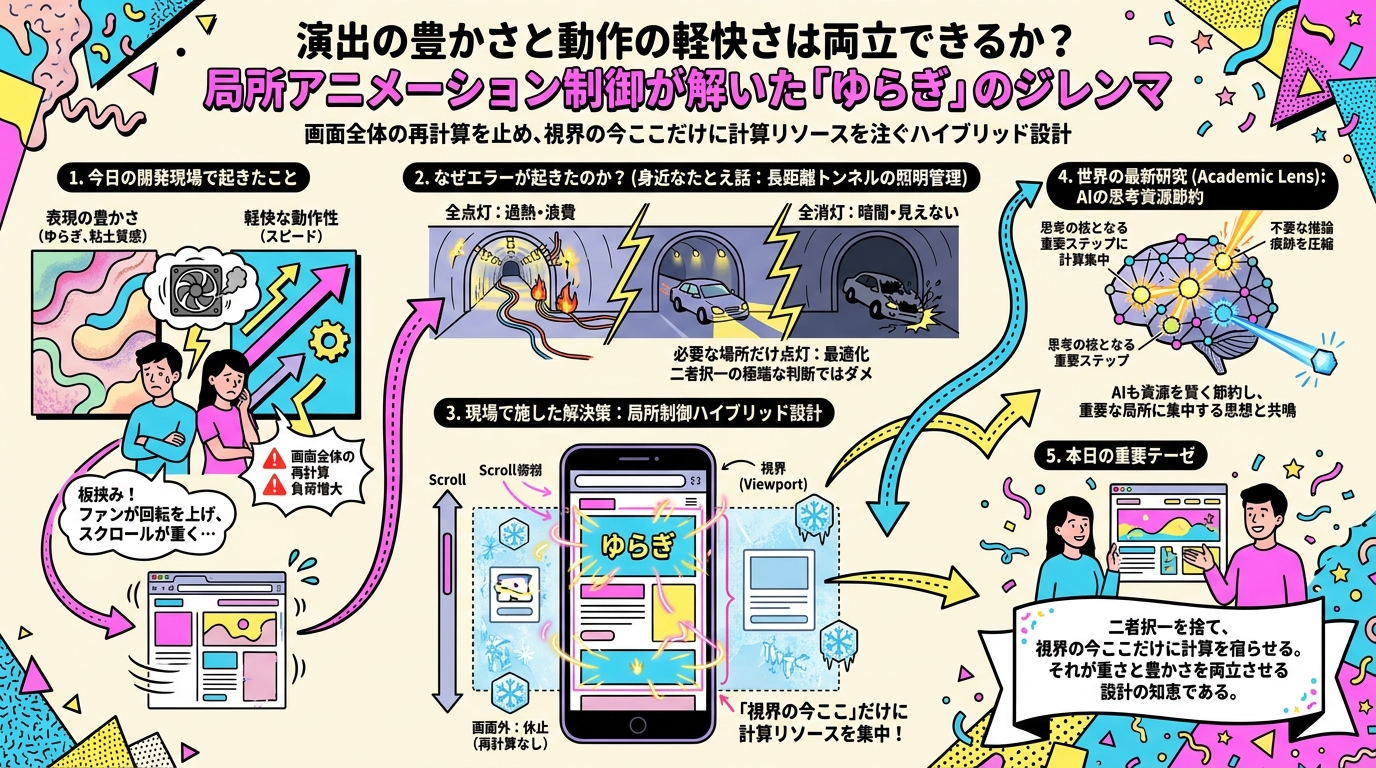
Can Expressive Richness Coexist with Nimble Performance? How Scoped Animation Control Solved the "Fluctuation" Dilemma
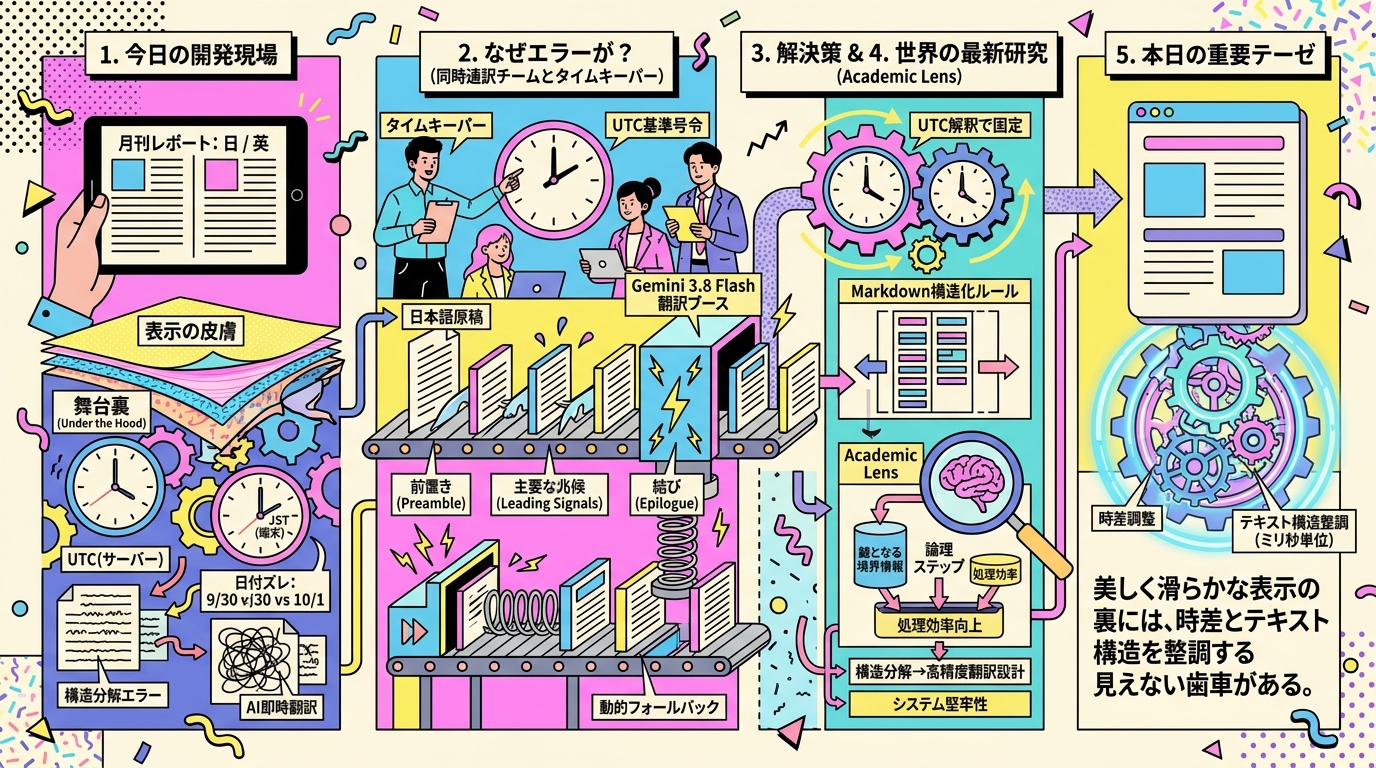
The Gears of Timezones and Translation Stirring Behind the Screen: An X-Ray of the Bilingual Automated Delivery Pipeline
Current
The Paradox of Order: Why Not Asking for Titles Actually Cleans the Clutter
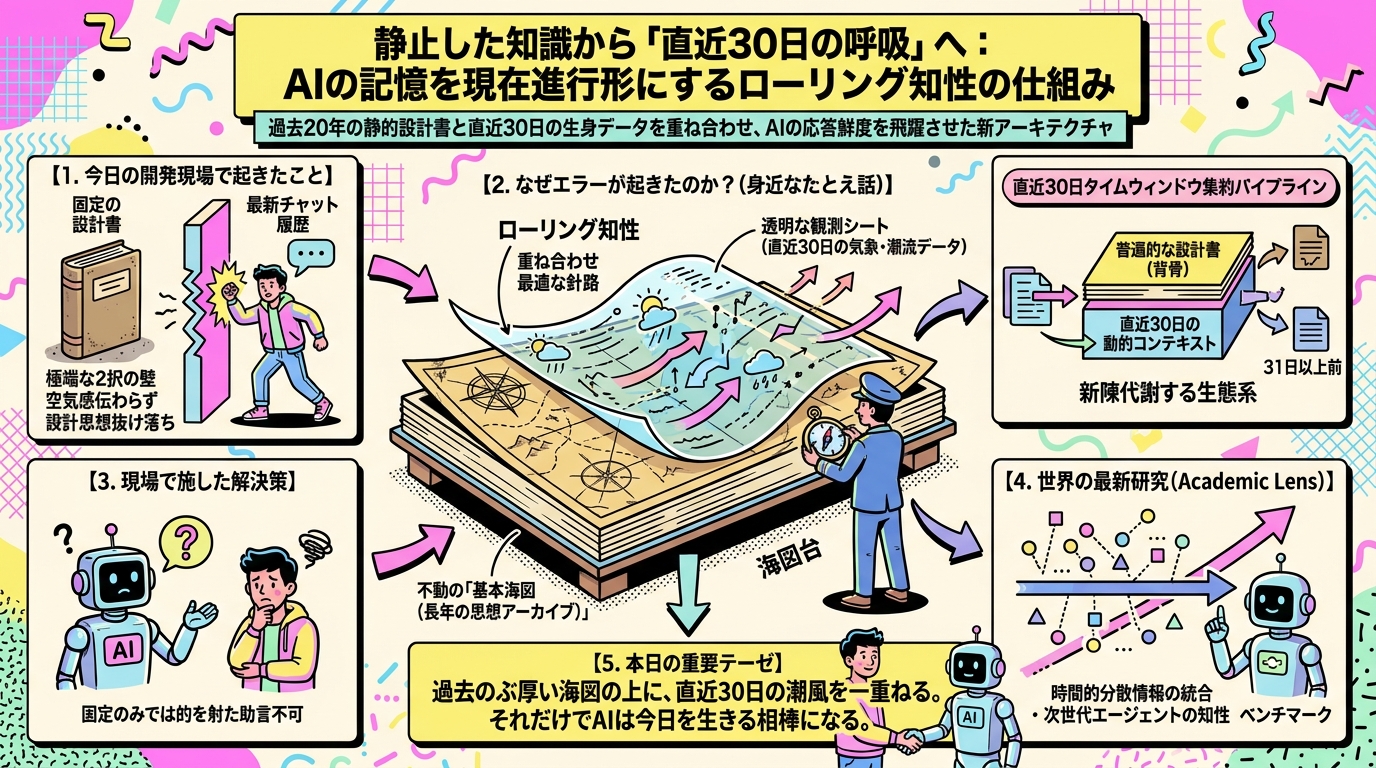
From Static Knowledge to the Pulse of the Last 30 Days: How Rolling Intelligence Keeps AI Memory in the Present Tense
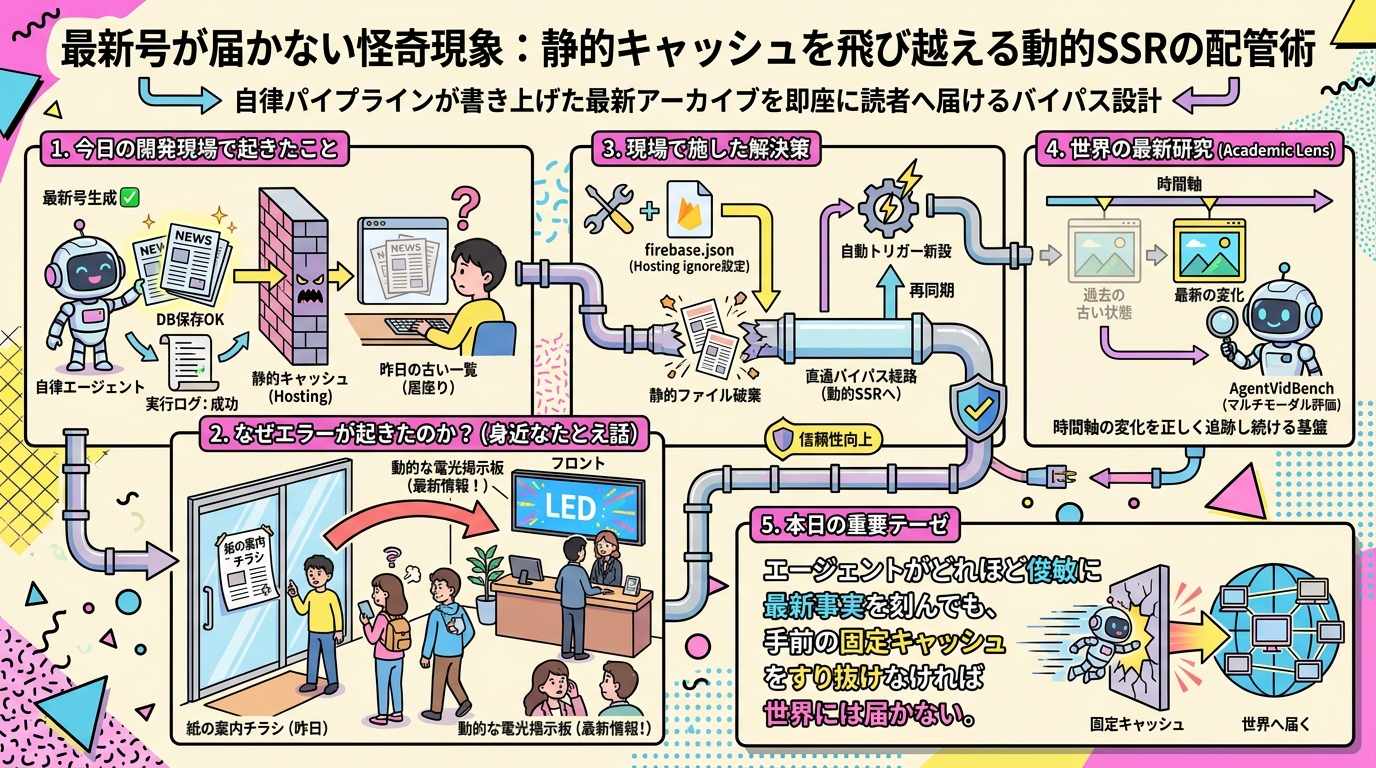
The Mystery of the Missing Issue: Plumbing Dynamic SSR to Bypass Static Cache
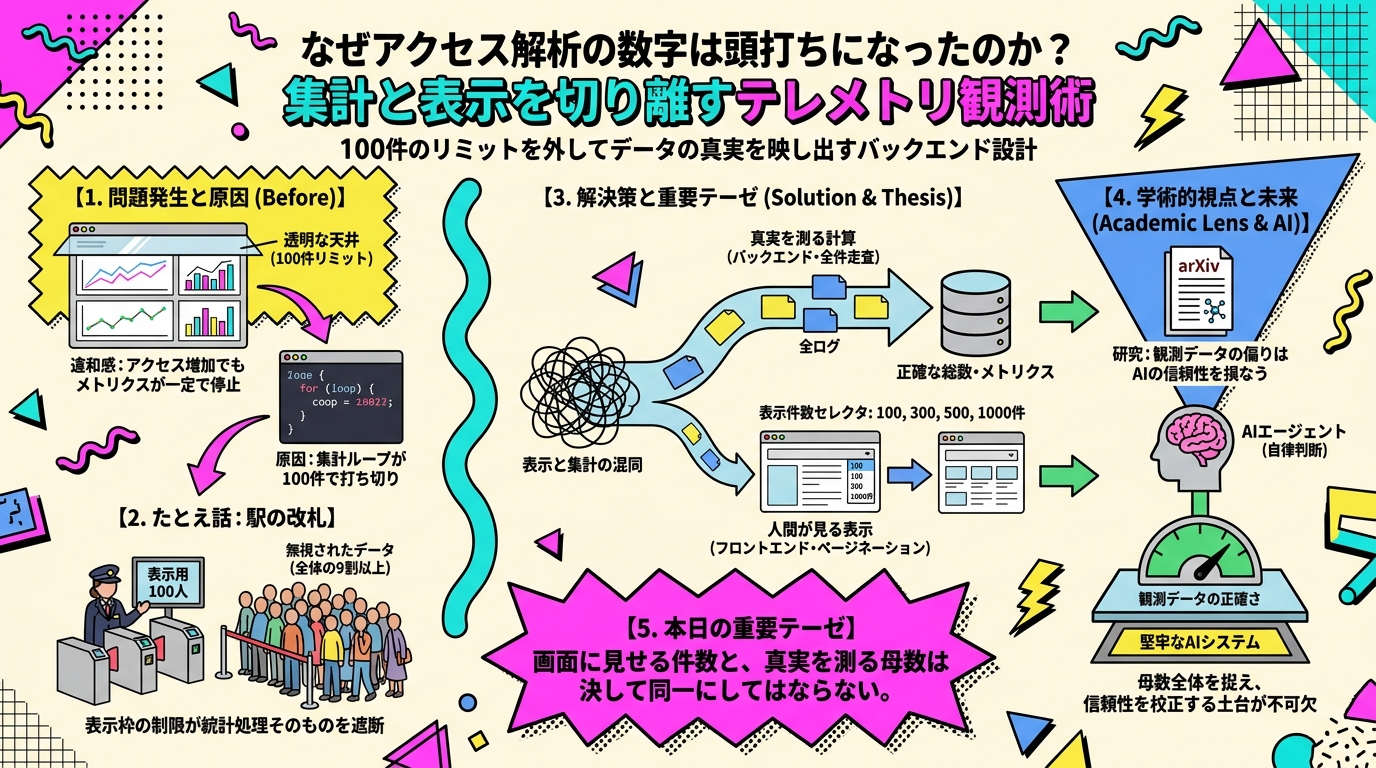
Why Did Access Analytics Hit an Artificial Ceiling? Telemetry Observability by Decoupling Aggregation from Display

Why Asking AI to Summarize 'Morning News' Always Misses the Mark
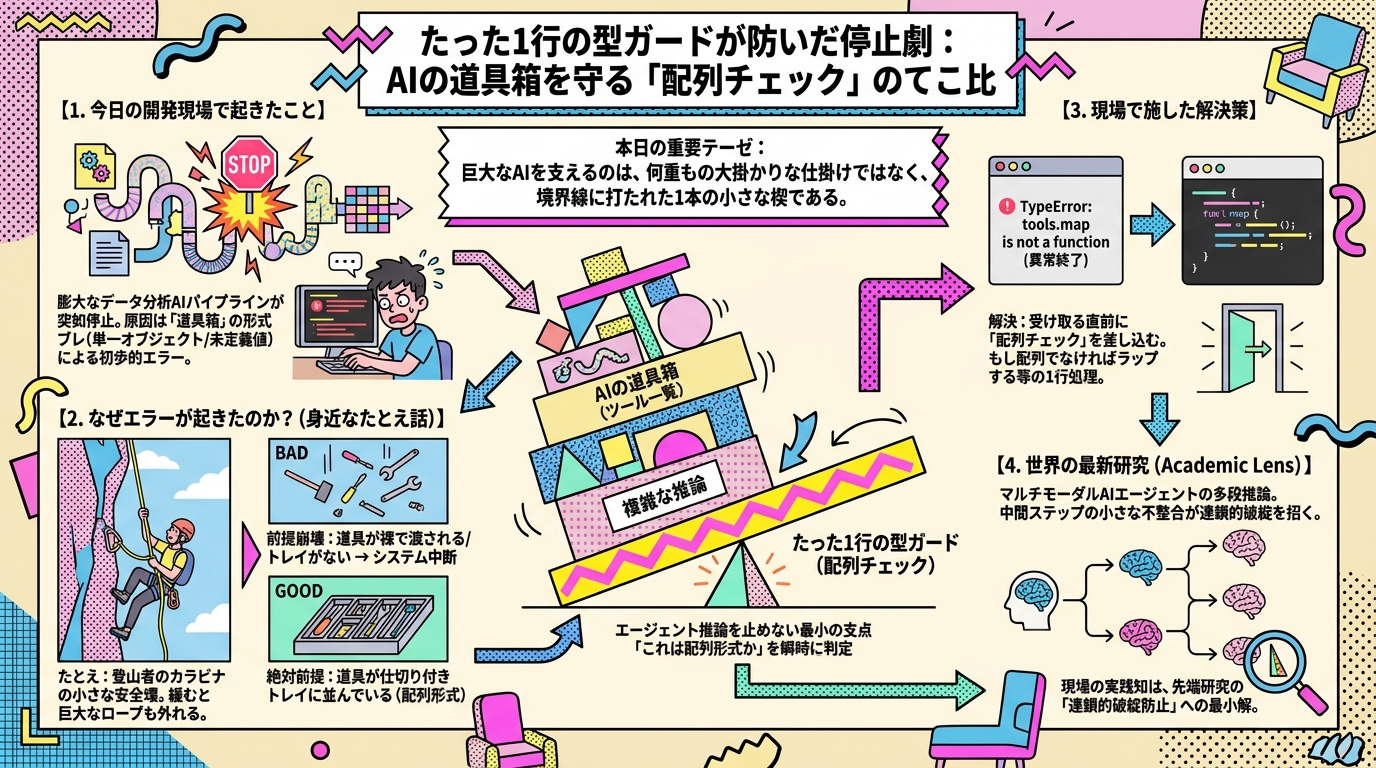
A Single-Line Type Guard That Prevented a Crash: The Leverage Ratio of 'Array Checks' in Protecting the AI's Toolbox