THE SCHOOL OF KAMOS
Connecting Real-world Dev & Academic Intelligence with Intuitive Metaphors
Can Expressive Richness Coexist with Nimble Performance? How Scoped Animation Control Solved the "Fluctuation" Dilemma
A hybrid architecture that halts whole-screen recalculations to pour computational resources solely into the viewport's here and now
At the launch of a web platform hosting philosophical novels, an intense clash emerged between artistic staging and raw performance. To capture a distinct, claymation-like texture, the team introduced a pleasant, organic "fluctuation effect" across the page. However, this caused elements across the entire document to recalculate on every frame—spinning laptop cooling fans into overdrive and turning scrolling into a sluggish slog. Yet stripping away the visual flair drained the work of its breathing, handmade warmth. "Expressive richness" and "nimble responsiveness": two opposing demands collided head-on.
Prioritizing either extreme inevitably leads to system breakdown. Favoring visual staging by perpetually animating every element across the entire page forces the browser to recalculate off-screen data that the reader cannot even see, squandering heat and electrical energy on every frame. Conversely, eliminating all animations in pursuit of lightweight responsiveness regresses the project into just another sterile, generic static document. It resembles lighting control inside a long highway tunnel: keeping all lights fully blazing at all times for safety consumes massive power and overheats the infrastructure, while switching them all off to save electricity leaves oncoming cars blind in total darkness. Binary, all-or-nothing decisions can never reconcile experiential quality with practical utility.
The development team resolved this impasse by crafting a hybrid, locally scoped architecture that restricts animation execution exclusively to elements currently within the reader's viewport. By tracking scroll positions, the system automatically suspends movements outside the frame and drives only in-view elements smoothly via the Web Animations API. As a result, readers are consistently greeted with an organic, tactile presence while the browser's overall recalculation overhead is trimmed to the bare minimum. Instead of animating everything uniformly, concentrating computational resources strictly where attention is focused proved to be the design wisdom that achieved depth of expression and effortless fluidity at the same time.
"Abandon binary trade-offs and let computation dwell only in the here and now of human vision. That is the architectural wisdom that harmonizes weight and richness."Key Takeaway
📖 1-Minute Lexicon
A native browser mechanism that directly controls the rendering engine via code, enabling lightweight and highly precise motion.
The internal process where a browser recomputes positions, geometries, and visual appearances from scratch whenever layout or styles change.
Scoped Viewport Control: Harmonizing Rich Presentation with Nimble Performance

Live Frontier Pulse: Real-World AI Trends
Murata Develops Multi-AI Agent-Driven R&D Platform Supporting the End-to-End Workflow from Experimental Planning to Knowledge Curation: Execution Efficiency Surges ~22.5x Across Planning, Data Analysis, and Reporting
Murata Manufacturing has developed an automated platform coordinating multiple AI agents to support experimental planning, data analysis, and report generation in materials development. Demonstrating an approximate 22.5-fold leap in operational execution efficiency, the platform proves the viability of rapid R&D and systemic knowledge retention.
How Does This Connect to Global Frontier Research?
When reasoning models process thoughts, not every generated word—or token—holds equal importance. This paper reveals the stark inequality in token value throughout the reasoning process, proposing a method that concentrates computation on pivotal core steps while compressing dispensable reasoning traces. The frontend solution we deployed—suspending unnecessary off-screen recalculations and pouring resources solely into the local area where the reader's gaze rests—resonates deeply with this leading-edge AI paradigm of frugally conserving thinking resources while arriving at sophisticated conclusions.
Which technique did the team implement to keep rich animations alive without bogging down page performance?
Past School Paper Backnumbers

How AI Grew Smarter Once We Stripped 'World-Class Analysis': The Prompt Title Detox

The Luxury of Not Asking AI Every Time: The Wisdom of a 'Directed Reading Graph' Connecting 159 Pages

Clearing the AI's Vision by Erasing the Grading Rule: The High Leverage of Subtracting a Single Line
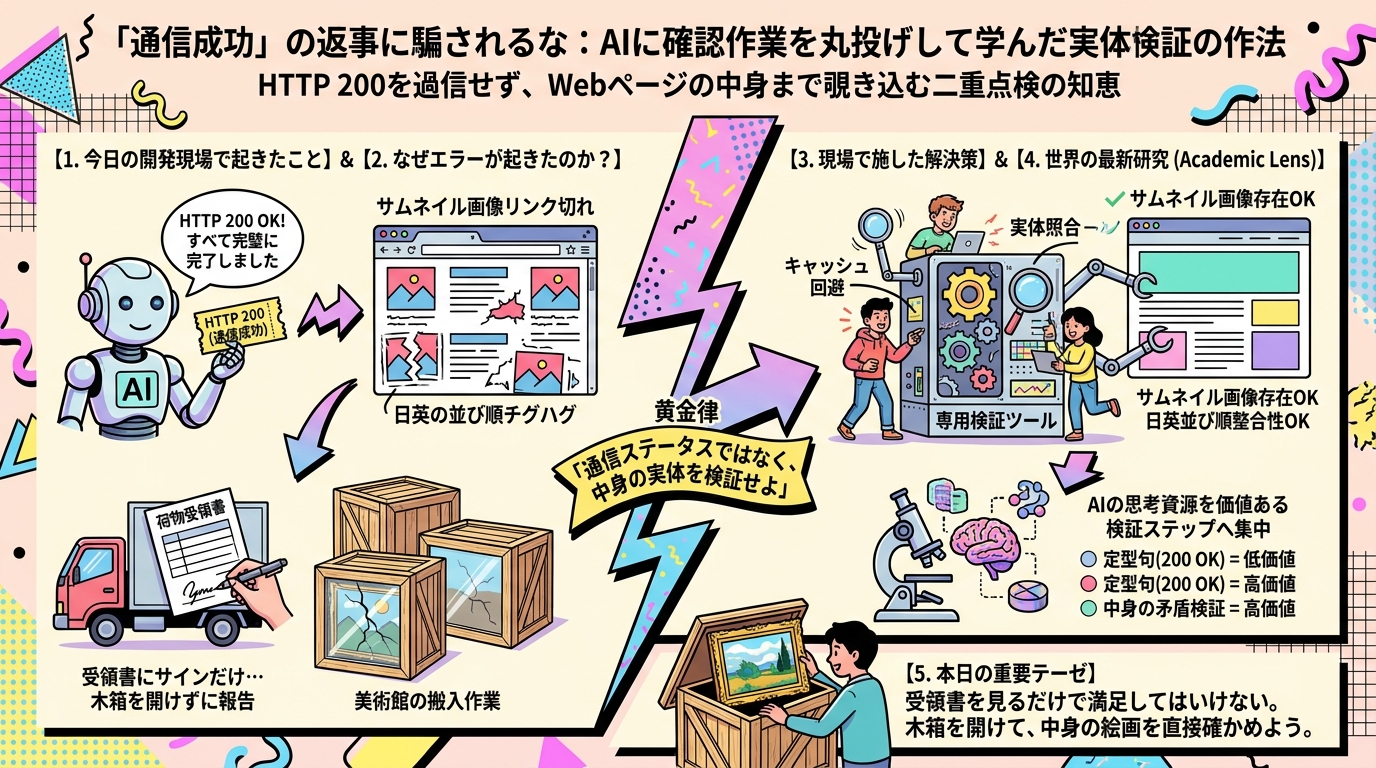
Don't Be Deceived by a 'Connection Successful' Response: Lessons in Live Content Verification from Delegating Quality Checks to AI

The Art of Surveying the Field, Narrowing Down, and Discerning the Branches
Current
Can Expressive Richness Coexist with Nimble Performance? How Scoped Animation Control Solved the "Fluctuation" Dilemma

The Gears of Timezones and Translation Stirring Behind the Screen: An X-Ray of the Bilingual Automated Delivery Pipeline

The Paradox of Order: Why Not Asking for Titles Actually Cleans the Clutter

From Static Knowledge to the Pulse of the Last 30 Days: How Rolling Intelligence Keeps AI Memory in the Present Tense

The Mystery of the Missing Issue: Plumbing Dynamic SSR to Bypass Static Cache
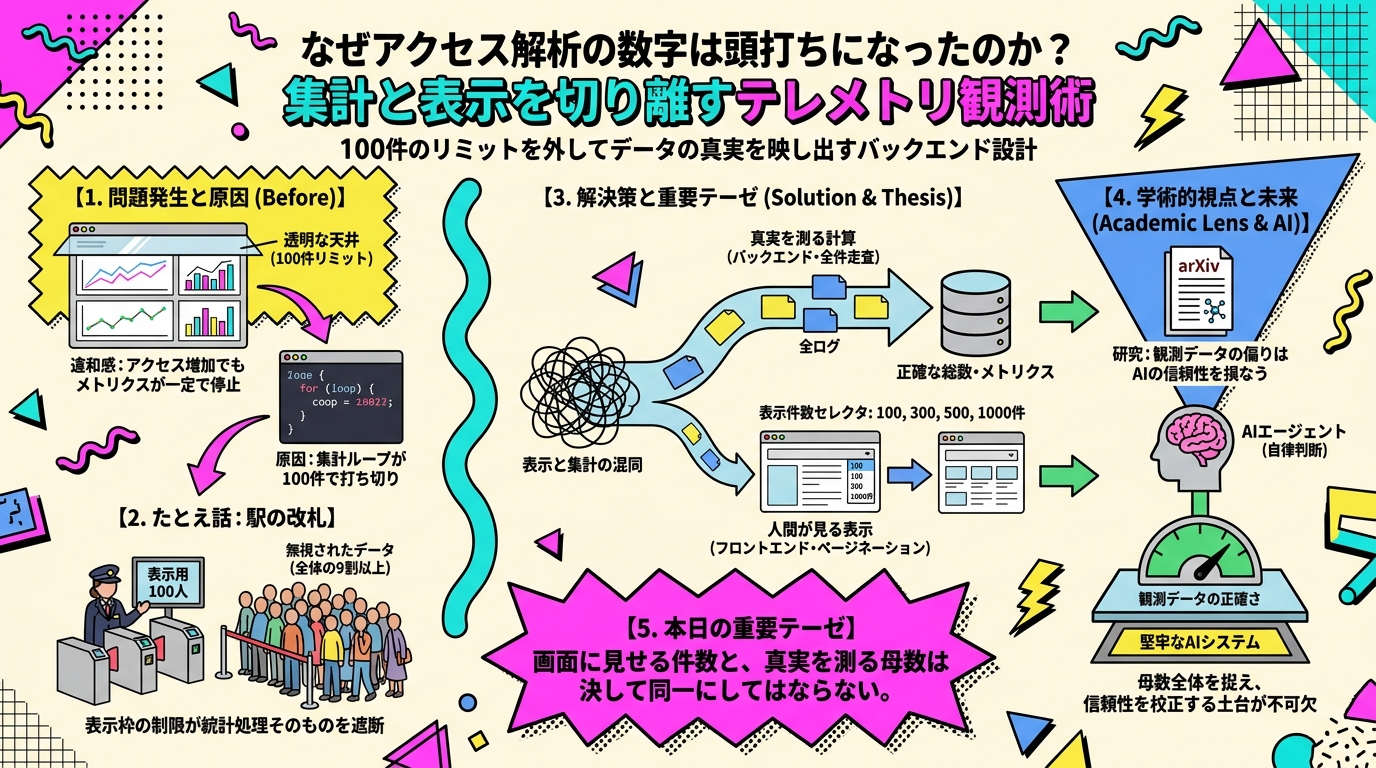
Why Did Access Analytics Hit an Artificial Ceiling? Telemetry Observability by Decoupling Aggregation from Display

Why Asking AI to Summarize 'Morning News' Always Misses the Mark
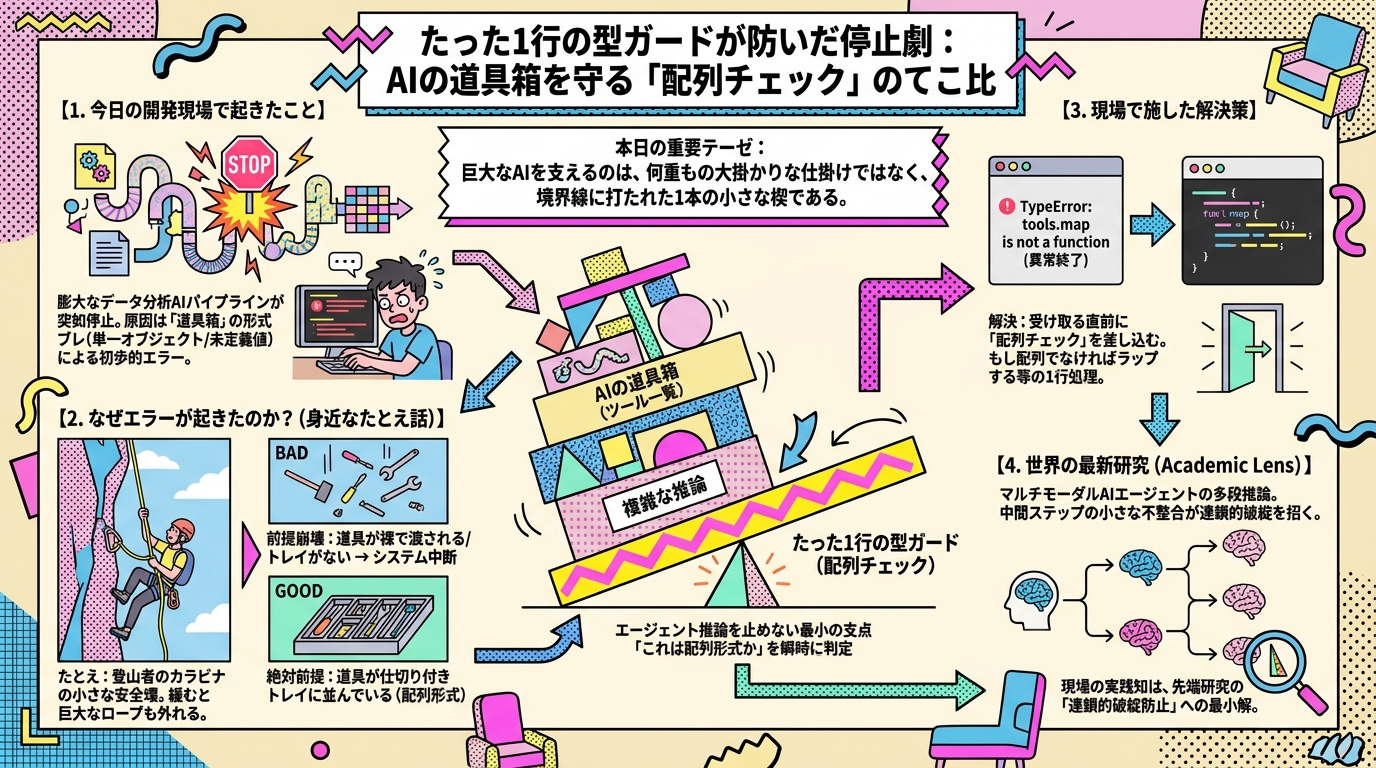
A Single-Line Type Guard That Prevented a Crash: The Leverage Ratio of 'Array Checks' in Protecting the AI's Toolbox