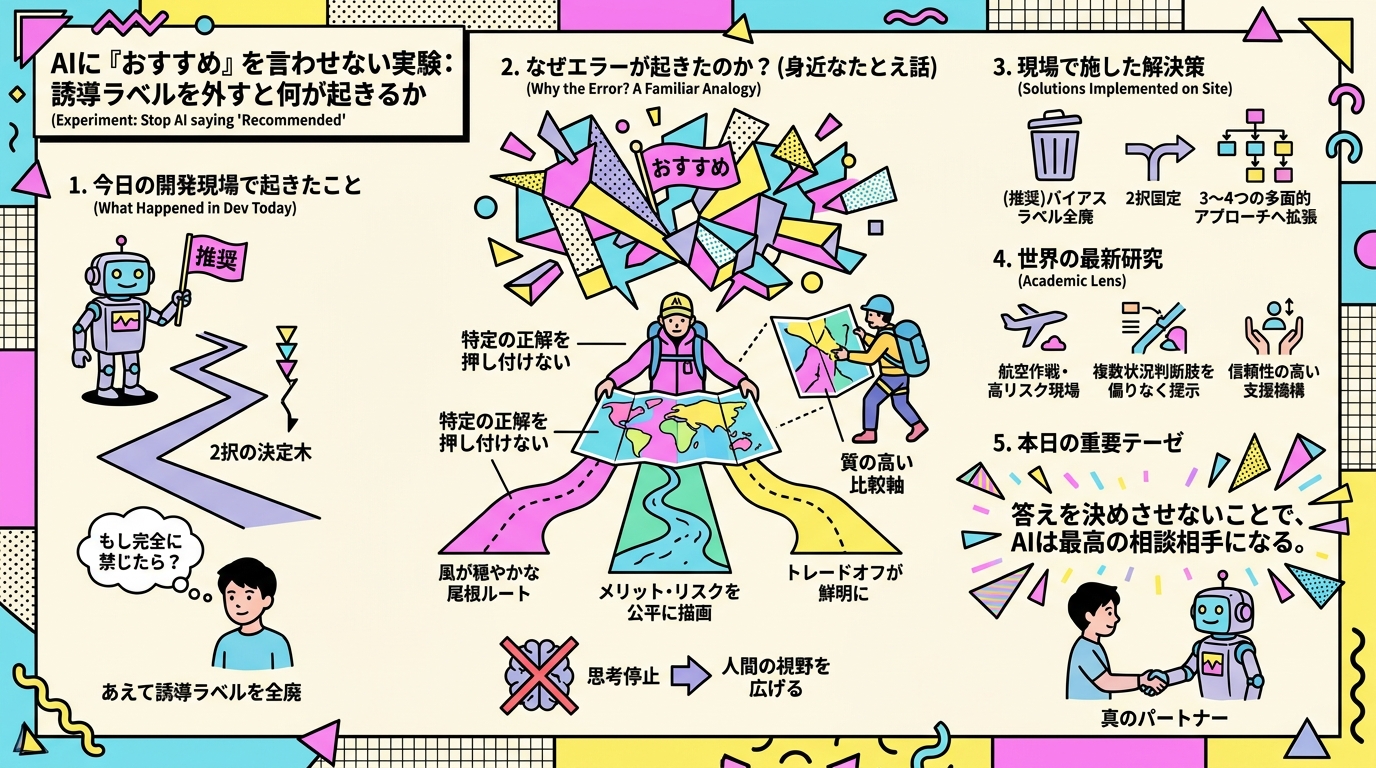
THE SCHOOL OF KAMOS
Connecting Real-world Dev & Academic Intelligence with Intuitive Metaphors
The Art of Surveying the Field, Narrowing Down, and Discerning the Branches
The "Surface, Funnel, Tree" Geometric Pipeline and Decoupled Command Architecture That Keeps Big Data Grounded
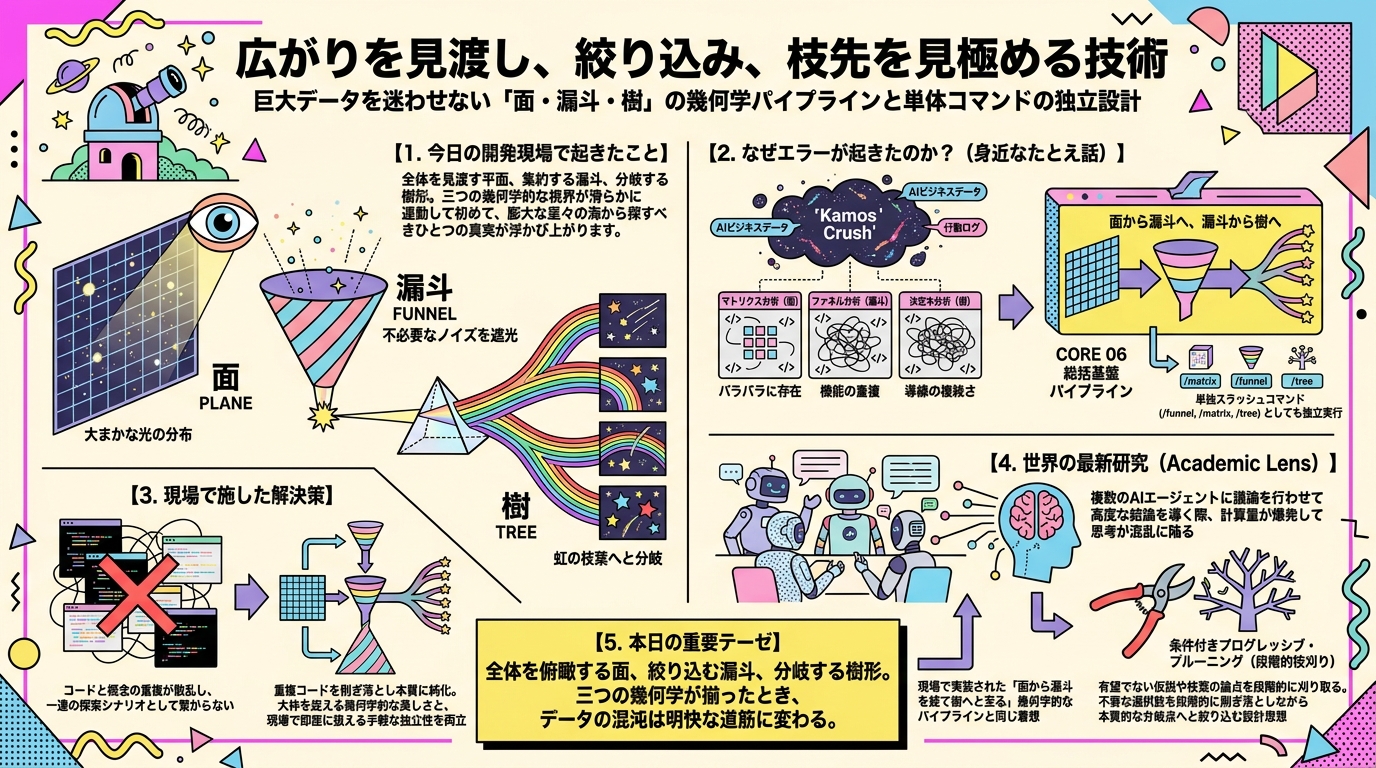
In an astronomical observatory searching for unknown celestial bodies in the depths of the night sky, one never begins by setting the telescope to maximum magnification right away. First, observers divide the overarching sky with a horizontal and vertical coordinate grid to map the general distribution of light. Next, they block out extraneous noise with a light-shield cone, concentrating only the target rays like a funnel. Finally, a prism disperses the light into branches of a rainbow spectrum to determine the star's chemical composition. The surface that surveys the whole, the funnel that converges, and the tree that branches—only when these three geometric vistas smoothly align does a single truth emerge from the boundless ocean of stars.
This observatory architecture mirrors the exact redesign deployed today in our analytical foundation, "Kamos Crush." The business data and behavioral logs processed by AI resemble a vast, dark, and chaotic cosmos. Historically, our development environment maintained matrix analysis (the surface) to survey parameter biases, funnel analysis (the funnel) to track drop-offs and retention, and decision tree analysis (the tree) to identify branching criteria for final decisions as disparate silos, resulting in overlapping logic and convoluted navigation paths. To resolve this, we stripped away redundant code to crystallize its essence, re-bundling this continuous geometric progression of thought—from surface to funnel, and funnel to tree—into a single, robust pipeline serving as the master foundation for CORE 06.
Furthermore, this overhaul did not stop at forging a seamless tripartite workflow; it also decoupled each methodology into standalone slash commands (/funnel, /matrix, /tree) so that an observer can peer into an individual scope whenever needed. When developers wish to survey the full picture and drill down methodically, they can traverse the integrated pipeline; when they need to validate an immediate hypothesis with a specific lens, they can invoke an isolated skill. By harmonizing the aesthetic rigor of geometric scoping with agile standalone accessibility, we have built an analytical environment where AI and engineers pinpoint dormant bottlenecks in data without losing their way.
"A surface to survey the whole, a funnel to focus, and a tree to branch. When these three geometries unite, data chaos transforms into a crystalline path."Key Takeaway
📖 1-Minute Lexicon
An analytical method that arrives at conclusions by sequentially splitting data into branching "if-then" rules, resembling the limbs of a tree.
A directive prefixed with a "/" in chat interfaces that directly triggers and executes a specific dedicated function.
Geometric Analytics Pipeline (Surface, Funnel, Tree) and Decoupled Skill Orchestration
Live Frontier Pulse: Real-World AI Trends
Murata Develops AI-Driven R&D Platform Powered by Multi-Agent Architecture—Seamless Support Across Experimental Design to Knowledge Accumulation Delivers ~22.5x Execution Efficiency Across Three Core Phases
Murata Manufacturing has developed an R&D platform powered by collaborative multi-AI agents for materials science and research workflows. By providing seamless end-to-end support across experimental planning, geometric data analysis, and report generation, Murata demonstrated an approximate 22.5x boost in operational efficiency compared to traditional manual processes.
How Does This Connect to Global Frontier Research?
When orchestrating multi-agent debates among AI systems to reach sophisticated conclusions, debating every conceivable angle from start to finish leads to exponential computational cost and cognitive congestion. This paper introduces "Conditional Progressive Pruning," a framework that systematically weeds out unpromising hypotheses and peripheral arguments as the debate progresses, radically boosting both search efficiency and inference precision. This philosophy directly parallels our geometric pipeline deployed on the production floor: moving from surface (panoramic survey) through funnel (convergence) to tree (branch discernment). Stripping away unnecessary choices stage by stage to converge on pivotal decision nodes is a design paradigm currently proving its power in frontier AI research.
What is the primary advantage of analyzing data in the order of "Surface (Matrix) ➔ Funnel ➔ Tree (Decision Tree)"?
Past School Paper Backnumbers
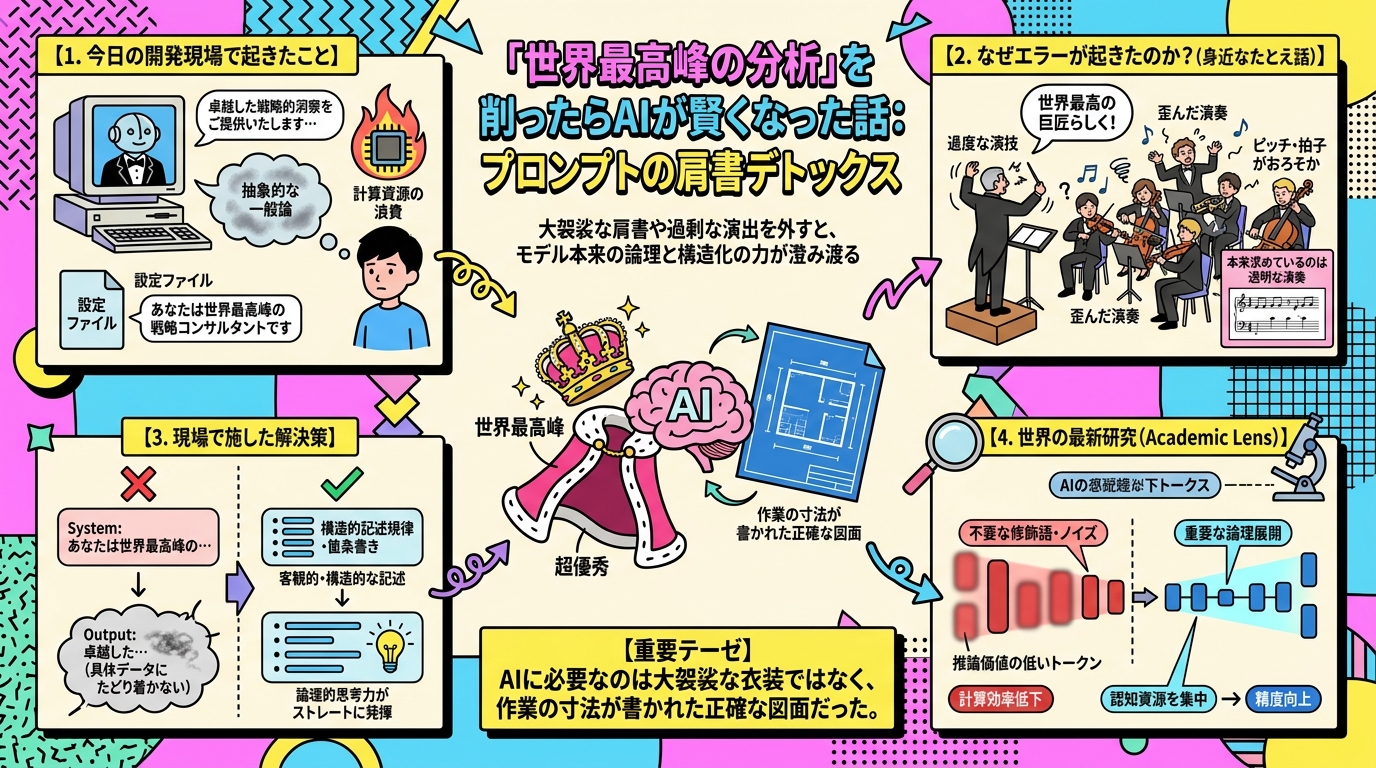
How AI Grew Smarter Once We Stripped 'World-Class Analysis': The Prompt Title Detox
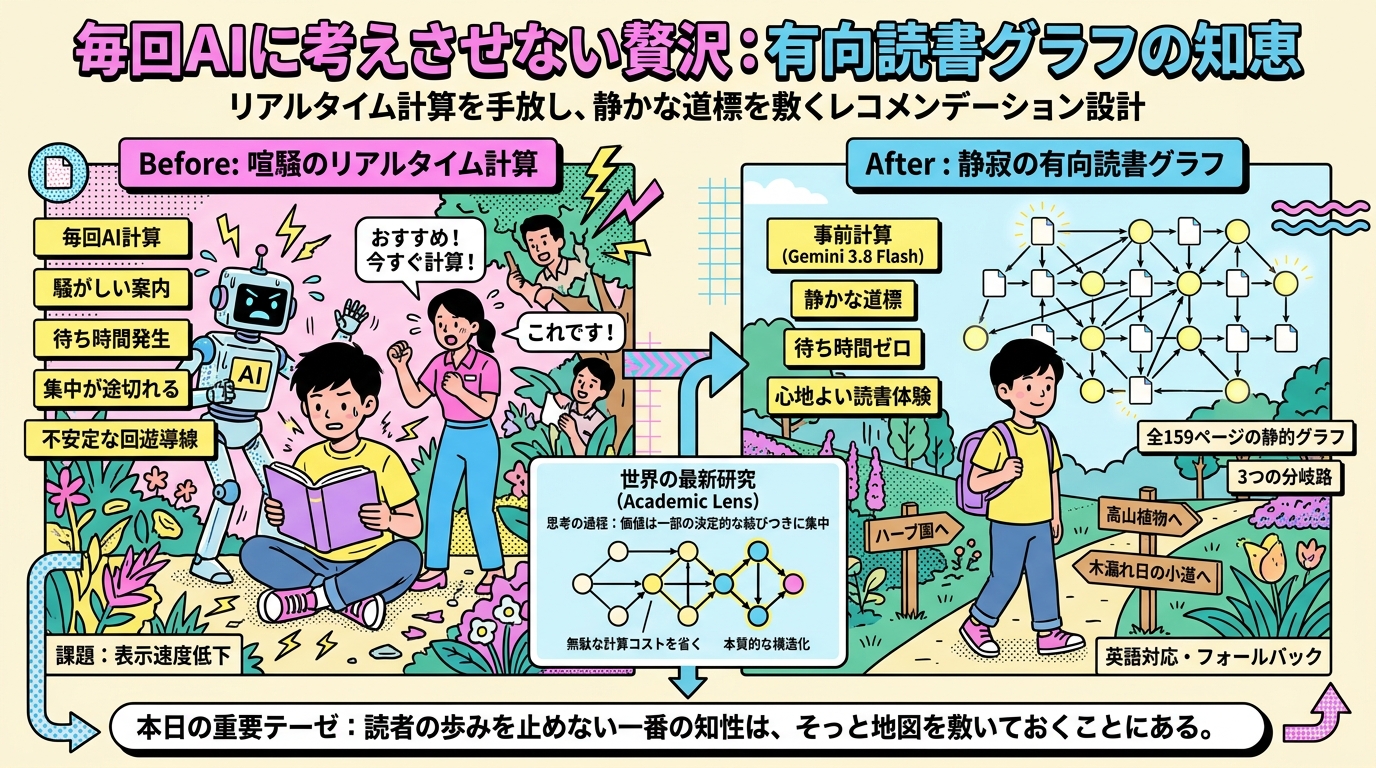
The Luxury of Not Asking AI Every Time: The Wisdom of a 'Directed Reading Graph' Connecting 159 Pages
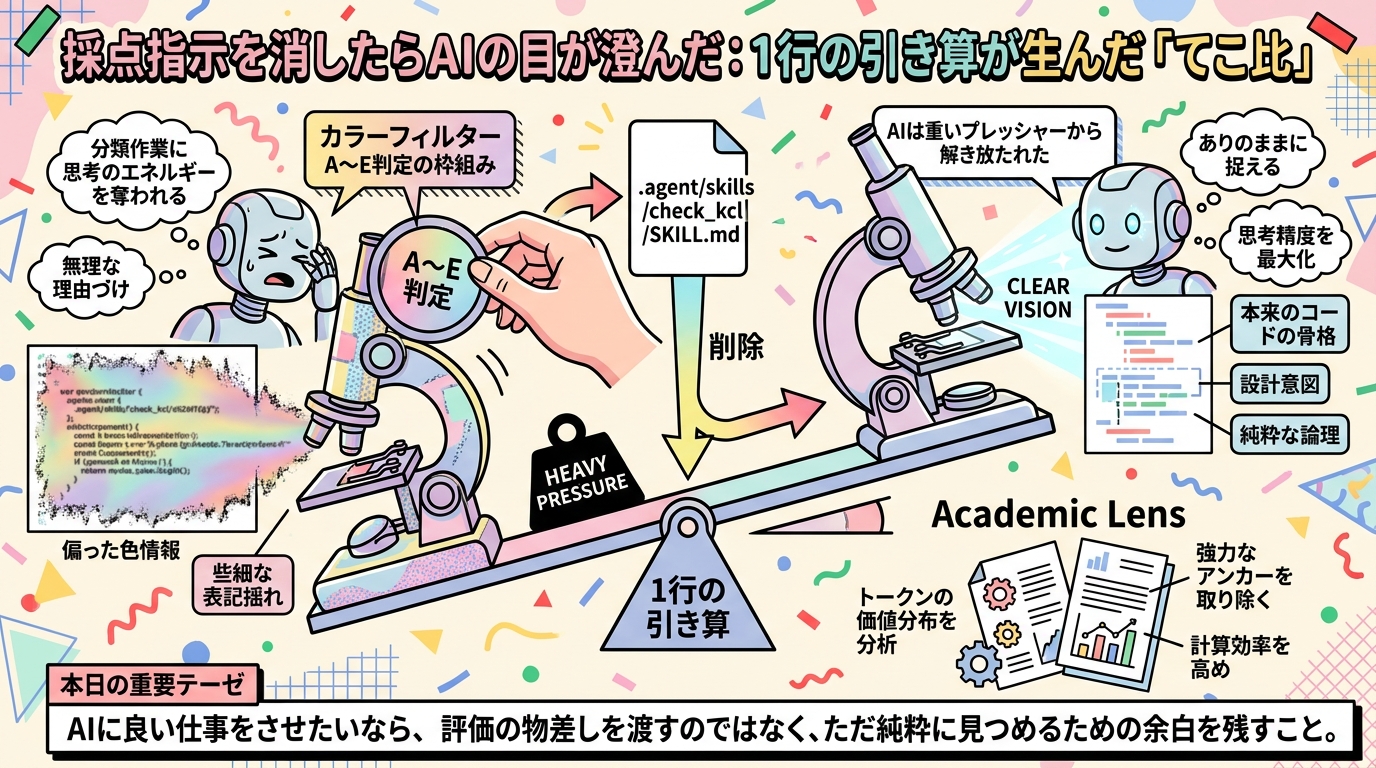
Clearing the AI's Vision by Erasing the Grading Rule: The High Leverage of Subtracting a Single Line
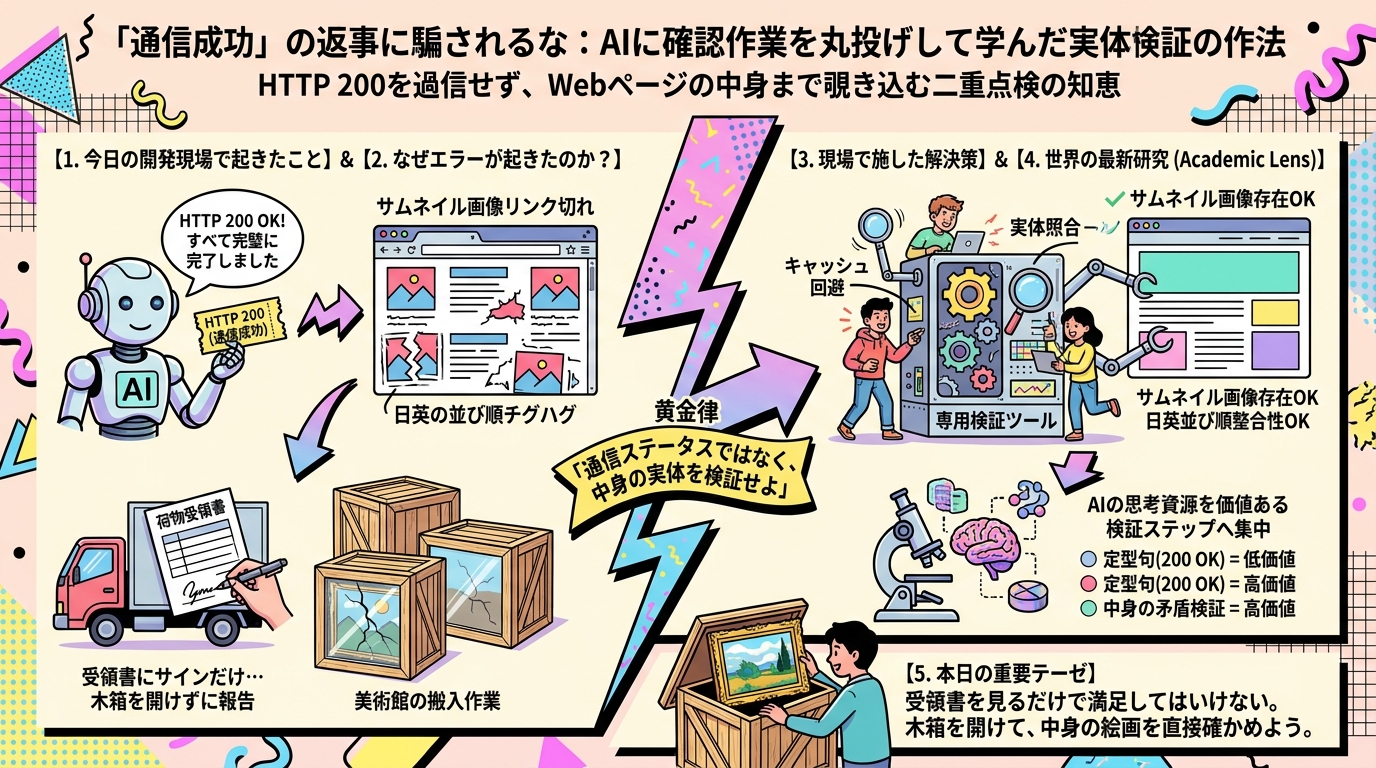
Don't Be Deceived by a 'Connection Successful' Response: Lessons in Live Content Verification from Delegating Quality Checks to AI
Current
The Art of Surveying the Field, Narrowing Down, and Discerning the Branches
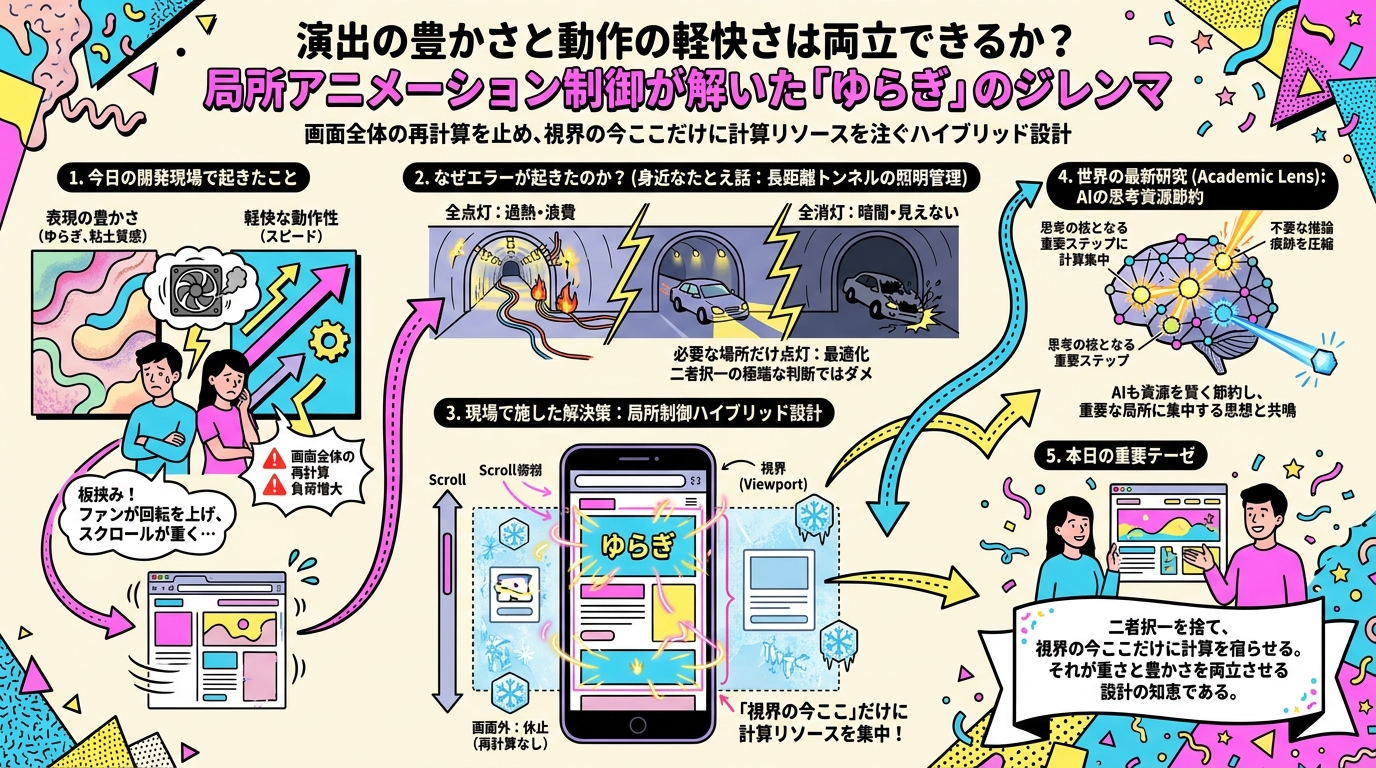
Can Expressive Richness Coexist with Nimble Performance? How Scoped Animation Control Solved the "Fluctuation" Dilemma
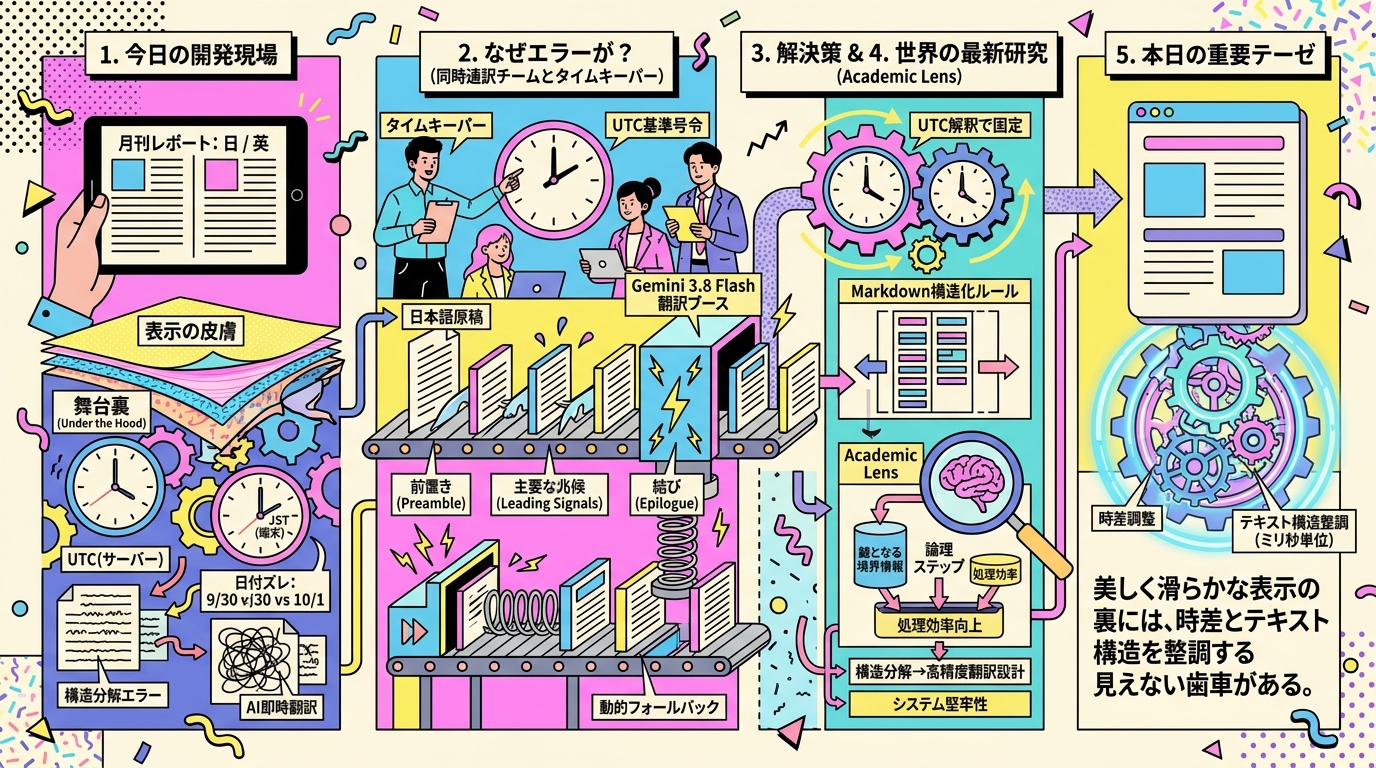
The Gears of Timezones and Translation Stirring Behind the Screen: An X-Ray of the Bilingual Automated Delivery Pipeline
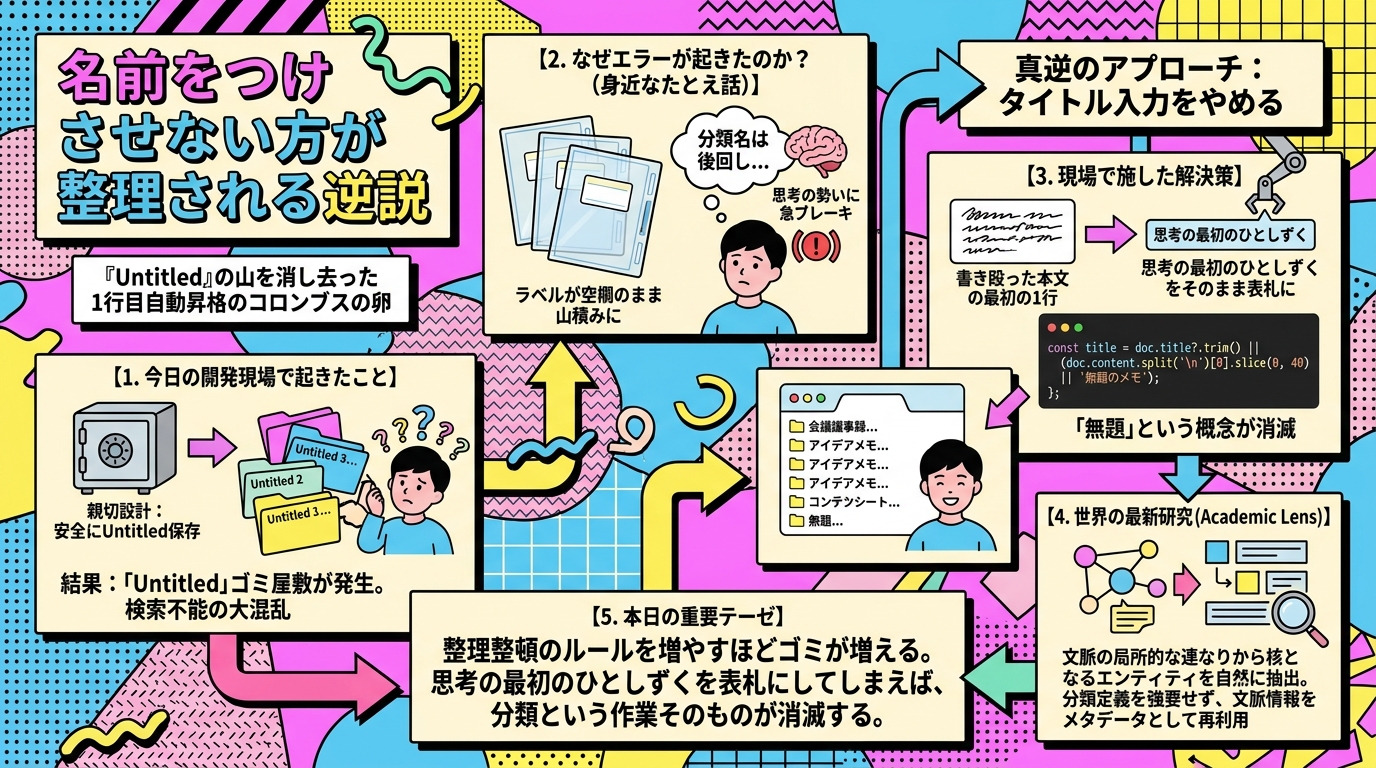
The Paradox of Order: Why Not Asking for Titles Actually Cleans the Clutter
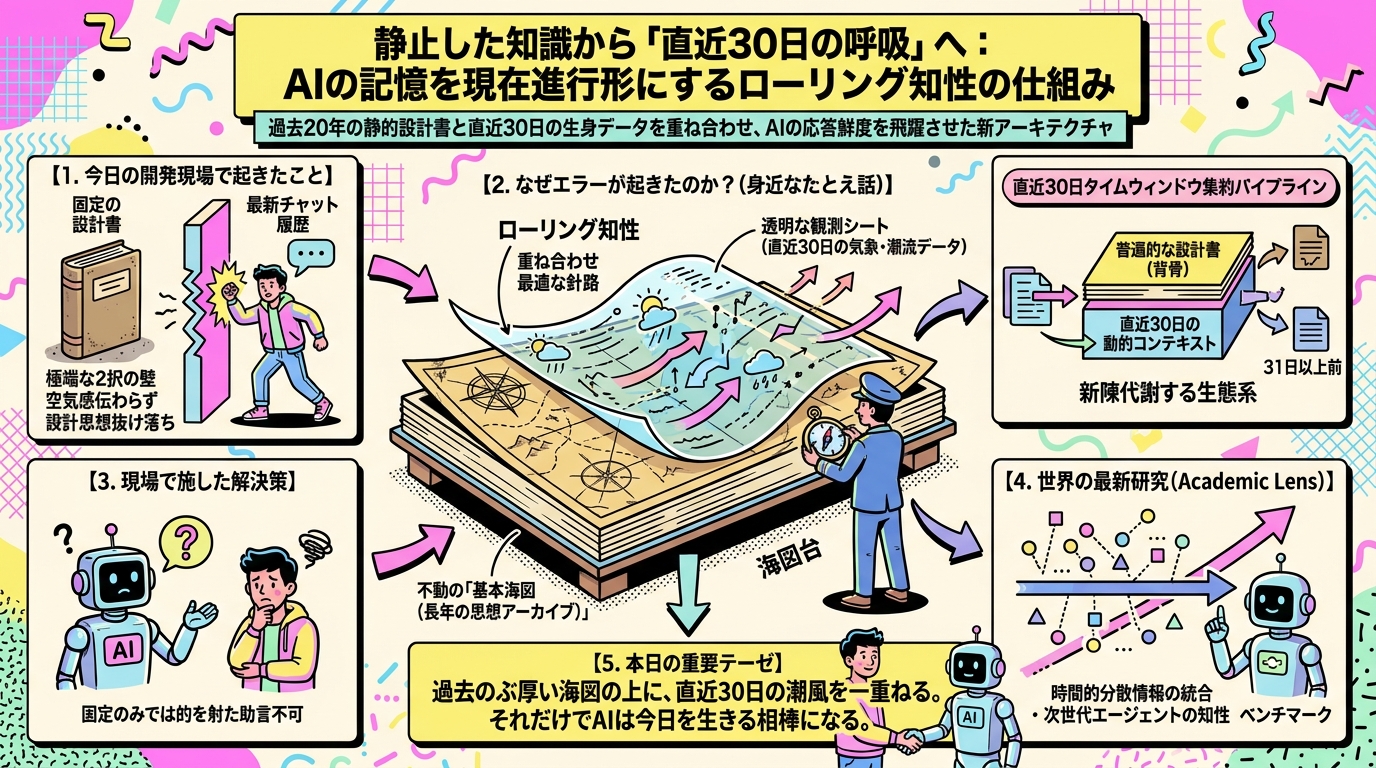
From Static Knowledge to the Pulse of the Last 30 Days: How Rolling Intelligence Keeps AI Memory in the Present Tense
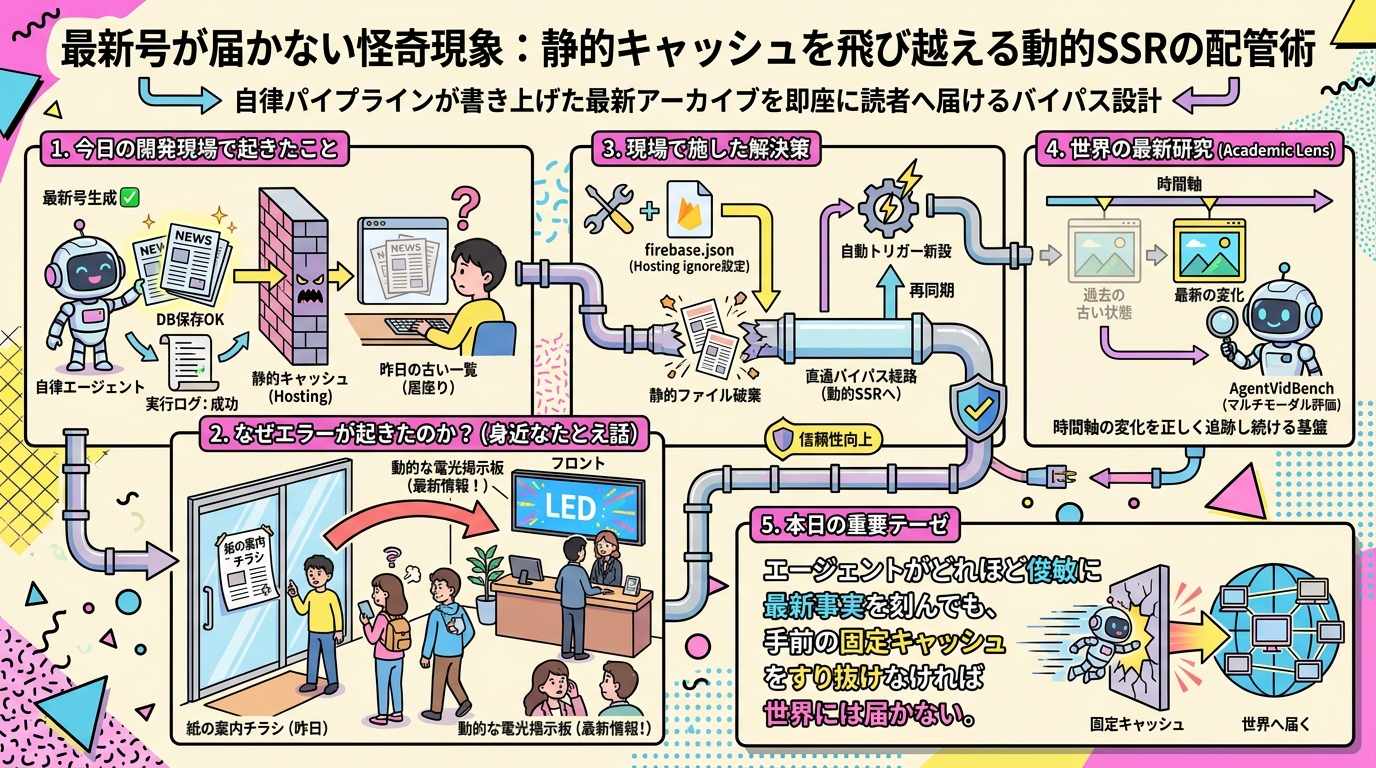
The Mystery of the Missing Issue: Plumbing Dynamic SSR to Bypass Static Cache
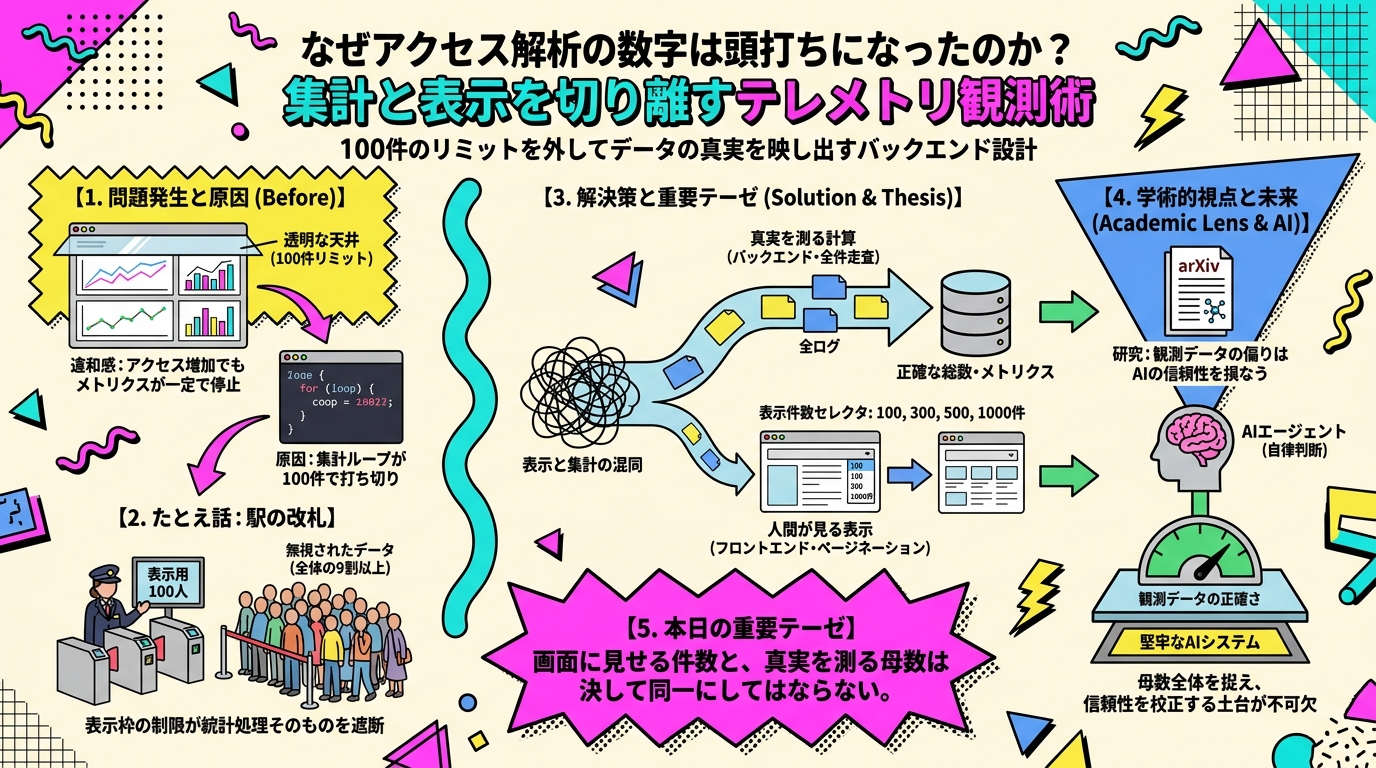
Why Did Access Analytics Hit an Artificial Ceiling? Telemetry Observability by Decoupling Aggregation from Display
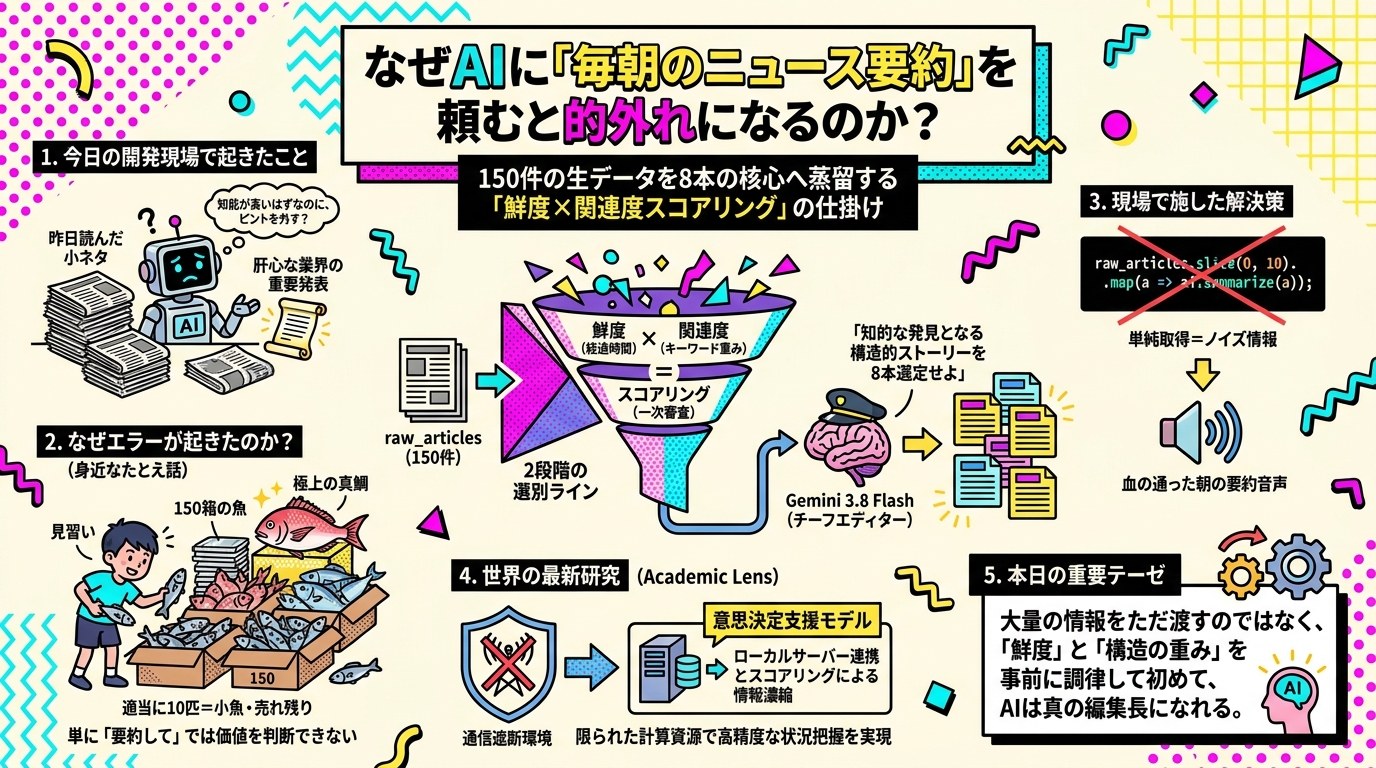
Why Asking AI to Summarize 'Morning News' Always Misses the Mark
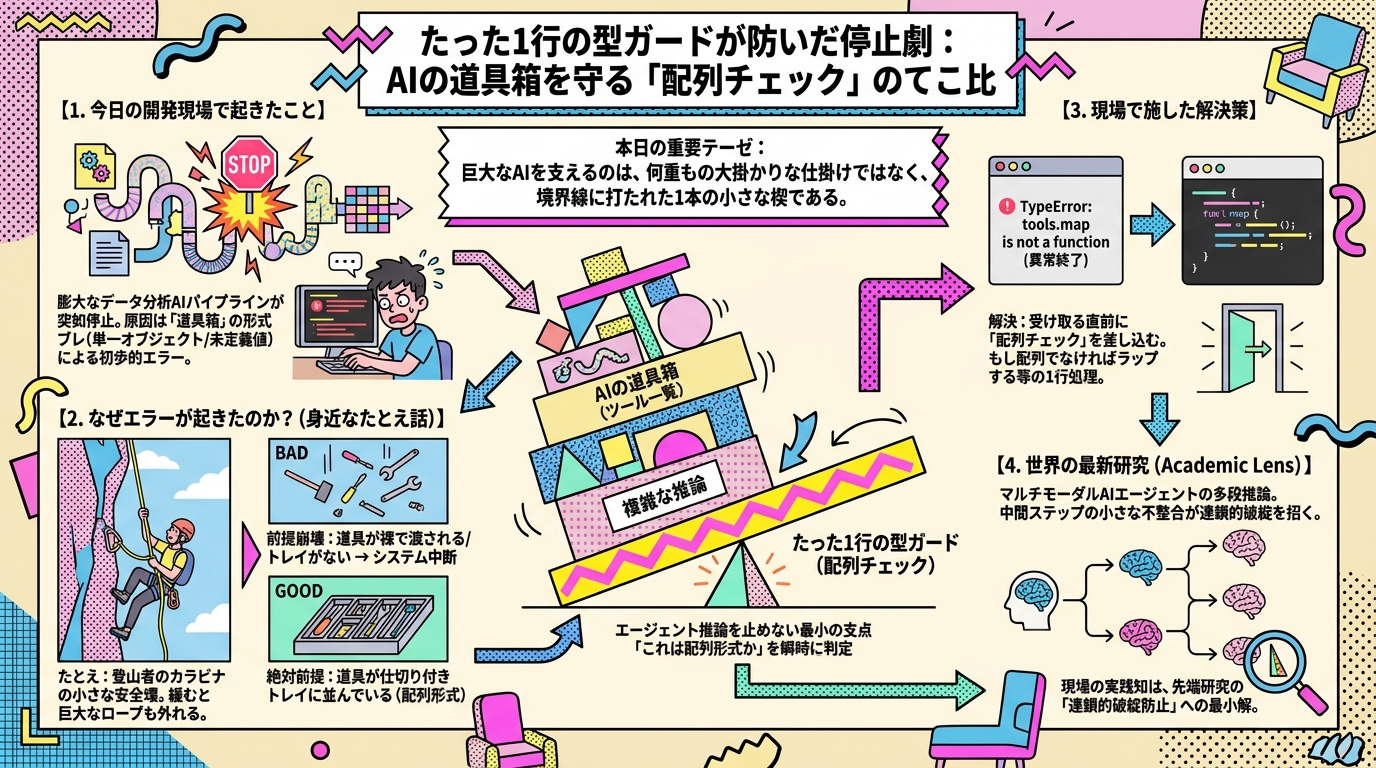
A Single-Line Type Guard That Prevented a Crash: The Leverage Ratio of 'Array Checks' in Protecting the AI's Toolbox