THE SCHOOL OF KAMOS
Connecting Real-world Dev & Academic Intelligence with Intuitive Metaphors
Clearing the AI's Vision by Erasing the Grading Rule: The High Leverage of Subtracting a Single Line
Why Removing the 'A–E Grade' Constraint Sharpened the Precision of Code Audits
When we asked our AI to audit source code against our constitutional guidelines, an unnatural pattern emerged: it fixated on nitpicking minor infractions and formalistic point deductions, while missing essential structural collapses. Adding hundreds of lines of instructions only compounded the complexity. Yet the breakthrough arrived from an unexpected angle. The moment we removed a single line from the skill definition file—"Grade the code across five tiers from A to E"—the AI seemed liberated from an immense pressure, accurately discerning the original architectural intent of the code.
This closely resembles removing a tinted color filter from a high-performance microscope. When a microscope lens is fitted with a filter that only permits specific wavelengths, the observer overlooks the delicate contours of cell membranes and the true expanse of tissue, preoccupied entirely with the skewed color information highlighted by the filter. Retaining an evaluation tier as a yardstick inside the prompt consumes the AI's cognitive bandwidth on the classification task of deciding which box to fit the code into. As a result, a distortion arose: the AI excessively flagged trivial stylistic inconsistencies that were easy to penalize, rather than examining the underlying skeleton of the code. Removing this framework restored clear vision, allowing the subject to be perceived exactly as it is.
In large language model reasoning, mandating a rating at the very beginning of the output imposes a powerful bias across the entire chain of thought. Models tend to concoct contrived justifications in subsequent sentences simply to rationalize the alphabetical grade they must present as their conclusion. By pruning just this single line of grading instructions, the burden of forced rationalization vanished from the reasoning context, enabling the model to focus purely on building step-by-step logic. Rather than appending more instructions, we removed the minimal fulcrum that distorted the reasoning. This subtraction of a single line hidden in the details acted as powerful leverage, dramatically aligning the entire system's behavior.
"If you want AI to do exemplary work, do not hand it a scorecard—leave open the white space simply to observe with clarity."Key Takeaway
📖 1-Minute Lexicon
A critical pressure point where minimal force or change can substantially move an entire complex system.
A mechanism where AI builds a step-by-step line of reasoning rather than rushing to an immediate answer.
Purifying AI Reasoning by Abolishing Evaluation Frameworks

Live Frontier Pulse: Real-World AI Trends
AI SOC Automating Threat Detection, Investigation, and Response Formulation Deployed Domestically with AI Agents (October 1, 2026) | CTC
ITOCHU Techno-Solutions has unveiled a new security operations service where AI agents autonomously support everything from threat detection and log investigation to drafting initial response actions.
How Does This Connect to Global Frontier Research?
This field discovery resonates deeply with cutting-edge research analyzing token value distributions across the reasoning process. This paper demonstrates that among all tokens generated by AI during reasoning, the highly critical tokens that determine the correctness of conclusions are concentrated within a very small subset. When a strong anchor—such as a grading instruction—exists in the prompt, it warps the value distribution across the entire reasoning trajectory, inducing wasteful computation and biased conclusions. Removing unnecessary directive tokens that compromise the trajectory of thought has robust academic validity as an approach to maximizing reasoning precision while enhancing computational efficiency.
When asking AI to perform a code quality audit, which of the following is the most effective approach to elicit deeper, objective analysis?
Past School Paper Backnumbers

How AI Grew Smarter Once We Stripped 'World-Class Analysis': The Prompt Title Detox
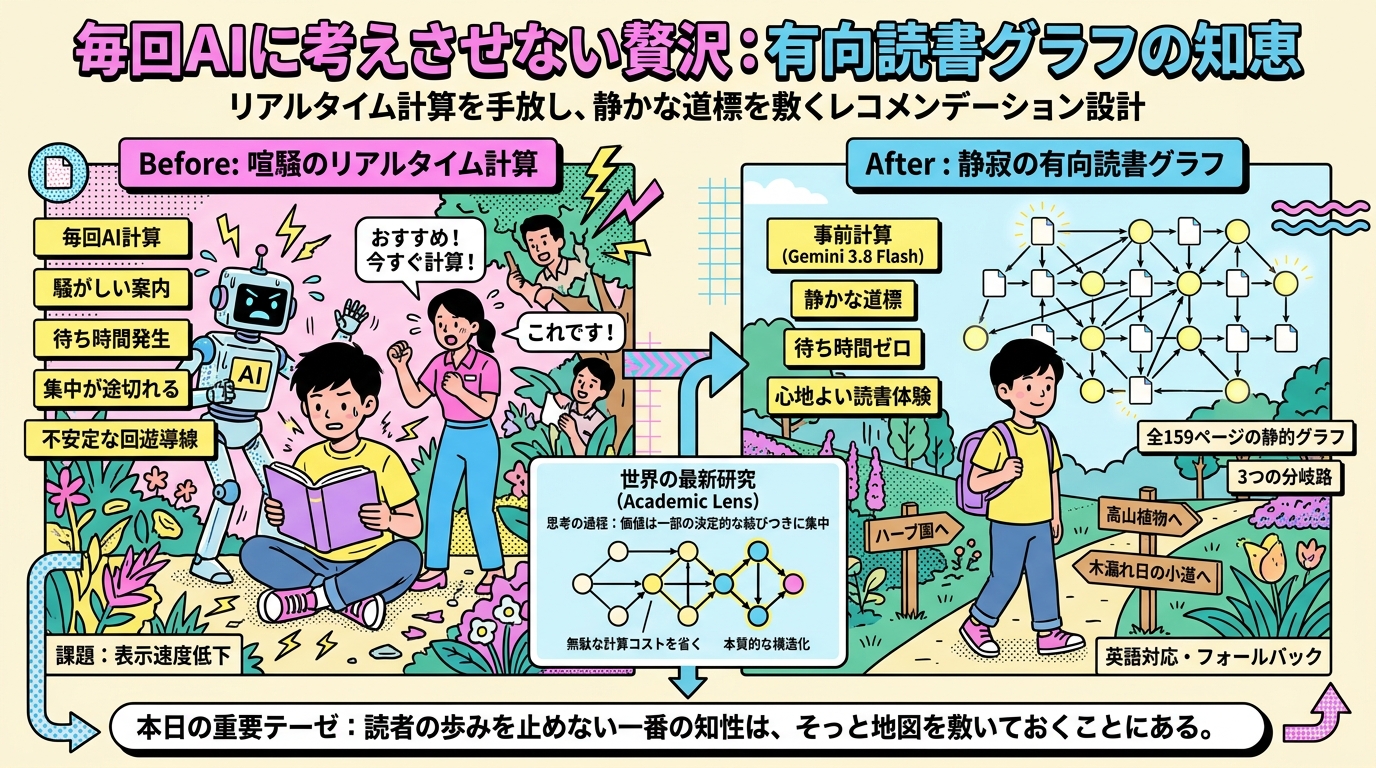
The Luxury of Not Asking AI Every Time: The Wisdom of a 'Directed Reading Graph' Connecting 159 Pages
Current
Clearing the AI's Vision by Erasing the Grading Rule: The High Leverage of Subtracting a Single Line

Don't Be Deceived by a 'Connection Successful' Response: Lessons in Live Content Verification from Delegating Quality Checks to AI

The Art of Surveying the Field, Narrowing Down, and Discerning the Branches

Can Expressive Richness Coexist with Nimble Performance? How Scoped Animation Control Solved the "Fluctuation" Dilemma

The Gears of Timezones and Translation Stirring Behind the Screen: An X-Ray of the Bilingual Automated Delivery Pipeline

The Paradox of Order: Why Not Asking for Titles Actually Cleans the Clutter

From Static Knowledge to the Pulse of the Last 30 Days: How Rolling Intelligence Keeps AI Memory in the Present Tense
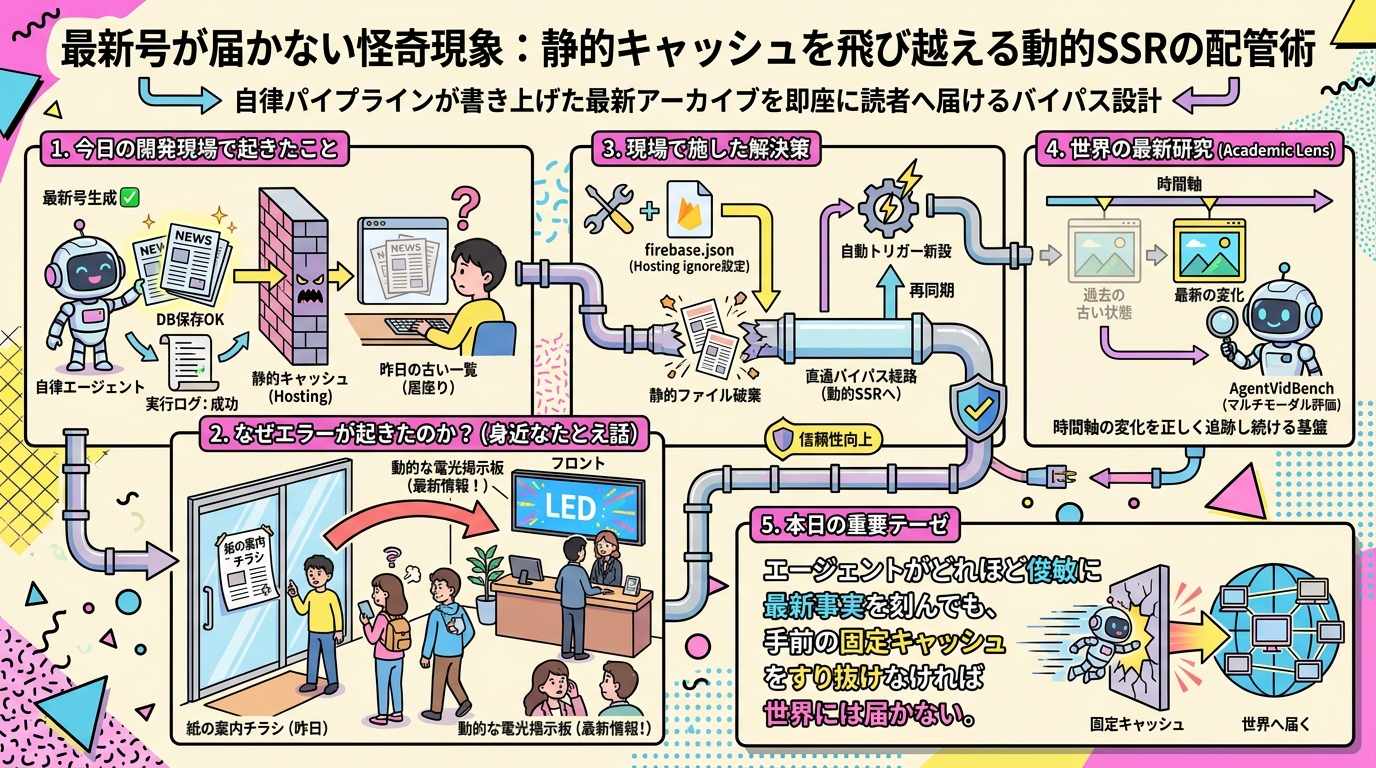
The Mystery of the Missing Issue: Plumbing Dynamic SSR to Bypass Static Cache
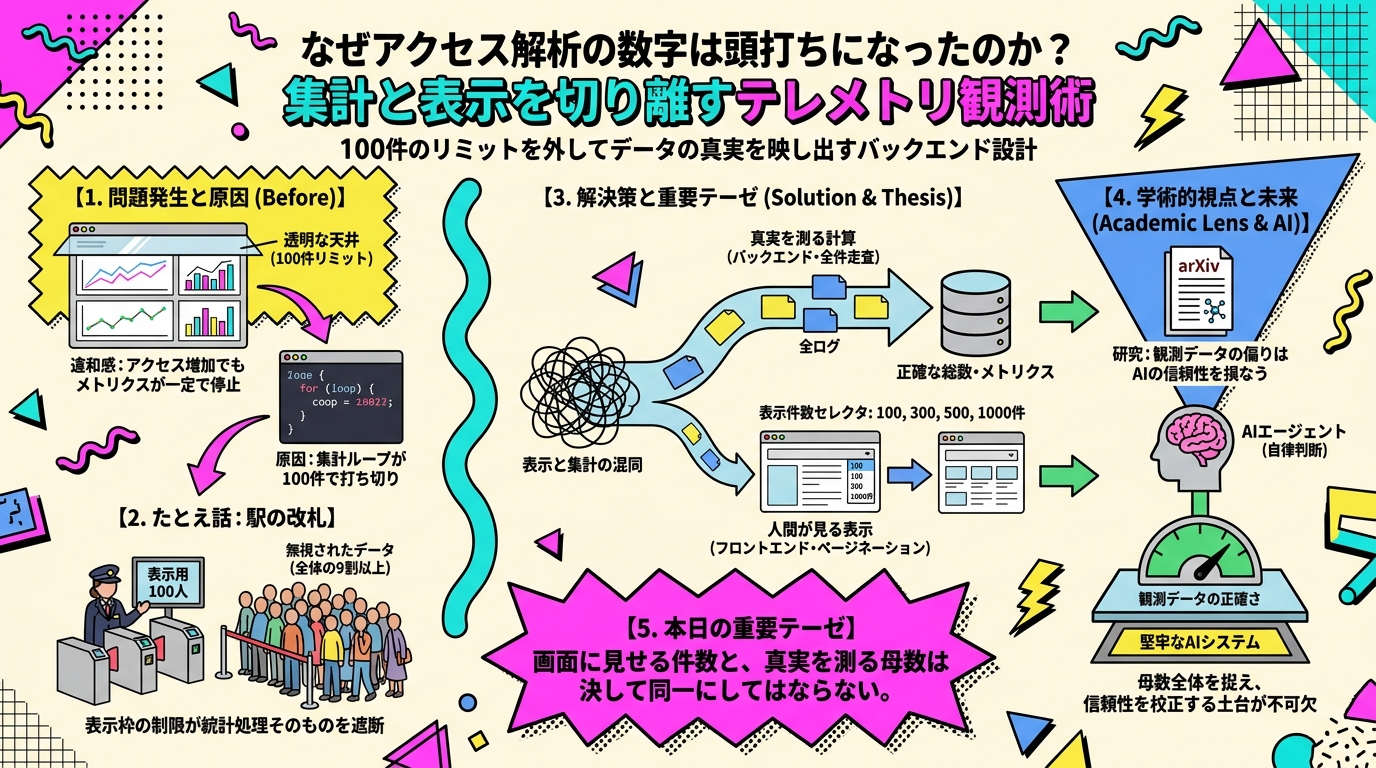
Why Did Access Analytics Hit an Artificial Ceiling? Telemetry Observability by Decoupling Aggregation from Display

Why Asking AI to Summarize 'Morning News' Always Misses the Mark
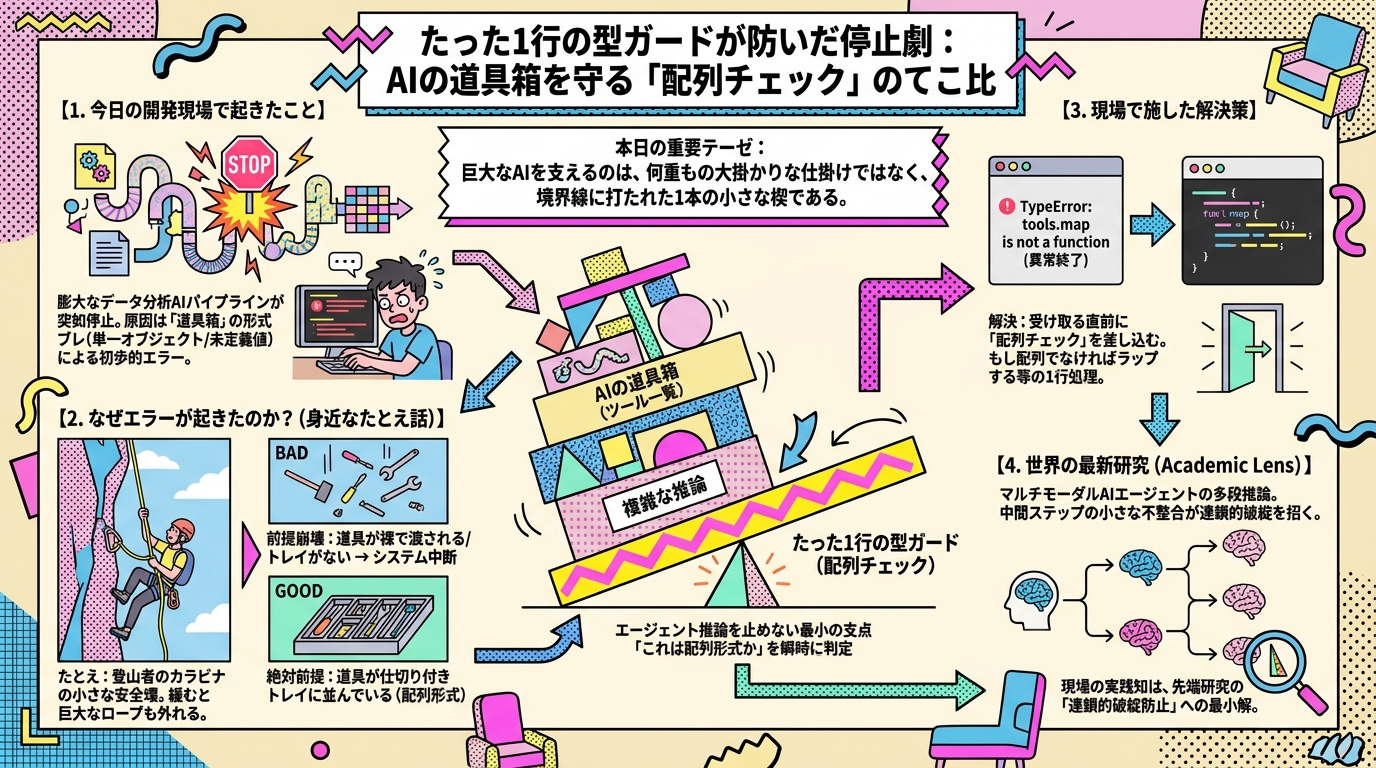
A Single-Line Type Guard That Prevented a Crash: The Leverage Ratio of 'Array Checks' in Protecting the AI's Toolbox